
Silicone Potato Masher Manufacturer
Silicone potato mashers for cooked potatoes and other soft foods. Specify head geometry, food-contact surfaces, grip, and packaging around your target texture and vessel.
Home » Silicone Kitchen Gadgets » Silicone Potato Masher
What Is a Silicone Potato Masher?
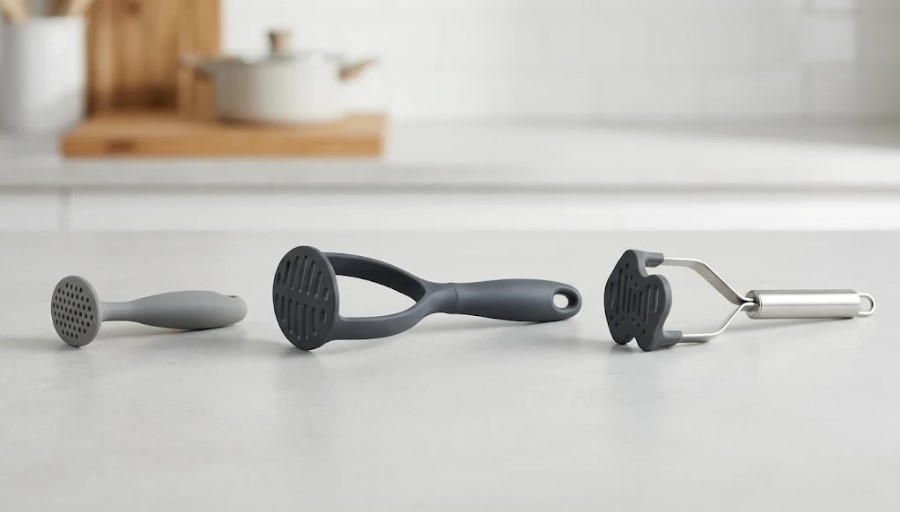
A silicone potato masher is a hand-held tool with a silicone food-contact head for pressing cooked potatoes or other soft foods. Its head may be solid silicone or silicone covering a rigid support. The head’s food-contact surface remains silicone regardless of grip material. Custom projects specify the head pattern, support, handle, color, and packaging.
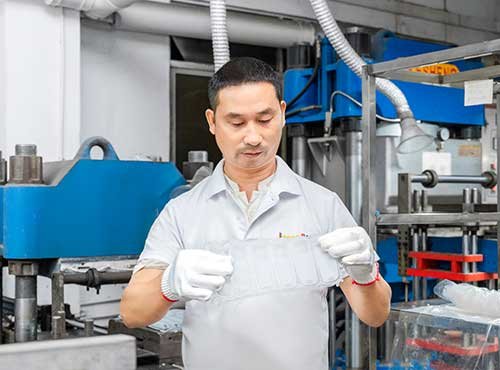
RY Silicone is a China-based custom silicone manufacturer established in 2012. Its facility, equipment count, and daily output describe the factory across product categories, not potato masher capacity. For an OEM or ODM project, we assess the proposed construction and sample requirements before defining a production route. Component materials and food-contact documentation follow the finished design and destination market.
Silicone Potato Masher Manufacturing at a Glance
Order Planning
Share target quantity and design files; tooling, sample scope, minimum order, and production timing follow the selected construction and packaging.
Product Specification
Define head diameter, opening pattern, support core, handle length, and joint design before judging pressing feel or pan clearance.
Branding & Logo
Select a molded mark or suitable non-contact print location after checking grip shape, artwork detail, and cleaning exposure.
Packaging Options
Choose bulk packs or retail presentation around head protection, handle length, labeling, and the sales channel for each SKU.
Who We Manufacture Silicone Potato Mashers For
Different channels prioritize pressing performance, handling, presentation, and order flexibility differently.

Soft-Food Preparation Brands
Develop masher lines for potatoes, pumpkin, cooked vegetables, ripe fruit, and cooked eggs. For tender cooked meat or fish, assess resulting texture, head geometry, and cleaning access using samples.
Distributors & Wholesalers
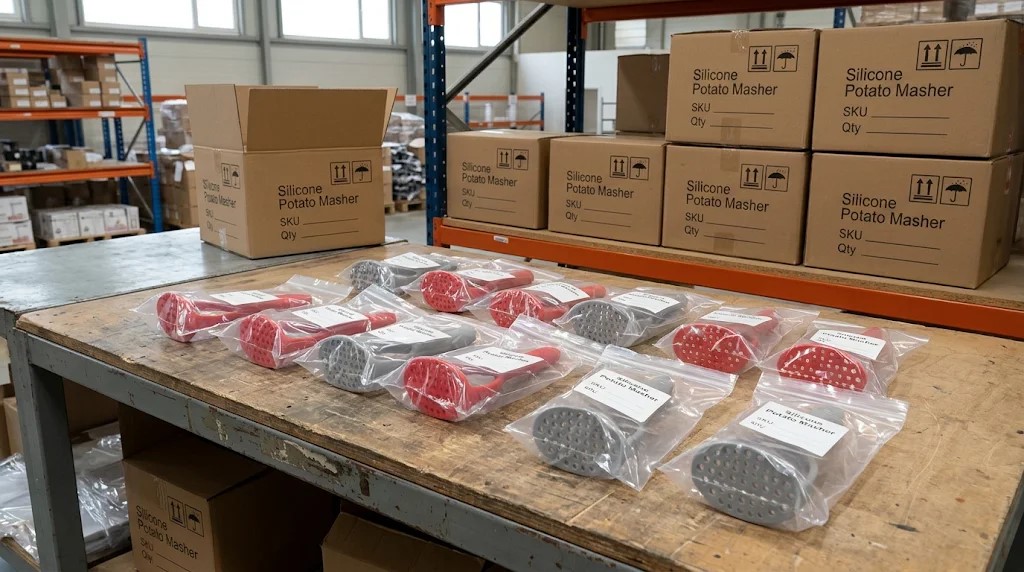
Source potato mashers in wholesale or bulk programs with clear SKU distinctions. Your assortment brief should separate head patterns and handle constructions so quotations reflect actual component and packaging differences.

Cookware Brands
Position a masher for use with your cookware by defining the surfaces it may touch. Edge shape and contact material need a sample check against the specified pan finish; a silicone label alone does not establish compatibility.
Foodservice Suppliers
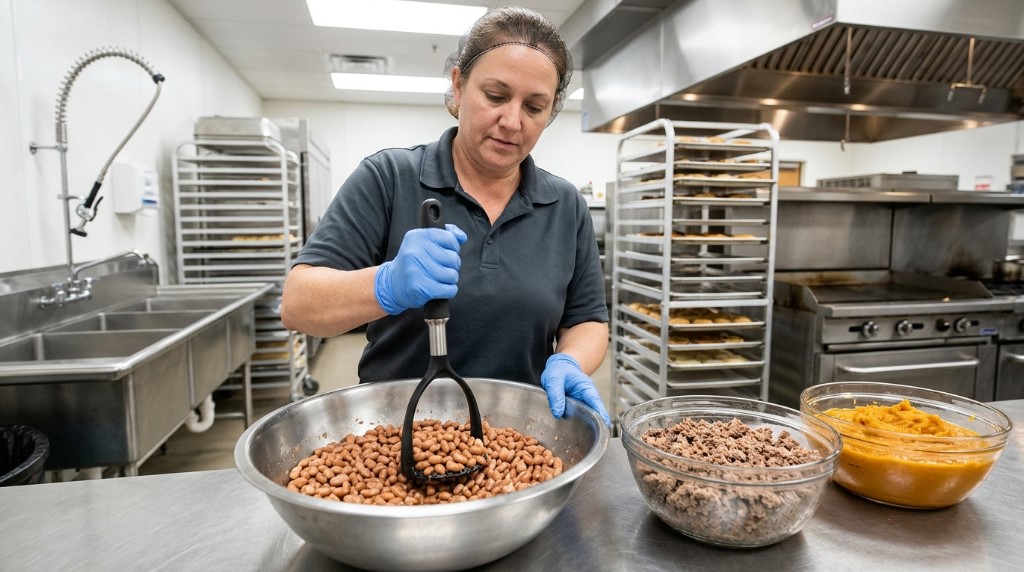
Specify the portion volume, handling frequency, and cleaning method for professional kitchens. A robust attachment and accessible surfaces matter when repeated pressing and washing are part of the intended use.
Retail and Ecommerce Sellers
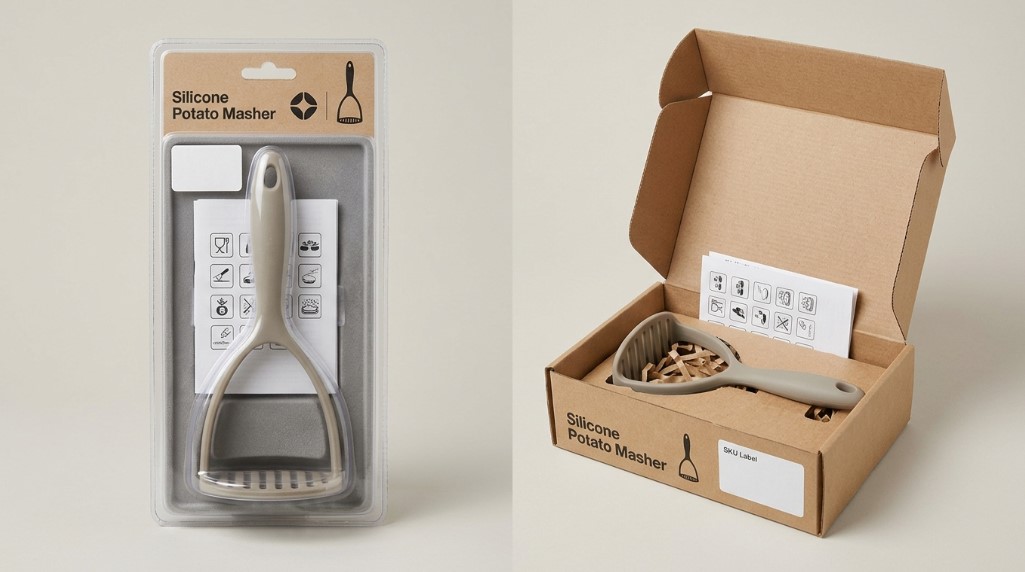
Plan private-label color, artwork, barcode, and pack dimensions for shelf or parcel sales. Product photography and descriptions should match the approved construction, especially when silicone covers only part of the masher.
Promotional Product Teams
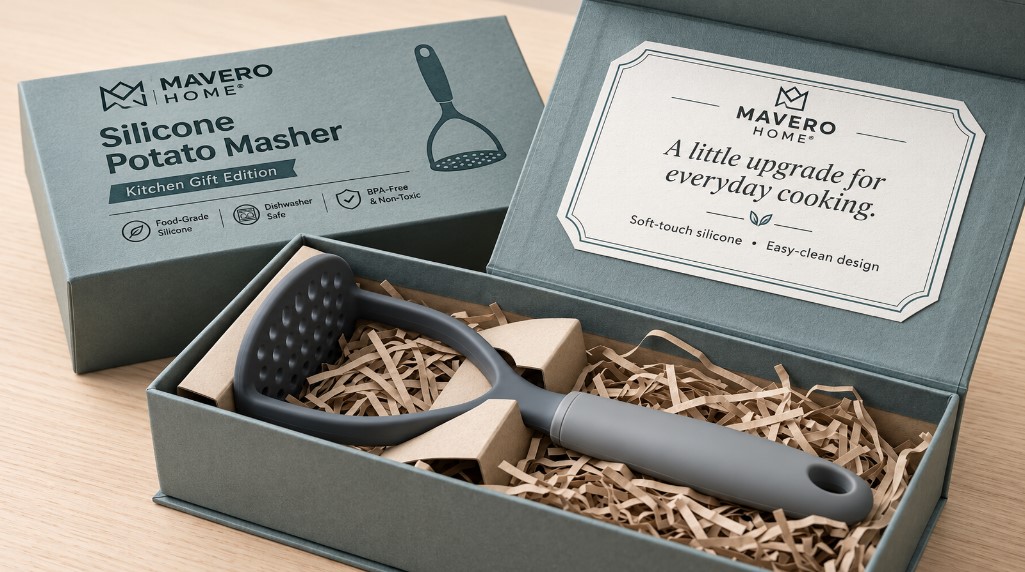
Create a branded kitchen giveaway around a practical head and legible mark. Agree on order volume, artwork area, and packaging before promising a particular decoration method or delivery window.
Silicone Potato Masher Types We Can Develop
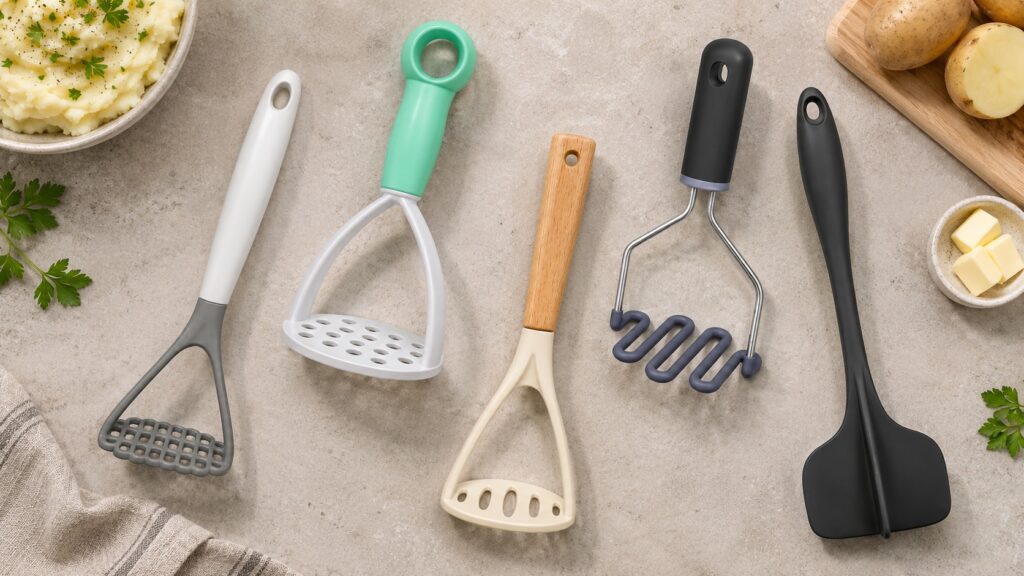
Perforated-Plate Silicone Potato Masher
Wave-Loop Silicone Mashers
Triangular Open-Frame Silicone Mashers
Curved-Edge Silicone Mashers
Mini Silicone Potato Masher
Silicone Potato & Meat Chopper
Silicone Potato Masher Customization
Start with pressing geometry, then settle materials, handling, and presentation.
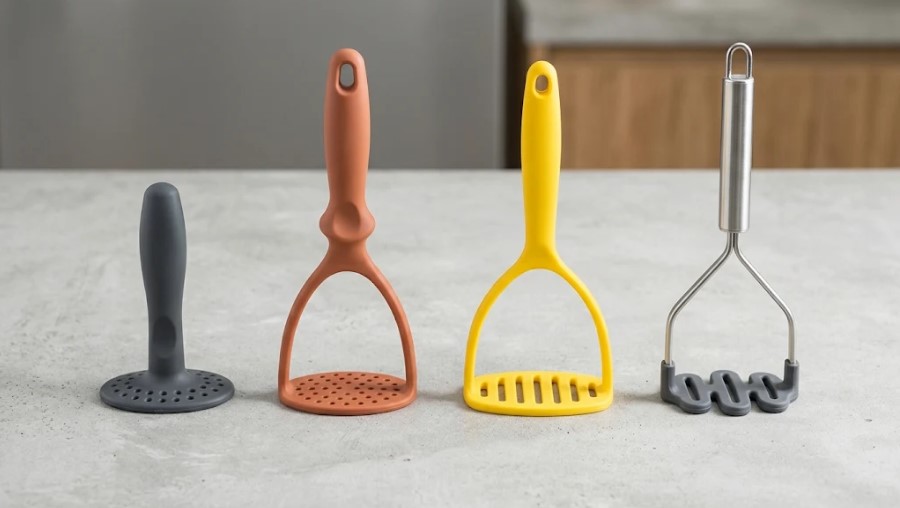
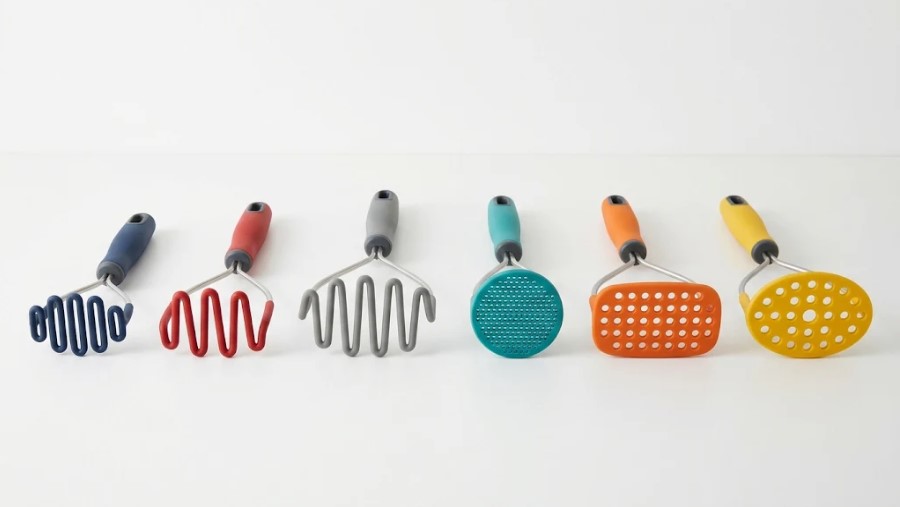
Choose a silicone food-contact head for the intended food and vessel. Oval plates can have elongated slots, while D-shaped plates can have round holes; triangular and wave concepts use open gaps. Head size, edge profile, and bridge thickness affect pressing, flex, and cleaning. Check a sample before tooling.
Available options include:
- Choose oval, D-shaped, triangular, or wave geometry.
- Define hole diameter, slot width, or gap spacing.
- Set head size, edge profile, and bridge thickness.
- Identify the intended food and cookware.
Choose how hand pressure reaches the silicone food-contact head. A solid silicone head and a silicone-covered rigid support create different stiffness and assembly questions. The neck and joint deserve particular attention because a comfortable grip cannot compensate for a head that bends away from the food. Set the proposed materials and joining method before requesting a durability assessment.
Available options include:
- Compare a solid silicone head with a silicone-covered supported head.
- Define any core material and full food-contact coverage boundaries.
- Specify neck and joint geometry.
- Set the intended pressing load for sampling.
Shape the handle for the intended hand position and repeated downward pressure. Grip diameter, surface texture, and handle length affect control, while grooves can complicate cleaning. A hanging hole changes both storage and end geometry. Use a physical sample to assess comfort and whether the grip can twist or shift around its support.
Available options include:
- Select handle length and cross-section.
- Add a molded grip texture.
- Specify color and finish.
- Define a hanging or storage feature.
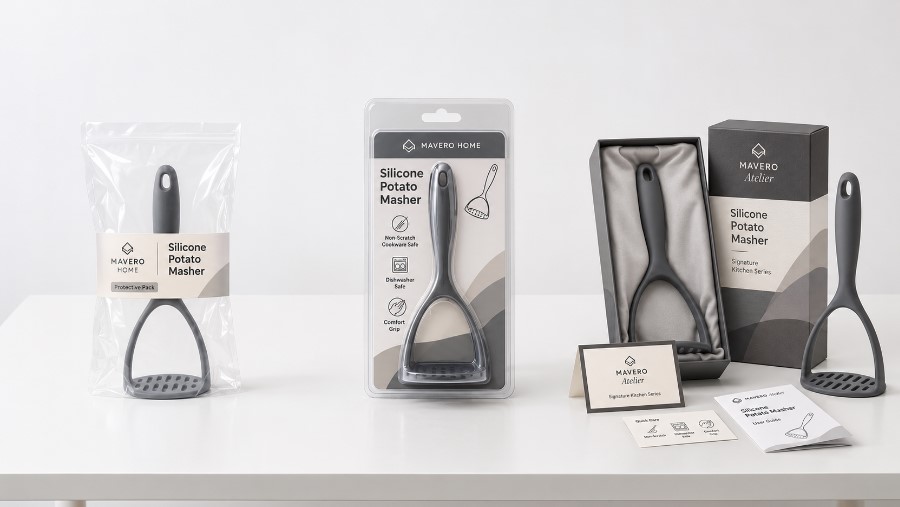
Plan the pack around the product’s length, weight, head protection, and channel requirements. A retail card needs a secure attachment point; a box needs enough internal restraint to prevent scuffs in transit. Artwork and label content should describe the actual component materials and supported use. Final packaging choices also affect quotation and carton planning.
Available options include:
- Choose bulk, carded, or boxed presentation.
- Specify barcode and label positions.
- Supply an approved care and use copy.
- Set carton and shipment requirements.
Start Your Custom Silicone Potato Masher Project
Send your head concept, target cookware, quantity, and packaging brief. We will assess construction, sample priorities, and the information needed for a quotation.
How to Specify a Better Silicone Potato Masher
A useful specification links food texture, pressing force, cookware contact, and cleanability.
- Food and task: Name the cooked foods, desired texture, and vessel used for sample trials.
- Head pattern: Define plate openings or wave spacing against the texture you want.
- Head size: Match diameter and edge profile to the pots users will reach into.
- Stiffness: State whether a rigid support is permitted and where silicone must cover it.
- Joint: Identify the handle-to-head connection and intended pressing load.
- Grip: Set handle length, diameter, texture, and storage feature.
- Cleaning: Identify crevices, removable parts, and the cleaning method to assess.
- Evidence: Specify the destination market and any finished-product documentation required.
Full Specification Guide
How to Specify a Silicone Potato Masher—head geometry, load path, grip, cookware contact, and a sample checklist.
Silicone Potato Masher Logo and Branding Methods
Place branding where it remains legible without disrupting food contact.
Screen Printing
Strong, clean coverage for simple one- or two-color logos in bulk orders.
Pad Printing
Prints small or curved areas that flat screen printing cannot easily reach.
Embossed Logo
Create desired raised logos or graphics on the material surface, including the handle part.
Debossed Logos
Build recessed logos on the silicone materia surface with excellent scratch resistance.
Silicone Potato Masher Material and Performance Options
Select materials for the head, support structure, grip, and joint as a complete system.
The exposed surface is where silicone meets food and cookware.
Specify whether silicone forms the entire head or covers a support. Coverage must remain consistent around the perimeter and openings.
Material selection alone does not guarantee that the finished masher suits every pan coating. Assess the approved sample against the stated cookware and use conditions.
Material Comparison
Silicone vs. Nylon: Which Masher Heads Are Optimal for Potato Mashers? — Compare stiffness, cookware contact, cleaning access, and construction trade-offs.
The head needs sufficient support to transmit downward force.
A soft contact layer can protect the intended touch points while a support structure carries the load. Excessive deflection reduces pressing control, especially with a broad plate.
Agree on a pressing task for the sample, then inspect the head shape afterward. Do not infer performance from compound hardness alone.
The neck carries a significant share of the pressing load.
Repeated pressing concentrates force where the handle meets the head. A concealed core, overmolded section, or assembled joint introduces different failure modes and cleaning gaps.
Define the construction in drawings, then use the approved sample and any agreed load test to evaluate the connection.
Keeps cavities accurate over repeated use.
Thin rims and fine details are where molds fail first, so we match the material, wall thickness and rim structure to how often the mold will be filled, flexed and stacked.
A fast screen for filler or curing problems.
A strong chemical odor or oily residue may indicate issues with fillers, curing or material selection. Visual and sensory screening can flag obvious risks, although laboratory testing is required for formal compliance claims.
Available documents may include:
- Material data sheets
- Material declarations
- FDA-related documentation
- LFGB-related documentation
- REACH-related reports
- Project-specific test reports
The scope must match the selected silicone, pigment, printing ink and intended market.
A raw-material report should not be presented as proof for every finished product configuration.
Silicone molds last longer when washed after each use, dried fully, kept away from sharp utensils, and stored flat and dry.
Care guide
How to Clean & Care for Silicone Molds — cleaning steps, odor and residue fixes, drying, storage and stain prevention.
How Custom Silicone Potato Mashers Are Manufactured

STEP 1: Requirement Review
The project brief identifies head geometry, target cookware, handle construction, quantity, packaging, and destination market so engineering can assess the proposed masher.
STEP 2: Mold Evaluation
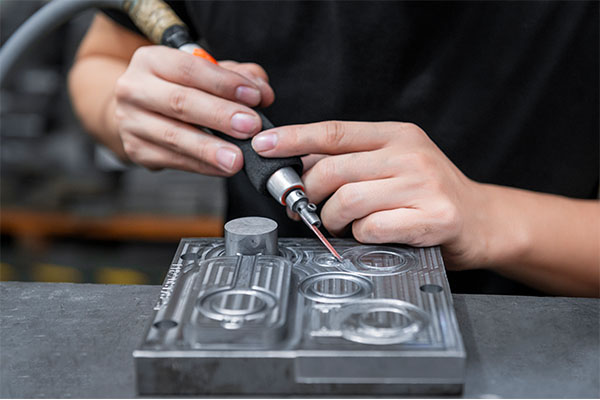
Drawings establish the head openings, wall transitions, and joints. Existing tooling suitability or new-tool requirements are determined against the selected construction.
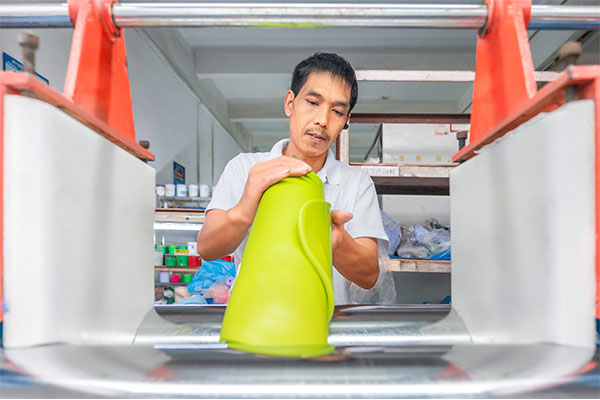
STEP 3: Material and Color Preparation
Selected silicone, pigment, and any separate support material are specified for their actual roles. Batch preparation follows the approved formulation and component plan.
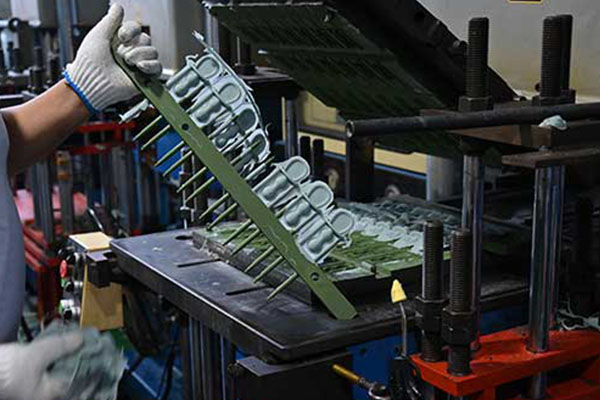
STEP 4: Forming and Assembly
The approved process forms the silicone component; supported heads also require a defined insert or assembly route. Feasibility is established before production commitments.
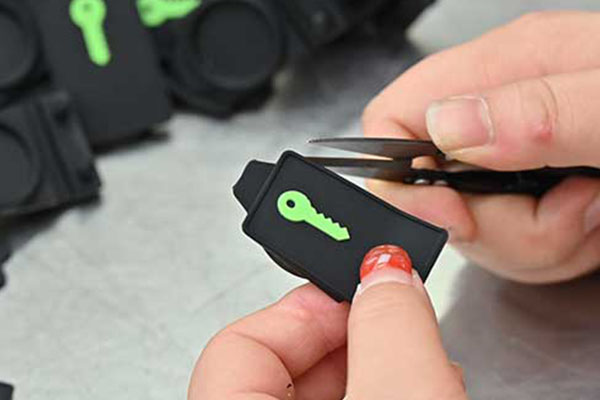
STEP 5: Demolding and Trimming
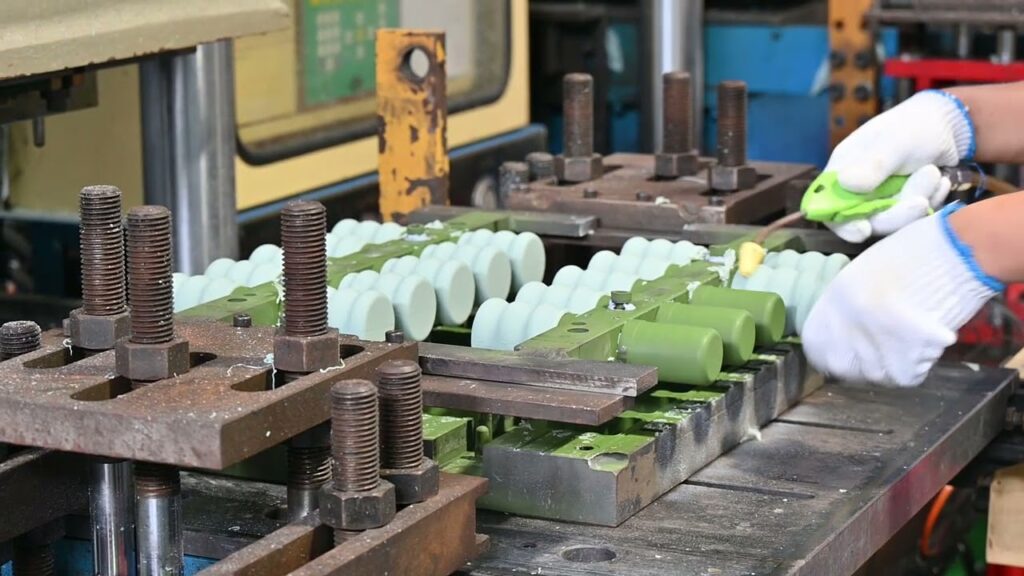
After forming, operators remove excess material and inspect narrow bridges and perimeter edges. Trimming must preserve the specified openings and contact profile.
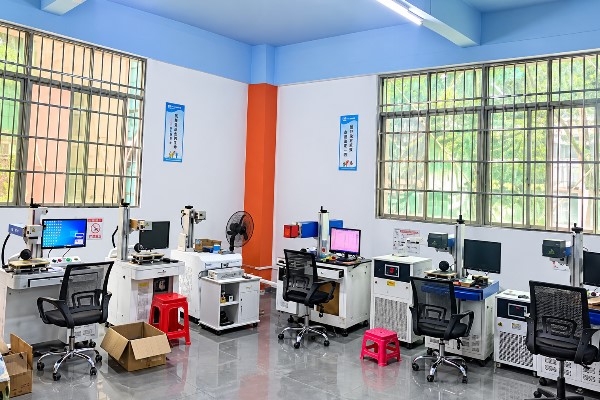
STEP 6: Surface and Branding
Molded texture or approved decoration is applied at its specified location. The sample sets the reference for mark detail, grip appearance, and finish.
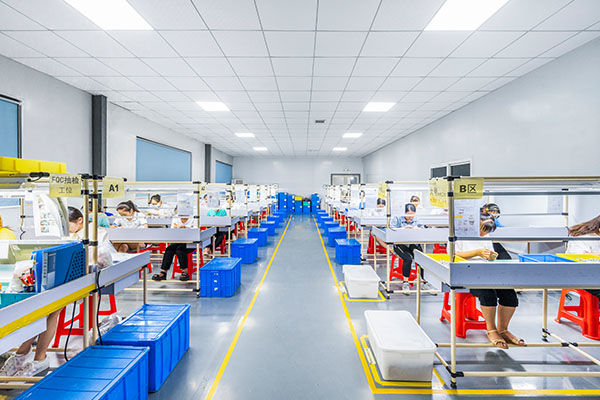
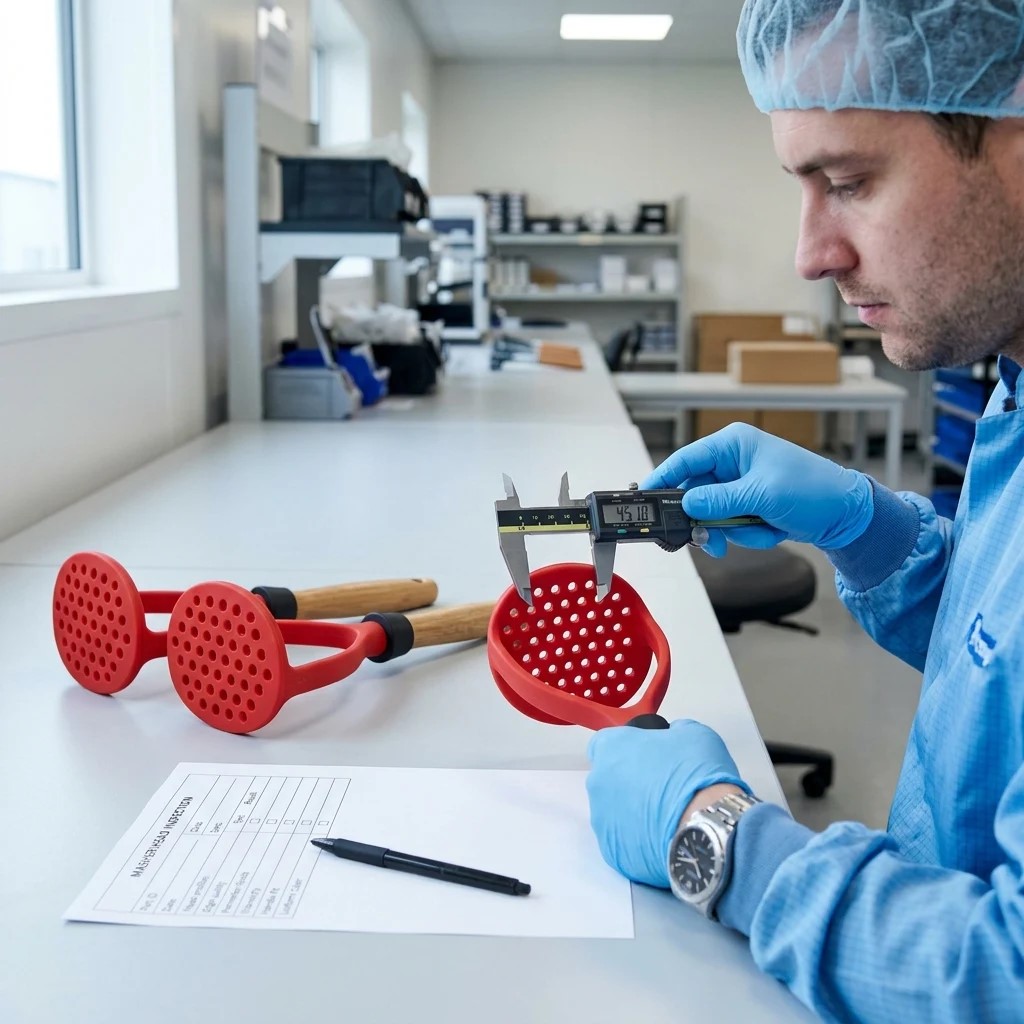
STEP 7: Quality Inspection
Finished mashers are compared with the approved sample for head shape, joint fit, color, and branding. Functional checks follow the agreed protocol.

STEP 8: Packaging and Shipment
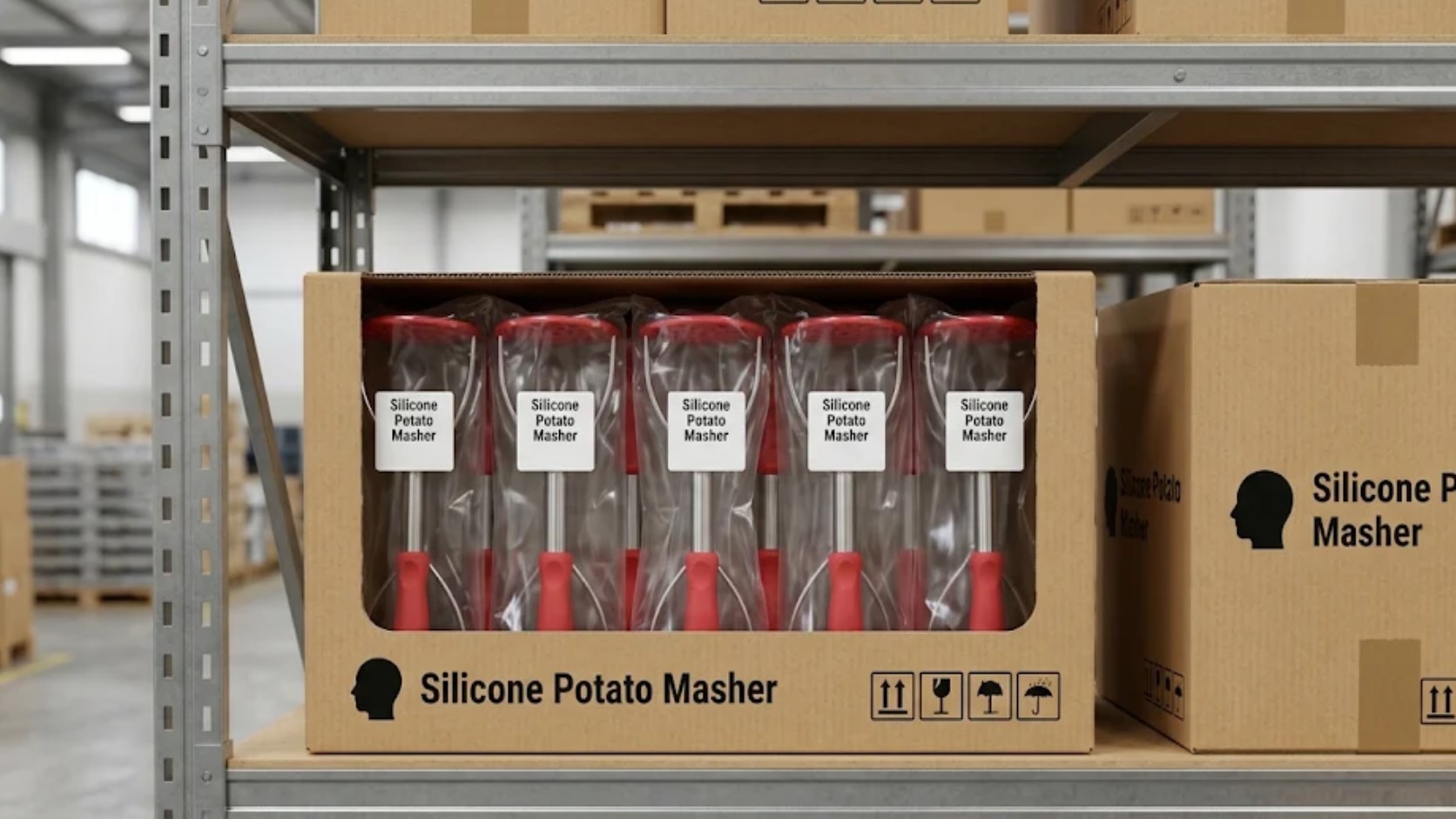
Products are counted and packed to protect the head and handle. Labels, carton marks, and shipment details follow the purchase order and approved artwork.
Silicone Potato Masher Quality Control
The head and joint need as much attention as color or surface finish. Inspection criteria should reflect the chosen construction and intended use.
AQL 2.5 / 4.0 Standard Inspection
We run final random sampling plans to verify batch consistency:
AQL 2.5
Critical / Major Defects
AQL 4.0
Minor Visual Flaws
Another inspection standard can be used when specified in the purchase order.
Approved Sample Control
Record head outline, opening geometry, handle fit, color, surface, and packaging presentation. Resolve any drawing-to-sample difference before production release.
Incoming Material Review
Check the specified silicone, pigment, and separate components against purchase requirements and available supplier documents. Keep material identity tied to the approved assembly.
In-Process Inspection
Watch for incomplete forming, flash in openings, exposed support where coverage is specified, and variation at the neck. Narrow bridges deserve particular attention because trimming can alter their cross-section.
Appearance & Dimensions
Compare head diameter, plate profile, opening size, overall length, and weight with the agreed drawing. Inspect visible contamination, tears, color difference, and edge finish.
Joint & Pressing Behavior
Use an agreed sample method to assess movement at the handle-to-head joint and unwanted head flex. A visual check alone cannot establish repeated-use durability.
Logo and packaging
Match mark position and detail to the artwork. Check unit count, label content, barcode, head protection, and carton marks before shipment.
Silicone Potato Masher Packaging Options
Choose packaging that protects the head and identifies the exact masher construction.

Bulk Packaging
For distributor orders, arrange units to limit pressure on head edges and keep colors or SKUs separated. Confirm carton counts and labels.
Retail Packaging
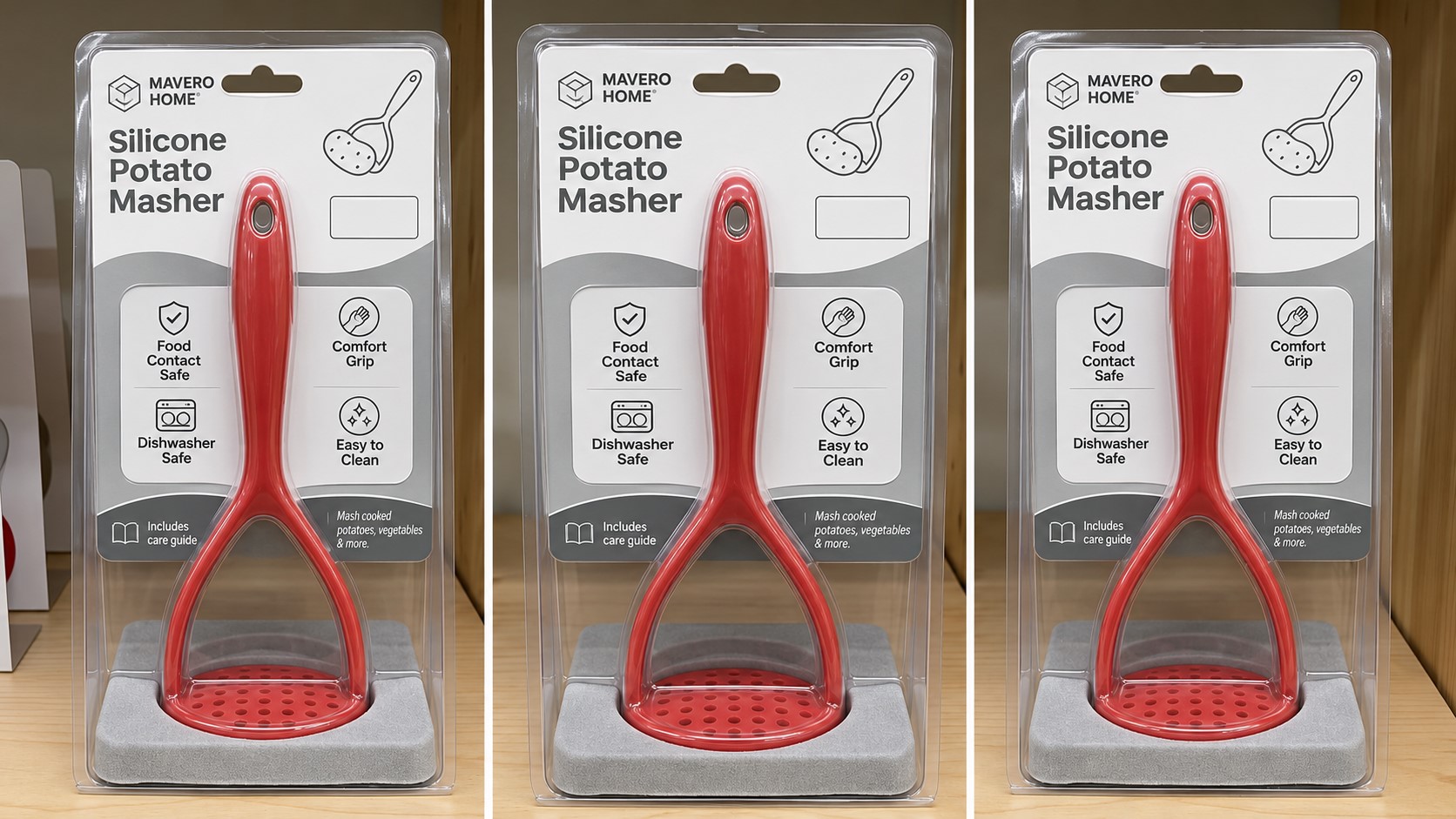
A header card or paper box can display use and care information. Set attachment points and artwork against the approved product dimensions.
Ecommerce Packaging
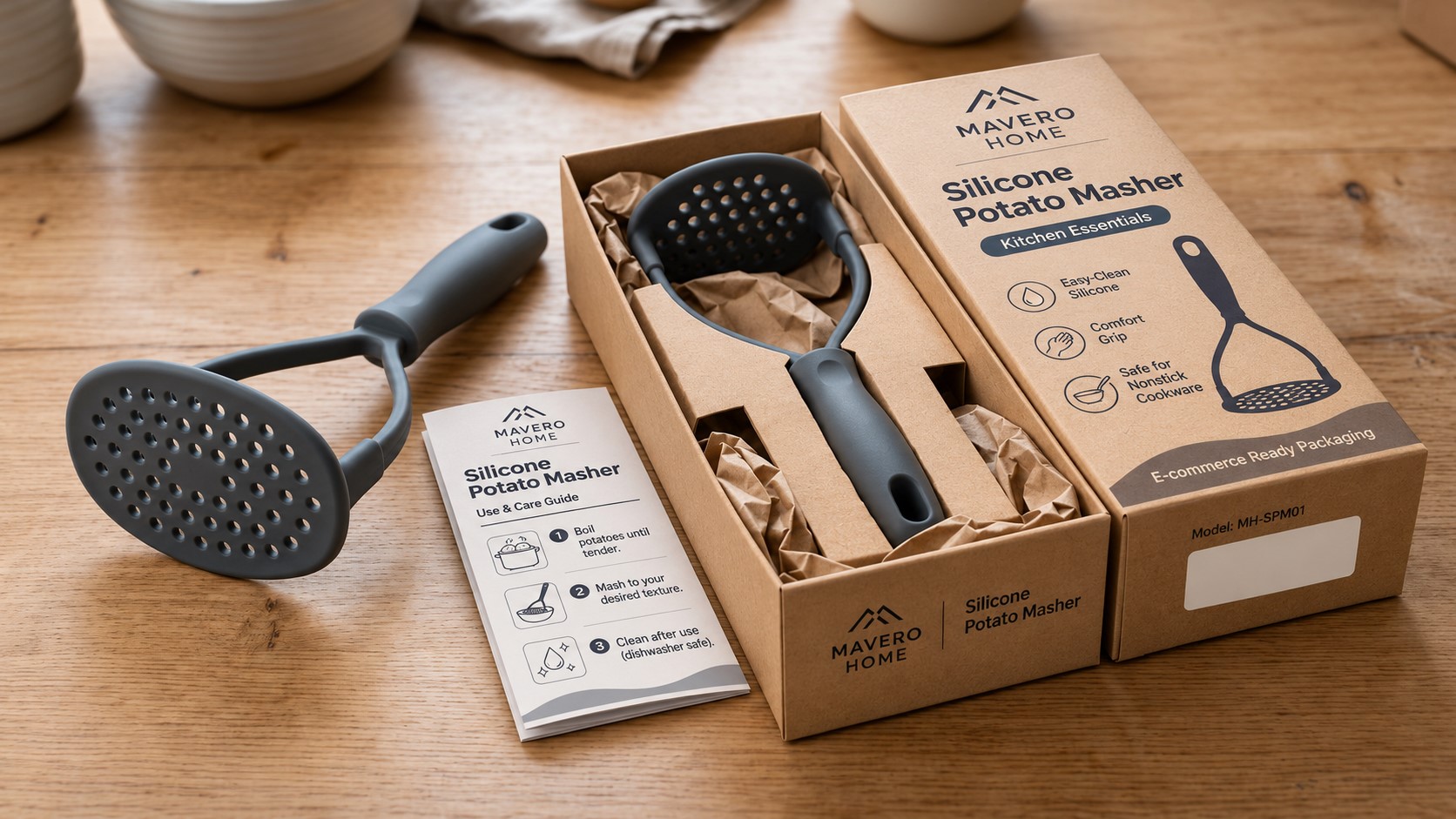
Individual protection and a legible SKU label help identify each variant. Match outer dimensions and barcode placement to your channel requirements.
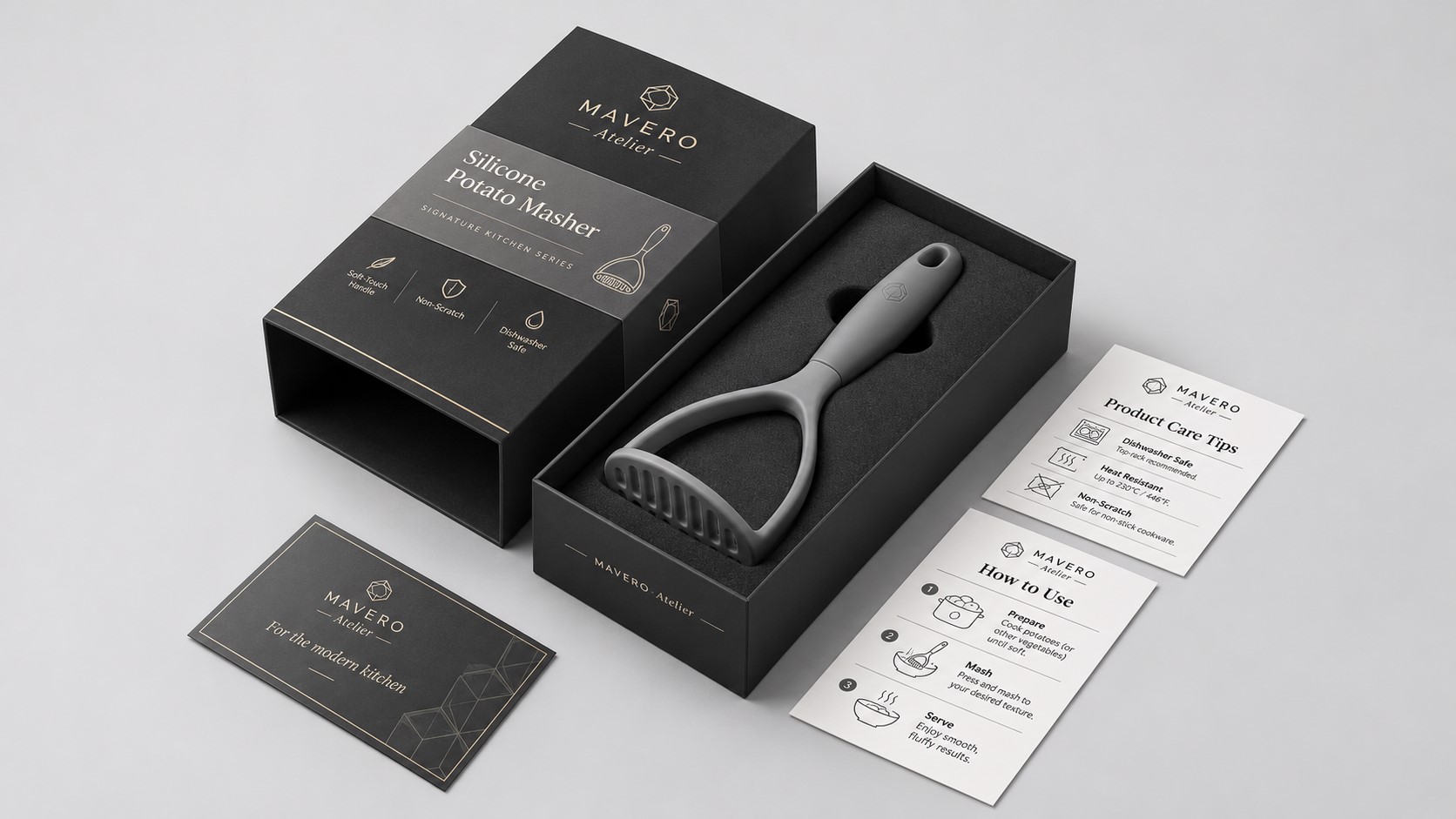
Premium Brand Packaging
A printed sleeve or fitted box supports a coordinated utensil line. Check internal restraint and finished artwork before approving the packing sample.

Typical Silicone Potato Masher Specifications
| Specification | Project Definition |
|---|---|
| Product construction | Solid silicone food-contact head or silicone-covered rigid head; select after feasibility review |
| Intended use | Cooked potatoes or other specified soft foods; state vessel and cookware surface |
| Head pattern | Perforated plate, wave, or approved custom profile |
| Head diameter and profile | Provide target dimensions, drawing, or reference sample |
| Opening geometry | Specify size, spacing, bridge width, and cleaning access |
| Overall length and weight | Set targets from the intended handling and packaging brief |
| Head support | Identify whether a core is permitted and its coverage boundary |
| Silicone hardness and thickness | Select after head stiffness and contact needs are defined |
| Handle and joint | Define grip dimensions, support, attachment, and hanging feature |
| Color and finish | Provide color reference and approved surface sample |
| Branding | Molded mark, suitable handle print, or packaging artwork, as approved |
| Material and food-contact documents | State each component, contact role, destination market, and required evidence |
| Cleaning instructions | Set for the finished assembly after evaluation |
| Packaging | Bulk, carded, boxed, or project-specific pack with approved labels |
| Minimum order quantity | Quoted after design, tooling, color, and packaging scope are set |
| Sampling and production timing | Quoted after construction and approval steps are defined |
| OEM and ODM scope | Engineering feasibility, tooling, branding, and sampling assessed per project |
Final dimensions, material choices, documentation, quantity, and timing follow the approved design and quotation.
Why Work with RY Silicone
Silicone Manufacturing Experience Since 2012
RY Silicone is a China-based custom silicone manufacturer established in 2012. For a potato masher project, we assess the silicone components, support structure, and sample criteria without claiming a product-specific history from that date.
10,000+ m² Production Facility
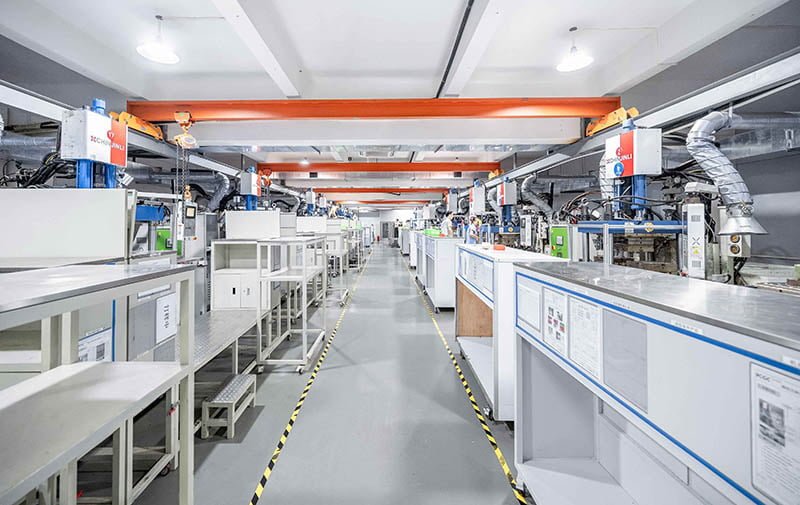
The 10,000+ m² figure describes the overall factory facility across silicone product categories. Space, equipment, and process arrangements for a particular masher construction are established during project evaluation.
30+ Production Machines
The factory operates 30+ production machines across its silicone product activities. This total does not identify dedicated potato masher equipment or establish a particular insert, assembly, or testing capability.
Up to 100,000 Silicone Products per Day
The factory-wide upper figure covers multiple silicone product categories. Potato masher output and delivery timing require a separate assessment of components, molding cycle, assembly, inspection, and packaging.
Engineering Review Before Quotation
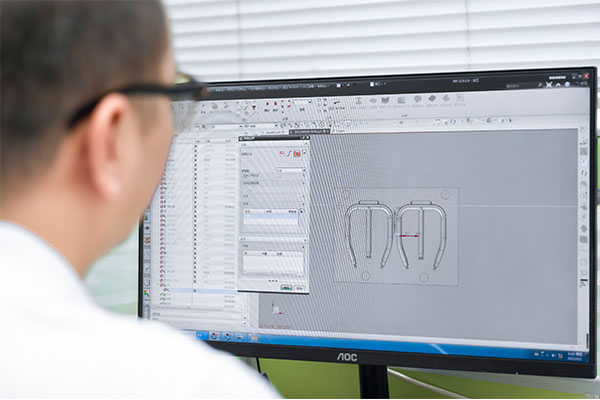
We examine head openings, stiffness, cookware contact, and the handle-to-head load path. These decisions define the material roles and sample work needed to price the proposed construction.
Sample-Based Production
An approved sample sets the reference for head profile, joint fit, grip feel, color, and branding. Any difference from the drawing or purchase specification is resolved before release.
Export Project Support
RY Silicone coordinates specifications, packaging, and shipment preparation for overseas projects. State the destination market and requested food-contact documents early so their scope can be assessed for the finished configuration.
Silicone Potato Masher FAQ and Final RFQ
What is the MOQ for a custom silicone potato masher?
The minimum order depends on whether the design uses existing tooling, new tooling, separate components, a custom color, and retail packaging. Send the proposed construction and target quantity for a project quotation.
Is an all-silicone head suitable for potato mashing?
Suitability depends on head thickness, opening pattern, diameter, and the force needed for your intended food. A supported construction may be preferable if the sample flexes excessively; the choice should follow a pressing trial.
Which head pattern gives a smoother mash?
Opening size and pattern affect how food passes through the head, but the cooked food and technique also change the result. Compare physical samples using your target preparation instead of promising one texture from a drawing.
Can the masher be used with nonstick cookware?
Specify the cookware finish and every head surface that may touch it. A silicone food-contact head and covered perimeter can be assessed against that brief; compatibility claims require evaluation of the complete sample under the intended use.
What dimensions should we provide for a new design?
Send head diameter, opening size and spacing, overall length, handle cross-section, and joint detail. A pot or pan reference helps set the edge profile and working clearance.
Can the masher include a metal core or insert?
A core or insert is a design option when more head stiffness is needed. Specify its material and retention, then assess whether silicone fully covers the food-contact head and edges before making product claims.
Can you add a logo to the grip or packaging?
Provide vector artwork and the preferred location. A molded grip mark, suitable handle print, or printed pack can be assessed against detail size, contact position, cleaning, and the selected construction.
Is the finished masher dishwasher safe?
That claim depends on every component, joint, decoration, and the intended washing conditions. Include dishwasher use in the brief so the finished configuration and any required test method can be assessed.
What food-contact documentation can you provide?
State the destination market, required standard, and actual food-contact surfaces. Available material records and any finished-product testing must be checked for the selected silicone, pigments, other components, and decoration.
How does a new masher design move from drawing to production?
Start with drawings and a brief use. Engineering evaluates the head, support, joint, and tooling; an agreed sample establishes geometry and appearance. Production terms follow approval of the design, documentation scope, and quotation.
What information do you need for a quotation?
Please provide:
- Design files, drawing, reference sample, or product concept.
- Target head pattern, dimensions, and intended food texture.
- Cookware surface and any contact restrictions.
- Handle, core, and joint construction preferences.
- Target quantity, colors, branding artwork, and packaging format.
- Destination market and required documents or tests.
- Target schedule and any sample acceptance method.