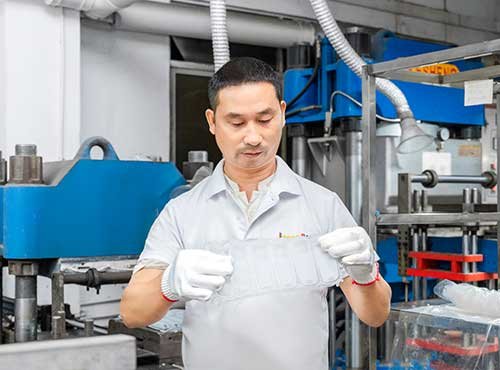
Manufacturing custom silicone products since 2012

Silicone Baby Spoon Manufacturer

Soft, food-contact silicone baby spoons for first feeding, self-feeding, and toddler meals. Custom shapes, handle designs, colors, branding, and retail packaging for OEM/ODM programs.

Home » Silicone Baby Spoon Manufacturer

What Is a Silicone Baby Spoon?

A custom silicone baby spoon is a flexible feeding utensil that is tailored in shape, size, color, and branding for infants. This silicone infant spoon features a soft tip for sensitive gums, and its material, dimensions, and compliance are chosen based on the target age group, intended use, and market to ensure safe and comfortable early eating.

RY Silicone is a China-based custom silicone manufacturer established in 2012. Our factory covers 10,000+, operates 30+ machines, and can produce up to 100,000 silicone products per day. We support OEM/ODM silicone feeding products for brands, distributors, and wholesalers serving international markets.

Silicone Baby Spoon Manufacturer

MOQ

From 500 pieces for suitable existing designs with custom branding, or from 3,000 pieces for new custom-molded spoon designs.

Lead Times

Samples can be developed in 5–10 working days, custom tooling in 10–20, and mass production in 15–25 after approval.

Material & Performance

Food-contact silicone options with selected hardness, soft spoon tips, stable handles, and temperature performance matched to the intended feeding application.

Branding & Packaging

Custom colors, molded logos, and suitable printing options combine with individual bags, header cards, paper boxes, and retail-ready packaging.

Who We Manufacture Silicone Baby Spoons For

Build the spoon around your feeding concept, sales channel, and target age stage.

Food-grade silicone baby spoons for baby feeding brands

Baby Feeding Brands

Develop coordinated feeding collections based on your brand colors, spoon shapes, and packaging system.Custom spoon geometry can support different feeding stages, from early assisted feeding to independent toddler use.
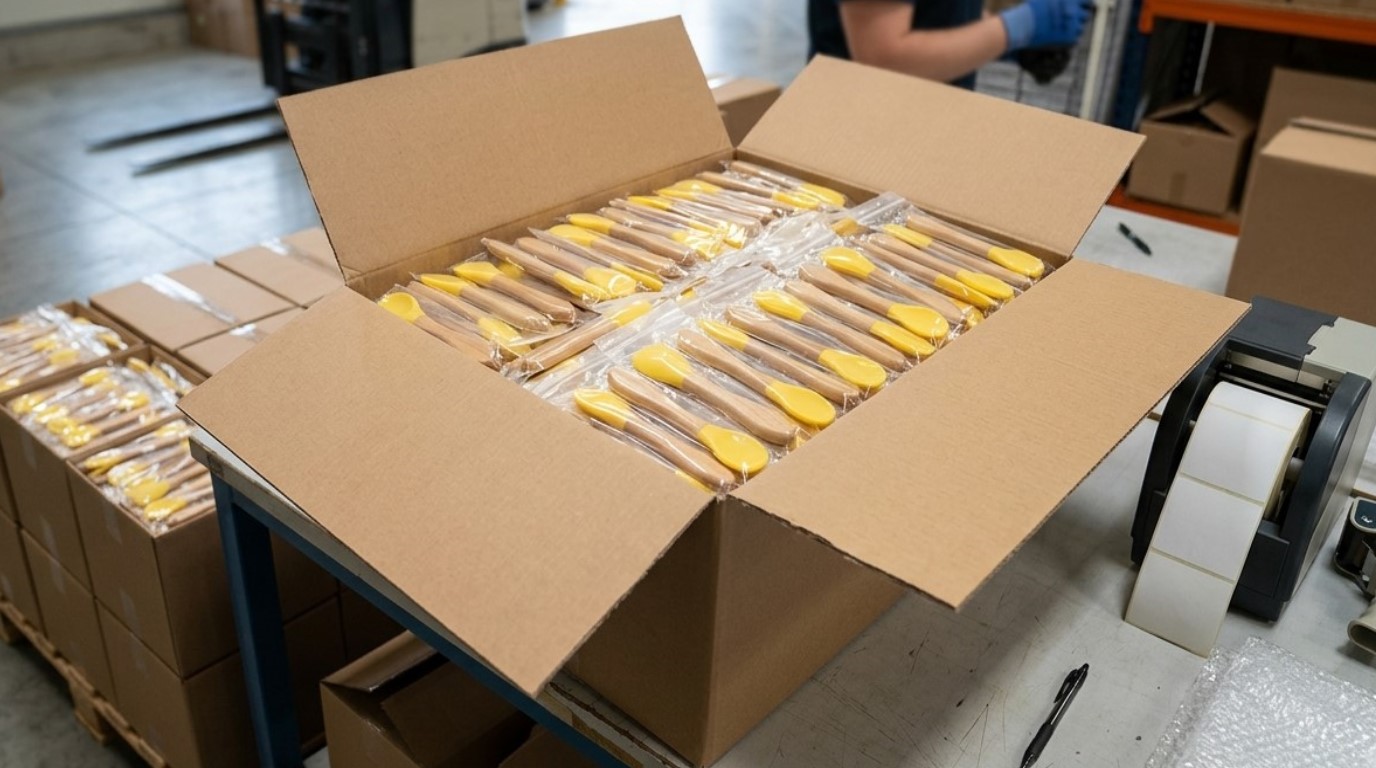
Custom silicone baby spoons with desired handles for distributors and wholesalers

Distributors & Wholesalers

Source silicone baby spoons in bulk for baby care, feeding, and nursery products.We offer support for existing designs to facilitate faster sourcing, as well as custom shapes, colors, and packaging for private-label programs.
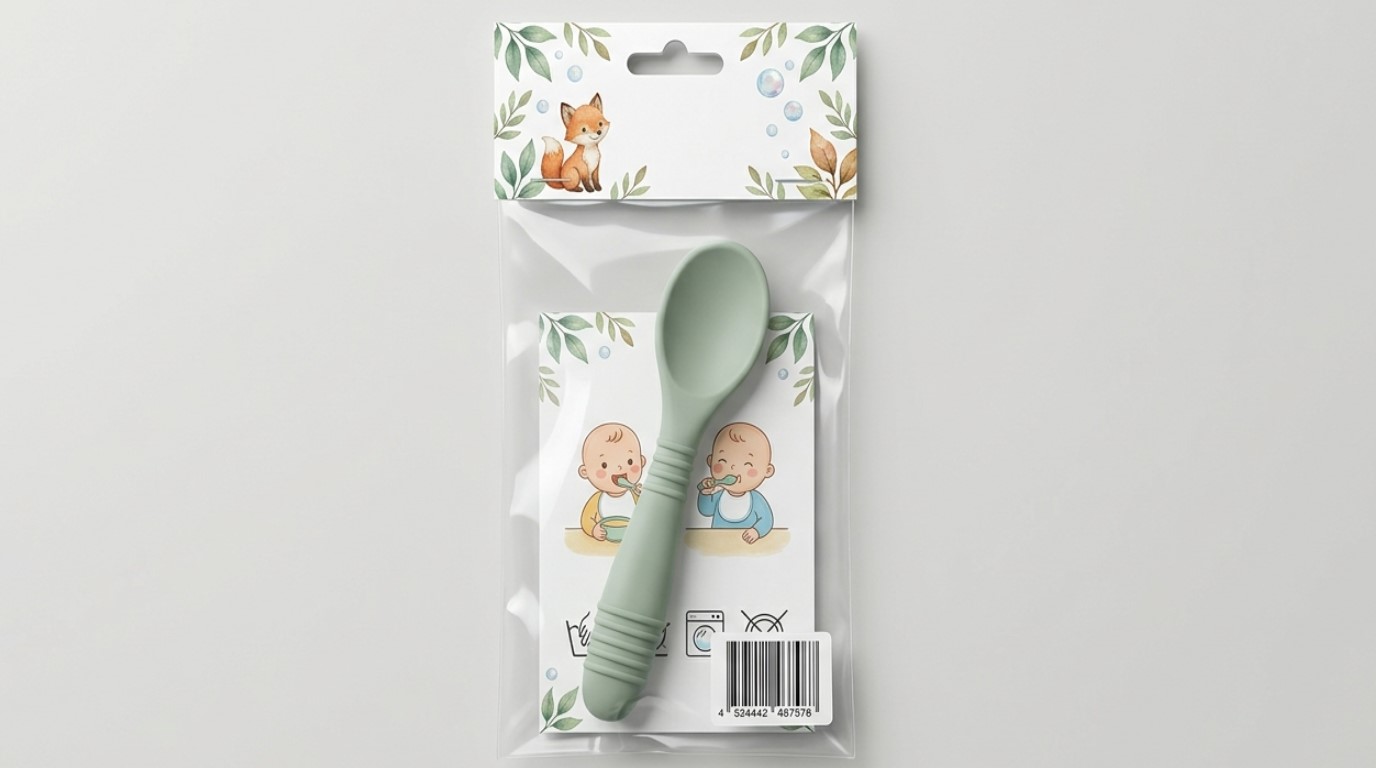
Custom silicone self-feeding spoon for baby products retailers with custom packaging

Baby Product Retailers

Create shelf-ready silicone baby spoons with coordinated colors, packaging, and SKU identification.Individual packaging and clear product specifications help organize different age stages, colors, and spoon designs across retail ranges.
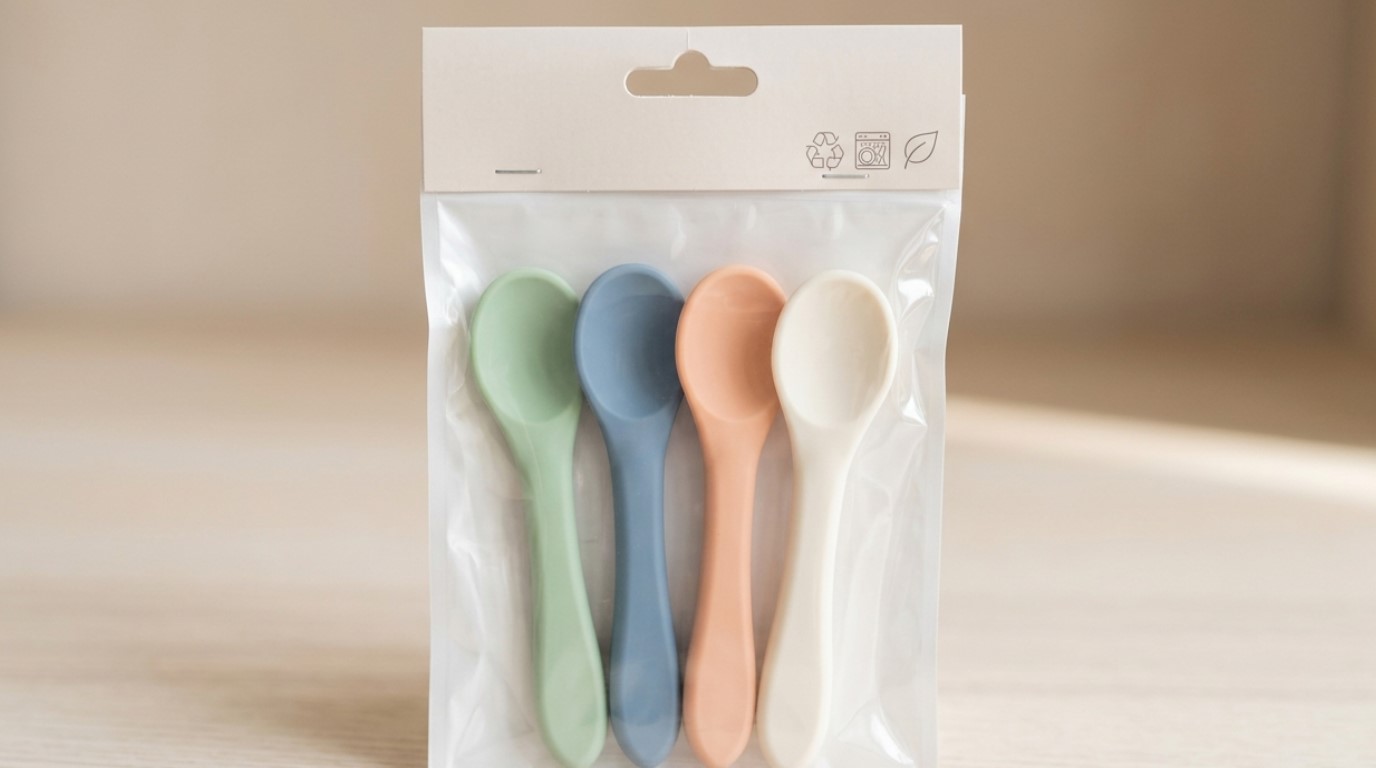
Silicone solid baby spoons in ecommerce and private-label sellers

Ecommerce & Private-Label Sellers

Build a differentiated feeding product with custom colors, molded branding, and e-commerce-ready packaging.Plan SKU labels, barcode requirements, inserts, and product presentation together before mass production.
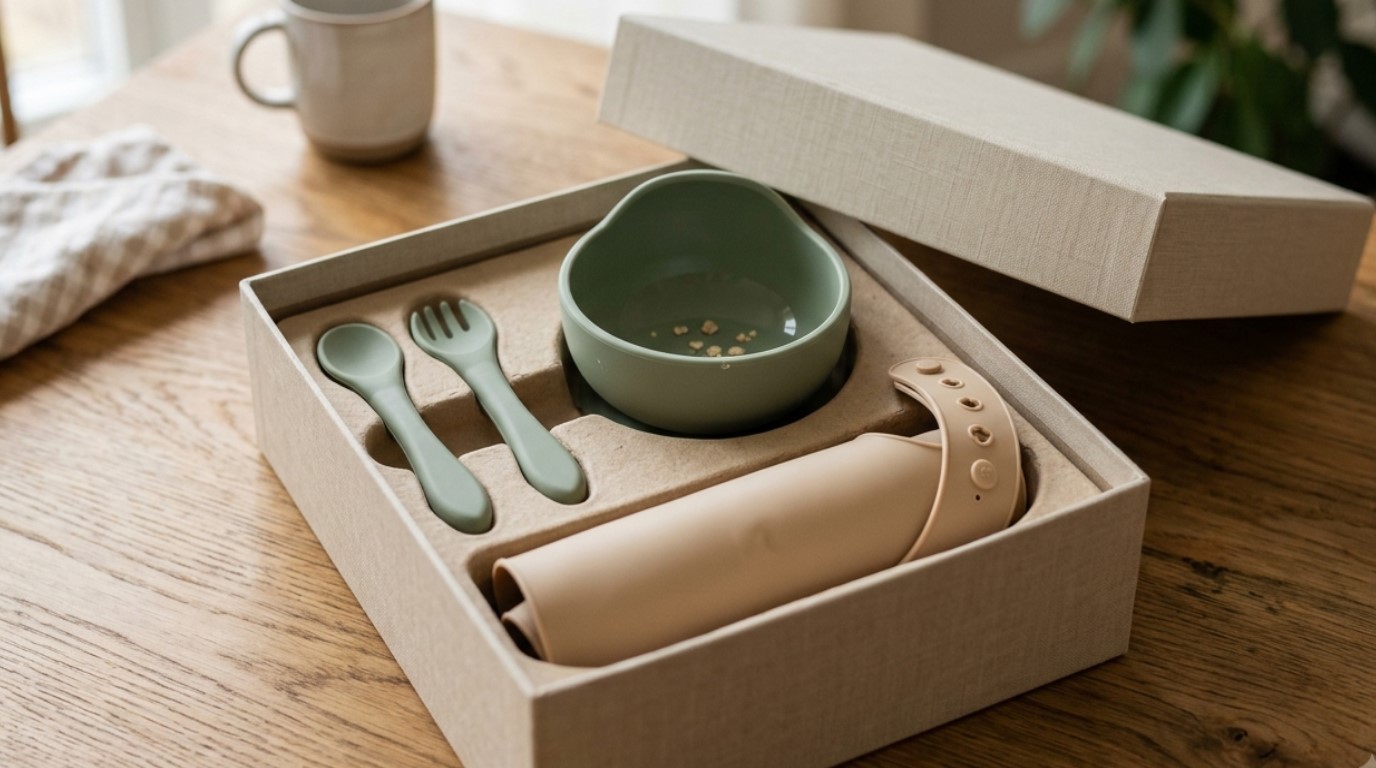
Silicone baby spoons and silicone baby products with gift packaging and desired requirements for baby feeding set brands

Baby Gift & Feeding Set Brands

Coordinate the spoon with bowls, cups, bibs, and other silicone feeding products to create a complete collection.Matching colors and branding create a consistent product system for baby shower gifts, newborn collections, and feeding kits.
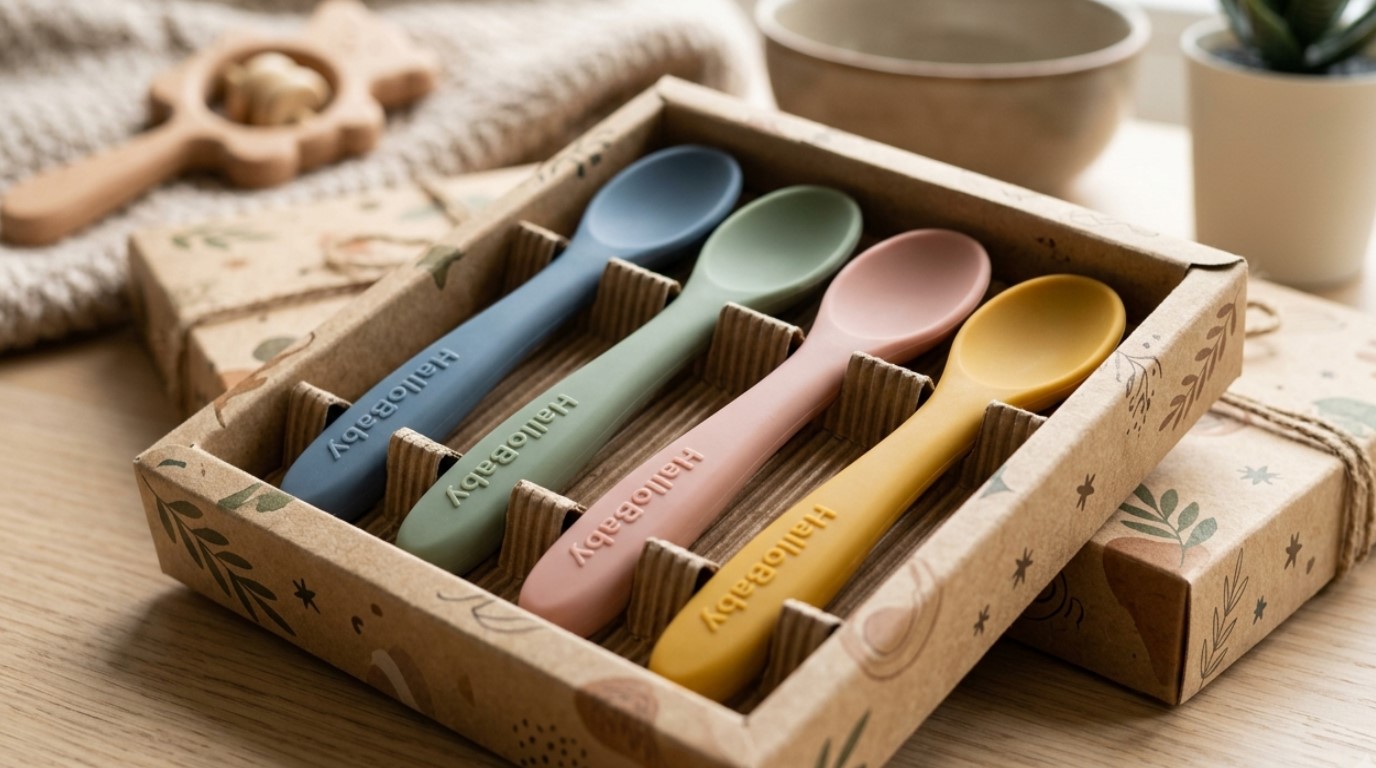
Silicone baby spoon set in promotional packaging for distribution programs

Promotional & Distribution Programs

Engineer for branded silicone spoons for campaigns, baby-care programs, and selected promotional applications.Existing spoon designs can provide a faster route when the priority is controlled cost, simple branding, and efficient delivery.
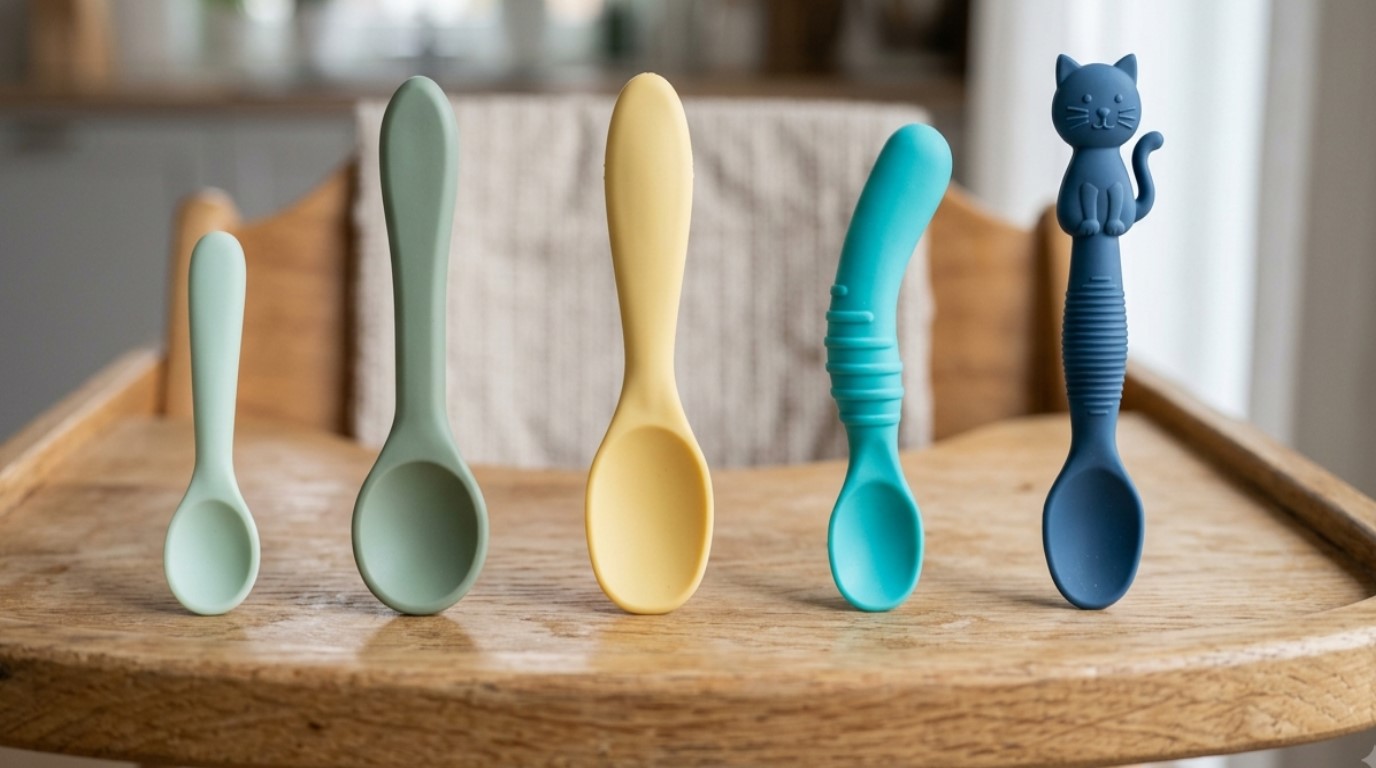
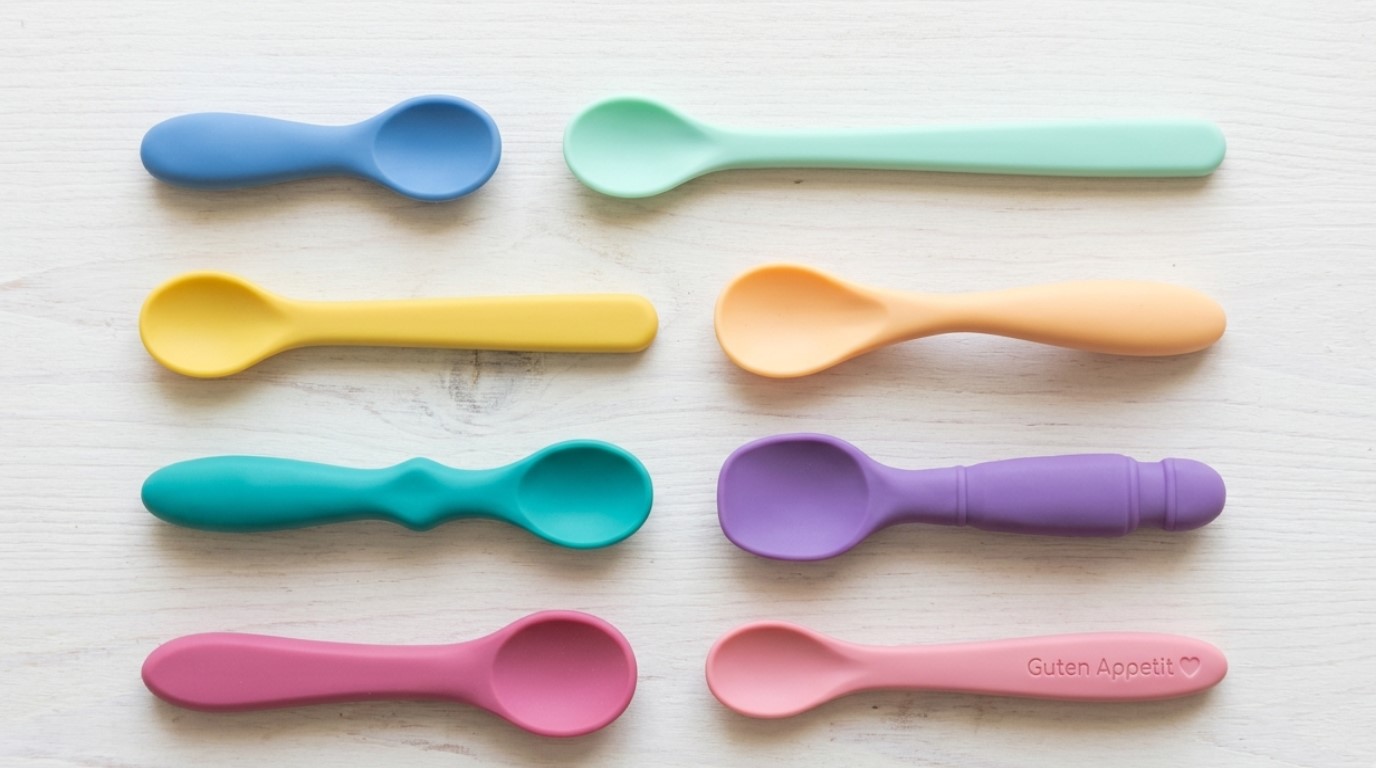
Silicone Baby Spoon Types We Can Develop

Silicone Baby Spoon Customization

Custom spoon projects start with shape, size, material, and branding.

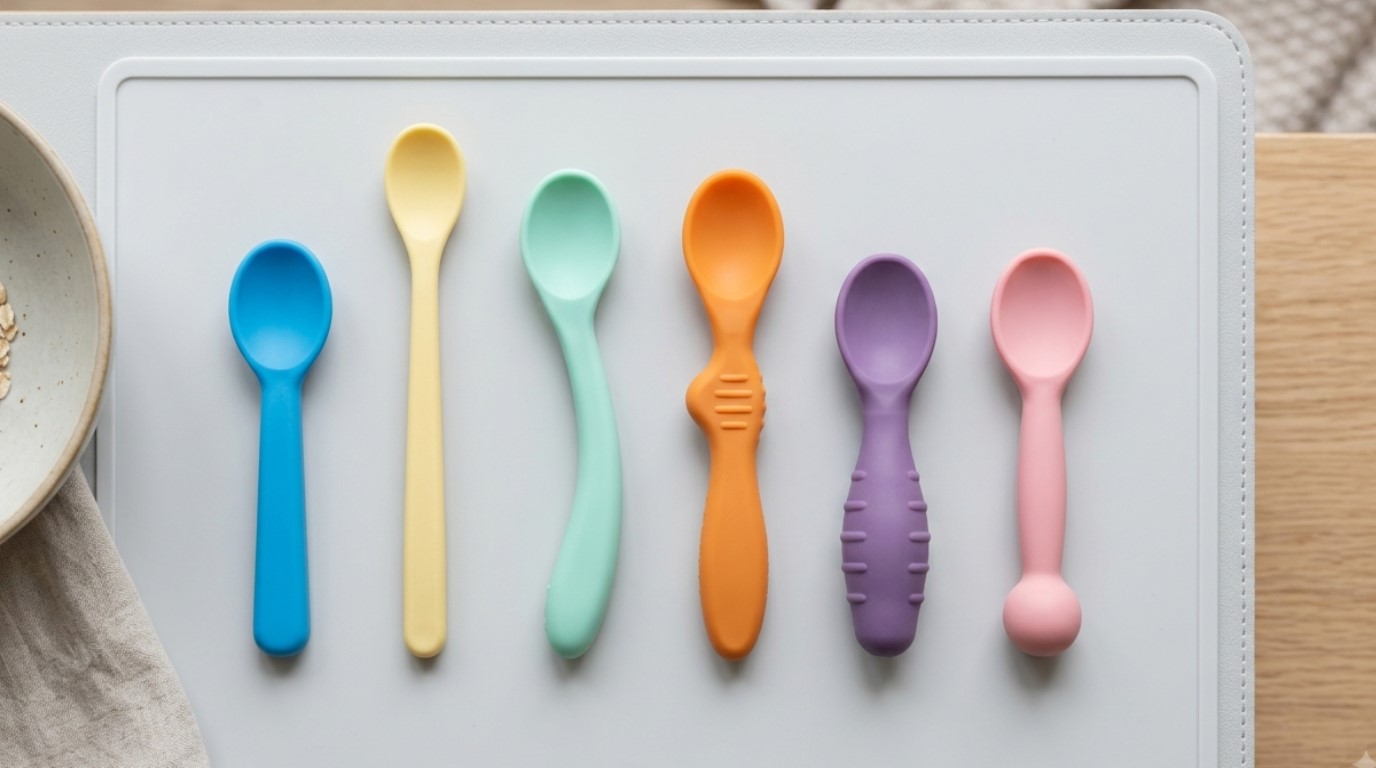
Different shapes of custom silicone baby spoons

Choose the spoon geometry according to the feeding stage and intended handling experience.

Available options include:

  • Shallow or deeper spoon bowls
  • Rounded spoon tips
  • Narrow or wide bowl profiles
  • Straight or curved handles
  • Ergonomic grip structures
  • Left- or right-hand-oriented designs
  • Custom molded shapes
  • Single-piece silicone construction

Distinct sizes of custom silicone baby spoons with different length, depth, and width of spoon bowl

Set the spoon dimensions around portion control, feeding stage, and storage requirements.

Available options include:

  • Spoon bowl length
  • Bowl depth & width
  • Overall spoon length
  • Handle thickness
  • Handle width & length
  • Tip thickness
  • Grip contour
  • Target spoon weight
  • Compact travel dimensions
  • Dimensional tolerance

Diverse handle designs in custom silicone baby spoons

Design the handle around feeding stage, grip comfort, spoon balance and intended user.

Available options include:

  • Short or long handles
  • Straight or curved handles
  • Ergonomic grip contours
  • Wider toddler-friendly grips
  • Slim caregiver-oriented handles
  • Rounded handle ends
  • Increased handle thickness
  • Custom handle length
  • Custom handle width
  • Textured grip areas
  • Molded brand marks
  • Color-matched handles

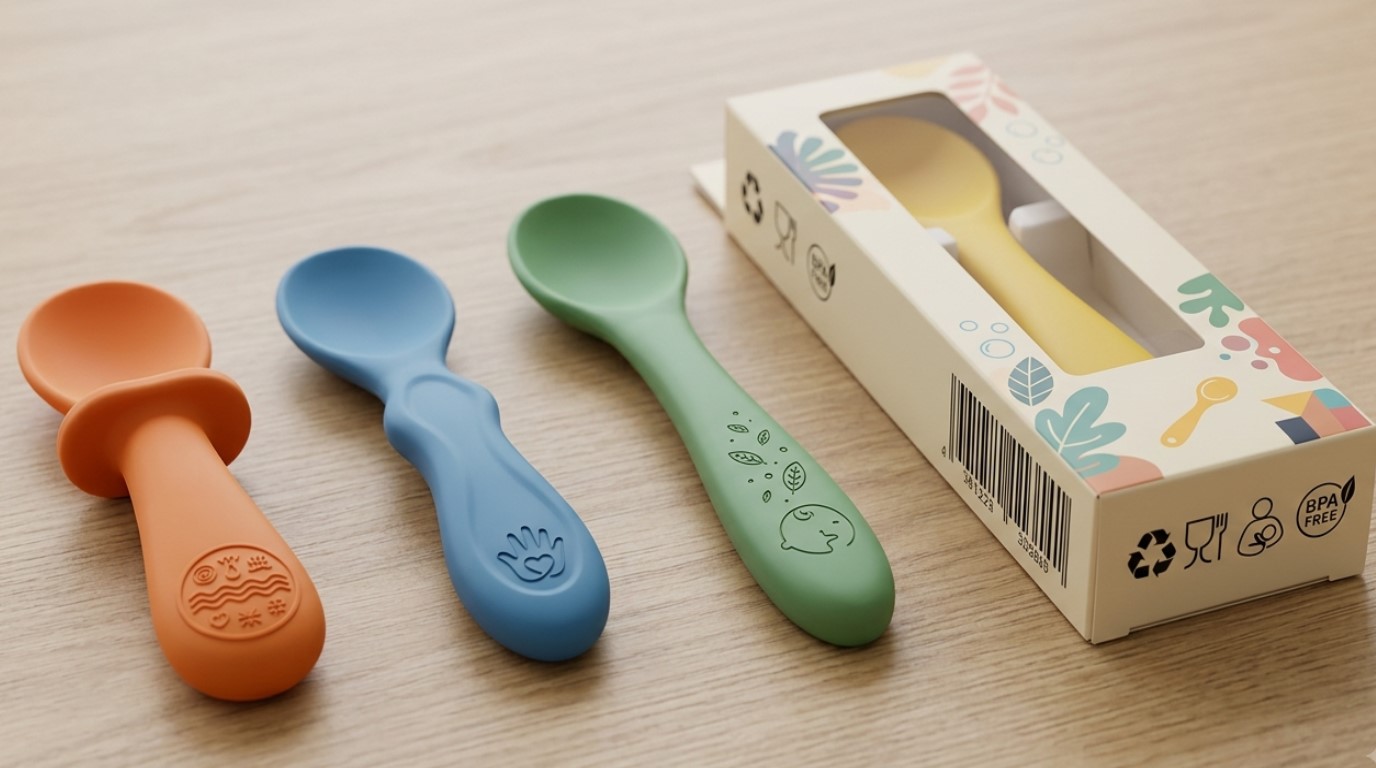
Flexible branding methods for custom silicone baby spoons with custom logo, colors, and specific needs

Build your visual identity directly into the spoon or its packaging.

Available options include:

  • Embossed logos
  • Debossed logos
  • Molded brand marks
  • Custom Pantone colors
  • Suitable surface printing
  • Branded packaging
  • Barcode and SKU labels
  • Instruction or product inserts

Start Your Silicone Baby Spoon Project

Send your spoon design, quantity, feeding application, branding and packaging requirements. We will review the structure and recommend a practical production plan.

How to Specify a Better Silicone Baby Spoon

The best spoon balances feeding comfort, grip control, cleanability, and manufacturing consistency.

  • Spoon tip — Keep the feeding edge appropriately soft and rounded for the intended feeding stage.
  • Bowl depth — Match the depth to the food texture and portion size rather than making the bowl deeper by default.
  • Handle geometry — Define the grip around whether the spoon is primarily caregiver-operated or intended for self-feeding.
  • Silicone hardness — Select hardness together with spoon-tip thickness and handle structure; hardness alone does not determine softness at the tip.
  • Wall thickness — Avoid excessive thickness that can make the spoon unnecessarily rigid or heavy.
  • Transition area — Review the bowl-to-handle junction carefully because abrupt geometry can affect flexibility and cleaning.
  • Surface finish — Keep food-contact surfaces smooth and easy to wash.
  • Mold draft — Adequate draft helps release the spoon cleanly without damaging thin edges during demolding.

Full Specification Guide

How to Specify a Better Silicone Baby Spoon — spoon dimensions, bowl geometry, handle design, silicone hardness, wall thickness, and production considerations.

A tester is measuring the hardness of a silicone baby spoon with a hardness tester

Silicone Baby Spoon Logo & Branding Methods

Select the branding method according to the logo geometry, surface location, and required durability.

Screen Printing

Screen printing adds colored logos or graphics to smooth, non-contact surfaces.

Custom Color Branding

Pantone-matched silicone colors reinforce your brand across spoons and feeding products.

Molded-In Logo

A raised or recessed logo creates an ink-free brand mark on spoons.

Embosse & Debossed

Raised or recessed artwork offers durable, ink-free branding on silicone surfaces.

Silicone Baby Spoon Material & Performance Options

Material selection should match the spoon tip, handle structure, feeding stage, and target-market documentation requirements.

Use food-grade silicone when the spoon is intended for infant or toddler feeding.

The selected silicone compound should be suitable for the intended food-contact application. Documentation depends on the specific silicone, pigment, production controls, and destination market.

Material Comparison

Silicone Spoon vs. Plastic Spoon: Which Option Is Best for a Baby? — hardness, flexibility, food-contact considerations, FDA appliance, durability, and documentation requirements.

Spoon flexibility comes from both silicone hardness and molded geometry.

A softer compound can create a gentler feeding feel, but bowl thickness, tip geometry, and handle structure also affect how the finished spoon bends during use.

Thin spoon edges and handle transitions need enough tear resistance for repeated flexing.

The material and wall structure should be reviewed together, especially around the spoon tip, handle junction, and other thin sections that experience repeated bending.

Temperature requirements should follow the actual feeding, chewing, bending, boiling & sterilizing.

The selected silicone should maintain its intended properties across the expected range of hot food, room-temperature use, refrigeration, and cleaning. The final temperature range depends on the selected compound.

Consistent silicone pigmentation keeps a product family visually uniform across production batches.

Pantone references can be used during color development, with an approved physical sample serving as the production reference because silicone thickness and surface geometry can influence visual color.

Available project documentation may include:

  • Material data sheets
  • Material declarations
  • Food-contact documentation
  • FDA-related documentation
  • LFGB-related documentation
  • REACH-related reports
  • Project-specific test reports

The applicable documentation depends on the selected silicone, pigment, printing method, and destination market. A raw-material report should not automatically be presented as proof for every finished spoon configuration.

A smooth one-piece silicone structure simplifies routine cleaning.

Wash the spoon after each use, remove food residue from the bowl and handle junction, dry it thoroughly, and follow the care instructions established for the selected material.

Maintenance Guide

How to maintain silicone baby spoons—cleaning, drying, odor prevention, storage, daily maintenance, inspection of cracks, damages, loss of elasticity, and discoloration conditions.

How Silicone Baby Spoons Are Manufactured

1. Requirement Review

STEP 1: Requirement Review

Every project begins by confirming the feeding application, target age stage, spoon dimensions, bowl geometry, handle design, hardness, color, branding, packaging, and documentation requirements.
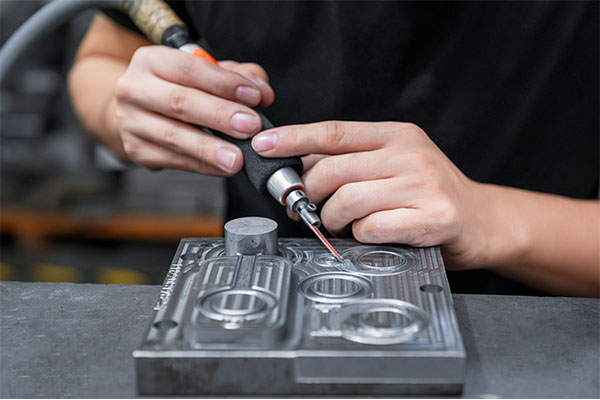
2. Mold Evaluation

STEP 2: Mold Evaluation

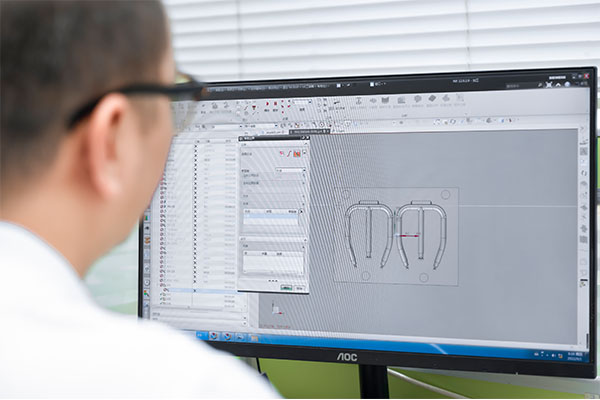
The engineering team reviews the spoon geometry, wall thickness, draft, parting line, and demolding direction before confirming whether existing tooling can be adapted or new tooling is required.
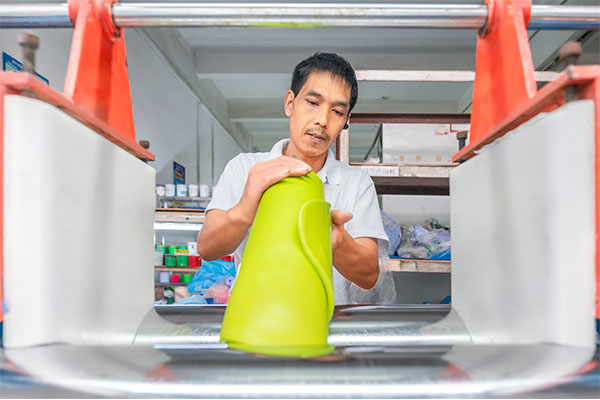
3. Material and Color Preparation

STEP 3: Silicone Material & Color Preparation

The approved silicone compound is prepared with the confirmed pigment and material specification, while hardness and color references are controlled against the approved project requirements.
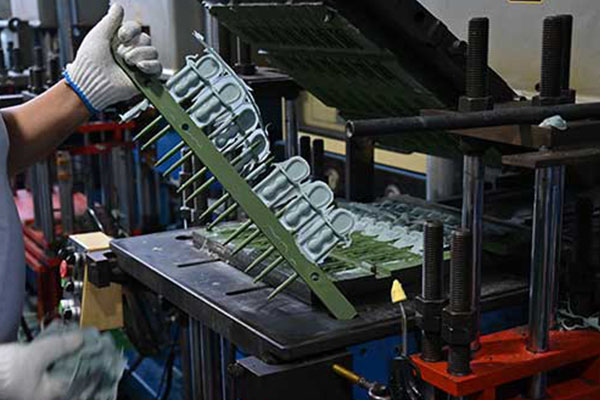
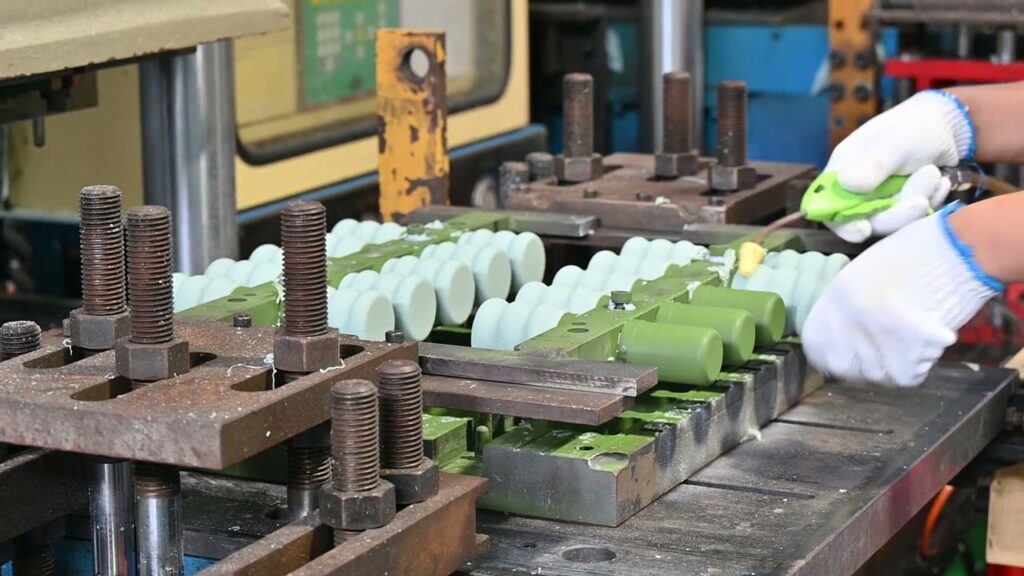
4. Silicone Molding

STEP 4: Silicone Molding

The silicone compound is molded using the approved production process selected for the spoon structure, tooling design, material, and required production volume.
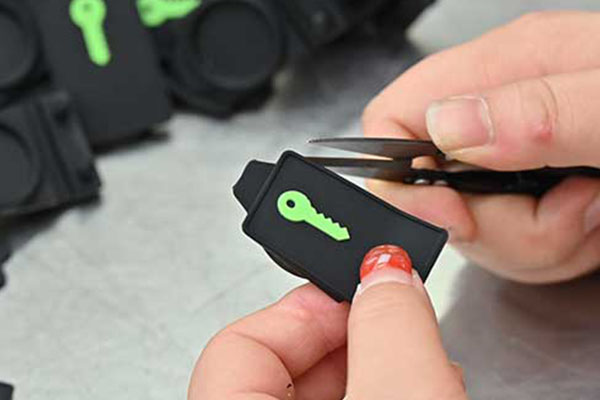
5. Demolding and Trimming

STEP 5: Demolding and Trimming

Once cured, each spoon is removed from the mold and trimmed carefully, with particular attention to the spoon edge, handle transition, and visible flash.
6. Logo and Surface Processing

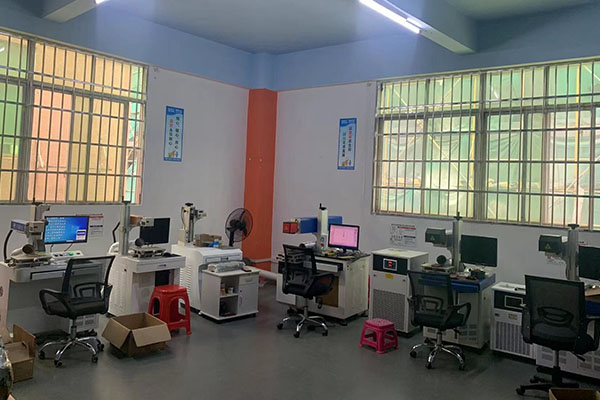
STEP 6: Logo and Surface Processing

Molded branding, printing, or other approved surface treatments are completed according to the artwork, position, and production reference confirmed during sampling.
7. Quality Inspection

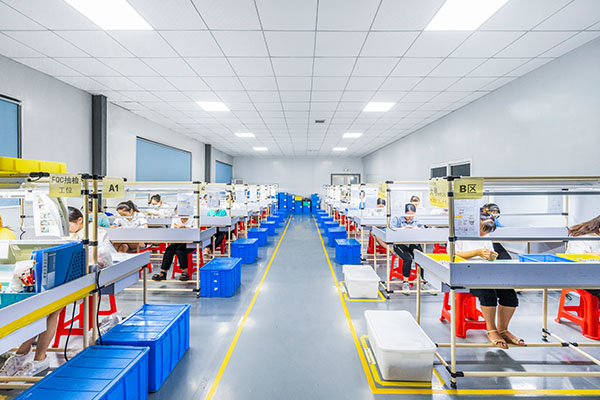
STEP 7: Quality Control

QC checks the finished spoons against the approved sample and specification, including dimensions, weight, color, surface condition, logo quality, flexibility, and visible molding defects.

8. Packaging and Shipment

STEP 8: Packaging and Shipment

Finally, spoons are counted, individually or in bulk, labeled, and carton-marked before shipment according to the agreed packaging specification and delivery method.
Silicone Baby Spoon Quality Control

Quality control covers more than the silicone itself. Spoon geometry, tip condition, color, branding, packaging, and batch consistency all need to remain aligned with the approved sample.

AQL 2.5 / 4.0 Standard Inspection

We conduct final random sampling plans to verify batch consistency:

AQL 2.5

Critical / Major Defects

AQL 4.0

Minor Visual Flaws

If specified in the purchase order, another inspection standard can be used.

The approved sample becomes the production reference for:

  • Spoon shape
  • Bowl dimensions
  • Handle geometry
  • Weight
  • Silicone color
  • Surface finish
  • Logo position
  • Packaging presentation

Incoming silicone compounds, pigments, and supplier documentation are checked against the confirmed project requirements before production begins.

Operators monitor molding completeness, flash, visible contamination, surface defects, color variation, and spoon geometry during production.

Finished spoons are checked for:

  • Tears
  • Severe bubbles
  • Contamination
  • Incomplete molding
  • Excessive flash
  • Surface damage
  • Irregular spoon edges

Critical dimensions such as bowl length, bowl width, handle dimensions, and overall spoon length are compared with the approved specification.

Production color is compared against the approved physical sample under controlled viewing conditions. Pantone matching alone is not treated as the final visual reference.

Inspection covers:

  • Position
  • Size
  • Edge definition
  • Molded depth
  • Ink coverage where applicable
  • Missing detail
  • Blurred printing
  • Visible adhesion problems

The spoon tip, bowl, and handle are reviewed for consistent flexibility using an agreed internal method or customer test protocol.

Product quantity, individual bags, labels, barcodes, inserts, boxes, and carton marks are verified before shipment.

Silicone Baby Spoon Packaging Options

Packaging should match your sales channel, SKU structure, and target retail position.

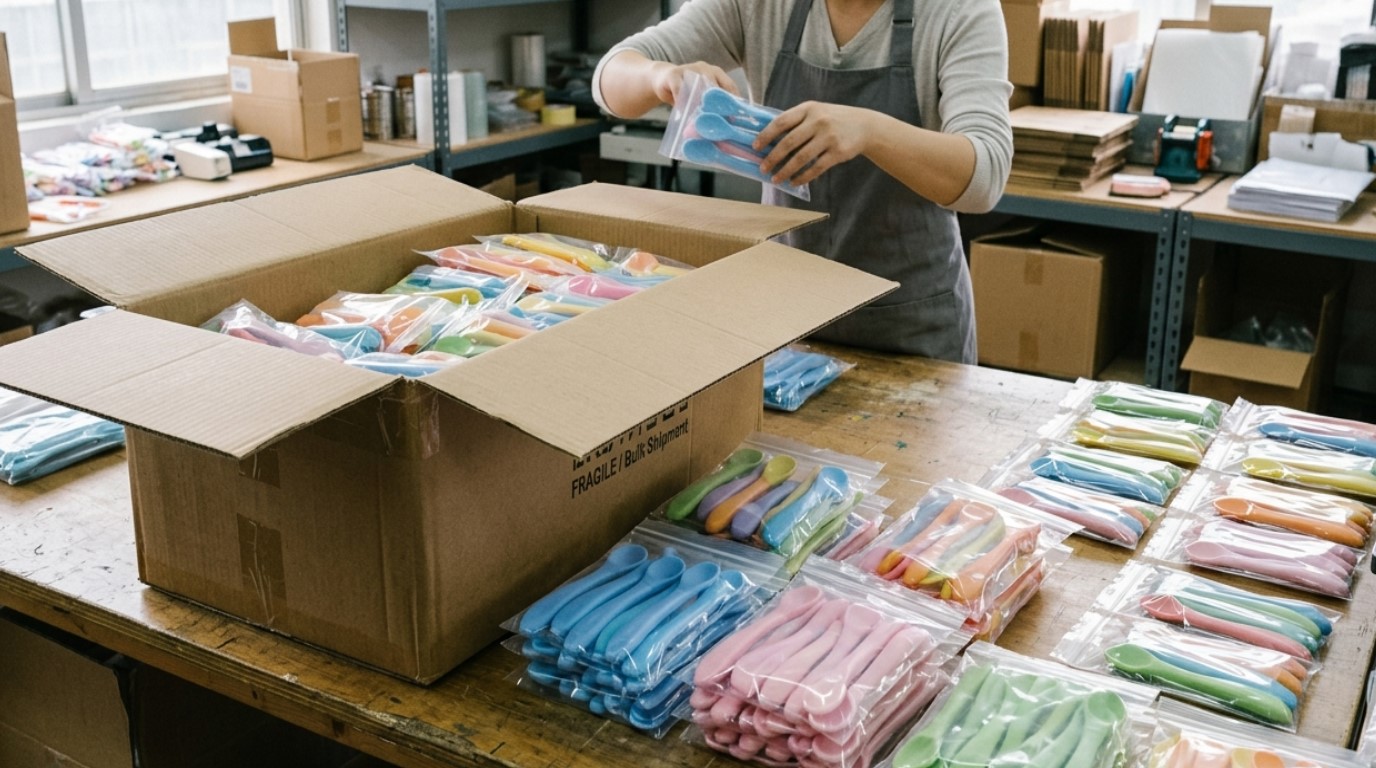
Custom silicone baby spoon in bulk packaging

Bulk Packaging

Individual bags or multi-piece cartons provide a cost-efficient option for distributors, wholesalers, and large-volume feeding programs with established downstream packaging.
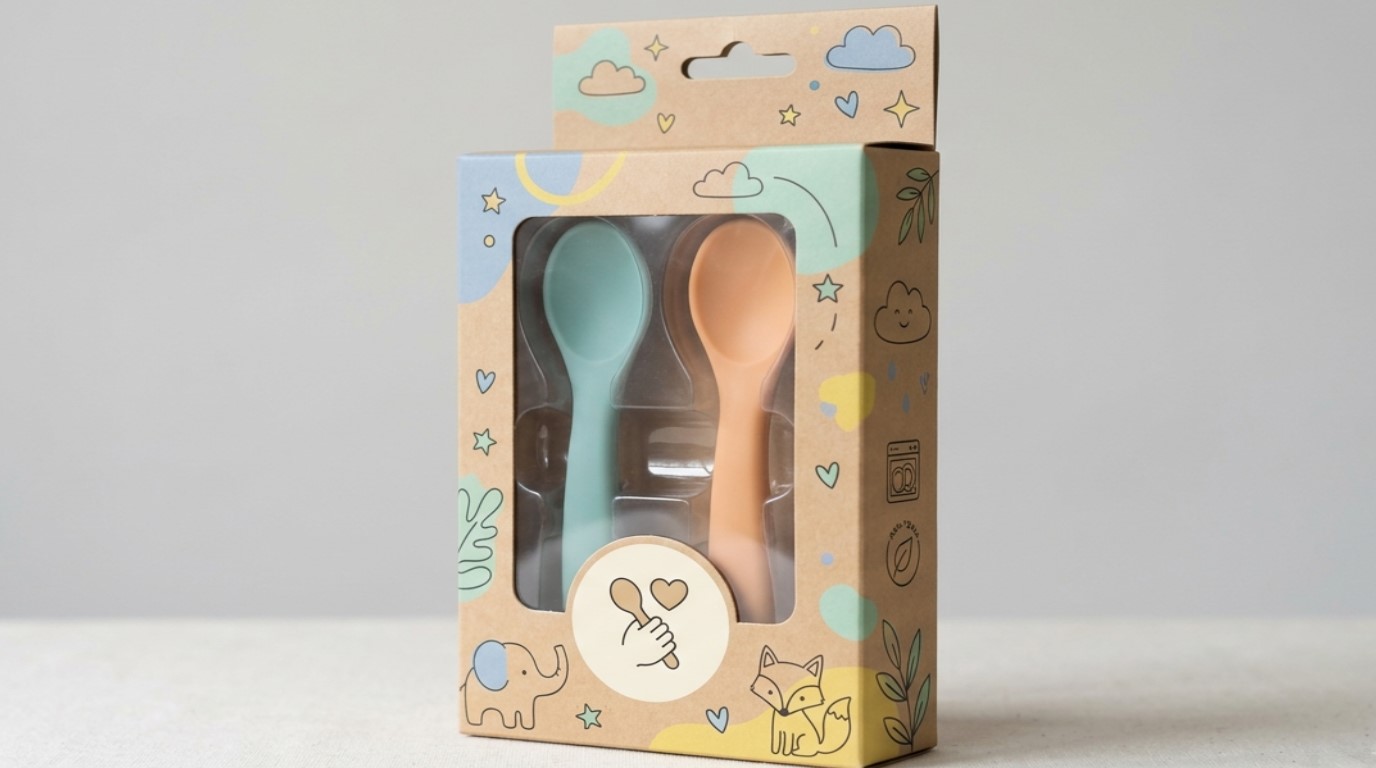
Custom silicone baby spoons in retail packaging

Retail Packaging

Header cards, individual bags, and printed paper boxes create a branded presentation, product information, barcode labels, and care instructions for physical retail.
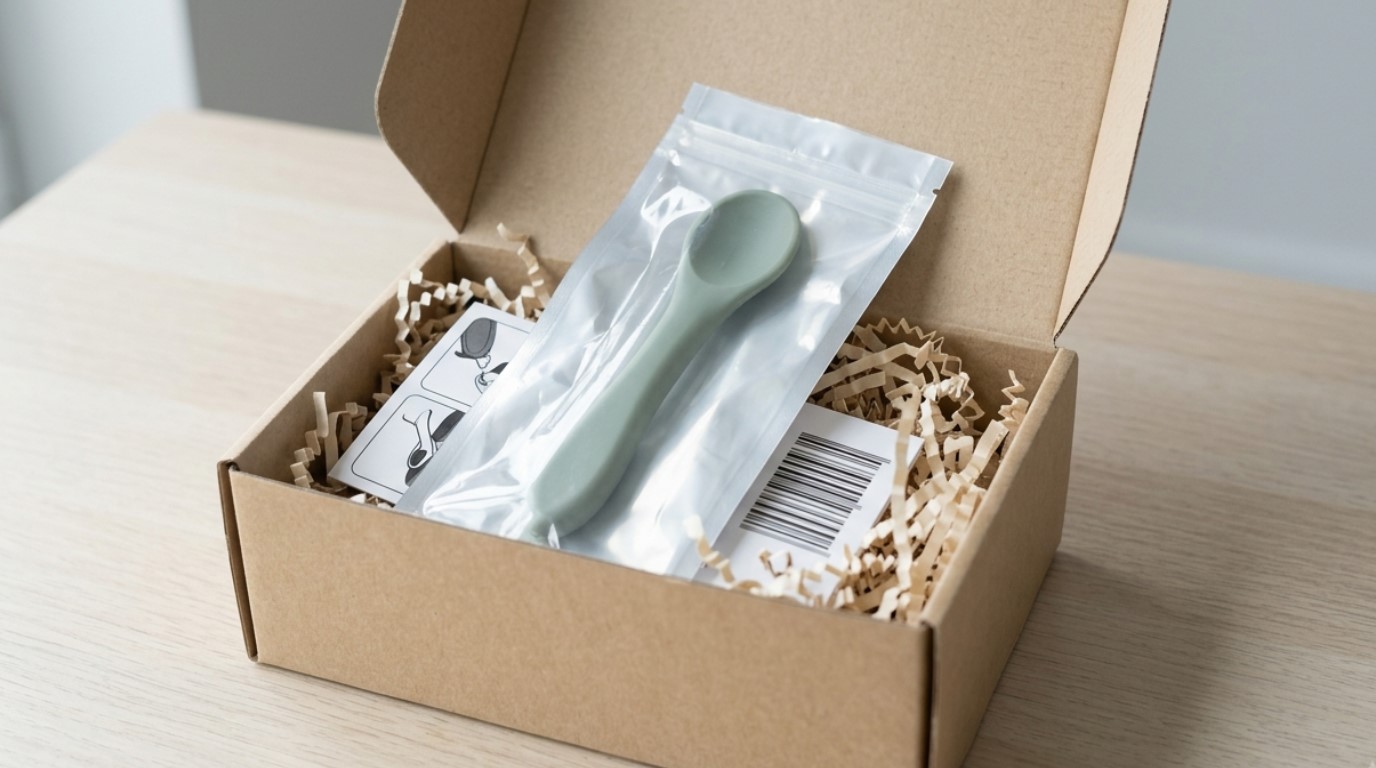
Silicone baby feeding spoon with fillers, barcode label, and instruction card in paper box for e-commerce packaging

Ecommerce Packaging

SKU labels, barcodes, product inserts, and protective outer packaging can be coordinated for direct-to-consumer and marketplace fulfillment requirements.
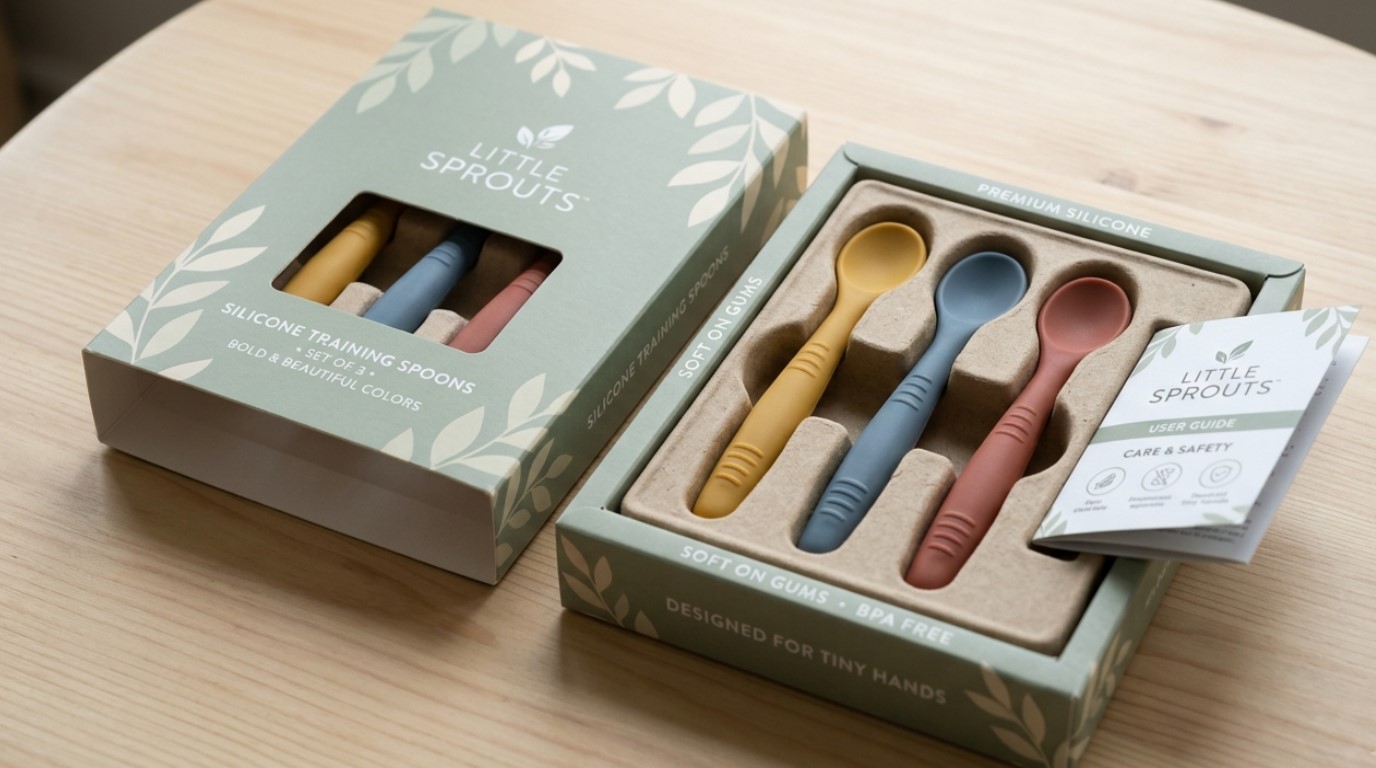
Ergonomic silicone baby spoons set in premium brand packaging with inserts

Premium Brand Packaging

SKU labels, barcodes, product inserts, and protective outer packaging can be coordinated for direct-to-consumer and marketplace fulfillment requirements.

Silicone Baby Spoon Typical Specifications

SpecificationTypical Reference
ProductCustom silicone baby spoon
ApplicationsFirst feeding, purees, cereals, toddler meals and self-feeding
MaterialFood-contact silicone
Silicone structureOne-piece molded silicone or custom-developed structure
Spoon typeFirst-feeding, long-handle, self-feeding, training or ergonomic
HardnessProject-specific; selected according to tip flexibility and handle structure
Spoon bowlCustom length, width and depth
Overall lengthCustom according to feeding stage and handle design
HandleStraight, curved or ergonomic
ColorsStandard colors or custom Pantone matching
SurfaceSmooth, matte or specified molded texture
Logo methodsEmbossed, debossed, in-mold (IMD), and laser etching
Molding processCompression molding or approved silicone molding process
PackagingIndividual bag, header card, paper box or custom retail packaging
Existing-style order quantityFrom 500 pieces for suitable existing designs with custom branding
Custom-molded order quantityFrom 3,000 pieces
Standard sample lead time5–10 working days
Custom tooling lead time10–20 working days
Mass-production lead time15–25 working days after approval
InspectionApproved sample plus agreed AQL or customer inspection standard
OEM & ODMAvailable

Final specifications are confirmed according to the selected spoon design, silicone compound, artwork, packaging, and approved sample.

Why Work with RY Silicone

RuiYang Silicone factory

Silicone Manufacturing Experience Since 2012

RY Silicone is a China-based silicone manufacturer focused on custom silicone product manufacturing since 2012.

We support international customers from product evaluation and sampling through molding, finishing, inspection, packaging, and shipment.

Video Image1

10,000+ m² Production Facility

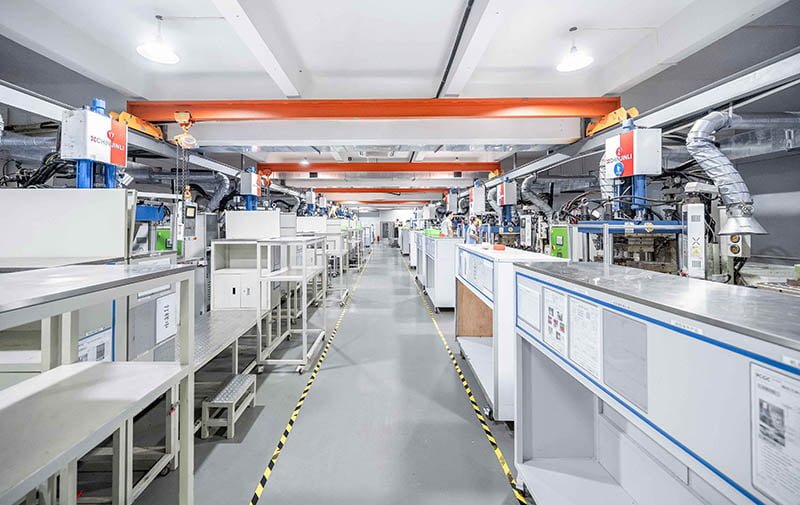
Our production facility supports silicone tooling, molding, trimming, branding, quality inspection, and packaging under one manufacturing workflow.

silicone machine

30+ Production Machines

Multiple production machines provide capacity for different silicone structures and scalable order quantities.

ruiyang silicone compression mol

Up to 100,000 Silicone Products per Day

Our stated production capacity provides room for repeat orders and larger-volume silicone programs, subject to product structure, cycle time, and inspection requirements.

silicone Products Design

Engineering Review Before Quotation

We review the spoon geometry before quoting rather than relying only on a product name or reference image.

The engineering review considers bowl dimensions, spoon-tip thickness, handle geometry, draft, parting lines, material, hardness, color, branding, and packaging so potential molding issues can be identified before tooling.

Rysilicone quality control

Sample-Based Production

The approved sample becomes the physical reference before mass production. Spoon geometry, color, surface finish, logo position, and packaging are checked against that reference.

Shipping

Export Project Support

RY Silicone supports customers across North America, Europe, and other international markets with commercial communication, product documentation, packaging coordination, and shipment preparation.

Silicone Baby Spoon FAQ and Final RFQ

The MOQ starts from 500 pieces for suitable existing designs with custom branding and from 3,000 pieces for new custom-molded designs. The final quantity depends on spoon structure, colors, branding, and packaging requirements.

Yes.

An existing design can provide a faster route for market testing and reduce initial tooling investment.

Custom tooling can be developed later when you need a unique bowl shape, handle, color system, or branded structure.

Food-contact silicone options are available.

The applicable material documentation depends on the selected silicone, pigment, production controls, and destination market. The exact compliance requirement should be confirmed before production.

Yes.

The spoon tip can be designed around the intended feeding stage. Tip softness depends on both the selected silicone hardness and the molded tip thickness, so these two factors should be evaluated together.

Yes.

Provide the target Pantone reference and approve a physical color sample before mass production. Silicone thickness, surface geometry, and surrounding colors can influence the final visual appearance.

Yes.

The length, width, thickness, curvature, and grip geometry of the handle can be customized based on the requirements of caregivers or toddlers who are learning to feed themselves.

RY Silicone also supplies chunky, short-handled silicone baby spoons that offer a better grip for self-feeding and training.

At the same time, silicone feeding spoons with long handles make feeding easier.

Yes.

A food-grade silicone baby spoon that is free of BPA, lead, and PVC is beneficial for babies' incoming teeth and gums during the introduction of solid foods and for babies aged 0 to 12 months.

Metal and hard plastic spoons are recommended for babies aged 12-18 months.

When choosing silicone baby spoons, look for the following three features:

  • Shallow spoon bowl: This makes it easier for babies to clear purees and feels less overwhelming during early feedings.
  • Flexible yet stable silicone: This provides a comfortable, soft texture with enough firmness to prevent the spoon from being too floppy and awkward to use.
  • Easy cleanup: Dishwasher-safe materials offer busy families a practical way to quickly sanitize and reuse everyday feeding tools.

Molded-in, laser engraving, embossed, and debossed logos are available for suitable designs. Printing can also be considered for appropriate surfaces and applications.

The preferred method depends on artwork complexity, logo position, appearance, and the intended food-contact configuration.

Yes.

We can develop first-feeding spoons, long-handle designs, self-feeding spoons, training spoons, and ergonomic handle configurations according to your product concept.

Available documentation depends on the selected silicone, pigment, printing method, and destination market.

Please provide the exact standard or documentation requirement so the appropriate material and available reports can be reviewed before production.

Please provide:

  • Target order quantity
  • Intended feeding stage or age range
  • Reference spoon design or drawing
  • Spoon bowl dimensions
  • Overall spoon dimensions
  • Handle requirements
  • Target silicone hardness
  • Pantone color
  • Logo artwork
  • Branding position
  • Packaging requirements
  • Destination country
  • Required reports or tests
  • Target delivery date

Ask For A Quick Quote

If you fail to submit the form, please write to us directly at [email protected]