Silicone Candy Molds Manufacturer
Silicone candy molds for gummies, hard candy, chocolate, and confectionery. Custom cavities, food-grade materials, detailed shapes, and branded packaging for OEM/ODM projects.
What Is a Silicone Candy Mold?
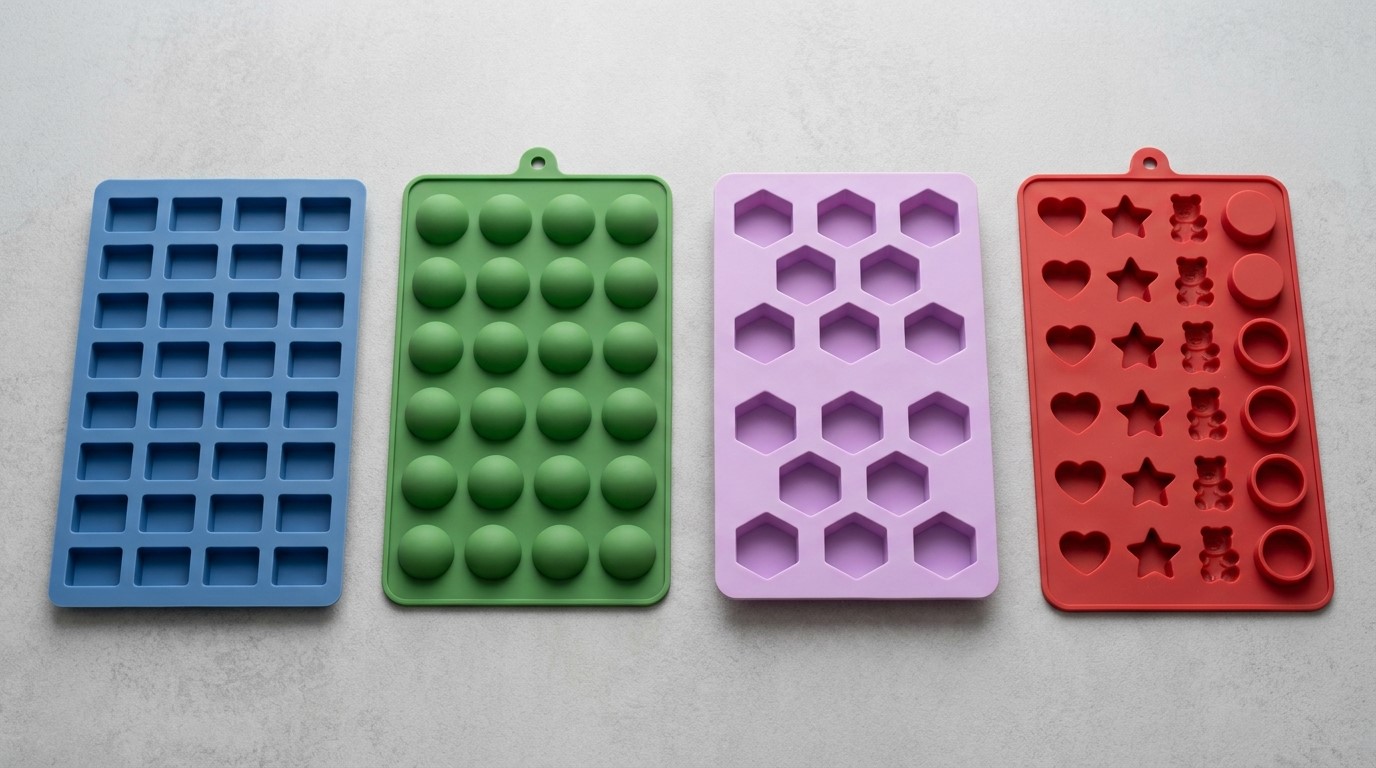
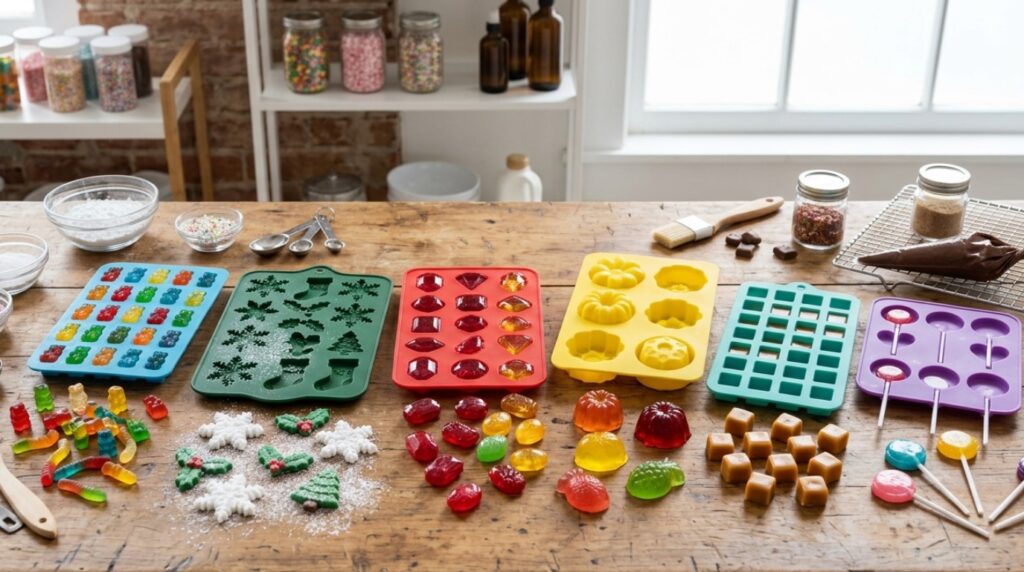
A flexible, heat-resistant silicone candy mold shapes confections like gummies and hard candy for easy release. Custom OEM and ODM versions are tailored specifically to your unique cavity shapes, sizes, layouts, colors, branding, and packaging requirements.
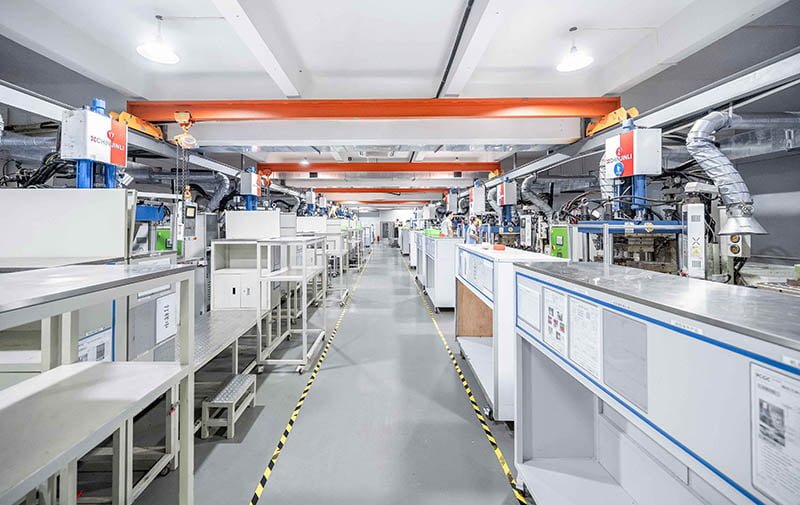
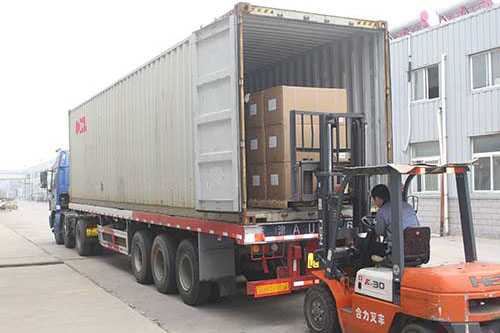
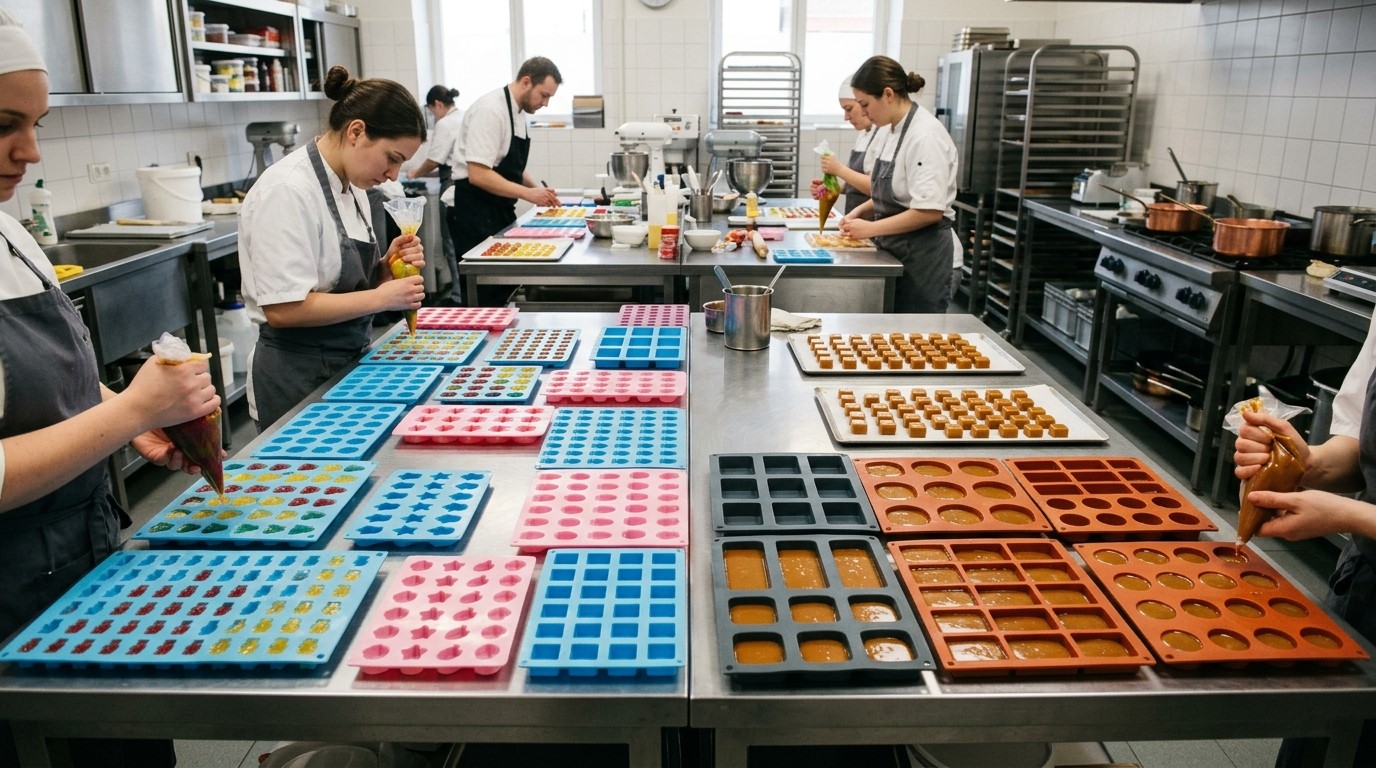
RY Silicone is a custom silicone manufacturer based in China, established in 2012. The factory covers 10,000+ m², operates 30+ machines, and can produce up to 100,000 silicone products per day for international brands, distributors, and wholesalers.
Silicone Candy Mold Manufacturing at a Glance
MOQ & Lead Times
From 500 pieces for existing styles with branding, samples take 5–10 working days, while bulk production follows approved specifications.
Cavity Specs
Define cavity shape, target candy weight, depth, and layout; then match tray dimensions to manual filling or depositing equipment.
Branding Methods
Add molded logos, cavity identification, or custom shapes, with artwork reviewed for readable detail and reliable release during repeated production.
Packaging Options
Choose bulk, retail, e-commerce, or premium packaging, including labels, barcode information, printed boxes, and project-specific inserts for your sales channel.
Who We Manufacture Silicone Candy Molds For
Choose the mold format, cavity design, and packaging around how your candy will be produced and sold.

Artisan Confectionery Brands
Develop branded candy molds around your signature shapes, portion sizes, and production requirements. We support existing mold concepts and new OEM designs, helping align cavity detail, tray structure, and retail presentation.
Gummy & Functional Candy Studio
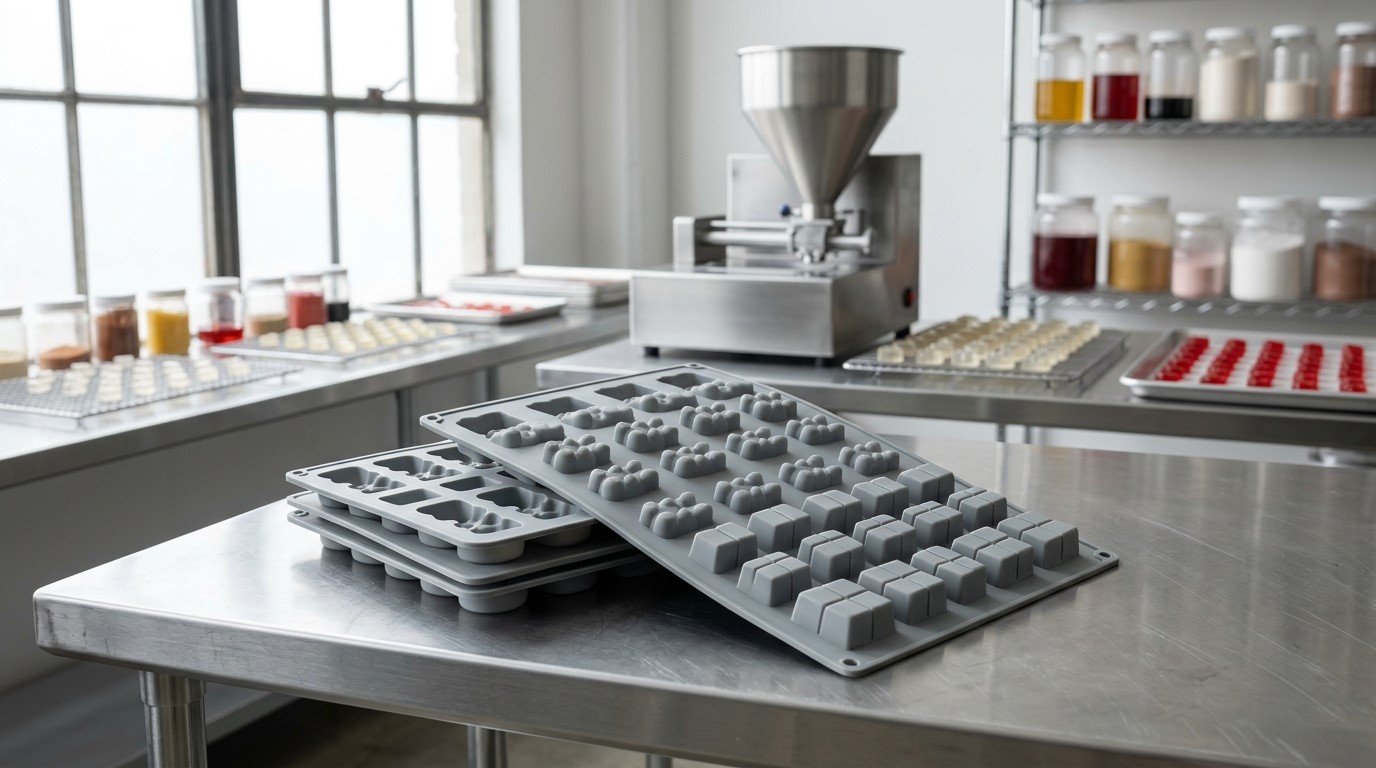
Build molds for gummies, jelly candies, and functional confectionery with controlled cavity volumes. Shape, target weight, and demolding behavior are reviewed before production, particularly when your formula creates a softer or stickier finished product.
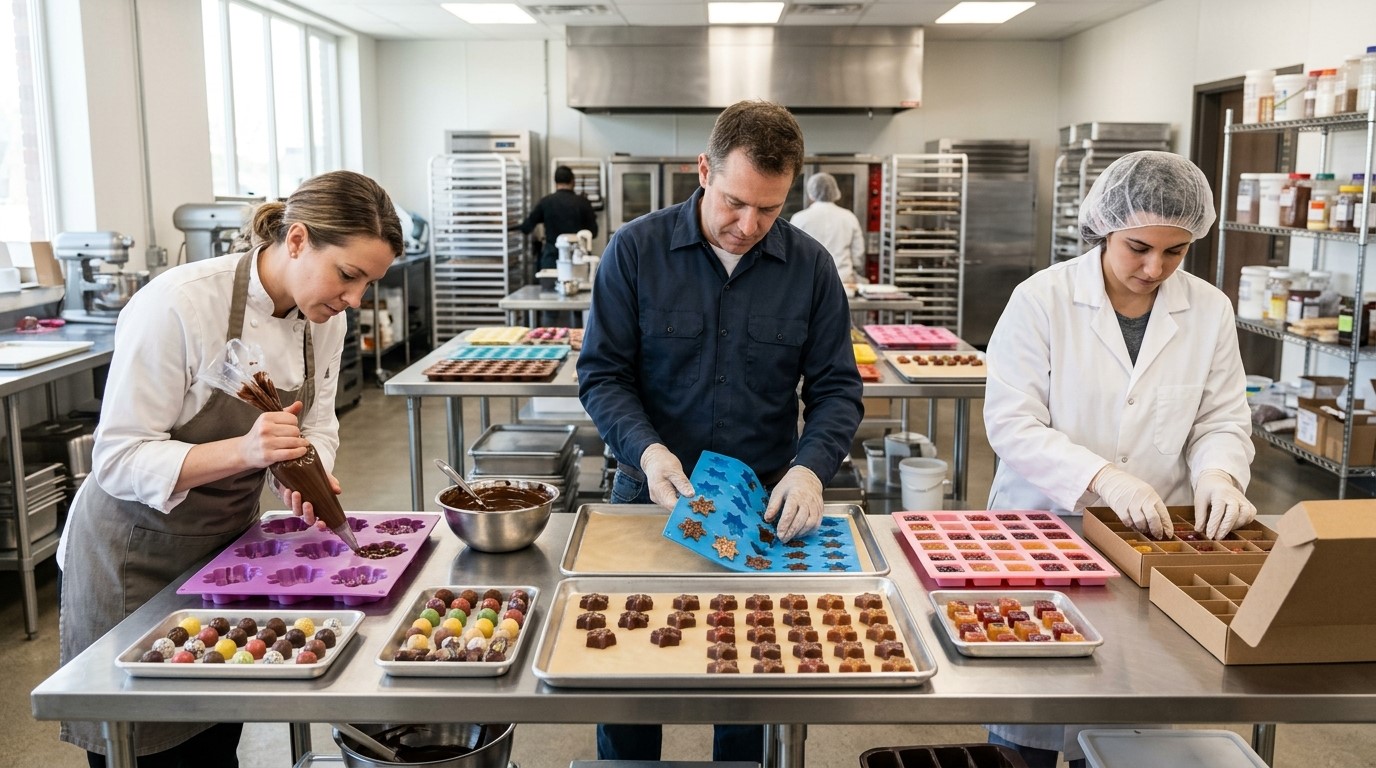
Pastry Chefs, Candy Manufacturers & Co-Packers
Engineer cavity geometry and surface clarity around your filling workflow (like manual pouring and depositors). Matches in size, weight, and finish for custom branded forms in volume, for seasonal candy collections, or for a private label confection line.
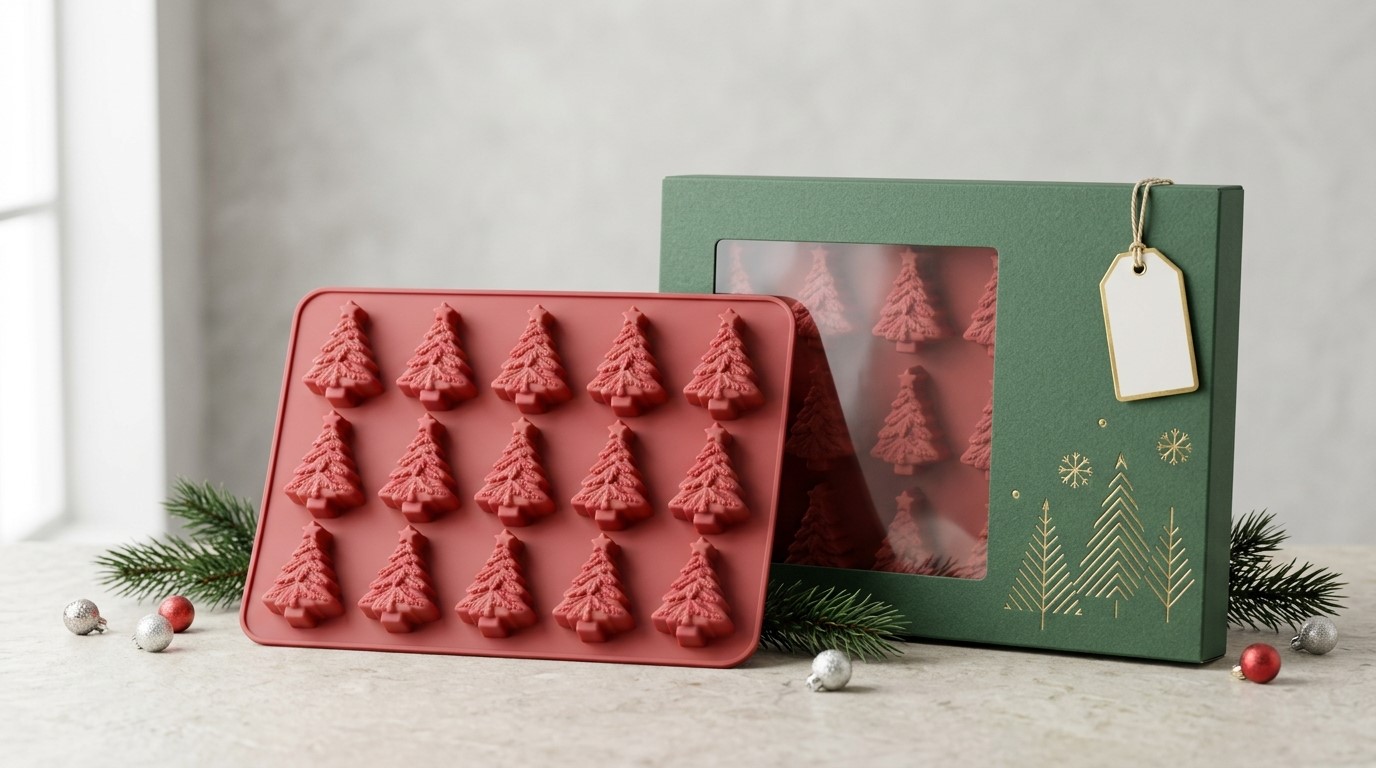
Private-Label Sellers
Launch private-label candy mold collections with custom colors, branded cavities, and retail-ready packaging. Existing structures can shorten development, while new tooling gives your product a shape competitors cannot easily duplicate.
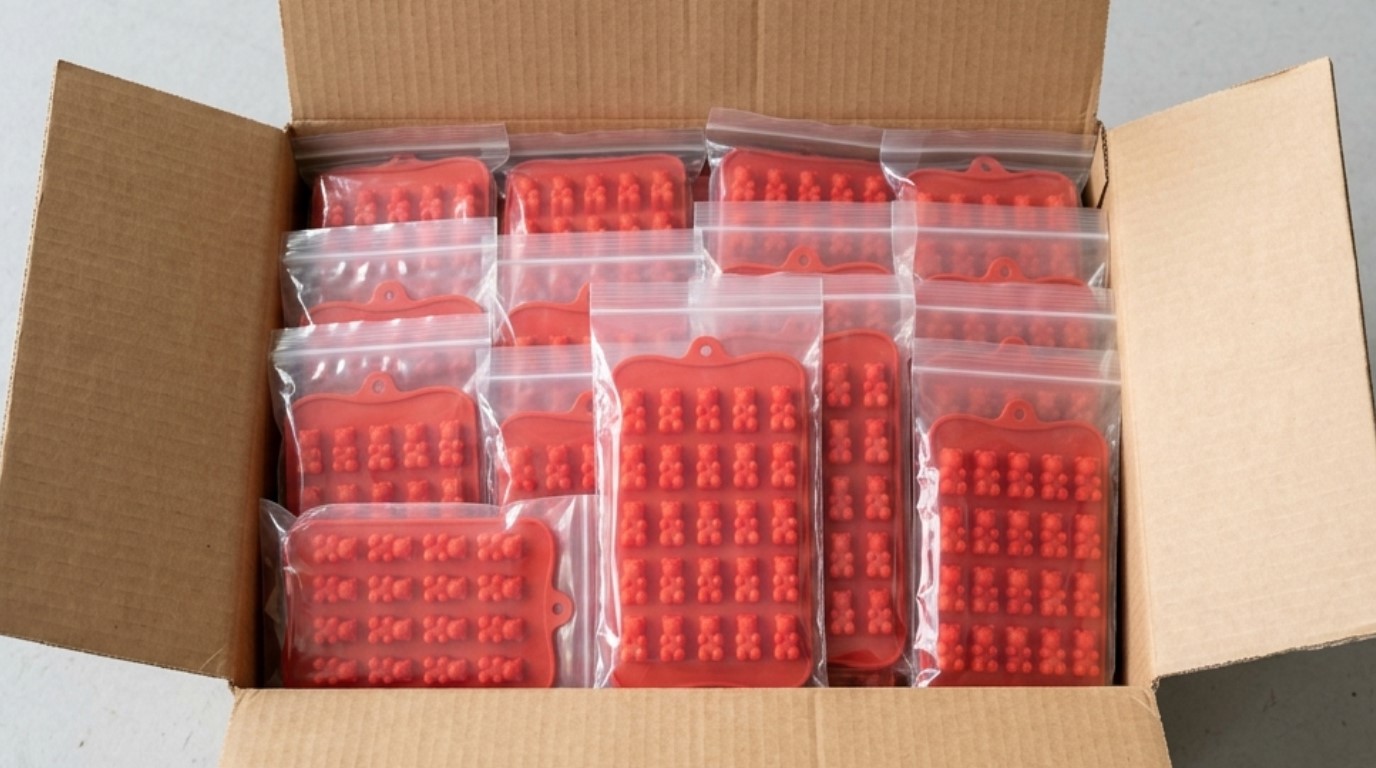
Distributors & Wholesalers
Source silicone candy molds in bulk for confectionery, baking, and specialty kitchenware channels. We can coordinate product variations, SKU identification, and packaging formats that suit different customer groups and order quantities.
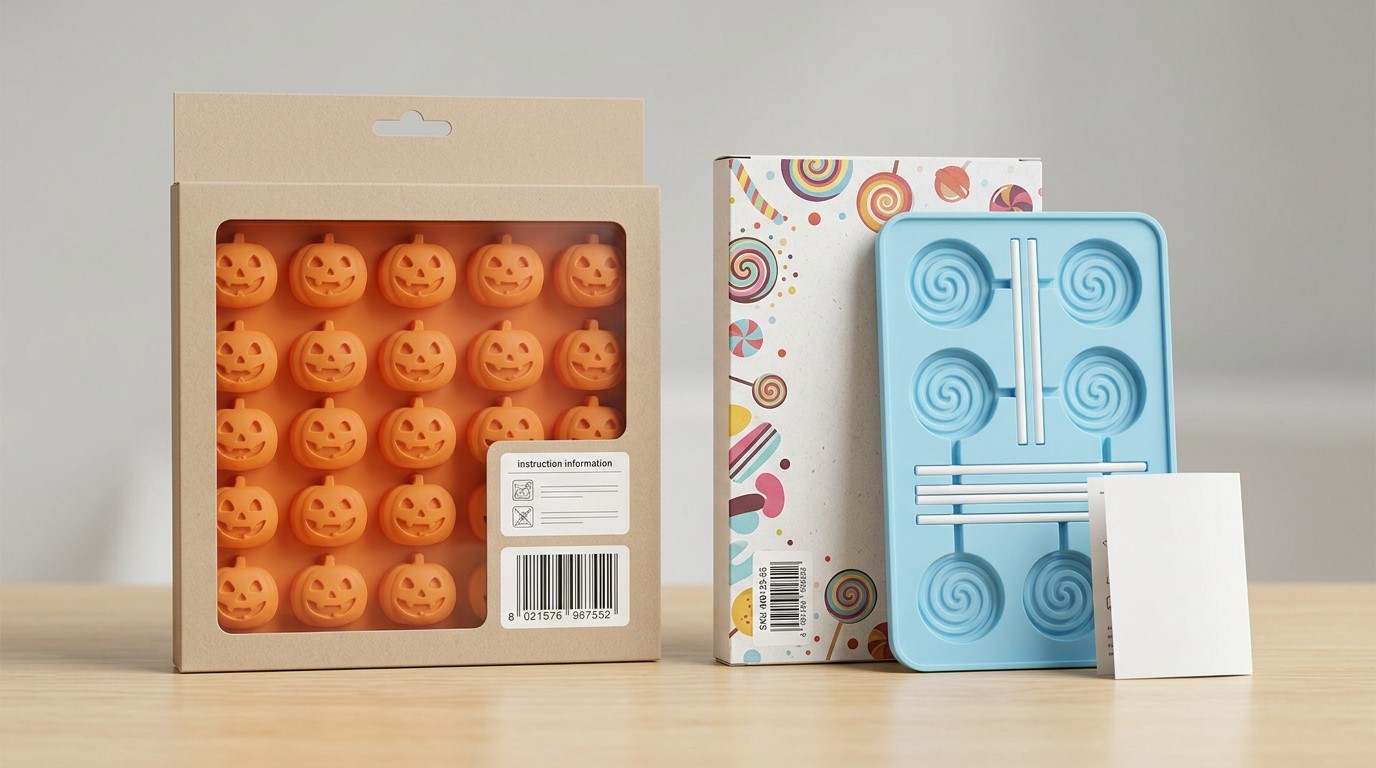
Retail & Ecommerce Brands
Prepare molds for store shelves or online fulfillment with branded boxes, barcode labels, instruction cards, and product inserts. Packaging is planned alongside the product to avoid artwork or production delays later.
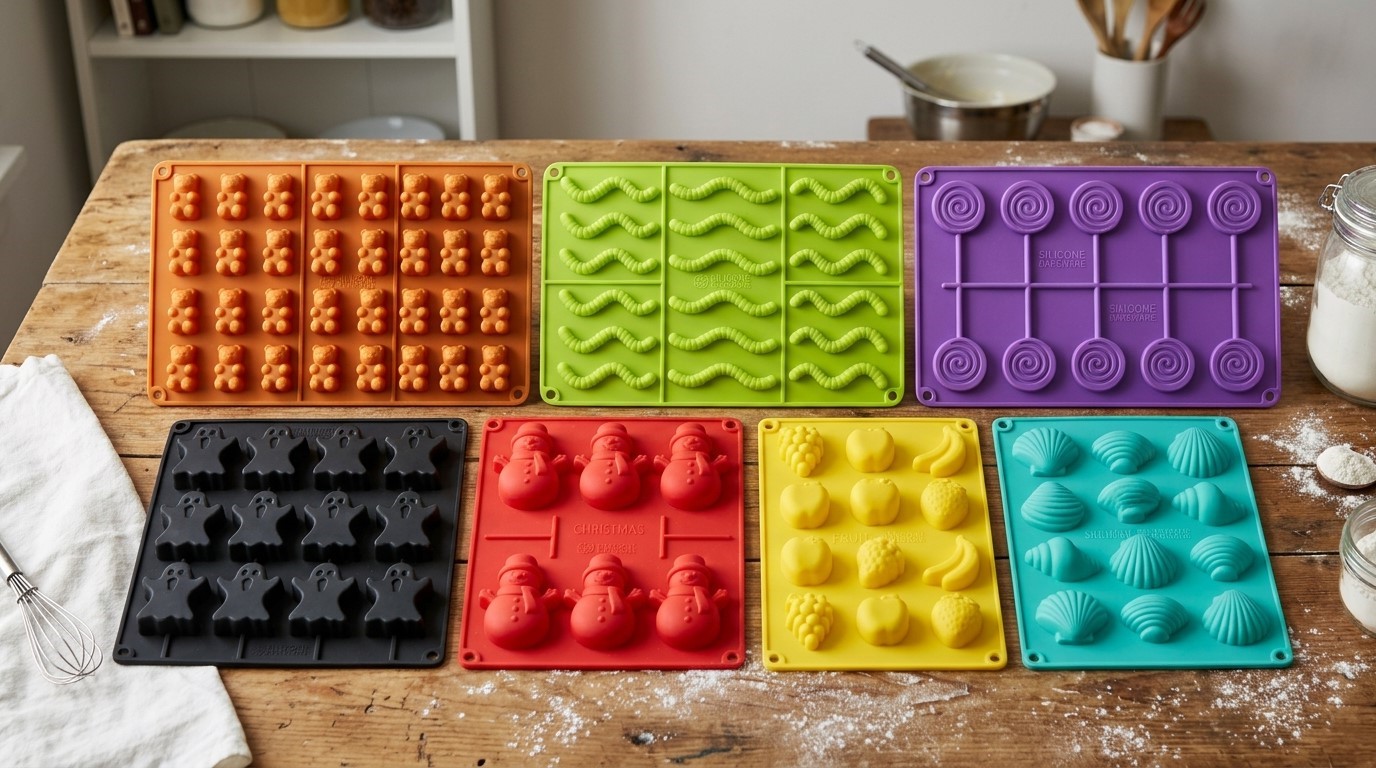
Who We Manufacture Silicone Candy Molds For
Silicone Gummy Candy Molds
Silicone Fondant Molds
Silicone Hard Candy Molds
Silicone Jelly Moulds
Silicone Lollipop Candy Molds
Silicone Caramel Molds
Custom Silicone Candy Molds
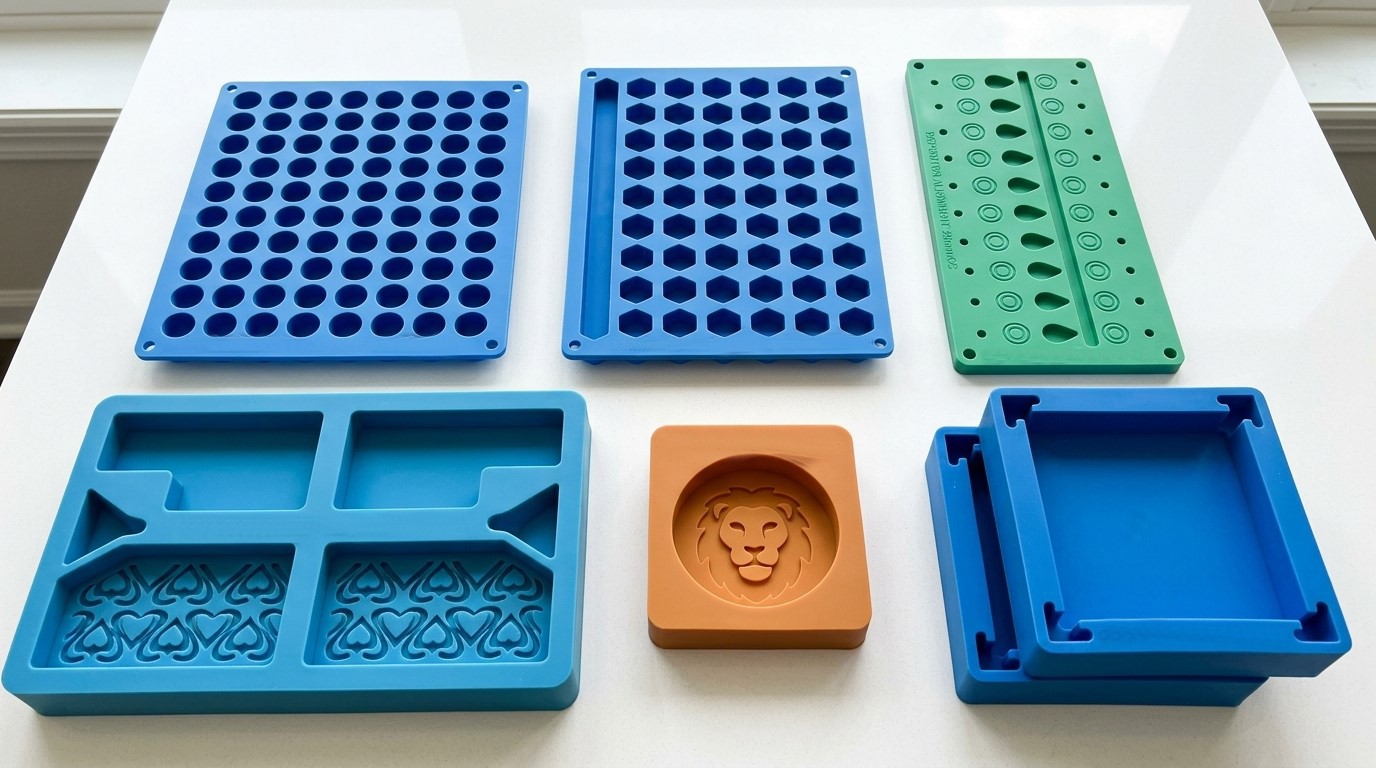
Multi-Cavity Depositor Molds
Silicone Candy Mold Customization
Define the product format first, then build the cavity and tray around it.
Create a mold from an existing concept, logo, drawing, 3D file, or physical sample for your band or specific recipe while reviewing fine details that may affect filling and release.
Available options include:
- Existing candy shapes
- Custom geometric cavities
- Fruit and novelty designs
- Bears designs
- Dog shapes
- Worms shapes
- Seashells designs
- Character shapes
- Christmas designs
- Pumpkin or halloween designs
- Seasonal collections
- Logo-shaped cavities
- Single-cavity formats
- Multi-cavity layouts
Match cavity dimensions to your target candy weight and production requirements, then confirm the volume through sampling with the intended finished product.
Available options include:
- Custom cavity dimensions
- Target piece weight
- Shallow or deep cavities
- Controlled cavity volume
- Equal-volume layouts
- Mixed-shape trays
- Portion-controlled designs
- Prototype cavity testing
Plan the cavity count and tray structure around your production method, handling requirements, and available filling equipment before finalizing the tooling.
Available options include:
- Custom cavity counts
- Grid arrangements
- Row and column spacing
- Custom tray dimensions
- Depositor nozzle alignment
- Manual-pouring formats
- Identification marks
- Stackable tray structures
Integrate your brand into the cavity, mold body, or packaging using a method that preserves readable detail and supports repeated production.
Available options include:
- In-mold branding
- Embossed marks
- Debossed marks
- SKU identification
- Custom silicone colors
- Pantone matching
- Printed retail packaging
Start Your Custom Silicone Candy Mold Project
Send your candy type, target piece weight, cavity design, tray size, and order quantity. We will review the structure before proposing production.
How to Specify a Better Silicone Candy Mold
The best mold matches your candy formula, cavity geometry, and production workflow.
- Cavity volume — Match the target weight and formulation density.
- Draft angle—Add a practical taper for easier release.
- Cavity depth — Review deeper shapes carefully before tooling.
- Corner radius — Avoid unnecessarily sharp internal corners.
- Tray rigidity — Balance flexibility with stable handling when filled.
- Cavity spacing — Leave enough material between cavities for durability.
- Depositor fit—Confirm tray dimensions and nozzle spacing before production.
- Surface finish — Match the cavity surface to the intended candy appearance.
Complex CAD shapes cause slow or inconsistent candy demolding, so prototype testing should always utilize the intended final product formula directly.
Full Specification Guide
How to Specify a Better Silicone Candy Mold—cavity volume, draft angle, tray layout, hardness, spacing, and a complete project checklist.
Silicone Candy Mold Logo & Branding Methods
Choose the branding method according to cavity geometry, logo detail, and whether the mark contacts the finished candy.
Screen & Pad Printing
Screen or pad printing can add color-coded identification or branding to suitable non-food-contact areas of the mold.
In-Molded Logos
A logo is engineered directly into the cavity so the finished candy carries the required brand shape or mark.
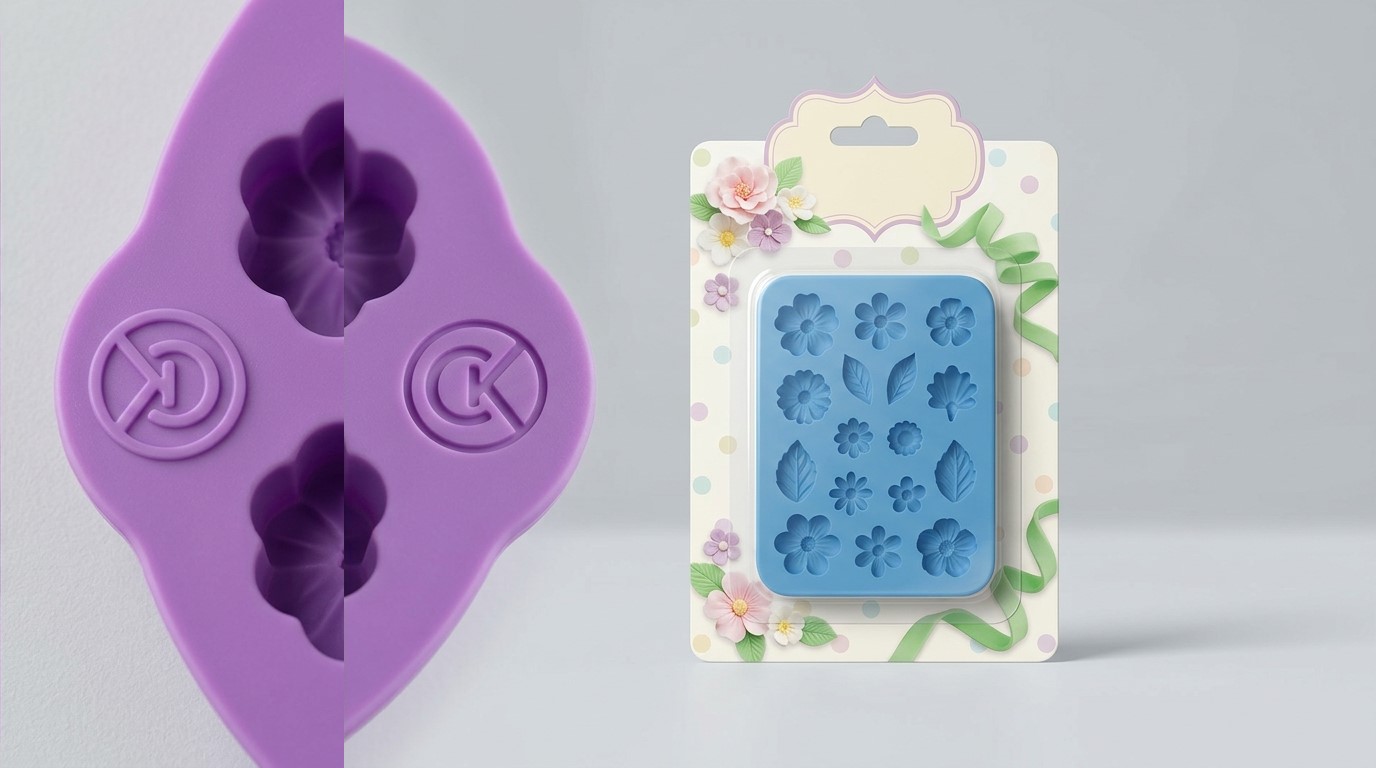
Embossed Logos
Raised branding molded directly into silicone for durable, print-free identification.
Debossed Logos
Recessed marks providing permanent identification while keeping surfaces clean and durable.
Silicone Candy Mold Material & Performance Options
The compound, hardness, and documentation should match the candy application and destination market.
Designed for food-contact candy and confectionery applications.
Projects involving food contact can use silicone compounds that are suitable for the intended application. The documentation should match the chosen material, pigment, production configuration, and destination market.
Material Comparison
Silicone vs. Polycarbonate Candy Molds: Which Is Best? —overall weight, the service life, ease of release, strength, stiffness, flexibility, non-stick needs, heat retention, and solidification time.
Balance easy demolding with stable tray handling.
Softer silicone flexes more easily around detailed shapes, and firmer silicone better supports larger, multi-cavity trays. The correct hardness should be evaluated alongside cavity geometry and filling conditions.
Clean release depends on geometry, formulation, and mold structure.
While silicone flexibility helps finished candies separate from the cavity without the need for dusting agents or cornstarch, release performance also depends on candy temperature, stickiness, surface treatment, and handling method.
Thin sections need enough strength to withstand repeated flexing.
The material and wall structure should protect narrow bridges between cavities, especially in dense trays with detailed or irregularly shaped candies.
Supports confectionery processes involving heating, cooling, or setting.
The usable temperature range depends on the selected silicone compound and the design of the finished mold, so confirm project conditions before production.
Available project documentation upon safety and regulations may include
- Material data sheets
- Material declarations
- FDA-related documentation
- LFGB-related documentation
- REACH-related reports
- Project-specific test reports
The scope of the documentation must match the selected silicone, pigments, printing materials, and destination market. A raw material report alone should not be automatically accepted as proof for every finished mold configuration.
Proper cleaning and maintenance methods can extend the service life of a silicone candy mold.
Immediately after use, clean the mold with warm, soapy water. Rinse it thoroughly to remove all soap, detergent, and liquid residue.
For deep sanitizing, bake the mold in the oven at around 350°F (175°C) for 10-15 minutes.
Avoid using harsh cleaning tools that could damage the mold’s structural integrity or leave scratches. Additionally, let silicone molds air dry completely before storing them. Silicone molds can be rolled and folded, making them easy to store in tight spaces.
Maintenance Guide
How to maintain silicone candy molds—washing in time, odor control, drying, storage, and sugar stain prevention.
How Silicone Candy Molds Are Manufactured

STEP 1: Requirement Review
Every project starts by confirming candy type, cavity shape, target weight, tray dimensions, production method, branding, packaging, destination market, and documentation requirements.
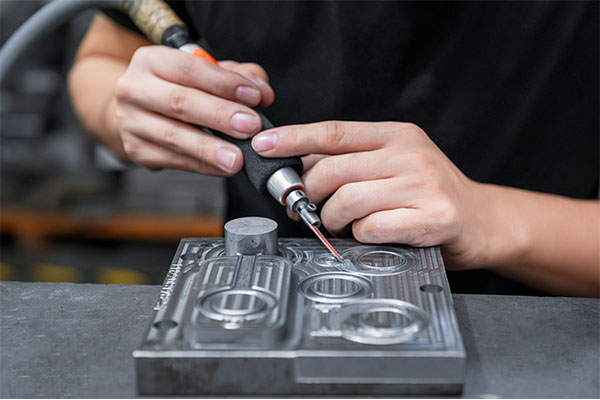
STEP 2: Mold Evaluation
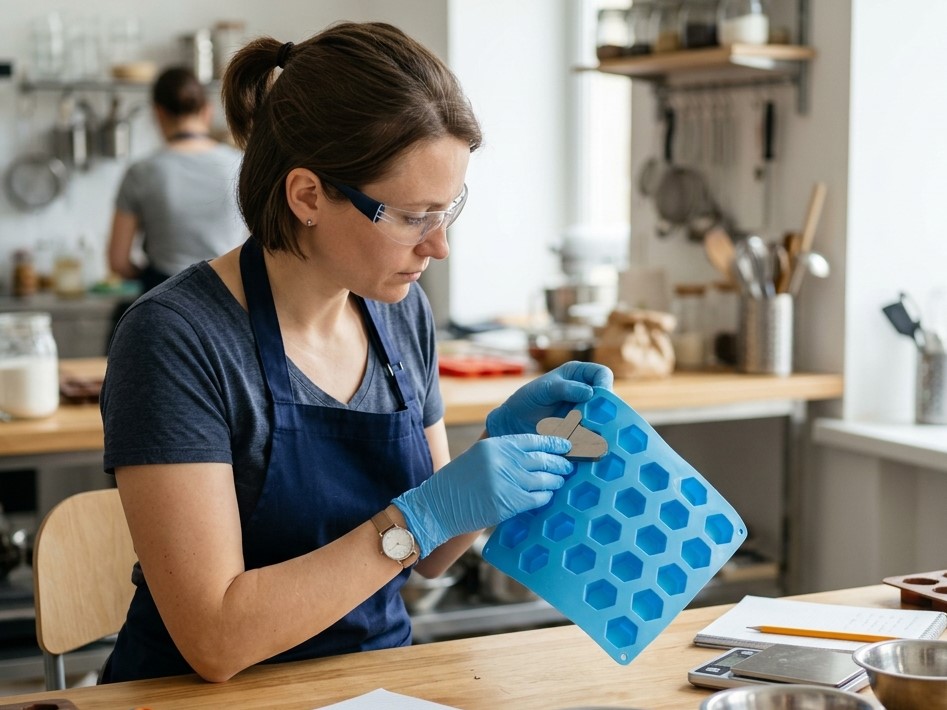
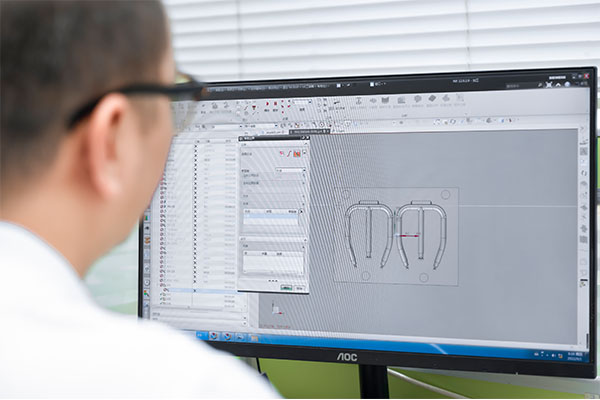
Engineers review cavity depth, draft direction, fine details, and spacing, then determine whether an existing design works or new custom tooling is required.
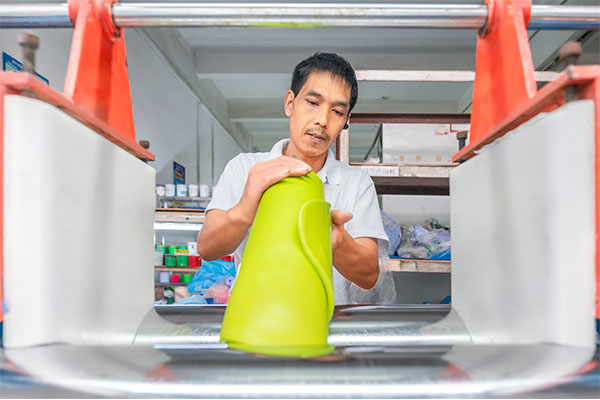
STEP 3: Material Preparation
The approved silicone compound is prepared with the required pigment and formulation controls before molding according to the confirmed project specification.
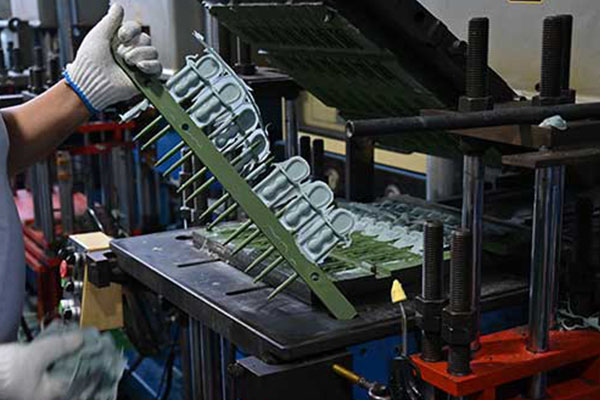
STEP 4: Silicone Molding
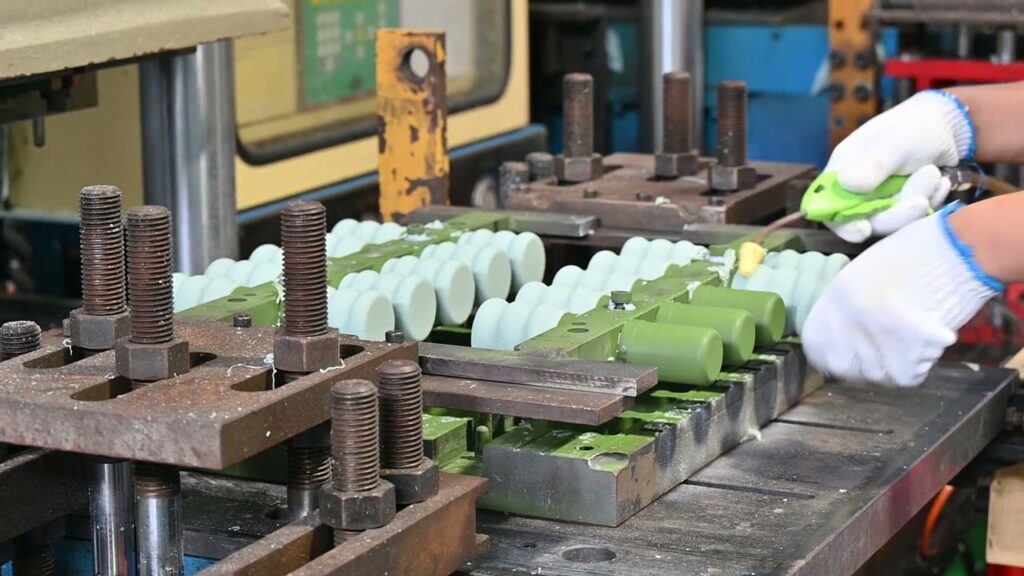
The compound is molded using the selected manufacturing process, with tooling and production parameters matched to the tray structure and cavity detail.

STEP 5: Demolding and Trimming
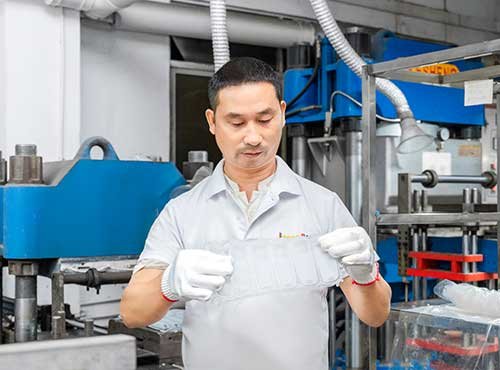
Once cured, each mold is removed and trimmed, while cavity edges, thin sections, and detailed features are checked for molding damage.
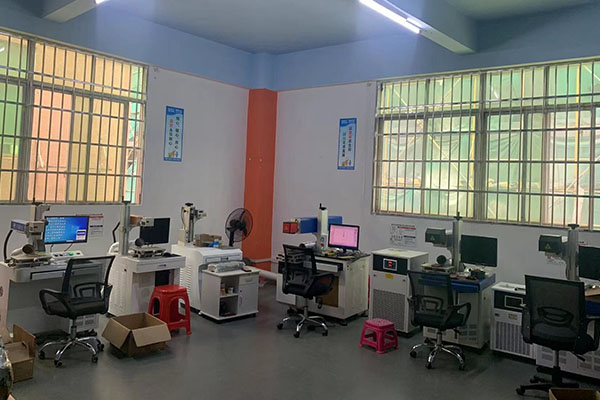
STEP 6: Branding & Surface Processing
In-mold logos, identification marks, and approved surface treatments are completed according to the artwork, positioning reference, and finished-product requirements.
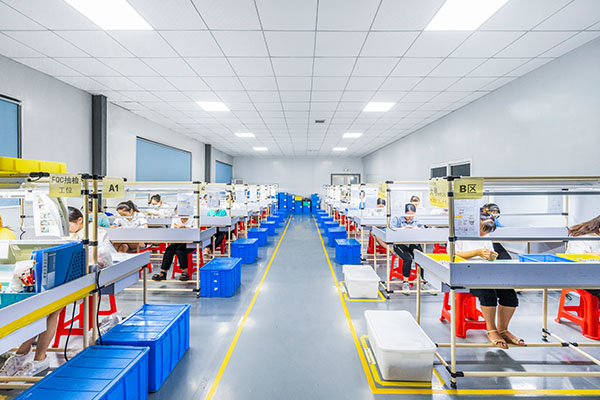
STEP 7: Quality Inspection
Finished molds are compared with the approved sample and specification, covering dimensions, cavity detail, color, surface quality, and structural consistency.
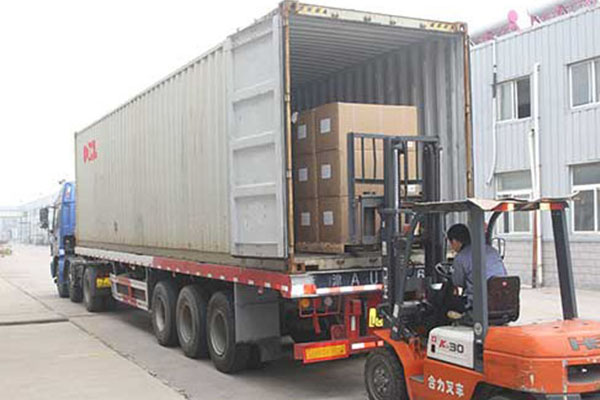
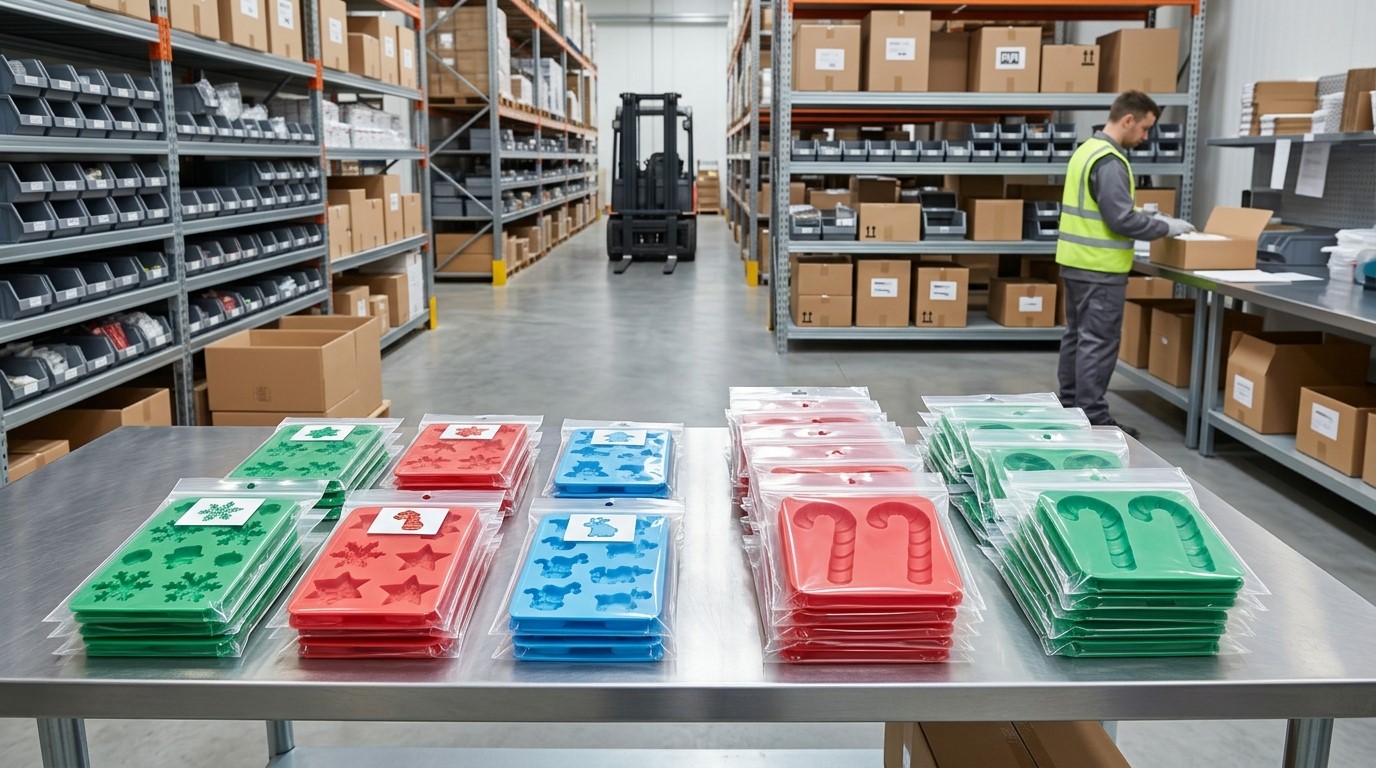
STEP 8: Packaging and Shipment
Approved products are counted, labeled, and packed according to the selected bulk or retail format before carton marking and shipment preparation.
Silicone Candy Mold Quality Control
Candy mold inspection goes beyond checking whether the silicone tray looks complete. Cavity volume, release geometry, spacing, and tray handling can directly affect the finished confectionery process.
AQL 2.5 / 4.0 Standard Inspection
We run final random sampling plans to verify batch consistency:
AQL 2.5
Critical / Major Defects
AQL 4.0
Minor Visual Flaws
If specified in the purchase order, another inspection standard can be used.
Approved Sample Control
The approved sample becomes the production reference for:
- Overall dimensions
- Cavity shape
- Cavity size
- Target volume
- Color
- Surface finish
- Branding
- Packaging presentation
Incoming Material Review
Incoming silicone compounds, pigments, and supporting documentation are checked against the confirmed project requirements before production.
In-Process Inspection
Production checks focus on molding completeness, cavity definition, thin-wall integrity, visible defects, and color consistency during manufacturing.
Cavity & Dimension Inspection
Key cavity dimensions and overall tray measurements are verified against the approved specification, particularly where the mold must fit filling or depositing equipment.
Appearance Inspection
Products are checked for:
- Tears
- Contamination
- Severe bubbles
- Incomplete molding
- Surface damage
- Irregular edges
Logo Inspection
Molded or printed branding is reviewed for position, size, edge definition, missing detail, and visible surface defects.
Packaging Inspection
Product quantity, labels, barcodes, inserts, retail boxes, and carton marks are verified before shipment.
Silicone Candy Mold Packaging Options
Plan packaging early because printed materials require separate artwork approval and production schedules.

Bulk Packaging
Simple bags or multi-piece packing helps control costs for candy manufacturers, distributors, and professional users purchasing molds in larger quantities.
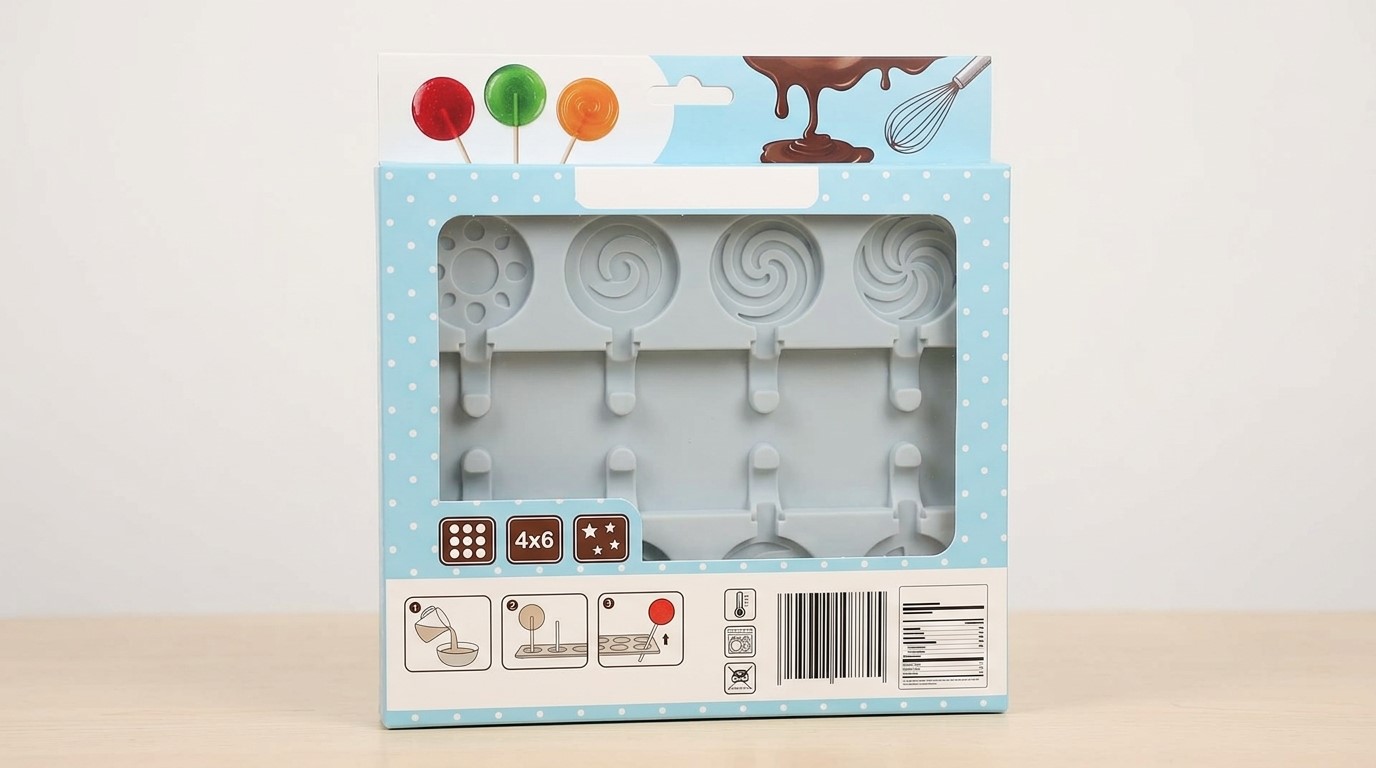
Retail Packaging
Header cards, printed boxes, and product inserts provide space for branding, usage information, and barcode identification in store-ready product programs.
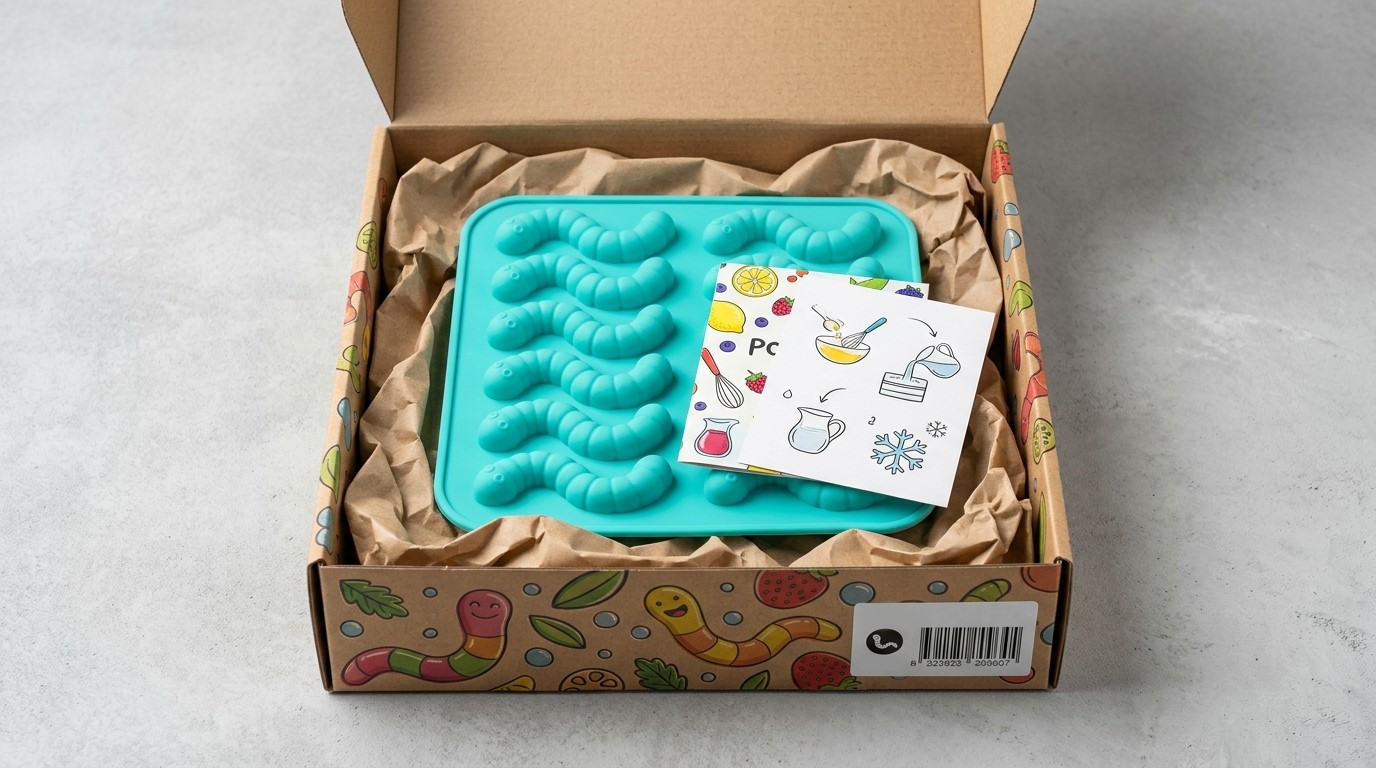
Ecommerce Packaging
SKU labels, scannable barcodes, and protective packing can be prepared around your fulfillment requirements and marketplace-specific labeling instructions.
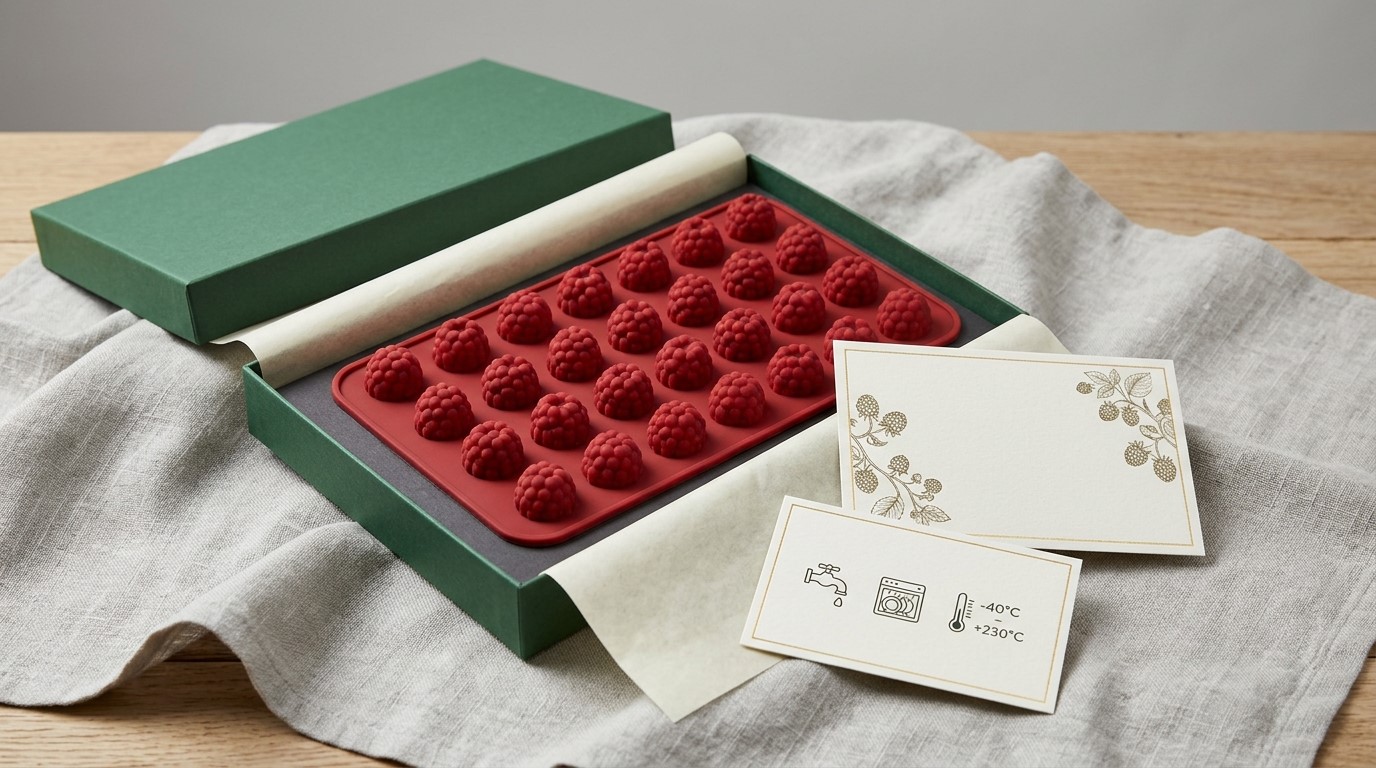
Premium Brand Packaging
Custom boxes, printed sleeves, and coordinated inserts support higher-value confectionery collections where presentation is part of the product experience.

Typical Silicone Candy Mold Specifications
| Specification | Typical Reference |
|---|---|
| Product | Custom silicone candy mold |
| Applications | Gummies, jelly candy, hard candy, lollipops and confectionery |
| Material | Food-contact silicone selected for the application |
| Hardness | Project-specific, commonly developed within 30–60 Shore A |
| Temperature range | Based on the selected silicone compound |
| Cavity shape | Standard or custom geometry |
| Cavity volume | Defined by target candy size or weight |
| Cavity layout | Single or multi-cavity |
| Cavity count | Custom according to tray size and production method |
| Cavity depth | Custom according to product geometry |
| Tray dimensions | Custom or equipment-matched |
| Colors | Standard colors or custom Pantone matching |
| Surface | Smooth, matte or project-specific molded texture |
| Branding | In-cavity, embossed, debossed or suitable printing |
| Production method | Matched to the approved mold structure |
| Packaging | Bulk, bag, header card, paper box or custom retail packaging |
| Existing-style MOQ | From 500 pieces, depending on branding and packaging |
| Custom-molded MOQ | From 3,000 pieces, depending on tooling and project structure |
| Sample lead time | 5–10 working days |
| Bulk production | Confirmed after sample and specification approval |
| Inspection | Approved sample plus agreed AQL or customer standard |
| OEM & ODM | Available |
All figures are initial project references. Final specifications depend on the candy formula, cavity design, selected material, tooling, and approved sample.
Why Work with RY Silicone
Silicone Manufacturing Experience Since 2012
RY Silicone has focused on custom silicone product manufacturing since 2012, supporting overseas projects from development and sampling through bulk production and shipment.
10,000+ m² Production Facility
Our production facility supports silicone molding, finishing, branding, inspection, and packaging for projects with different product structures and order requirements.
30+ Production Machines
Multiple machines provide flexibility for different silicone product designs, cavity configurations, and scalable production requirements.
Up to 100,000 Silicone Products per Day
Production capacity supports repeat orders and larger-volume programs, while actual output depends on mold complexity, cycle time, and inspection requirements.
Engineering Review Before Quotation
We review more than the product image. The engineering discussion starts with the candy shape and target weight, then moves to cavity depth, tray dimensions, production method, material, and packaging.
A particularly important detail is the real demolding path. Fine ears, narrow limbs, or deep vertical features may reproduce perfectly in tooling but distort when a warm or sticky candy is removed. We review these areas before tooling rather than discovering the problem after a full production tray is completed.
Sample-Based Production
Mass production follows an approved reference, locking the cavity dimensions and tray structure first, then color, surface finish, branding, and packaging.
Export Project Support
RY Silicone supports international projects with documentation coordination, commercial communication, packaging preparation, and shipment-related information.
Silicone Candy Mold FAQ and Final RFQ
What is the MOQ for custom silicone candy molds?
MOQ starts from 500 pieces for existing styles with custom branding and 3,000 pieces for new custom-molded designs. The final quantity depends on cavity structure, tooling, color, and packaging.
Can you make molds for gummy candy?
Yes. We can develop cavity layouts for gummies and other soft confectionery based on the target shape, piece size, cavity volume, and production method.
What information do you need to design the cavity?
Please provide your target candy shape, dimensions or target weight, reference images or drawings, cavity count, and intended production method.
Can you make a candy mold from our logo?
Yes. A logo, artwork, or other distinctive shape can be reviewed for cavity development. Minimum line width, depth, sharp corners, and release direction should be evaluated before tooling.
How do you determine the cavity volume?
The cavity is designed around the required dimensions or target piece weight. Because formulation density can vary, final volume should be confirmed with the intended candy during sampling.
Can the mold work with our candy depositor?
The tray can be reviewed around your equipment dimensions, nozzle arrangement, and production workflow. Please provide the relevant machine or tray specifications before development.
What silicone hardness is best for candy molds?
There is no single hardness for every project. Cavity geometry, tray size, filling conditions, and required flexibility should be assessed together before selecting the material.
Will my silicone candy molds lose their shape?
Yes, if the mold lacks proper support.
However, RY Silicone molds have an additional steel frame or core to improve their structural integrity and stability when using and transferring them.
If you regularly make candy, reinforced silicone candy molds are a worthwhile investment.
Are silicone candy molds suitable for making gummies?
Yes, flexible candy molds that release easily are optimal for gummies.
Due to their temperature resistance, silicone candy molds are suited for medium-heat tasks such as making gummies, gelatin-based candies, hard candy, and chocolate candies, which exceed 300°F (149°C).
Additionally, the non-stick surface of silicone molds generally eliminates the need for extra greasing or preparation. For better forming performance, you’d better put no grease in silicone candy molds for making candy, caramel, and chocolate.
Unlike plastic molds, silicone candy molds can withstand dishwasher cycles and are not easily scratched. Additionally, silicone candy molds allow for easy filling and air bubble removal by simply squeezing them.
What types of candies are silicone candy molds suitable for making and not recommended for making?
Silicone candy molds are optimal for
- Hard candies
- High-temperature mixtures
- Sticky mixtures like gummies or caramels
- Gelatin-based candies
Silicone molds are not so recommended for
- Quick-cooling candies
- A polished finish of tempered chocolates
- A clean and sharp edge
How to use silicone fondant molds?
Non-stick silicone molds with superior flexibility are ideal for creating and decorating fondant flawlessly.
Proper use of silicone fondant molds ensures the quality and performance of the formed fondant.
- Preparation of the fondant
- Optional of cornstarch (a bit) for non-stick if it is pliable
- Force the fondant into cavities of the mold evenly
- Excess fondant removal
- Optional fondant smoother for precise shaping
- Flex and bend gently to release the fondant
- Rinsing in time and air dry
- Avoid of sharp tools
Do deep or detailed candy shapes require special design?
Yes. Deep cavities, narrow details, and undercuts may need additional draft, thicker structural areas, or a different cavity design to maintain reliable demolding.
Can you match a custom Pantone color?
Yes. Provide the Pantone reference, then approve a physical sample before mass production because thickness and surface finish can affect the final appearance.
Are your silicone candy molds suitable for food-contact applications?
Suitable food-contact silicone materials can be selected for confectionery applications. The available documentation depends on the selected material, pigment, and destination market.
Can you provide FDA, LFGB, or REACH documentation?
Available documentation depends on the selected materials and the required market standard. Please provide your destination country and specific document requirements during quotation.
What do you need to quote a custom silicone candy mold?
Please provide:
- Target order quantity
- Candy type and application
- Target candy weight or dimensions
- Cavity count
- Tray dimensions
- Drawing, 3D file or reference sample
- Production method or equipment information
- Pantone color
- Logo artwork
- Packaging requirements
- Destination country
- Required reports or tests
- Target delivery date