Silicone Baby Teether Manufacturer
Safe, chewable silicone baby teethers designed for soothing, sensory development, and everyday use. Custom shapes, food-grade materials, private-label branding, and retail-ready packaging for baby brands worldwide.
What Is a Silicone Baby Teether?
A silicone baby teether is a food-contact product made from soft silicone rubber that helps infants relieve gum discomfort during the teething stage while supporting sensory exploration and oral development. An OEM or ODM silicone baby teether is developed according to your preferred shape, size, texture, color, branding, and packaging requirements.
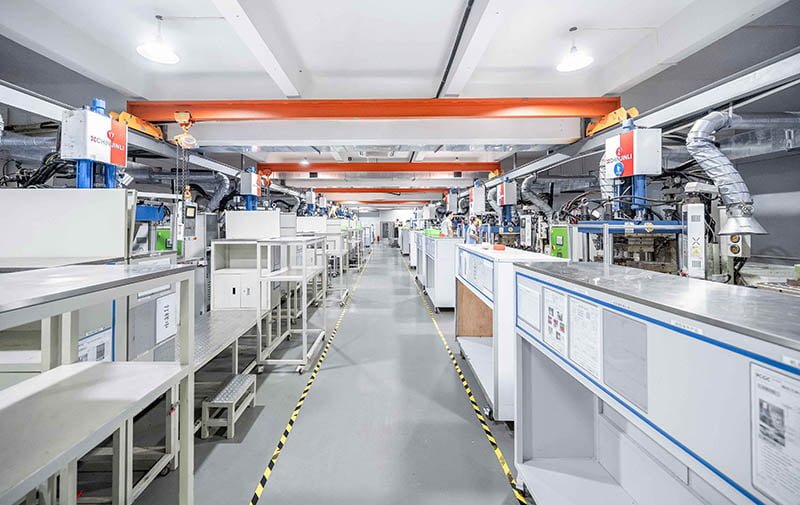
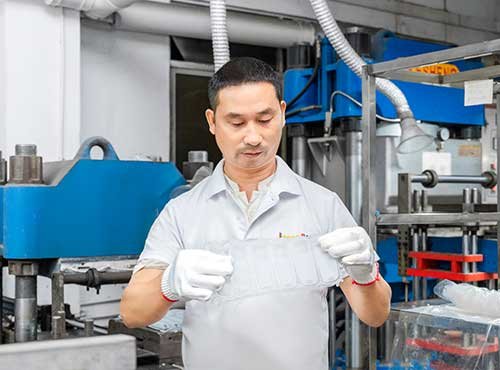
RY Silicone is a custom silicone manufacturer based in China and established in 2012. The factory operates from a 10,000+ m² production facility, utilizes 30+ production machines, and supports daily output of up to 100,000 silicone products.
Silicone Baby Teether Manufacturing at a Glance
MOQ & Lead Times
Custom branded existing teether designs require 500 pieces minimum, new projects 3,000. Samples take 5–10 working days.
Product Specs
Samples in 5–10 working days, custom molds in 10–20, and mass production in 15–25 after approval.
Logo & Branding
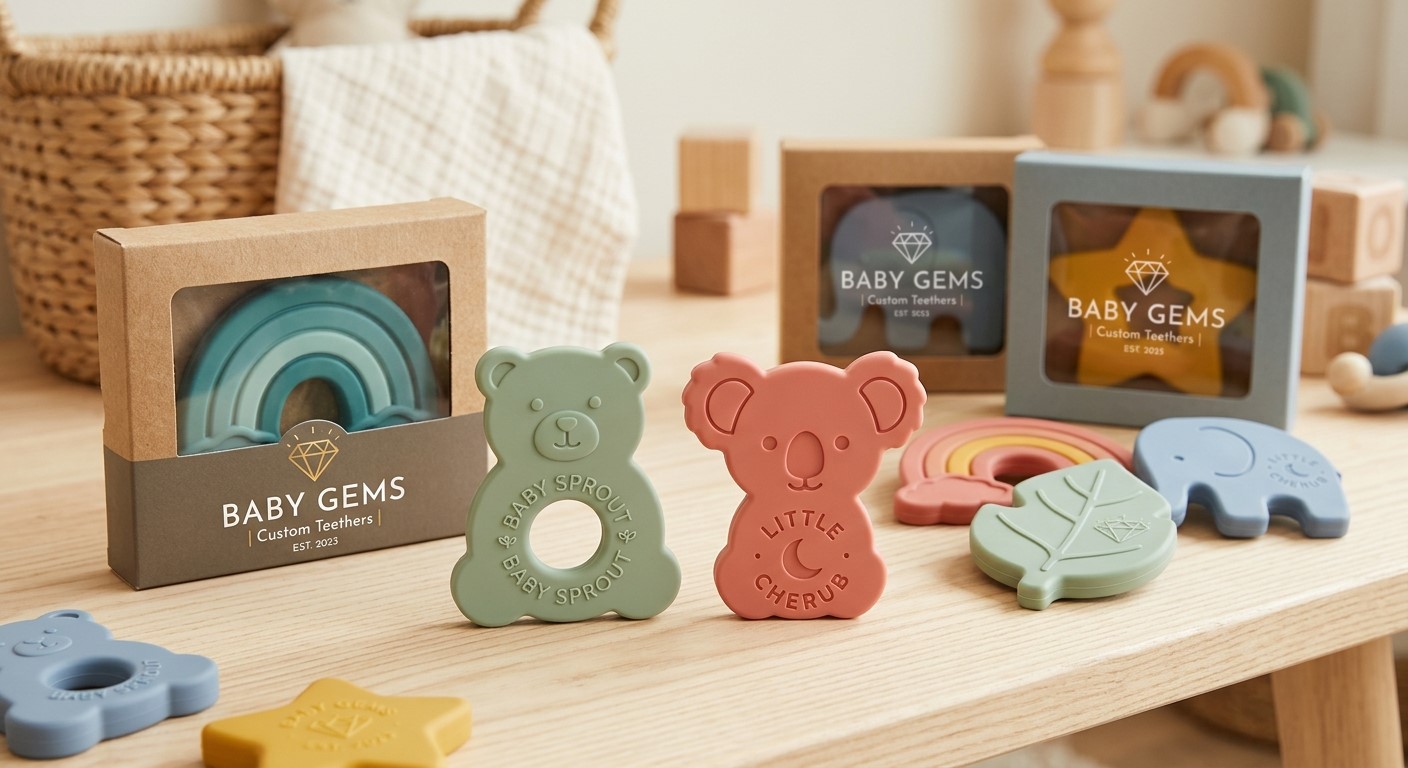
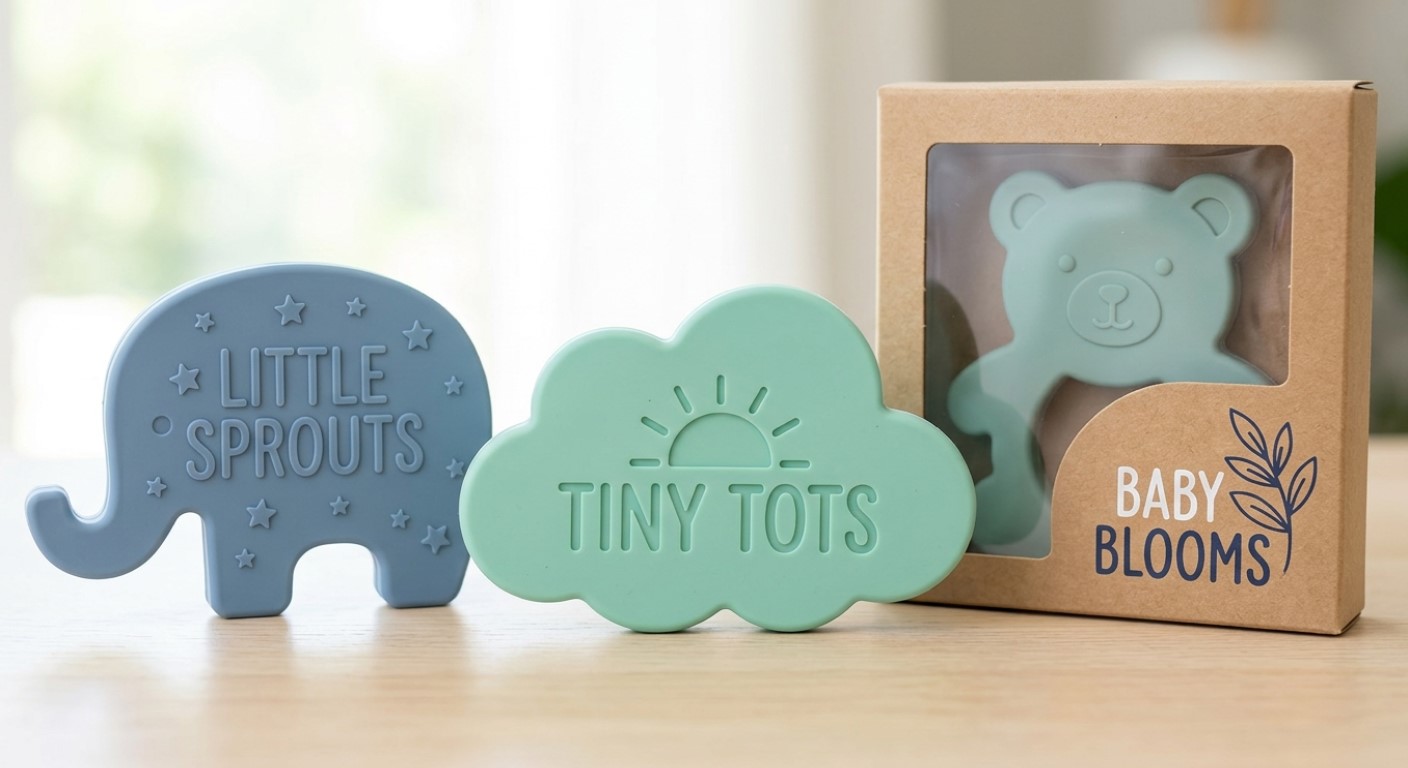
Embossed logos, debossed logos, molded graphics, and printed packaging help transform a baby teether into a recognizable retail product.
Packaging Options
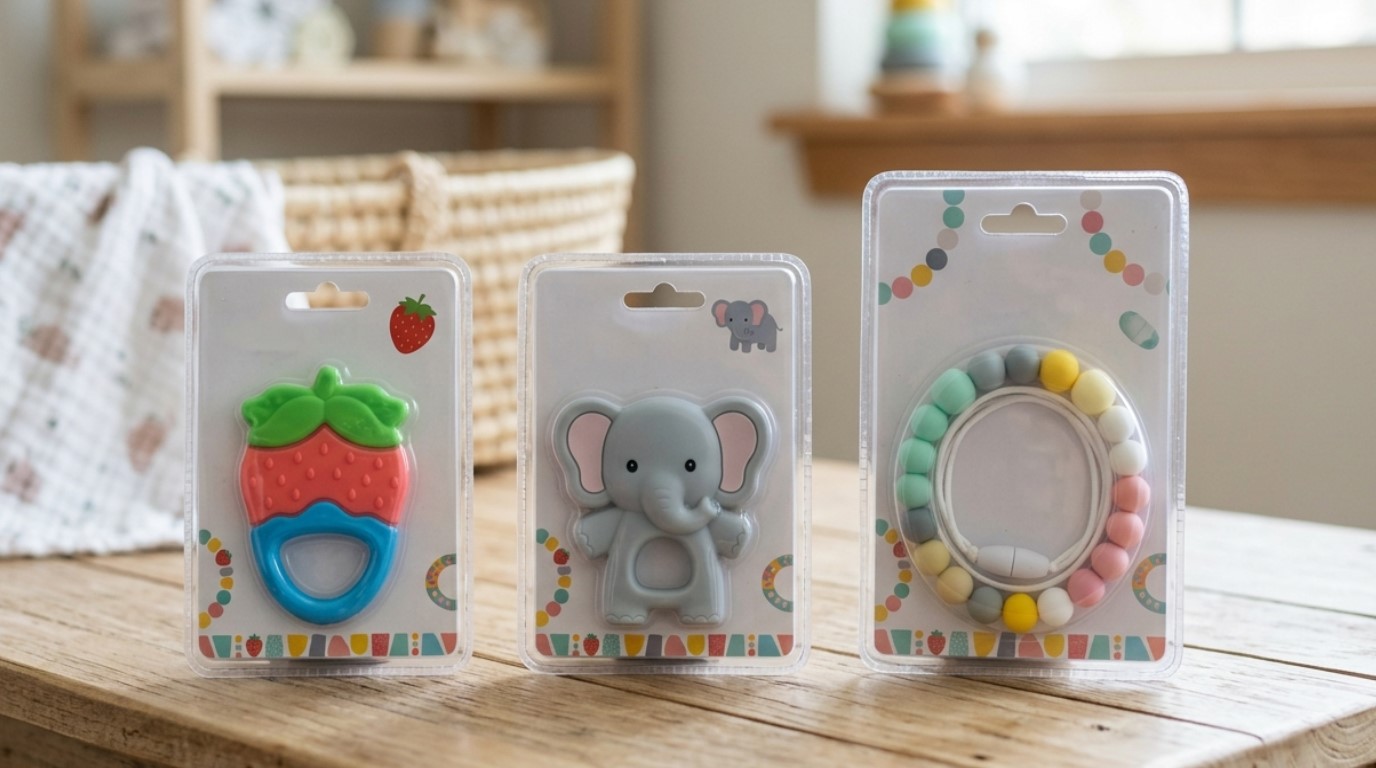
Bulk cartons, retail boxes, hanging cards, and e-commerce packaging can be matched to your distribution channel and target market.
Who We Manufacture Silicone Baby Teethers For
Different markets require different teether structures, certifications, packaging, and branding strategies.

Baby Product Brands
Develop exclusive silicone baby teethers that complement your existing feeding, soothing, or developmental product collections. Coordinated colors, molded branding, and retail packaging strengthen brand consistency across your product line.
Distributors & Wholesalers
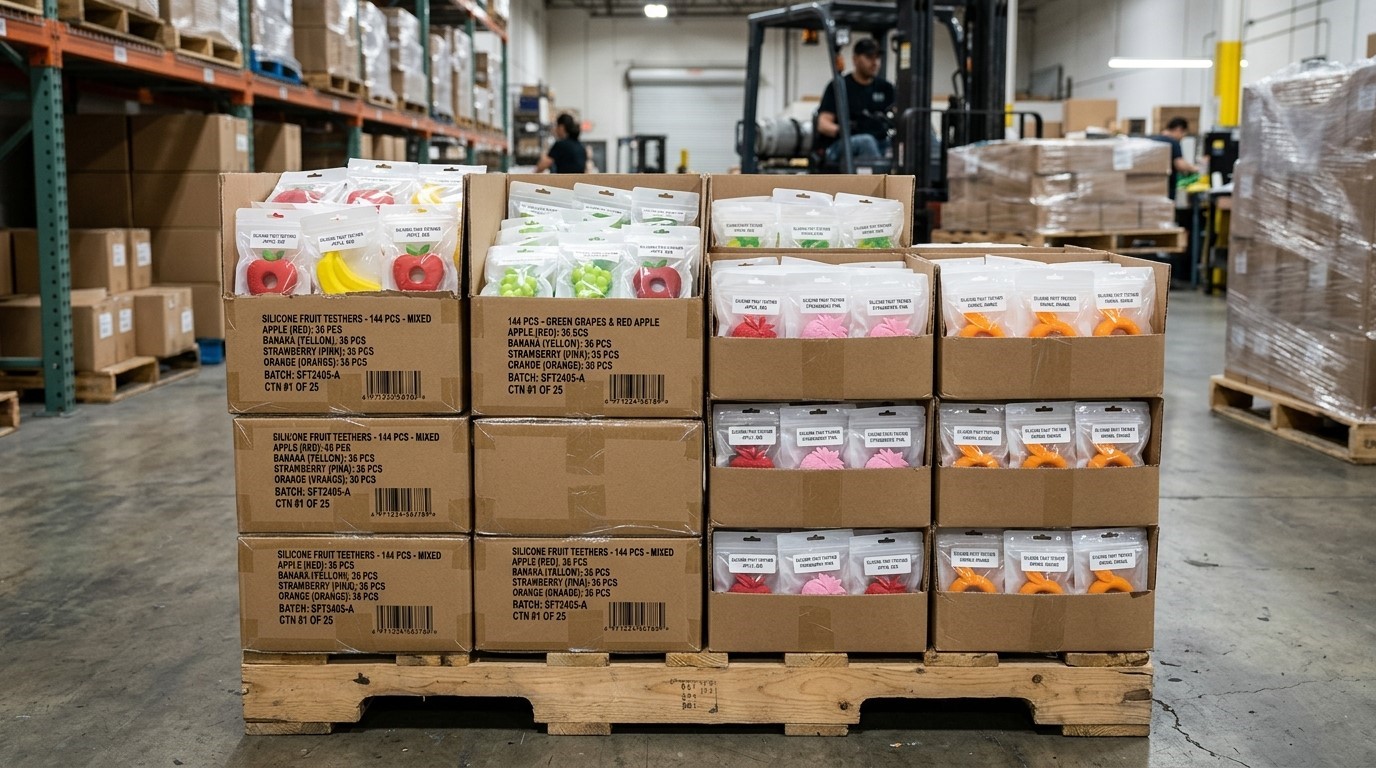
Source silicone baby teethers in bulk for baby stores, specialty retailers, supermarkets, and regional distribution networks. Stable production capacity and flexible packaging help simplify inventory management and replenishment.
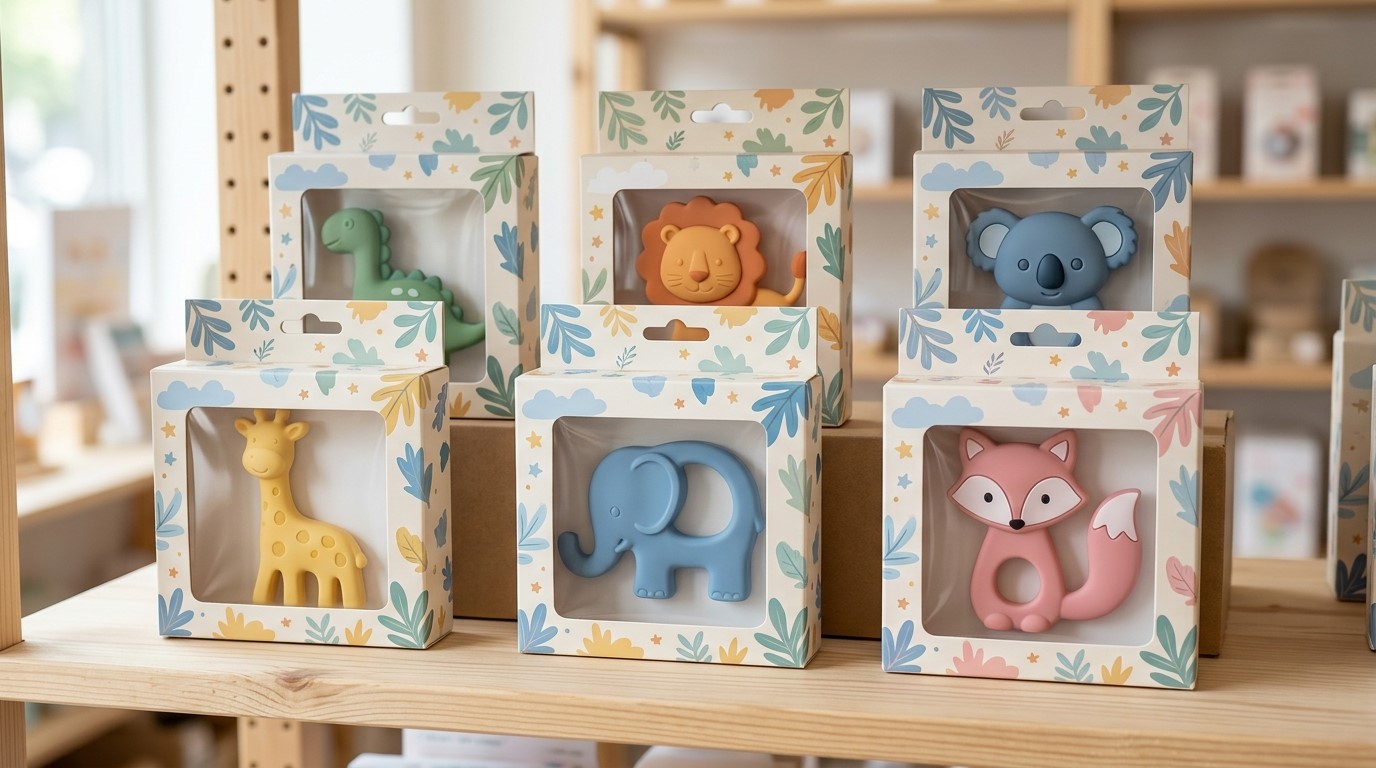
Private-Label & Ecommerce Sellers
Launch silicone teether collections through marketplaces, independent websites, and online retail channels. Barcode labels, product inserts, and customized packaging support faster product listing and fulfillment.
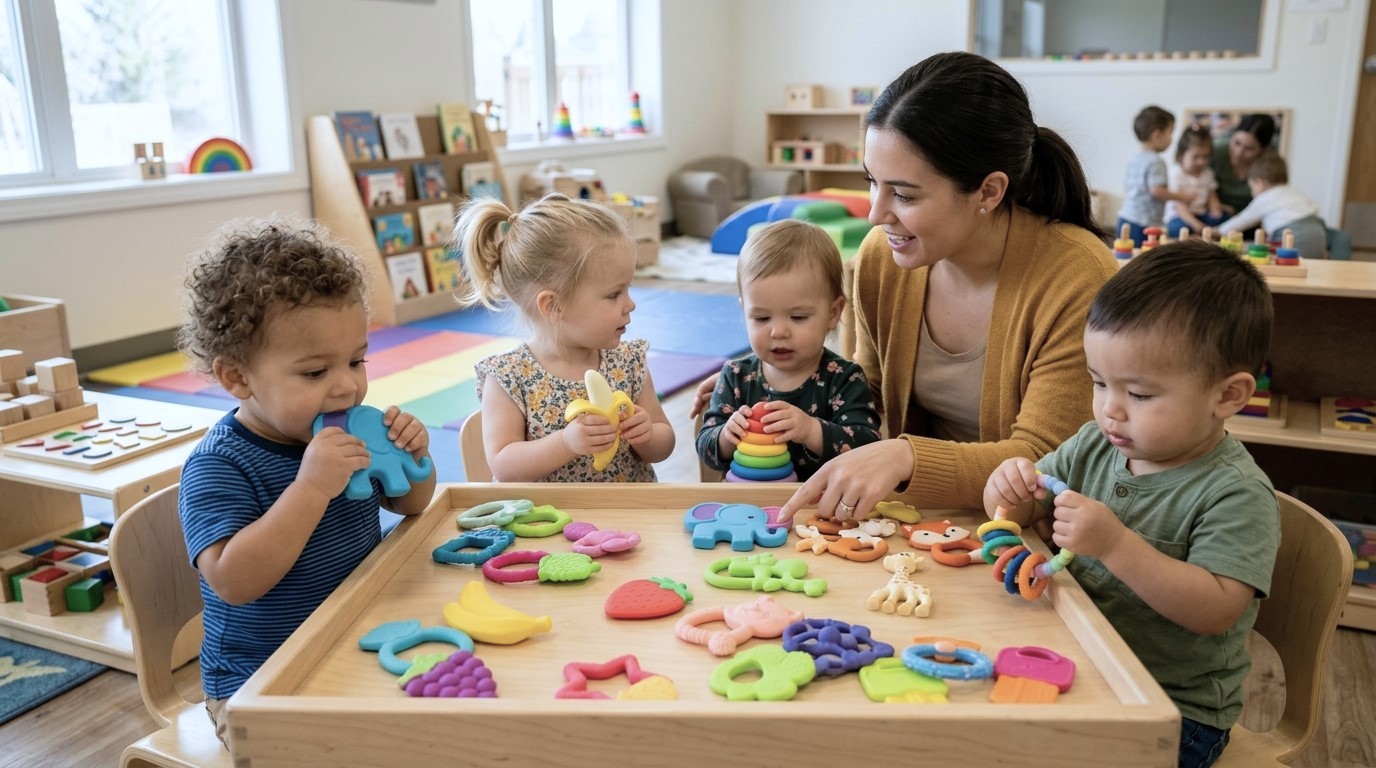
Nursery & Early Childhood Organizations
Develop practical teething products for childcare centers, educational programs, and infant development organizations. Easy-to-clean materials and durable construction support repeated daily use in supervised environments.
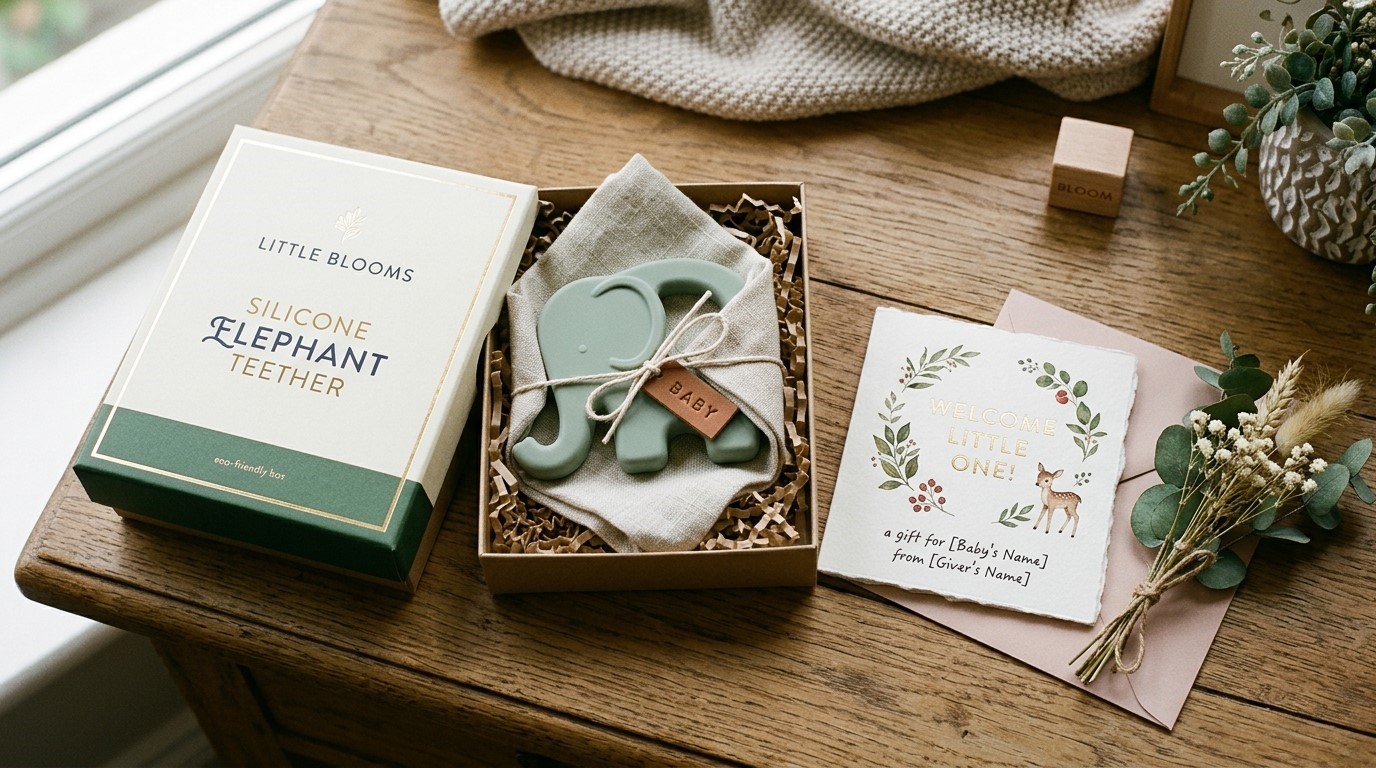
Gift & Promotional Companies
Create customized silicone teethers for maternity events, newborn gift sets, baby shower programs, and promotional campaigns. Personalized shapes and coordinated packaging create stronger product differentiation.
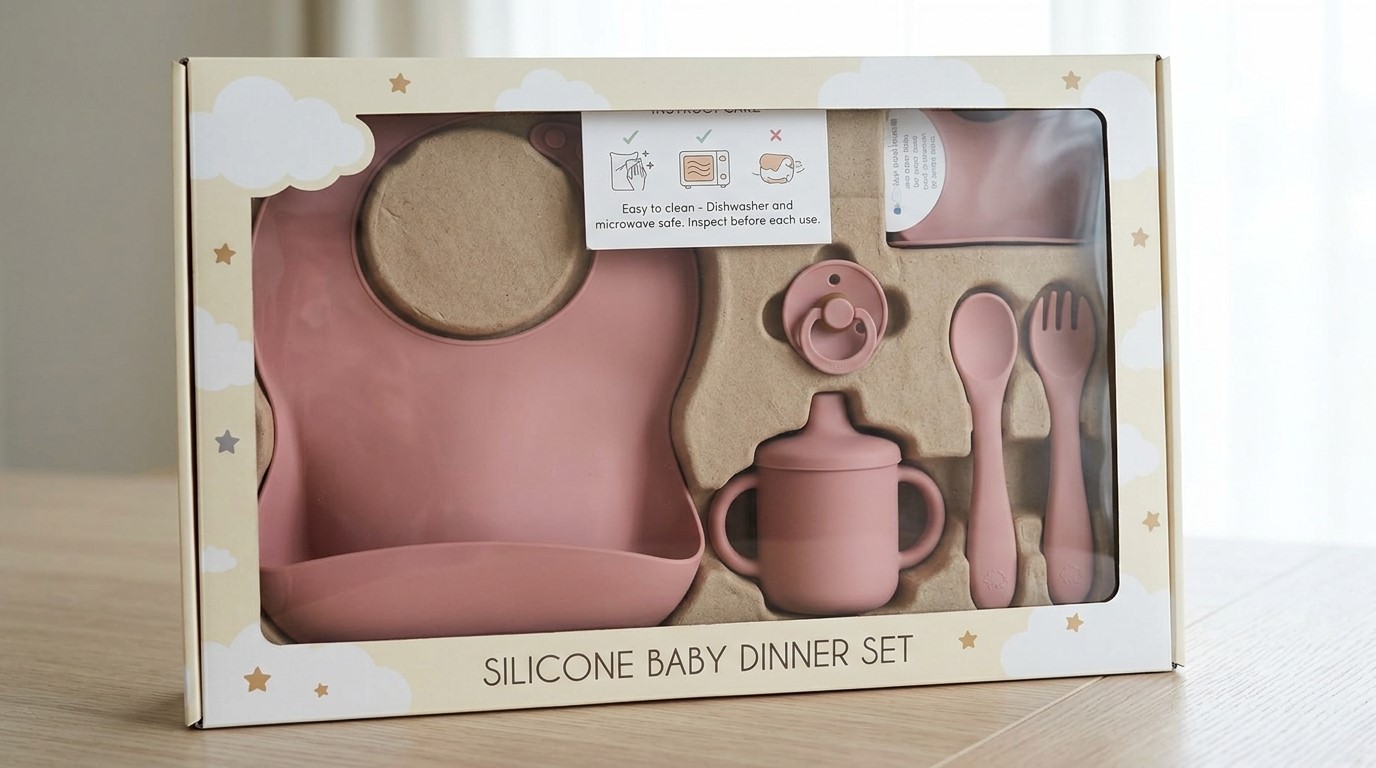
Infant Feeding Set Manufacturers
Integrate silicone teethers into complete feeding collections that include baby spoons, bibs, bowls, cups, and pacifiers. Unified material specifications and color systems simplify collection development.
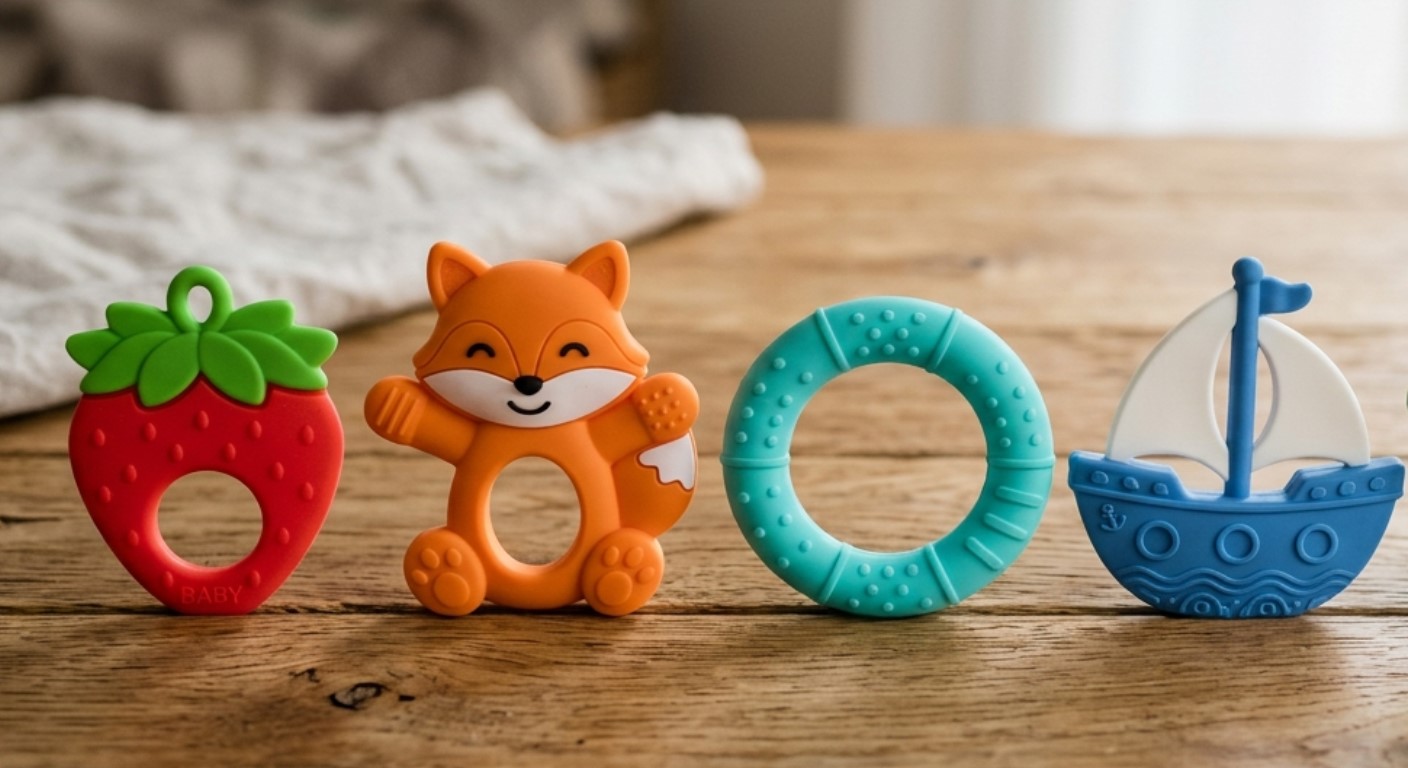
Silicone Baby Teether Types We Can Develop
Silicone Teething Toys
Silicone Teething Necklace
Silicone Teething Ring
Silicone Teething Beads
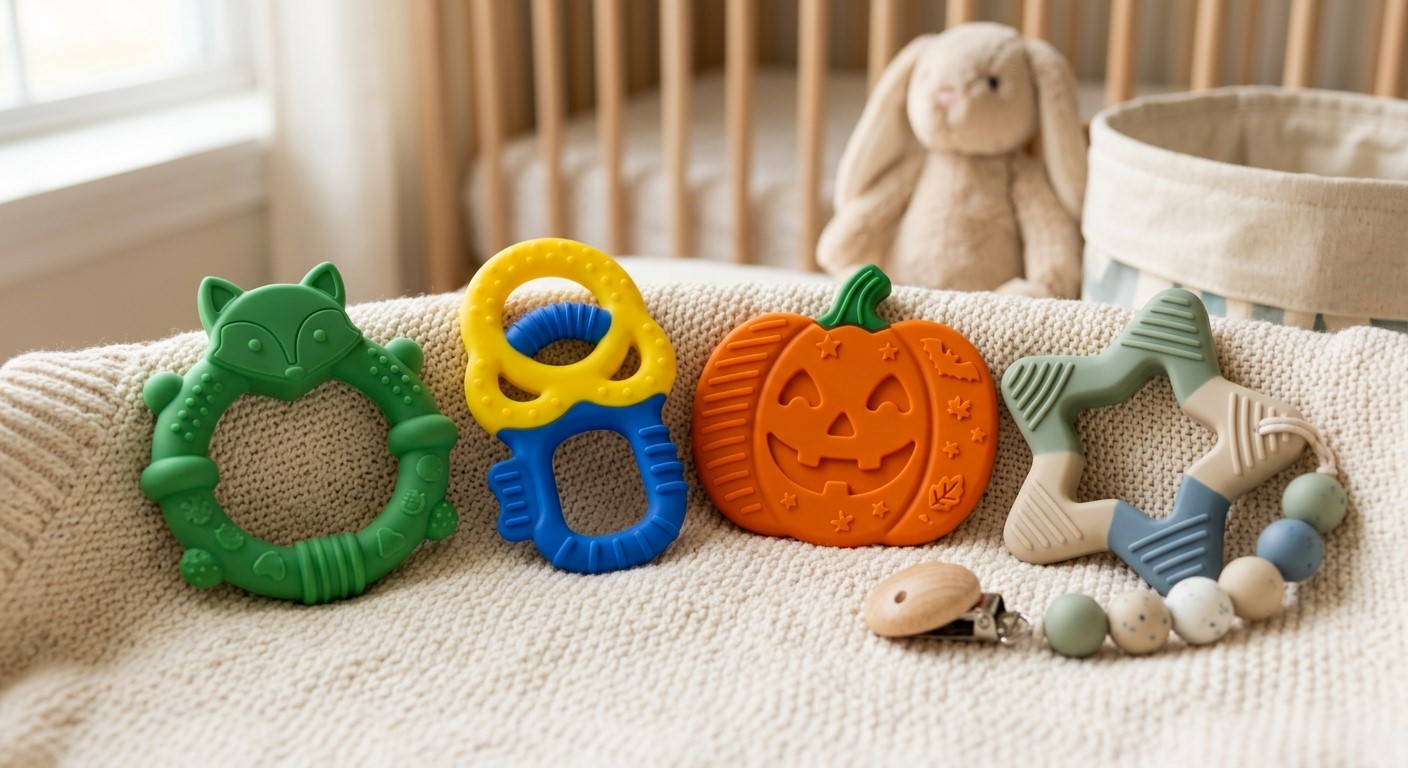
Animal Silicone Teethers
Textured Silicone Teethers
Silicone Water Teether
Silicone Teether Pacifier
Silicone Teething Mitten
Silicone Fruit Teether
Silicone Teething Straws & Silicone Teething Tubes
Custom Silicone Teether
Silicone Baby Teether Customization
Every successful teether project begins with structure, safety, branding, and retail positioning.
Choose a design that matches your product strategy, infant age group, and development goals. Different structures influence gripping comfort, chewing behavior, tooling complexity, and manufacturing cost.
Available options of silicone teething shapes include:
- Animal shapes
- Fruit shapes
- Toy shapes
- Ball shapes for sensory stimulations
- Geometric shapes
- Ring structures
- Mitten designs
- Silicone straws & hollow tubes
- necklace designs
- silicone beads for teething
- Wearable wrist styles
- Optional handles
- Character-inspired silhouettes
- Fully customized designs
Add sensory elements that improve oral stimulation, create different chewing experiences, and offer tactile exploration. Surface patterns should be reviewed together with mold release and cleaning requirements.
Available options include:
- Raised bumps
- Smooth nodes
- Fine ridges & lines
- Geometric patterns
- Soft bristles
- Massage textures
- Mixed-texture surfaces
- Smooth finishing areas
- Double-sided textures
- Multi-zone sensory designs
Build a color system that aligns with your baby product collection and retail identity. Physical color approval remains important because product thickness can influence the final appearance.
Available options include:
- Standard silicone colors
- Pantone color matching
- Single-color designs
- Dual-color molding
- Multi-color designs
- Marble-effect appearances
- Seasonal color collections
- Gender-neutral palettes
- Coordinated collection colors
Incorporate permanent branding directly into the product instead of depending only on external packaging. Logo size and position should be evaluated during tooling development.
Available options include:
- Embossed logos
- Debossed logos
- Molded graphics
- Character branding
- Brand symbols
- Product identification marks
- Packaging logos
- Combination branding
Start Your Silicone Baby Teether Project
Share your design, quantity, branding, and packaging requirements. Our engineering team will recommend the most suitable material, manufacturing process, and production solution for your project.
How to Specify a Better Silicone Baby Teether
A safe teether balances chewing comfort, material safety, cleaning convenience, and developmental value.
- Hardness — Softer materials improve chewing comfort, while excessive softness may reduce structural stability. Optional dual-hardness teether.
- Size — The overall dimensions should fit infant hands while minimizing potential choking risks.
- Texture — Surface patterns should provide stimulation without creating cleaning difficulties.
- Weight — Lightweight products are easier for infants to hold during extended use.
- Material — Food-contact materials should match the target market and required documentation.
- Cleaning Method — Daily cleaning requirements should be considered before selecting the final design.
- Age Range — Different developmental stages often require different product structures.
- Packaging Format — Retail channels and e-commerce platforms usually require different packaging systems.
A larger teether does not automatically provide better chewing performance.
Full Specification Guide
How to Specify a Better Silicone Baby Teether—hardness selection, texture design, age recommendations, cleaning requirements, safety considerations, and a complete purchasing checklist.
Silicone Baby Teether Logo & Branding Methods
Choose the branding method that fits the logo, surface and tooling plan.
Mold-In Graphics
Patterns, characters, numbers, and brand elements can be integrated directly into the molding tool to create distinctive visual identities.
Packaging Branding
Printed packaging provides additional space for brand storytelling, instructions, safety information, barcodes, and retail marketing materials.
Embossed Logos
Raised logos create permanent branding directly within the molded silicone structure.
Debossed Logos
Recessed logos with durable product identification through repeated cleaning.
Silicone Baby Teether Material & Performance Options
The right material improves safety, durability, comfort, and long-term product performance.
Food-contact safety should always be the primary consideration when choosing materials.
For baby teethers, food-grade silicone remains the preferred material because it is soft, flexible, odor-resistant, and suitable for repeated chewing. Material documentation should always match the selected silicone compound and destination market.
Although tough silicone teethers are safe for food contact, cracks or damage to the teether may pose a risk to babies. Therefore, inspect the teether for damage before each use.
Material comparison
Silicone vs. Wood Teether: Which Is Best?—Storage conditions, hardness, safety, cleaning, and maintenance considerations.
Hardness directly affects chewing comfort and product performance.
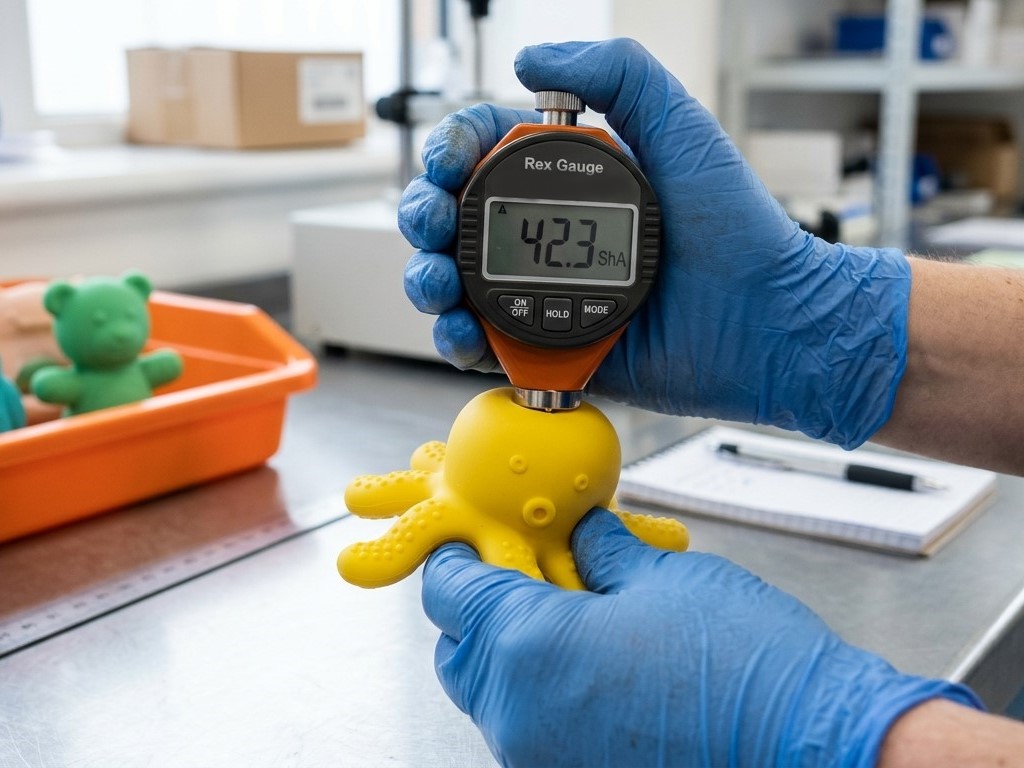
Most silicone baby teethers are developed within a 30–60 Shore A range. Softer materials create a gentler chewing experience, while firmer compounds provide better shape retention and structural support.
A wider temperature range creates more flexible daily use.
Quality silicone maintains its performance between -40°C and 230°C, allowing the product to withstand refrigeration, warm-water cleaning, and routine sterilization without becoming brittle or deforming.
Small connecting areas often become the first failure point.
Thin handles, narrow bridges, and detailed decorative elements experience repeated pulling and twisting during use. Reinforcing these areas during product development significantly improves product durability.
Strong odors may indicate problems with material selection or processing.
Properly cured silicone should not produce noticeable chemical odors during normal use. Material formulation, pigments, and curing systems all influence the final product.
Available documents may include:
- Material data sheets
- FDA-approved food grade silicone
- LFGB-related documentation
- REACH-related reports
- BPA-free declarations
- Phthalate-free declarations
- Migration test reports
- Project-specific documentation
Documentation requirements should always be confirmed according to the target market, selected materials, pigments, and product configuration.
A raw-material report should not be presented as proof for every finished-product configuration.
Silicone baby teethers perform best when cleaned regularly, dried completely, and stored in a clean environment away from sharp objects.
Maintenance Guide
How to Clean & Care for Silicone Baby Teethers—cleaning methods, sterilization recommendations, storage practices, and maintenance guidelines.
How Silicone Baby Teethers Are Manufactured

STEP 1: Requirement Review
Every project begins by reviewing the product concept, age group, dimensions, texture, hardness, color, branding method, packaging requirements, and destination market.
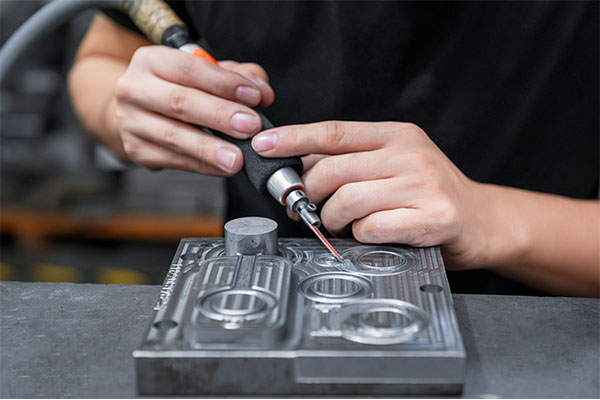
STEP 2: Tooling Evaluation
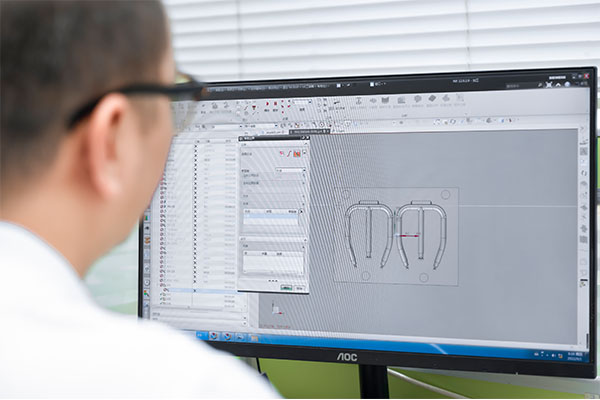
Engineers evaluate the product structure, undercuts, wall thickness, gripping areas, and texture details to determine whether an existing tool can be used or new tooling is required.
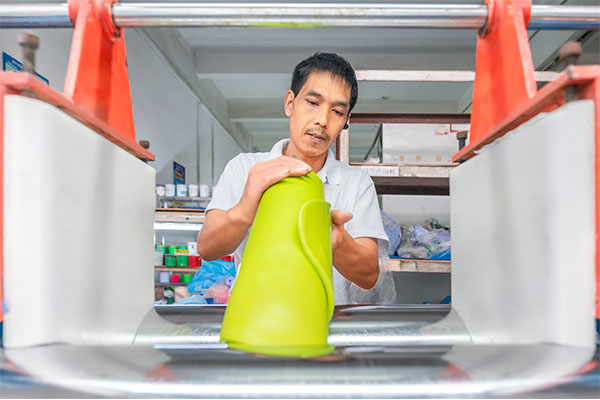
STEP 3: Material and Color Preparation
The approved silicone compound is mixed with the selected pigment according to the confirmed formulation, ensuring consistent material performance and color reproduction.
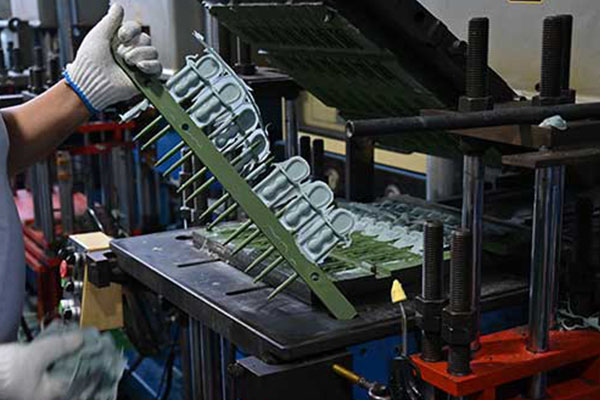
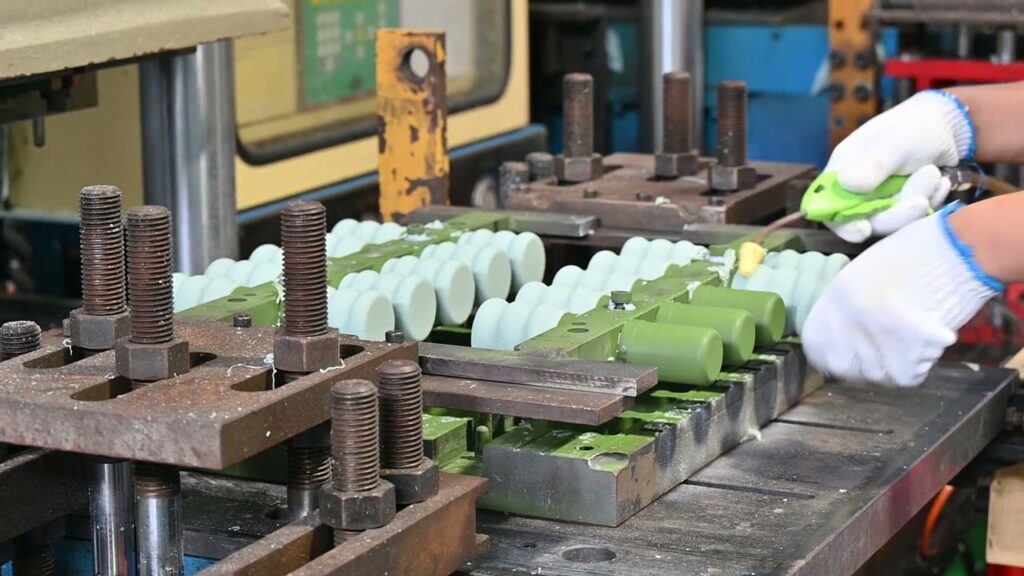
STEP 4: Silicone Molding
Compression molding or liquid silicone molding is selected according to product complexity, structural requirements, production volume, and tooling design.
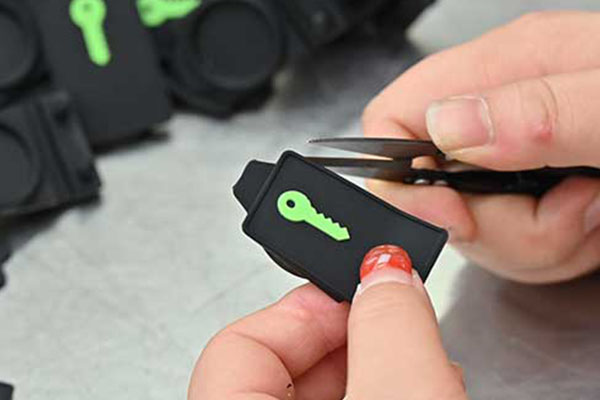
STEP 5: Deflashing and Surface Finishing
After curing, excess material is removed from the molded product, and all edges, textures, and chewing surfaces are inspected for defects.
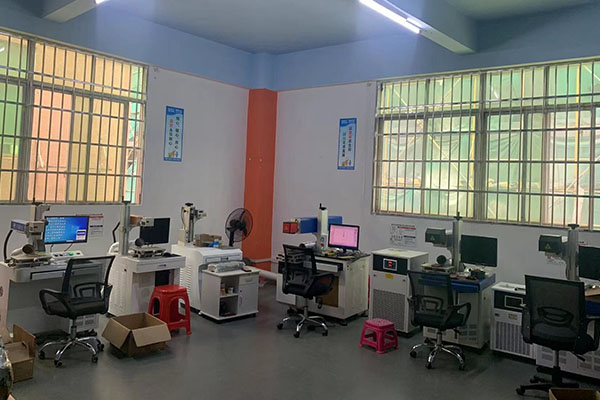
STEP 6: Logo and Decorative Processing
Embossed details, molded graphics, and other branding elements are processed according to the approved artwork and positioning requirements.
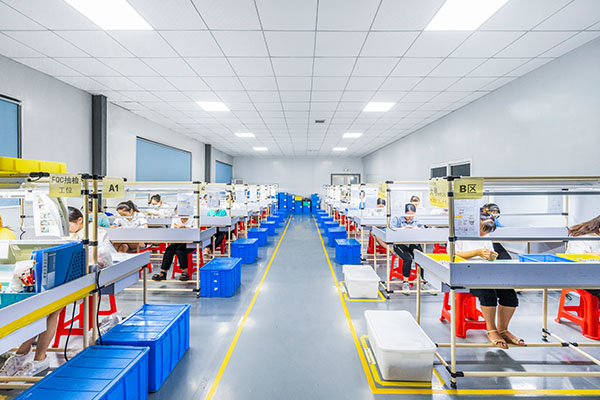
STEP 7: Quality Inspection
Finished products are inspected against the approved sample, technical drawings, production standards, and packaging specifications before release.
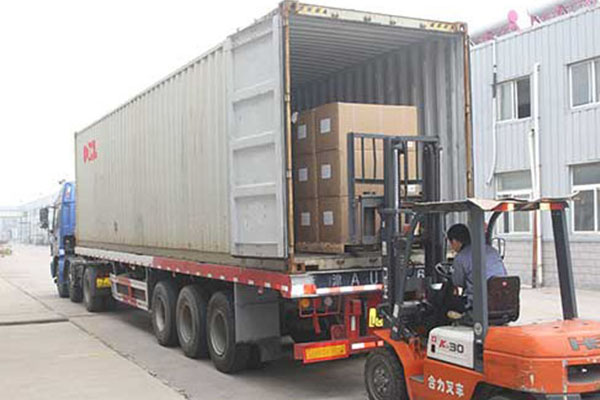
STEP 8: Packaging and Shipment
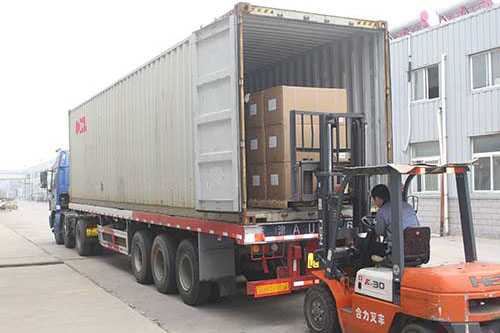
Products are counted, packaged, labeled, carton-marked, and prepared for export according to the approved shipping and packaging plan.
Silicone Baby Teether Quality Control
Quality control extends beyond material verification because infants repeatedly chew, pull, twist, and drop teething products during everyday use.
AQL 2.5 / 4.0 Standard Inspection
Final inspection follows a random sampling plan to evaluate batch consistency.
AQL 2.5
Critical / Major Defects
AQL 4.0
Minor Visual Flaws
Alternative inspection standards can be implemented according to customer requirements.
Approved Sample Control
The approved sample becomes the production reference for:
- Dimensions
- Hardness
- Texture
- Color
- Weight
- Logo position
- Packaging presentation
Incoming Material Review
Silicone compounds, pigments, additives, and supplier documentation are reviewed before production begins.
In-Process Inspection
Operators continuously inspect molding completeness, flash lines, surface quality, and texture consistency throughout production.
Appearance Inspection
Each silicone baby teether is examined for:
- Tears
- Surface contamination
- Flash residue
- Air bubbles
- Incomplete molding
- Surface damage
Dimension Verification
Overall dimensions, thickness, and critical structural areas are measured against approved specifications.
Color Verification
Finished products are compared with approved color references under controlled lighting conditions.
Logo Quality
The inspection process verifies:
- Logo position
- Logo size
- Edge definition
- Molded depth
- Missing details
- Printing consistency
Packaging Verification
Labels, inserts, cartons, barcodes, packaging quantities, and shipping marks are verified before shipment.
Silicone Baby Teether Packaging Options
Choose packaging by sales channel to optimize transportation, presentation, protection, and experience.

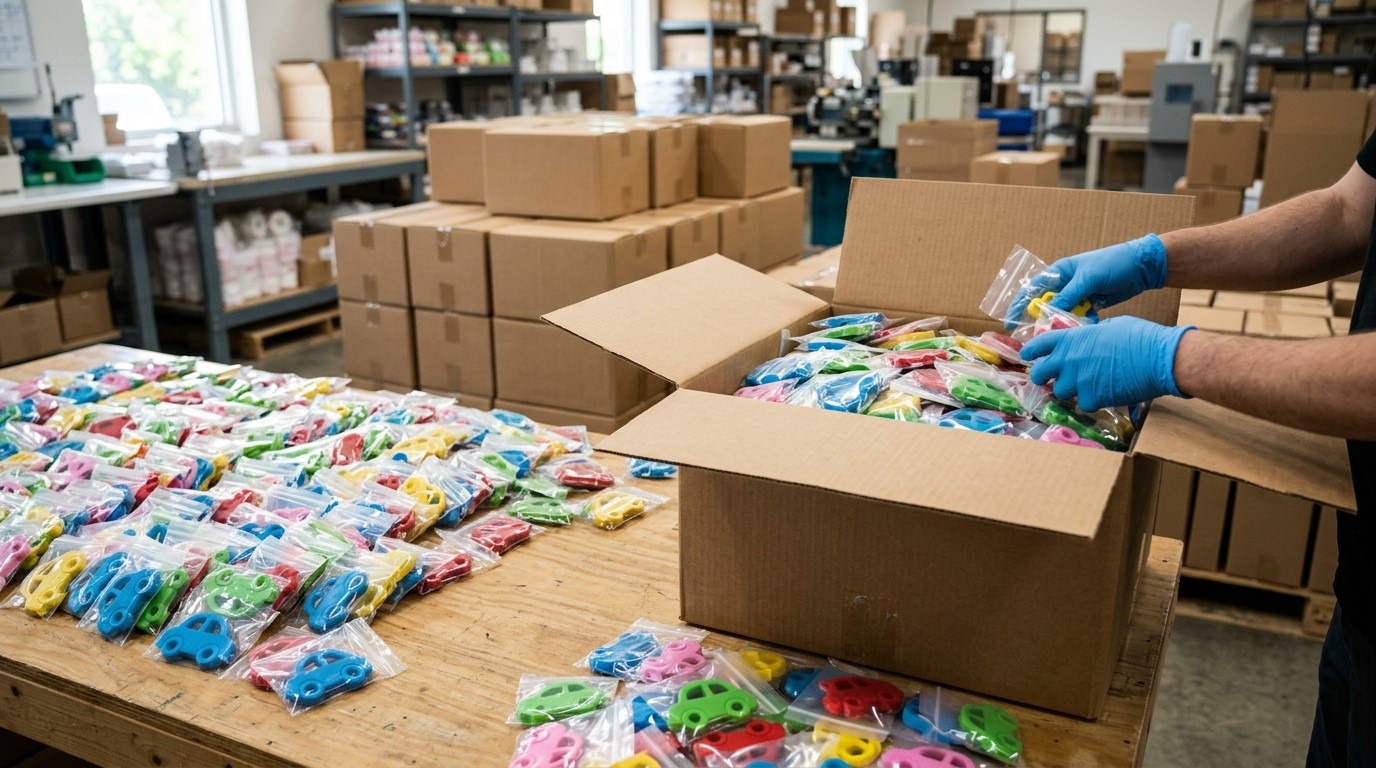
Bulk Packaging
PE bags and simplified carton packaging reduce unit costs while improving shipping efficiency for distributors, wholesalers, and large-volume procurement programs across multiple sales channels.
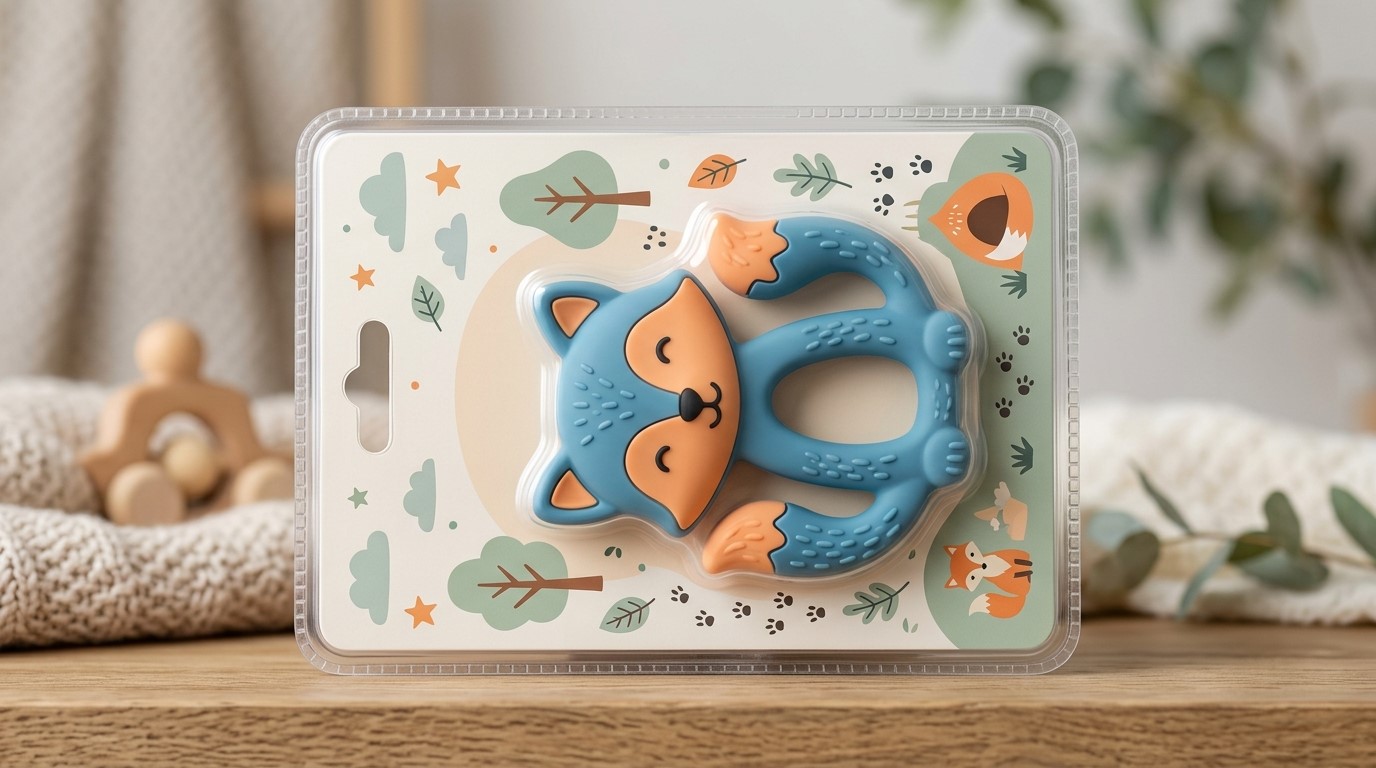
Retail Packaging
Printed paper boxes, hanging cards, and window packaging create stronger shelf visibility while providing space for branding, safety instructions, age recommendations, and product information.
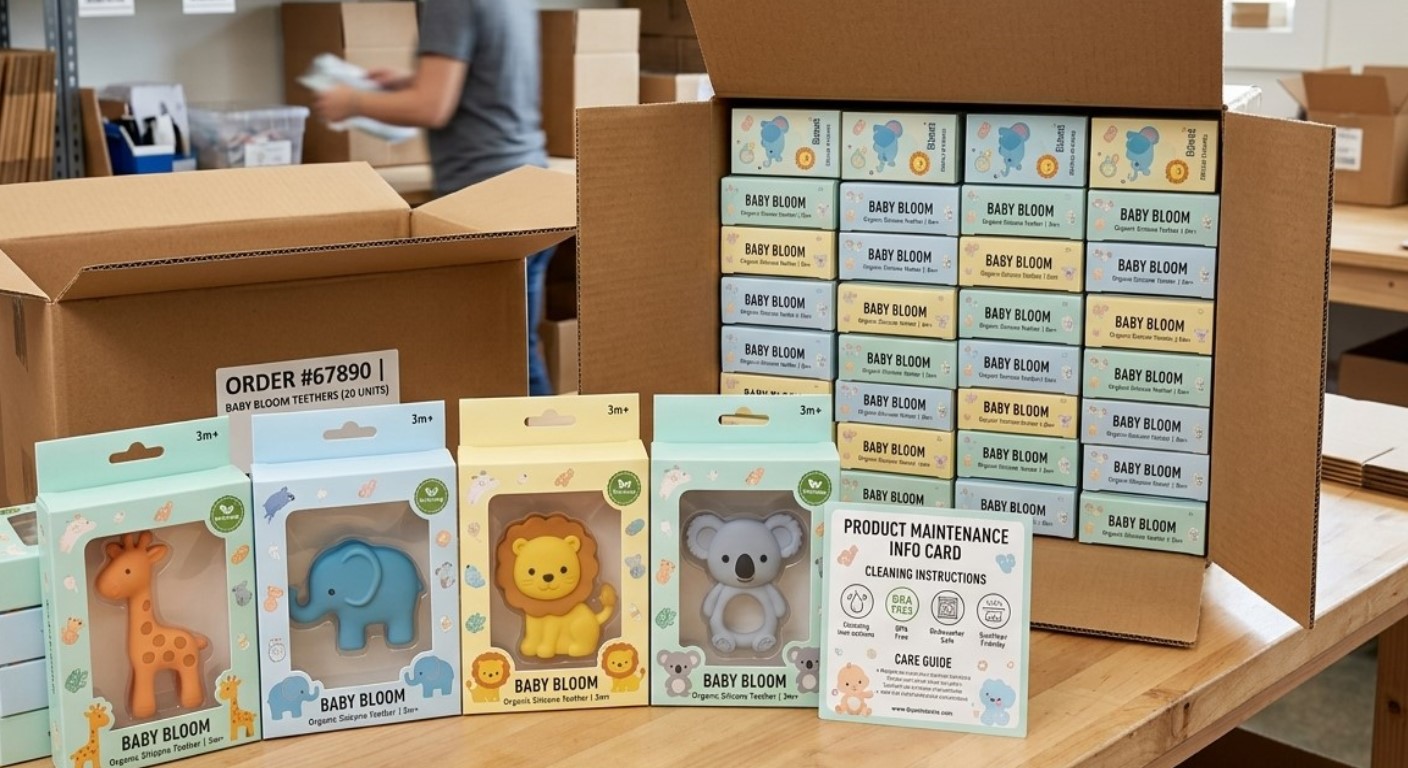
Ecommerce Packaging
Barcode labels, product inserts, SKU identification, and shipping-compatible packaging help online sellers simplify inventory management while protecting products during fulfillment and delivery.
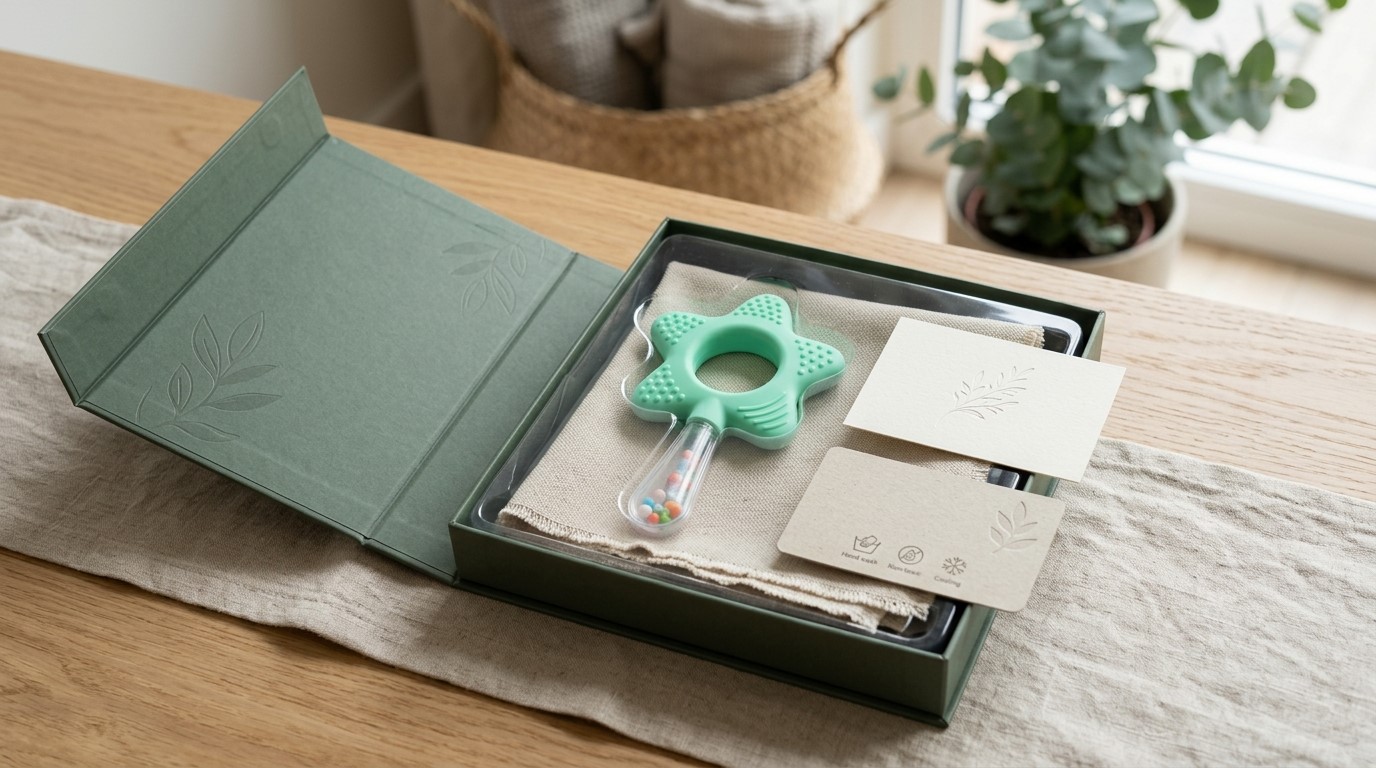
Premium Brand Packaging
Gift boxes, customized inserts, coordinated packaging systems, and premium presentation improve perceived value while creating a stronger unboxing experience for higher-end baby brands.

Silicone Baby Teether Typical Specifications
| Specification | Typical Reference |
|---|---|
| Product | Custom silicone baby teether |
| Applications | Teething, gum soothing, sensory development, oral exploration |
| Material | Food-grade platinum-cured or peroxide-cured silicone |
| Hardness range | 30–60 Shore A |
| Temperature range | -40°C to 230°C |
| Product structure | Ring, animal, fruit, mitten, wrist, or custom designs |
| Surface | Smooth, textured, ridged, or multi-texture |
| Colors | Standard colors or custom Pantone matching |
| Logo methods | Embossed, debossed, molded graphics |
| Molding process | Compression molding or liquid silicone molding |
| Age recommendation | Customized according to product design |
| Packaging | PE bags, header cards, paper boxes, gift boxes, ecommerce packaging |
| Existing-style order quantity | From 500 pieces |
| New custom project quantity | From 3,000 pieces |
| Sample lead time | 5–10 working days |
| Mass-production lead time | 15–25 working days after approval |
| Inspection | Approved sample and AQL inspection |
| OEM and ODM | Available |
Final specifications are confirmed according to the selected mold, material, artwork and approved sample.
Why Work with RY Silicone
Silicone Manufacturing Experience Since 2012
RY Silicone has specialized in custom silicone product manufacturing since 2012, supporting overseas baby product brands from concept development through production and international delivery.
10,000+ m² Production Facility
An integrated manufacturing facility supports tooling, molding, finishing, branding, quality inspection, and packaging under one production system.
30+ Production Machines
Multiple molding machines allow different product structures, production volumes, and customization requirements to be managed simultaneously.
Up to 100,000 Silicone Products per Day
High production capacity supports repeat orders, seasonal demand, new product launches, and large-volume wholesale programs without compromising delivery schedules.
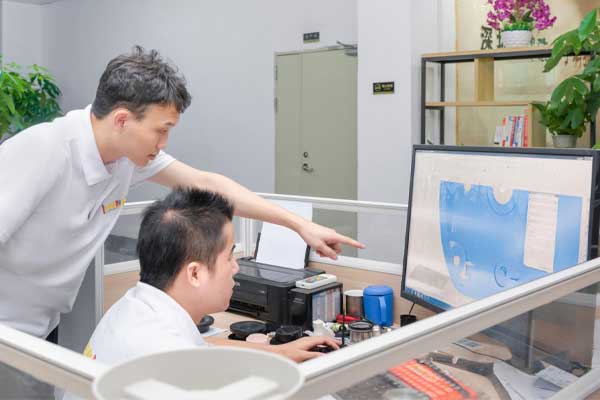
Engineering Review Before Quotation
Our engineering team evaluates product structure before preparing a quotation.
Dimensions, texture, hardness, branding, packaging, and certification requirements are reviewed together rather than treated as separate decisions.
Sample-Based Production
Mass production begins only after sample approval. Dimensions are verified first, followed by color, texture, branding details, packaging presentation, and final documentation.
Export Project Support
RY Silicone supplies custom silicone baby products to customers throughout North America, Europe, and other international markets.
Different destination markets may require different documentation. FDA, LFGB, REACH, packaging labels, and age-related requirements should be reviewed before production begins.
Silicone Baby Teether FAQ and Final RFQ
What is the MOQ for custom silicone baby teethers?
The MOQ usually starts from 500 pieces for existing products with customized branding and from 3,000 pieces for completely new product development.
Final quantities depend on tooling, packaging, and structural complexity.
Which silicone material is best for baby teethers?
Food-grade platinum-cured silicone is the preferred option for most baby teether applications because it provides excellent flexibility, durability, and food-contact performance.
Can you develop a completely new silicone baby teether from our design?
Yes.
Product development can begin with sketches, technical drawings, 3D files, physical samples, or conceptual references.
Our engineering team will evaluate manufacturability before tooling begins.
What silicone teether designs should distributors source for different infant age groups?
For 3-month-olds, source extremely soft, single-piece teethers without small parts.
For 4 to 5 months, choose firmer, multi-textured silicone shapes that encourage two-handed exploration.
For 6-month-olds, stock ring-style teethers with sensory elements to support grasping and shaking.
Finally, for 9 to 12 months, provide larger, ergonomic, and larger silicone designs capable of withstanding stronger bites during advanced teething stages.
Are silicone teethers safe to put in the freezer?
It is generally recommended to avoid doing so.
They can become dangerously hard in the freezer, which can bruise delicate gums or stick to your baby's lips.
Instead, chill the teether in the refrigerator. A cool temperature safely reduces inflammation without the freezing extremes.
RY Silicone offers manufacturer silicone water teethers and refrigerable teethers.
Notice: Offer two options—one cooled and one at room temperature—and let your baby choose which feels better. Always check teethers regularly for wear and tear to ensure safety.
Can you match our brand colors for silicone teethers?
Yes.
Pantone color matching is available. Physical sample approval is recommended because material thickness and surface texture can slightly influence the final appearance.
Which hardness is most suitable for silicone baby teethers?
Most products are developed between 30 and 60 Shore A.
Softer materials provide a gentler chewing experience, while slightly firmer materials improve structural stability and durability.
Are your silicone baby teethers BPA-free?
BPA-free materials are available.
Documentation should be confirmed according to the selected material formulation and the requirements of the destination market.
Can silicone baby teethers be sterilized?
Yes.
Many silicone teethers can tolerate warm-water cleaning and common sterilization methods. Cleaning instructions should always match the approved product specifications.
Which logo method provides the longest service life?
Embossed and debossed logos generally provide the best durability because the branding becomes part of the molded structure instead of depending on surface printing.
Can you provide FDA, LFGB, or REACH reports?
Available documentation depends on the selected silicone compound, pigments, packaging materials, and the target market.
Please provide your required standards before production begins.
What information do you need for a quotation?
Please provide:
- Estimated order quantity
- Product dimensions
- Preferred structure
- Hardness requirements
- Texture requirements
- Pantone color
- Logo artwork
- Packaging requirements
- Destination country
- Required certifications
- Reference samples or drawings
- Target delivery date