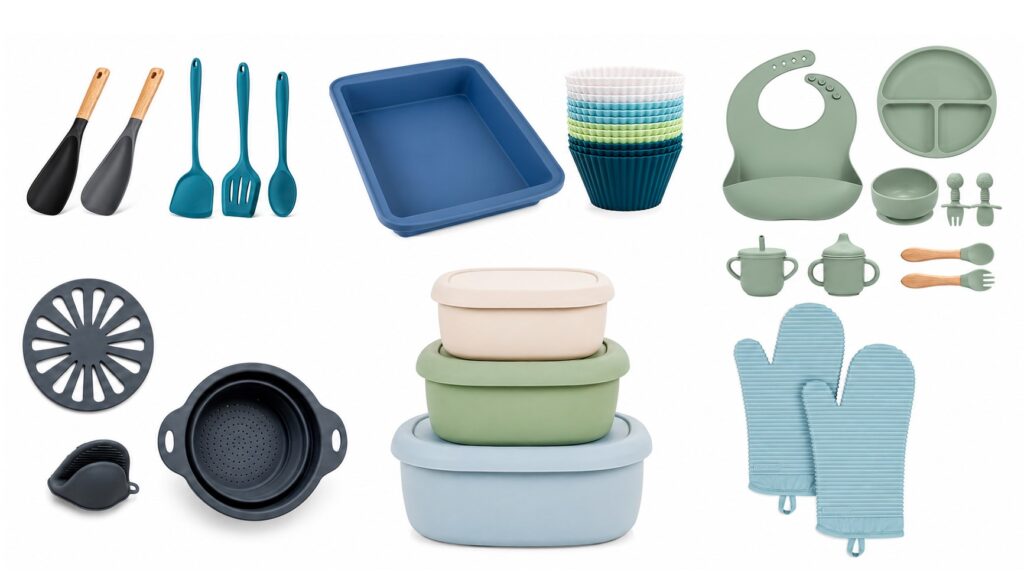

Silicone Kitchen Products Manufacturer
Silicone kitchen products designed for cooking, baking, food preparation and storage. We manufacture OEM and ODM silicone kitchenware with custom colors, logos, packaging and product designs for brands, wholesalers and retailers worldwide.
Home » Silicone Kitchen Products Manufacturer
What Is a Silicone Kitchen Product?
A silicone kitchen product is a food-contact utensil or storage item made from food-grade silicone for cooking and baking, valued for flexibility and heat resistance. Through OEM/ODM manufacturing, these items can be custom-made to match your exact design, dimensions, color, hardness, logo, packaging, and branding requirements.
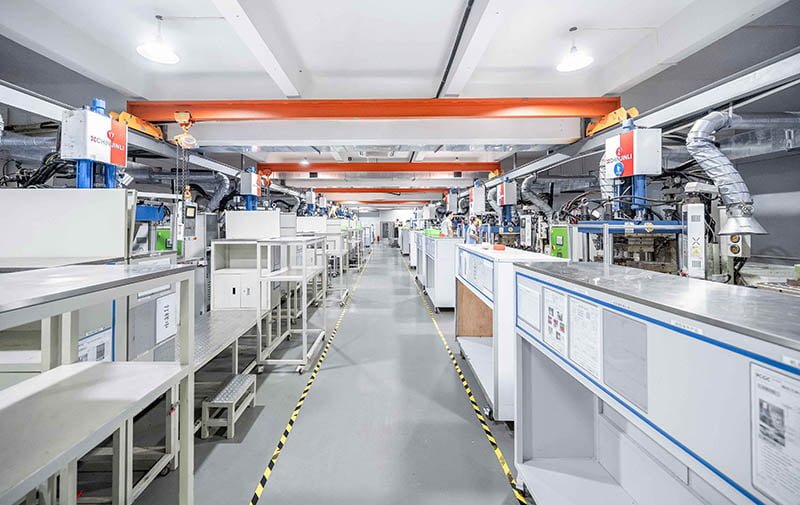
RY Silicone is a custom silicone manufacturer based in China, established in 2012. Our production facility covers more than 10,000 m², operates 30+ production machines, and supports output of up to 100,000 silicone products per day. We supply custom silicone kitchen products to brands, distributors, wholesalers and importers across North America, Europe and many other international markets.
Silicone Kitchen Products Manufacturing at a Glance
MOQ
From 500 pieces for existing kitchen products with custom branding to 3,000 pieces for a new custom kitchenware design.
Lead Times
Samples in 5–10 working days, with mass production in 15–25 working days after approval.
Material & Performance
Food-grade platinum- or peroxide-cured silicone, 30–80 Shore A, stable from -40°C to 230°C.
Branding & Customization
Most product categories offer custom colors, molded logos, laser engraving, screen printing, and private labeling.
Who We Manufacture Silicone Kitchen Products For

Kitchenware Brands
Develop a complete collection of silicone kitchenware with consistent colors, materials, and packaging that reflect your brand identity.Expanding an existing product line or launching a new collection, we support OEM and ODM development from concept to mass production.
Importers, Distributors & Wholesalers
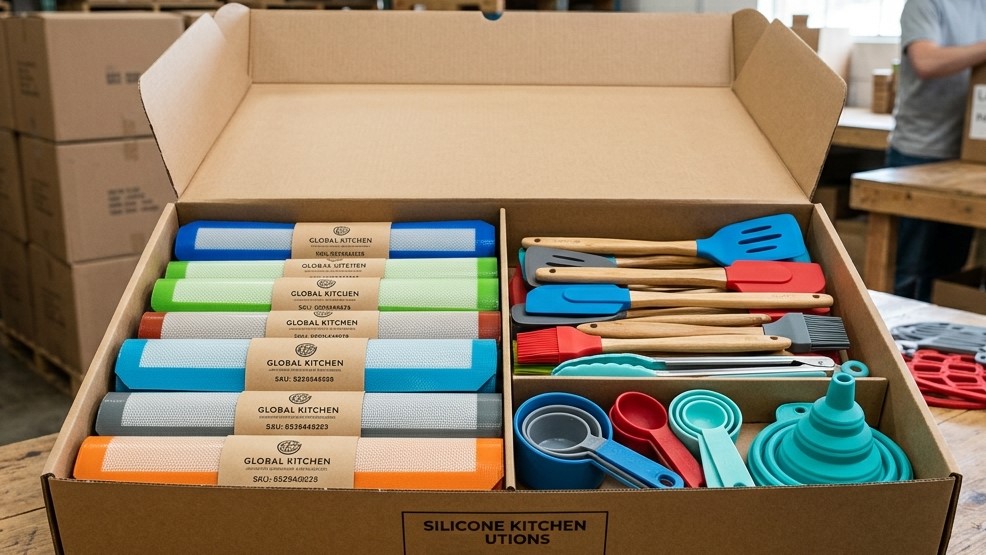
Purchase silicone kitchen products in bulk for supermarkets, department stores, kitchenware distributors, and wholesale markets.As a direct manufacturer, we offer consistent production, competitive prices, and customizable packaging for large orders.
Retail & Ecommerce Sellers
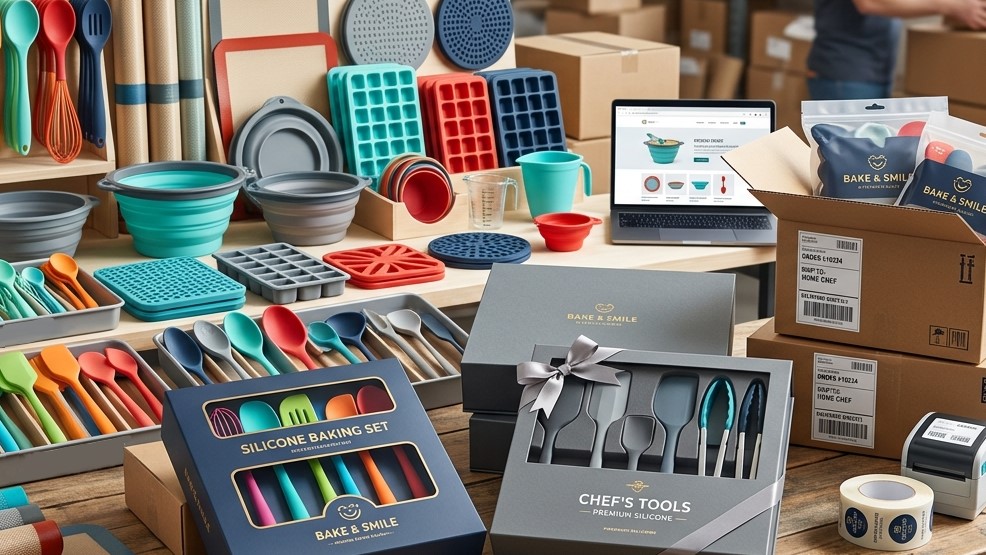
Private-label silicone kitchen products help online sellers create unique product portfolios on Amazon, Shopify, Walmart Marketplace, and other e-commerce platforms.We can prepare custom packaging, barcode labels, instruction manuals, and retail-ready presentations before shipment.
Event & Promotional Companies
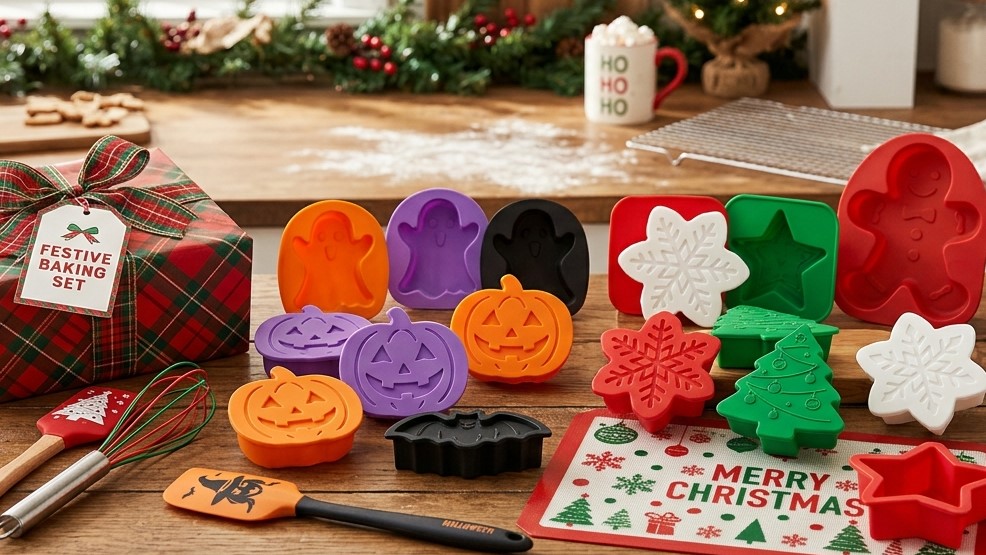
Silicone kitchen accessories are popular for promotional campaigns, seasonal gifts, and corporate branding.Custom colors, molded logos, and gift packaging allow promotional products to represent your brand effectively while remaining practical for everyday use.
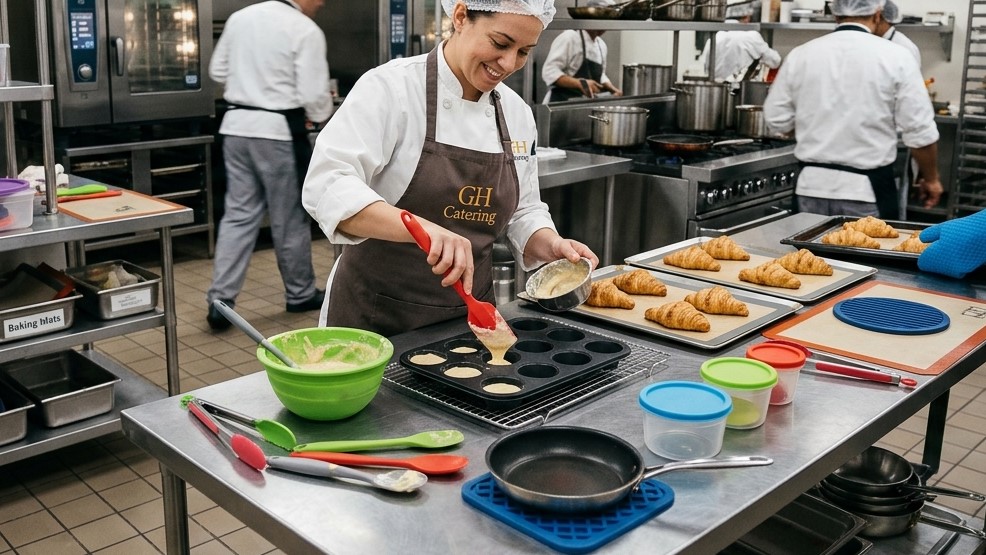
Restaurant, Catering & Hospitality Suppliers
Commercial kitchens require kitchen tools that withstand frequent use, high temperatures, and repeated cleaning.We manufacture durable silicone utensils, baking tools, and food-contact accessories suitable for restaurants, hotels, cafés, and catering businesses.
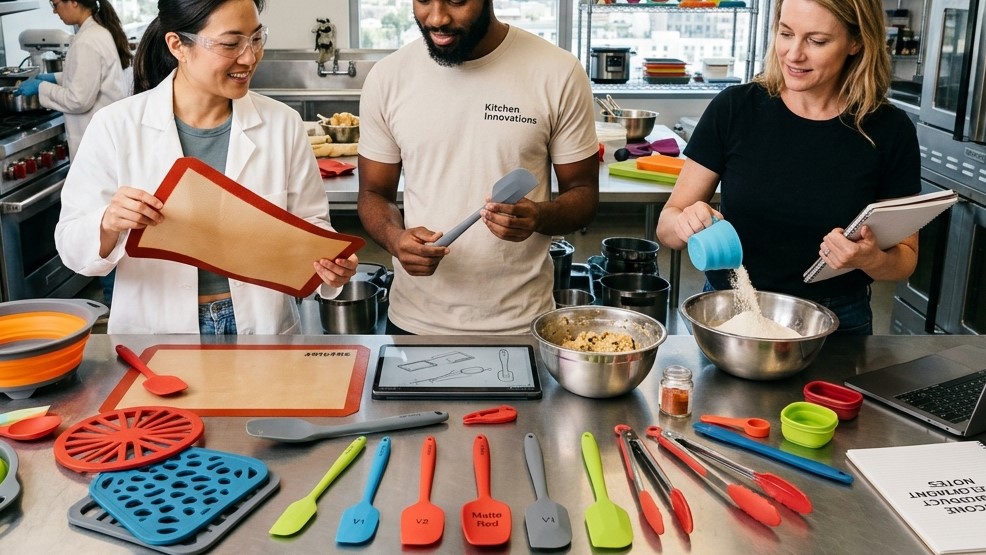
Kitchen Product Developers & Startups
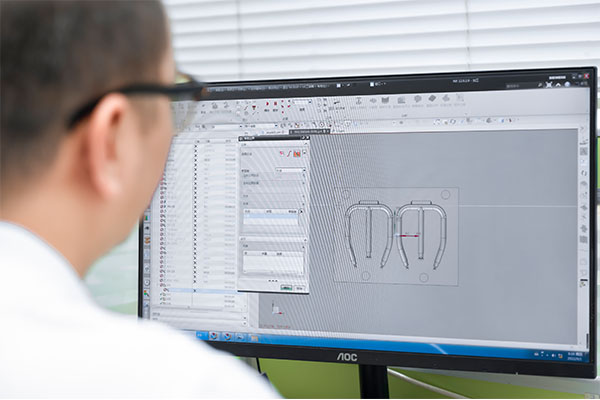
New product ideas often require engineering support before tooling begins.Our engineering team reviews product structure, wall thickness, material selection, and manufacturing feasibility in order to reduce development risks prior to production.
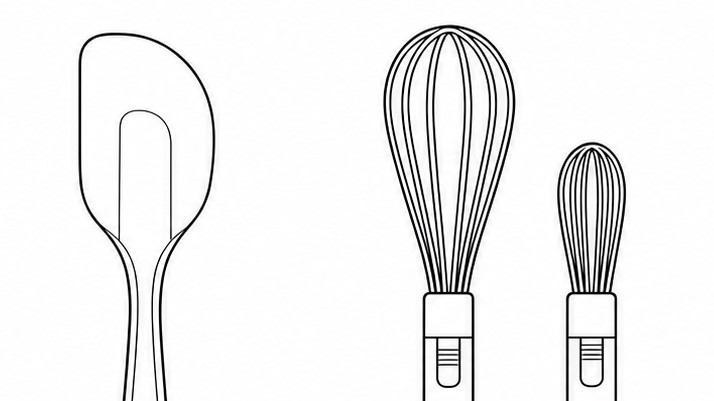
Silicone Kitchen Products We Can Develop
Silicone Spatula
Silicone Spoon
Silicone Pastry Brush
Silicone Whisk
Silicone Cooking Utensil Set
Silicone Kitchen Accessories
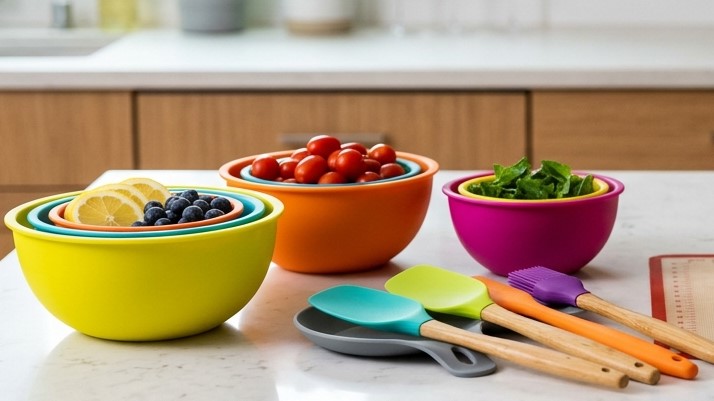
Silicone Bowl
Silicone Baking Mat
Silicone Food Storage Products
Silicone Gloves
Silicone Kitchen Products Customization
To speed up your time to market, choose from existing designs. Or, develop an entirely new product to differentiate your brand.
Available options range from
- Existing product designs
- Fully customized products
- Product size adjustments
- Ergonomic handle designs
- Multi-piece kitchen tool sets
- Foldable or space-saving structures
- Integrated stainless steel reinforcement
- Hanging holes and storage features
We recommend a silicone formulation based on the product application, temperature requirements, and expected service life.
Available choices include:
- Platinum-cured food-grade silicone
- Peroxide-cured silicone
- Different Shore A hardness options
- BPA-free formulations
- FDA or LFGB-compliant materials
- Reinforced composite structures
- One-piece molded construction
- Multi-material overmolding
Consistent color matching strengthens brand recognition across an entire kitchenware collection.
The available options are as follows:
- Standard silicone colors
- Custom Pantone matching
- Matte finishes
- Gloss finishes
- Soft-touch textures
- Marble or gradient effects
- Multi-color molding
- Embossed or debossed logos
Packaging should be planned early because artwork approval and printed materials often require additional production time.
Available options include:
- Bulk export cartons
- Individual poly bags
- Paper sleeves
- Hang cards
- Printed retail boxes
- Gift packaging
- Barcode labels
- Ecommerce-ready packaging
- Instruction manuals
- Recyclable packaging
Start Your Custom Silicone Kitchen Products Project
Share your product ideas, the estimated quantity you need, your logo requirements, and your packaging preferences. Based on your project requirements, our engineering team will recommend the most suitable manufacturing solution.
How to Specify Better Silicone Kitchen Products
Silicone kitchen product quality relies on more than just material; sustained performance needs the right balance between structure, material, and intended application.
When evaluating a product, pay attention to these specifications:
- Silicone Material Grade — Select food-grade platinum- or peroxide-cured silicone according to your target market and compliance requirements.
- Hardness—Match the Shore A hardness to the product. Softer silicone improves flexibility, while higher hardness provides better structural support.
- Temperature Resistance—Confirm the required working temperature based on whether the product is intended for freezing, baking, cooking, or dishwasher use.
- Wall Thickness—A balanced wall thickness improves durability without making the product unnecessarily heavy or difficult to mold.
- Reinforcement Structure—Kitchen utensils with stainless-steel or nylon cores should maintain rigidity while preventing handle movement after long-term use.
- Surface Finish—Choose matte, glossy, or textured finishes according to branding, grip, and cleaning requirements.
- Logo Method—Select molded, laser, or printed logos based on durability and product appearance.
The best solution depends on how the product will actually be used.
Full specification guide
How to Specify Better Silicone Kitchen Products — material selection, hardness, reinforcement structures, heat resistance, food-contact standards, and a complete purchasing checklist.
Silicone Kitchen Products Logo & Branding Methods
Branding should complement the design of the product and the manufacturing process. Different logo methods offer different visual effects, production costs, and long-term durability.
Screen Printing
An economical solution for simple graphics and logos, offering excellent color visibility on flat or gently curved silicone surfaces.
Laser Engraving
Creates permanent markings by removing the surface layer of silicone for premium products.
In-Mold Cavity
Logos, scales, and patterns are molded directly into the product for production consistency.
Embosse & Debossed
Raised or recessed logos are molded directly into the product for durable branding.
Silicone Kitchen Products Material & Performance Options
Choose silicone compounds based on product function, environment, and market needs.
Food safety is the first priority for every kitchen product.
We manufacture kitchen products using food-grade, platinum- or peroxide-cured silicone, which is selected based on the application and destination market. We can provide documentation based on the approved material formulation and project requirements.
Material Comparison
Platinum Silicone vs. Peroxide Silicone: Which Material Is Better for Kitchen Products?
One product should perform reliably across different kitchen environments.
Food-grade silicone remains stable from -40°C to 230°C, allowing many products to move between the freezer, microwave, oven, and dishwasher without becoming brittle or permanently deformed. Actual temperature limits depend on the selected compound and product structure.
Kitchen tools should remain comfortable to use while maintaining their original shape.
The balance between flexibility and structural stability is achieved through the interplay of material hardness, wall thickness, and reinforcement design. Spatulas, for example, benefit from flexible working edges but require reinforced handles for improved control during cooking.
High-quality silicone resists staining and retains fewer food odors during normal use.
Selecting the proper material and curing it properly reduces the likelihood of odor retention from ingredients such as garlic, onions, and spices. The surface finish also affects how easily oils and food residue can be removed during cleaning.
Kitchen products should withstand repeated bending, twisting, and daily handling.
For utensils with internal stainless steel or nylon reinforcement, the bonding structure is just as important as the silicone. A poorly designed interface may pass the initial dimensional inspection, but it will gradually loosen after thousands of cooking and washing cycles.
As important as the mechanical properties of silicone are, evaluating the structure during product development helps prevent this type of long-term failure.
Available documentation may include:
- Material data sheets
- Material declarations
- FDA-related documentation
- LFGB-related documentation
- REACH-related reports
- Project-specific testing reports
The applicable documentation depends on the selected silicone compound, pigments, additives, and destination market. Material reports should match the final product configuration, not just the raw silicone compound.
Maintenance Guide
How to Clean & Maintain Silicone Kitchen Products—cleaning methods, stain removal, odor reduction, storage recommendations, and maintenance tips.
How Silicone Kitchen Products Are Manufactured

STEP 1: Requirement Review
Confirm product specs, quantities, materials, branding, packaging, and destination markets while the engineering team assesses whether existing molds or new tooling will be required.
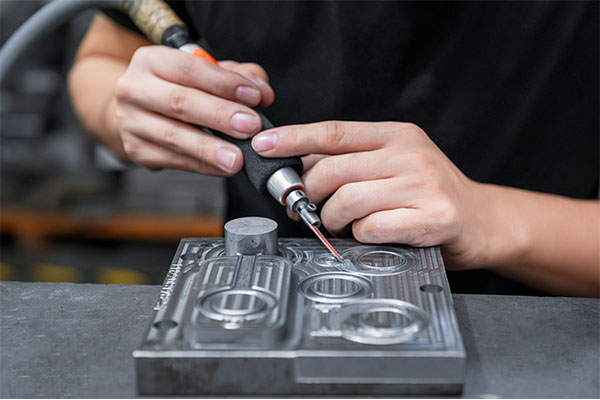
STEP 2: Mold Evaluation
Custom colors utilize existing molds, whereas new shapes or features require new tooling. Engineers evaluate draft angles and wall thicknesses to minimize manufacturing and sampling risks.
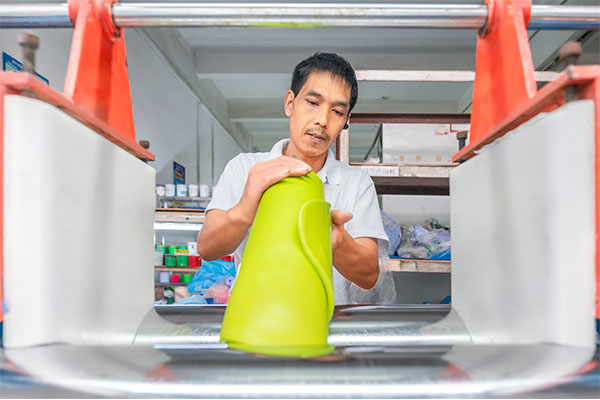
STEP 3: Material and Color Preparation
Silicone compounds are mixed with approved pigments and additives. All reinforcement inserts, such as stainless steel or nylon, undergo inspection to ensure proper bonding and dimensions.
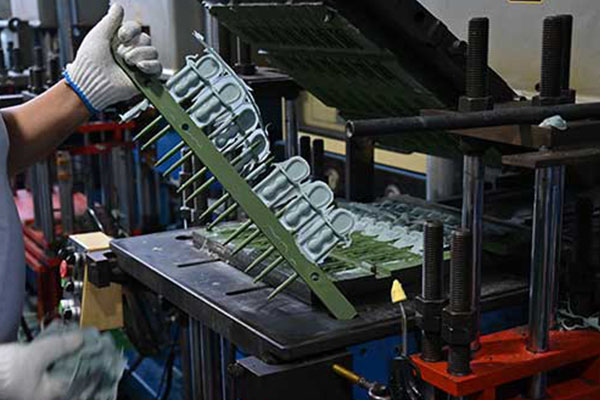
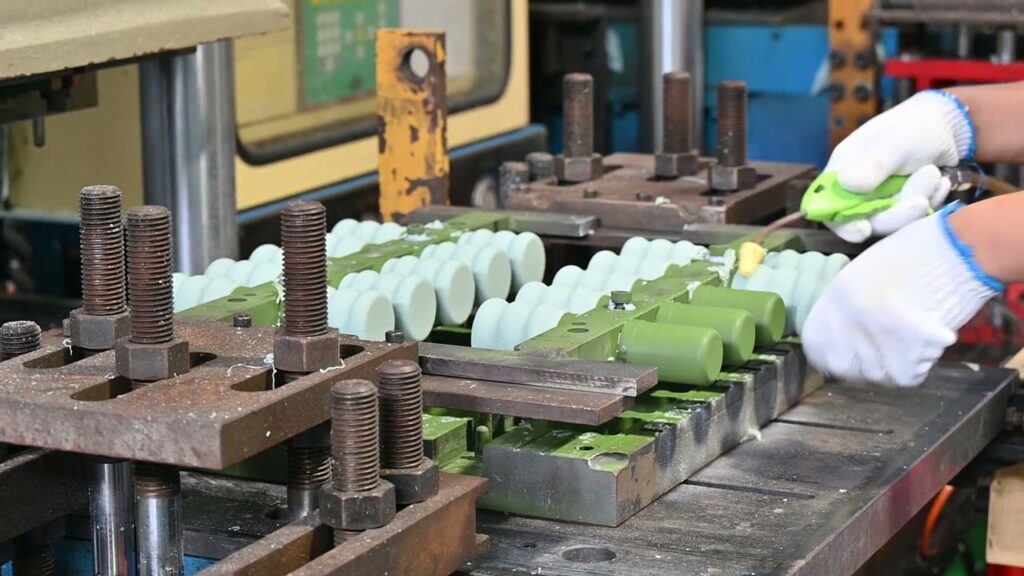
STEP 4: Silicone Molding
Components are produced via compression or liquid silicone rubber molding, selected strategically based on geometry, material properties, tooling design, and overall production efficiency.

STEP 5: Demolding & Finishing
Cured products are demolded and trimmed of excess material. Edges, functional surfaces, and food-contact areas are carefully inspected to guarantee smooth, burr-free finishes.
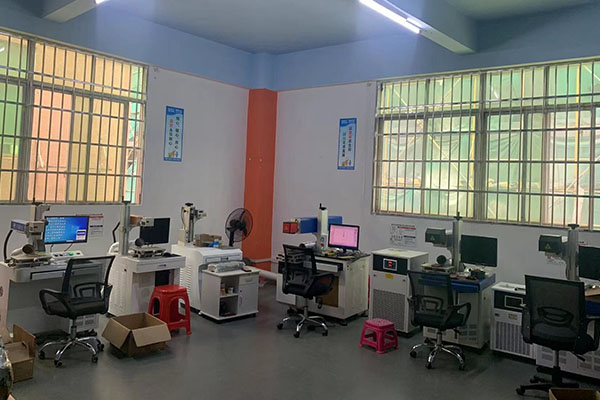
STEP 6: Surface Processing & Assembly
Logos are applied via screen printing or laser engraving. Cores and additional components are then securely assembled and fixed in place prior to final inspection.
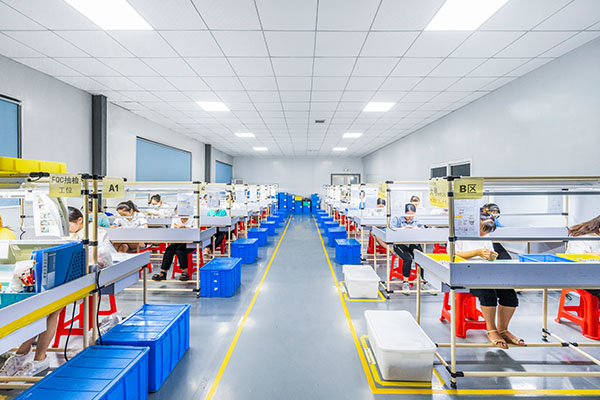
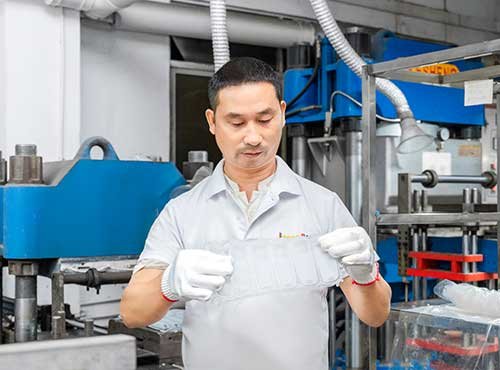
STEP 7: Quality Inspection
Quality control teams verify appearance, dimensions, color, branding, and assembly against approved samples, engineering drawings, and purchase orders before giving shipment approval.

STEP 8: Packaging and Shipment
Finished items are counted, labeled, and securely packaged into retail, e-commerce, or export cartons, ready for dispatch using the agreed-upon logistics method.
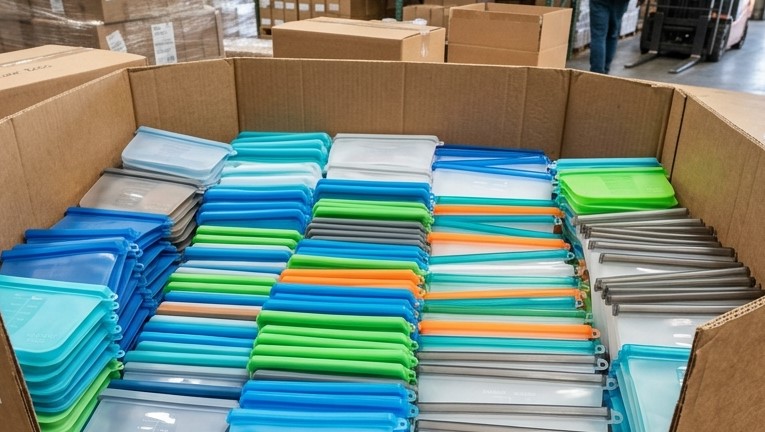
Silicone Kitchen Products Quality Control
Achieving consistent quality requires more than selecting premium silicone. Reliable kitchen products depend on stable dimensions, food-safe materials, a durable assembly, accurate branding, and consistent packaging throughout the production process.
AQL 2.5 / 4.0 Standard Inspection
Final inspections follow agreed sampling plans to verify production consistency.
AQL 2.5
Critical / Major Defects
AQL 4.0
Minor Cosmetic Defects
Alternative inspection standards can also be implemented according to customer requirements.
Approved Sample Control
The approved sample serves as the production reference for:
- Product dimensions
- Weight
- Material hardness
- Color
- Surface finish
- Logo quality
- Packaging presentation
Incoming Material Review
Silicone compounds, pigments, reinforcement components, and packaging materials are inspected before production begins.
In-Process Inspection
Production operators monitor molding quality, trimming accuracy, assembly consistency, and visible appearance throughout manufacturing.
Appearance Inspection
Each batch is checked for:
- Flash
- Surface contamination
- Air bubbles
- Incomplete molding
- Surface scratches
- Color variation
- Deformation
- Poor trimming
Dimensions & Assembly
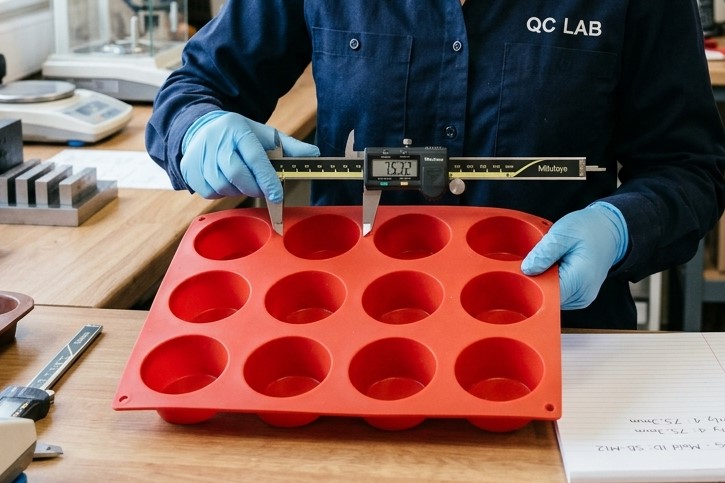
We measure critical dimensions, wall thickness, and assembled components against approved specifications.
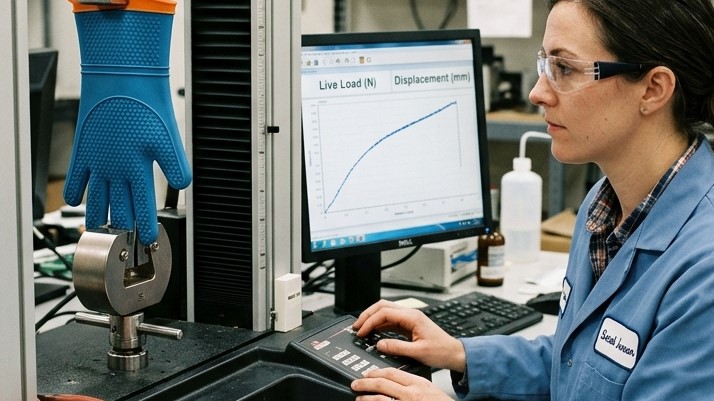
For reinforced kitchen utensils, we also review the bonding strength between the silicone body and the internal support structure. Although a utensil may initially meet dimensional requirements after molding, it may still develop handle movement if the insert design or bonding interface is not optimized. Evaluating this relationship during production improves long-term product reliability.
Color Consistency
Finished products are compared with the approved color standard under controlled lighting conditions.
Logo Quality
Inspection includes:
- Position
- Size
- Edge definition
- Printing clarity
- Engraving quality
- Molded logo detail
- Adhesion where applicable
Functional Performance
Depending on the product type, inspections may include flexibility, recovery, heat resistance, basic functionality checks, and assembly verification.
Packaging Inspection
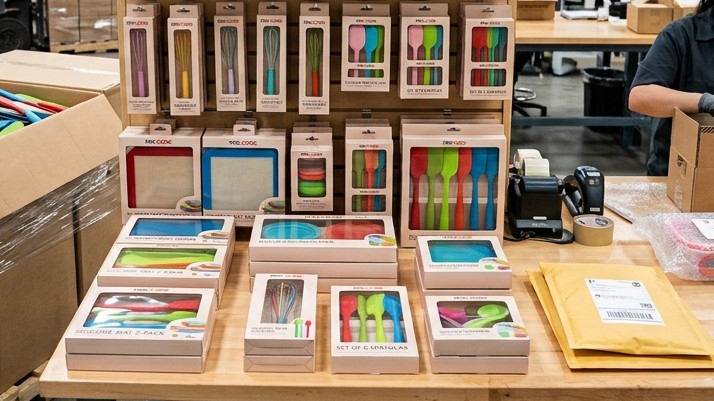
Before shipment, product quantity, barcode labels, retail packaging, instruction manuals, carton markings, and shipping labels are verified.
Silicone Kitchen Products Packaging Options
Packaging should be planned during product development because printed materials, retail artwork, and barcode systems require their own approval schedules.

Bulk Packaging
Simple individual bags or multi-piece packaging help control cost for distributors, professional users and promotional distribution.
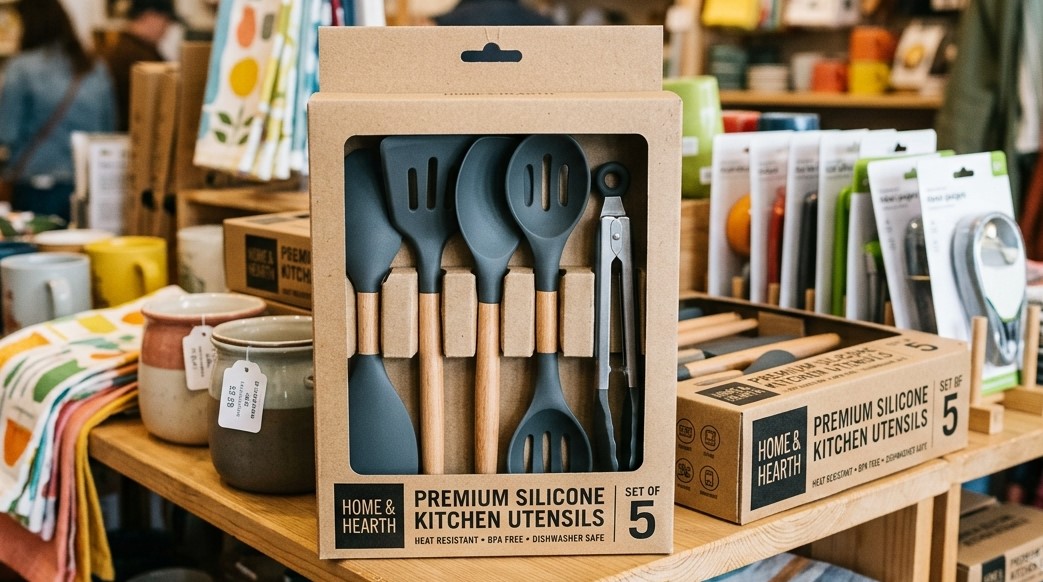
Retail Packaging
Header cards, blister packs, reusable bags and printed paper boxes provide space for branding, recipes and barcode information.
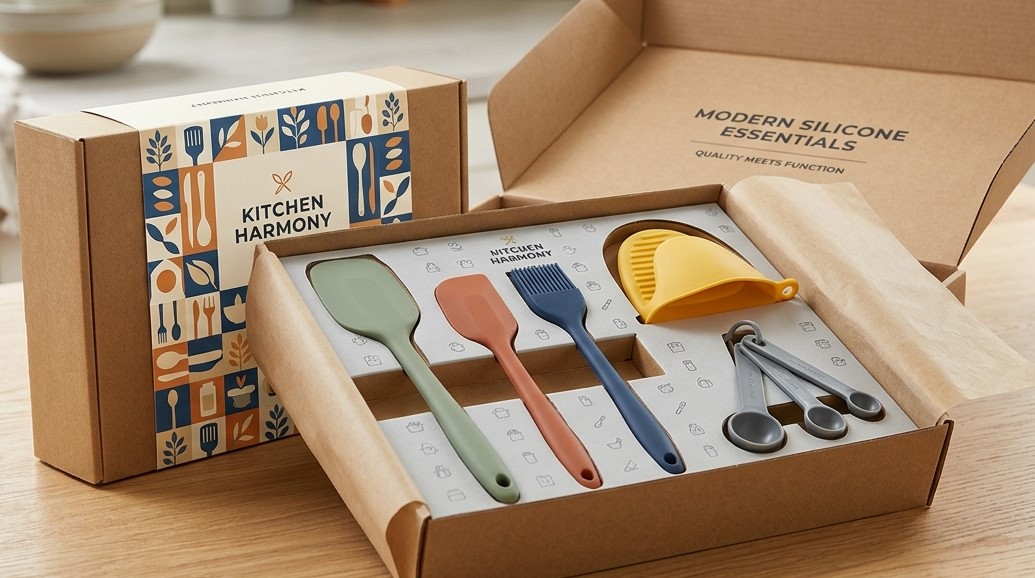
Ecommerce Packaging
We prepare SKU labels, scannable barcodes, product inserts and marketplace-specific outer labels according to your packaging file.
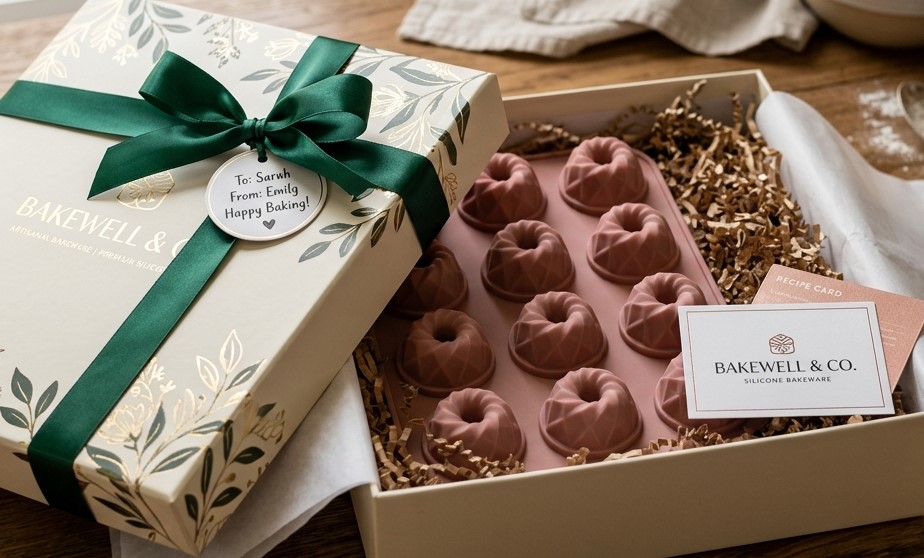
Premium Brand Packaging
Custom boxes, printed sleeves, recipe inserts and coordinated brand presentation can support higher-value retail products.

Typical Silicone Kitchen Products Specifications
| Specification | Typical Reference |
|---|---|
| Product Category | Silicone kitchen products |
| Applications | Cooking, baking, food preparation, serving and food storage |
| Material | Food-grade platinum- or peroxide-cured silicone |
| Hardness | 30–80 Shore A |
| Working Temperature | -40°C to 230°C (depending on product) |
| Reinforcement | Stainless steel, nylon or one-piece molded construction |
| Colors | Standard colors or custom Pantone matching |
| Surface Finish | Matte, glossy or textured |
| Logo Methods | Embossed, debossed, laser engraved, screen printed or molded logos |
| Manufacturing Process | Compression molding, LSR molding or overmolding |
| Product Types | Cooking utensils, bakeware, food storage products, kitchen accessories and custom kitchenware |
| Packaging | Poly bag, retail box, hang card, gift box or custom packaging |
| Existing Product MOQ | From 500 pieces with custom branding |
| Fully Custom Product MOQ | From 3,000 pieces |
| Sample Lead Time | 5–10 working days |
| Mass Production Lead Time | 15–25 working days after sample approval |
| Inspection Standard | Approved sample plus agreed AQL or customer standard |
| OEM & ODM | Available |
Final specifications are confirmed according to the selected product, material, structure, branding requirements and approved sample.
Why Work with RY Silicone
Silicone Manufacturing Experience Since 2012
RY Silicone has specialized in custom silicone product manufacturing since 2012, supplying OEM and ODM kitchenware to brands, distributors, and retailers worldwide.
From concept evaluation and prototype development to mass production and export, we support every stage of the manufacturing process with an experienced engineering and production team.
10,000+ m² Production Facility
Our production facility combines tooling development, silicone molding, trimming, printing, assembly, inspection, and packaging under one roof.
Managing these processes internally shortens communication, improves production consistency, and allows engineering changes to be implemented more efficiently during product development.
30+ Production Machines
Our factory operates more than 30 production machines covering different molding technologies and product structures.
This flexibility enables us to manufacture everything from small kitchen accessories to reinforced cooking utensils and complex multi-component silicone products while maintaining stable production capacity.
Production Capacity of Up to 100,000 Silicone Products Per Day
Scalable manufacturing allows us to support both seasonal purchasing programs and long-term production contracts.
Actual daily output varies according to product dimensions, molding cycle time, assembly complexity and inspection requirements rather than a single production target.
Engineering Review Before Quotation
Every quotation starts with an engineering evaluation rather than just looking at drawings. Our team reviews geometry, wall thickness, materials, and packaging to find the best manufacturing method.
For stainless steel or nylon inserts, we determine if molding-in or secondary assembly works best for durability. Addressing these details early reduces costs and shortens sampling cycles.
Sample-Based Production
Mass production starts only after sample approval. This approved sample acts as the definitive reference for dimensions, materials, color, finish, branding, and packaging to ensure consistency throughout the entire manufacturing process.
Export Project Support
As a Chinese silicone kitchenware manufacturer serving global markets, we assist with technical documentation, communication, packaging coordination, and shipment preparation to help customers streamline international sourcing.
Silicone Kitchen Products FAQ and Final RFQ
What is the MOQ for custom silicone kitchen products?
For existing products with custom colors or branding, the MOQ starts from 500 pieces. Fully customized products that require new tooling generally begin from 3,000 pieces. The exact quantity depends on product size, structure, packaging, and manufacturing complexity.
Do you manufacture silicone kitchen products using FDA- or LFGB-approved food-grade silicone?
Yes.
We manufacture kitchen products using food-grade silicone compounds that are selected based on your target market and compliance requirements. The available documentation depends on the approved material formulation and finished product configuration.
Which type of silicone is better for kitchen products? Platinum-cured or peroxide-cured?
Both materials are widely used in kitchenware.
Platinum-cured silicone is commonly chosen for premium products that require lower odor, higher purity, and stricter food contact standards. Meanwhile, peroxide-cured silicone is an economical solution for many everyday kitchen applications. The most suitable material depends on your product's positioning, target market, and budget.
Can you match custom Pantone colors for silicone kitchen products?
Yes.
Custom Pantone color matching is available for most silicone kitchen products.
To ensure the highest accuracy for your brand, we use advanced color-formulation software. However, because factors like wall thickness, surface texture (matte vs. glossy), and high-temperature curing conditions can slightly alter light reflection, the final appearance may vary slightly from paper or digital swatches.
Can multiple silicone kitchen products share the same custom color and packaging design?
Yes, absolutely.
We specialize in helping brands develop cohesive silicone kitchenware collections. We ensure exact color consistency, uniform logo placement, and matching retail packaging across different product types (e.g., matching spatulas, baking mats, and pinch mitts) to strengthen your brand identity on retail shelves or e-commerce platforms.
Are silicone utensils dishwasher safe?
Yes, high-quality silicone kitchen products are 100% dishwasher safe.
Food-grade silicone inherently resists high temperatures and harsh dishwashing cycles. To maximize the lifespan of the products, we recommend standard commercial or residential dishwasher settings and avoiding highly abrasive detergents.
All our kitchenware is engineered to withstand repeated cleaning without degrading, warping, or fading.
Can you manufacture products with stainless-steel or nylon reinforcement?
Yes.
We specialize in overmolding silicone with stainless-steel or nylon reinforcements. Many ergonomic cooking utensils require an internal core to improve rigidity, structural integrity, and handling performance. Our engineering team designs the interface between the reinforcement structure and the silicone body to prevent separation, ensuring long-term durability during heavy-duty cooking and repeated commercial dishwashing.
What custom logo and branding methods do you offer for silicone products?
Common branding methods include:
- Embossed logos: Raised lettering molded directly into the silicone surface.
- Debossed logos: Engraved or recessed lettering molded into the product.
- Screen printing: Ideal for high-contrast, multi-color logos using specialized silicone inks.
- Laser Engraving: Highly precise, permanent branding suited for detailed artwork.
- In-Mold Decoration: Fuses the logo and graphics seamlessly into the product during the molding process for maximum wear resistance.
The recommended method depends on the product surface, artwork, durability expectations, and production process.
What information is required to get an accurate OEM/ODM manufacturing quote?
To prepare an accurate quotation, please provide:
- Product type
- Order Volume
- Product dimensions or drawings
- Material requirements
- Color reference (Pantone if available)
- Logo artwork
- Packaging requirements
- Destination country
- Required compliance documents
- Target delivery schedule
Can you assist with completely new product development (Custom Silicone Engineering)?
Certainly.
RY Silicone offer full-service OEM and ODM contract manufacturing. Our in-house engineering team supports you from initial concept evaluation and 3D prototyping through to custom tooling fabrication, mass production, and export logistics.
Before cutting any steel molds, we conduct a rigorous manufacturing review to optimize your design. This minimizes expensive tooling revisions, reduces material waste, and significantly shortens your time-to-market.