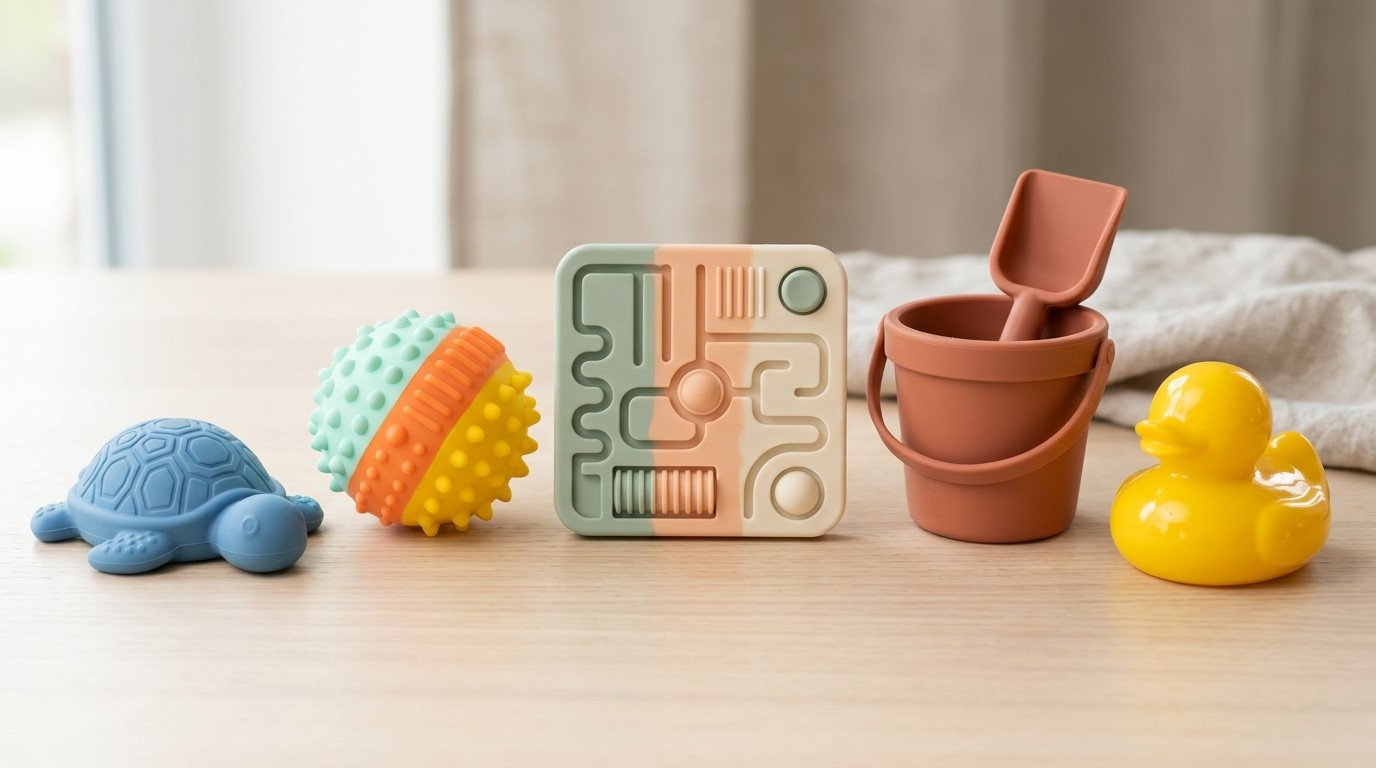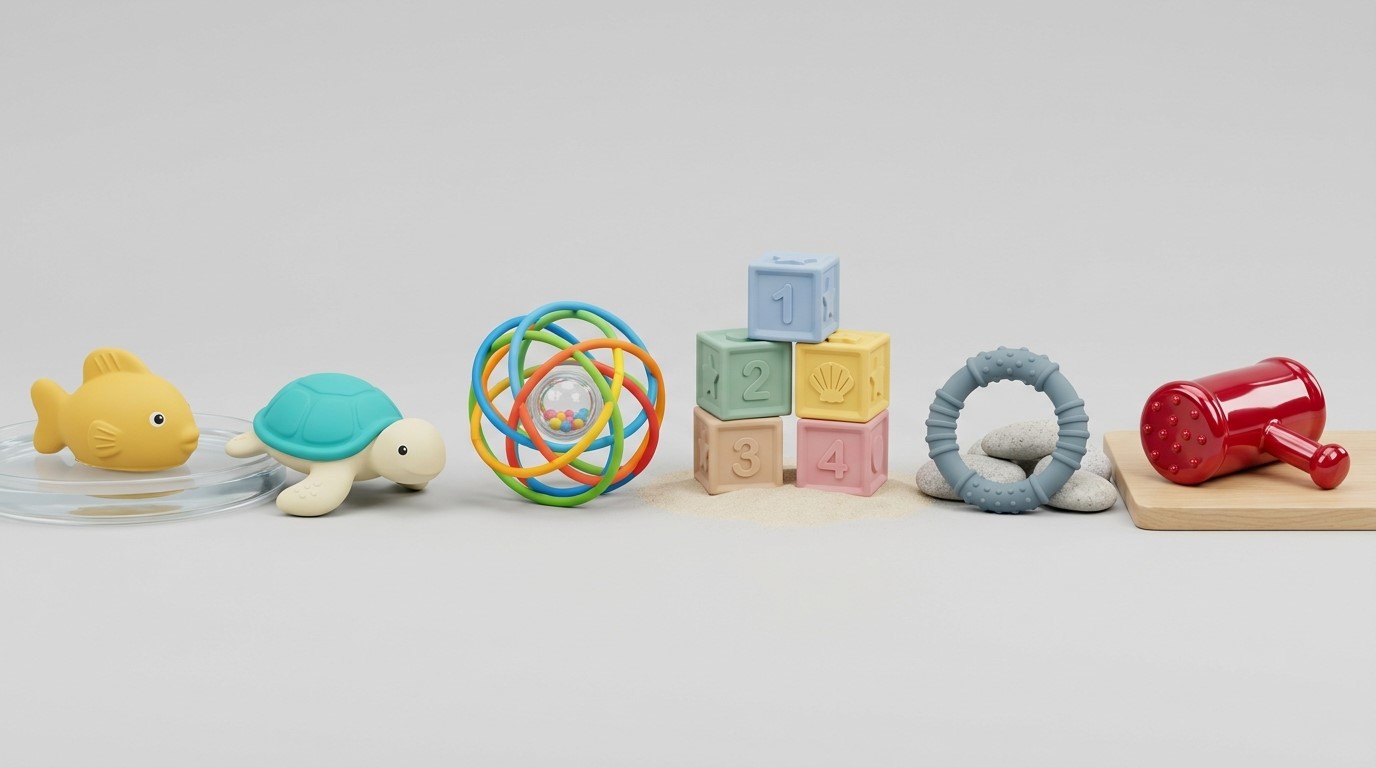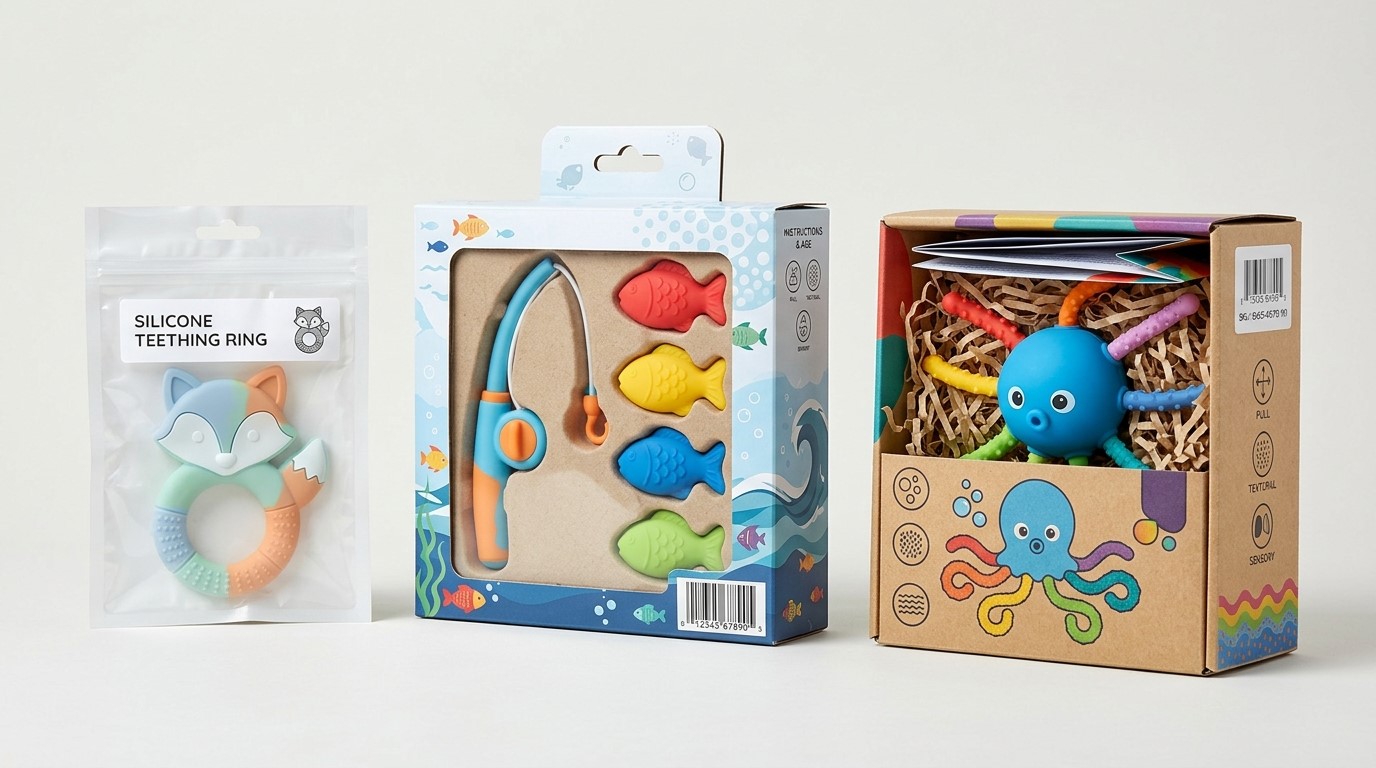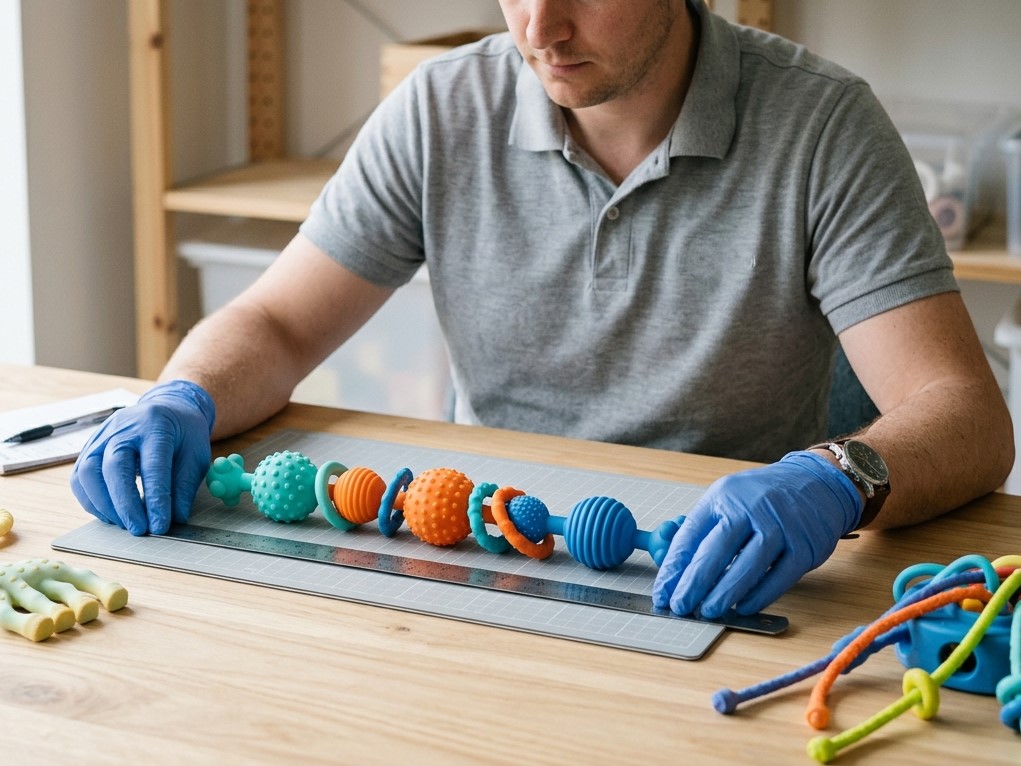
Silicone Baby Toys Manufacturer
Silicone baby toys designed for safe sensory play, teething, and early development. RY Silicone supports custom OEM/ODM designs, colors, branding, and retail packaging.
What Are Silicone Baby Toys?
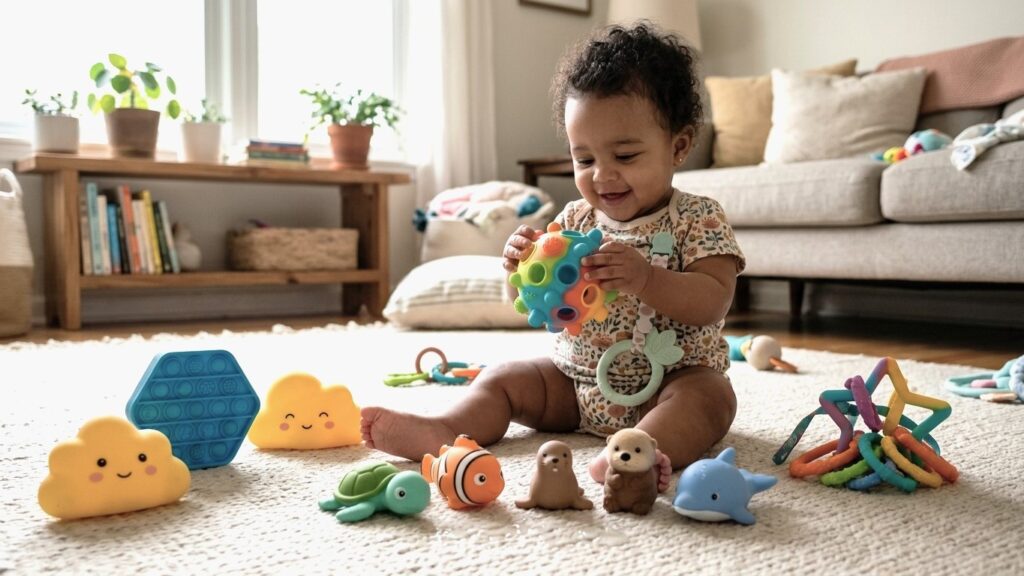
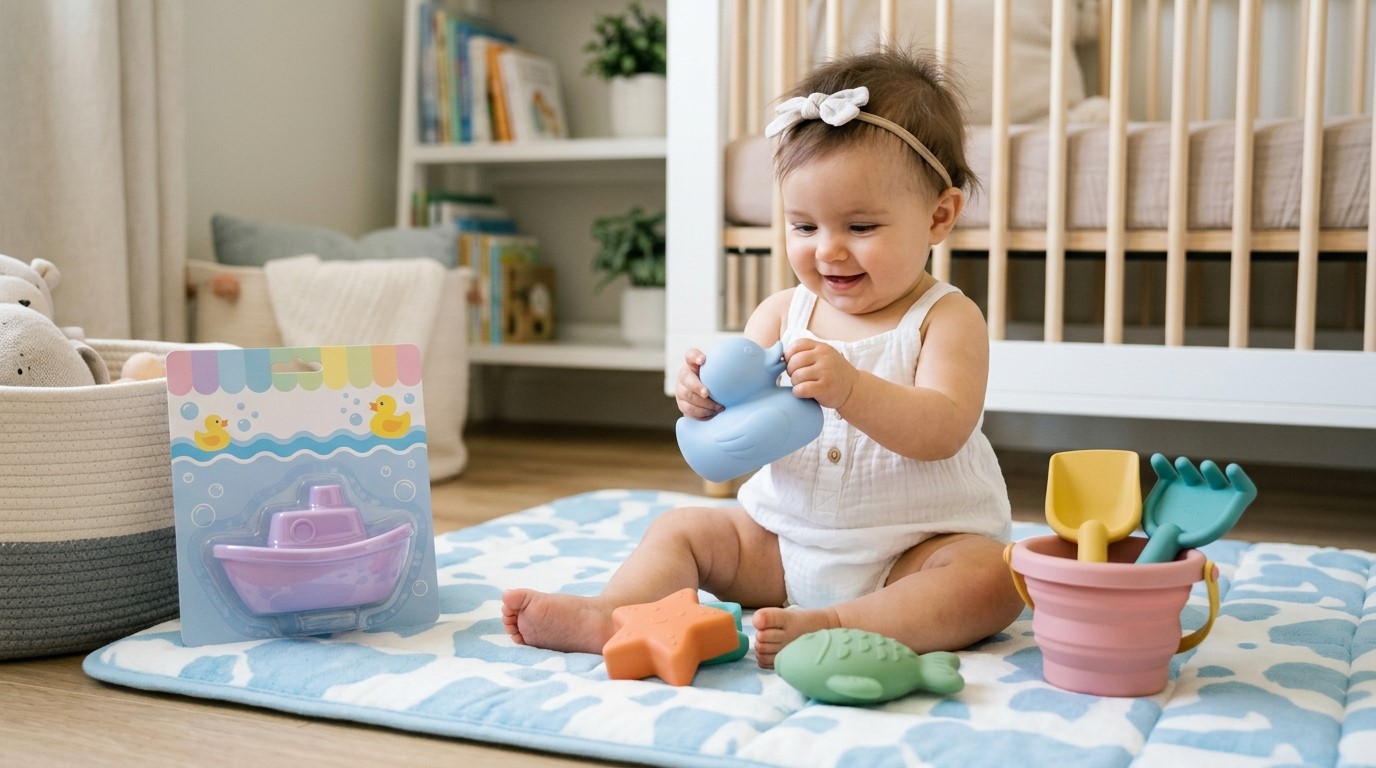
A silicone baby toy is a soft, durable product that supports sensory exploration, chewing, grasping, and fidget releasing. Established in 2012, RY Silicone is a China-based manufacturer that offers OEM & ODM services for custom silicone toys. They supply international brands, distributors, and wholesalers with tailored, high-quality products featuring personalized shapes, textures, colors, and packaging.
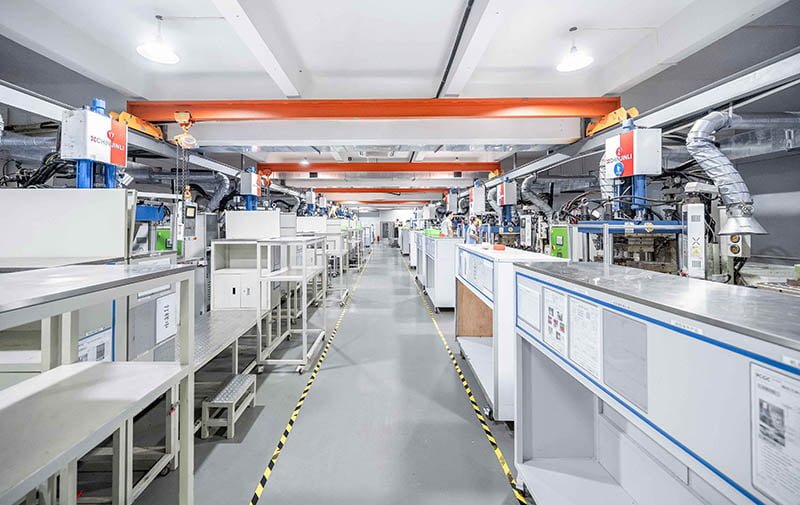
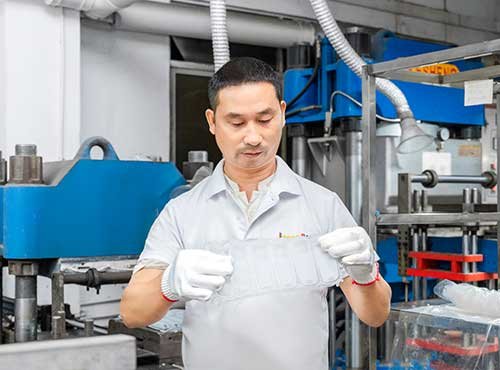
RY Silicone operates a 10,000+ m² production facility with 30+ production machines and a capacity of up to 100,000 silicone products per day. Production capability is matched to the approved design, material requirements, tooling structure, and quality standards for each baby toy project.
Silicone Baby Toy Manufacturing at a Glance
MOQ & Lead Times
Existing designs use set quantities, while custom designs need tooling and planning before MOQ confirmation.
Material & Safety
Food-contact-grade silicone compounds can be selected for baby toys intended for mouthing, chewing, and repeated daily handling.
Design & Branding
Custom shapes, sensory textures, colors, molded logos, and functional structures can be developed around your product concept.
Packaging Options
From bulk packing to private-label retail boxes, packaging can be matched to your sales channel and SKU strategy.
Who We Manufacture Silicone Baby Toys For
Support different sales channels with product development, manufacturing, and packaging solutions.

Baby Product Brands
Develop a silicone baby toy collection around your age group, product concept, and visual identity. Custom tooling, color matching, and branded packaging help create products that fit an established baby-care range.
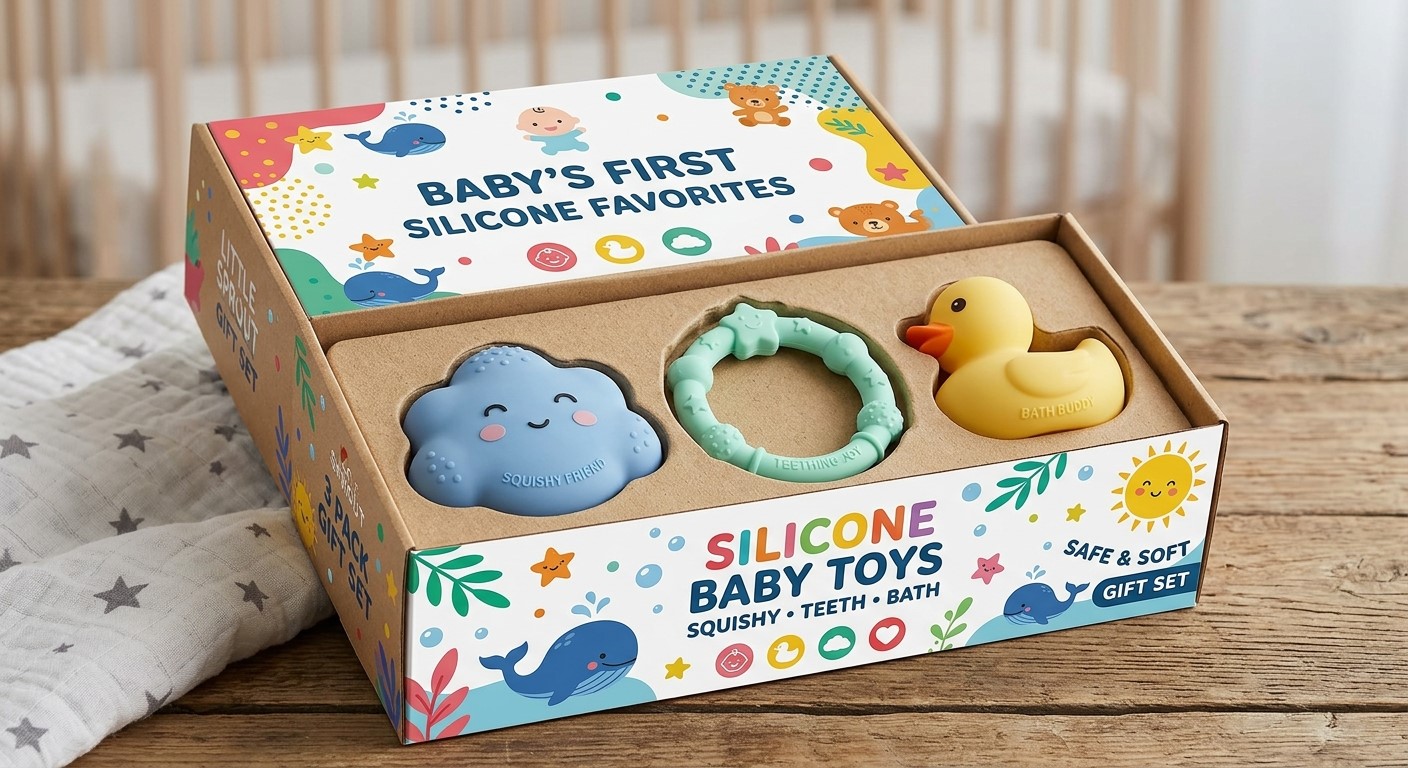
Baby Gift & Subscription Brands
Build coordinated toy selections for baby gift boxes and subscription programs. Product appearance, packaging dimensions, and SKU consistency are planned together for efficient assembly and repeat ordering.
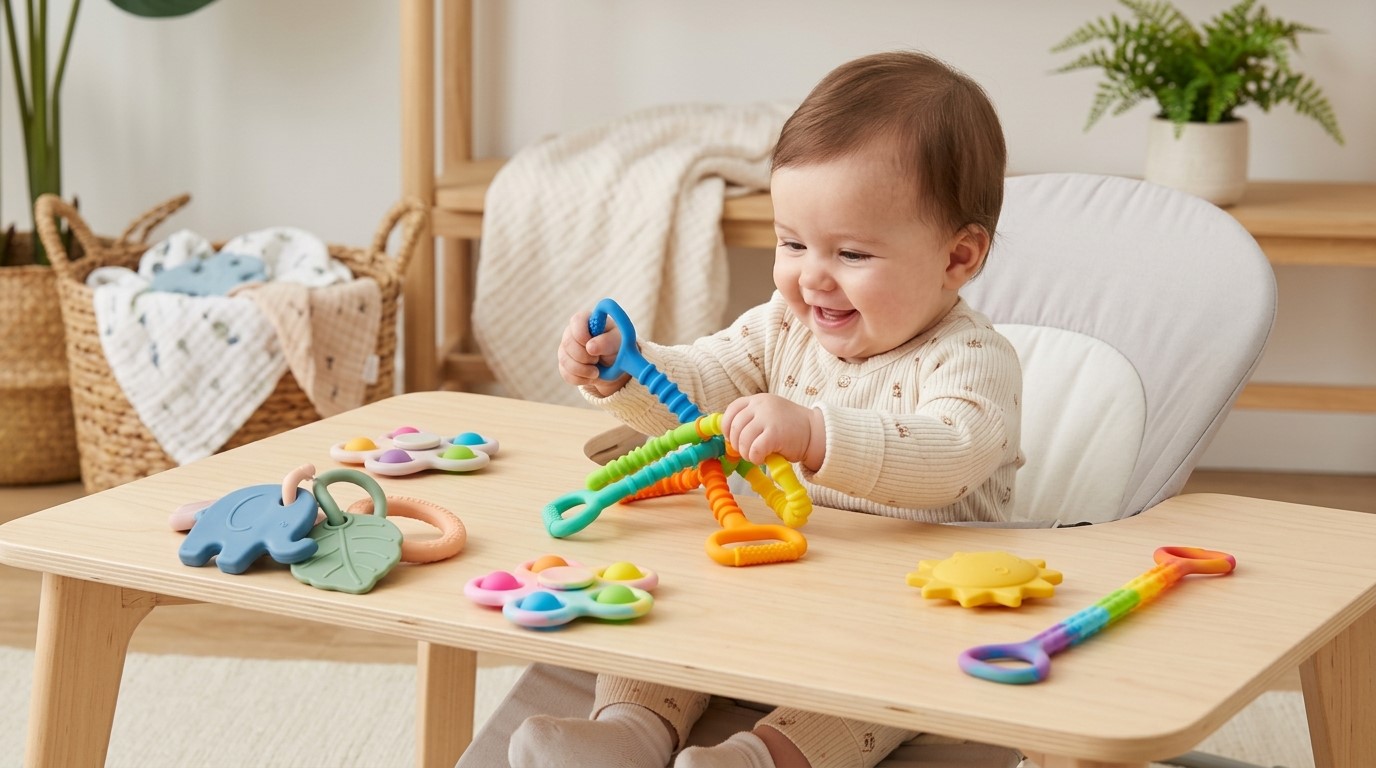
Early Childhood & Educational Brands
Create sensory and developmental toys designed around grasping, texture exploration, and age-appropriate play. Product structure, tactile features, and durability should be reviewed together before tooling begins.
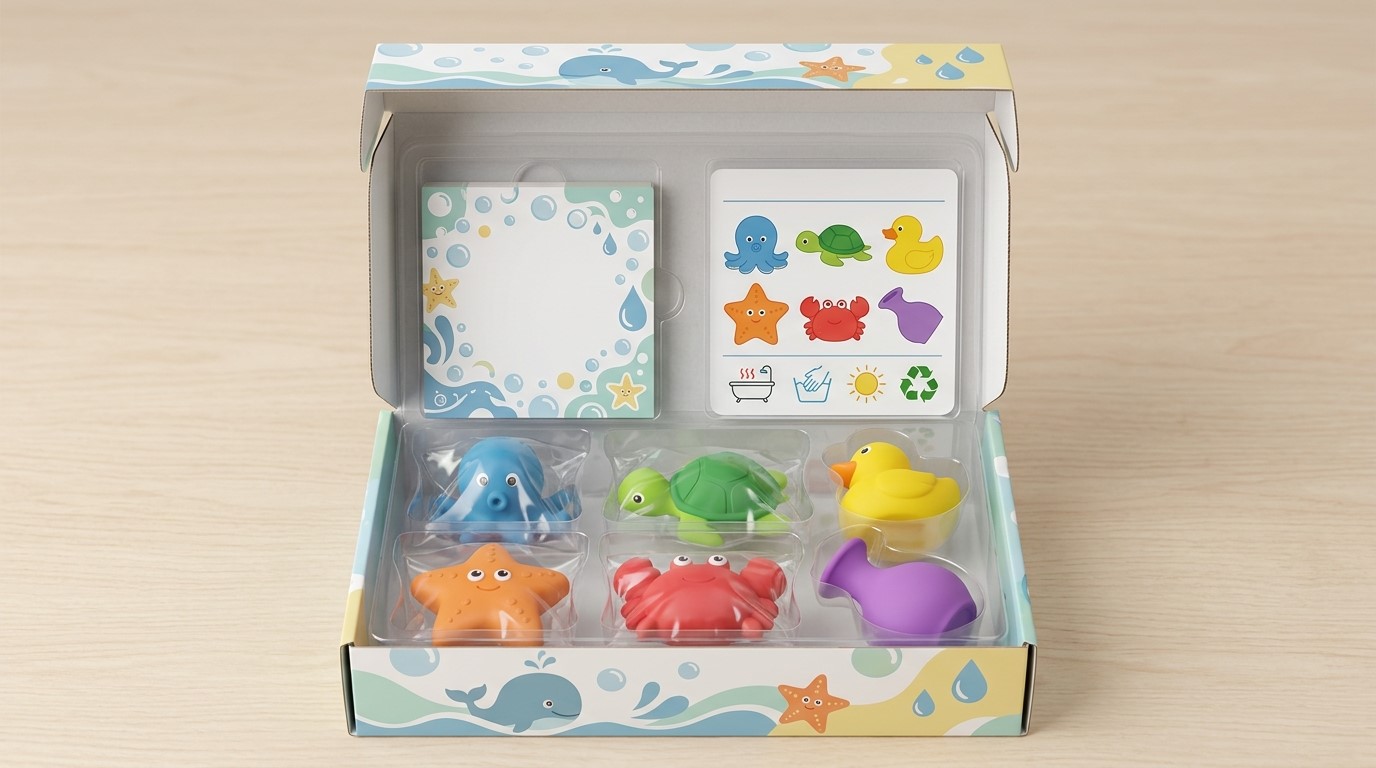
Promotional & Gift Companies
Develop branded silicone baby toys for parenting campaigns, baby gift programs, and promotional collections. Molded logos and coordinated colors offer longer-lasting branding than disposable printed promotional products.
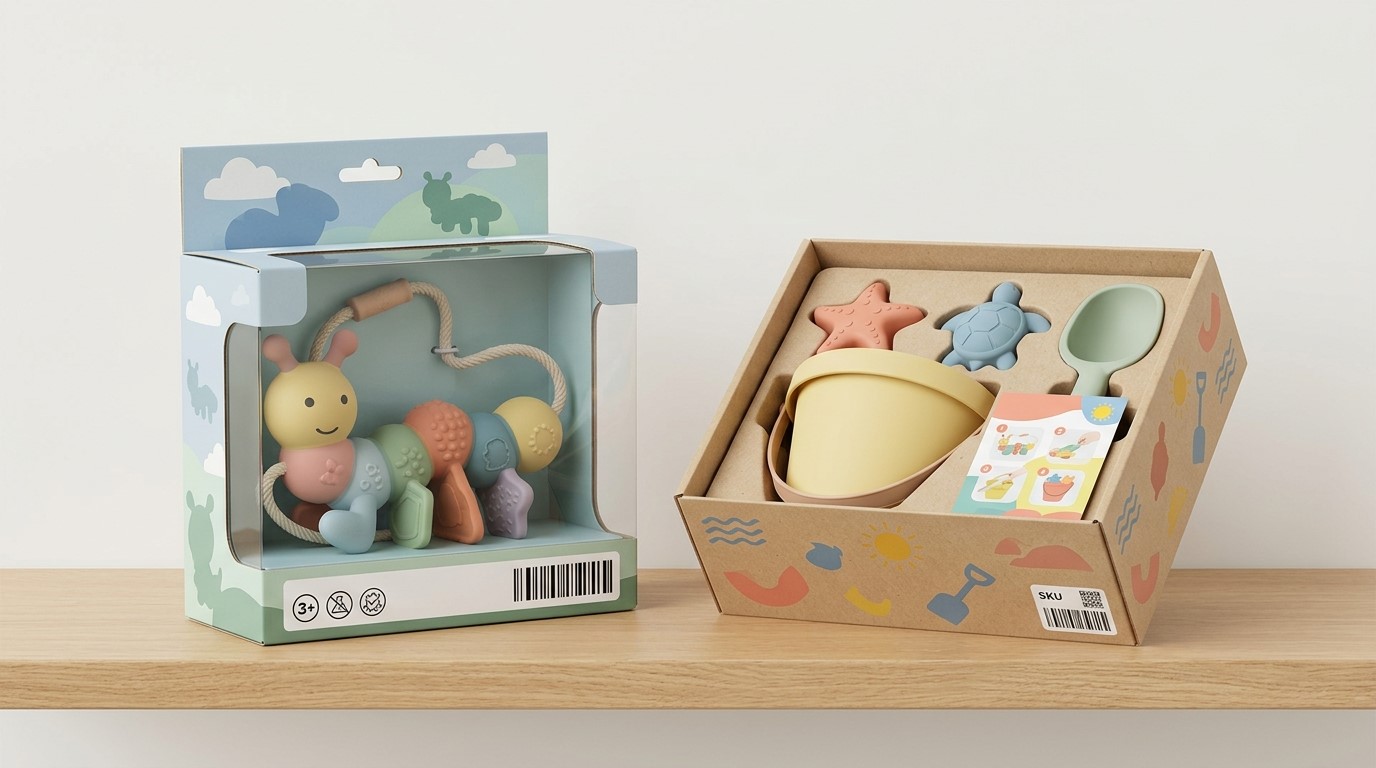
Retail & Ecommerce Sellers
Launch private-label silicone baby toys with custom colors, packaging, barcode labels, and product information. We help align manufacturing details with marketplace presentation and retail-ready packaging requirements.
Distributors & Wholesalers
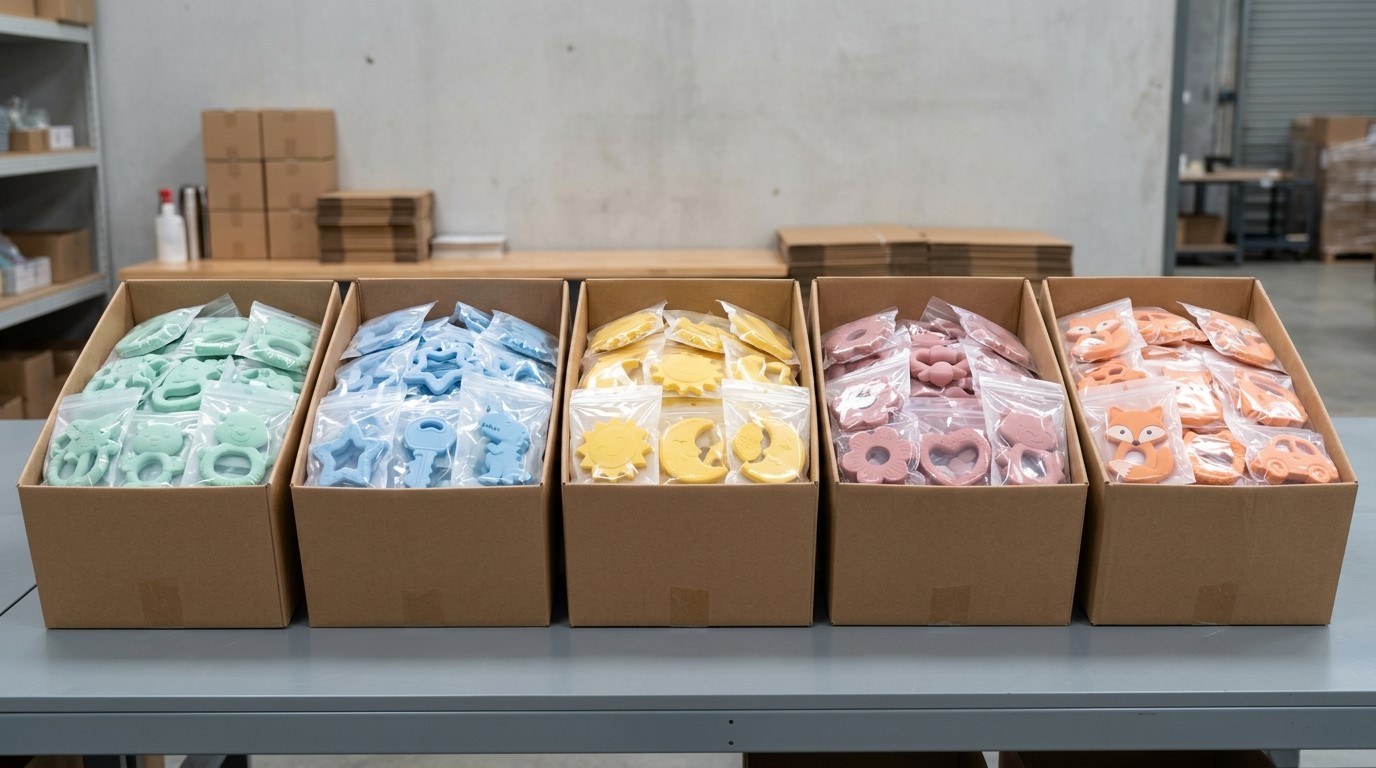
Source silicone baby toys in bulk for baby stores, gift channels, and regional distribution networks. Existing product structures can support faster development, while private-label options help differentiate your assortment.
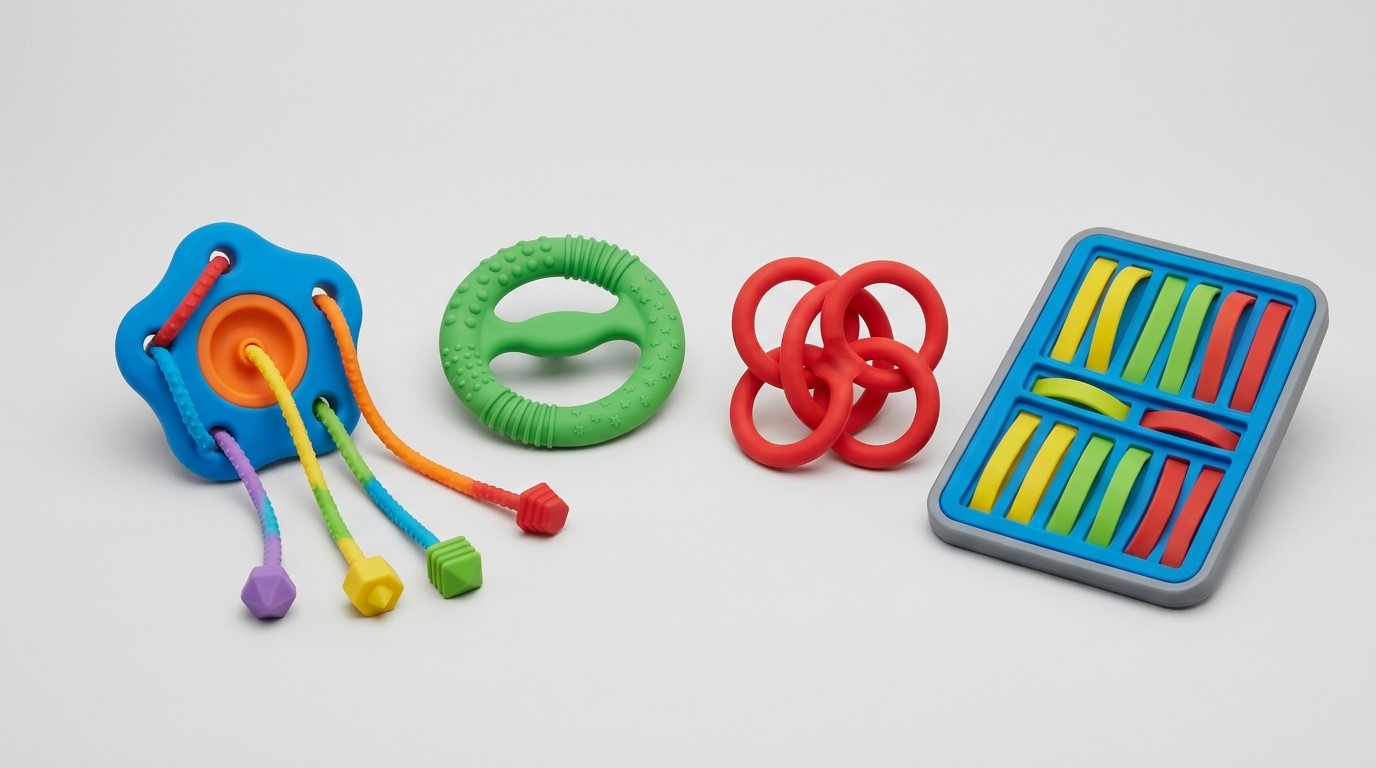
Silicone Baby Toy Types We Can Develop
Silicone Teething Toys
Silicone Sensory Toys for Babies
Silicone Fidget Toys for Babies
Silicone Bath Toys
Silicone Beach Toys
Silicone Stacking Toys
Silicone Baby Toy Customization
Develop the product around your concept, target users, and sales requirements.
Choose an existing concept or develop a new baby toy structure around your product idea. The shape affects tooling, grip, texture placement, cleaning, and manufacturing complexity.
Available options include:
- Animal and character-inspired shapes
- Geometric designs
- Easy-grip structures
- Ring and handle designs
- Multi-part toy concepts
- Custom sensory forms
- Brand-specific silhouettes
- Molded functional features
Add tactile details that support the intended sensory experience while maintaining a practical, cleanable product surface. Texture depth must be reviewed because overly fine details can be harder to reproduce consistently.
Available options include:
- Raised patterns
- Fine sensory textures
- Ridges and grooves
- Geometric surfaces
- Mixed tactile zones
- Smooth touch areas
- Custom molded patterns
- Product-specific surface details
We match the color strategy to your brand identity and product collection. Silicone color appearance should be approved on physical samples because thickness and surface finish can influence the final visual result.
Available options include:
- Standard colors
- Custom Pantone matching
- Single-color products
- Multi-color combinations
- Soft-toned collections
- Coordinated product ranges
- Matte finishes
- Glossy finishes
Plan the packaging alongside production so artwork, labels, and inserts do not delay the finished order. The packaging structure should match your retail channel and product positioning.
Available options include:
- Bulk packaging
- Individual PE or OPP bags
- Printed header cards
- Paper boxes
- Window packaging
- Barcode labels
- Instruction inserts
- Private-label retail packaging
Start Your Custom Silicone Baby Toy Project
Send your product concept, target quantity, and branding requirements. RY Silicone will evaluate the design and recommend a practical OEM/ODM manufacturing plan.
How to Specify a Better Silicone Baby Toy
A successful baby toy balances age-appropriate design, material selection, safety considerations, and practical manufacturing.
- Age Group—Define the intended user range before finalizing size and functional details.
- Product Size—Review overall dimensions against the intended use and product concept.
- Hardness—Match silicone flexibility to squeezing, chewing, stacking, or interactive functions.
- Texture—Confirm tactile depth and edge transitions before tooling.
- Structure—Avoid unnecessary enclosed spaces that are difficult to inspect or clean.
- Part Design—Review whether multiple components introduce additional assembly or retention risks.
- Surface Finish—Choose a finish that supports both appearance and practical cleaning.
Full Specification Guide
How to Specify Silicone Baby Toys—age considerations, dimensions, hardness, textures, structural design, and manufacturing specifications.
Silicone Baby Toy Logo & Branding Methods
Pad Printing
Suitable for simple graphics, allowing an appropriate, compatible printing process.
Custom Molded Shapes
Brand identity integrated into products through distinctive silhouettes or structures.
Embossed Logos
Raised, durable, ink-free branding formed directly during the molding process.
Debossed Logos
Recessed, permanent brand marks keep flexible surfaces resistant to handling.
Silicone Baby Toy Material & Performance Options
Selecting the right material is essential for baby toys intended for mouthing and chewing.
The silicone material grade can be selected according to the product’s intended use and documentation requirements. Rather than being applied broadly to every product configuration, material claims should match the selected compound, pigment, production controls, food-contact silicone standards, and destination market.
Material Comparison
Silicone vs. TPE Baby Toys: Which Material Is Best?—Compare flexibility, durability, cleaning, texture, and product development considerations.
The hardness of a baby toy should match how it is meant to be squeezed, gripped, chewed, or assembled.
Softer structures create more flexible tactile experiences, while firmer compounds provide better shape retention for stacking pieces and larger structures. The correct hardness is determined by the product design rather than appearance alone.
Thin connecting areas require extra engineering attention.
Handles, narrow necks, and deeply textured features can experience concentrated stress when repeatedly stretched or flexed.
To ensure long-term durability, evaluate these vulnerable areas alongside the overall wall thickness and mechanical properties during the tooling review phase.
Smooth transitions are as important as the visible product shape.
Sharp transitions between raised details can create manufacturing and cleaning challenges. Rounded edges and controlled texture geometry generally produce a more consistent molded surface.
Color approval should be based on physical samples.
The final appearance can be influenced by pigment concentration, silicone thickness, and surface finish. While a digital Pantone reference provides the target, the approved production sample becomes the practical color standard.
A strong chemical odor indicates the need for a thorough review of the material and process.
Obvious odor, residue, or unusual surface behavior may indicate issues with material handling, curing, or contamination. Visual and sensory checks can identify obvious concerns, while formal compliance requires appropriate testing and documentation.
Available documentation may include:
- Material data sheets
- Material declarations
- FDA-related documentation where applicable
- REACH-related documentation
- Project-specific test reports
- Supplier material information
The documentation scope must match the selected silicone compound, pigment, additional components, and destination market.
A raw-material document should not automatically be presented as proof for every finished silicone watch band configuration.
A well-designed silicone baby toy should be easy to clean and dry.
The product structure should be influenced by cleaning requirements during development. Designs with enclosed cavities that are difficult to access, inaccessible channels, or complex internal surfaces can be harder to inspect and maintain.
Wash products according to the approved care instructions, rinse thoroughly, and allow them to dry completely before storing them.
Care Guide
How to Clean and Care for Silicone Baby Toys—cleaning, drying, storage, and practical maintenance considerations.
How Silicone Baby Toys Are Manufactured

STEP 1: Requirement Review
Every project begins by confirming the toy concept, intended use, target age group, dimensions, colors, branding, packaging, and required documentation.
STEP 2: Design & Tooling Evaluation
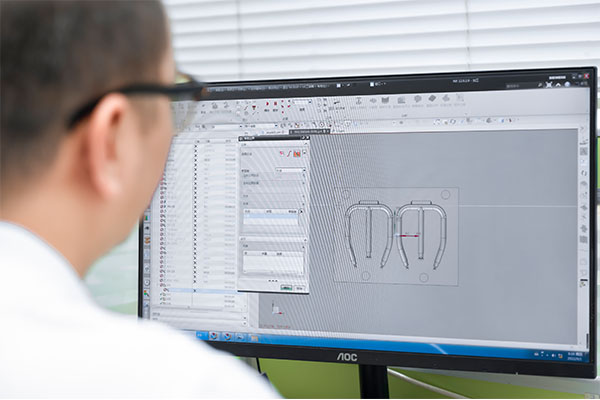
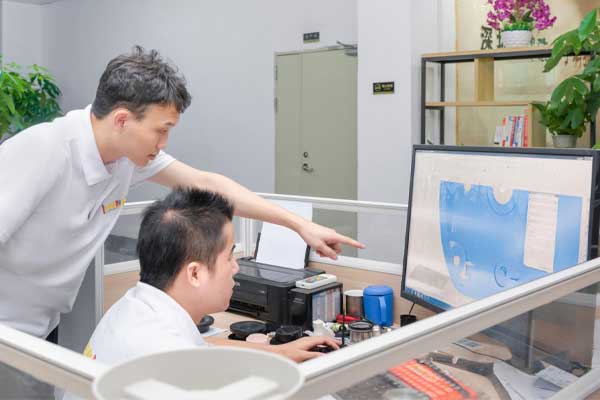
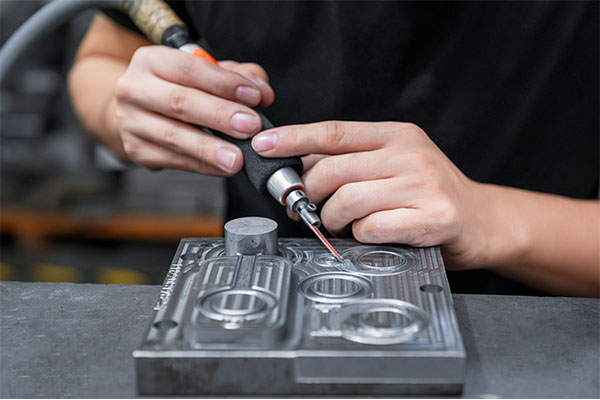
Our engineering team reviews the product structure for molding feasibility, wall transitions, texture reproduction, and areas that may require new tooling.
STEP 3: Material and Color Preparation
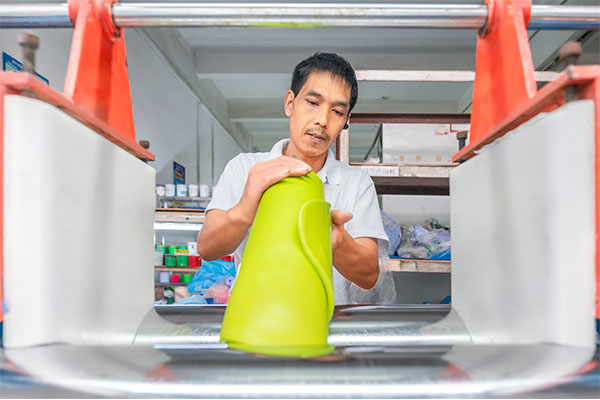
The selected silicone compound is prepared with the approved pigment according to the confirmed formulation and production requirements.
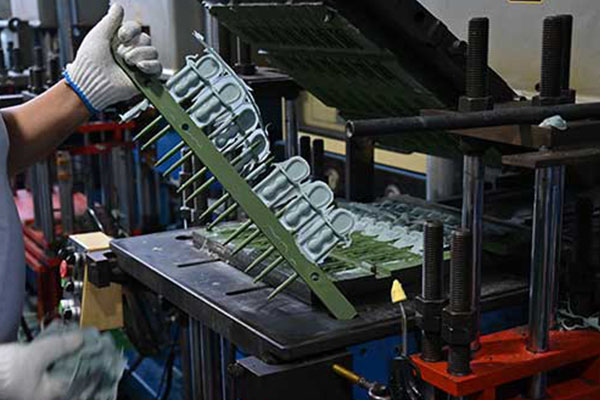
STEP 4: Silicone Molding
The material is molded using the manufacturing process selected for the approved product structure, tooling design, and required production volume.
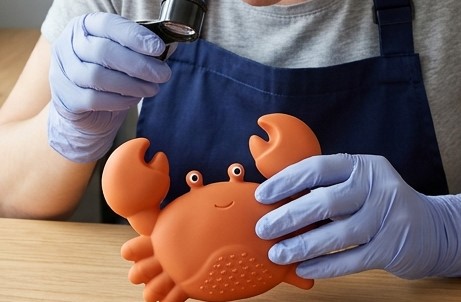
STEP 5: Demolding and Trimming
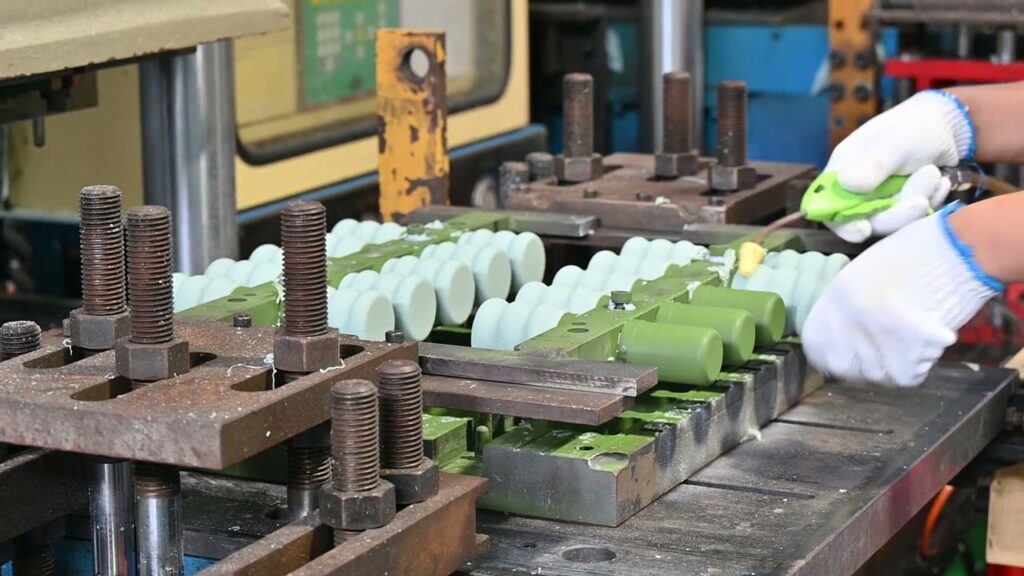
Once cured, each molded part is removed from the tool, and excess flash is trimmed before surface details receive further inspection.
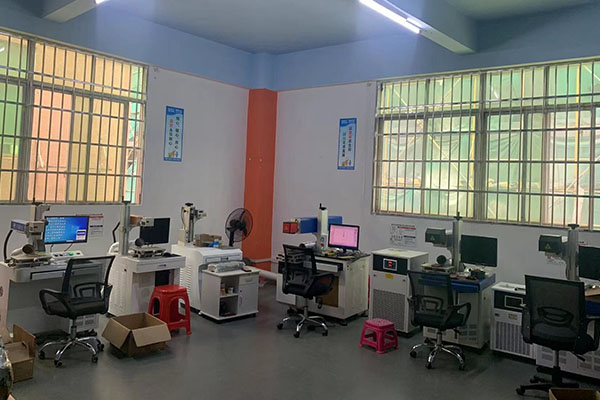
STEP 6: Surface & Branding Processing
Embossed details are formed during molding, while approved printing or additional surface processes follow the confirmed artwork and positioning requirements.
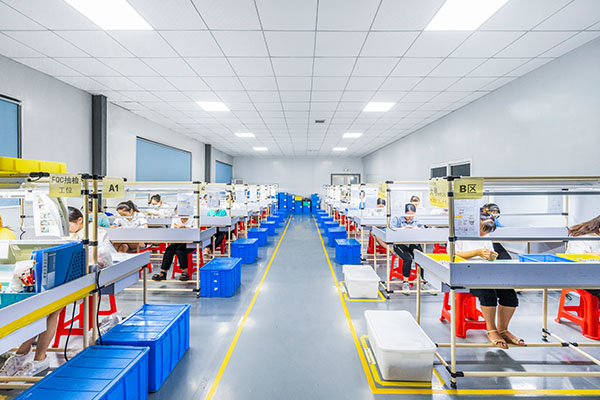
STEP 7: Quality Inspection
Our QC team compares finished products with the approved sample and confirmed specifications before the batch moves to final packing.
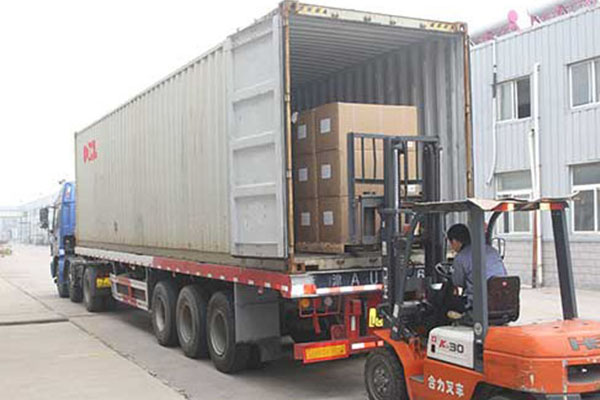
STEP 8: Packaging and Shipment
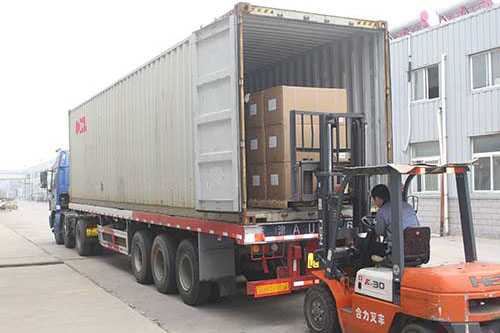
Finally, products are counted, packed, labeled, and carton-marked according to the approved packaging configuration and agreed shipping requirements.
Silicone Baby Toy Quality Control
Quality control starts before final inspection because a visually attractive baby toy can still have inconsistencies in dimensions, material appearance, or structural details.
AQL 2.5 / 4.0 Standard Inspection
Final random sampling can be performed according to the agreed inspection plan:
AQL 2.5
Critical / Major Defects
AQL 4.0
Minor Visual Flaws
Another inspection standard can be applied when specified in the purchase order.
Approved Sample Control
The approved sample becomes the production reference for:
- Overall shape
- Product dimensions
- Color
- Weight
- Surface finish
- Texture definition
- Logo position
- Packaging presentation
Incoming Material Review
Incoming silicone materials, pigments, and available supplier documentation are reviewed against the confirmed project requirements before production.
In-Process Inspection
Operators monitor molding completeness, flash, visible surface defects, color consistency, and reproduction of textures or fine product details during production.
Appearance Inspection
Finished products are checked for:
- Visible contamination
- Severe bubbles
- Incomplete molding
- Excessive flash
- Surface damage
- Irregular edges
- Poor texture definition
Dimensions & Structural Consistency
Overall dimensions and key structural features are checked against the approved specification. Functional areas such as handles, stacking interfaces, or flexible sections require particular attention.
Color Control
Production color is compared with the approved sample under controlled viewing conditions.
Branding Quality
Where branding is included, inspection covers:
- Position
- Size
- Edge definition
- Molded depth
- Ink coverage
- Missing details
- Blurred printing
- Visible adhesion issues
Structural Detail Review
One manufacturing detail that requires special attention is the transition between thick and thin sections. Large differences in thickness can affect how silicone fills and cures, which may impact consistency around fine features.
Another common tooling consideration is deep texture combined with narrow spacing. A pattern may appear excellent in CAD but reproduce poorly if the mold geometry makes demolding difficult or prevents consistent material flow into fine areas.
Packaging Inspection
Before shipment, product quantity, labels, barcode information, inserts, bags, boxes, and carton markings are checked against the approved packaging requirements.
Silicone Baby Toy Packaging Options
Consider the packaging plan early on because printed items require separate scheduling.

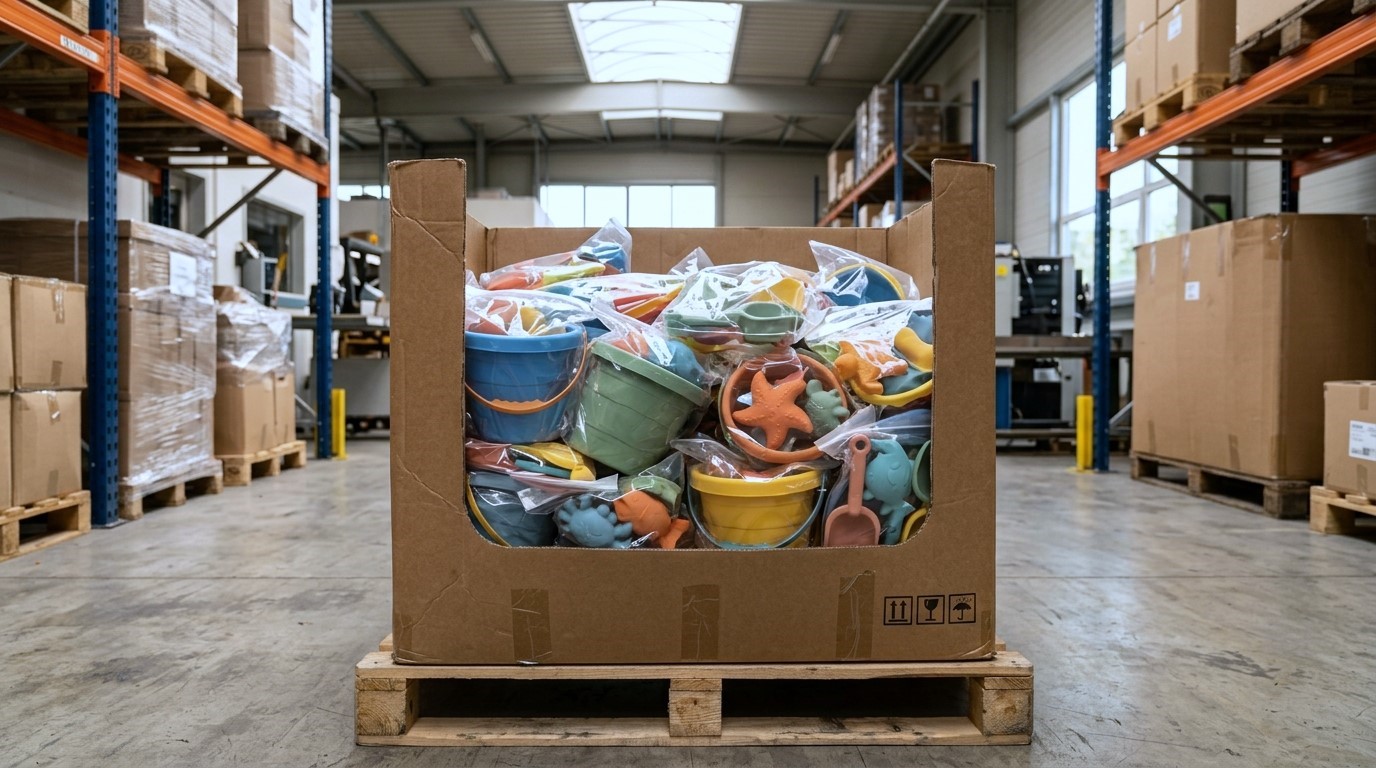
Bulk Packaging
Simple bulk or individual bag packaging supports distributors and wholesale programs while controlling packing costs and simplifying large-volume product handling.
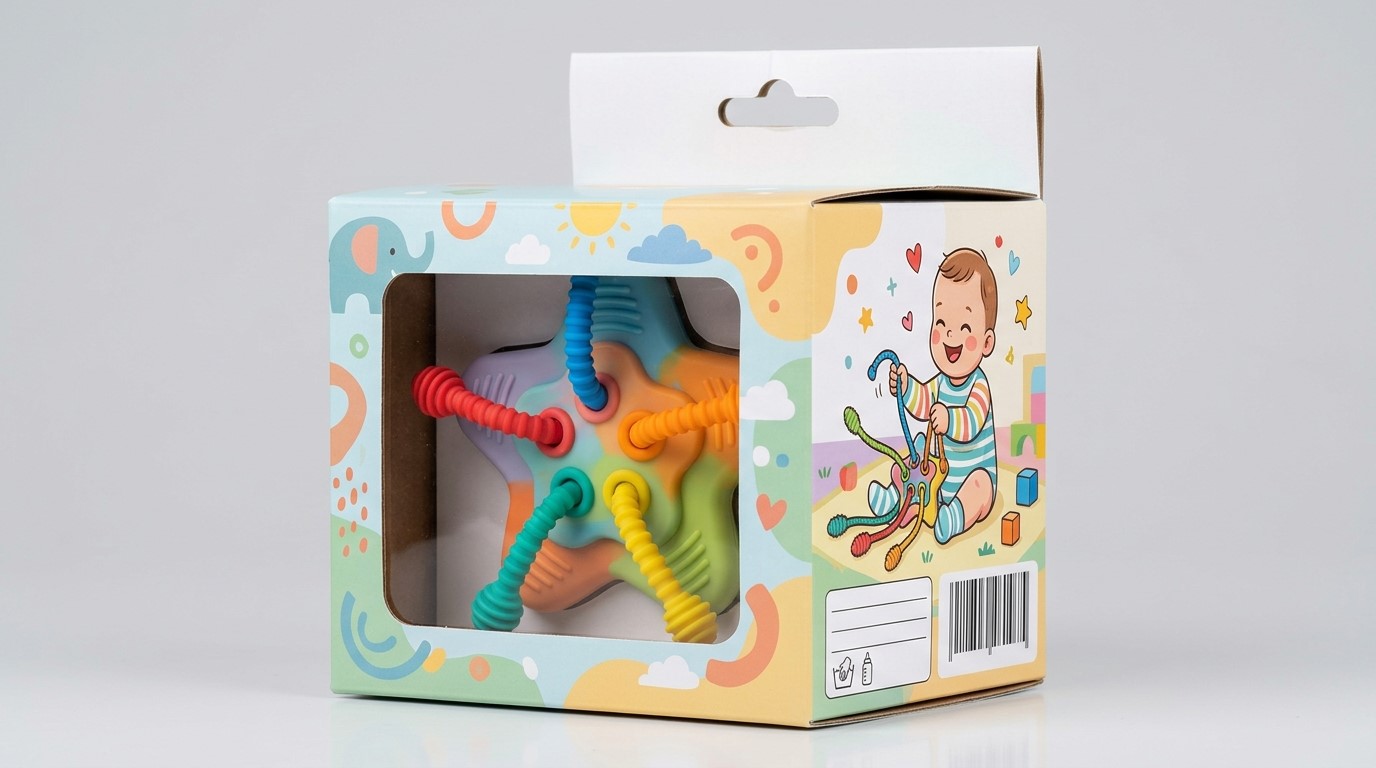
Retail Packaging
Header cards, printed boxes, and display-ready packaging create stronger shelf presentation while providing space for branding and required product information.
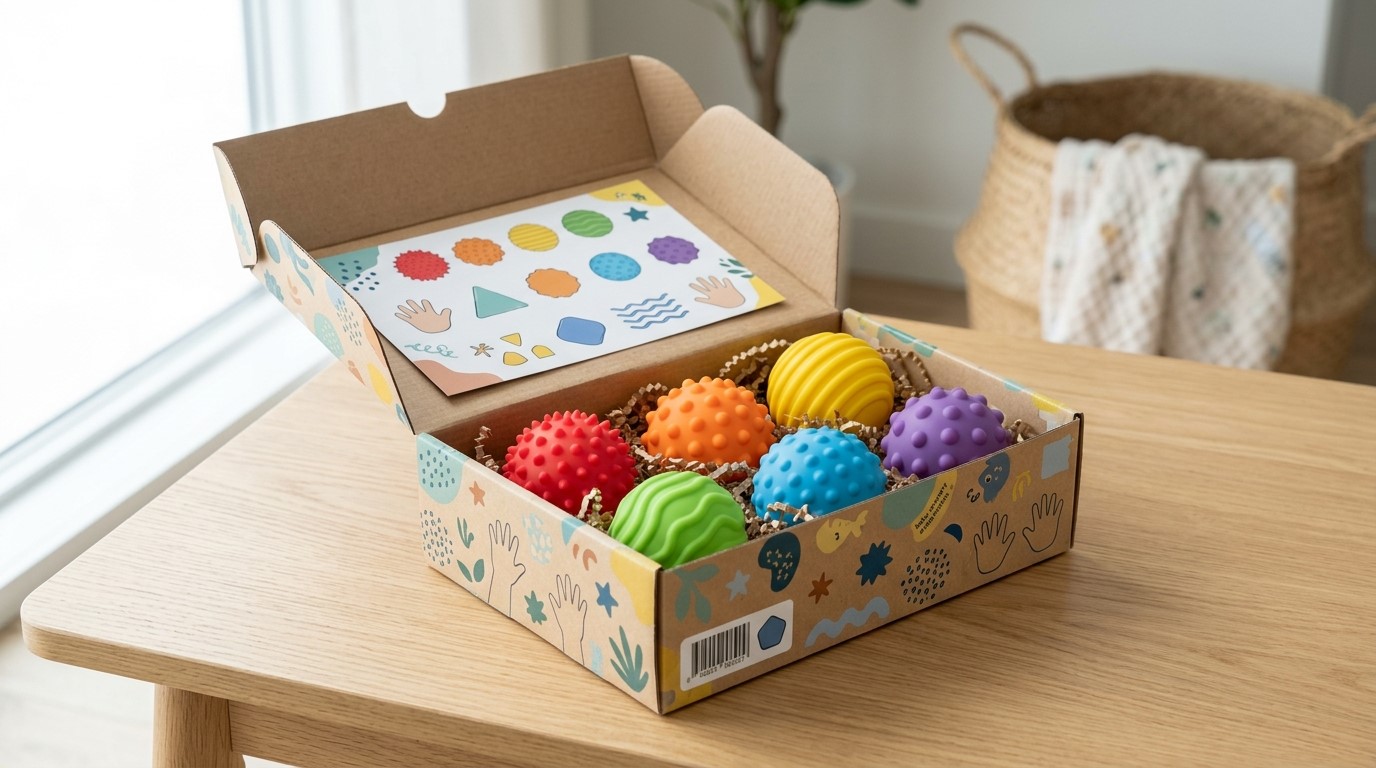
Ecommerce Packaging
SKU labels, barcode stickers, and product inserts can be prepared around your fulfillment requirements and marketplace-specific packaging or identification needs.
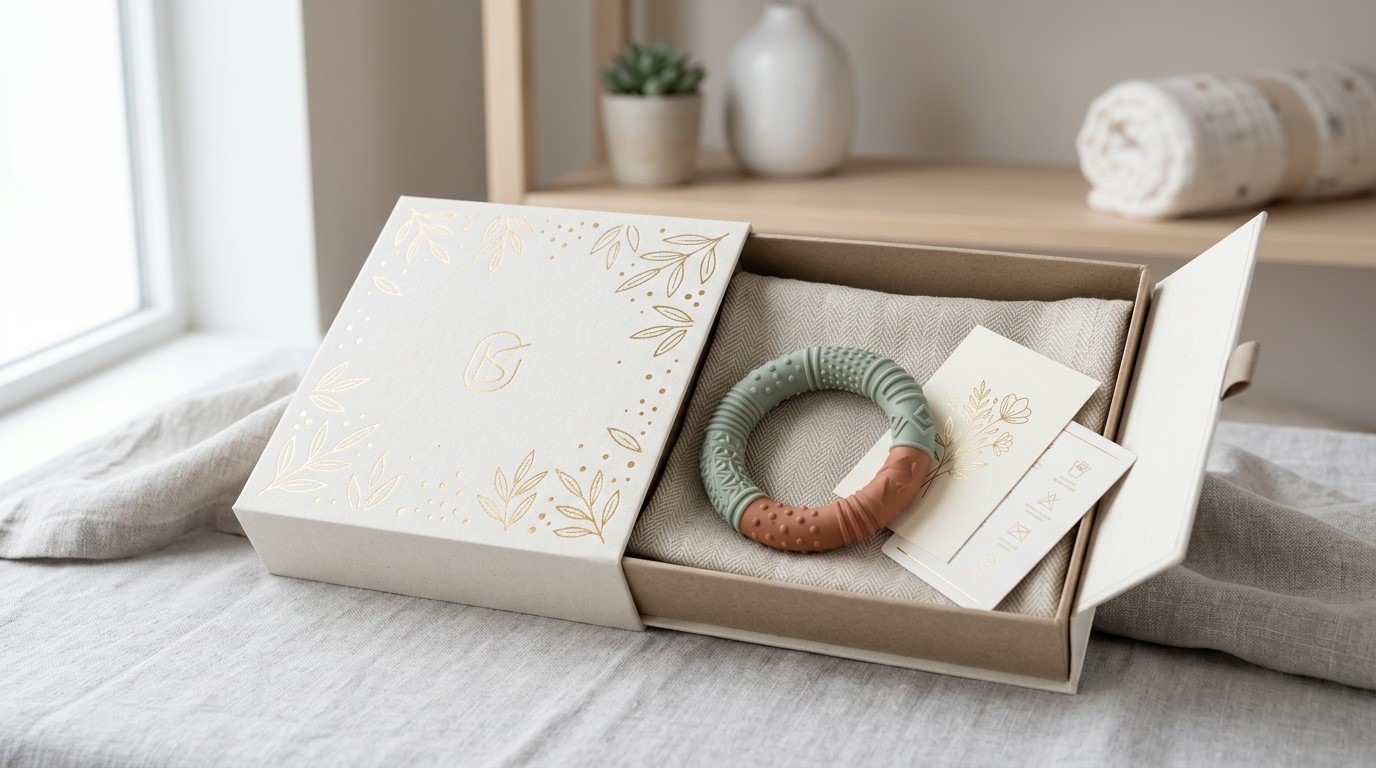
Premium Brand Packaging
Custom boxes, coordinated inserts, and branded presentation support higher-value baby gift collections, subscription programs, and premium retail product positioning.

Silicone Baby Toy Typical Specifications
| Specification | Typical Project Reference |
|---|---|
| Product | Custom silicone baby toy |
| Applications | Sensory play, teething, grasping, stacking, and interactive play |
| Material | Silicone compound selected according to intended use |
| Product structure | One-piece or approved multi-part construction |
| Hardness | Confirmed according to product function and design |
| Shape | Existing design or fully custom-molded shape |
| Surface | Smooth, matte, glossy, or custom sensory texture |
| Colors | Standard colors or custom color matching |
| Branding | Embossed, debossed, or approved printing method |
| Texture | Raised, recessed, or mixed tactile features |
| Molding process | Selected according to approved tooling and product structure |
| Packaging | Bulk, individual bag, header card, retail box, or custom packaging |
| MOQ | Confirmed according to design, tooling, and production requirements |
| Sample lead time | Confirmed after project evaluation |
| Mass-production lead time | Confirmed after sample approval and order requirements |
| Inspection | Approved sample plus agreed inspection standard |
| OEM & ODM | Available |
Final specifications are confirmed according to the approved design, selected materials, tooling, and production sample.
Why Work with RY Silicone
Silicone Manufacturing Experience Since 2012
RY Silicone is a China-based manufacturer specializing in custom silicone products since 2012. We support overseas brands from early product evaluation through sampling, bulk production, inspection, and shipment preparation.
10,000+ m² Production Facility
Our 10,000+ m² production facility supports silicone molding, finishing, branding, quality inspection, and packaging within an integrated manufacturing workflow.
30+ Production Machines
More than 30 production machines support different product structures and scalable manufacturing requirements, helping us manage both new development projects and repeat production programs.
Up to 100,000 Silicone Products per Day
Production capacity reaches up to 100,000 silicone products per day across suitable product categories. Actual output depends on product size, tooling cavities, molding cycles, and inspection requirements.
Engineering Review Before Quotation
Sample-Based Production
Mass production follows an approved sample whenever the project requires it.
The production reference confirms the product appearance and key details first, then provides the benchmark for color, texture definition, logo quality, and packaging presentation throughout the manufacturing process.
Export Project Support
RY Silicone supplies custom silicone products to clients in North America, Europe, and other international markets.
Our team supports project communication, product documentation, packaging coordination, and shipment preparation for OEM, ODM, private-label, and wholesale programs.
Silicone Baby Toy FAQ and Final RFQ
What is the MOQ for custom silicone baby toys?
MOQ depends on whether you select an existing product structure or develop a completely new custom design.
New shapes generally require tooling evaluation before the final minimum order quantity is confirmed. Product size, material, color combination, packaging, and production complexity can also affect the project MOQ.
Can you develop a completely custom silicone baby toy?
Yes.
RY Silicone can review your concept, drawing, reference sample, or product requirements and evaluate the manufacturing structure before tooling development.
A custom project can include:
- Product shape
- Sensory texture
- Functional structure
- Custom colors
- Molded branding
- Packaging design
The final development plan depends on whether the concept can be manufactured efficiently and consistently.
Which silicone material is suitable for baby toys?
Material selection depends on the toy's intended use.
For products designed for mouthing or chewing, the selected silicone compound and project documentation should be reviewed against the intended use and destination market. The finished product configuration matters, not simply the general name of the raw material.
Are colorful silicone baby toys food-contact safe?
Yes.
We combine material safety and brand identity into your colorful silicone baby toy project.
According to your specific requirements, we focus on the following key performance criteria for pigments:
- Resist heat and withstand steam or boiling sterilization
- Migration resistance to prevent color transfer
- RoHS- or REACH-compliant, with no toxic substances
- Weathering resistance and durability against UV or ozone
RY Silicone process strictly adheres to international food-contact safety regulations for color matching and formulation in food-grade silicone baby products.
Can silicone baby toys have different hardness levels?
Yes.
Hardness can be adjusted according to the product's intended function. A flexible sensory toy, chewable design, and structural stacking toy may require different material performance.
The hardness should therefore be selected after the product structure and functional requirements are defined.
Can you make custom sensory textures?
Yes.
Raised patterns, grooves, ridges, and other tactile details can be incorporated into the tooling.
However, texture design needs manufacturing review. Extremely fine patterns or deep details can create demolding challenges and may not reproduce as consistently as they appear in a digital design.
Can you match our brand colors?
Yes.
Provide your Pantone reference or approved physical color sample for evaluation.
The final production color should be confirmed using an actual silicone sample because material thickness and surface finish can influence the visual appearance.
Can you add our logo to a silicone baby toy?
Yes.
Available options can include embossed logos, debossed logos, and approved printing processes.
The best method depends on the artwork, logo detail, product surface, and durability requirements.
Are one-piece silicone baby toys better than multi-part designs?
Not necessarily.
A one-piece structure can simplify molding and reduce assembly requirements. However, some interactive or functional products require multiple components.
The important point is to evaluate how every component connects, moves, and performs before production begins.
Can silicone baby toys be designed without difficult-to-clean enclosed spaces?
Yes.
This should be considered during the product development stage, particularly for toys exposed to moisture or frequent washing.
A sealed-looking design can still contain internal areas that are difficult to inspect or dry, so the structure should be reviewed before tooling is finalized.
Can you provide FDA, LFGB, or REACH-related documentation?
Available documentation depends on the selected silicone compound, pigment, additional materials, and destination market.
Please provide your required standard and target market during the quotation stage so we can review the appropriate documentation requirements for the project.
How long does it take to develop a custom silicone baby toy?
The development schedule depends on design complexity, tooling requirements, sample revisions, and approval timing.
A project generally moves through requirement review, engineering evaluation, tooling, sampling, approval, and mass production. Final timing is confirmed after the product structure has been evaluated.
What Information Do You Need for a Silicone Baby Toy Quotation?
Please provide:
- Design files
- Target order quantity
- Reference image, drawing, or physical sample
- Intended application or market
- Target user group
- Watch type or component requirements
- Band dimensions or wrist range
- Silicone color or Pantone reference
- Logo artwork
- Preferred branding method
- Packaging requirements
- Destination country
- Required documentation or testing
- Target delivery date
The more clearly the band structure and watch configuration are defined, the earlier we can identify tooling, assembly, and compatibility requirements.