
Silicone Pet Collar Manufacturer
A silicone pet collar’s strap, closure, and attachment points must work as one assembly. RY Silicone assesses dog leash connections separately from cat breakaway requirements before quotation.
Home » Silicone Pet Products » Silicone Pet Collar
What Is a Silicone Pet Collar?
A silicone pet collar is a neck-worn accessory within silicone pet products, made with a silicone strap or verified silicone coating over a specified core. A custom version defines animal, fit range, closure, and identification. A separate silicone tag does not turn a textile collar into a silicone collar. Evaluate the finished assembly as one product.
RY Silicone is a China-based custom silicone products manufacturer established in 2012. Its 10,000+ m² facility, 30+ machines, and capacity of up to 100,000 silicone products per day are factory-wide figures. A collar project requires separate evaluation of its strap construction, hardware, and assembly route before RY Silicone commits to production.
Silicone Pet Collar Manufacturing at a Glance
Order & Timing
The minimum order, tooling route, sample schedule, and production timeline follow the approved collar construction and requested quantity.
Product Specifications
Define neck circumference, adjustment range, strap width, thickness, closure, and leash attachment before evaluating material and hardware.
Logo & Identification
Molded marks or compatible surface printing need enough space to remain legible after the strap bends around the neck.
Packaging Options
Specify bulk or retail presentation alongside the size assortment, barcode plan, and any required customer instructions.
Who We Manufacture Silicone Pet Collars For
Different channels need distinct size assortments, product evidence, and packaging.

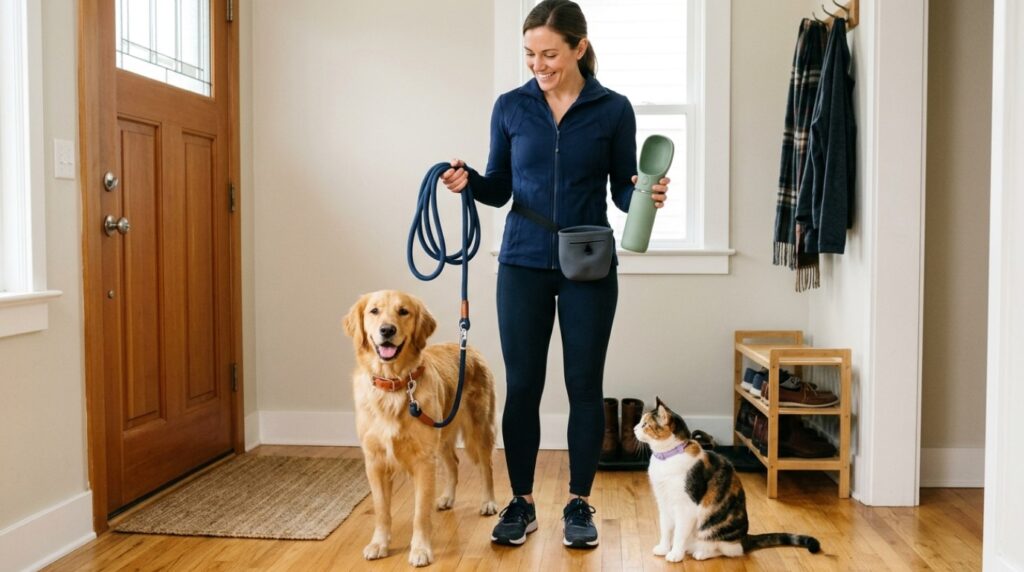
Dog Walking Gear Brands
Specify the strap, buckle, charms, and leash connection as one walking assembly for the silicone dog collar. Set the dog-size range, optional airyag dog collars, and intended use before selecting flexibility or describing pull performance.
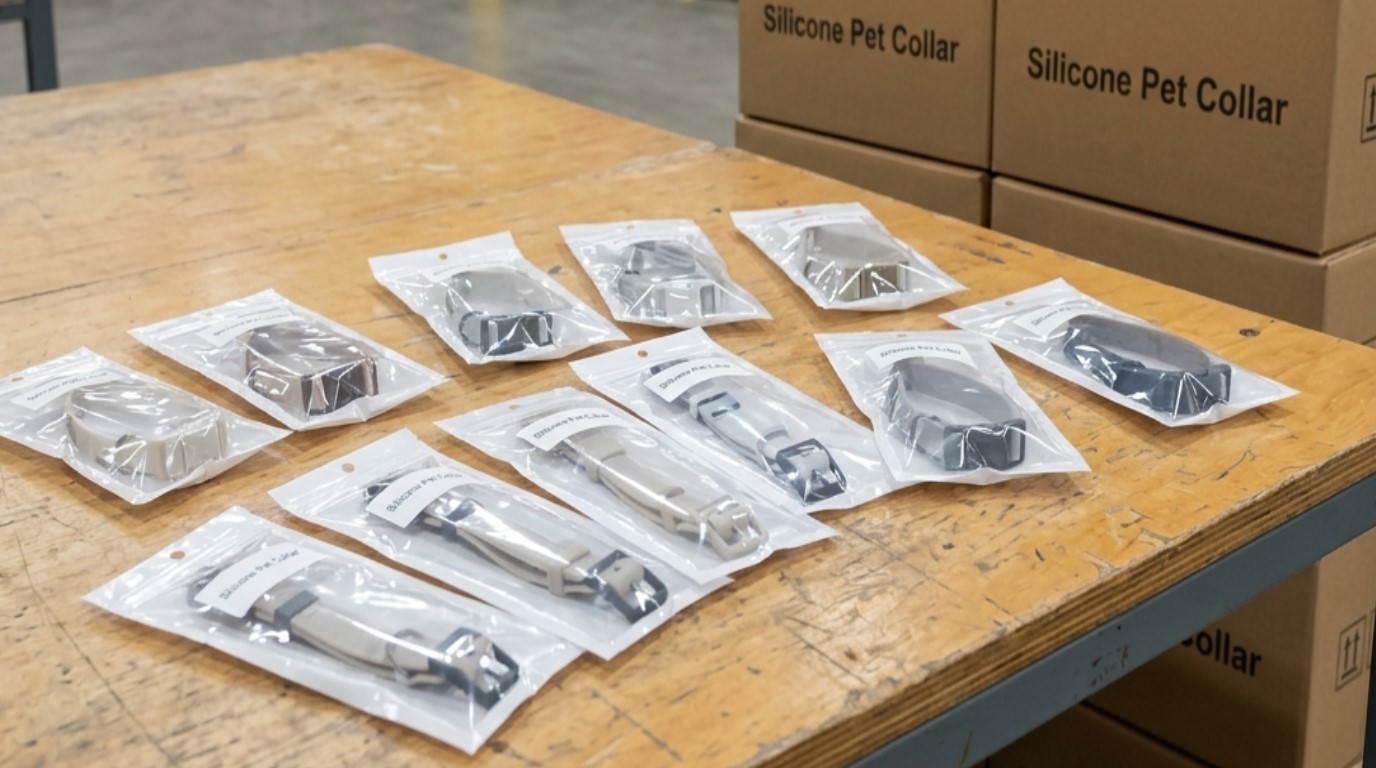
Distributors & Wholesalers
Plan wholesale assortments by neck-size range and color, then settle the closure and packaging specification. A consistent size chart helps downstream customers order the intended fit.
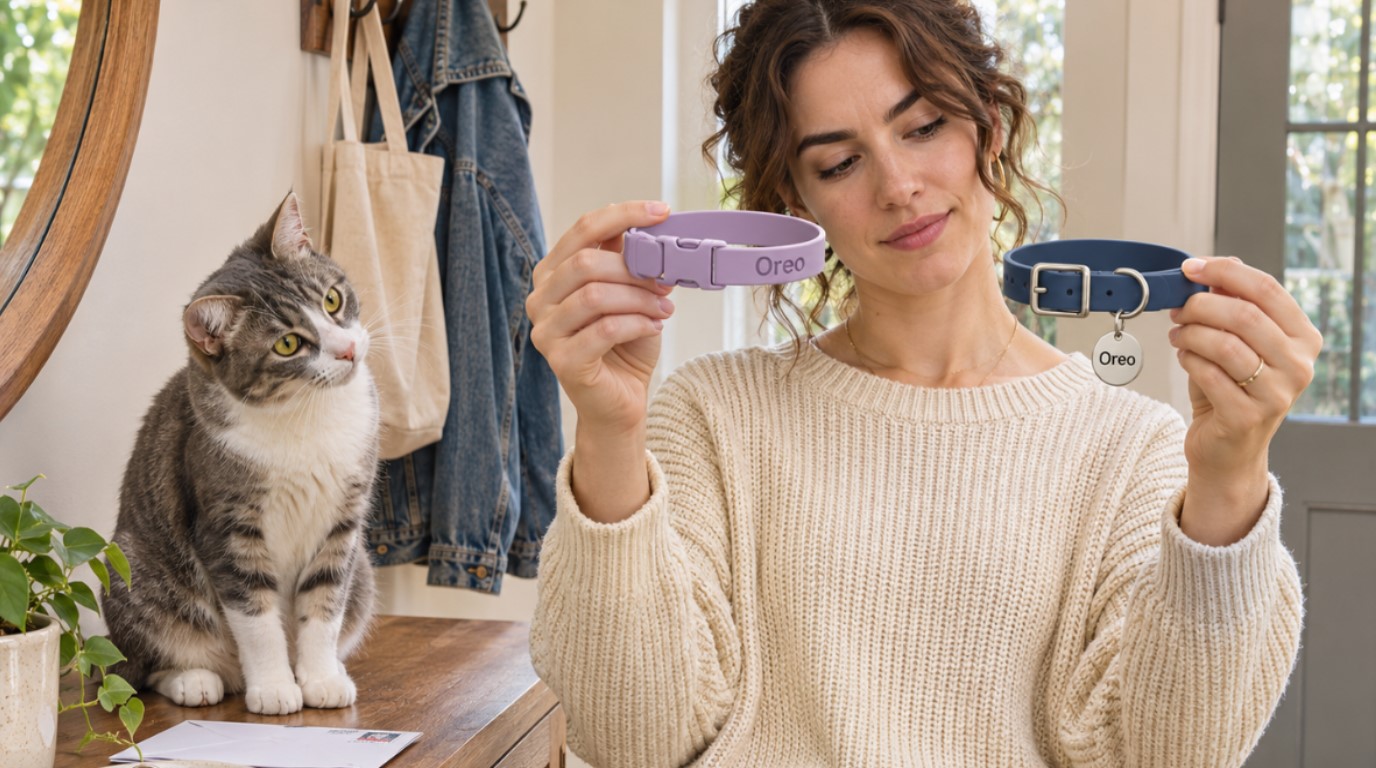
Pet Identification Brands
Build silicone dog & cat collars with a name, ID field, address, or accessory mount where it stays readable without blocking adjustment. Check retention and legibility on a curved, assembled sample.
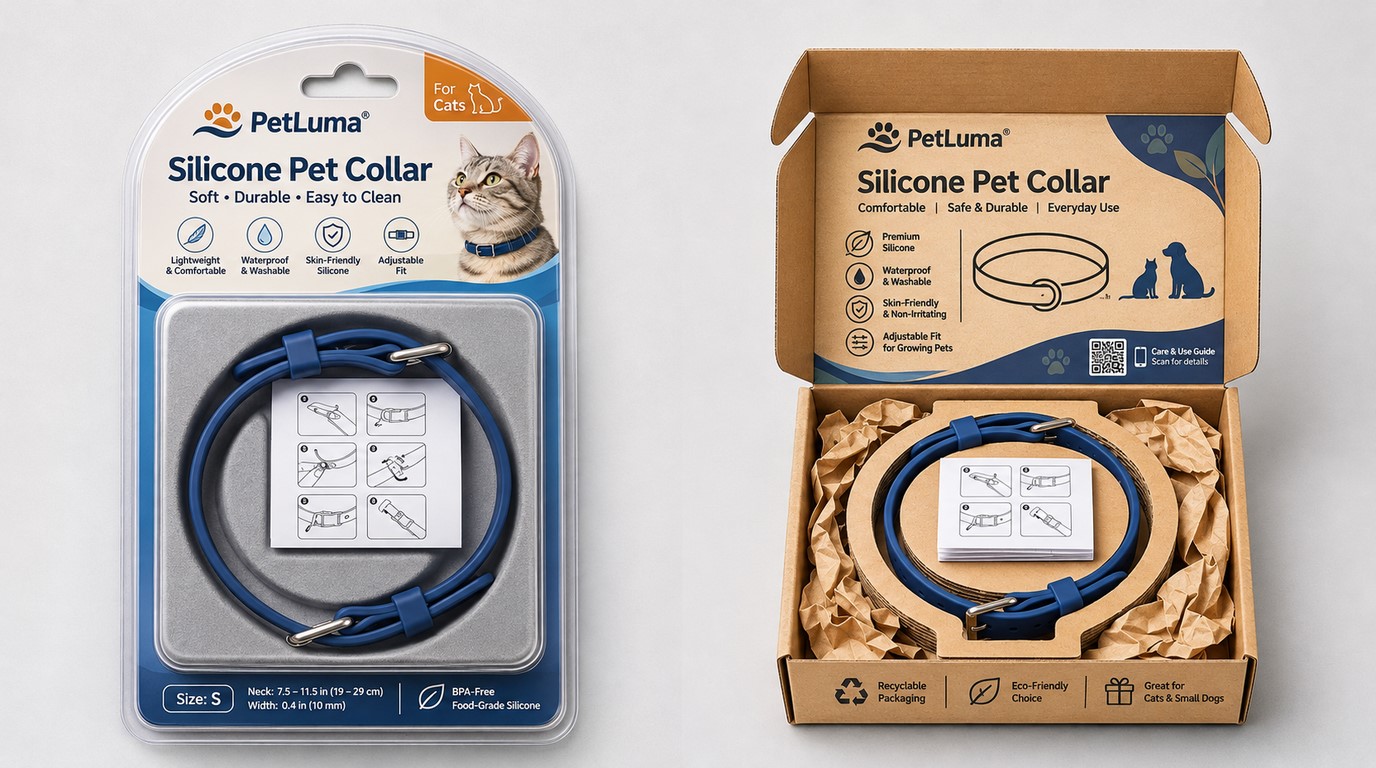
Retail & Ecommerce Sellers
Prepare size labels, product photography, packaging, and care information around the actual construction. Clear material naming helps shoppers distinguish silicone straps from PVC- or TPU-coated webbing.
Promotional & Gift Suppliers
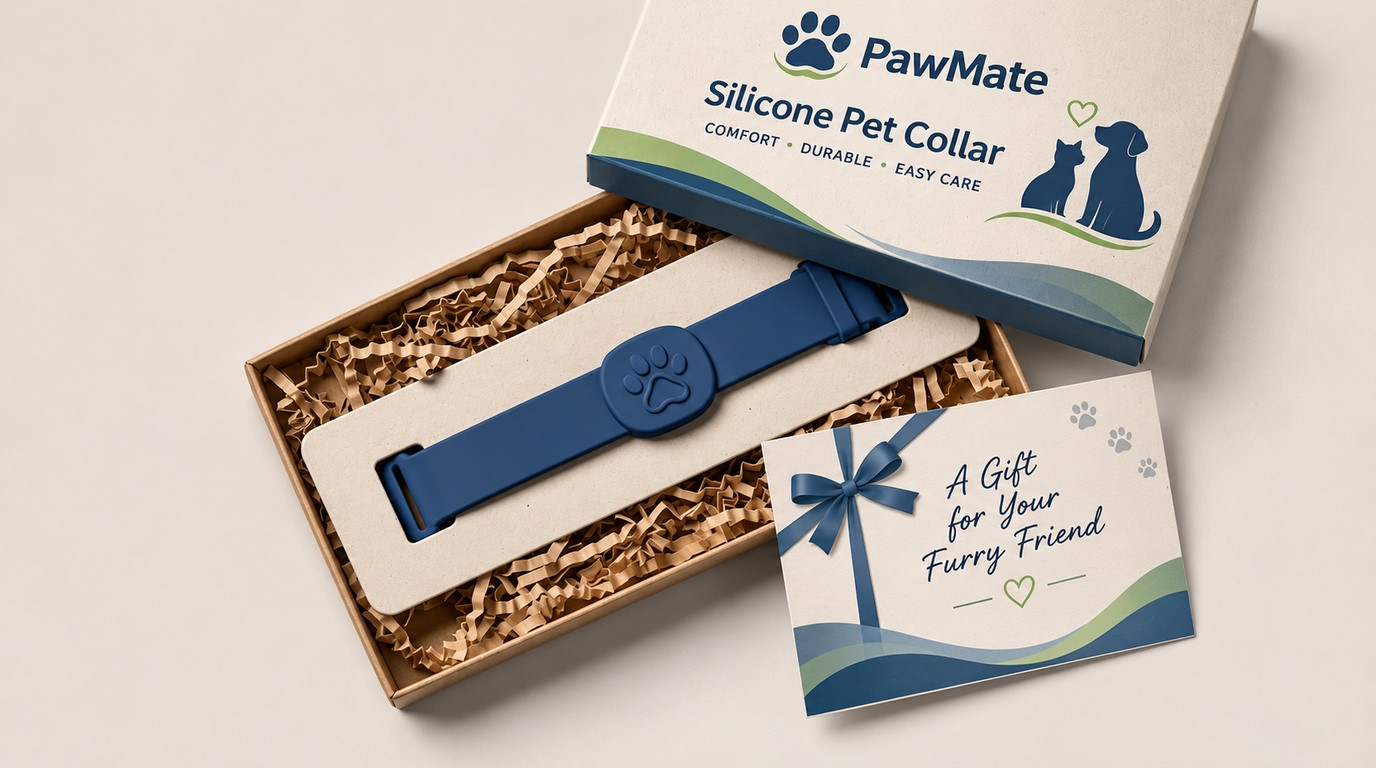
Define the actual collar construction before planning logo placement, color assortment, and presentation. Confirm that the proposed size mix and identification details suit the intended recipient program.
Cat Safety Accessory Brands
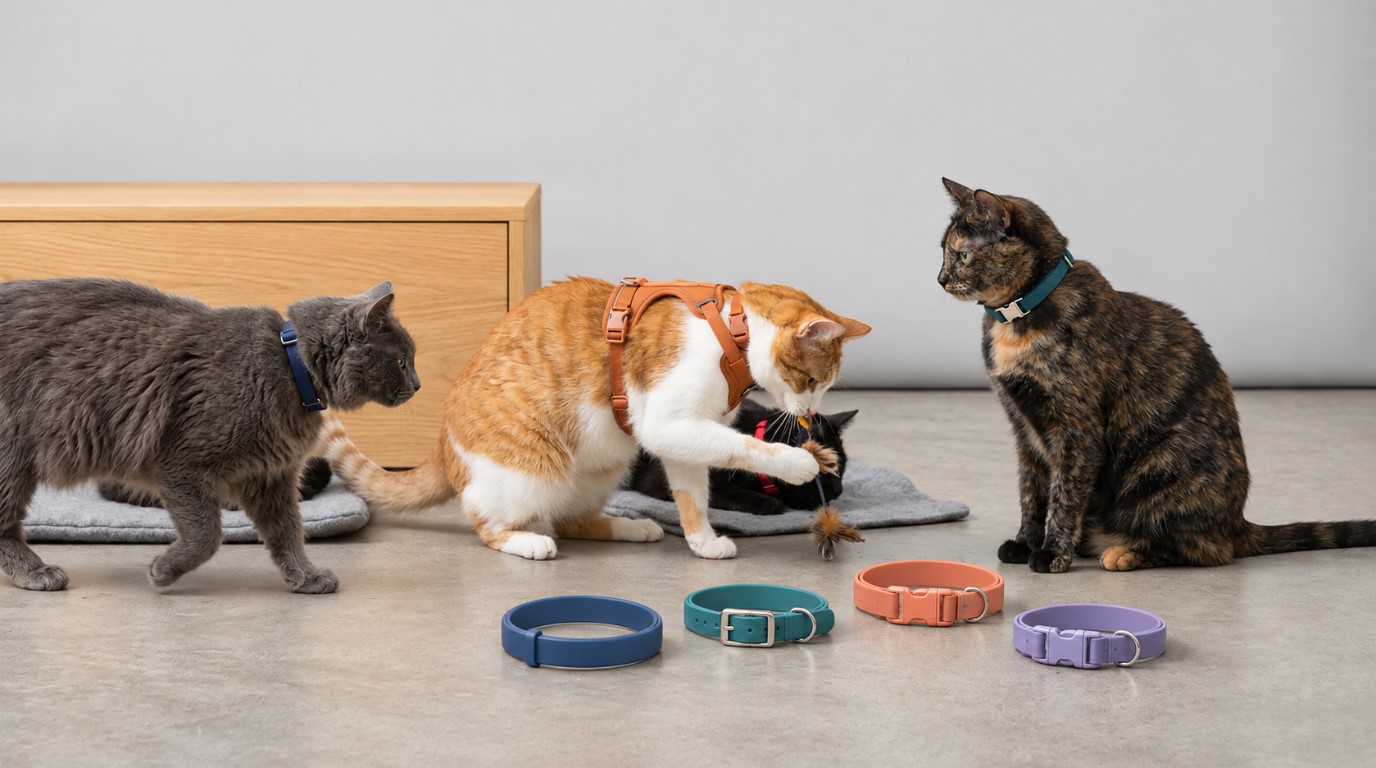
Develop silicone cat collars that fit well and have a purpose-designed breakaway closure. Specify release behavior separately from dog walking requirements, then assess the finished sample before making safety claims.
Silicone Pet Collar Types We Can Develop
Adjustable Silicone Dog Collars
Reinforced Silicone Dog Collars
Silicone-Coated Webbing Pet Collars
Personalized Silicone ID Collars
Quick-Release Silicone Cat Collar Concepts
Silicone Bead Pet Collar
Silicone Pet Collar Customization
Lock the construction and fit before settling on the appearance and packaging.
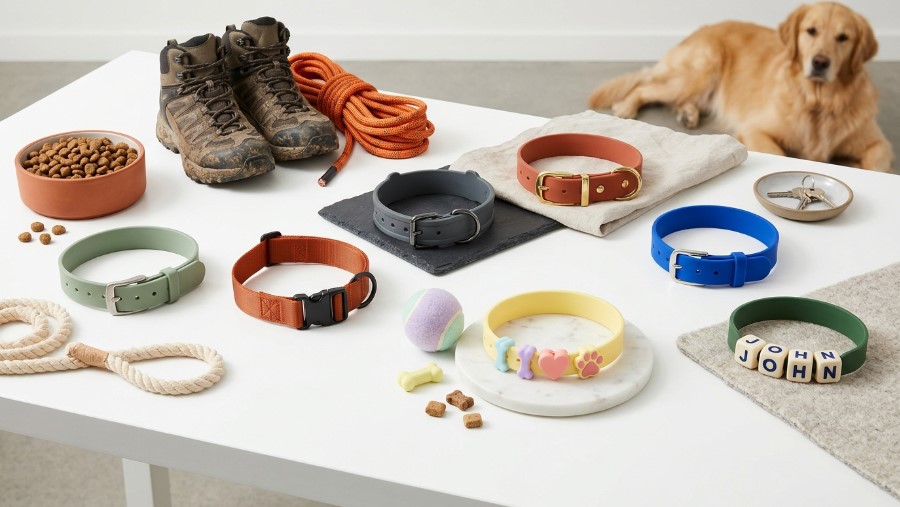
Choose the strap construction, buckle, and leash attachment as a complete assembly. Custom silicone dog collars can be developed around a solid silicone strap or an evaluated silicone-coated webbing construction. The selected structure should match the intended dog size, adjustment method, and load requirements.
Available customization options include:
- Strap construction: Solid silicone straps or silicone-coated webbing, with reinforcement evaluated where needed.
- Buckle options: Pin buckles, pin-and-tuck closure, breakaway, or quick-release buckles, with compatible metal or plastic components.
- Leash attachments: Custom D-ring size, position, quantity, and hardware finish.
- Structural details: Strap-end shape, edge rounding, keeper loops, and attachment-hole placement.
- Bead assembly: Define bead arrangement, stringing material, retention, and closure details for bead-style collars. See our silicone bead assembly guide for additional construction considerations.
Final construction, material compatibility, and assembly performance should be confirmed using the approved sample.
Dimension
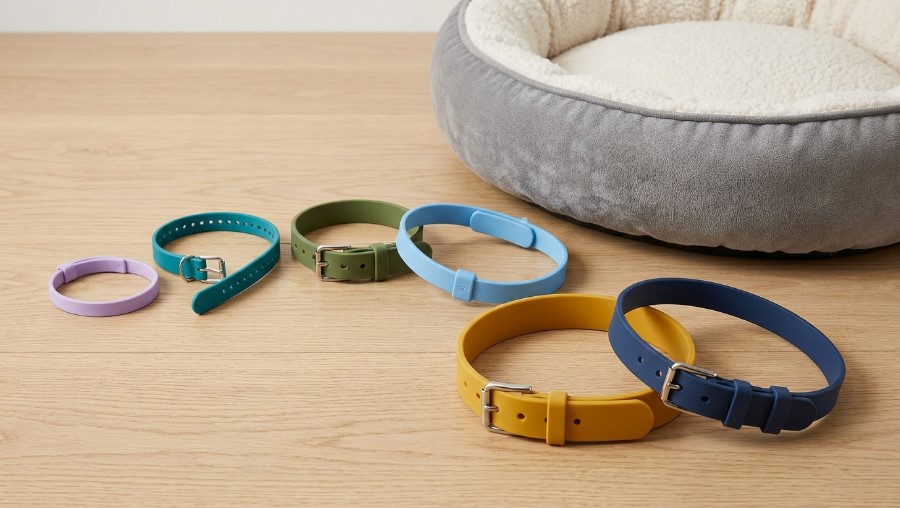
Build the collar size range around your target dog breeds and neck measurements. Strap length, width, thickness, and adjustment design can be specified for each size. The finished fit range should account for buckle dimensions and the usable adjustment positions, rather than strap length alone.
Available customization options include:
- Size range: XS, S, M, L, XL, or a custom size chart based on target neck circumferences.
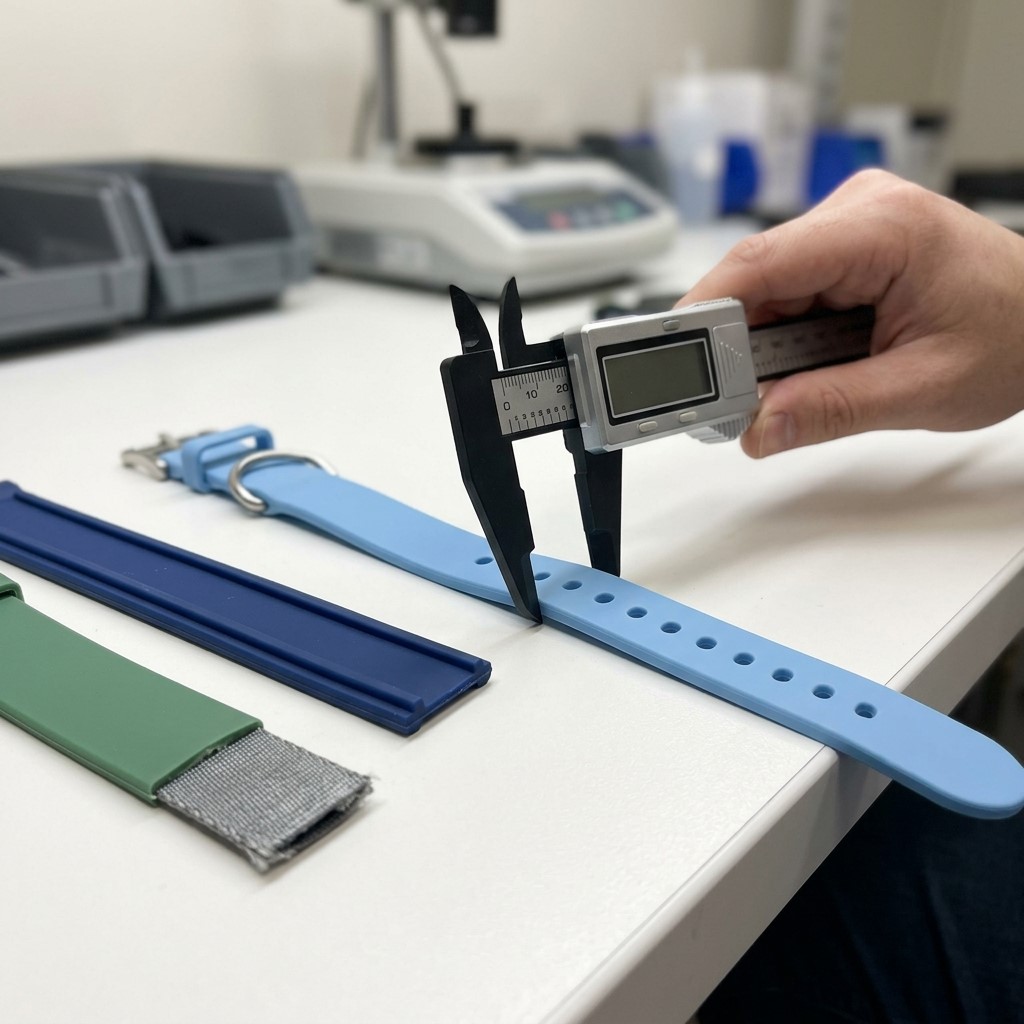
- Strap dimensions: Custom overall length, width, and thickness for each collar size, with specified tolerances. Refer to our hardness and thickness specification guide when preparing technical requirements.
- Adjustment design: Multiple adjustment holes, custom hole spacing, or compatible sliding-adjustment hardware.
- Fit details: Minimum and maximum wearable circumference, hole edge distance, and remaining strap-end length.
Final sizing should be checked on assembled samples at both ends of the adjustment range.
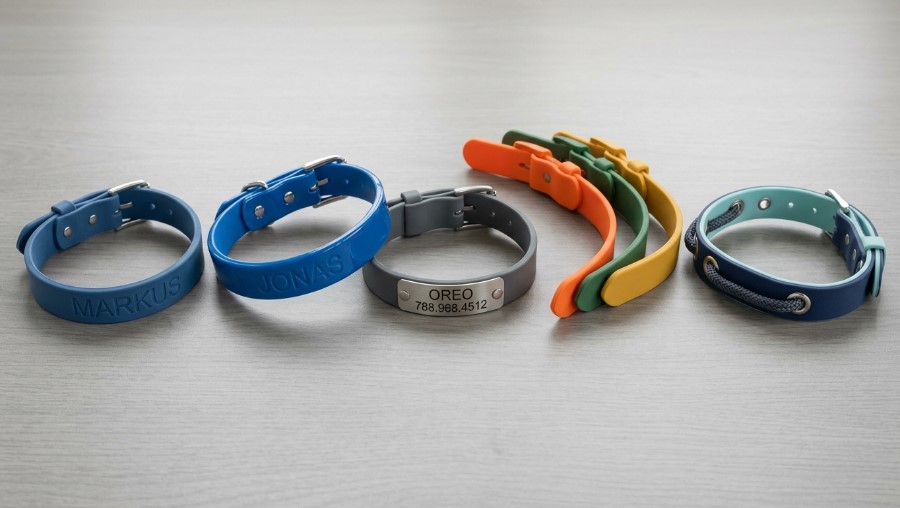
Develop custom silicone pet collars with brand-specific colors, logos, and surface details. Logo placement should avoid adjustment holes, high-bend areas, and hardware contact points. Molded branding and printed graphics require different tooling or surface-process considerations, so the finished appearance should be approved on a physical sample.
Available customization options include:
- Logo methods: Embossed or debossed logos, with silicone-compatible printing evaluated where suitable.
- Custom colors: Pantone-based color matching for silicone straps and coordinated hardware colors.
- Surface appearance: Smooth, matte, or textured finishes, subject to the selected construction and tooling. Explore silicone surface patterns and finishes when specifying the final appearance.
- Identification details: Custom name or ID areas, separate identification tags, or branded hardware details where applicable.
Submit vector artwork, color references, and preferred logo positions for sample evaluation.
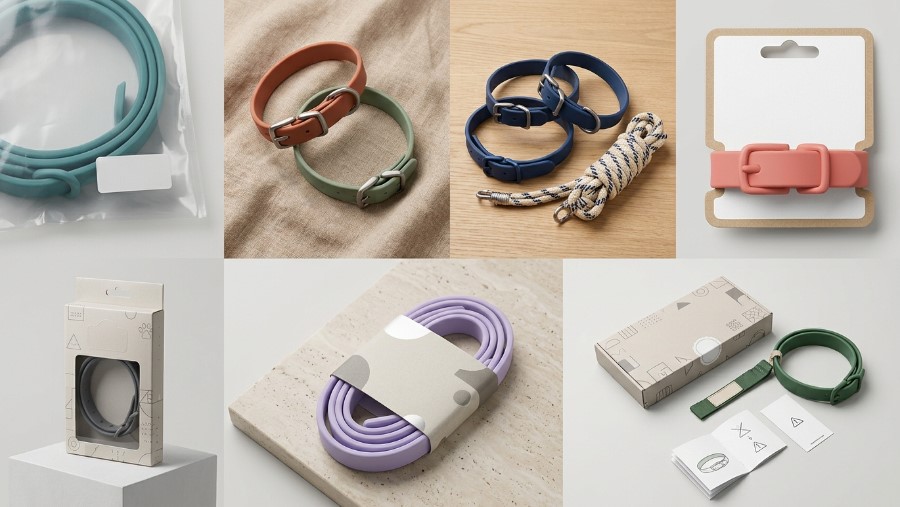
Customize packaging for wholesale distribution, private-label retail, or branded pet product collections. Packaging formats can be selected according to order volume, sales channels, and the number of collar sizes and colors in the product range.
Available customization options include:
- Packaging formats: Bulk polybags, hanging cards, printed sleeves, or custom retail boxes.
- Private-label packaging: Custom brand artwork, product labels, inserts, and size or care information.
- SKU identification: Barcodes, size and color labels, and carton markings for mixed product ranges.
- Packing configurations: Individual packs, multipacks, or matching collar-and-leash sets where available.
Packaging artwork, labeling requirements, and units per carton should be confirmed before bulk production. Product claims must be supported by the approved specifications and relevant documentation.
Start Your Custom Silicone Pet Collar Project
Send your target animal, reference design, size range, quantity, and branding files. RY Silicone will assess the construction and quote against a defined sample plan.
How to Specify a Better Silicone Pet Collar
A usable specification connects fit, attachment strength, and material identity.
- Animal and use: State whether the collar is for a dog or a separately assessed cat design.
- Neck fit: Provide circumference ranges and usable adjustment positions for each size.
- Strap: Define silicone, any core, width, thickness, and edge shape.
- Closure: Name the buckle or breakaway mechanism and its intended function.
- Leash point: Show the ring and how loads transfer into the strap.
- Branding: Supply artwork size and a position that avoids high-bend zones.
- Evidence: Agree on sample checks for fit, retention, and appearance.
Full Specification Guide
How to Specify a Silicone Pet Collar—size charts, strap construction, closure design, tensile strength, and sample acceptance criteria.
Silicone Pet Collar Logo & Branding Methods
Choose a mark that survives bending and remains readable.
Compatible Surface Printing
Ink compatibility and wear expectations need a sample-specific method before a durability claim is made.
ID Fields and Hardware Marks
An identification area or marked hardware may support private-label programs.
Embossed Logos
A raised mark can be formed in a newly tooled silicone strap. Artwork depth and line width must suit the available strap thickness.
Debossed Logos
A recessed mark avoids added ink, but deep details should not weaken thin strap sections or sit beside adjustment holes.
Silicone Pet Collar Material and Performance Options
Select materials around the assembled collar and its intended use.
Specify the silicone body and load path together.
A soft strap still needs a reliable connection to its closure and leash point. Material grade, hardness, section thickness, and any reinforcement belong in one design brief.
A sample should reveal whether holes stretch, edges tear, or hardware shifts under agreed handling conditions; no universal strength rating applies to every proposed collar.
Material Comparison
Silicone vs. Nylon: Which Material Is Optimal for Pet Collars? —Material identity, core structure, cleaning, flexibility, water & odor resistance, tensile strength, chew resistance, and attachment & hardware design.
Choose hardness against the formed strap, not a material name alone.
Strap width, thickness, and any core affect how the collar bends around the neck. Compare proposed material options in the intended size range, including the smallest and largest adjustment positions.
A softer compound does not by itself establish comfort or durability; assess the finished collar’s contact and handling on a representative sample.
Define the boundary between silicone and any reinforcing layer.
A coated-webbing design needs the actual core and coating polymer named in the specification.
For reinforced straps, locate exposed ends, adjustment holes, and hardware penetrations where a layer may lift or wear.
The bonding route and acceptance checks depend on the proposed construction; avoid describing PVC- or TPU-coated webbing as silicone.
Evaluate odor resistance for wet and outdoor use.
Odor resistance can be specified as an optional performance requirement for collars exposed to moisture, skin oils, and outdoor dirt.
Silicone formulation, strap surface, exposed webbing, and hardware joints can affect where odor-causing residues collect and how readily they are removed. Compare solid silicone and silicone-coated webbing constructions against the intended use rather than assuming identical odor performance.
Confirm the selected design’s odor-retention behavior through agreed sample evaluation.
Inspect the parts that touch the animal, not only overall dimensions.
Edge shape, hole finish, strap width, and hardware position affect contact during movement.
Define a usable neck-size range and inspect the sample at each intended adjustment extreme.
Material softness alone cannot substantiate skin-comfort or irritation claims; any such statement needs evidence from the relevant finished configuration and use conditions.
The hardware connection is a separate performance decision.
Ring holes, folded ends, molded features, and fasteners create different load paths. Agree on the intended use and sample test method before describing leash suitability or pull resistance.
A closure designed to release for a cat must be evaluated separately from a fixed dog-collar closure.
Document the selected finished configuration.
Material declarations and substance reports should match the selected materials and components of the finished collar. Documentation requirements vary by destination market and may include:
- Silicone and pigments: Material identification and relevant substance declarations.
- Webbing and reinforcement: Core material specifications and supporting documentation, where applicable.
- Printing and hardware: Relevant information for inks, coatings, buckles, rings, and other specified components.
- Finished assembly: Product-specific documentation where required; silicone raw-material reports alone do not establish compliance for the complete collar.
Match cleaning instructions to the complete collar assembly.
Moisture, skin oils, and outdoor dirt can leave residues that contribute to unpleasant odors. Specify cleaning methods suitable for the strap surface, coating, printing, and hardware, with attention to exposed webbing and attachment joints where residues may remain. Check whether routine cleaning reduces odor without damaging the approved sample.
Replace collars showing tears, loose hardware, or persistent material damage.
Cleaning instructions should reflect the finished assembly rather than the silicone surface alone.
Care Guide
How to Clean a Silicone Pet Collar—strap cleaning, hardware checks, drying, and signs that a collar needs replacement.
How Custom Silicone Pet Collars Are Manufactured
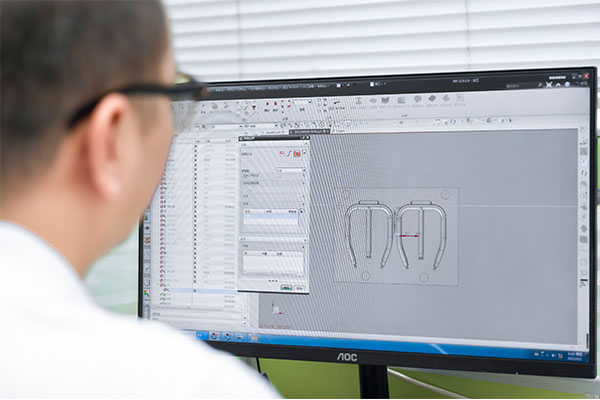
STEP 1: Requirement Review
The project brief defines the animal, neck-size range, strap construction, closure, attachment point, order quantity, branding, packaging, and requested documents before costing begins.
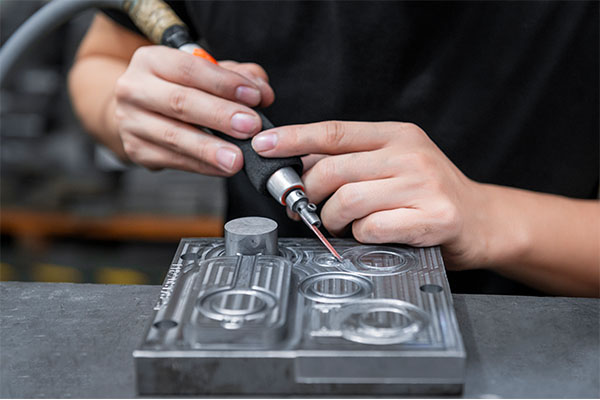
STEP 2: Tooling and Assembly Evaluation
The team compares the drawing with available tooling and identifies new mold features, hardware interfaces, coating needs, and outsourced assembly steps before sampling.

STEP 3: Material and Color Preparation
Selected silicone and pigment are matched to the approved brief; any webbing core, buckle, ring, ink, or adhesive receives a separate material specification.
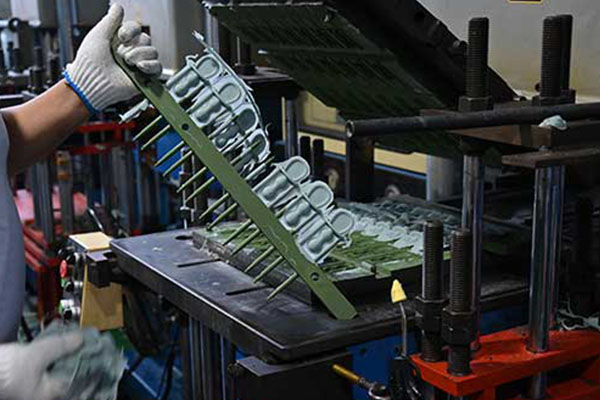
STEP 4: Silicone Molding
The silicone strap is formed through a process chosen for its geometry and material; a coated-webbing design needs a separately verified coating route.
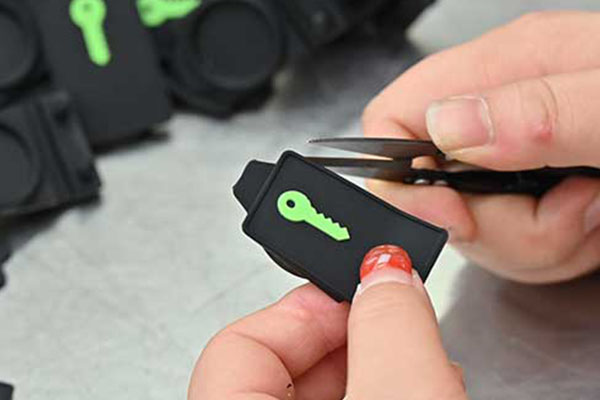
STEP 5: Demolding and Edge Finishing
Operators trim molded edges and inspect adjustment holes, thin sections, and attachment openings, where cuts or uneven thickness can initiate tears during use.
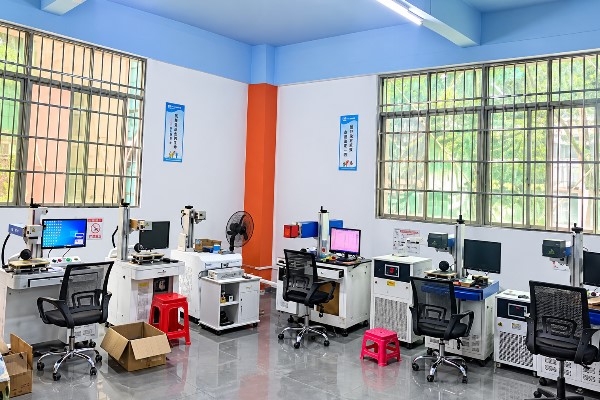
STEP 6: Branding and Assembly
Molded or surface marks follow approved artwork, and then specified hardware is assembled; the actual joining method and supplier responsibilities belong in the production plan.

STEP 7: Quality Inspection
The finished collar is compared with its approved sample for size, appearance, logo placement, closure operation, and any agreed component-retention or load checks.

STEP 8: Packaging and Shipment
Each size and color is counted, labeled, and packed to the purchase order; carton marks and supplied documents follow the agreed destination requirements.
Silicone Pet Collar Quality Control
The finished assembly, rather than the silicone alone, is the inspection unit.
AQL 2.5 / 4.0 Standard Inspection
We run final random sampling plans to verify batch consistency:
AQL 2.5
Critical / Major Defects
AQL 4.0
Minor Visual Flaws
Another inspection standard can be used when specified in the purchase order.
Approved Sample
The signed sample should define the actual strap construction, usable size range, color, surface, logo, closure, and attachment arrangement.
Any mismatch between drawing and sample needs resolution before production release.
Incoming Material
Check the selected silicone and pigment against the project specification.
Record the source and identity of any webbing, buckle, ring, ink, or other component used in the assembly.
In-Process Inspection
Inspect strap thickness and hole geometry during formation.
Thin material around adjustment holes or a sharp edge at a ring opening can trigger failure despite acceptable overall length.
Dimensions & Appearance
Compare length, width, thickness, hole spacing, and usable circumference with approved tolerances.
Check color, flash, cuts, contamination, and legibility at the collar’s curved wearing position.
Closure & Attachment
Check buckle operation and component retention using agreed methods.
Define dog-collar load criteria separately from any cat-collar release requirement; neither can be inferred from a material certificate.
Odor Performance Verification
For collars with specified odor-resistance requirements, agree on the sample configuration, odor exposure, cleaning conditions, and acceptance criteria before testing.
Evaluate odor retention on the representative finished assembly, including exposed webbing and attachment areas where applicable. Use the results to approve the design and define any required production rechecks.
Final Sampling & Packaging
Set the sampling plan and defect classes in the purchase order. Our silicone product inspection guide provides additional quality-control context. AQL 2.5/4.0 can be discussed as a proposed inspection basis, but the actual acceptance criteria and product tests require project agreement.
Silicone Pet Collar Packaging Options
Choose packaging that identifies each collar’s size, material, and intended use.
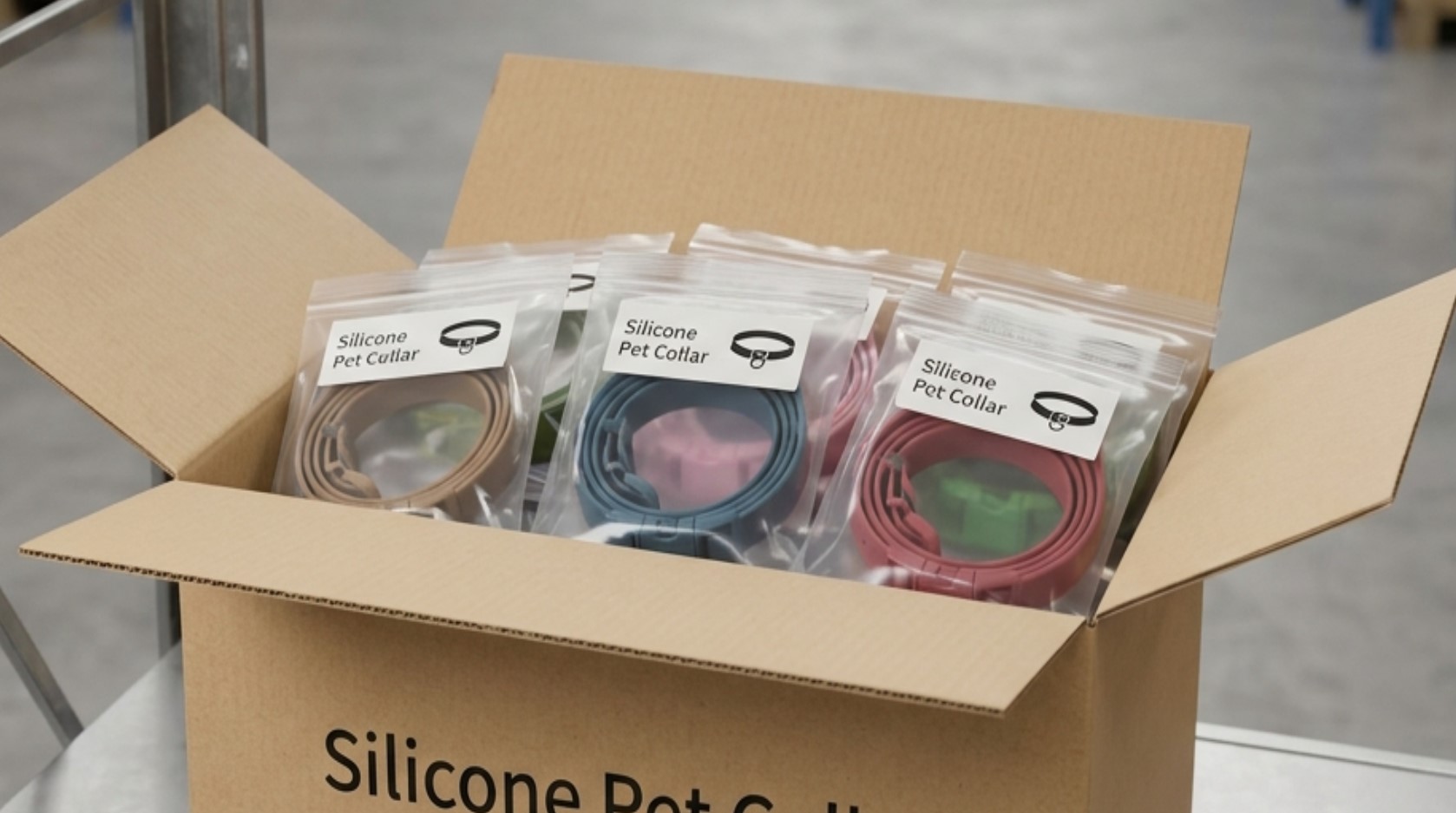
Bulk Packaging
Group collars by size and color with clear carton labels. Protective separation helps distributors count stock without mixing adjustable ranges or hardware versions.
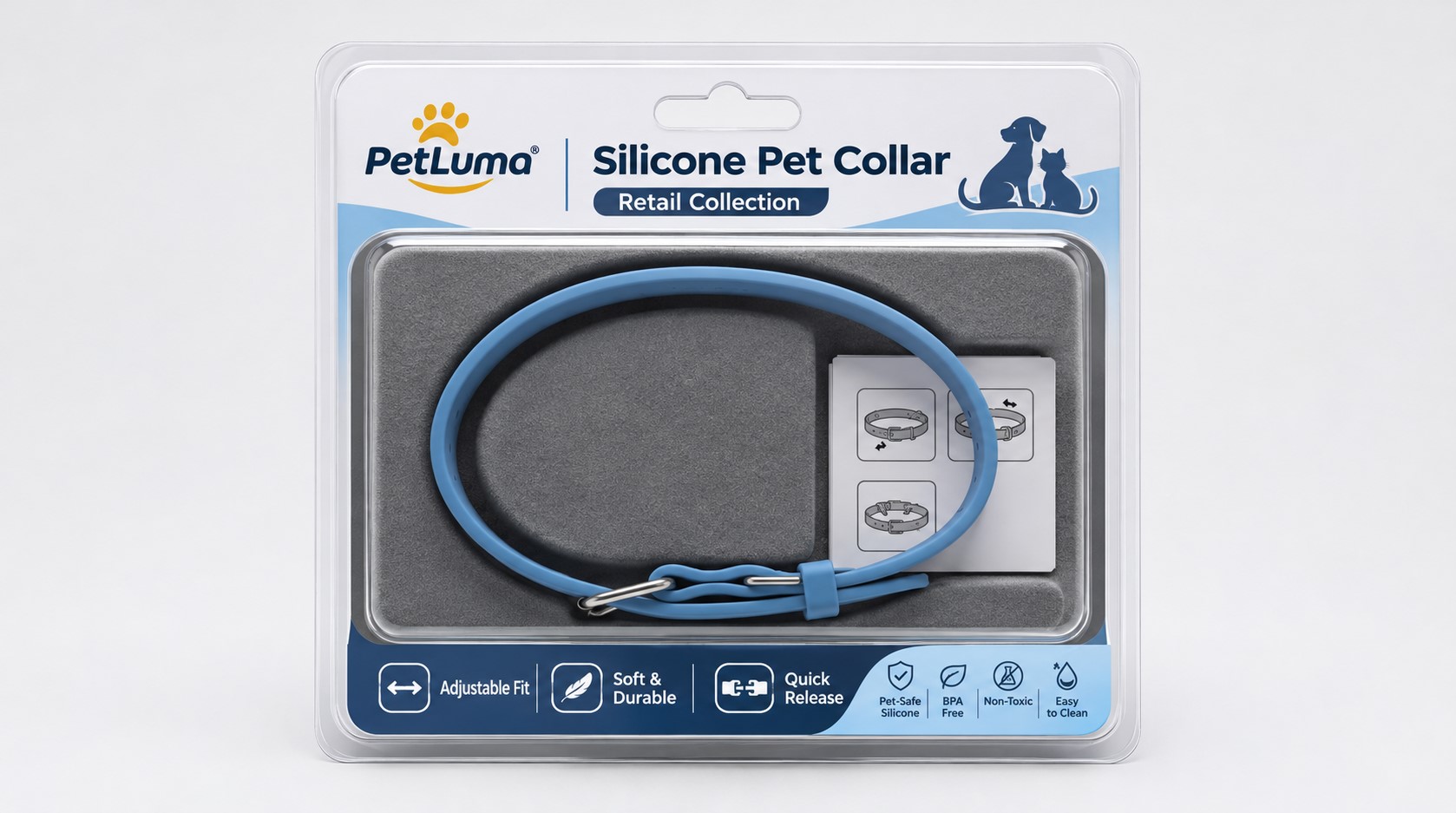
Retail Packaging
Use a hanging card or printed box with a readable fit guide. Material and closure descriptions should match the approved finished collar.
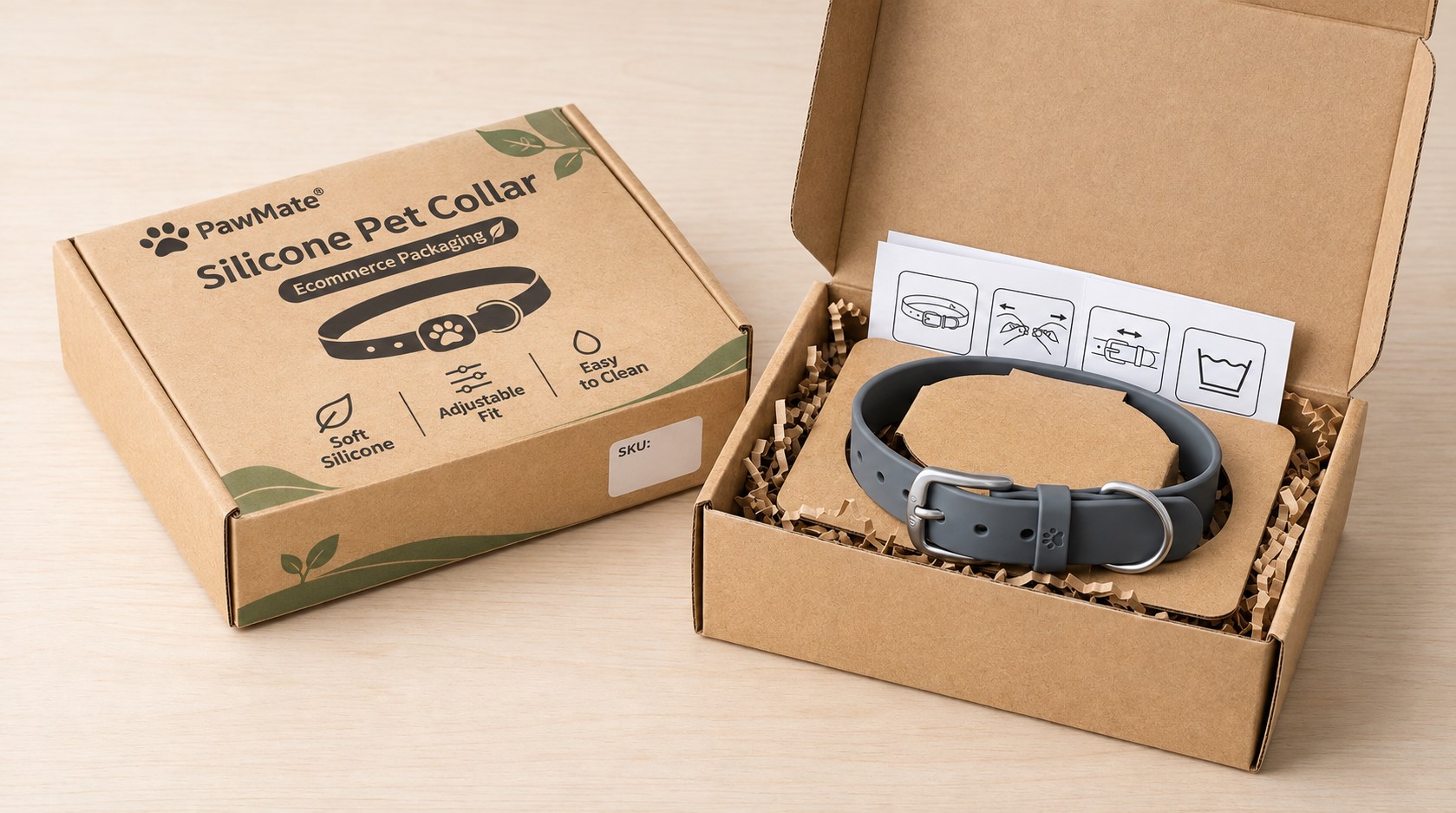
Ecommerce Packaging
Assign each construction, size, and color its own SKU and barcode. Add protection that keeps the strap and hardware presentable during fulfillment.
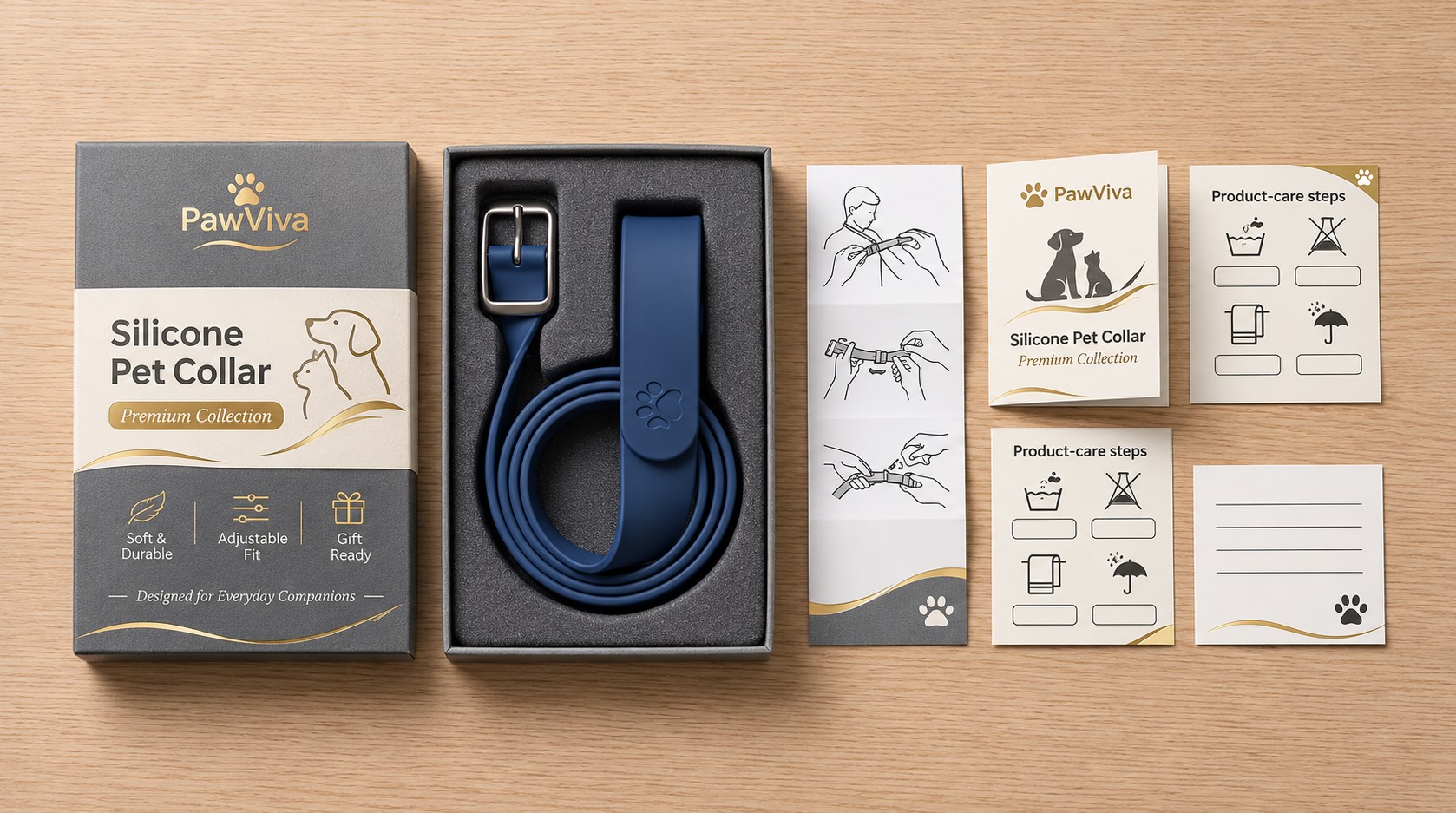
Premium Brand Packaging
Coordinate the package artwork with the product's color and ID treatment. Any performance statement on the box needs matching product-specific evidence.
Typical Custom Silicone Pet Collar Specifications
| Specification | Project decision or evidence required |
|---|---|
| Product | Complete silicone pet collar, or defined silicone component only |
| Intended animal | Dog; cat only with a separately evaluated quick-release design |
| Strap construction | Solid silicone, reinforced silicone, or verified silicone-coated webbing |
| Core material | State material and supplier when a core is used |
| Neck circumference | Minimum and maximum usable fit for each size |
| Strap length, width, and thickness | Drawing dimensions and agreed tolerances |
| Adjustment | Hole count, spacing, edge margin, and usable positions |
| Silicone hardness | Select after strap and hardware design assessment |
| Closure | Buckle type and fixed or breakaway function |
| Leash attachment | Ring material, connection geometry, and intended use |
| Weight | Approved sample weight by size and assembly |
| Colors | Approved physical sample and references for each component |
| Branding | Molded logo, compatible print, ID field, or hardware mark as approved |
| Manufacturing route | Defined after design, tooling, coating, and assembly assessment |
| Functional checks | Agreed fit, closure, retention, and load methods where relevant |
| Documentation | Match material, components, finished configuration, and destination |
| MOQ | Quote separately for existing tooling and new development |
| Sample and production timing | Quote after construction, tooling, quantity, and packaging are set |
| Packaging | Bulk, retail, ecommerce, or brand-specific specification |
| OEM/ODM scope | Define design ownership, tooling, assembly, and branding responsibilities |
Final specifications follow the approved design, sample, and purchase order.
Why Work with RY Silicone

Silicone Manufacturing Experience Since 2012
RY Silicone is a China-based custom silicone products manufacturer established in 2012. For a collar brief, we start with material identity, strap geometry, and the proposed closure rather than applying a generic accessory specification.

10,000+ m² Production Facility
The 10,000+ m² figure describes RY Silicone’s overall factory facility. It is not a dedicated collar workshop; product-specific tooling and assembly arrangements are determined for each project.

30+ Production Machines
RY Silicone reports more than 30 production machines across its silicone manufacturing activities. This factory-wide count does not establish dedicated collar machines, a coating line, or hardware assembly equipment.
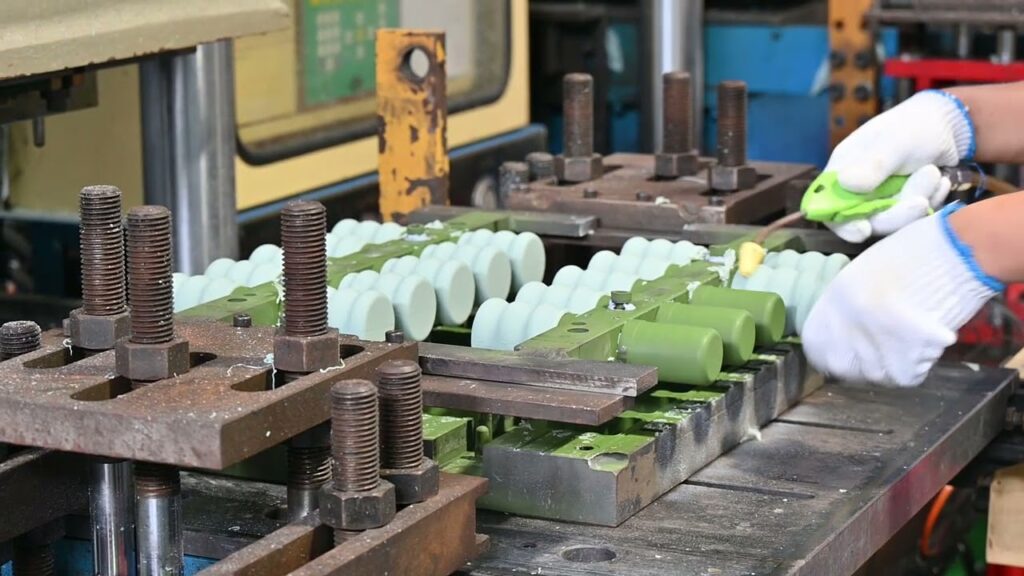
Up to 100,000 Silicone Products per Day
The factory-wide upper capacity covers multiple silicone product categories. It does not describe collar output or guarantee a collar-order lead time; proposed volume follows the approved construction and production route.

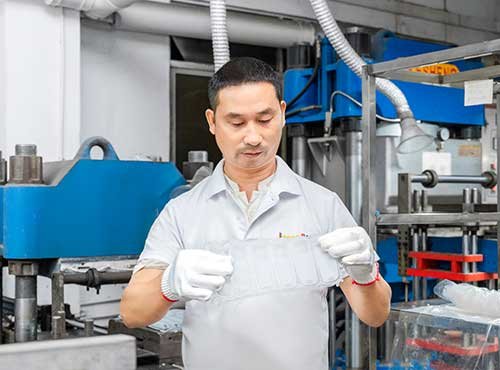
Engineering Review Before Quotation
An engineering review maps the neck-size range to strap dimensions, then examines adjustment-hole margins and the load path through hardware. Coated webbing requires a separate material and bonding assessment.
Sample-Based Production
The approved sample controls fit settings, surface, color, logo position, and assembled hardware. Drawings and sample details must agree before release; performance checks require their own agreed methods and results.

Export Project Support
RY Silicone coordinates overseas silicone-product projects around specifications, available documents, packaging, and shipping preparation. Destination-market requests for a collar are assessed against its actual material and finished assembly.
Silicone Pet Collar FAQ and Final RFQ
What is the MOQ for a custom silicone pet collar?
The minimum depends on whether a usable strap design and tooling already exist, whether new hardware or coating is needed, and the number of sizes and colors. Send the proposed construction and order split for a project-specific quotation.
Can RY Silicone supply a complete collar rather than only a silicone strap?
The scope of silicone manufacturing, hardware sourcing, assembly, and final packing must be defined for the specific design.
A reference sample or drawing lets us assess the complete-delivery route before a supply commitment.
Is a silicone-coated webbing collar the same as a solid silicone collar?
No.
Coated webbing has a textile core and a separate surface layer; a solid silicone strap has a different construction. State the actual coating polymer because PVC and TPU are not silicone.
Can the same design be sold for dogs and cats?
The intended animal changes the fit and closure requirements. A cat version needs a separately evaluated quick-release mechanism; a fixed dog-collar closure should not be presented as an equivalent safety design.
How should we specify collar sizes?
Provide the target neck circumference and usable adjustment range for each size. Include strap dimensions and buckle type so the finished fit can be checked on assembled samples.
Which closure and leash ring should we choose?
Start with whether the collar carries a leash and the expected use. Supply hardware preferences or a reference product so the load path, materials, and assembly method can be assessed together.
Can we customize the collar with our brand logo or individual pet names?
Yes.
Molded logos can be evaluated for consistent branding across production batches. Individual pet names may require separate ID tags or other variable-marking methods.
The suitable process depends on the artwork, strap design, and order requirements.
Is a softer silicone compound always more comfortable?
Not necessarily. Strap thickness, flexibility, edge geometry, and collar fit also affect wearing comfort. Select silicone hardness together with the strap design and assess the assembled collar at its intended adjustment positions.
What testing or documentation can be supplied?
Specify the destination market and the exact material or finished-product documents required. Closure, retention, and load checks need agreed methods for the assembled collar; raw-material paperwork alone cannot replace them.
How long does sampling and mass production take?
Timing depends on existing tooling, new strap geometry, hardware sourcing, assembly, and the approved packaging. A schedule can be quoted after the construction and expected quantity are defined.
What should we send for a silicone pet collar quotation?
Provide design files, drawings or reference samples, target animal and neck sizes, strap construction, closure and leash-point requirements, expected quantity by SKU, branding artwork, packaging brief, destination market, and required documents or tests.