Manufacturing custom silicone products since 2012

Silicone Fondant Molds Manufacturer

Food-grade silicone fondant molds for detailed cake decorations, letters, flowers, and themed designs with precise cavities and private-label packaging.

Home » Silicone Fondant Molds
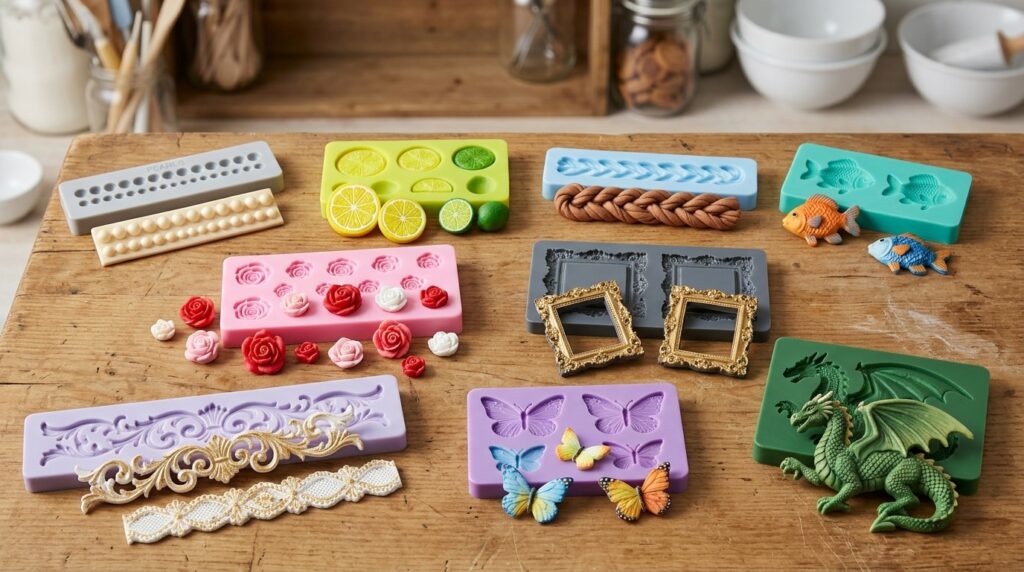
Diverse silicone fondant molds

What Is a Silicone Fondant Mold?

A silicone fondant mold is a flexible food-contact molding tool that shapes fondant, sugar paste, or edible decoration materials into repeatable flowers, letters, figures, patterns, and other cake-decorating details. A custom silicone fondant mold is developed to your required shape, cavity layout, detail level, size, color, logo, and packaging.

RY Silicone is a custom silicone manufacturer based in China, established in 2012. We develop OEM/ODM silicone fondant molds for bakeries, cake-decoration brands, baking-supply distributors, wholesalers, and private-label sellers serving international markets.

Silicone Fondant Mold Manufacturing at a Glance

MOQ & Lead Times

Minimum order quantity: 500 pieces for existing molds with branding, or 3,000 for new custom designs.

Mold Specifications

Food-contact silicone with 30–60 Shore Hardness, single- or multi-cavity layouts, and custom decorative details.

Detail & Branding

Molded patterns, embossed details, and custom printing options enhance branded fondant decoration ranges.

Packaging & Shipment

Custom packaging, including bags, boxes, and barcode labels, can be tailored to your sales channel.

Who We Manufacture Silicone Fondant Molds For

Match mold structure to your decoration style, sales channel, and detail level.

Silicone fondant molds for Cake Decorating Brands

Cake Decorating Brands

Develop coordinated fondant mold collections around your own themes, seasonal ranges, characters, flowers, letters, or decorative motifs.Custom tooling allows proprietary shapes and cavity layouts that are difficult to reproduce with generic baking-tool collections.

Silicone fondant molds for Bakeries Cake Studios

Bakeries & Cake Studios

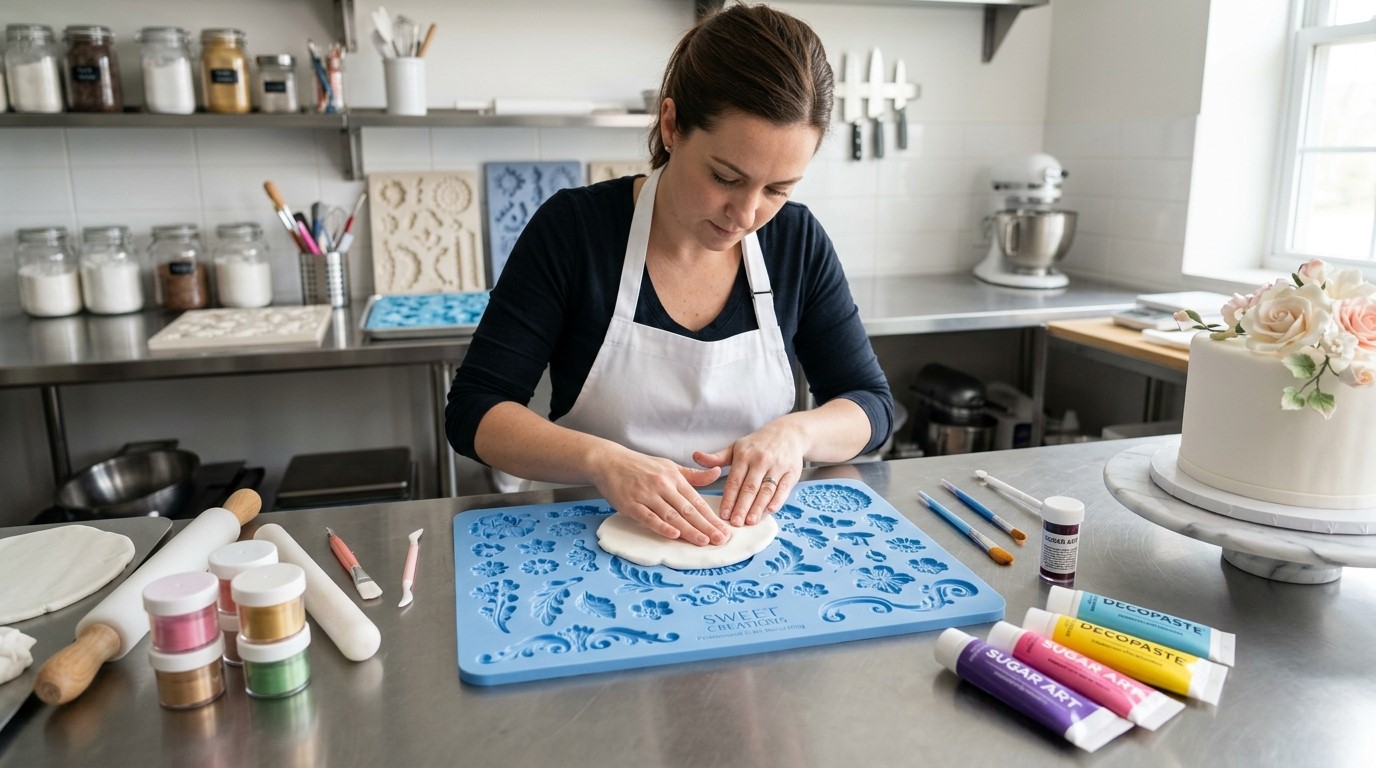
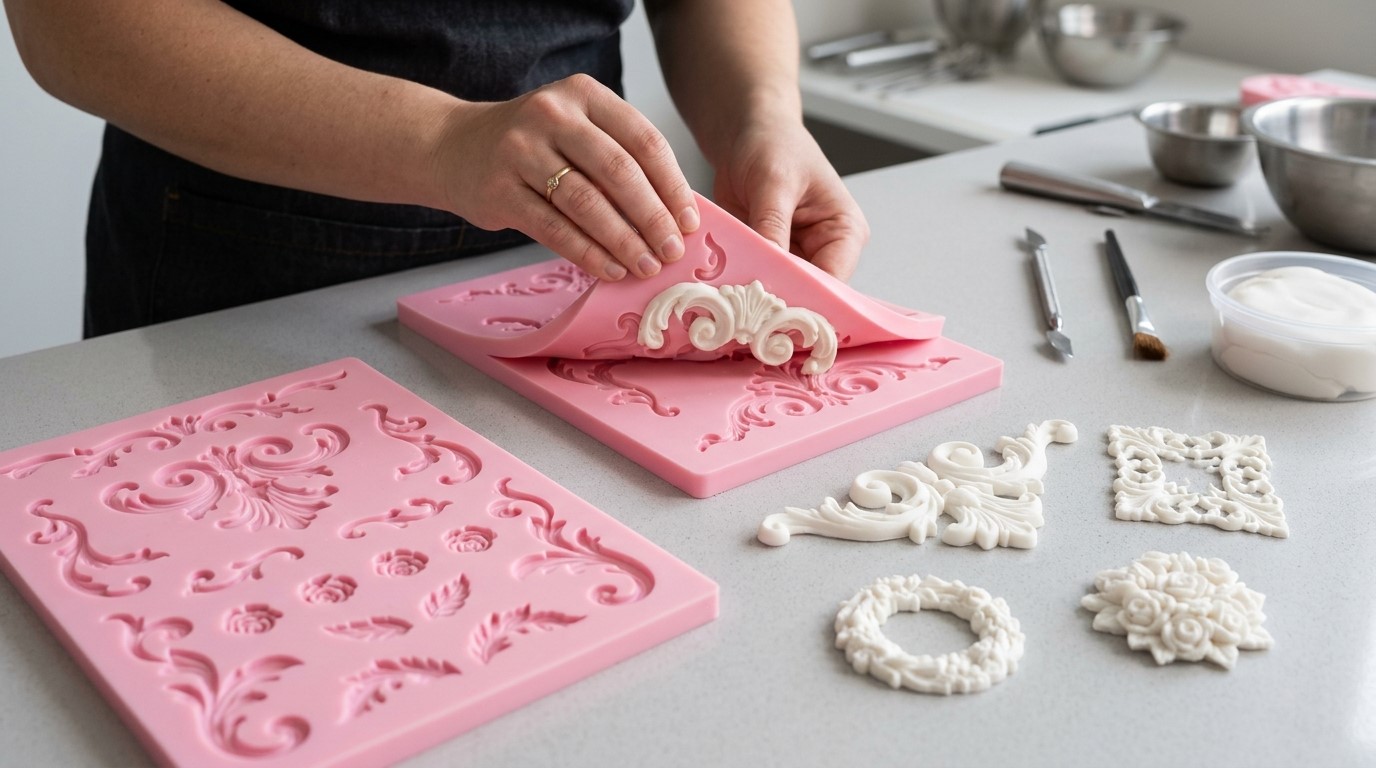
Create repeatable decorative elements for wedding cakes, celebration cakes, themed cakes, and specialty orders.Consistent cavity dimensions help decorators reproduce the same visual details across multiple cakes and production batches.
Silicone fondant molds for Baking Supply Distributors Wholesalers

Baking Supply Distributors & Wholesalers

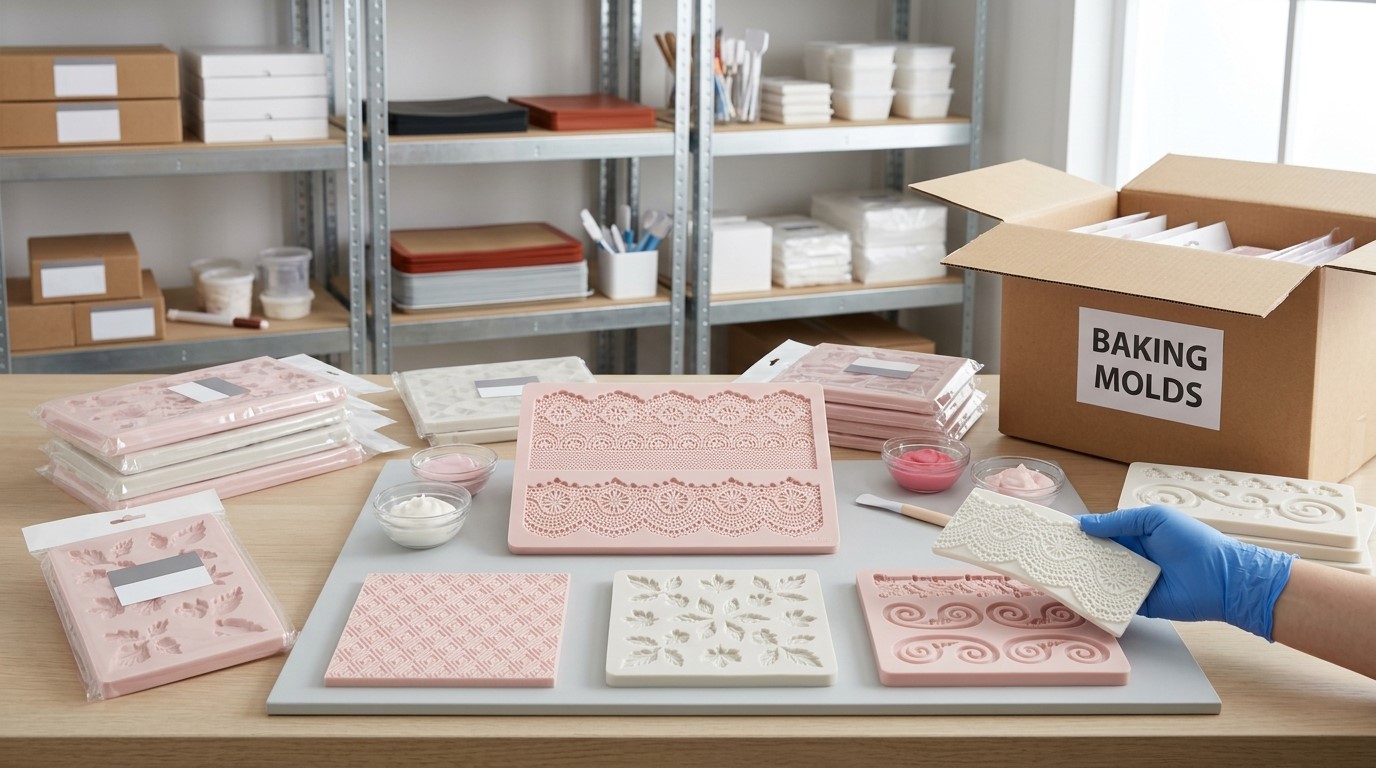
Source silicone fondant molds in bulk for professional baking stores, craft channels, and cake-decoration suppliers.Existing mold designs support faster assortment expansion, while custom tooling creates exclusive SKUs for your distribution network.
Silicone fondant molds for Event & Promotional Companies

Event & Promotional Companies

Develop themed fondant molds for weddings, holidays, corporate events, seasonal campaigns, and branded cake decorations.Custom shapes or molded logos can turn a standard cake-decorating tool into a campaign-specific promotional product.

Silicone fondant molds for Sugarcraft & Confectionery Makers

Sugarcraft & Confectionery Makers

Produce molds for detailed sugarcraft elements, miniature decorations, letters, numbers, flowers, and character components.Cavity depth, fine detail, draft angle, and silicone flexibility are reviewed together to support clean demolding.

Silicone fondant molds with custom packaging for Retail Ecommerce Brands

Retail & Ecommerce Brands

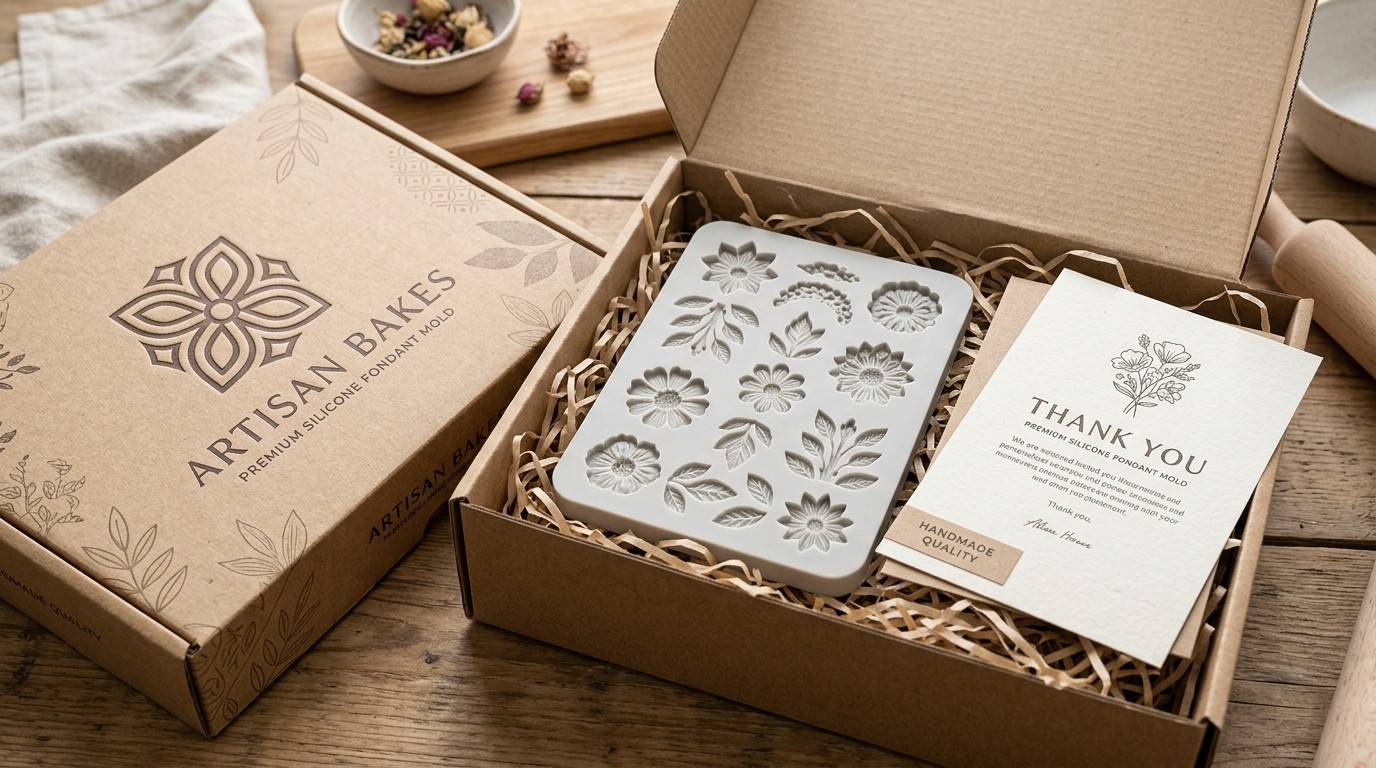
Build private-label fondant mold sets with your own colors, logos, SKU structure, and retail packaging.We can coordinate individual packaging, barcode labels, inserts, and product presentation for marketplace and direct-to-consumer channels.
Silicone Fondant Mold Types We Can Develop

Silicone Fondant Mold Customization

Design the mold around your decorative detail, cavity shape, and production method.

Different shape designs of custom silicone fondant molds

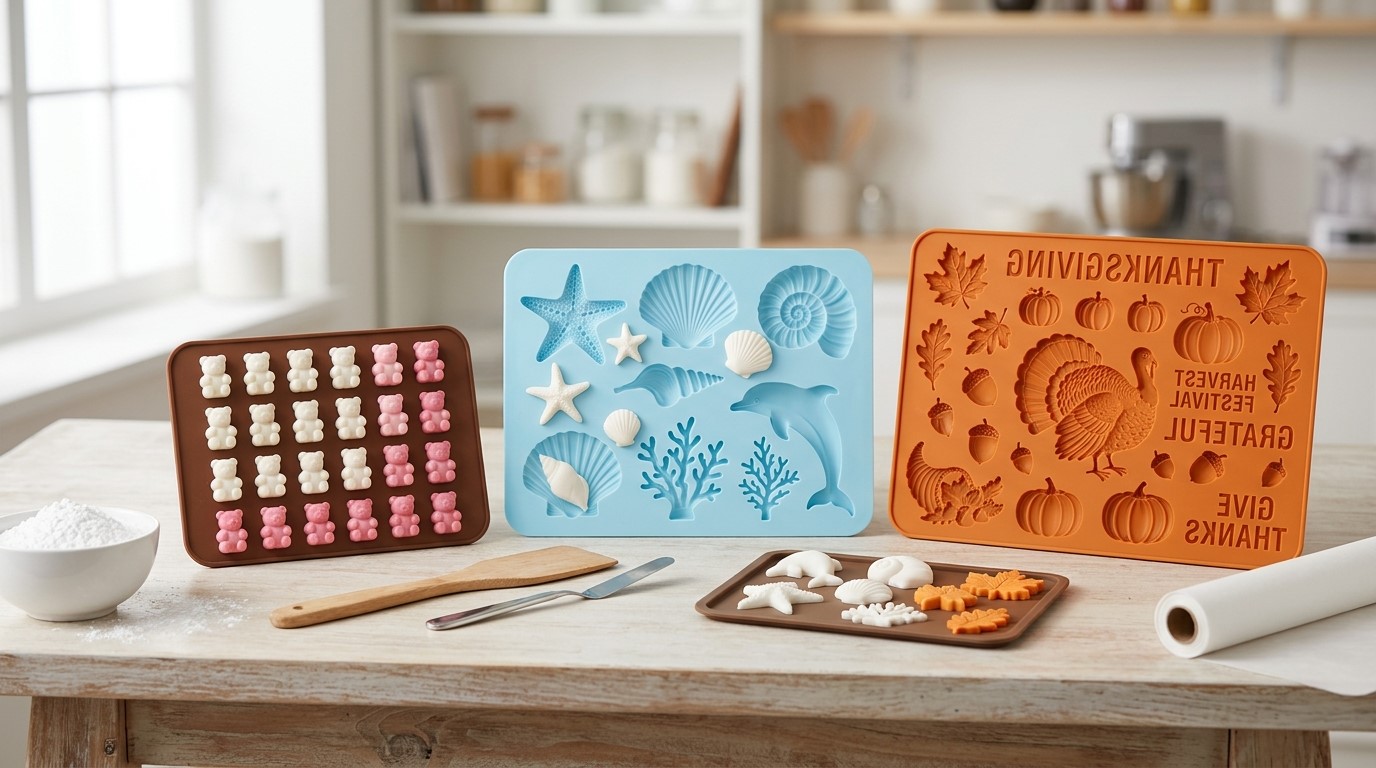
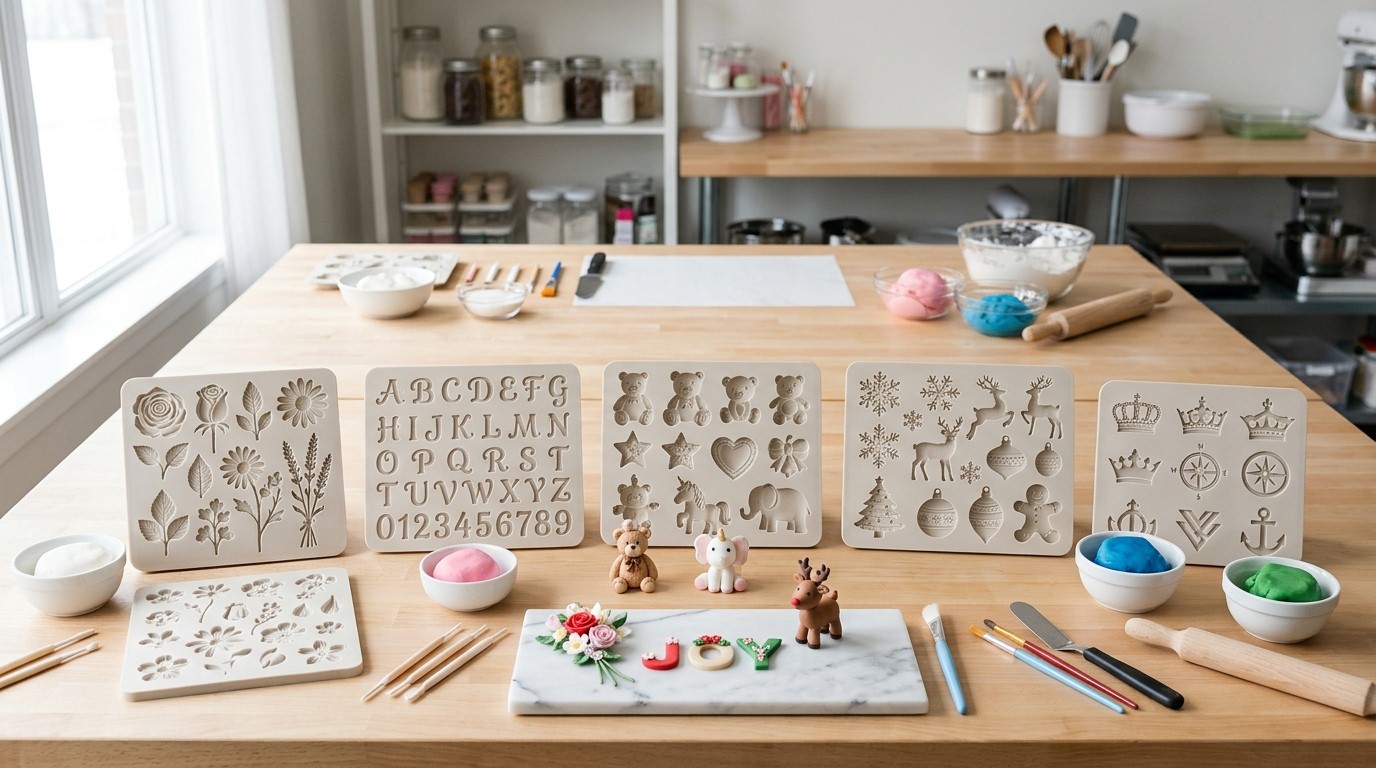
Select a decorative geometry that matches your cake style, product collection, or proprietary design. Using existing shapes can shorten development time, and new tooling can support unique silhouettes, themed decorations, and brand-specific designs.

Available options include:

  • Existing fondant mold shapes
  • Custom decorative silhouettes
  • Flowers and botanical forms
  • Lollipop and bowknot designs
  • Letters and numbers
  • Characters and figurines
  • Heart or circle shapes
  • Christmas-themed or other seasonal motifs
  • Custom symbols and logos
  • Single-cavity or multi-cavity layouts

Diverse details options with relief, flat, 3D, or other needs of custom silicone fondant molds

The design of fine detail must be considered in conjunction with cavity depth, relief height, and demolding direction. Small lettering, petals, and facial features require sufficient definition to avoid creating fragile edges or difficult undercuts.

Available options include:

  • Fine relief patterns
  • Raised decorative details
  • Recessed details
  • Text and lettering
  • Small facial features
  • Floral textures
  • Repeating patterns
  • Custom logo details

Flexible size options of custom silicone fondant molds

Adjust the size of the finished decoration according to the size of your cake, the portion size required, and the retail positioning. Evaluate cavity dimensions based on the intended fondant thickness and demolding behavior rather than treating them as isolated measurements.

Available options include:

  • Custom cavity dimensions
  • Overall mold dimensions
  • Single or multiple sizes
  • Miniature decoration cavities
  • Large cake-decoration cavities
  • Multi-size mold sets
  • Custom cavity spacing
  • Reinforced outer structure

Flexible appearance and branding methods of custom silicone fondant molds

Match the silicone packaging and branding to your brand system, sales channel, and SKU requirements. Confirm the packaging before production because printed components may require separate artwork approval and additional lead time.

Available options include:

  • Standard silicone colors
  • Custom Pantone matching
  • Glossy or matte surfaces
  • Individual OPP or PE bags
  • Header cards
  • Printed paper boxes
  • Barcode and SKU labels
  • Instruction or product inserts
  • Ecommerce-ready packaging

Start Your Custom Silicone Fondant Mold Project

Send your design, decoration size, quantity, and packaging requirements. We will review the cavity, silicone, and production route.

How to Specify a Better Silicone Fondant Mold

Better fondant molds balance fine detail, easy release, and cavity stability.

  • Define the cavity shape and dimensions according to the finished fondant decoration.
  • Specify the required relief height, cavity depth, and fine-detail features.
  • Review undercuts and draft direction before tooling to reduce tearing during demolding.
  • Select silicone hardness according to the balance between detail reproduction and flexibility.
  • Check thin petals, lettering, and small features for sufficient structural strength.
  • Define cavity spacing and outer wall dimensions for single- or multi-cavity layouts.
  • Confirm the required surface texture, gloss level, and decorative finish.
  • Specify the intended fondant thickness and decoration application.
  • Approve a production sample before confirming mass production.

Full Specification Guide

Use a product-specific specification guide to align cavity geometry, material hardness, detail requirements, and production expectations before quotation.

A woman is inspecting the dimension and cavities of a silicone fondant mold

Silicone Fondant Mold Logo & Branding Methods

Branding can be built into the mold or added to suitable non-contact surfaces.

Screen Printing

Applies flat, vivid ink logos directly onto the smooth silicone mold exterior.

Pad Printing

Transfers detailed color ink logos onto curved or irregular silicone surfaces.

In-Molded Logo

The logo is permanently formed into the silicone mold surface during production.

Embossed & Debossed Logos

Creates raised or receded logo impressions on your molded fondant designs.

Silicone Fondant Mold Material & Performance Options

Choose food-contact silicone based on detail reproduction, flexibility, and release performance.


For fondant and other edible cake decorations, select a silicone compound intended for food contact. The available documentation depends on the specific material, pigment, and target market.

Material Comparison

Silicone vs. ABS Fondant Molds: Which One Is Optimal for Your Project? —Hardness, food-contact needs, detail reproduction, flexibility of geometry designs, tear resistance, and intended food-contact requirements.

Fine floral textures, lettering, facial features, and decorative reliefs require silicone and tooling that can consistently reproduce small cavity details.

Extremely fine or deep features should be evaluated during mold development rather than being assumed to be suitable based on the artwork alone.

Silicone flexibility helps release molded fondant from detailed cavities. However, excessive softness can allow deep or delicate features in the cavity to deform during filling or demolding. Therefore, hardness should be matched to the cavity geometry and decoration design.

The smooth and low-adhesion silicone surface supports cleaner fondant release and helps preserve fine decorative details.

Surface finish, silicone formulation, cavity geometry, and fondant characteristics should be considered together, especially for intricate flowers, lettering, and textured patterns.

Proper geometry and textured pattern designs will eliminate fondant residues during release and defomation.

Cavity depth, undercuts, narrow openings, and thin decorative sections should be considered when selecting silicone hardness and designing the mold structure.

For complex fondant patterns, the mold should be evaluated for filling, release direction, and demolding access during tooling development for specific decoration precision needs.

Thin petals, narrow letters, sharp decorative edges, and small protrusions can create higher tearing risks. Review cavity geometry and demolding direction together, particularly for custom designs with undercuts.

The appearance of molded fondant is directly affected by mold surface characteristics.

A stable, well-finished cavity helps maintain fine textures and decorative reliefs. Material selection should also consider odor and surface characteristics that are appropriate for the intended food-contact application.

Depending on the target market and project requirements, documentation may include material data sheets, declarations, FDA- or LFGB-related documentation, REACH information, compliance of migration & safety, or project-specific reports.

Raw material documentation does not automatically ensure compliance with every finished mold configuration.

Clean the mold according to the selected silicone compound and intended application. Avoid practices or cleaning tools that could damage fine cavity details, thin edges, or textured surfaces.

Care Guide

How to Care for Silicone Fondant Mold? — Proper cleaning, storage in cool and dry environments, avoid sharp objects contacting and folding.

How Silicone Fondant Molds Are Manufactured

1. Requirement Review

STEP 1: Requirement Review

Confirm the fondant decoration, cavity dimensions, detail level, silicone requirements, color, branding, packaging, and target quantity before production planning.
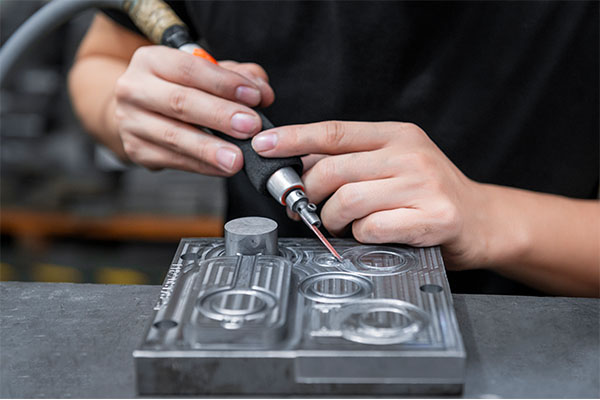
2. Mold Evaluation

STEP 2: Mold & Geometry Evaluation

Engineering reviews cavity depth, relief details, undercuts, draft direction, wall structure, and demolding access to identify potential deformation or tearing risks.
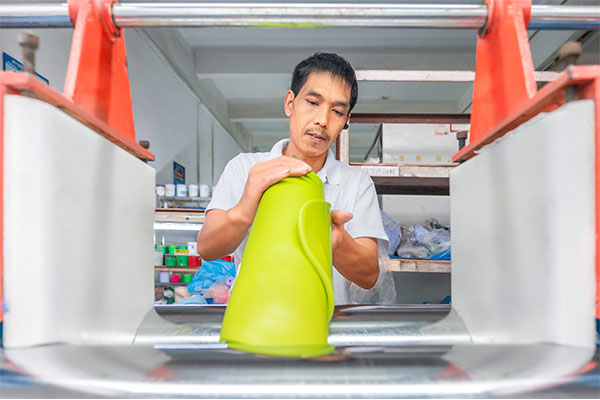
3. Material and Color Preparation

STEP 3: Silicone Material Selection

Select an appropriate food-contact silicone compound and hardness according to detail reproduction, flexibility, tear resistance, and the intended fondant application.
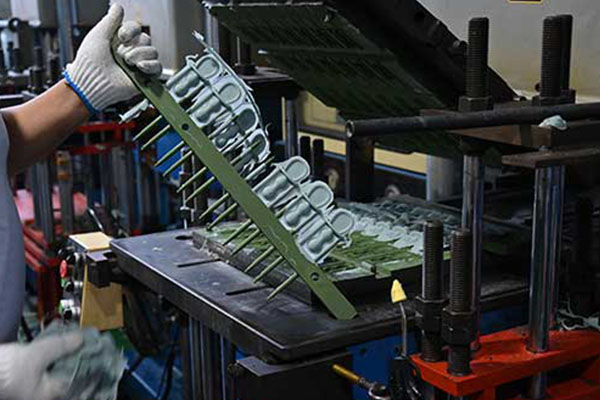
4. Silicone Molding

STEP 4: Silicone Molding

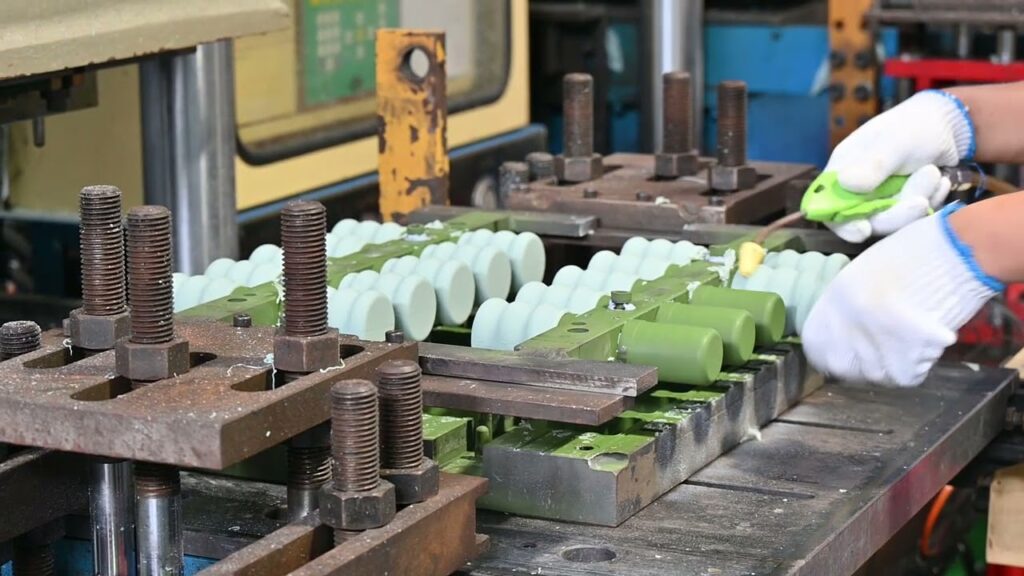
Silicone is formed around the approved tooling to reproduce the required cavity geometry, decorative textures, lettering, and fine relief details consistently.

5. Demolding and Trimming

STEP 5: Trimming & Finishing

Flash, excess material, and unwanted edges are removed while preserving thin decorative features, cavity boundaries, and the intended mold surface finish.
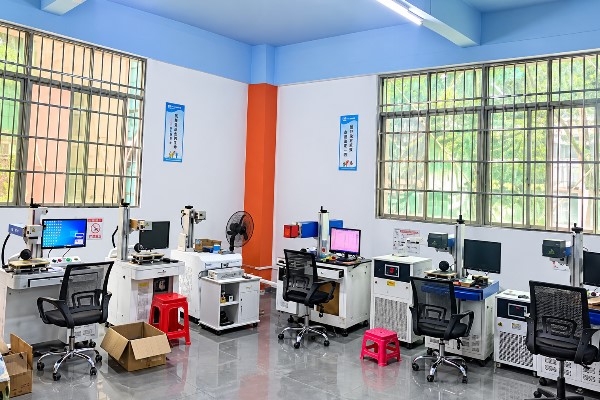
6.-Logo-and-Surface-Processing

STEP 6: Logo & Surface Treatment

Approved molded, embossed, debossed, or suitable printed branding is applied according to the approved artwork, position, and production specification.
7. Quality Inspection

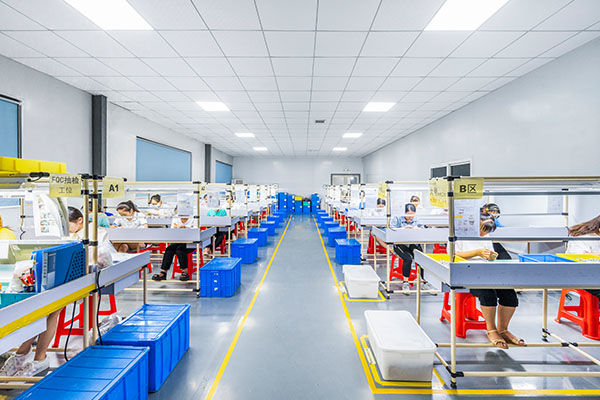
STEP 7: Quality Inspection

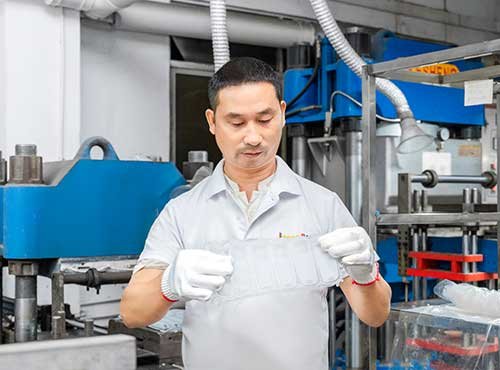
Finished molds are checked against the approved sample for appearance, dimensions, cavity definition, color, logo quality, flexibility, and packaging requirements.

Packaging-and-Shipment

STEP 8: Packaging and Shipment

Approved molds are packed according to the selected retail, bulk, or e-commerce format, then prepared for shipment with the required labels and documentation.

Silicone Fondant Mold Quality Control

Quality control focuses on cavity accuracy, decorative detail, material consistency, and reliable demolding.

AQL 2.5 / 4.0 Standard Inspection

We run final random sampling plans to verify batch consistency:

AQL 2.5

Critical / Major Defects

AQL 4.0

Minor Visual Flaws

Another inspection standard can be used when specified in the purchase order.

Mass production follows the approved sample for cavity geometry, overall dimensions, surface finish, color, logo position, and decorative detail.

Incoming silicone materials and relevant colorants are checked against the specified material requirements and available documentation before production.

Production checks monitor molding consistency, flash, cavity filling, thin decorative features, and potential deformation before finishing and packaging.

Inspectors check for:

  • Surface defects
  • Air marks or visible molding defects
  • Excess flash
  • Incomplete cavity details
  • Uneven edges
  • Color inconsistency
  • Contamination

Critical dimensions, cavity size, spacing, relief details, and overall mold geometry are compared with approved specifications or samples.

Molded or printed logos are checked for position, definition, orientation, completeness, and consistency with the approved artwork.

Selected samples can be reviewed for flexibility and practical demolding behavior, particularly where the design contains deep cavities, fine lettering, or thin decorative features.

Every silicone fondant mold undergoes inspection against approved specifications, verifying individual protection, packaging quantity, labels, artwork, SKU details, and carton marks to guarantee total packing accuracy before dispatch.

Silicone Fondant Mold Packaging Options

Plan packaging early because printed items need separate schedules.

Silicone fondant molds in polybags for bulk packaging

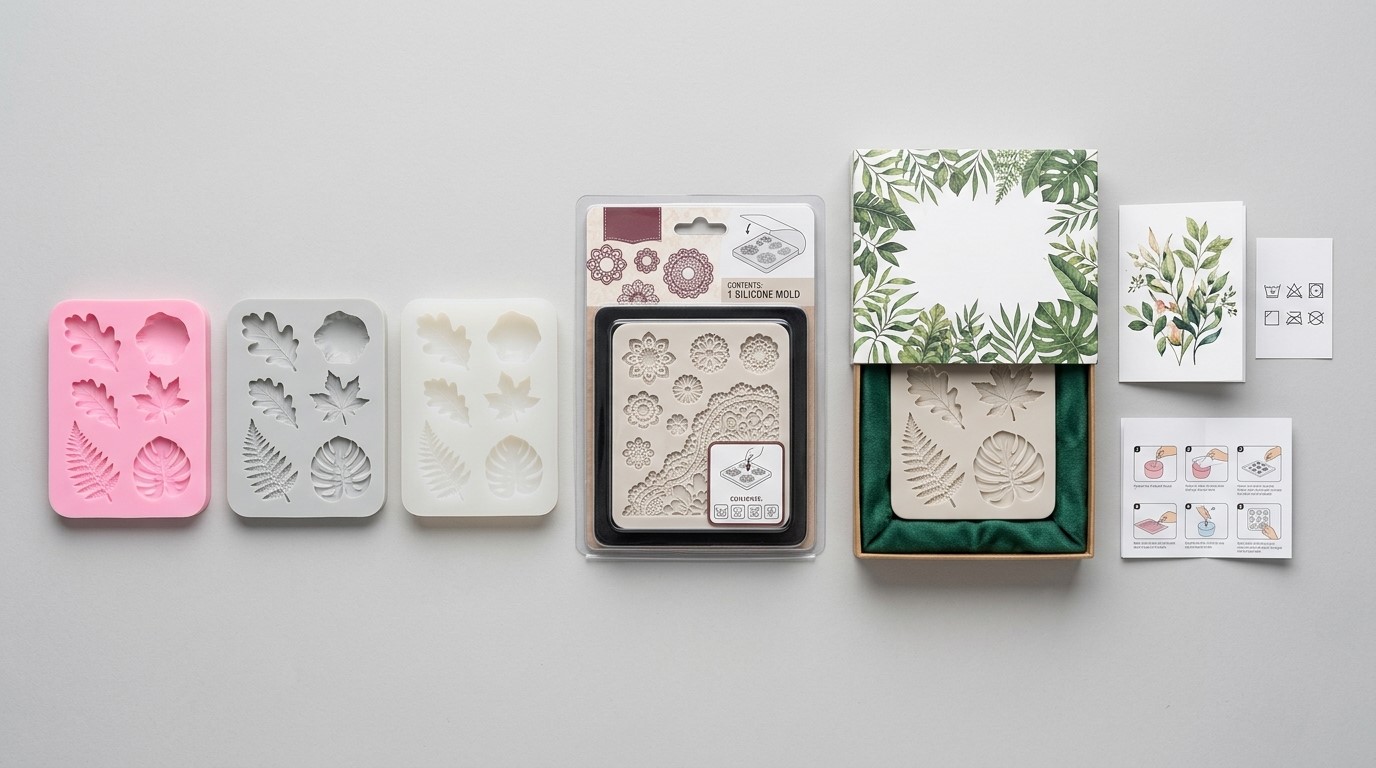
Bulk Packaging

For distributors and wholesalers, molds can be packed individually or in grouped quantities with protective inner bags and consolidated cartons.

A leaf silicone fondant mold in custom retail packaging

Retail Packaging

Private-label brands can use individual OPP/PE bags, header cards, printed paper boxes, product labels, and barcode information for retail presentation.

A Christmas-themed silicone fondant mold with custom ecommerce packaging

Ecommerce Packaging

Ecommerce-ready packaging can combine individual product protection, SKU identification, and compact carton dimensions to support warehouse handling and direct fulfillment.
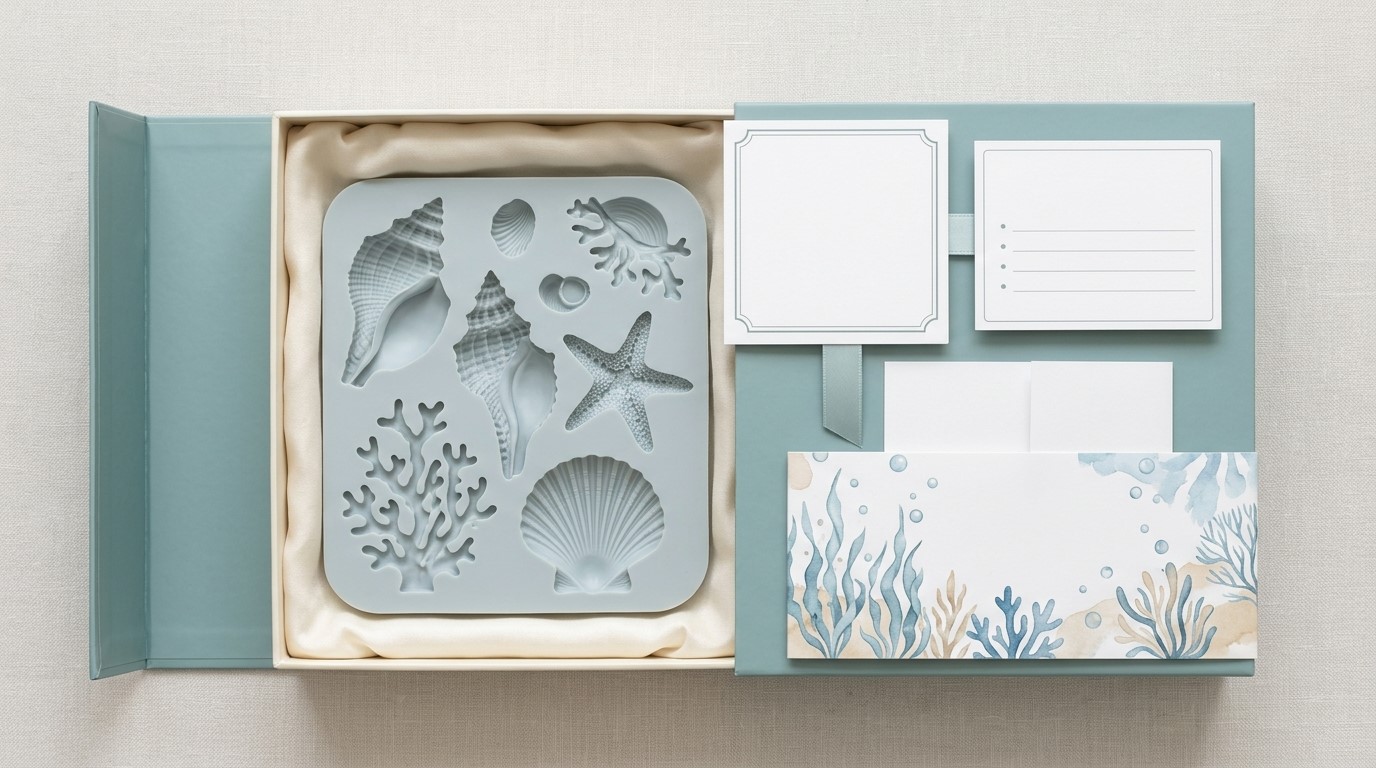
a marine silicone fondant mold in custom premium brand packaging

Premium Brand Packaging

Gift-oriented or specialty fondant mold collections can use upgraded printed boxes, inserts, and coordinated branding for a more finished retail presentation.

Typical Silicone Fondant Mold Specifications

SpecificationTypical Options
ProductSilicone Fondant Mold
ApplicationsFondant, sugarcraft, cake decoration, confectionery
MaterialFood-contact silicone
Hardness30–60 Shore A
CavitySingle or multi-cavity
DetailFine relief, textures, lettering, decorative features
ShapeExisting or custom
SurfaceGlossy, matte or textured
ColorStandard or custom color
BrandingEmbossed, debossed, molded logo, suitable printing
Molding ProcessCompression or approved silicone molding process
PackagingOPP/PE bags, header cards, printed boxes, e-commerce packaging
MOQFrom 500 existing styles to 3,000 new custom-molded
Sample Lead TimeTypically 5–10 working days
Custom ToolingTypically 10–20 working days
Mass ProductionTypically 15–25 working days after approval
Quality StandardApproved sample, AQL 2.5/4.0 or customer standard
OEM/ODMAvailable

Actual specifications and lead times depend on cavity complexity, tooling requirements, order quantity, and approval timing.

Why Work with RY Silicone

RuiYang Silicone factory

Silicone Manufacturing Experience Since 2012

RY Silicone has manufactured custom silicone products since 2012, supporting OEM and ODM projects for international brands, distributors, wholesalers, and private-label businesses.

Video Image1

10,000+ m² Production Facility

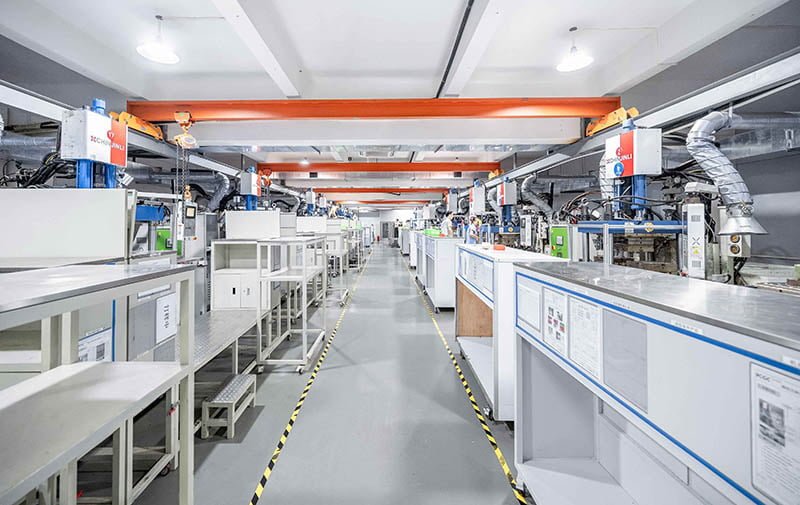
Our 10,000+ m² facility supports integrated silicone product development, tooling, molding, finishing, inspection, and packaging for different project requirements.

silicone machine

30+ Production Machines

Multiple production machines support different custom silicone fondant mold designs and order volumes of any size.

ruiyang silicone compression mol

Up to 100,000 Silicone Products per Day

That headroom enables us to take on repeat orders and five- to six-figure production runs without delaying your delivery date.

Actual mold capacity depends on cavity configuration, cycle time, and inspection requirements.

silicone Products Design

Engineering Review Before Quotation

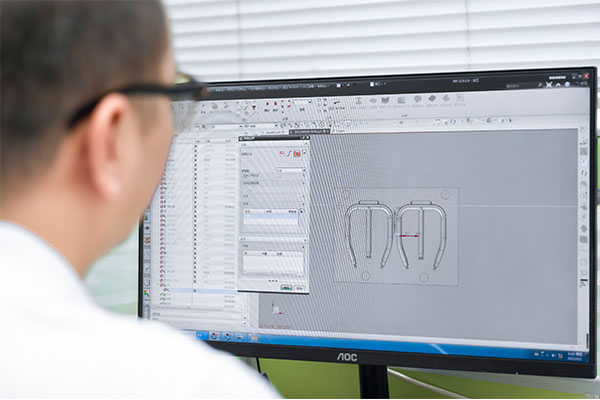
Before quotation, engineering reviews your drawings or samples together with cavity geometry, detail requirements, material selection, tooling considerations, and production risks.

Rysilicone quality control

Sample-Based Production

Production can proceed against an approved sample, helping establish a clear reference for cavity definition, dimensions, color, surface finish, and branding before mass production.Everything is locked to one approved sample before mass production — the cavity dimensions and color first, then surface finish, logo position and packaging. On the floor that sample outranks any spec sheet: if the two disagree, we pause the run and confirm with you.

Shipping

Export Project Support

RY Silicone supports international B2B orders with product development, packaging coordination, quality inspection, and shipment preparation for overseas markets.

Silicone Fondant Mold FAQ and Final RFQ

MOQ starts from 500 pieces for suitable existing mold designs with custom branding and typically 3,000 pieces for newly developed custom molds. The final MOQ depends on the design and production requirements.

Yes. We can develop custom molds for flowers, letters, numbers, characters, logos, seasonal motifs, repeating patterns, and other decorative shapes.

Food-contact silicone is generally used for edible fondant applications.

Selecting color formulation and color matching also may affect the food-contact safety for your silicone fondant mold project.

The appropriate compound and hardness depend on the details of the cavity, flexibility requirements, release requirements, and target market documentation.

Generally, no.

Greasing is recommended for some silicone baking molds when making sticky baked goods.

The non-stick surfaces of silicone fondant molds support the fine details of formed fondants and make them easy to release. However, for sticky fondants, adding cornstarch and greasing the mold before chilling it in the fridge can eliminate fondant residue and make it easier to handle.

And there are also methods to use silicone fondant molds and enhance your cake decorations.

Fine relief, lettering, floral textures, and other decorative details can be produced. However, extremely thin features, deep cavities, and undercuts require an engineering review because they can affect filling and demolding.

Yes. You can develop letters, numbers, monograms, and personalized designs as individual cavities, coordinated sets, or multi-cavity layouts.

Yes, standard or custom colors can be used according to project requirements. For color approval, an accurate physical sample is necessary.

Yes. Depending on the design, logos can be incorporated as molded, embossed, or debossed details. Suitable printing can also be considered for appropriate non-contact areas.

Vector artwork in AI, EPS, SVG, or vector PDF format is preferred. The artwork should clearly depict the logo, lettering, shape, and required orientation.

The typical custom tooling period is 10–20 working days, followed by sample approval and mass production. The actual timing depends on the complexity of the design and the speed of the approval process.

For suitable designs, custom branding and packaging can be evaluated without developing a new mold. First, the available branding area and mold structure must be reviewed.

We can discuss relevant material and project documentation according to the target market, silicone compound, and finished product requirements.

Available documentation may include material data, declarations, and market-specific supporting documents.

Final RFQ: What to Send for a Silicone Fondant Mold Quotation

For an accurate quotation, provide:

  • Fondant mold drawings, CAD files, design files, or product references
  • Decoration shape and cavity dimensions
  • Cavity quantity and layout
  • Required detail, relief height, or cavity depth
  • Silicone material requirements or intended application
  • Preferred silicone hardness, if known
  • Color requirements
  • Logo artwork and branding method
  • Packaging requirements
  • Target quantity and estimated annual demand
  • Target market and required compliance documentation
  • Delivery destination

Send your design and requirements to RY Silicone for an engineering review, sample development, and production quotation.

Ask For A Quick Quote

If you fail to submit the form, please write to us directly at [email protected]