Silicone molds can hold onto grease, sugar, resin flakes, wax, pigments, and fine dust inside detailed cavities. The right cleaning method depends less on the word “silicone” than on what was cast in the mold and whether that material is still liquid, partly cured, or fully solid.
What Is the Best Way to Clean Silicone Molds?
Quick Answer: Let the molded material cool, set, or cure completely, then demold it without using a knife or metal pick. Remove loose fragments before washing. For a washable mold, clean both sides with warm water, mild dish detergent, and a soft cloth or sponge; use a soft brush only where the manufacturer permits it. Rinse thoroughly and air-dry the cavities before storage. Uncured resin, strong solvents, dishwashers, boiling water, and sanitizers require product-specific instructions.
This guide covers finished, reusable silicone molds used for food and common craft materials. It does not cover removing construction sealant, cleaning microbial growth from bathroom caulk, industrial mold-cleaning processes, or reprocessing medical and dental devices. For material-wide care principles beyond molds, see How to Clean Silicone.
Before You Clean: Identify What Was Cast
Do not clean a baking mold, resin mold, and candle mold as if they contain the same residue. First identify the casting material and check its label, safety data sheet, and the mold maker’s care instructions.
| Mold use | Typical residue | Safest starting method | Main precaution |
|---|---|---|---|
| Food, candy, chocolate, ice, or baking | Oil, sugar, crumbs, color, or odor | Warm water, mild dish detergent, soft sponge | Use heat, a dishwasher, or sanitizer only when the finished mold permits it |
| Epoxy or UV resin | Cured flakes or uncured reactive resin | Demold cured material and lift dry fragments gently | Do not wash liquid resin into a drain or choose a solvent without the resin and mold instructions |
| Candle wax | Solid wax, fragrance oil, or dye | Cool fully, flex the mold, and remove solid residue before washing | Do not melt wax into a sink or expose the mold to unapproved heat |
| Soap or cosmetic bar | Soap film, fragrance, pigment, or uncured mixture | Demold at the time specified by the formula, then wash as the material supplier directs | Fresh mixtures may require gloves and product-specific handling |
| Plaster, cement, clay, or similar craft material | Dry dust, chips, or mineral film | Remove dry fragments with a soft brush before any compatible wet cleaning | Avoid sharp scraping and follow the casting material’s dust and disposal guidance |
How to Clean Silicone Molds in Six Steps
These steps are a safe starting point for a fully cured, washable mold. The mold manufacturer’s instructions and the casting material’s label take priority.
1. Let the Contents Cool, Set, or Cure
Do not start by adding water to an unknown residue. Hot sugar and wax can burn; uncured epoxy or UV resin may require protective equipment and a specific cleanup method. Wait until the cast can be removed according to its recipe or technical instructions.
If a resin batch has failed to cure, skip the normal washing sequence and follow the resin supplier’s spill, cleanup, and disposal directions.
2. Demold Without Cutting the Cavity
Release the perimeter, support the casting, and peel the flexible mold away from the finished piece. Do not lever the casting out with a knife, fork, razor, or metal pick. A small cut in a thin corner can grow when the mold is flexed during later cycles.
3. Remove Loose Residue While It Is Dry
Turn the mold over and flex it gently to release crumbs, resin flakes, wax chips, or plaster fragments. A soft cloth, soft brush, or low-tack tape can lift small dry particles from detailed cavities. Avoid compressed air when the casting material’s dust should not become airborne.
4. Hand-Wash Compatible Molds
Use warm water and a small amount of mild dish detergent. Clean the cavity side, back, rim, and any reinforced edge. Press a soft sponge or cloth into details rather than scrubbing one spot aggressively. A small soft-bristled brush can help with lettering and narrow channels if it does not scratch the surface.
5. Rinse and Dry Completely
Rinse until no foam or slippery detergent film remains. Shake out deep cavities, then air-dry the mold on a clean rack with the openings exposed. Water trapped in undercuts can create odors and spots during storage.
6. Inspect Before Storing or Reusing
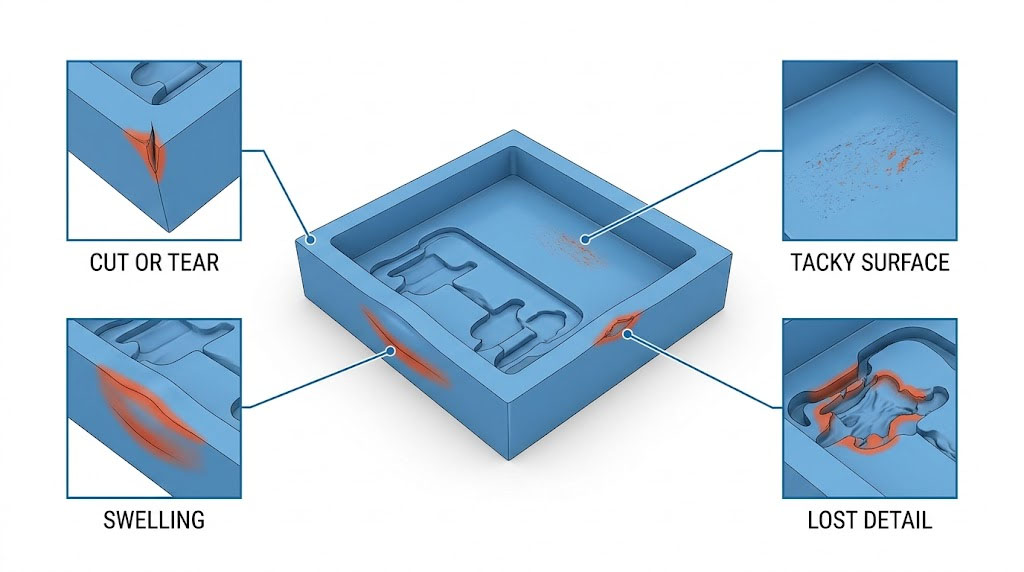
Look for cuts, tears, permanent tackiness, swelling, loss of detail, or a surface that has started to grip castings. Store the clean, dry mold flat or in its supported shape, protected from dust and heavy objects.

How to Clean Silicone Baking Molds
After the food has cooled enough to demold, remove crumbs and wash the entire mold with warm water and grease-cutting dish detergent. Cleaning only the cavities can leave oil on the underside, rim, or textured exterior.
For a greasy film:
- Rewash with fresh detergent and clean water.
- Gently flex the mold so the sponge reaches corners and ribs.
- Rinse both sides thoroughly.
- Let it dry before judging whether the film remains.
Excess cooking spray, pooled butter, fragranced detergent, and rinse aid can all contribute to a persistent slick feel. If the mold maker permits a mild abrasive treatment, a short application of baking-soda paste may help with localized residue. Use light pressure and rinse completely; do not make hard scouring a routine step.
Use a dishwasher only when the complete mold is labeled dishwasher-safe. “Food-safe silicone” does not automatically mean dishwasher-safe. For example, Smooth-On’s instructions for specified food-contact silicone molds call for warm soapy water, a soft sponge, and thorough rinsing between batches or before storage. Product instructions can therefore be narrower than the general properties of silicone. For appliance limits and loading precautions, see Can Silicone Go in the Dishwasher?.
For baking technique, temperature, support, and demolding, see How to Bake in Silicone Molds. If repeated greasing is creating residue, review Do Silicone Baking Molds Need to Be Greased?.
How Should You Clean a Silicone Mold Before First Use?
Wash a new food-contact mold with warm water and mild dish detergent, rinse it thoroughly, and let it dry before use, unless the manufacturer specifies another first-use procedure. Do not try to “burn off” an odor in the oven.
In the United States, 21 CFR 177.2600 states that finished rubber articles intended for repeated food contact must be thoroughly cleaned before their first food-contact use. This requirement does not make an unidentified craft mold food-safe; the formulation and intended use still matter.
How to Clean Silicone Resin Molds
Resin molds need a different sequence because liquid resin is not ordinary washable soil.
After a Successful Resin Cast
Allow the resin to reach the demolding stage stated by its manufacturer. Peel the mold away from the casting, then lift remaining cured flakes with a soft cloth or low-tack tape. Avoid stretching narrow details farther than needed.
Do not default to rubbing alcohol, acetone, or a flame. ArtResin specifically advises avoiding alcohol when cleaning silicone resin molds and avoiding flame torches near the mold because both practices can shorten mold life or damage the casting surface. A solvent that cleans one resin system may also dull, swell, dry, or otherwise change a particular mold.

When Resin Is Still Liquid or Sticky
Treat uncured resin as a chemical cleanup, not a dishwashing task:
- Put on the protective equipment required by the resin label or safety data sheet.
- Use a disposable plastic tool or absorbent material to collect as much bulk resin as possible without cutting the cavity.
- Follow the resin manufacturer’s specified cleaner and disposal procedure.
- Do not rinse uncured resin or solvent into a sink, toilet, or storm drain.
- Inspect the dry mold before another pour; discard it if the surface remains contaminated, tacky, swollen, or damaged.
There is no universal solvent recipe for “silicone resin molds.” Epoxy, polyurethane, polyester, and UV-curing systems have different chemistry, and the silicone formulation can also vary. The EPA advises following product labels and local household hazardous-waste guidance rather than pouring potentially hazardous leftovers down a drain or mixing them with other products.
How to Clean Candle, Soap, and Plaster Molds
Candle Wax
Let the wax cool and harden according to the candle formula. Flex the mold and peel away solid wax, then collect loose chips before washing. If the mold maker allows water cleaning, use warm—not unapproved high-temperature—water and mild detergent for the remaining oily film. Do not pour melted wax into plumbing.
Persistent fragrance or dye can migrate into a mold even after removable wax is gone. Keep strongly scented or deeply colored molds dedicated to compatible projects if transfer would affect a later casting.
Soap
Demold soap at the point specified by the formula. Remove solid remnants, then wash a compatible mold with warm water and mild detergent. Wear the protective equipment required for fresh cold-process soap or an uncured mixture; do not assume that a soft residue is harmless because the finished product will be soap.
Plaster, Cement, and Clay
Allow the casting to reach its specified demolding condition. Flex the mold gently and remove loose, dry fragments with a soft brush. If wet cleaning is allowed, keep hard mineral particles from being ground across a glossy cavity. Dry fully before storage or the next pour.
How to Remove Common Problems From Silicone Molds
Small Pieces Trapped in Detailed Cavities
Start with dry removal. Flex the mold, turn it cavity-side down, and use a soft brush or low-tack tape. Do not dig into lettering or undercuts with a needle. If the detail cannot be cleaned without damaging it, the casting material may have exceeded what the geometry can release reliably.
Greasy or Slippery Film
Rewash with fresh warm water and grease-cutting dish detergent. Use a clean sponge and rinse until all detergent is gone. If a clean, dry craft mold remains oily or begins transferring residue to castings, check whether the mold, a release agent, or the casting material is degrading before applying a stronger cleaner.
Odor or Color Stain
Cleanliness and color are not the same. Food pigment, resin dye, candle fragrance, and soap colorant may leave a stain or odor after surface residue is gone. Repeat the approved wash and ventilated drying process. For persistent food-related odors, follow the troubleshooting steps in How to Remove Smells from Silicone Kitchenware. Do not escalate automatically to bleach, solvents, or oven heating simply to restore the original color.
A Mold That Stays Sticky
First rule out uncured casting residue and detergent film. Clean according to the relevant material instructions, rinse, and dry completely. If the bare mold itself remains tacky, sheds material, has swollen, or sticks to castings that previously released cleanly, the silicone surface may be deteriorating. Replacement is more reliable than repeated solvent treatment. If sticking occurs only during normal demolding, review How to Keep Silicone From Sticking before assuming the mold is damaged.

Do You Need a Special Silicone Mold Cleaner?
Usually not. Mild dish detergent is the best starting cleaner for routine food residue and other washable films. A product sold as a “silicone mold cleaner” is not automatically suitable for food-contact molds, resin systems, candle fragrance, or every silicone formulation.
Use a specialty cleaner only when its label covers the residue and the mold supplier confirms compatibility. Check whether it requires gloves, ventilation, a rinse, a limited contact time, or special disposal. A proprietary resin remover or solvent is a chemical process, not a stronger version of dishwashing.
Can You Use a Dishwasher, Alcohol, Vinegar, Bleach, or Boiling Water?
| Method | When it may be suitable | Why it is not a default |
|---|---|---|
| Dishwasher | Only when the complete mold is labeled dishwasher-safe | Heat, detergent, water jets, and rack contact can affect thin details or a product with narrower care instructions |
| Rubbing alcohol | Only when both the mold and residue supplier specify compatible use | Some resin-mold suppliers warn that alcohol shortens mold life or changes the surface |
| Acetone or another solvent | Only under written product-specific cleanup guidance | Solvents introduce flammability, exposure, disposal, and compatibility concerns |
| Vinegar | Occasionally specified for a particular mineral residue | It is not the normal cleaner for grease, wax, or resin and is not a universal disinfectant |
| Bleach or sanitizer | When hygiene requires it and both the mold and cleaner label allow the intended food-contact use | The label controls dilution, contact time, ventilation, rinsing, and drying; never mix bleach with another cleaner |
| Boiling water or steam | Only for a mold specifically labeled for that process | Heat resistance of silicone material does not prove that the finished mold, pigment, frame, or surface will tolerate boiling |
Health Canada recommends using and maintaining silicone bakeware according to the manufacturer’s intended use and instructions. That product-level instruction is more useful than assuming every silicone mold has the same temperature and chemical limits. For baking-specific heat boundaries, see Silicone Baking Molds Temperature.
If a food-contact mold genuinely requires sanitizing, clean it first and follow the sanitizer label. The EPA directions for registered disinfectants control the approved surface, concentration, application method, and contact time.
What Should You Avoid?
- Knives, razors, metal picks, and sharp scrapers inside a cavity
- Steel wool, coarse scouring pads, abrasive powders, and stiff brushes
- Flame torches or direct heating of a mold to remove residue
- Unverified soaking in alcohol, acetone, or another solvent
- Washing liquid resin, wax, plaster slurry, or solvent into a drain
- Mixing bleach with vinegar, ammonia, acids, or another cleaner
- Returning a mold used for non-food chemicals to food preparation
- Folding a wet mold or storing heavy objects on detailed cavities

When Should You Replace a Silicone Mold?
Replace the mold when it develops:
- a cut, tear, puncture, or missing detail;
- permanent tackiness after correct cleaning and full drying;
- swelling, warping, brittleness, chalking, or surface shedding;
- loss of cavity definition that affects the casting;
- repeated sticking where the same process previously released correctly;
- contamination or odor that transfers to food or a finished casting;
- embedded residue that cannot be removed without damaging the mold.
A color stain alone does not necessarily mean the mold has failed. The more important questions are whether the surface remains stable, cleanable, intact, and suitable for its dedicated use.
How to Store Silicone Molds After Cleaning
Make sure every cavity is dry. Store the mold flat, in its natural shape, or inside a support shell supplied for that design. Protect glossy cavities from dust, abrasion, direct sunlight, and uncontrolled heat. Do not compress thin walls under tools or cookware, and keep food molds physically separated from craft molds.
Label dedicated molds by use—such as food, epoxy resin, candle wax, or soap—when similar designs could be confused.
Frequently Asked Questions
What Is the Best Way to Clean Silicone Molds?
For most washable molds after the contents have cooled, set, or cured, remove loose residue and hand-wash with warm water, mild dish detergent, and a soft cloth or sponge. Rinse and air-dry completely. Use a different procedure for uncured resin or another reactive material.
Can Silicone Molds Go in the Dishwasher?
Only when the manufacturer identifies the complete mold as dishwasher-safe. Some food-contact silicone mold materials specifically require hand washing even though they are safe for their intended food use.
How Do You Clean Silicone Resin Molds Without Damaging Them?
Wait for the resin to reach its stated demolding stage, peel the mold away, and lift cured flakes with a soft cloth or low-tack tape. Avoid alcohol, acetone, and flame unless the mold and resin suppliers provide compatible instructions.
How Do You Remove Uncured Resin From a Silicone Mold?
Wear the protective equipment listed for the resin, collect bulk material with disposable tools or absorbent material, and follow the resin label or safety data sheet for the permitted cleaner and disposal method. Do not rinse liquid resin into a drain.
Why Is My Silicone Mold Still Sticky After Washing?
It may still contain uncured casting material or detergent film. If correct cleaning, rinsing, and drying do not remove the tackiness, the mold surface may be deteriorating and should be replaced.
Can You Use a Resin Mold for Food After Cleaning It?
No. Keep any mold used with resin, cement, non-food wax or dye, or another craft chemical permanently out of food service.
How Often Should Silicone Molds Be Cleaned?
Remove residue after each use and clean before storage. A food mold should also be clean and dry before every batch; a resin or craft mold may need gentle dry removal rather than unnecessary washing when no washable film remains.
Cleaning Specifications for Custom Silicone Molds
For commercial molds, cleaning should be part of the design specification. The approved method depends on the cast material, silicone formulation, cavity finish, pigment, mold thickness, inserts or support frame, release agent, cycle temperature, and expected service life.
Define and validate:
- the materials that may be cast and whether the mold is food or non-food;
- the approved detergent, solvent, or sanitizer and its concentration;
- water and process temperature, contact time, and mechanical action;
- rinse, drying, and storage requirements;
- inspection limits for gloss, tackiness, dimensions, tear damage, and release performance;
- the number of cleaning and casting cycles the mold must withstand.
Testing should use production-representative silicone molds, including every pigment, surface finish, insert, and cleaning method. A general material-resistance statement cannot predict how a detailed finished mold will perform after repeated casting and cleaning.
References
- ArtResin: Shiny vs. Matte Silicone Molds
- Smooth-On: Processing Silicone Molds Safe for Food Contact
- Health Canada: The Safe Use of Cookware and Bakeware
- U.S. EPA: Selected EPA-Registered Disinfectants and Directions for Use
- U.S. EPA: Household Hazardous Waste
- 21 CFR 177.2600: Rubber Articles Intended for Repeated Use