
Silicone Dog Treat Molds Manufacturer
Food-grade silicone dog treat molds for baked biscuits, frozen snacks, and training treats. Develop custom bone and paw shapes, portion sizes, branded designs, and designed packaging.
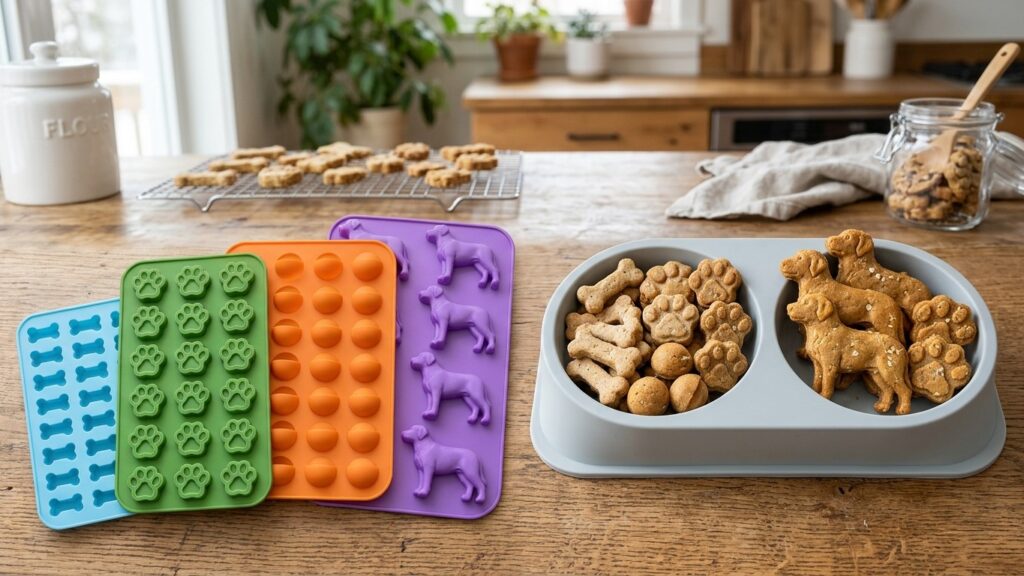
What Is a Silicone Dog Treat Mold?
A silicone dog treat mold is a flexible, reusable silicone mold with shaped cavities for making homemade dog biscuits, frozen snacks, and portion-controlled treats. As a category of silicone pet products, these molds commonly feature bone, paw, and other pet-themed designs. Custom (OEM/ODM) silicone dog treat molds can be manufactured with your specified cavity shapes, dimensions, colors, logos, and packaging for retail or wholesale distribution.
RY Silicone is a custom silicone product manufacturer based in China, established in 2012. Our factory covers 10,000+ m², operates 30+ production machines, and has a total capacity of up to 100,000 silicone products daily. We manufacture silicone dog treat molds for pet brands, kitchenware companies, distributors, and private-label retailers serving international markets.
Silicone Dog Treat Mold Manufacturing at a Glance
MOQ & Lead Times
From 500 pieces for eligible existing designs or 3,000 for new tooling. Sampling and production schedules follow project approval.
Product Specifications
Food-contact silicone, 30–60 Shore An initial hardness range, with adjustable cavity volume, tray thickness, rim support, and temperature rating.
Logo & Branding
Embossed or debossed logos, custom cavity artwork, Pantone color matching, and printed branding on suitable non-contact surfaces or packaging.
Packaging Options
Bulk cartons, individual bags, header cards, printed sleeves, and branded retail boxes prepared for wholesale or e-commerce distribution.
Who We Manufacture Silicone Dog Treat Molds For
Support brands and businesses developing pet treat preparation products.
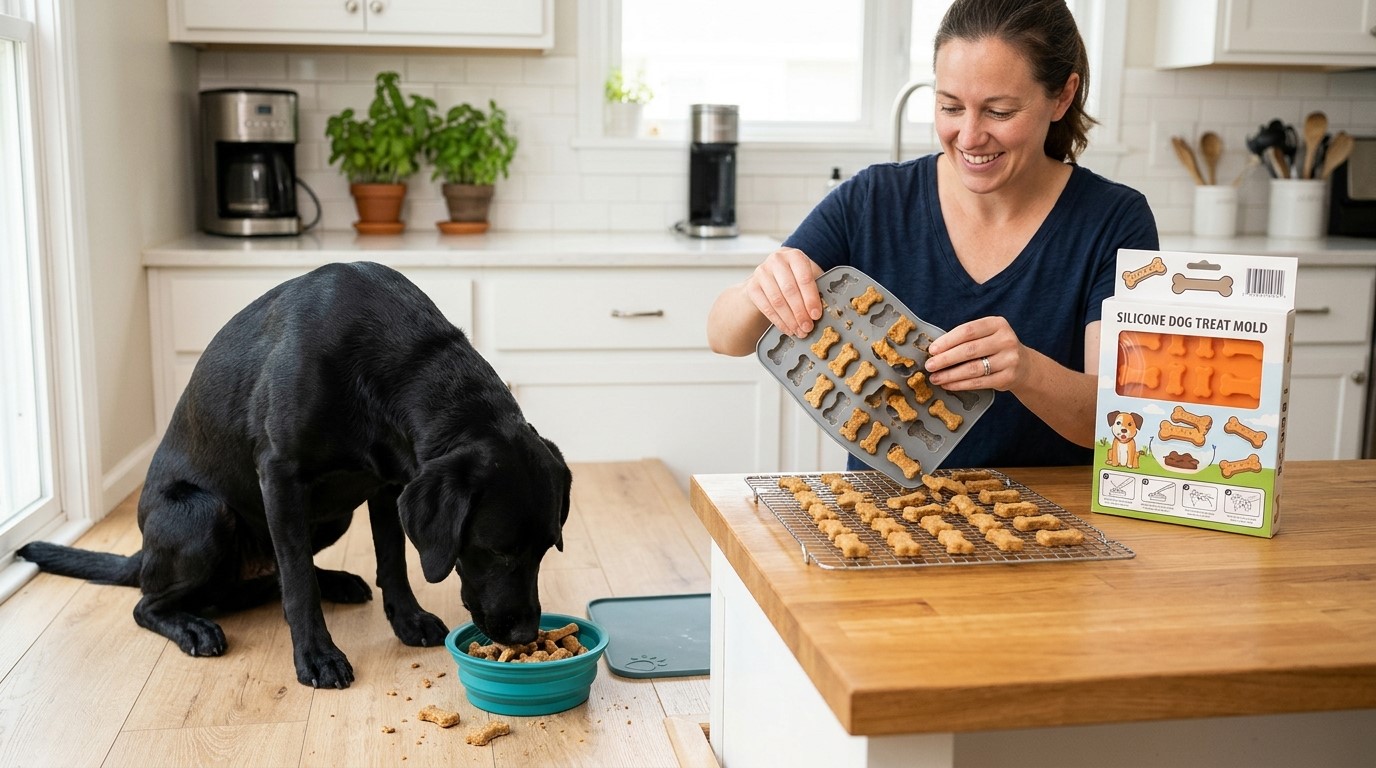
Pet Product Brands
Develop silicone dog treat molds that complement pet feeding accessories and homemade treat collections. Coordinate recognizable shapes, signature colors, and branded packaging to build a consistent product range.
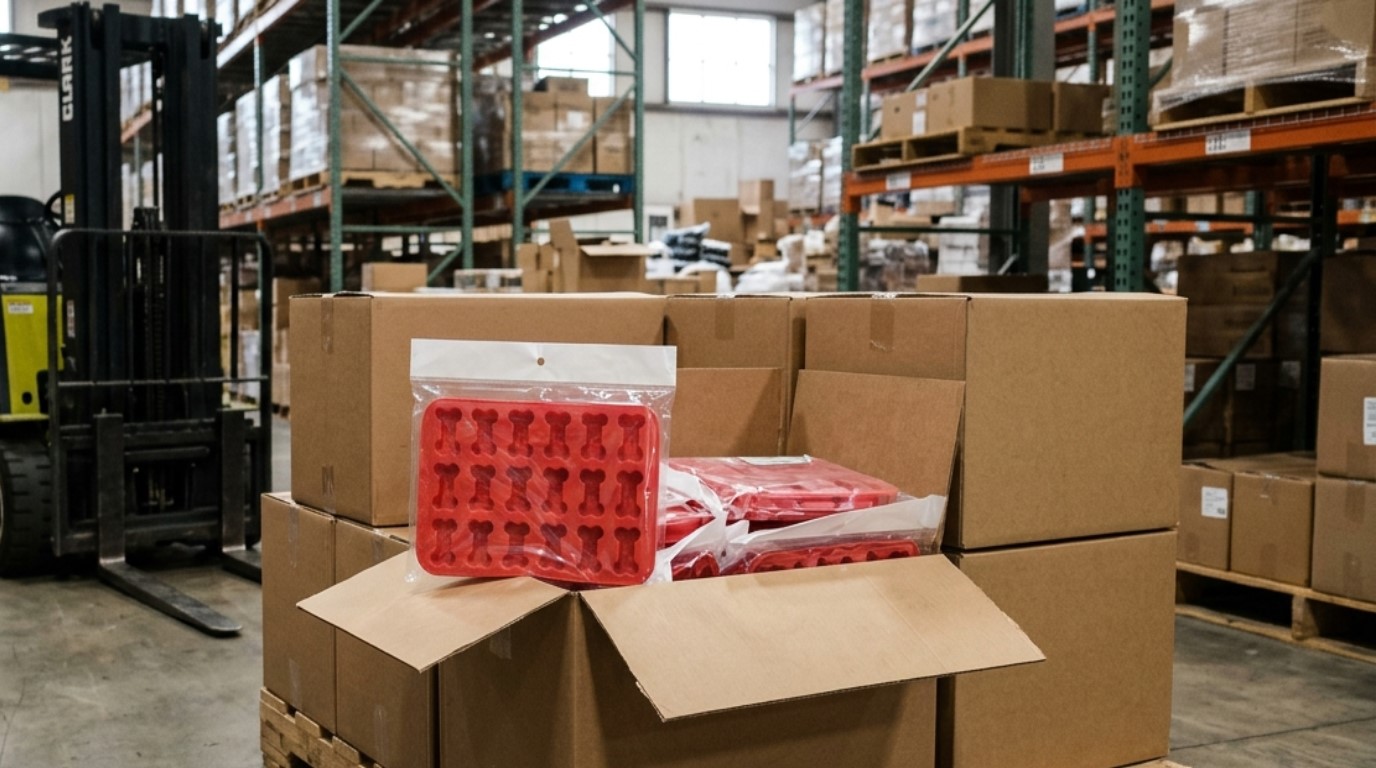
Distributors & Wholesalers
Source silicone dog treat molds wholesale for pet stores, veterinary supply channels, and regional distributors. Choose existing bone and paw designs or introduce differentiated assortments for bulk orders.

Pet Bakeries & Treat Makers
Create repeatable treat shapes for small-batch pet bakeries and specialty treat producers. Cavity capacity, filling efficiency, and clean release help maintain portion consistency across production batches.
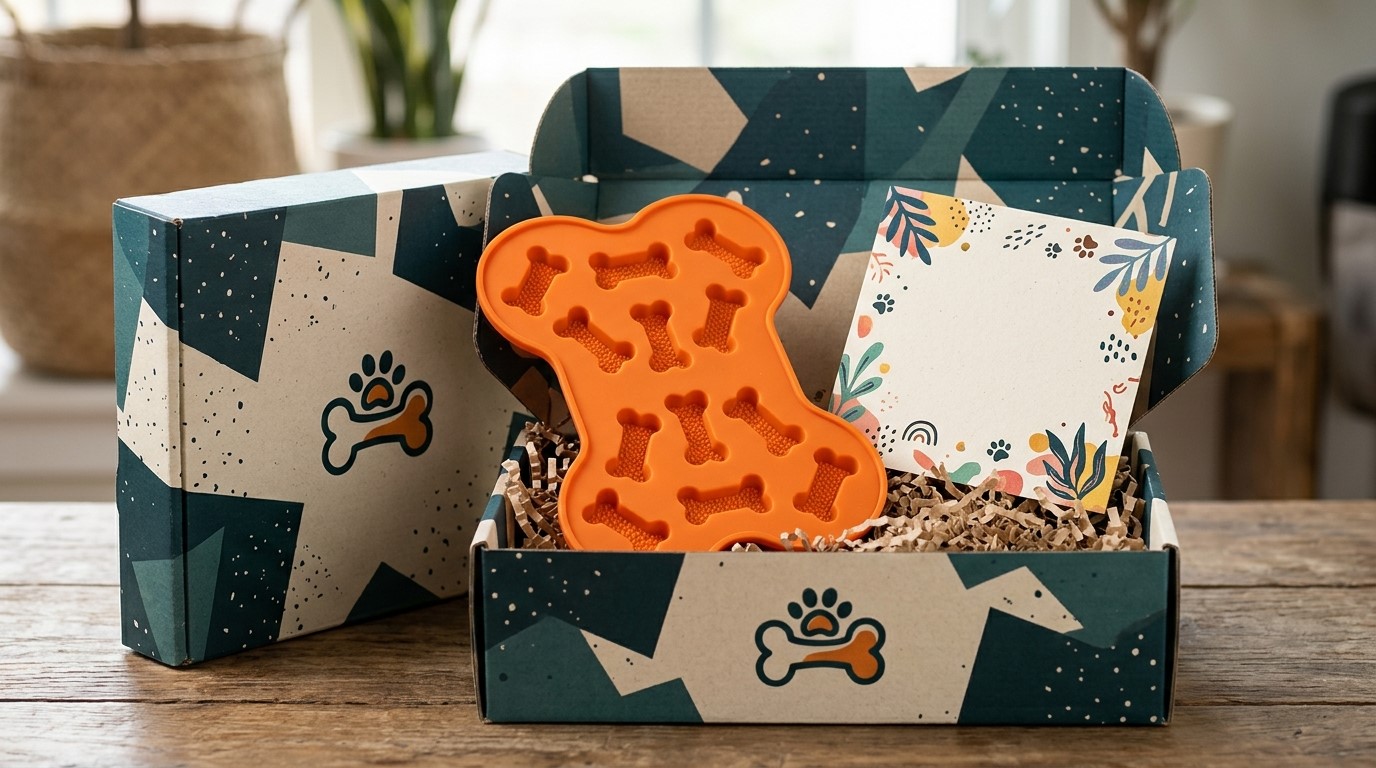
Pet Subscription & Promotional Companies
Include personalized dog treat molds in subscription boxes, seasonal bundles, and pet-themed promotional campaigns. Molded logos, themed shapes, and coordinated packaging support recognizable branded gifts.
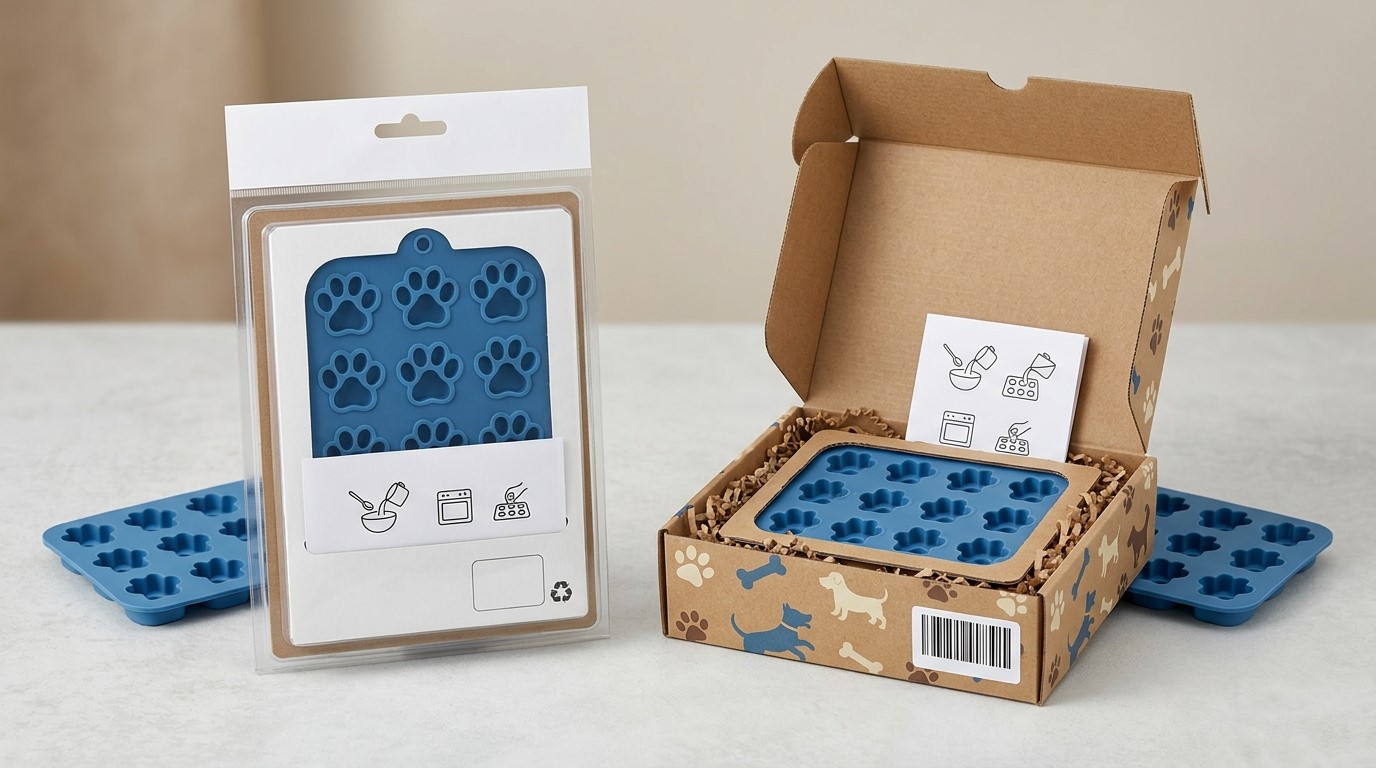
Retail & Ecommerce Sellers
Launch private-label dog treat molds with product inserts, barcodes, and marketplace-ready packaging. Combine practical tray formats with visually distinctive designs for online and physical retail channels.
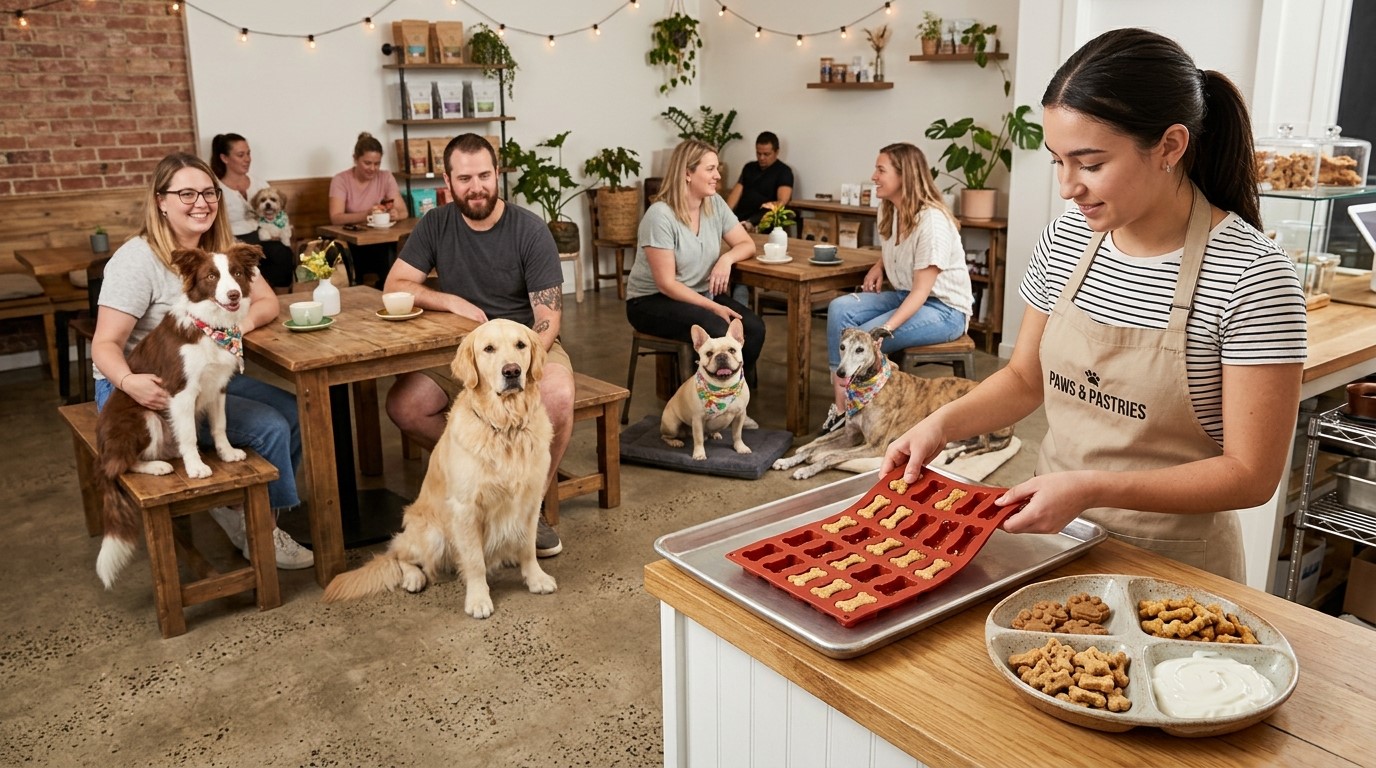
Pet Cafés & Training Facilities
Prepare small rewards, frozen enrichment snacks, and portioned treats for supervised pet activities. Match cavity size and material selection to the intended recipe and preparation routine.
Silicone Dog Treat Mold Types We Can Develop
Silicone Dog Bone Treat Molds
Silicone Paw Dog Treat Molds
Mini Silicone Training Treat Molds
Silicone Frozen Dog Treat Molds
Silicone Dog Biscuit Baking Molds
Custom Silicone Pet Treat Molds
Silicone Dog Treat Mold Customization
Develop your mold around the recipe, portion size, and intended sales channel.
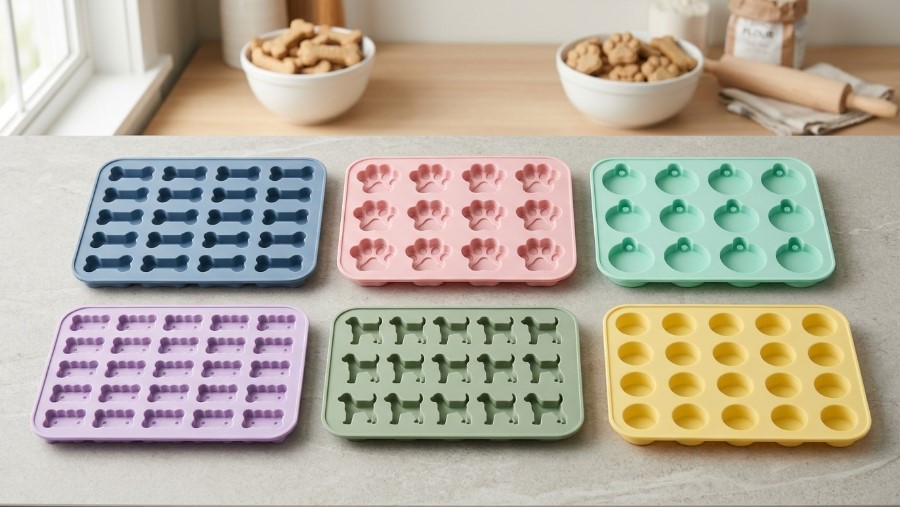
The treat shape affects appearance, filling, and release. Choose familiar bone or paw cavities for retail appeal, or develop distinctive silhouettes. Before tooling, we review outlines, corner radii, and cavity details. The silicone mold design guide explains draft, wall thickness, and release paths. Deep decoration and narrow sections need care because they can trap treats or create fragile edges during demolding.
Available options include:
- Classic bone-shaped cavities
- Paw print and pet-themed silhouettes
- Heart, star, and seasonal shapes
- Mixed-shape cavity arrangements
- Single-design or assorted cavity layouts
- Custom branded cavity impressions
- Rounded edges and adjusted corner radii
- Modified cavity depth and release geometry
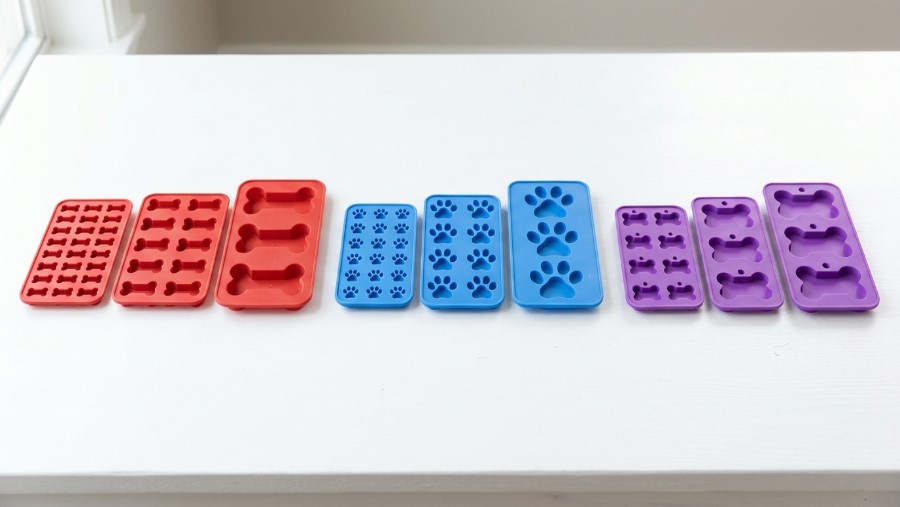
Cavity dimensions determine portion weight and how the mold behaves during filling, baking, or freezing. Smaller cavities suit training rewards, while larger shapes accommodate biscuits and substantial frozen snacks. We define length, width, and depth alongside cavity spacing and tray thickness. A filled mold also needs sufficient rim support: excessive flexibility can make it difficult to transfer between a worktop, oven tray, or freezer shelf.
Available options include:
- Custom overall tray dimensions
- Small, medium, and large cavity sizes
- Target cavity capacity in mL
- Adjustable cavity count and spacing
- Custom cavity depth
- Bottom and sidewall thickness
- Reinforced tray rims
- Compatibility with selected baking trays
- Lid-fitting features for frozen treats
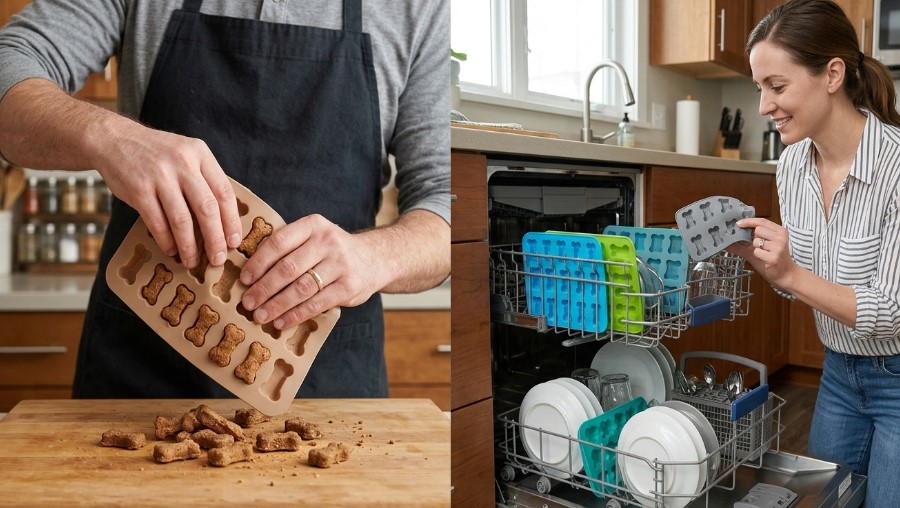
Silicone hardness and surface finish affect treat release and tray stability. Softer compounds ease inversion of detailed cavities; firmer ones improve handling support. We select food-contact silicone for the preparation method and confirm its temperature range. The food-grade silicone formulation and heat resistance guide explains why oven use requires formulation review and qualification of the finished mold.
Available options include:
- Food-contact-grade silicone
- Platinum-cured silicone formulations
- Project-specific hardness selection
- Flexible or firmer tray structures
- Standard silicone colors
- Custom Pantone color matching
- Smooth cavity surfaces
- Matte or fine-textured exterior surfaces
- Formulations evaluated for baking or freezing
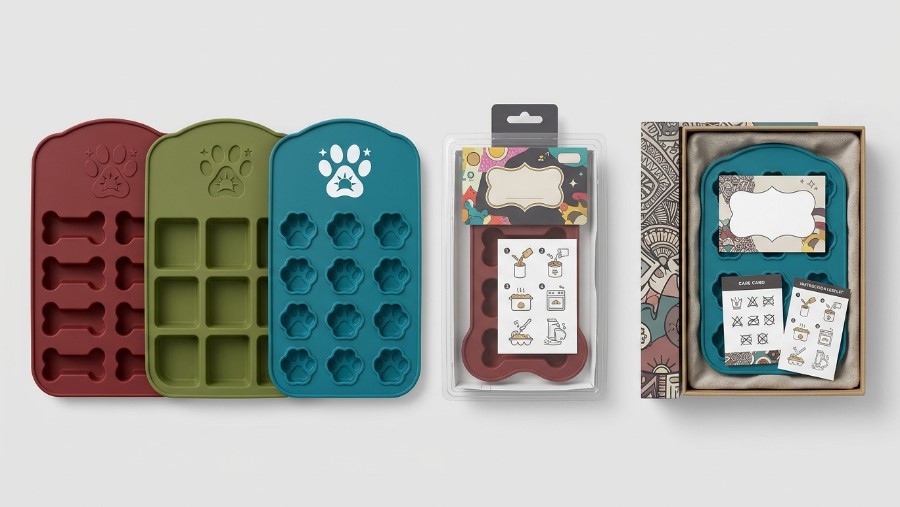
Branding provides pet accessories with an identity without altering their function. It uses molded or printed logos that are carefully positioned for cleaning and mold release. When product space is limited, packaging can display detailed artwork, recipes, and product information.
Available options include:
- Embossed brand logos
- Debossed logo designs
- Molded artwork on the tray border
- Custom cavity symbols
- Pantone-matched brand colors
- Pad or screen printing where suitable
- Printed paper sleeves
- Branded retail boxes
- Barcode and SKU labels
- Recipe cards and instruction inserts
Start Your Custom Silicone Dog Treat Mold Project
Share your preferred treat shapes, cavity dimensions, order quantity, and branding requirements. We will review suitable designs and manufacturing options.
How to Specify a Better Silicone Dog Treat Mold
A practical dog treat mold balances portion accuracy, clean release, tray stability, and preparation temperature.
- Cavity Volume: Match treat capacity to serving size and intended recipes.
- Cavity Depth: Allow sufficient filling without creating difficult release points.
- Hardness: Balance flexibility for demolding against stability when lifting filled trays.
- Wall Thickness: Maintain consistent cavity shape during repeated flexing.
- Rim Support: Reduce sagging when transferring liquid-filled molds.
- Detail Definition: Use rounded transitions to preserve paw prints and decorative features.
- Tray Dimensions: Confirm compatibility with baking sheets, freezer shelves, and retail packaging.
Full Specification Guide
How to Specify a Better Silicone Dog Treat Mold—cavity volume, hardness, wall thickness, rim design, ease of release & cleaning, and demolding considerations.
Silicone Dog Treat Mold Logo & Branding Methods
Choose branding methods that ensure cavity function and remain compatible with food-contact needs.
Pad & Screen Printing
Apply suitable inks to selected non-food-contact surfaces.
Custom Cavity Artwork
Integrate simple symbols or brand-related shapes into treat cavities. We review relief depth and corner geometry to reduce release problems.
Embossed Logos
Raised logos molded into the tray border or other suitable areas.
Debossed Logos
Recessed brand marks create defined artwork directly in the silicone.
Silicone Dog Treat Mold Material & Performance Options
Choose the material based on the intended recipe, preparation temperature, and required release behavior.
Platinum-cured silicone is a strong material choice for reusable dog treat molds.
It provides flexibility, thermal stability, and suitability for food-contact formulations. The complete material system, including pigments and processing aids, should be evaluated against the applicable food-contact requirements.
For U.S. projects, relevant provisions may include 21 CFR 177.2600 for rubber articles intended for repeated food contact. For European projects, Regulation (EC) No 1935/2004 and applicable national provisions require consideration.
Review the food-grade silicone compliance boundaries when defining the test scope for the selected compound, pigments, finished mold, and destination market.
Material Comparison
Silicone vs. Plastic: Which Is Optimal for Dog Treat Molds? —Compare flexibility, heat exposure, food-contact requirements, and manufacturing trade-offs; verify release and cleaning on the finished mold.
An appropriately rated silicone mold can withstand freezing and oven baking.
An initial range of 30–60 Shore A is a good place to start when evaluating materials. Softer silicone is useful when cavities require inversion, while firmer formulations provide additional tray stability.
Frozen treats and baked biscuits impose different handling conditions. Freezing places greater emphasis on demolding flexibility, while oven use requires thermal stability and sufficient tray support.
A balanced hardness allows shaped treats to release without making the entire tray difficult to handle.
An initial range of 30–60 Shore A provides a starting point for material evaluation. The Silicone Shore A hardness guide explains how to specify and compare durometer values.
Softer silicone is useful when cavities require inversion, while firmer formulations provide additional tray stability.
The appropriate selection also depends on cavity depth, wall thickness, and whether a supporting baking sheet is used.
A softer compound cannot compensate for poorly designed release geometry.
Smooth surfaces allow for clean demolding and easier removal of food residue.
We evaluate mold surface finish in conjunction with cavity geometry. However, narrow grooves and deeply recessed decorative details can trap soft mixtures, even when the silicone itself releases readily.
For detailed, paw-shaped cavities, rounded transitions help prevent localized sticking and tearing of delicate frozen treats.
Adequate wall thickness protects cavities during repeated bending and removal.
Thin sections between closely spaced cavities experience localized stretching during demolding. If the material is too soft or the connecting sections are too narrow, repeated inversion may lead to distortion or tearing.
Our engineering review examines these sections before confirming tooling.
A properly processed silicone mold should not introduce objectionable odors or residues into prepared treats.
Material selection, curing conditions, and post-curing requirements can influence odor and extractable substances. We evaluate the proposed compound and processing method during the sampling process.
While sensory checks can help identify obvious defects, they cannot replace laboratory testing where compliance verification is required.
Depending on the project and destination market, available documentation may include:
- Silicone material data sheets
- Material composition declarations
- FDA-related food-contact documentation
- LFGB-related test reports
- Applicable EU food-contact documentation
- REACH-related substance documentation
- Finished-product test reports, when requested
Please note that REACH documentation addresses chemical regulatory obligations and does not independently establish food-contact suitability.
Testing requirements should match the formulation and intended use of the finished mold.
Proper cleaning preserves cavity detail and prevents residue buildup.
Wash the mold before the first use and after preparing treats. Warm water and mild dish detergent are suitable for routine cleaning. Rinse thoroughly and allow the mold to dry before storing it.
For detailed cavities, use a soft brush instead of abrasive cleaning tools. Cleaning in a dishwasher is appropriate only when supported by the validated care instructions for the finished product.
Avoid direct contact with open flames, stovetop heating elements, and sharp utensils.
Cleaning & Care Guide
How to Clean Silicone Dog Treat Molds—removing food residue, managing odors, drying detailed cavities, and storing reusable molds.
How Silicone Dog Treat Molds Are Manufactured
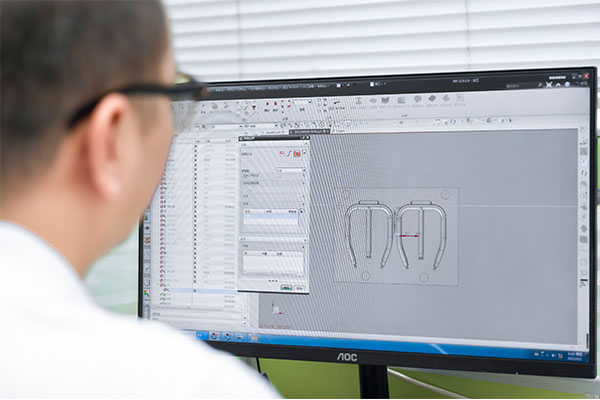
STEP 1: Requirement Review
Every project begins with an analysis of the intended treatment application, tray dimensions, cavity layout, material requirements, order quantity, branding method, and destination market.
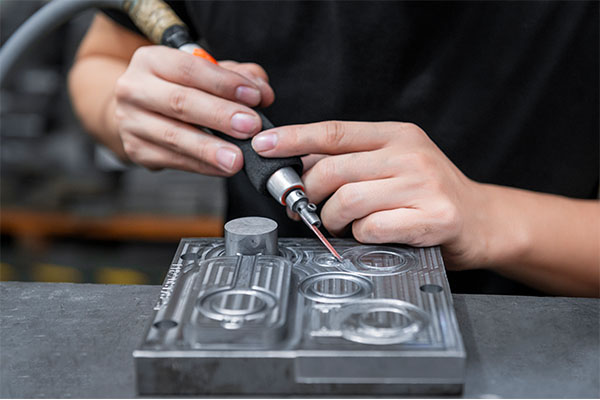
STEP 2: Tooling Evaluation
Engineers compare the proposed design with the available tooling. They review new shapes, modified cavity dimensions, and molded logos for tooling feasibility and release geometry.
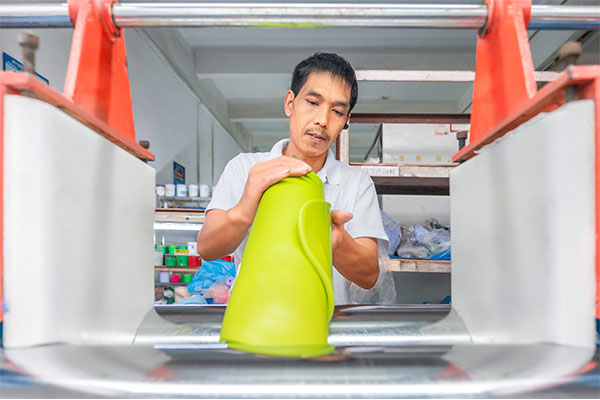
STEP 3: Material and Color Preparation
The selected silicone compound is prepared with approved pigments. Material batches and color formulations adhere to the agreed-upon reference specifications before molding begins.
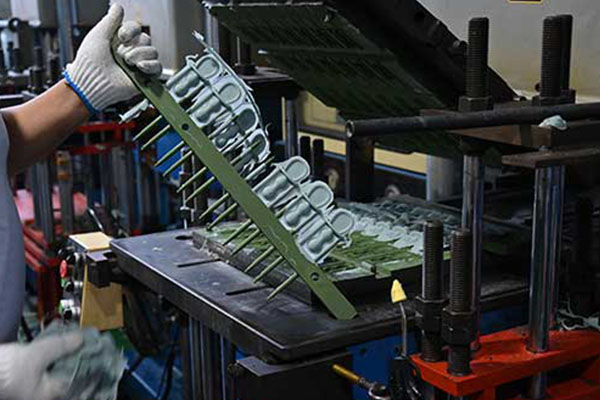
STEP 4: Silicone Molding
The silicone is formed using an appropriate compression or liquid silicone molding process. Processing parameters are selected according to product geometry and material characteristics.
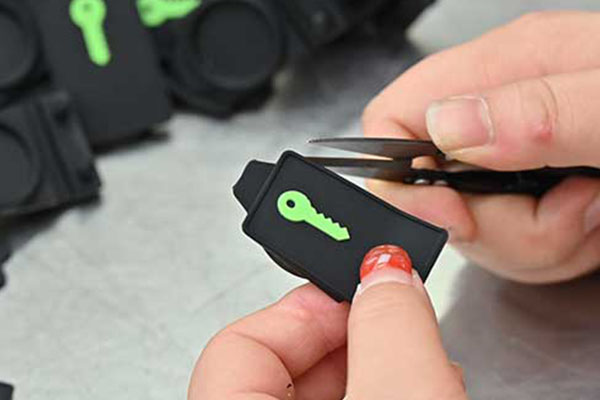
STEP 5: Demolding and Trimming
After curing, the molded trays are removed and trimmed. Operators inspect the cavity details, dividing walls, and outer edges for visible defects or incomplete formation.
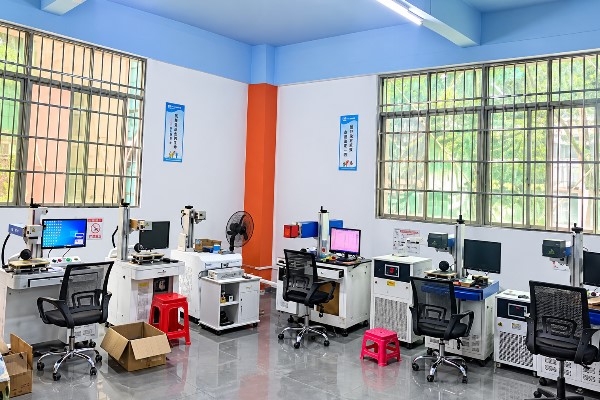
STEP 6: Logo and Surface Processing
Any approved printing or secondary surface treatment is completed. Molded artwork is checked for definition, and printed details undergo appearance and adhesion checks.
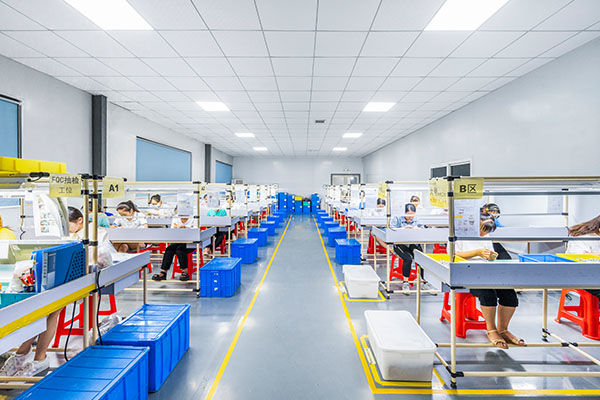
STEP 7: Quality Inspection
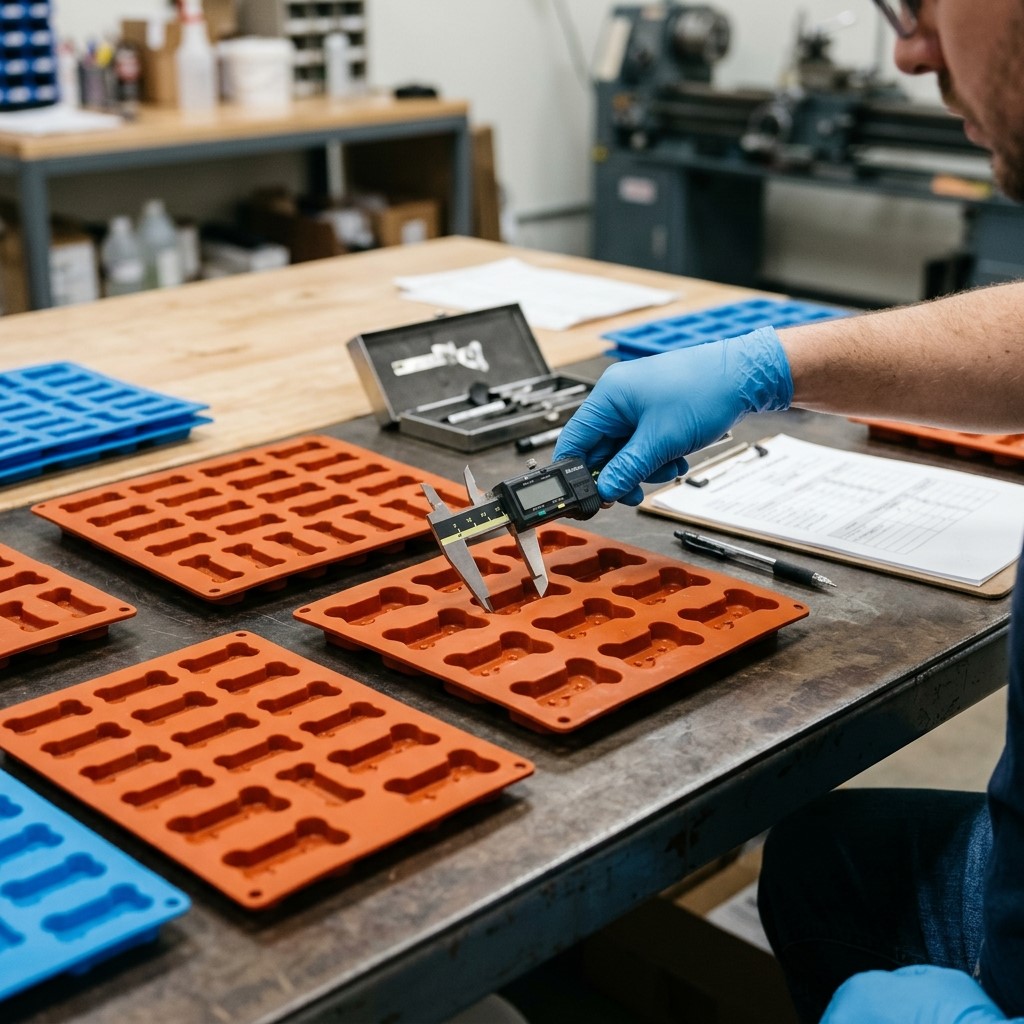
Finished molds are compared to approved samples. Our QC team checks for dimensional consistency, cavity appearance, flexibility, color, and adherence to packaging requirements before accepting the batch.

STEP 8: Packaging and Shipment
Accepted products are counted, packed, and labeled according to the purchase order. Carton markings and shipping documents are prepared according to the agreed-upon delivery arrangement.
Silicone Dog Treat Mold Quality Control
The quality inspection focuses on consistent tray dimensions, intact cavities, flexible trays, and conformity with the approved product specifications.
AQL 2.5 / 4.0 Standard Inspection
We run final random sampling plans to verify batch consistency:
AQL 2.5
Critical / Major Defects
AQL 4.0
Minor Visual Flaws
Sampling follows the agreed-upon inspection standard, defect classification, and purchase order requirements.
Approved Sample Control
The approved sample establishes the reference for:
- Overall tray dimensions
- Cavity shape, count, and spacing
- Cavity depth and volume
- Product weight and hardness
- Silicone color and surface finish
- Logo appearance and position
- Packaging and label presentation
Incoming Material Review
We check silicone compounds, pigments, and relevant supplier documentation against the confirmed formulation. Material identification and batch traceability ensure consistent production.
In-Process Inspection
Operators monitor molding completeness, cavity formation, and visible color variation. Thin dividing walls and detailed paw impressions receive particular attention because these sections are more susceptible to incomplete filling or damage during demolding.
Appearance & Surface Quality
Inspection criteria include:
- Incomplete molding
- Trapped air or visible bubbles
- Torn cavity walls
- Excess flash
- Contamination
- Irregular tray edges
- Damaged decorative details
- Surface discoloration
Dimensional & Cavity Consistency
The overall length, width, and thickness are measured against the drawings. Selected cavity dimensions and volume are verified using an agreed-upon measurement method.
Consistent cavity dimensions support portion repeatability, but the actual treat weight also depends on the recipe’s density and the filling technique.
Hardness & Flexibility
Hardness is verified against the approved material specification. Flexibility is assessed through an agreed-upon bending or demolding procedure.
A tray may pass the hardness inspection yet be deemed unsuitable if it has excessively thin connecting walls between closely spaced cavities.
Logo & Color Inspection
Finished colors are compared under consistent lighting conditions. Molded logos are examined for readable detail and correct placement.
Printed graphics are reviewed for registration, coverage, and agreed-upon adhesion performance.
Functional Release Performance
Functional tests use representative test materials or agreed simulants when specified.
Testing can assess:
- Release of baked or frozen samples
- Retention of decorative features
- Cavity deformation during inversion
- Tray stability during filling
- Damage after repeated flexing
The release performance depends on the specific recipe and preparation conditions and is not guaranteed for every mixture.
Packaging Inspection
The final inspection verifies the product count, labels, barcodes, and printed inserts. Retail packages are checked against approved artwork, and shipping cartons are reviewed for quantity and marking accuracy.
Silicone Dog Treat Mold Packaging Options
Arrange packaging based on protection, order volume, and shelf presentation.
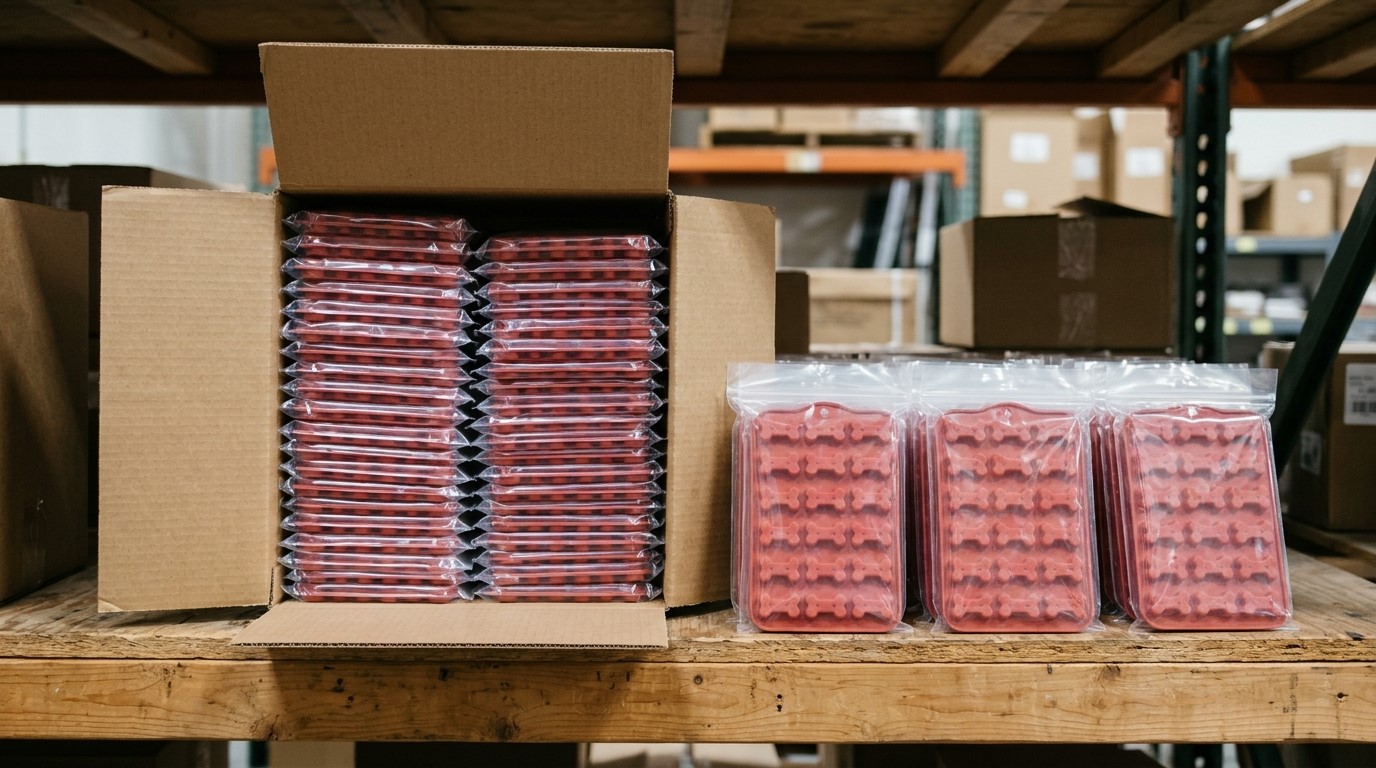
Bulk Packaging
Economical multi-piece bags and master cartons suit wholesale distributors, professional pet bakeries, and larger orders where unit packaging costs require control.
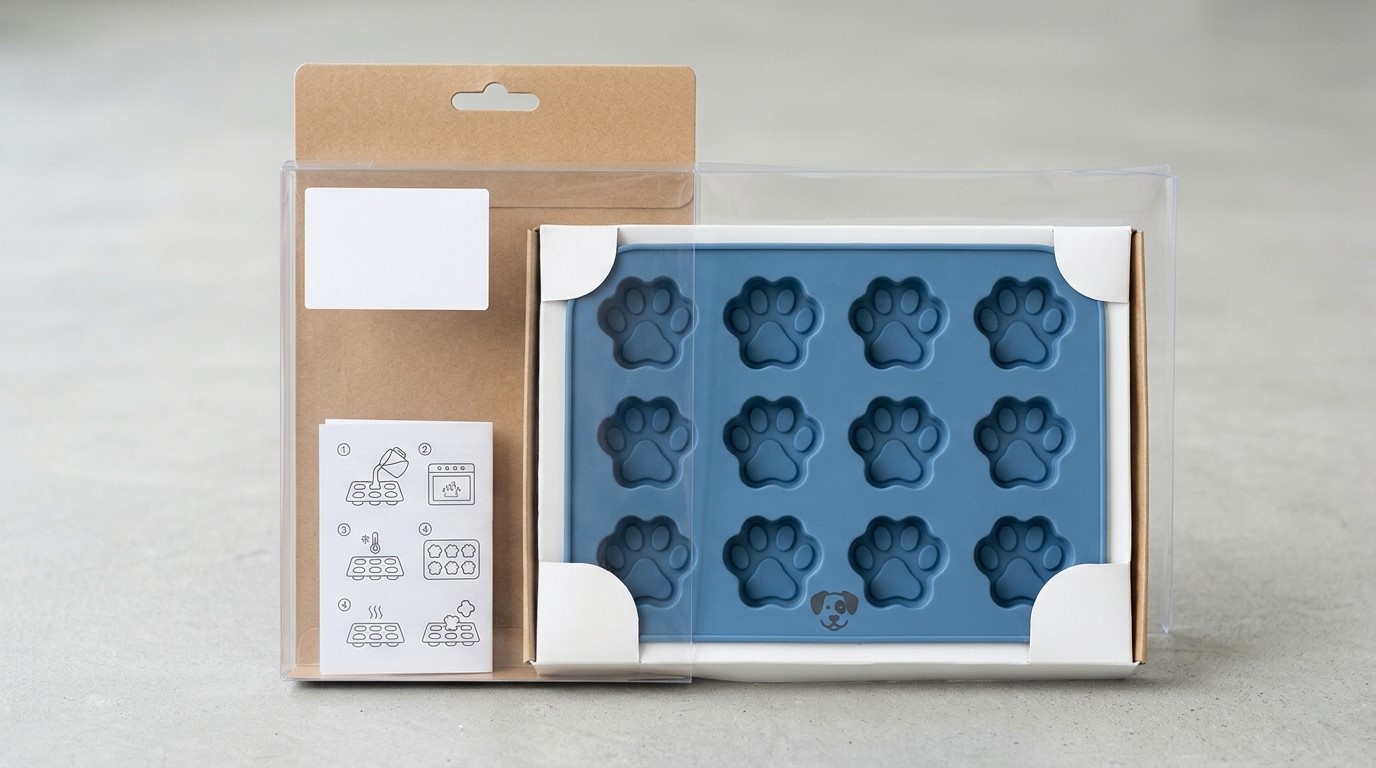
Retail Packaging
Branded sleeves, header cards, and printed paper boxes display product features while providing space for recipe suggestions, care instructions, and barcodes.
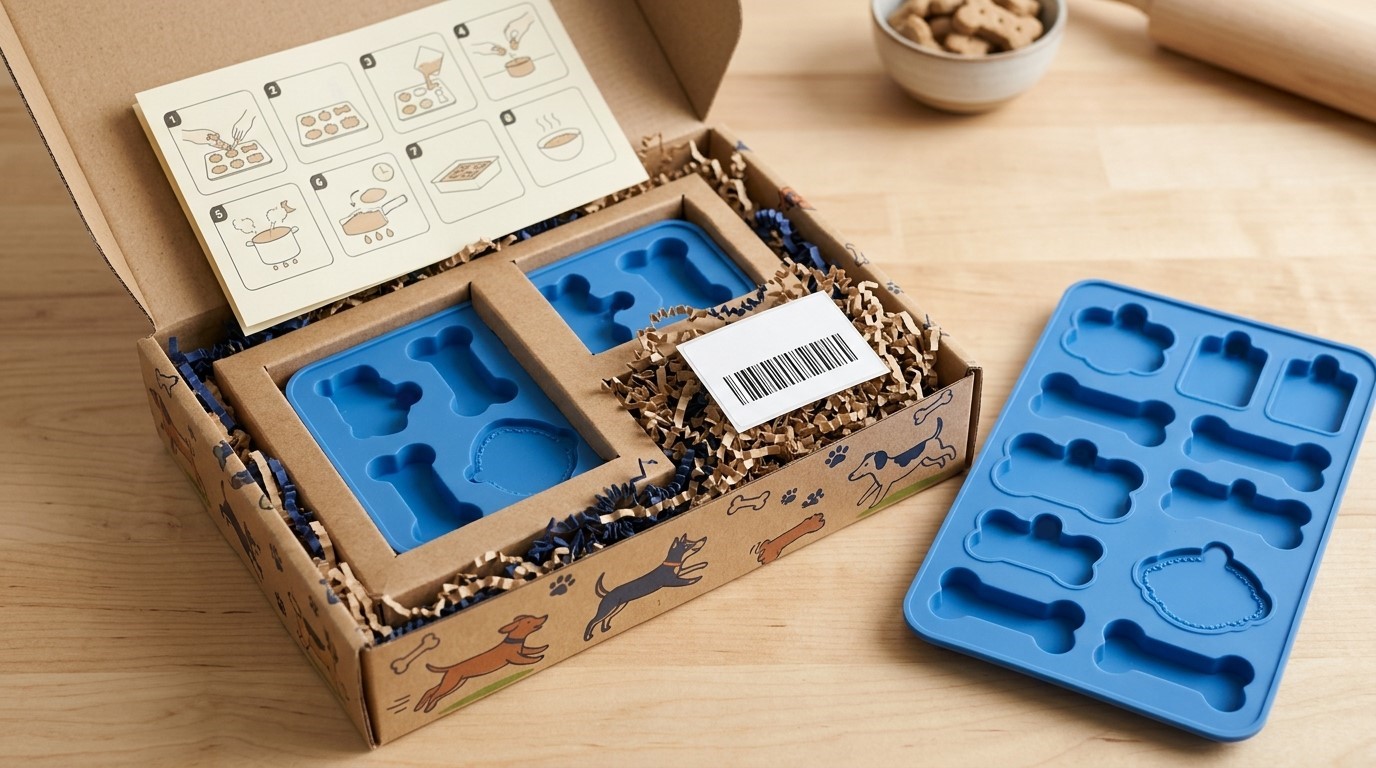
Ecommerce Packaging
Individual protective bags or compact boxes with SKU labels and scannable barcodes support online orders, inventory identification, and marketplace fulfillment.
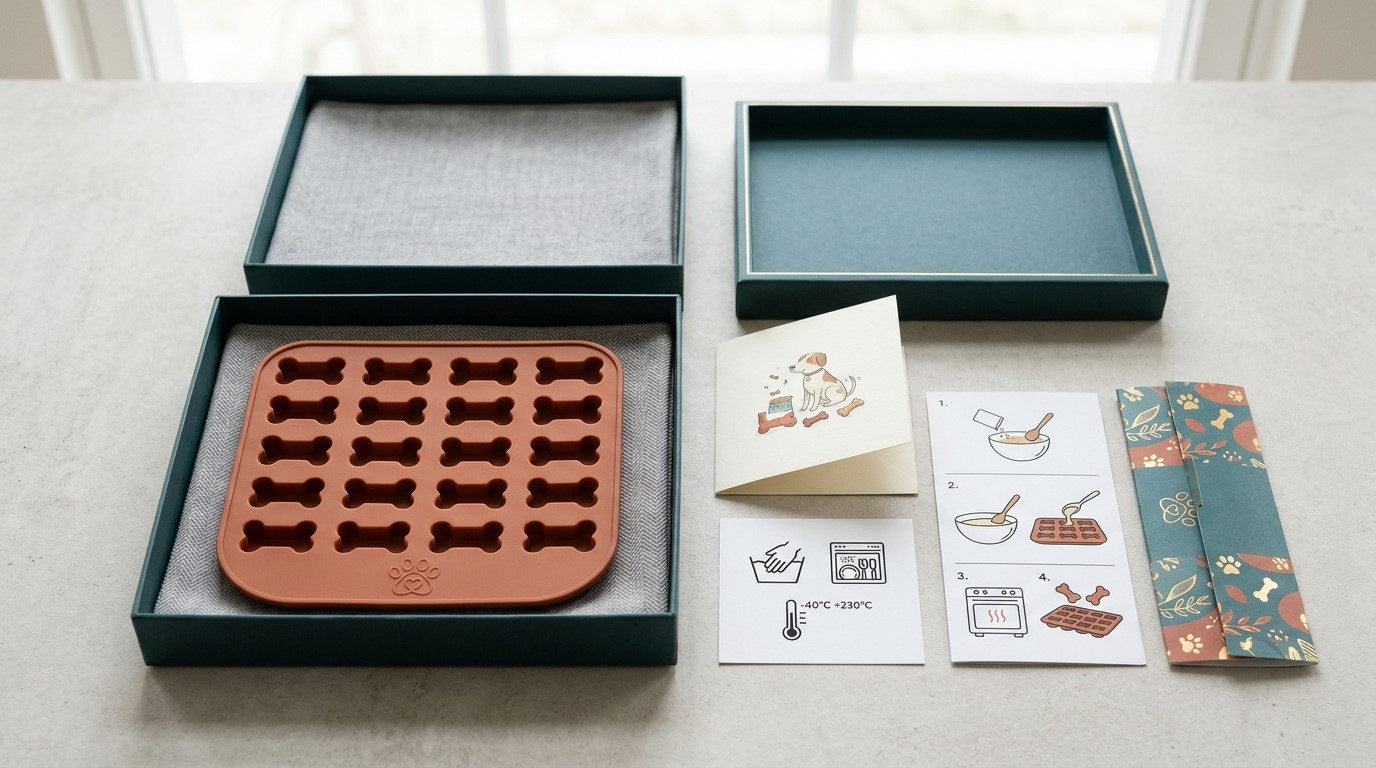
Premium Brand Packaging
Custom presentation boxes, coordinated color graphics, and printed recipe inserts create a consistent appearance for pet gift sets and branded collections.
Custom Silicone Dog Treat Mold Typical Specifications
| Specification | Typical Reference |
|---|---|
| Product | Silicone dog treat mold |
| Applications | Baked dog biscuits, frozen treats, training rewards |
| Material | Food-contact-grade VMQ silicone |
| Curing system | Platinum-cured; other systems subject to evaluation |
| Hardness | 30–60 Shore A, design-dependent |
| Temperature range | -40°C to 230°C, subject to compound validation |
| Tray dimensions | Custom; select to fit baking sheets and packaging |
| Cavity shapes | Bone, paw, heart, star, custom designs |
| Cavity count | Single or multi-cavity layouts |
| Cavity dimensions | Custom length, width, and depth |
| Cavity capacity | Defined in mL; design-dependent |
| Cavity wall thickness | Defined by geometry and release requirements |
| Tray thickness | Custom according to mold structure |
| Rim structure | Standard or reinforced |
| Product weight | Depends on dimensions and cavity count |
| Surface finish | Smooth cavity surfaces; custom exterior textures |
| Colors | Standard colors or custom Pantone matching |
| Logo options | Embossed, debossed, molded artwork, suitable printing |
| Molding process | Compression molding or approved LSR process |
| Packaging | Bulk, OPP/PE bag, header card, printed box |
| Existing-style MOQ | From 500 pieces, subject to design confirmation |
| New custom-tooling MOQ | From 3,000 pieces, subject to project review |
| Standard sampling | 5–10 working days for eligible existing tooling |
| Custom tooling lead time | 10–20 working days for suitable designs |
| Mass production | 15–25 working days after approval, project-dependent |
| Inspection | Approved sample and agreed AQL or customer standard |
| OEM / ODM | Available |
Final values follow the selected design, tooling evaluation, material, and approved sample.
Why Work with RY Silicone

Silicone Manufacturing Experience Since 2012
RY Silicone is a China-based supplier specializing in custom silicone products since 2012. We support pet accessory projects from initial design evaluation through sampling, mass production, and export preparation.
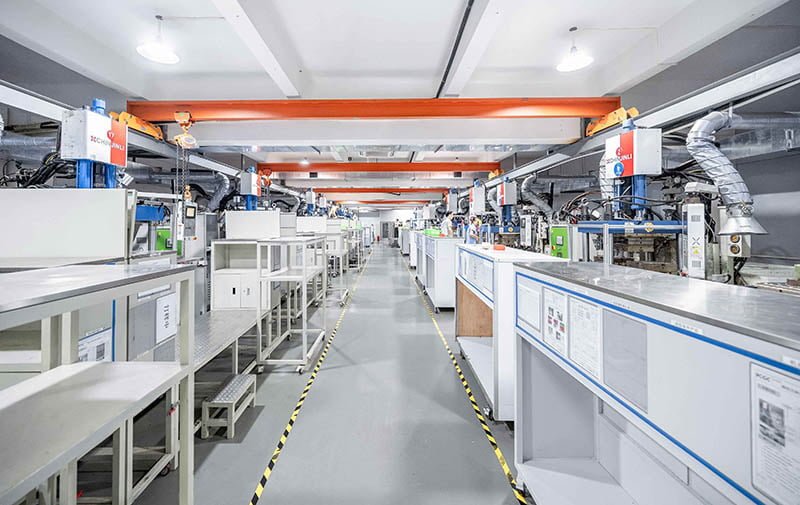
10,000+ m² Production Facility
Our manufacturing facility supports silicone molding and related finishing, inspection, and packaging operations. Product-specific tooling and production arrangements are evaluated according to the approved design.

30+ Production Machines
Our production equipment supports different silicone product geometries and order volumes. Machine selection depends on the mold design, silicone formulation, and required production process.
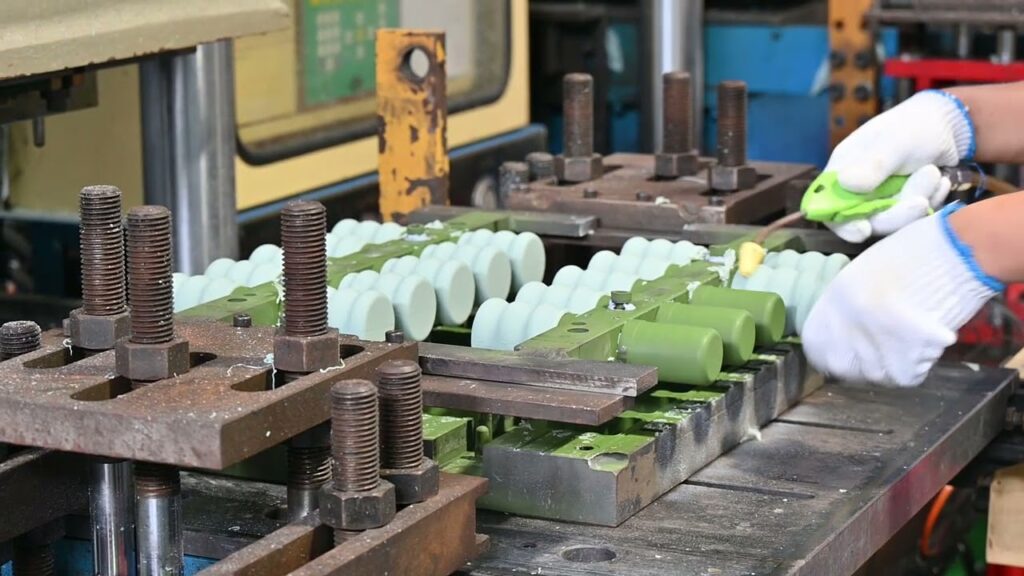
Up to 100,000 Silicone Products per Day
This figure represents overall factory production capacity across silicone products, not a guaranteed daily output for dog treat molds. Actual throughput depends on tray size, cavity configuration, and molding cycle.
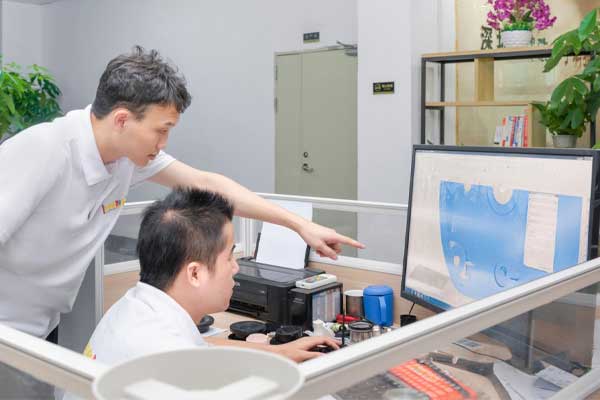
Engineering Review Before Quotation
A mold’s appearance alone cannot establish manufacturing feasibility. Our engineers review cavity depth and layout first, then evaluate wall thickness, rim support, and material hardness. These details determine tooling complexity and affect demolding performance.
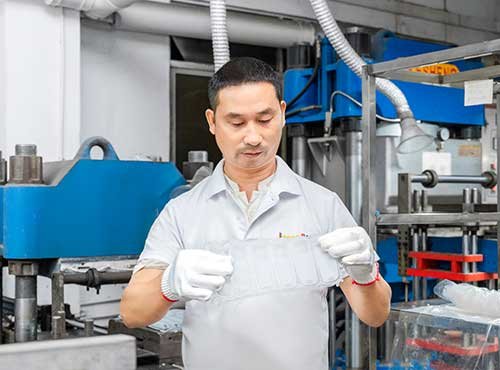
Sample-Based Production
Approved samples establish the production reference before mass manufacturing. We verify essential dimensions and cavity details, followed by color, branding, and packaging. Any significant discrepancy between the sample and specification is clarified before production release.

Export Project Support
RY Silicone supports international OEM/ODM projects for pet product brands, wholesale distributors, and retail businesses. Our team coordinates product specifications, required documentation, packaging details, and shipment preparation according to the destination market.
Silicone Dog Treat Mold FAQ and Final RFQ
What is the MOQ for custom silicone molds?
For initial quotation planning, an existing mold design with eligible custom branding may start from 500 pieces.
A completely new mold design may start from 3,000 pieces.
The final MOQ depends on tooling availability, cavity design, selected material, color, and packaging requirements.
Can you manufacture custom bone and paw-shaped silicone dog treat molds?
Yes. We can evaluate existing bone and paw mold designs or develop new tooling according to your drawings.
Customized features include cavity shape, depth, count, and arrangement. Decorative details are reviewed for release performance before tooling approval.
Which silicone material is best for dog treat molds?
Please provide the following:
- Design files, product reference images, or CAD drawings
- Intended for baking, freezing, or dual-use application
- Preferred bone, paw, or other cavity shapes
- Overall tray dimensions
- Individual cavity dimensions or target volume
- Desired cavity count and arrangement
- Required material hardness, if specified
- Color or Pantone reference
- Logo artwork and intended position
- Order quantity
- Packaging requirements
- Destination country
- Required compliance documents or testing
- Target delivery date
Send your design, dimensions, and order requirements to RY Silicone. Our team will review suitable tooling, material selection, branding options, and production arrangements.
Food-contact-grade platinum-cured silicone is generally a suitable choice for reusable dog treat molds. It provides flexibility and can be formulated for baking and freezing applications.
The final hardness and formulation must match the mold structure, operating conditions, and destination-market requirements.
What hardness should I choose for silicone dog treat molds?
A starting selection range is 30–60 Shore A.
Softer compounds support easier inversion and release, while firmer compounds can improve tray handling.
The best hardness depends on cavity size, depth, wall thickness, and rim construction. Sample testing should confirm the final choice.
How do I determine the correct cavity size for dog treats?
Start with the intended portion volume and recipe.
Mini cavities suit small training rewards, while larger cavities produce biscuits or substantial frozen snacks.
Specify cavity dimensions and target capacity in milliliters.
Treat weight cannot be determined from cavity volume alone because ingredient density varies.
Can the same silicone dog treat mold be used for baking and freezing?
Yes, when the selected material and finished mold are qualified for both conditions.
A proposed operating range may be -40°C to 230°C (-40℉ to 446℉), but the approved temperature rating must be confirmed for the actual formulation.
Filled flexible trays may require a rigid support during transfer or baking.
Can you add a custom logo to a silicone dog treat mold?
Yes.
Embossed and debossed logos can be incorporated into suitable mold surfaces.
Simple custom artwork may also be integrated into treated cavities.
Printed branding can be considered on appropriate non-contact areas. Logo size and detail must be evaluated before tooling or artwork approval.
Can you make silicone dog treat molds with different cavity sizes on one tray?
Yes.
Mixed cavity sizes are possible with new tooling. The layout should consider filling space, cavity spacing, and overall tray stability.
Different cavity volumes may create uneven baking or freezing times, so the final arrangement should match the intended preparation method.
Are your silicone dog treat molds food-grade, and can you provide FDA or LFGB reports?
Food-contact-grade silicone formulations are available. Relevant documentation depends on the selected compound, pigments, finished-product configuration, and target market.
For U.S. projects, FDA-related material requirements may be assessed against applicable provisions such as 21 CFR 177.2600. European projects require evaluation against the relevant EU framework and applicable national requirements.
Please identify your destination country and required testing scope before ordering.
Are silicone dog treat molds suitable for every recipe?
Silicone dog treat molds can be used with many baked and frozen preparations, but successful release depends on the ingredients, consistency, and preparation method. Very crumbly mixtures may break during demolding, while sticky preparations can remain attached to detailed cavities.
The mold itself does not establish whether a recipe is nutritionally or medically suitable for dogs. Only dog-safe ingredients should be used.
How long does it take to develop a custom silicone dog treat mold?
An initial planning schedule may allow 10–20 working days for suitable new tooling, followed by sampling and approval.
Mass production may require 15–25 working days after approval.
Complex artwork and specialized cavity geometry requiring testing or custom packaging can extend the project schedule. Final milestones are confirmed during quotation.
What information is required to quote a custom silicone dog treat mold?
Please provide the following:
- Design files, product reference images, or CAD drawings
- Intended for baking, freezing, or dual-use application
- Preferred bone, paw, or other cavity shapes
- Overall tray dimensions
- Individual cavity dimensions or target volume
- Desired cavity count and arrangement
- Required material hardness, if specified
- Color or Pantone reference
- Logo artwork and intended position
- Order quantity
- Packaging requirements
- Destination country
- Required compliance documents or testing
- Target delivery date
Send your design, dimensions, and order requirements to RY Silicone. Our team will review suitable tooling, material selection, branding options, and production arrangements.