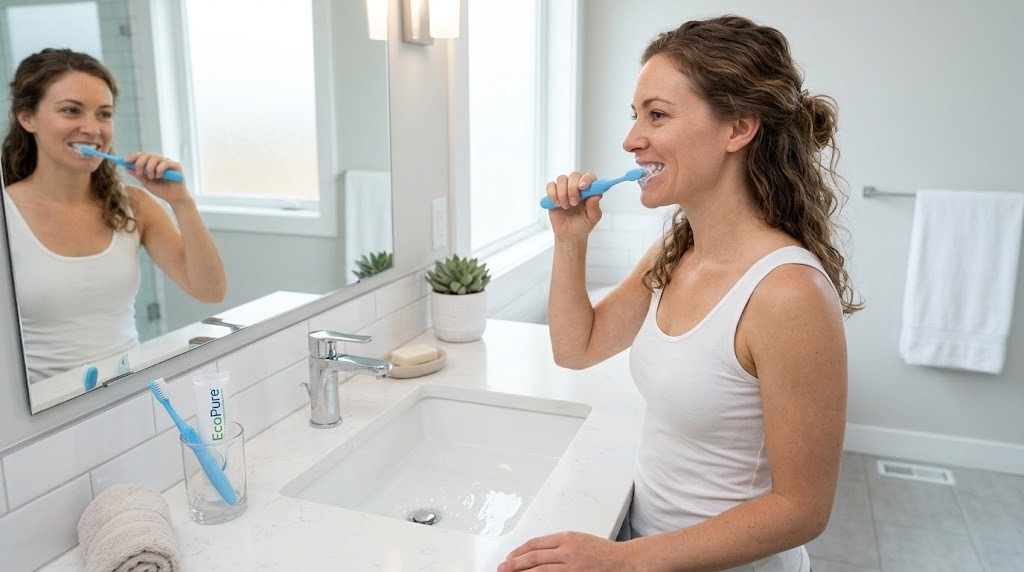
Silicone Toothbrush Manufacturer
Silicone toothbrush concepts with tailored head geometry, grip, branding, and packaging for oral-care brands and private-label programs. Send your design for a feasibility review.
What Is a Silicone Toothbrush?
A silicone toothbrush is an oral-care silicone brush with silicone bristles or other silicone cleaning elements intended for brushing teeth or gums. The head may also be silicone, while an integrated silicone handle is optional; other head and handle materials require their own specification. A custom design defines these components for the intended user and market.
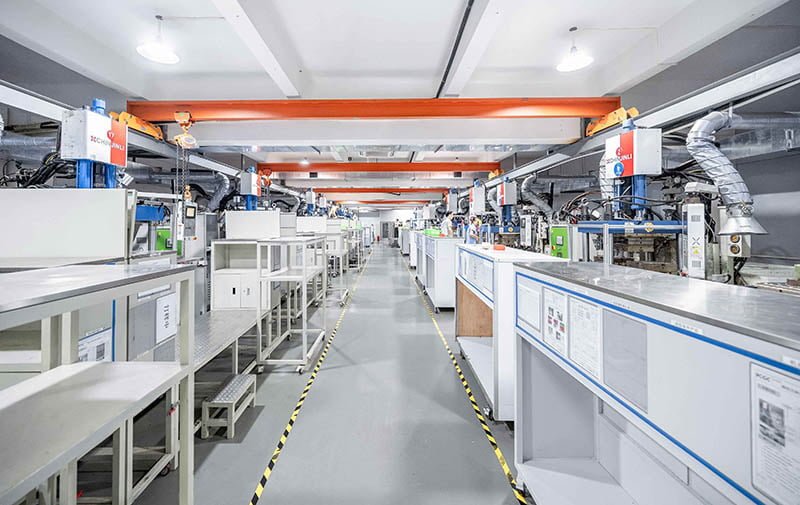
RY Silicone is a China-based manufacturer of custom silicone products established in 2012. Its 10,000+ m² facility, 30+ production machines, and capacity of up to 100,000 silicone products per day are factory-wide figures, not toothbrush-specific capacity or delivery commitments.
Silicone Toothbrush Manufacturing at a Glance
MOQ & Development
Confirm MOQ, tooling ownership, sample route, and lead time for the chosen design before making a purchasing commitment.
Brush Geometry
Specify bristle geometry, head dimensions, head material, and access zones before evaluating the tool and handle connection.
Brand Identification
Confirm the logo method, artwork line weight, logo location, color reference, and approval sample before production release.
Packaging Option
Plan head protection, retail presentation, barcode placement, inserts, and carton configuration with the intended sales channel.
Who We Manufacture Silicone Toothbrushes For
Start with the user profile, sales channel, and intended oral-care routine.

Oral-Care Brands
Develop a differentiated silicone toothbrush range around your visual identity and target brushing experience. Head proportions, softness, grip, logo placement, and packaging should be approved as one product system.
Distributors & Wholesalers
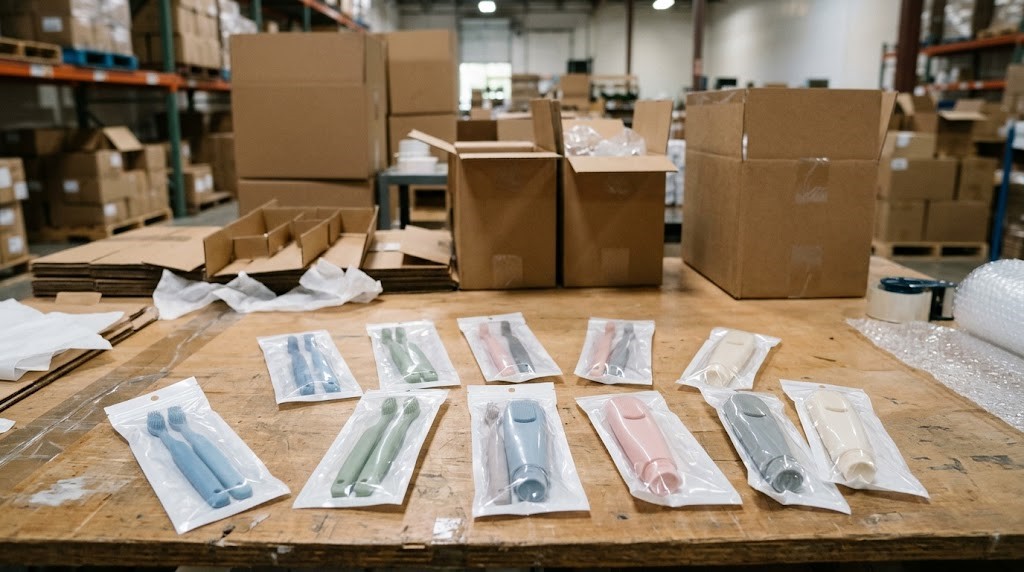
Source silicone toothbrushes in bulk with clear SKU differentiation for oral-care, pharmacy, gift, or convenience channels. Confirm the product documentation, packaging language, and market requirements before committing inventory.

Pet Oral-Care Brands
Explore silicone finger toothbrushes for pets, including dog and cat toothbrush concepts. Define finger fit, cleaning-element layout, handling instructions, and packaging; confirm pet-use suitability and production feasibility before quotation.
Retail & Ecommerce Sellers
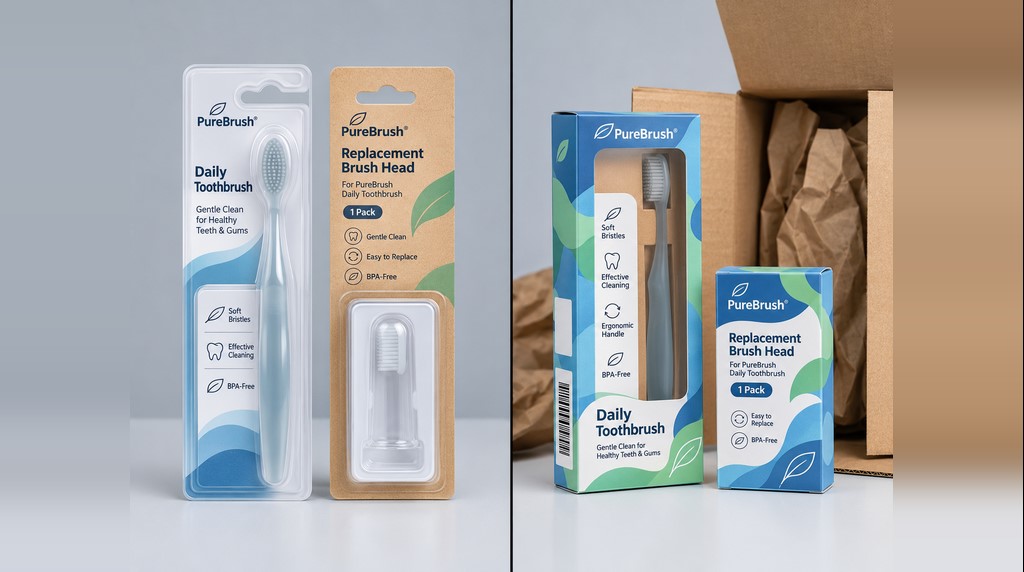
Prepare unit protection, product inserts, labels, and carton quantities for marketplace fulfillment. Do not imply clinical or antimicrobial benefits unless substantiated for the final product configuration.

Baby & Family Brands
Develop age-appropriate finger brushes or small-head products only after reviewing intended age, supervision guidance, choking hazards, and applicable product-safety requirements.
Promotional & Gift Programs
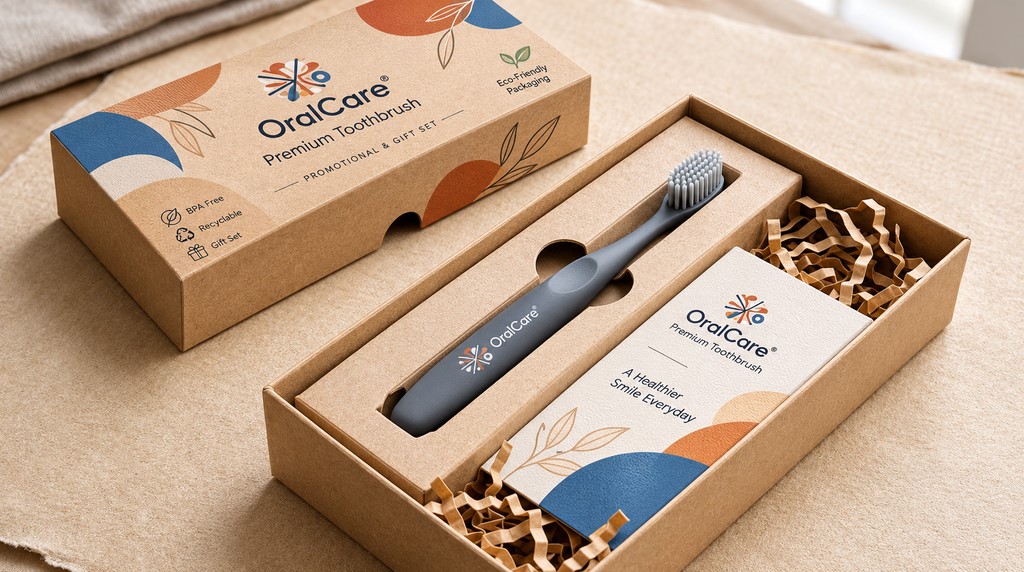
Use an existing, validated product platform when launch timing and lower development cost are priorities. Artwork, packaging, and any hygiene or oral-care claims require project-specific review.
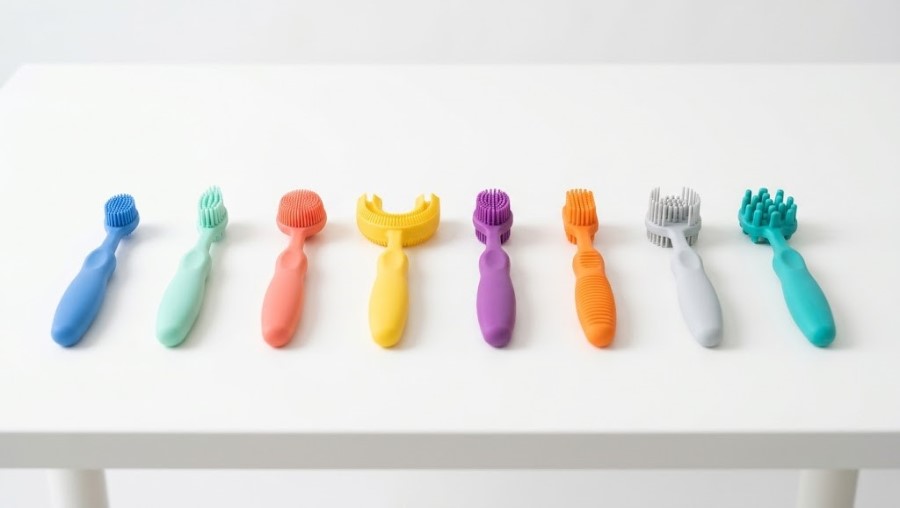
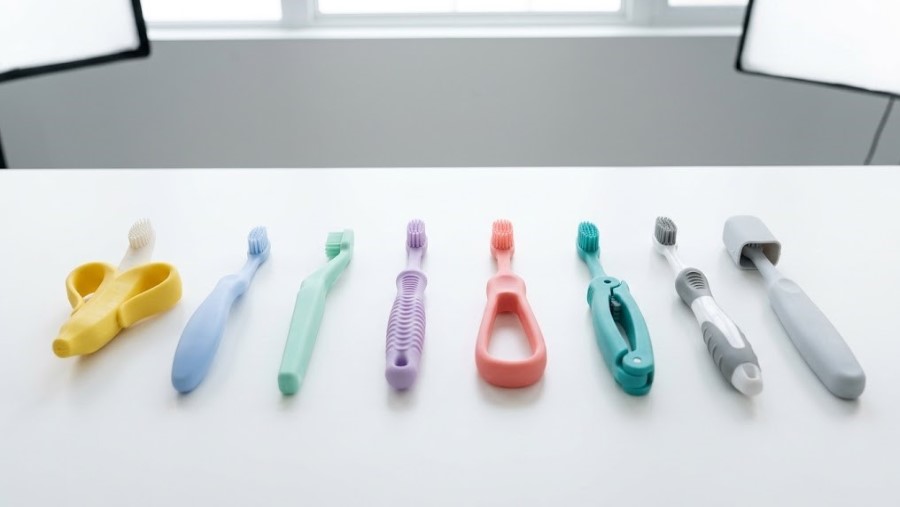
Silicone Toothbrush Types We Can Develop
Manual Silicone Toothbrushes
Silicone Finger Toothbrushes
Silicone Infant Toothbrush
U-Shaped Silicone Toothbrushes
Dual-Sided Silicone Toothbrush
Silicone Banana Infant Toothbrush
Silicone Toothbrush Customization
Lock the product architecture before color and packaging are finalized.
Define the silicone bristles and their head interface first because geometry shapes tool design, brushing feel, and cleaning access. A dense field of tall bristles is not automatically more effective; spacing must support the selected molding route and intended motion.
Available options include:
- Head substrate material and bristle-to-head integration method
- Cleaning-element profile and height
- Spacing and row arrangement
- Tapered, rounded, or compact head outline
- Tongue-cleaner or textured rear surface
- Guard or stop feature, subject to safety review
- Integrated or assembled head-and-handle architecture
Choose a handle material and shape for the intended grip. An integrated silicone handle is one option; a separate handle may use another specified material. Review the neck and head connection early, since a thin transition can flex or assemble poorly.
Available options include:
- Straight, curved, or angled handle form
- Adult, child, or travel-oriented proportions
- Grip ribs or molded texture
- Hanging hole or storage feature
- Integrated silicone or specified non-silicone handle
- Fingerbrush opening dimensions
- Protective cap interface, subject to fit review
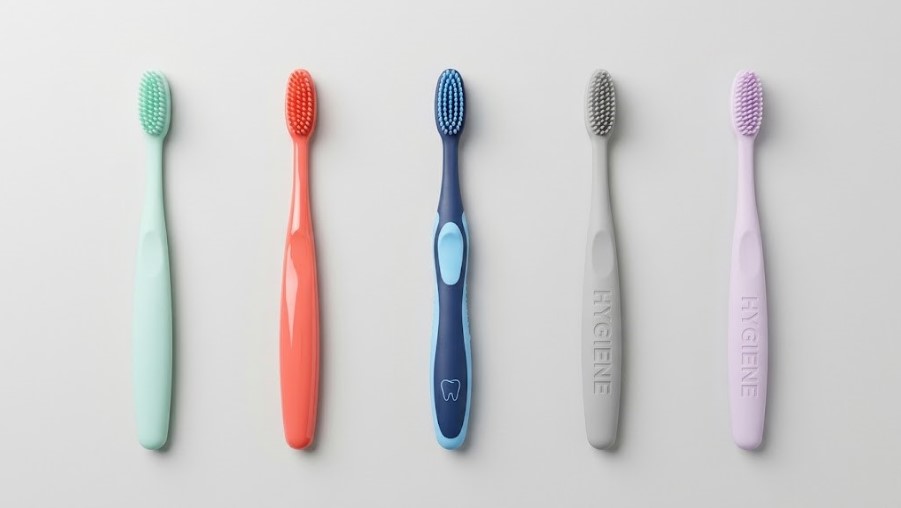
Match the material appearance and brand treatment to the approved product sample. Thin silicone bristles and a thicker silicone head or handle can show color differently. Approve each visible material on the actual geometry rather than a flat swatch.
Available options include:
- Standard or custom color reference
- Matte, gloss, or molded texture
- Embossed or debossed mark
- Screen or pad printing, subject to adhesion review
- Color-separated components, subject to process confirmation
- Artwork placement on non-contact areas where appropriate
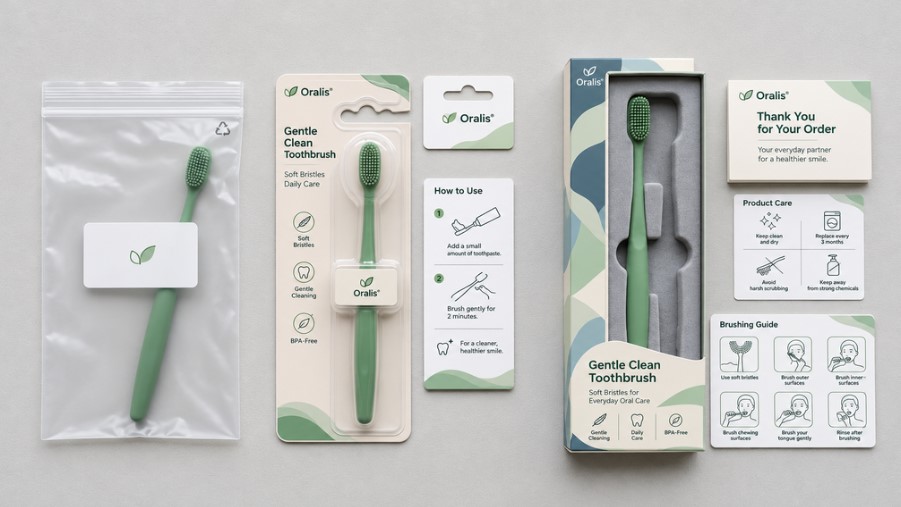
Plan the protective pack alongside the toothbrush because the product’s cleaning elements can deform in transit if the cavity, cap, or tray does not support them. Retail copy, warnings, and compliance marks remain your responsibility until the required market review is complete.
Available options include:
- Bulk bags or compartment trays
- Individual protective cases
- Blister, clamshell, or paperboard pack
- Printed boxes and sleeves
- Barcode and SKU labels
- Instruction or care insert
- Ecommerce-ready labeling and carton marks
Start Your Custom Silicone Toothbrush Project
Send the target user, concept drawings, quantity, market, branding, packaging, and required documents. We will confirm the feasible development route.
How to Specify a Better Silicone Toothbrush
A better silicone toothbrush design begins with the intended user and brushing routine.
- User group—define adult, child, supervised infant, or travel use before selecting head and handle proportions.
- Cleaning zone—state the element height, profile, spacing, and dental areas the design is intended to reach.
- Material—specify silicone bristles first, then select head and handle materials for contact, durability, and market requirements.
- Structure—identify one-piece, assembled, capped, or folding construction and each interface needing fit review.
- Hygiene—specify rinsing, drying, storage, and replacement guidance; silicone alone is not a hygiene guarantee.
- Quality—list required documentation, test methods, acceptance limits, and target-market claims before production approval.
Full Specification Guide
How to Specify a Silicone Toothbrush—Head geometry, cleaning-element layout, material selection, packaging protection, and a project review checklist.
Silicone Toothbrush Logo and Branding Methods
Choose branding that suits the product surface and contact zone.
Screen Printing
Screen printing can suit a larger, simple mark on a stable surface when the selected ink system and adhesion requirements are confirmed.
Pad Printing
Print a small logo or graphics on selected handle areas of the brush.
Color Identification
Color-coded handles, caps, packaging designs, printed graphics, or molded details.
Embosse & Debossed
A raised, ink-free brand mark formed in the mold for a premium look.
Silicone Toothbrush Material and Performance Options
Match the material and evidence package to the intended oral-care product.
Select the bristle compound for the cleaning-element geometry.
LSR is one candidate; HCR needs a separate feasibility review for fine bristles. Confirm the material grade, cure system, pigment, and hardness against a representative sample. A compound name alone does not establish finished-brush safety or cleaning performance.
Material Comparison
Silicone vs. Nylon Bristles: Which Toothbrush Design Fits Your Product Positioning?—brushing feel, cleaning-element structure, durability questions, and sourcing considerations.
Geometry and compound work together to create the brushing feel.
Bristle height, root thickness, spacing, and compound hardness affect deflection. A soft prototype may feel comfortable yet lack support.
Dense bristles can leave less room for rinsing. Compare approved samples against agreed deflection criteria rather than judging softness by appearance.
The bristle root and head interface need their own review.
Bristles may be molded with a silicone head or joined to a different head substrate. Thin roots can tear, while a poorly designed interface can loosen or separate.
Define the joining route and an appropriate retention or integrity check for the chosen architecture.
Repeated flexing should be evaluated on the finished brush, not inferred from a material label.
Check for leaning bristles, root tears, neck distortion, and permanent compression from a cover or pack. Set the cycling method, sample size, and pass/fail limits for the intended use.
No service-life claim should precede finished-product verification.
Documentation must match the selected materials, colorants, inks, and destination market.
Confirm documents for silicone, head and handle materials, pigments, inks, and the destination market. Raw-material reports do not prove finished-product compliance or substantiate medical-grade or antibacterial claims. For all-elastomer cleaning heads, agree on product-specific tests.
ISO 20126: 2022 excludes this construction from its physical-property requirements.
Available documents may include:
- Material data sheets
- Material declarations
- FDA-related documentation
- LFGB-related documentation
- REACH-related reports
- Project-specific test reports
The scope must match the selected silicone, pigment, printing ink and intended market.
A raw-material report should not be presented as proof for every finished product configuration.
How Custom Silicone Toothbrushes Are Manufactured

STEP 1: Requirement Review
First, confirm the intended user, destination market, drawings, order quantity, claims, packaging, and documentation. Resolve child-use and oral-contact requirements before tooling review.
STEP 2: Design and Tool Evaluation
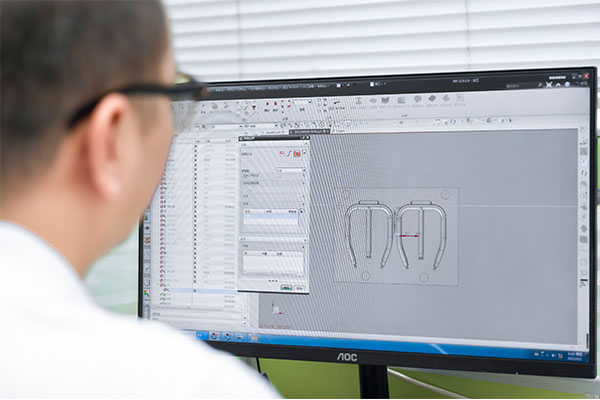
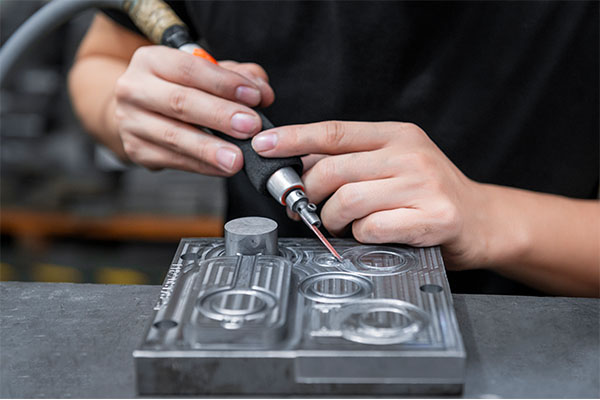
Review silicone bristle geometry, head substrate, handle connection, and any cover. Check draft, root thickness, and release paths before approving a tool concept.
STEP 3: Material and Color Preparation
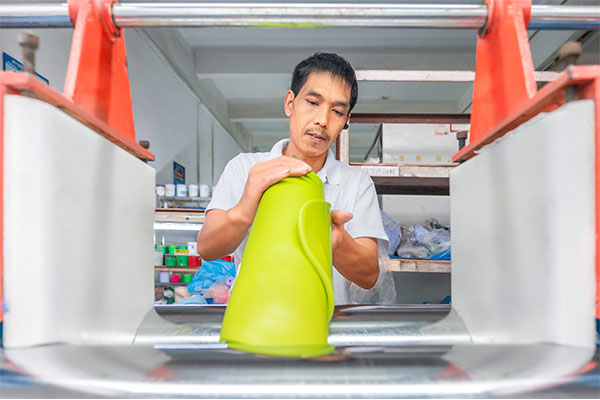
Confirm the silicone bristle grade and pigment. Identify separate head, handle, and connector materials, then record the approved specification for each component.
STEP 4: Silicone Molding
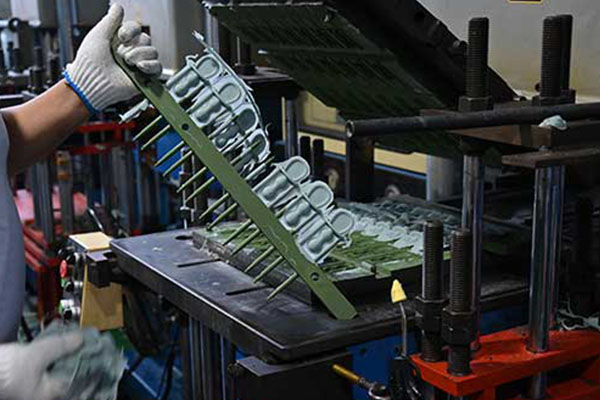
Select a molding and assembly route after material and tool review. Confirm whether compression molding, liquid silicone molding, or overmolding is available for this design.
STEP 5: Demolding and Trimming
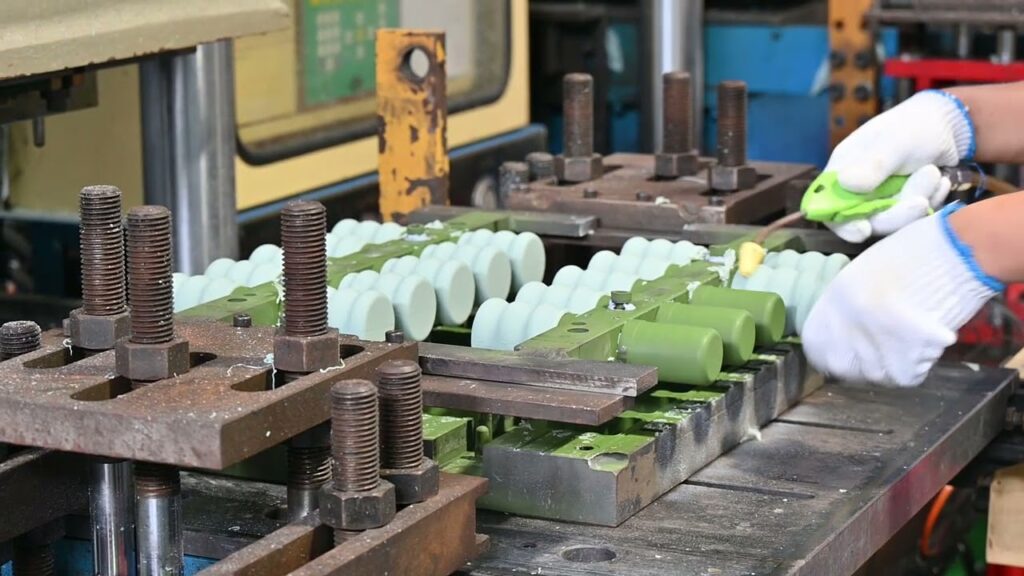
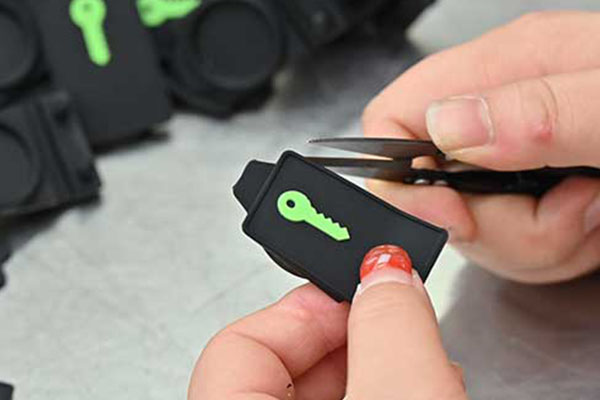
After forming, inspect bristle roots, head edges, flash-prone areas, and handle transitions. Trim without leaving sharp edges, loose fragments, or distorted cleaning elements.
STEP 6: Branding and Assembly
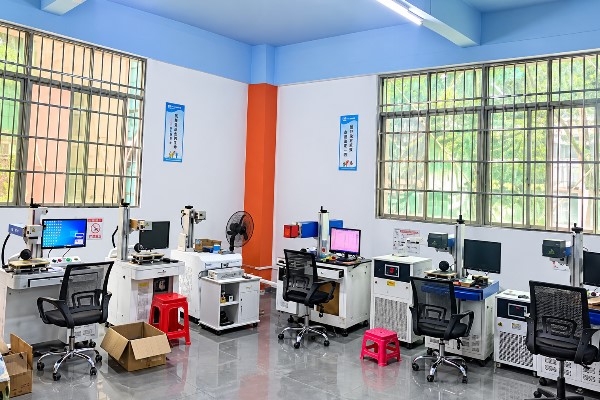
Apply the approved molded mark or print to its specified surface. Assemble covers and separate components, then check logo position, component fit, and appearance.
STEP 7: Quality Inspection
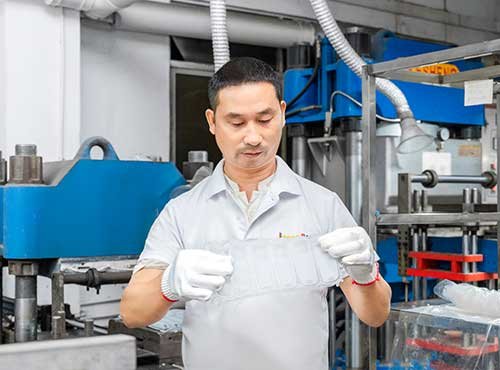
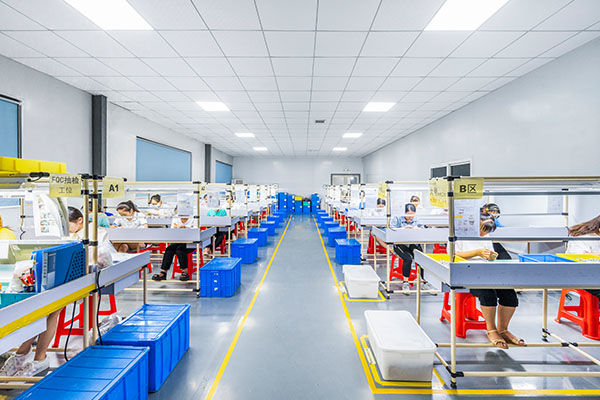
Compare each finished brush with the approved sample and specification. Perform flex, retention, or other tests only under agreed methods and acceptance criteria.

STEP 8: Protective Packaging and Shipment
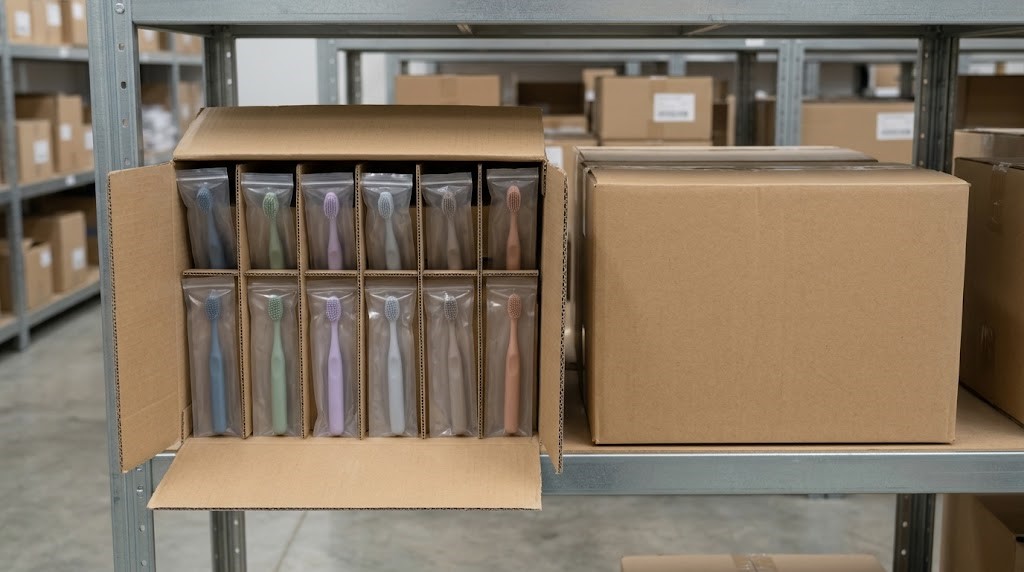
Pack brushes to protect silicone bristles from compression. Check unit counts, labels, inserts, and carton marks before preparing shipment to the agreed destination.
Silicone Toothbrush Quality Control
Quality control should protect the approved design, not merely confirm that a brush is present. The control plan must distinguish appearance review, dimensional inspection, functional verification, and regulatory evidence.
AQL 2.5 / 4.0 Standard Inspection
We run final random sampling plans to verify batch consistency:
AQL 2.5
Critical / Major Defects
AQL 4.0
Minor Visual Flaws
Another inspection standard can be used when specified in the purchase order.
Approved Sample Control
The approved sample should define head outline, cleaning-element appearance, handle geometry, color, logo, cap or case fit, and packaging presentation.
Incoming Material Review
Confirm the identified material, pigment, purchased components, and available project documents against the approved specification.
The review does not substitute for finished-product compliance testing.
In-Process Inspection
Review incomplete molding, flash, damaged elements, color variation, surface contamination, and distortion at the head-to-handle transition.
Dimensions and Geometry
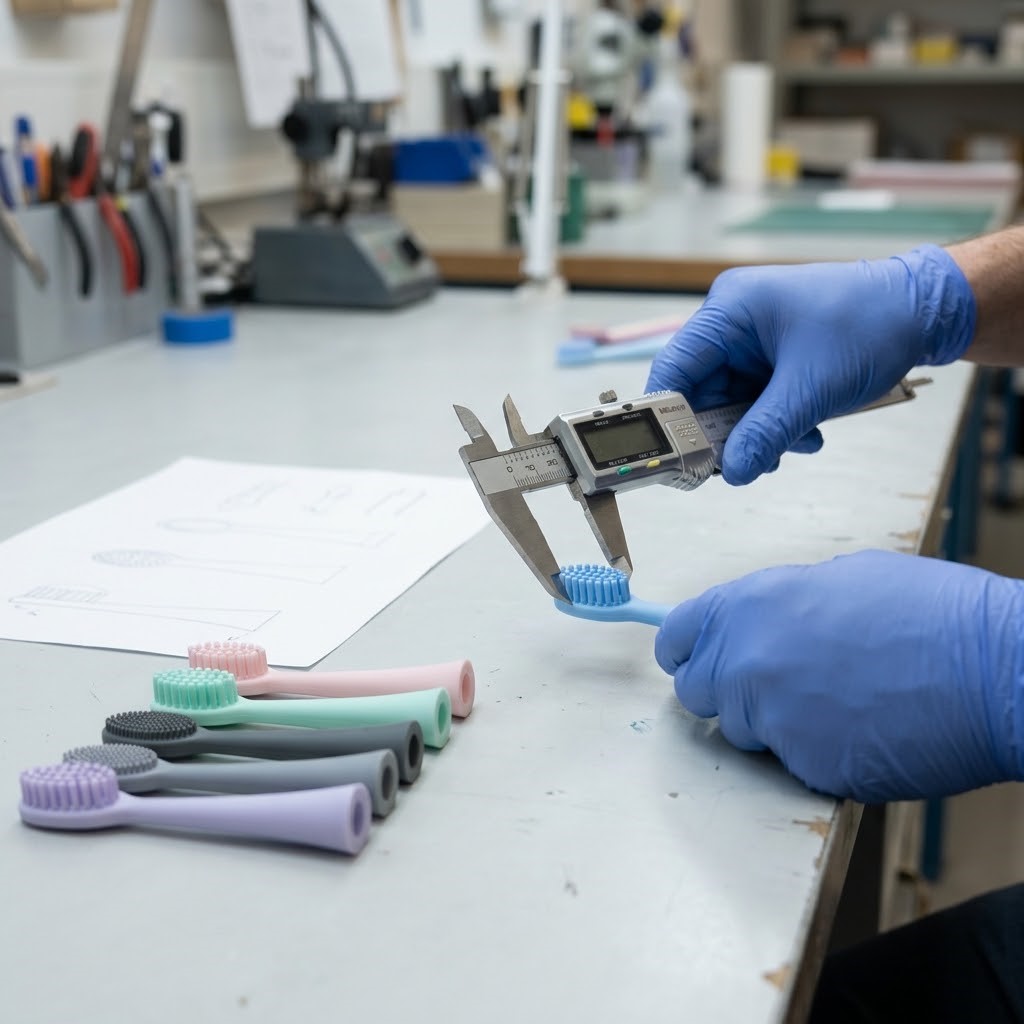
Check the head, handle, cleaning-element height, spacing, and any interface dimensions against approved drawings or sample limits.
Branding and Assembly
Verify logo position, edge definition, color, cap retention, and assembled-part fit where applicable. Printed-logo durability needs a separately agreed method.
Cleaning-Element Flex and Retention
Agree on a finished-brush method for checking element flex, root tears, loose fragments, and deformation after repeated use. Set sample size and pass/fail limits before testing.
Packaging Protection
Confirm unit count, protective orientation, labels, inserts, barcode readability, and carton marks. Packaging must prevent permanent compression or deformation of the cleaning elements during transit.
Silicone Toothbrush Packaging Options
Select packaging that protects the cleaning elements and supports the sales channel.

Bulk Packaging
Individual bags, grouped bags, or compartment trays can control packing cost for distributors and institutional programs while keeping brush heads separated and identified.
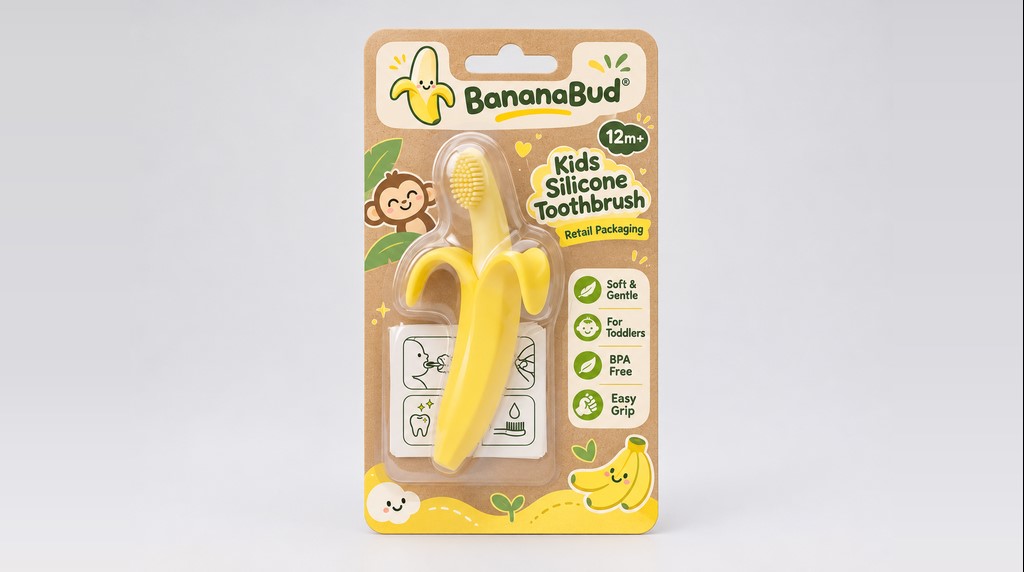
Retail Packaging
Blister packs, paperboard cards, or printed boxes create a shelf presentation for brands. Confirm protective clearance, required warnings, barcode position, and local labeling before release.
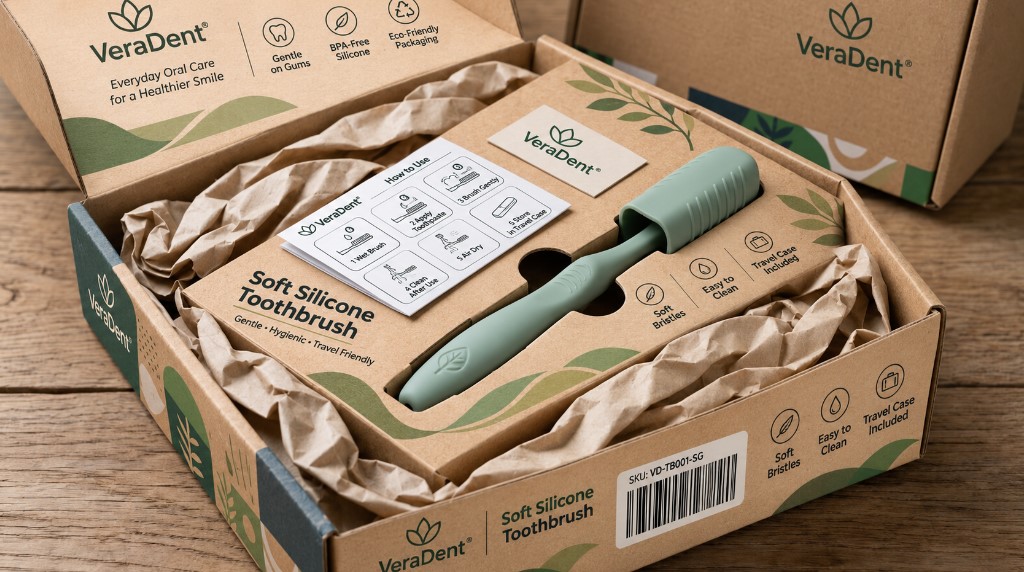
Ecommerce Packaging
Unit packs, SKU labels, inserts, and outer-carton marks can be prepared for marketplace fulfillment. The package should prevent head deformation during storage and distribution.
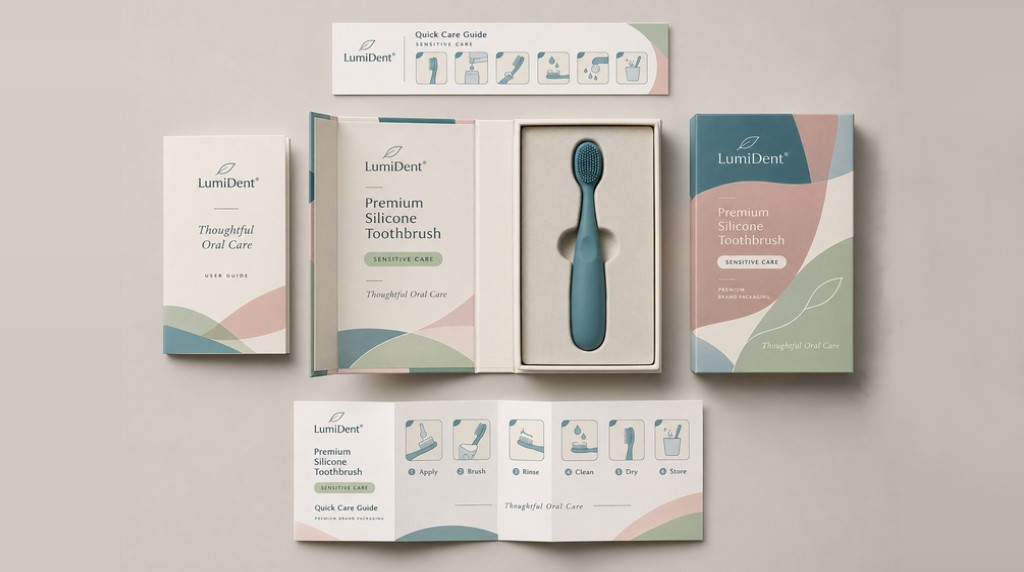
Premium Brand Packaging
Protective cases, printed sleeves, gift boxes, and coordinated inserts can support a premium launch. Validate case fit, ventilation, and post-use storage instructions for the final brush.

Typical Custom Silicone Toothbrush Specifications
| Specification | Information to Define for Quotation |
|---|---|
| Product concept | Manual, finger, infant and toddler, U-shaped, folding, dual-sided, banana-shaped, or covered brush |
| Intended user | Define age group, brushing routine, supervision, and destination market |
| Head dimensions | Set length, width, thickness, profile, and cleaning-zone layout in an approved drawing |
| Cleaning elements | Set height, root geometry, spacing, profile, and count in the approved head design |
| Handle dimensions | Set length, grip form, neck geometry, and any hanging or cover interface |
| Weight | Record the approved finished-brush target and unit of measurement |
| Bristle material | LSR typically; HTV (HCR) if fine-bristle molding is feasible |
| Head material | Silicone rubber or PP; confirm bristle-to-head integration |
| Handle material | Integrated silicone handle, ABS or PP |
| Hardness | Set separate targets and methods for silicone bristles and any silicone head or handle |
| Colors and surface | Provide color references and select a molded surface finish for sample approval |
| Logo | Specify artwork, size, position, and proposed molded or printed method |
| Construction | Define one-piece, assembled, covered, folding, or other architecture |
| Molding and assembly | Select a production route after tool, material, and component feasibility review |
| Packaging options | Define head protection, unit pack, SKU labels, instructions, and carton quantity |
| MOQ | Request separate quotations for an existing platform and a new tool, where available |
| Sampling and production lead times | Confirm after design, tooling, material, and packaging requirements are reviewed |
| Inspection | Agree on the approved sample, defect criteria, sampling plan, and required tests |
| OEM and ODM scope | Define artwork changes, tooling, component development, and packaging responsibilities |
Final values and commitments belong in the approved specification and purchase order.
Why Work with RY Silicone
Silicone Manufacturing Experience Since 2012
RY Silicone is a China-based manufacturer focused on custom silicone products since 2012. For toothbrush inquiries, we begin by confirming the product architecture, intended user, market requirements, and the development scope we can support.
10,000+ m² Production Facility
RY Silicone’s 10,000+ m² figure describes its overall manufacturing facility, not space dedicated to silicone toothbrushes. The relevant tooling, molding, assembly, and packing arrangements require project-specific confirmation.
30+ Production Machines
RY Silicone operates 30+ production machines across its silicone product manufacturing activities. This factory-wide figure does not identify toothbrush-specific machines, processes, or validated production lines.
Up to 100,000 Silicone Products per Day
Factory-wide capacity is up to 100,000 silicone products per day across categories. Toothbrush output must be assessed separately by design, tooling, process, inspection, and packaging requirements; it is not a delivery guarantee.
Engineering Review Before Quotation
Before quoting, we review head geometry, cleaning-element layout, handle transition, intended user, logo position, packaging protection, and requested documentation. Feasibility, test needs, and production route are confirmed before a manufacturing proposal is finalized.
Sample-Based Production
An approved sample should establish the reference for head profile, cleaning elements, color, branding, component fit, and packaging. Any difference between the sample, drawing, or purchase order is clarified before production release.
Export Project Support
RY Silicone coordinates project specifications, available documents, packaging, and shipment preparation for overseas customers. Destination-market regulations, claim wording, testing, and certification status must be confirmed for the selected toothbrush configuration.
Silicone Toothbrush FAQ and Final RFQ
What is the MOQ for a custom silicone toothbrush?
MOQ is quoted for the chosen design rather than taken from a generic silicone-product threshold. If an existing product platform is available, its minimum can be compared with the minimum for new tooling.
Color variants, custom packaging, and assembled components also affect the quotation; send your design and target quantity for review.
Can the cleaning-element layout and handle shape be customized separately?
The head and handle can be specified separately in your design brief, but their connection must be reviewed as one structure.
Send the element layout, handle drawing, intended user, and target market.
RY Silicone will confirm whether the proposed geometry and production route are feasible before accepting the design.
Which silicone toothbrush head design is right for our product?
The right design depends on the intended user, brushing routine, head reach, cleaning-element profile, grip, and required claims.
A product-development review should resolve these choices before appearance details are finalized.
Are silicone toothbrushes suitable for babies or toddlers?
That depends on the exact age group, product design, supervision instructions, and applicable safety requirements.
Do not position a brush for infant or child use until the hazards, warnings, and finished-product evidence are reviewed.
Can a silicone toothbrush be marketed as antibacterial?
Not without substantiation for the finished product and the exact claim.
Silicone material selection alone does not prove antimicrobial performance, user hygiene, or disease-prevention benefit.
How do silicone cleaning elements compare with nylon bristles?
They differ in material, element geometry, and brushing feel. Compare finished prototypes against the intended user requirements, cleaning method, durability criteria, and applicable safety evidence.
Neither material should be described as cleaning better or being gentler without suitable comparative evidence for the specific designs.
What quality checks should be agreed before a bulk order?
Approve a reference sample and define dimensions, cleaning-element appearance, color, logo placement, and packaging criteria.
Agree on defect classes, a sampling plan, and any flex, retention, or finished-product tests before production. Inspection of appearance alone does not establish cleaning performance or regulatory compliance.
Can you provide oral-contact or compliance documents?
Available documentation depends on the selected silicone, pigments, inks, components, target market, and required standard.
Please share the exact requirement so its scope can be checked.
Raw-material paperwork is not proof for every finished configuration.
How should a silicone toothbrush and optional cover be packaged?
The unit pack should protect cleaning elements from compression and keep the SKU, instructions, and required warnings clear.
For a matching silicone cover, specify head clearance, retention, ventilation, and drying guidance. Choose the outer format for bulk distribution, retail display, or ecommerce fulfillment.
What do you need to quote a silicone toothbrush project?
Please provide:
- Target user and intended use
- Design files, drawings, 3D files, reference samples, or concept images
- Head and cleaning-element requirements
- Handle, cap, case, or assembly concept
- Target order quantity and destination country
- Color reference and logo artwork
- Packaging format and labeling requirements
- Required documents, standards, tests, and approved claim wording
- Target launch date