A phone case picks up skin oil, pocket lint, makeup, sunscreen, food residue, and dye from clothing every day. Most of that soil is easy to remove, but an aggressive cleaner can fade printing, dull a soft-touch finish, loosen a lining, or damage a bonded magnetic assembly.
What Is the Safest Way to Clean a Silicone Phone Case?
Quick Answer: Remove the phone, clear away loose grit, and wipe the case inside and out with a soft, slightly damp, lint-free cloth. If the case maker permits washing, use a small amount of mild soap for remaining dirt, remove all cleaner residue, and let the case dry completely at room temperature before reinstalling the phone. Do not assume that alcohol, baking soda, bleach, peroxide, soaking, or hot water is safe for every silicone case.
This article covers removable silicone and silicone-like smartphone cases. It does not cover the phone itself, powered battery cases, charging accessories, or protective covers for earbuds. For the material-wide principles behind product care, see How to Clean Silicone.
Before You Start: Confirm the Case Material and Construction
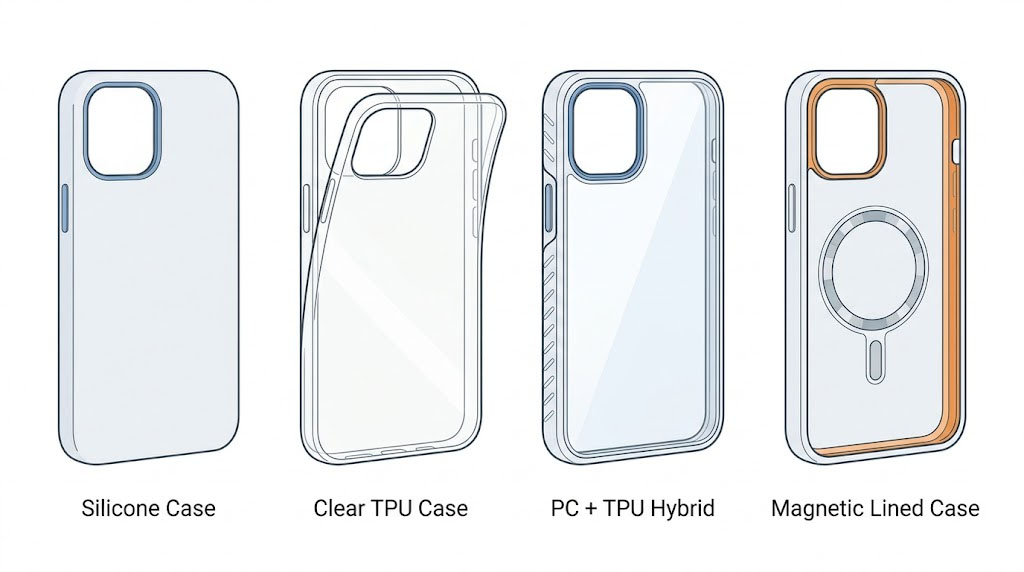
“Silicone phone case” is often used as a general name for any soft case. The product may actually be silicone rubber, thermoplastic polyurethane (TPU), polycarbonate, TPE, or a combination of several materials. A soft-touch coating, printed graphic, microfiber lining, rigid frame, adhesive, or magnetic ring can set the cleaning limit even when the exterior contains silicone.
Check the packaging, product page, molded material mark, and care instructions before using anything stronger than water. If the material is unknown, treat the case as a coated, multi-material product and start with the gentlest method.
| Case type | Common construction | Safest starting method | Main caution |
|---|---|---|---|
| Silicone case | Silicone exterior, sometimes over a rigid shell or microfiber lining | Slightly damp lint-free cloth | Do not saturate a lining or abrade the surface finish |
| Clear flexible case | Often TPU rather than silicone | Damp cloth; mild soap only when approved | Yellowing may be polymer aging, not removable dirt |
| Hybrid clear case | Rigid polycarbonate back with flexible TPU edges | Gentle wiping of both materials and their seam | One cleaner may affect the two materials differently |
| Printed or coated case | Polymer shell with ink, transfer, coating, or decoration | Damp-cloth spot cleaning | Alcohol and abrasion may fade the design or change gloss |
| Magnetic or MagSafe case | Polymer shell with embedded magnets and bonded layers | Low-moisture wiping | Avoid unapproved soaking, heat, and liquid at bonded edges |
| Battery or electronic case | Polymer exterior with electrical components and connectors | Follow the device maker’s instructions only | Do not immerse or rinse |
Do not assume the case is washable because the phone has a water-resistance rating. The phone and case are separate products, and moisture trapped between them can carry grit into openings or keep a lining damp.
What You Need
Prepare two soft microfiber cloths, cool or lukewarm water, a clean towel, and a ventilated indoor drying area. Add mild fragrance-free soap or a very soft detail brush only when the case maker permits them. You rarely need a specialty “silicone cleaner.”
How to Clean a Silicone Phone Case in Five Steps
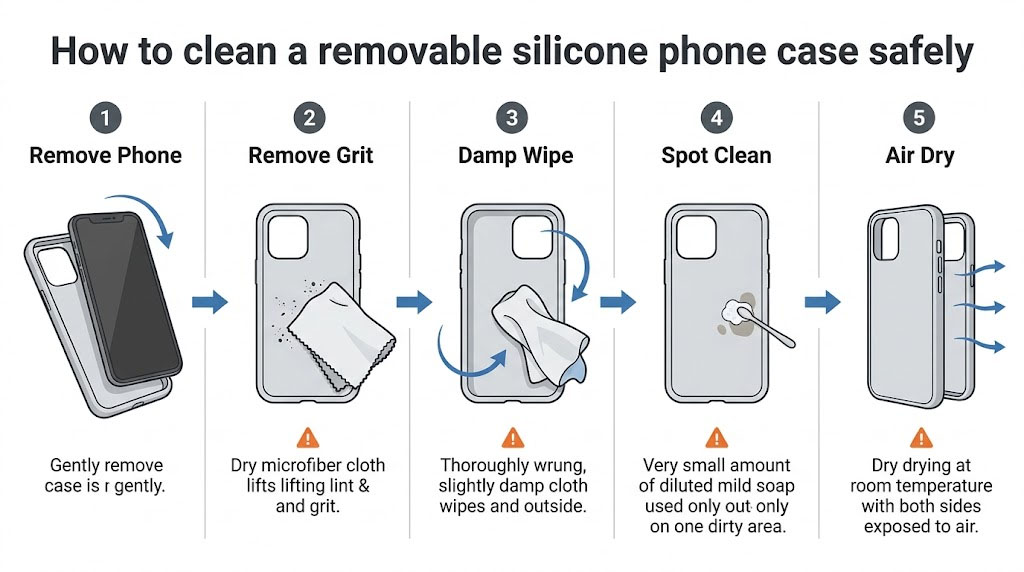
1. Remove the Phone and Detachable Accessories
Take the phone out before introducing moisture. Remove detachable rings, straps, card holders, and decorative inserts when their instructions allow it. Release one corner at a time instead of sharply folding or stretching thin areas around the buttons and camera opening.
Never rinse a normal case while it is installed. Moisture can collect around the charging port, speakers, buttons, cameras, and the gap between the case and phone.
2. Remove Loose Dust and Inspect the Case
Use a dry microfiber cloth to lift lint, sand, and grit from both sides. Pay attention to the camera rim, button covers, raised screen edge, charging cutout, corners, and the area around any magnetic ring.
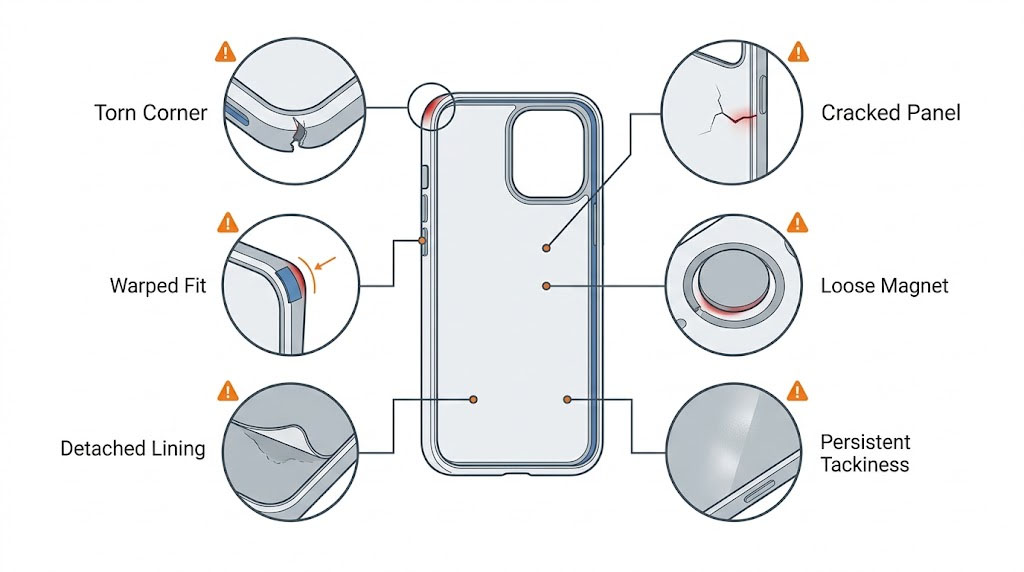
Inspect for tears, warping, peeling layers, exposed adhesive, loose magnets, permanent tackiness, cracks, and a detached lining. Cleaning can improve hygiene and appearance, but it cannot restore structural protection.
3. Wipe the Inside and Outside With a Damp Cloth
Dampen a clean lint-free cloth with water and wring it thoroughly. It should be slightly damp, not dripping. Wipe the exterior with light circular motions, then clean the interior and corners. Do not flood button openings or saturate a fabric or microfiber lining.
This is the safest default when no stronger method is expressly approved. Apple instructs users to clean its silicone, clear, polycarbonate, and TPU iPhone cases with a soft, slightly damp, lint-free cloth.
4. Treat Remaining Dirt Only as the Manufacturer Allows
If the instructions permit mild soap, dilute a small amount in water, dampen the cloth, and gently wipe the dirty area. OtterBox says its cases can generally be cleaned with mild soap and water, while Google’s current Pixel case instructions emphasize water, gentle circular wiping, cold rinsing, and no harsh cleaner, hard scrubbing, or soaking.
For uncoated grooves, a very soft brush may help when the maker allows it. Use minimal pressure. Do not brush a printed image, soft-touch coating, glossy clear surface, metallic decoration, or flocked lining unless its care instructions specifically permit that method.
5. Remove Residue and Dry Completely
Wipe away cleaner with a second cloth slightly dampened with clean water, or rinse only when the product instructions call for rinsing. Continue until no foam or slippery detergent film remains.
Pat the case dry, then leave both sides exposed to air at room temperature. Check seams, cutouts, the lining, and bonded areas before reinstalling the phone. Do not accelerate drying with a hair dryer, radiator, oven, or direct sunlight.
How to Remove Oil, Makeup, Dye, and Sticky Residue
Skin Oil, Lotion, and Sunscreen
Start with a damp cloth. If soap is approved, use a small amount of diluted mild soap to lift the oily film, then remove the soap completely. Clean the inside edge as well as the exterior because skin oil and lotion collect around the rim.
Fresh sunscreen should be blotted and cleaned promptly. Sunscreen formulations contain different oils, solvents, and UV-filter ingredients, so do not assume one stain treatment works for every coating or plastic.
Makeup and Fabric Dye
White and pastel cases easily show foundation, lipstick, and color transfer from denim or bags. Use several gentle passes instead of one aggressive scrub. Work from the outside of a spot toward its center so you do not spread it.
If the color no longer transfers to the cloth but remains visible after approved cleaning, it may have migrated into the coating or polymer. More abrasion may remove the finish without removing the embedded color.
Ink and Marker
Do not automatically reach for rubbing alcohol, acetone, or nail-polish remover. These liquids may fade the case color, soften or strip a coating, damage printing, or affect adhesive. Follow the maker’s stain guidance. If no chemical treatment is approved, use the damp-cloth method and accept that some ink stains may remain.
Dirt in Corners and Cutouts
Use the corner of a microfiber cloth or an approved very soft brush. Avoid toothpicks, pins, knife tips, and metal picks. A hard tool can puncture thin silicone, scratch a rigid insert, or push grit farther into a seam.
A Case That Still Feels Sticky
Stickiness may be removable oil, lotion, adhesive transfer, or old soap. Reclean with water and an approved mild soap, remove the residue, and allow the case to dry fully before judging the result.
If a clean, dry case remains uniformly tacky or an oily film quickly returns, the soft-touch coating, adhesive, or polymer may be degrading. Stronger solvent is not a reliable repair and may make the finish worse. Persistent tackiness, peeling, or exposed adhesive is a replacement signal.
How to Clean a White Silicone Phone Case
A white case can look dirty because of removable soil, transferred dye, a surface stain, or a permanent material change. Start by removing dust, then wipe the mark with a damp microfiber cloth. Use diluted mild soap only if the case instructions permit it, remove the residue, and dry the case completely.
Treat denim, makeup, food, and ink transfer early. Repeating a gentle method is safer than adding pressure. A rough eraser, scouring powder, or toothbrush can change the surface sheen and create a clean-looking patch that is actually abrasion damage.
Do not use chlorine bleach or hydrogen peroxide as a universal “whitening” method. Apple specifically tells users not to use cleaners containing hydrogen peroxide on its iPhone cases and also prohibits abrasives and household cleaners. A stain that has penetrated the finish may not be removable without damaging it.
How to Clean a Yellow, Clear, or Transparent Phone Case
First separate surface contamination from material aging. Many products marketed as “clear silicone cases” are actually TPU or hybrid cases with a polycarbonate back and flexible TPU edge. For a deeper material comparison, see Silicone vs. TPU.
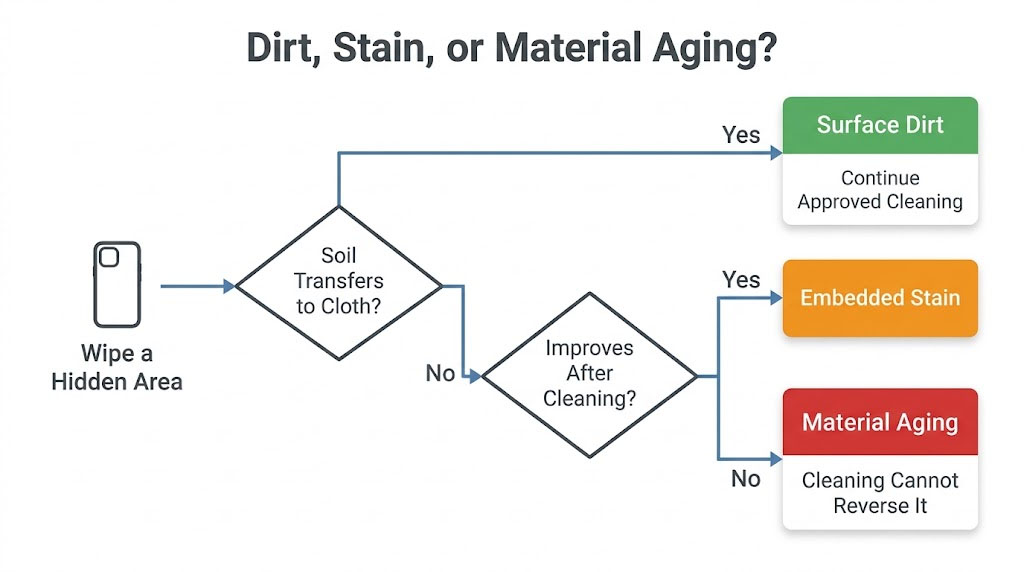
Use this test:
- Wipe a hidden area with a damp lint-free cloth.
- If soil transfers to the cloth and the test area becomes clearer, at least part of the discoloration is on the surface.
- If the case remains evenly amber or yellow after safe cleaning, the polymer or coating has probably changed.
A NIST-led study of one aromatic TPU formulation without added UV-absorbing stabilizers observed substantial yellowing during controlled UV exposure. Cases and formulations age differently, but the study supports an important distinction: photo-oxidation changes the material itself.
Cleaning can remove a yellow-looking film made of oil and grime; it cannot reliably reverse yellowing caused by UV, heat, or polymer degradation. OtterBox reaches the same practical conclusion for degradation-related clear-case yellowing. If approved cleaning does not restore clarity, replacement is safer than toothpaste, bleach, peroxide, abrasive powder, or prolonged sunlight.
How to Clean an Apple Silicone Case
Apple’s case-specific instructions are conservative:
- remove the iPhone from the case;
- use a soft, slightly damp, lint-free cloth;
- wipe both the exterior and interior; and
- let the case dry before reinstalling the phone.
Apple says not to use window cleaners, household cleaners, aerosol sprays, solvents, ammonia, abrasives, or cleaners containing hydrogen peroxide on its iPhone cases.
This guidance matters because an Apple case is not simply a test piece of unpigmented silicone rubber. Apple’s current Silicone Case with MagSafe includes a silicone exterior, microfiber lining, and built-in magnets. The complete construction—not only the silicone—determines how it should be cleaned.
Apple separately permits certain alcohol wipes on compatible iPhone exterior surfaces. That device instruction is not permission to use alcohol on the case. Follow the dedicated case section instead.
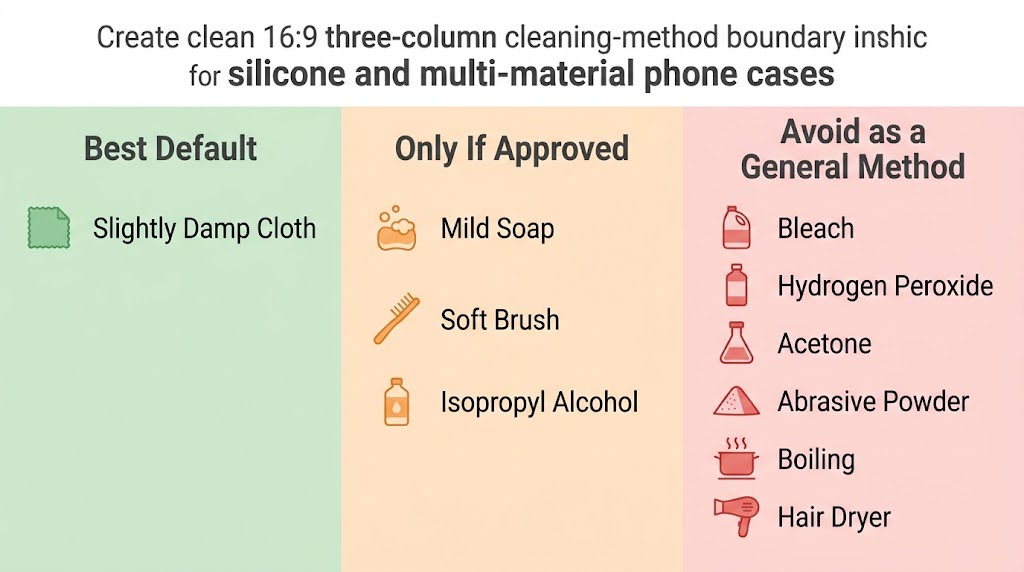
Are Soap, Baking Soda, Alcohol, Bleach, or Heat Safe?
| Method | Practical boundary | Main risk |
|---|---|---|
| Slightly damp lint-free cloth | Best default for an unknown or multi-material case | Do not leave the lining or seams wet |
| Mild soap and water | Use when the exact case instructions permit it | Too much detergent, rinsing, or soaking may affect a lining or bonded part |
| Baking soda or toothpaste | Not a universal phone-case method | Abrasive particles may dull a finish, scratch clear plastic, or wear printing |
| Rubbing or isopropyl alcohol | Use only when the case maker approves the product, concentration, and contact method | May fade ink or affect a soft-touch coating, adhesive, or rigid insert |
| Hydrogen peroxide | Not a general whitening treatment; Apple expressly excludes it for its cases | May alter color, coatings, and other components |
| Chlorine bleach | Do not use unless both the case maker and cleaner label authorize the application | Discoloration, coating or adhesive damage, and dangerous mixing reactions |
| Vinegar, acetone, or another unapproved cleaner or solvent | No universal approval for phone cases | Clouding, swelling, color loss, coating damage, or weakened adhesive |
| Dishwasher, boiling, hair dryer, or oven | Avoid unless the exact model has a written procedure | Heat and mechanical action can damage coatings, adhesives, case shape, or the bonded magnetic assembly |
| Direct sunlight for “bleaching” | Not a cleaning method | UV and heat may accelerate discoloration and aging |
Can You Disinfect a Silicone Phone Case?
The CDC advises following the manufacturer’s instructions for electronics and notes that routine cleaning is enough in most household situations. If disinfection is genuinely needed, clean visible soil first and use only a disinfectant the case maker approves; do not transfer a phone-screen instruction to a separate case. Never mix bleach with alcohol, peroxide, ammonia, vinegar, or another cleaner.
How Often Should You Clean and Keep a Silicone Phone Case Clean?
After cleaning, pat away visible water and leave the case in a ventilated indoor area. Let the inside, outside, lining, cutouts, and bonded areas dry. Clean the phone separately according to its own instructions, and reinstall the case only when both surfaces are dry.
Clean the case whenever it looks or feels dirty; use and exposure matter more than a fixed calendar. Clean promptly after contact with makeup, sunscreen, food, sugary drinks, sand, ink, strongly dyed fabrics, or heavy sweat.
Periodic removal also lets you clear trapped grit before it rubs against the phone’s finish.
When Should You Replace the Case?
Replace the case when cleaning cannot correct a condition that affects fit, structure, or safe use:
- tears around the corners, buttons, camera rim, or charging opening;
- permanent stretching, looseness, or warping;
- cracks in a rigid panel;
- loose magnets or separated bonded layers;
- a peeling coating, detached lining, or exposed adhesive;
- permanent tackiness after gentle cleaning and full drying;
- severe yellowing accompanied by brittleness or cracking; or
- damage after a significant impact that may have reduced protection.
Uniform color change alone is mainly an appearance issue, but a clean case is not necessarily a protective case. Fit and structural condition matter more than making the product look new. See Are Silicone Cases Protective? for the broader protection factors.
Frequently Asked Questions
Can I Wash a Silicone Phone Case With Soap and Water?
Sometimes. A damp cloth is the lowest-risk default. Use diluted mild soap when the exact case maker permits it. Do not assume that lined, printed, magnetic, electronic, or multi-material cases can be immersed or rinsed.
Can I Use Rubbing Alcohol on a Silicone Phone Case?
Only when the case maker approves alcohol for that model and finish. Bare silicone, TPU, printed cases, coated cases, and MagSafe assemblies do not share one compatibility rule. Apple’s separate alcohol guidance for certain device surfaces does not apply automatically to an Apple silicone case.
Can I Use Baking Soda to Clean a Silicone Phone Case?
Use it only when the manufacturer specifically recommends it. Baking soda is mildly abrasive and may change the sheen of a smooth case, scratch a clear coating, or wear a printed design. A brand-specific method for one clear case is not a universal silicone-case recipe.
How Do I Clean a Dirty White Silicone Phone Case?
Start with a damp microfiber cloth. If approved, add a small amount of diluted mild soap, then remove the residue and dry the case. Treat dye transfer early, but understand that a pigment that has migrated into the coating or polymer may be permanent.
Why Did My Clear Phone Case Stay Yellow After Washing?
The discoloration may be inside the material rather than on its surface. Cleaning removes oil and dirt, but it cannot reverse UV- or heat-related polymer degradation. Many flexible clear cases are TPU, not pure silicone.
Why Is My Silicone Case Sticky After Cleaning?
It may still have detergent, oil, or lotion on it. Wipe it again with clean water and let it dry fully. If tackiness remains or returns, a coating, adhesive, or polymer may be degrading, and replacement is safer than stronger solvent.
Designing Custom Silicone Phone Cases for Easier Cleaning
For a consumer, care begins after purchase. For a brand developing custom silicone phone cases, cleanability begins with the product specification.
Product teams should define and validate:
- the silicone, TPU, TPE, polycarbonate, lining, insert, and surface-finish system;
- color stability and resistance to sebum, sunscreen, cosmetics, and denim dye;
- durability of printing, coatings, adhesives, magnets, and rigid frames; and
- complete-case performance after repeated cleaning, drying, abrasion, and UV-aging cycles.
If a brand wants to claim alcohol or disinfectant compatibility, test the complete production-representative case—not only an unpigmented silicone coupon. Ink, primer, coating, adhesive, microfiber, magnets, and plastic inserts can have different chemical resistance.
Material choice also affects appearance and care claims. Review Silicone vs. Plastic Phone Cases before treating all flexible or clear constructions as equivalent.
References
- Apple Support: How to Clean Your Apple Products
- Apple: iPhone 17 Silicone Case with MagSafe
- Google Pixel Help: Clean Your Pixel Case
- OtterBox FAQ: How to Clean a Phone Case
- OtterBox: How to Clean a Clear Phone Case
- NIST: Graphene/Polymer Nanocomposite Degradation by Ultraviolet Light
- CDC: When and How to Clean and Disinfect Your Home