Many people might think cleaning silicone is easy. After all, it looks smooth and durable.
But the truth is, many people damage their silicone items without knowing it. They use the wrong tools or harsh cleaners and end up with sticky surfaces, strange smells, or faded colors.
With the right method, silicone is very easy to clean and can last for years. This guide will walk you through effective ways to clean silicone products.

Why Does Silicone Require Special Care When Cleaning?
Silicone is durable and easy to clean. But it still needs special care. This helps it last longer and stay in good shape.
Although silicone is smooth, its surface can catch oil and dust. These things stick to it easily. They can make the surface feel sticky and look dirty. Over time, they may cause germs and dirt to build up.
Silicone is soft. It can be damaged if cleaned the wrong way. Strong chemicals may change its color or make it age faster. They can also break down the material. Rough tools may scratch the surface. These scratches can trap more dirt and make it feel rough.
To keep silicone clean and safe, use soft cleaning methods. Pick mild cleaners and gentle tools. This will protect the silicone and help it work well for a long time.
5 Common Ways to Clean Silicone at Home
Here are five easy ways to clean silicone at home. They use simple tools to get the job done safely and effectively.
Warm Water and Dish Soap: The Basic Cleaning Method for Silicone
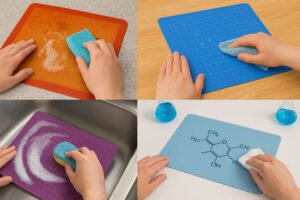
Warm water and mild dish soap offer a simple and reliable way to clean silicone. This method works well for items like silicone molds, placemats, and phone cases.
Start by soaking the item in water heated to 40–50°C. Add a few drops of mild dish soap, then let it sit for about 30 minutes. This helps loosen grease and stains. After soaking, scrub gently using a soft brush or sponge to clean the surface. Rinse thoroughly with clean water and leave the item to air dry.
Avoid using cleaners that contain bleach or strong acids and bases. These can damage the silicone surface or make it brittle. If the item is covered in grease, wipe it down with a tissue before soaking. This step can make cleaning more effective.
Dishwasher Cleaning: A Fast and Easy Modern Option
For silicone kitchen tools marked as dishwasher-safe, like baking molds or placemats, a dishwasher can save time and effort.
Place the silicone item on the top rack. Keep it away from sharp metal tools. Use a gentle cycle with mild detergent.
However, some non-food-grade silicone, such as decorative phone cases, may warp in high heat or strong water pressure. Always check the heat resistance on the packaging before using the dishwasher.

Vinegar Soaking: A Natural Way to Remove Odors
White vinegar is great for removing smells from silicone cups and placemats. It is a safe and eco-friendly option.
Mix vinegar and warm water in a 1:1 ratio. Soak the silicone item in the solution for 4 hours. If the smell is strong, soak for 8–10 hours. After soaking, scrub gently with a soft brush. Then rinse it well to remove any vinegar smell.
Do not soak for more than 12 hours. The acid may cause slight fading or dullness. If the item has printed designs, test a small area first to make sure the vinegar does not damage the pattern.
Lemon Juice Cleaning: A Natural Way to Brighten Silicone
Lemon juice is eco-friendly and helps bring back the shine of silicone placemats and molds. It works well on stains from juice or sauces.
Squeeze the juice from 2–3 lemons. Mix with warm water in equal parts. Soak the silicone item in the solution for 1 hour. Then scrub the surface with a sponge or soft cloth. Rinse well with clean water. The surface will look cleaner and brighter. Citric acid in lemon juice also helps remove stains like blueberry or tomato sauce.
After cleaning, you can leave the item in the sun for up to 30 minutes to help kill germs. But do not leave it in the sun too long, or the silicone may age faster.
Alcohol Wipe: A Quick Way to Disinfect
70%–90% rubbing alcohol or medical alcohol is a good choice for cleaning silicone phone cases or medical items. It removes sticky residue and helps disinfect the surface.
Use a clean cloth or cotton swab. Dip it in alcohol and gently wipe the silicone surface. Pay extra attention to sticky areas and small gaps. If you’re cleaning food-grade items like silicone straws, rinse with water afterward to remove any alcohol left behind.
Be careful with printed or colored silicone. Test a small area first, as alcohol may fade the design or damage the coating. Also, avoid alcohol with more than 90% strength. It may make the silicone surface dry and brittle.

3 Advanced Methods for Stubborn Stains
Baking Soda for Grease: A Powerful Helper for Deep Cleaning
Baking soda is great for cleaning silicone bakeware and molds. It helps break down stubborn grease with its gentle scrubbing action.
To use it, sprinkle baking soda evenly over the silicone surface. Add a little warm water and mix it into a paste. Gently rub the greasy areas with your fingers or a soft cloth. Let it sit for 10 to 15 minutes. This gives the baking soda time to absorb the grease. Then rinse the item well with warm water.
If the grease is very heavy, you can add one drop of mild dish soap to the paste. This will improve the cleaning power. But avoid scrubbing too hard to protect the silicone from scratches. Baking soda also helps remove light odors. It is a good choice for cleaning silicone tools used over a long time.
High-Heat Baking: A Special Method to Kill Germs and Remove Odors
High heat is an effective way to clean silicone, especially for removing smells and bacteria from heat-resistant kitchen items.
First, check the temperature limit of the silicone. Then place the clean item in an oven preheated to 120–150°C. Bake it for 10 to 15 minutes. The high heat helps remove bad smells and kills surface germs. After baking, wash the item with warm water and mild dish soap.
However, this method only works for food-grade silicone without any printing or coating. Heat can cause designs to fade or coatings to peel off. Also, make sure there is no oil left on the surface before baking. Otherwise, the grease may harden and become harder to clean.
Acetone Cleaning: A Precise Method for Silicone Craft Molds
Acetone is useful for cleaning resin molds made of silicone. It removes cured resin quickly and works well for craft or jewelry molds.
Wear gloves during use. Pour a small amount of acetone onto a clean cloth or cotton swab. Gently wipe the stained areas on the mold. Right after that, rinse the silicone with plenty of water. This prevents acetone from staying on the surface too long.
Keep in mind that acetone is a strong solvent. Use it only in small areas. Do not let it sit on the silicone for more than one minute. It may make the surface brittle or slightly melt. Also, never use acetone on food-grade silicone or printed items. It can damage the surface or leave behind chemical residue.

What Mistakes Should You Avoid When Cleaning Silicone?
Knowing what not to do is important. Here are a few common mistakes to watch out for.
Harsh Chemicals
Strong acids and alkaline cleaners can damage silicone. They may cause discoloration, loss of flexibility, or even cracks. Always choose mild and gentle cleaning products.
Too Much Heat
Silicone can handle heat, but extreme temperatures over time can make it age faster or change shape. Avoid boiling or baking items that aren’t made for high heat.
Scrubbing with Rough Tools
Steel wool and stiff brushes can scratch the surface. These scratches not only make the silicone look worse, but they can also trap dirt. It’s better to use soft tools to clean it safely.
Recommended Cleaning Routine
Keeping silicone products clean is straightforward. Here’s a practical step-by-step routine.
- Daily Maintenance: Soak in warm water (40-50°C) with mild dish soap for 30 minutes.
- Stubborn Stains: Treat with baking soda paste or white vinegar.
- Odor Removal: Use lemon juice or bake at 120-150°C (for heat-resistant silicone).
- Sanitization: Wipe with 70%-90% isopropyl alcohol or expose to a UV-C light for 10 minutes.
Conclusion
Cleaning silicone isn’t hard. You just need the right tools and methods. With gentle care, your silicone products can stay clean, fresh, and long-lasting.
Great silicone products start with great production. We use proven methods and top-quality silicone to bring your ideas to life. Let us help you create custom silicone products that truly stand out.