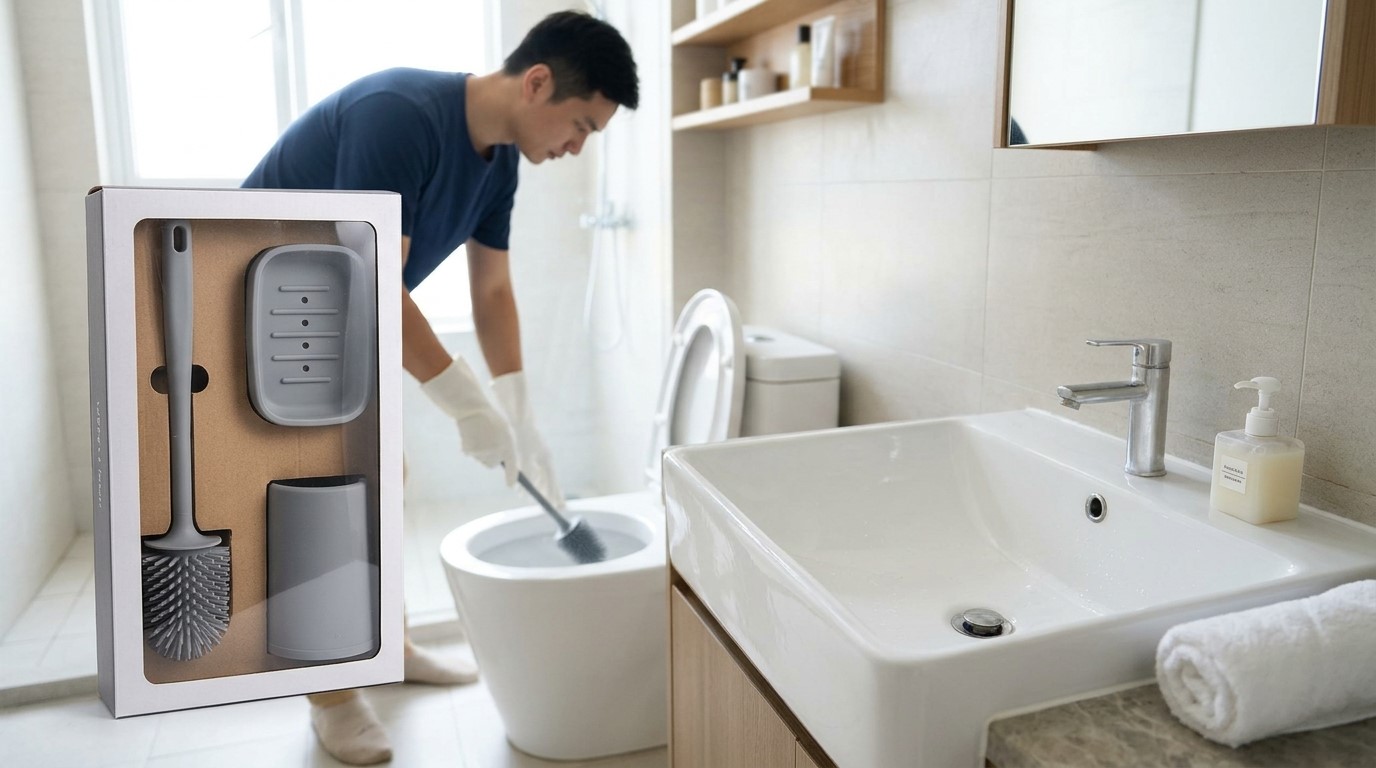
Silicone Toilet Brush Manufacturer
Custom silicone toilet brushes for effective bowl cleaning, easy rinsing, and practical storage. Customize brush heads, handles, holders, and private-label packaging.
What Is a Silicone Toilet Brush?
A silicone toilet brush is a bathroom cleaning tool that uses a flexible silicone brush head with bristles or cleaning fins to scrub toilet bowls, reach curved surfaces, and remove everyday residue as a hygienic and durable cleaning solution. Unlike conventional nylon-bristle brushes, its molded rubber head can be designed for easier rinsing, controlled flexibility, and access beneath the toilet rim.
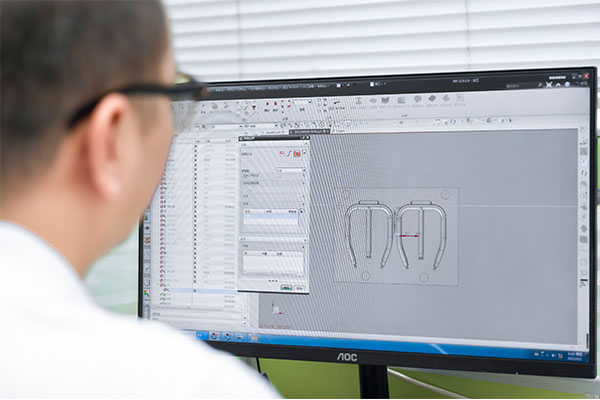
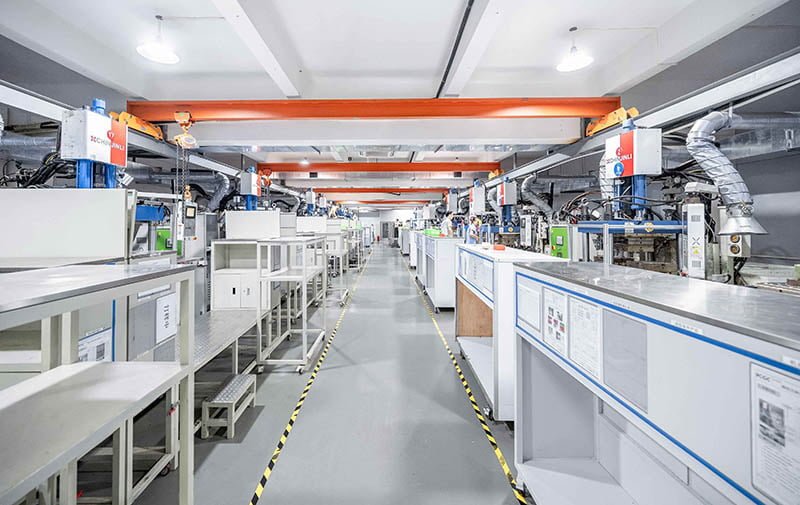
A custom (OEM/ODM) silicone toilet brush combines a selected cleaning head with your specified handle, holder, colors, and branding. RY Silicone is a China-based custom silicone manufacturer established in 2012. Its overall manufacturing facility covers 10,000+ m², operates 30+ production machines, and has a cross-category capacity of up to 100,000 silicone products per day.
Silicone Toilet Brush Manufacturing at a Glance
MOQ & Lead Times
Order quantities, tooling requirements, and sample schedules are quoted according to the selected brush design, components, and packaging.
Brush Specifications
Specify head geometry, fin flexibility, handle length, connection strength, and holder drainage to match the intended cleaning application.
Logo & Branding
Choose molded logos, suitable printing methods, and coordinated component colors for retail collections or private-label bathroom accessories.
Packaging Options
Arrange bulk cartons, individual sets, retail boxes, or e-commerce packaging around brush length, holder dimensions, and assembly requirements.
Who We Manufacture Silicone Toilet Brushes For
Develop silicone toilet brush configurations for different cleaning, retail, and distribution requirements.

Bathroom Accessory Brands
Develop coordinated toilet brush collections that complement bathroom organizers, soap dispensers, and storage accessories. Custom colors, head silhouettes, and matching holders help establish a consistent brand identity.
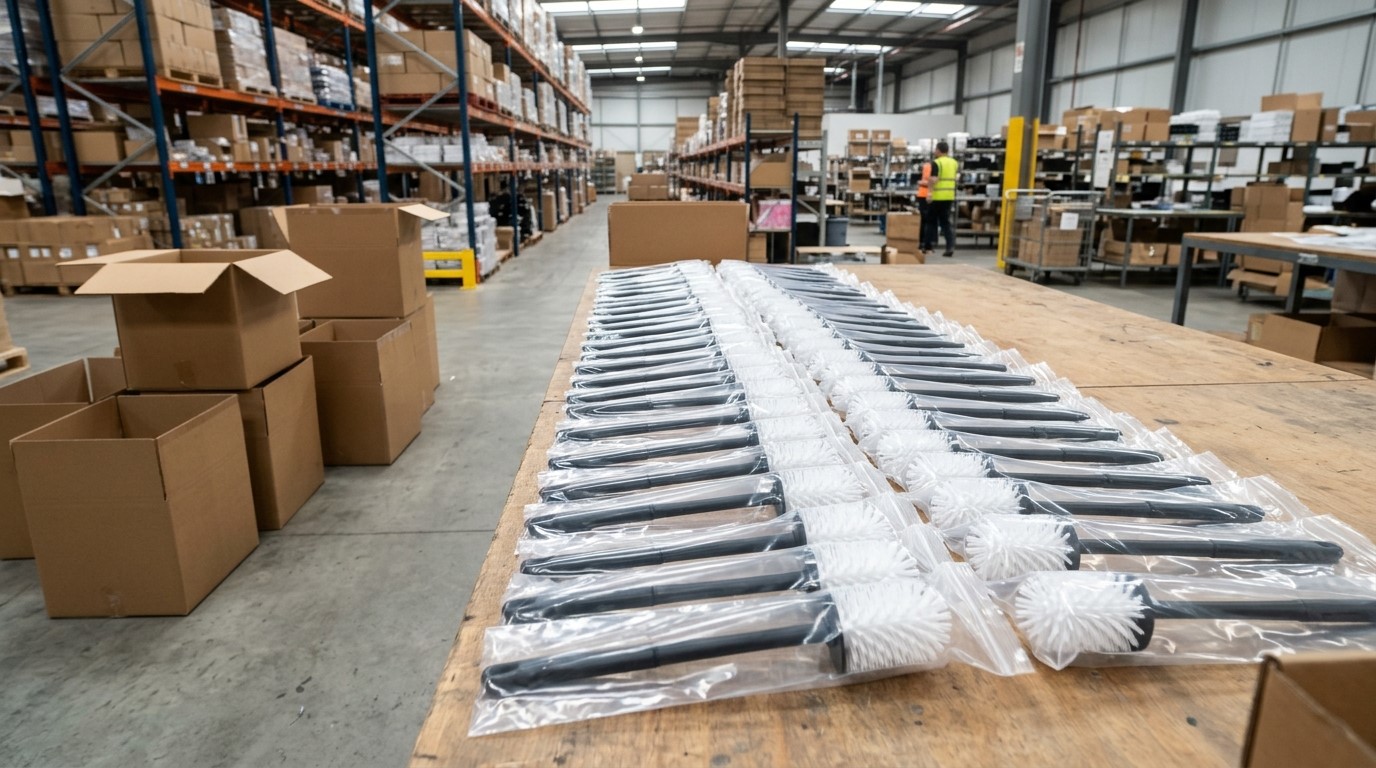
Distributors & Wholesalers
Source silicone toilet brushes in bulk for homeware distribution and cleaning supply channels. Select standard-style configurations or discuss new designs according to your target price and order volume.
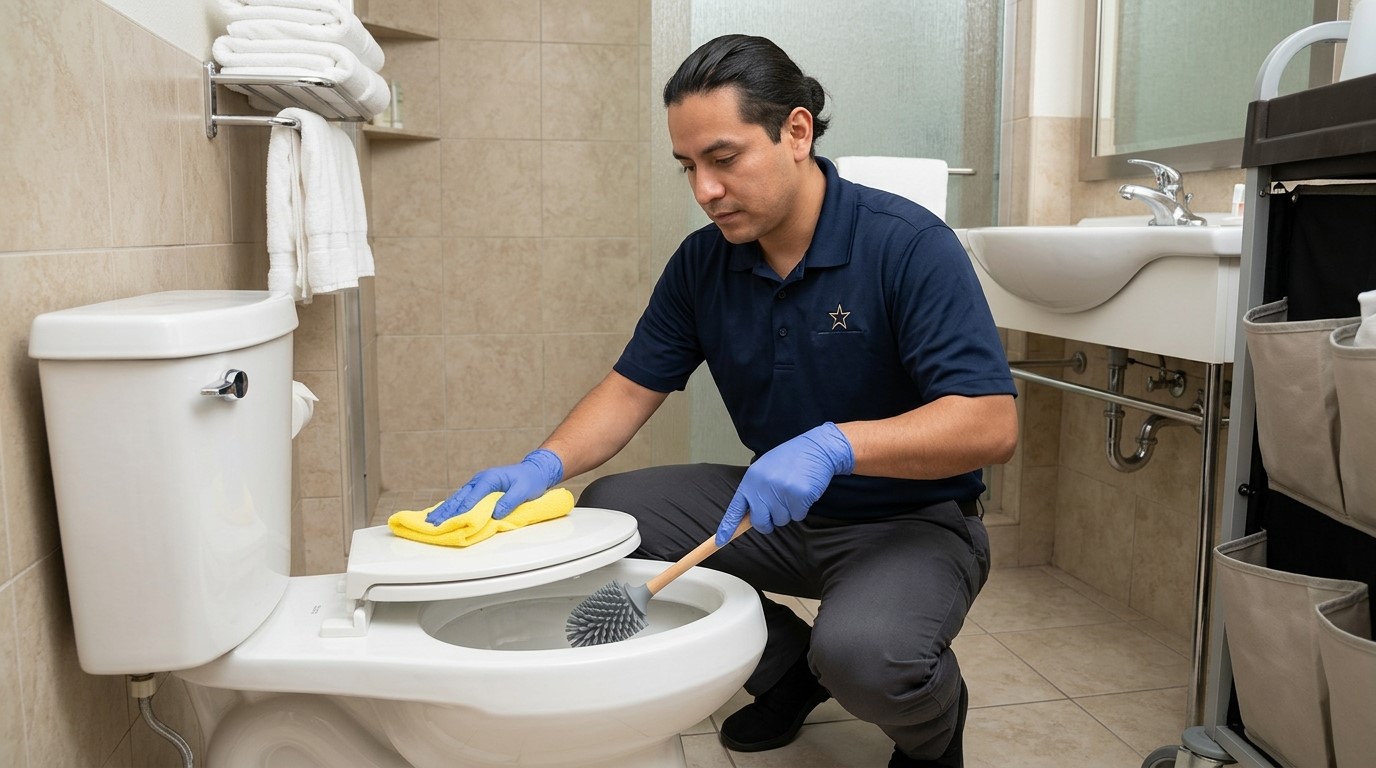
Cleaning Equipment Suppliers
Specify brushes for routine toilet maintenance in offices, hotels, and managed facilities. Prioritize handle rigidity and replaceable cleaning heads and holders that allow effective draining and accessible cleaning.
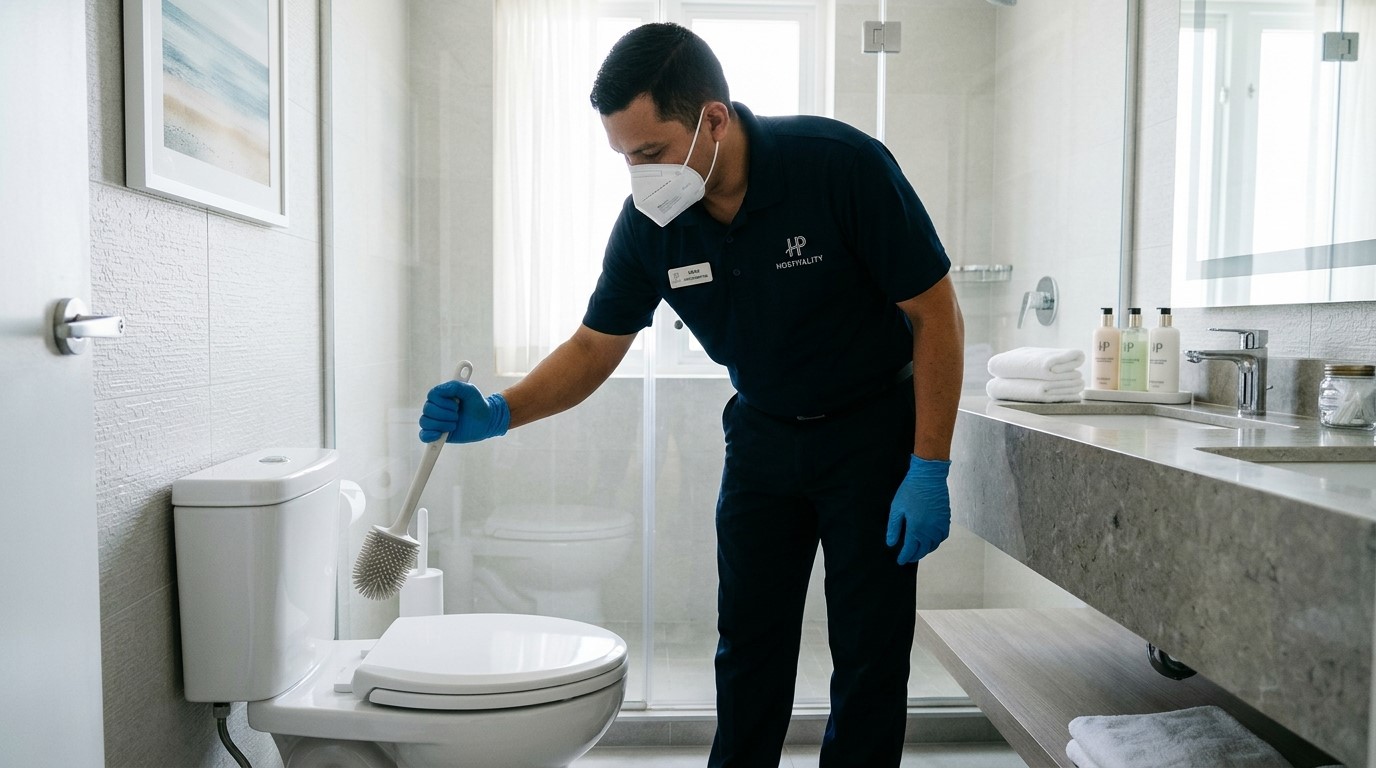
Hospitality & Property Groups
Build practical bathroom accessory sets for hotels, serviced apartments, and rental properties. Compact holders, neutral colors, and straightforward replacement procedures help simplify room maintenance and product consistency.
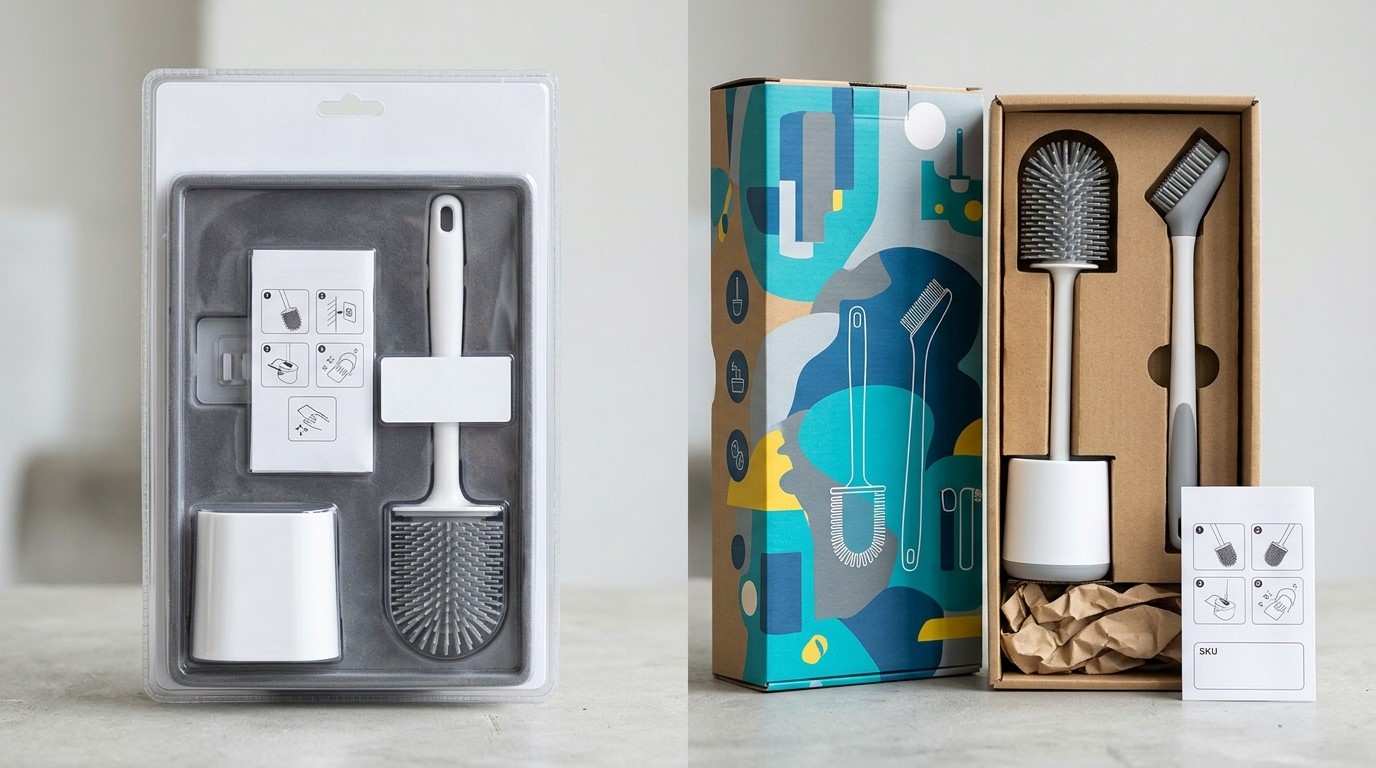
Retail & Ecommerce Sellers
Develop private-label silicone toilet brush sets with product-specific colors, packaging, and barcode identification. Compact storage designs and secure component packing help reduce unnecessary shipping volume and transit damage.
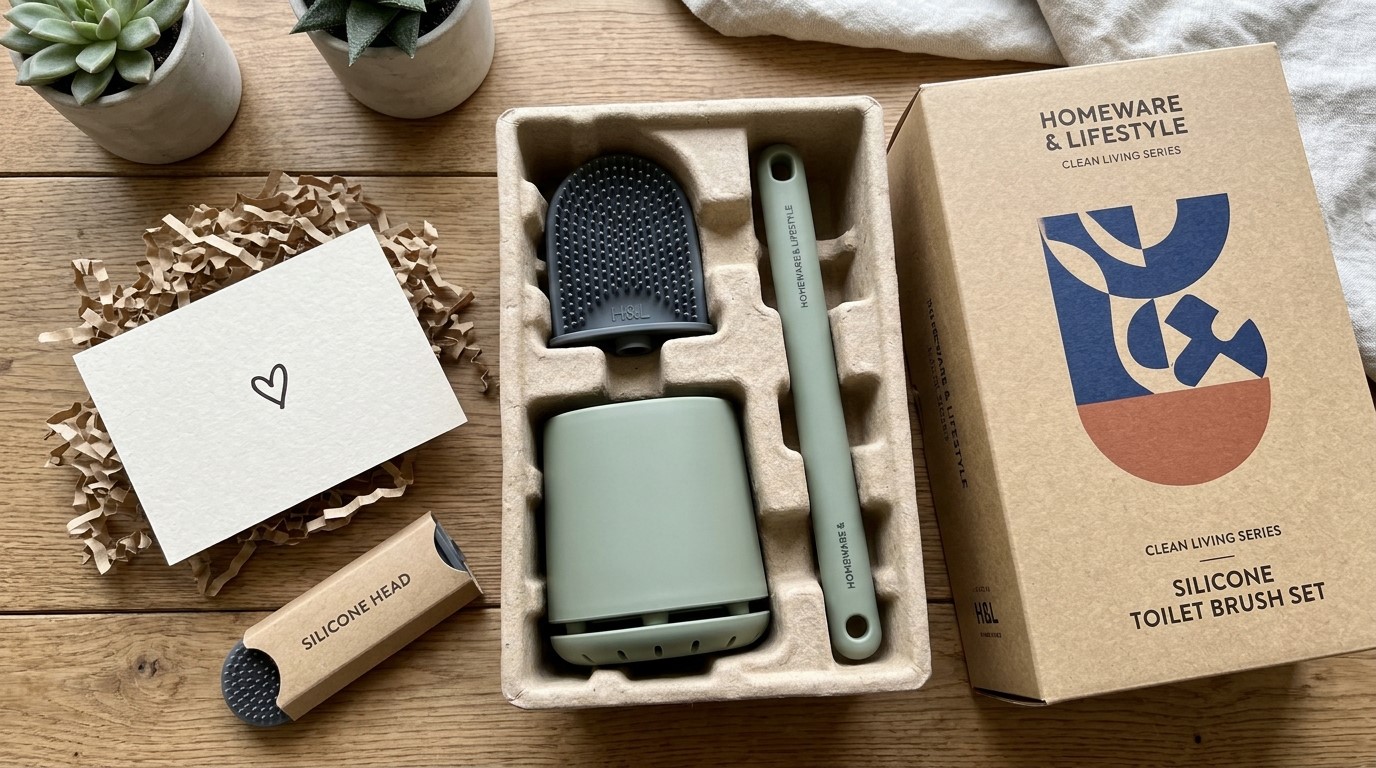
Homeware & Lifestyle Brands
Create visually coordinated bathroom cleaning products with concealed holders, wall-mounted storage, or minimalist handles. Balance appearance with under-rim reach, cleaning performance, and everyday accessibility.
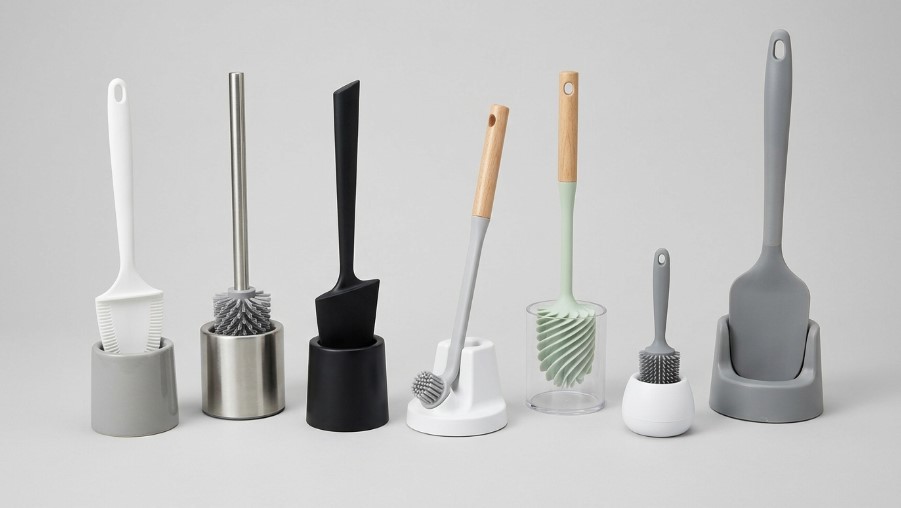
Silicone Toilet Brush Types We Can Develop
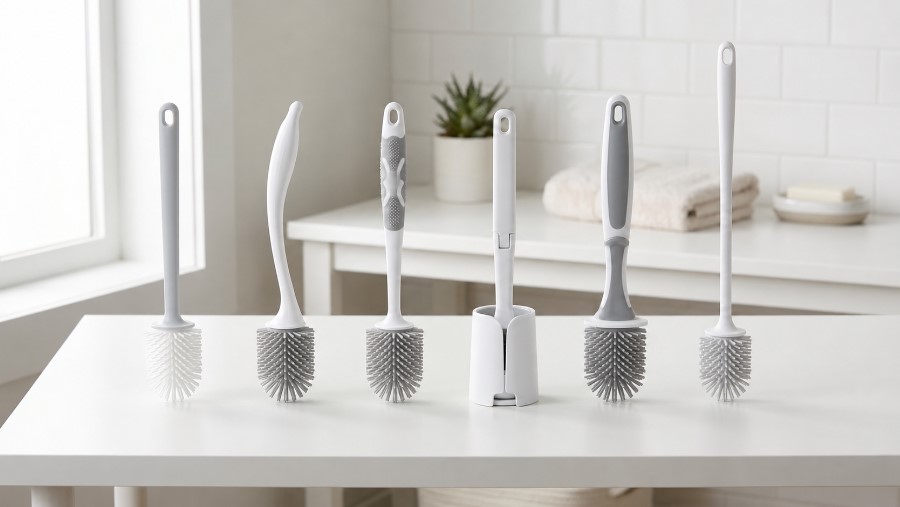
Flat Head Silicone Toilet Brushes
Round Head Silicone Toilet Brushes
Angled Silicone Toilet Brushes
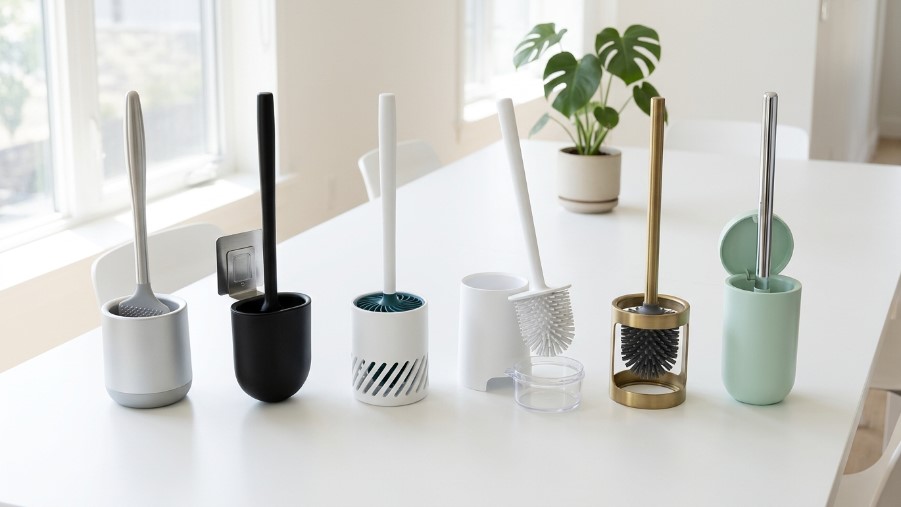
Silicone Toilet Brushes with Holders
Wall-Mounted Silicone Toilet Brushes
Replaceable Head Silicone Toilet Brushes
Silicone Toilet Brush and Plunger Set
Silicone Toilet Brush Customization
Customize the brush head, handle, holder, and packaging for your market.
Choose flat, rounded, or angled heads according to bowl geometry and under-rim access. Fin thickness, spacing, and root shape determine cleaning pressure, flexibility, and resistance to tearing. The head must maintain sufficient contact without folding excessively during scrubbing.
Available options include:
- Flat, round, or angled profiles
- Flexible and bendable heads
- Dual-sided heads with round and flat designs
- Custom fin patterns
- Rim-reaching tips
- Head dimensions and hardness
Set handle length and grip geometry for comfortable reach and controlled scrubbing. Connection design must transfer pushing and twisting forces without loosening. Detachable heads require secure engagement, while reinforced handles help limit unwanted bending during use.
Available options include:
- Straight or curved handles
- Custom length and diameter
- Textured grips
- Threaded or snap-fit connections
- Reinforced plastic or metal handles
Design the holder around brush-head clearance, drainage, and storage stability. Ventilated structures promote drying, while removable trays simplify cleaning. Freestanding bases need sufficient tipping resistance, and wall-mounted versions require a secure attachment method suited to the installation surface.
Available options include:
- Freestanding or wall-mounted designs
- Ventilation openings
- Removable drip trays
- Open or enclosed storage
- Floor-standing or wall-mounted
- Magnetic pads for base
- Custom holder dimensions
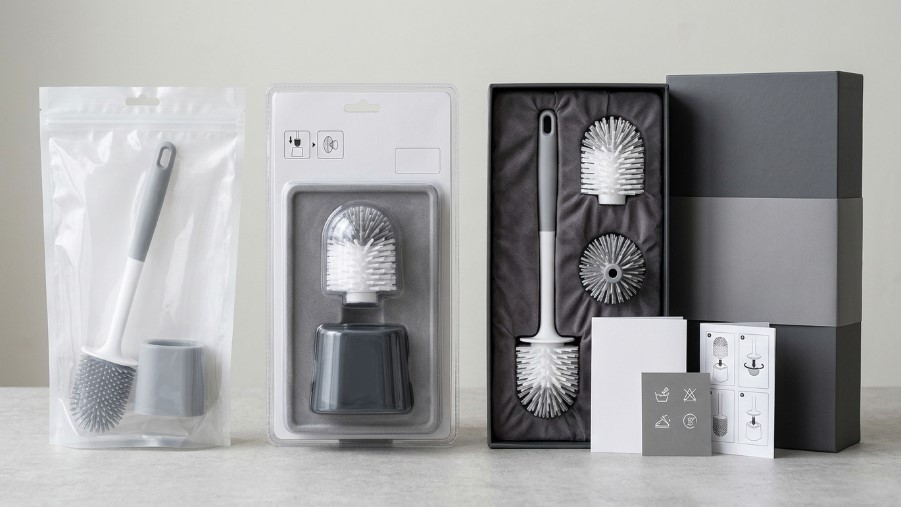
Match packaging to the brush length, holder dimensions, and distribution channel. Separate component packing may reduce carton volume, but flexible fins need protection against compression. Printed packaging, labels, and instructions should be approved alongside the product configuration.
Available options include:
- Bulk cartons
- Individual retail boxes
- Private-label sleeves
- Header card
- Instruction leaflet
- Barcode and SKU labels
- Protective fillings
- Disassembled component sets
Start Your Custom Silicone Toilet Brush Project
Share your preferred brush design, quantities, and packaging requirements. We will review cleaning-head construction, component compatibility, and tooling needs.
How to Specify a Better Silicone Toilet Brush
Choose cleaning-head geometry and connection strength before finalizing appearance or packaging.
- Head shape: Match flat, round, or angled profiles to the cleaning areas and toilet bowl geometry.
- Fin design: Set fin thickness and spacing to balance scrubbing contact, flexibility, and rinsing.
- Hardness: Evaluate head deflection under cleaning pressure instead of selecting softness alone.
- Handle: Confirm working length, bending resistance, and grip comfort.
- Connection: Check resistance to twisting and pulling during repeated use.
- Holder: Allow head clearance and provide a practical drainage and cleaning arrangement.
- Assembly: Determine whether components ship assembled or separately.
Full Specification Guide
How to Specify a Silicone Toilet Brush—Head Geometry, Fin Design, Handle Connections, Flexibility & Scrubbing Power, and Holder Drainage.
Silicone Toilet Brush Logo & Branding Methods
Branding methods must match component materials, available surfaces, and expected handling.
Color-Matched Branding
Coordinate brush heads, handles, and holders using approved component-specific color references.
Pad Printing
Prints small or curved areas that flat screen printing cannot easily reach.
Embossed Logos
Raised logos integrated into suitable molded handles, holders, or silicone surfaces.
Debossed Logos
Depth and corner geometry are adjusted to preserve legibility and avoid creating difficult-to-clean recesses.
Silicone Toilet Brush Material & Performance Options
Material selection must account for cleaning pressure, repeated flexing, and wet storage.
Silicone rubber and TPR are different materials, even when both are marketed as silicone toilet brushes.
Vulcanized silicone rubber provides configurable flexibility, while thermoplastic rubber offers an alternative construction. Specify the actual polymer, hardness, and processing requirements before approving the cleaning head.
Material Comparison
Silicone vs. Nylon: Which Material Is Better for Your Toilet Brush Project? —Differences in Cleaning Performance, Flexibility, and Maintenance.
Effective scrubbing requires sufficient contact force without excessive head rigidity.
Soft fins conform to curved surfaces but may fold under pressure. Firmer designs transfer greater force yet can restrict under-rim access. Evaluate fin thickness, free length, and hardness together.
Fin roots and thin sections are common stress-concentration areas.
Repeated bending can initiate tears near sharp transitions or undersized fin roots. Rounded junctions, appropriate thickness, and material selection improve structural resilience. Repeated-flex performance requires project-specific validation.
Chemical resistance must match the intended cleaner and exposure conditions.
Silicone tolerates water and many mild cleaning formulations, but concentrated oxidizers, aggressive solvents, and prolonged exposure require evaluation. Handle and connector materials must also be considered.
The assembled brush must transmit cleaning force without loosening or excessive bending.
Handle stiffness, joint geometry, and assembly tolerances that affect reliability. Detachable heads require adequate resistance to twisting and pulling, while suitable grip profiles improve cleaning control.
Material approval should be based on documented specifications, not product descriptions alone.
Confirm the actual polymer, hardness range, color system, curing or processing method, and applicable supplier documentation before production.
Where regulatory, odor, chemical-contact, or performance requirements apply, define the required test standard, sample condition, and acceptance criteria for the finished brush assembly.
A practical holder keeps the brush head clear of standing water.
Ventilated structures support drying, while removable trays simplify cleaning. Drainage openings must control wastewater rather than release it onto the floor. Silicone alone does not establish antimicrobial performance.
Maintenance Guide
How to Maintain a Silicone Toilet Brush—Rinse the head after use, clean and drain the holder, follow the product’s disinfection instructions, and replace worn components when needed.
How Silicone Toilet Brushes Are Manufactured

STEP 1: Requirement Review
The project begins with the cleaning-head design, intended use, component materials, handle structure, storage arrangement, branding requirements, and estimated order quantity.
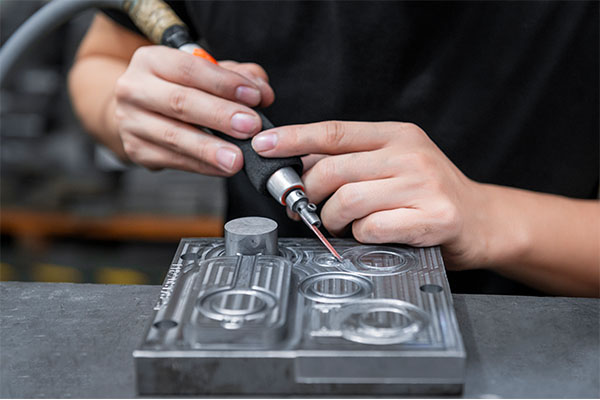
STEP 2: Tooling Evaluation
Engineers assess the cleaning fins, head geometry, and demolding requirements. Existing tooling suitability and new component tooling needs are evaluated separately.
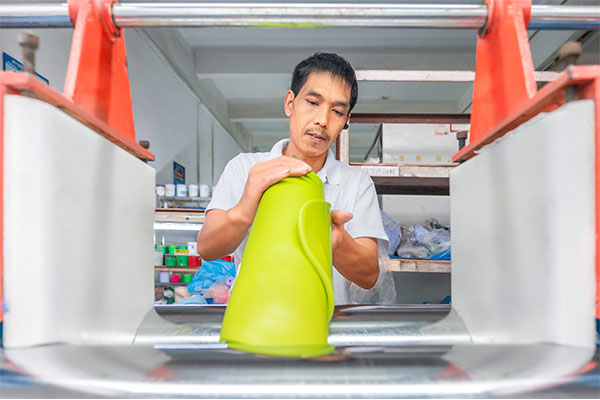
STEP 3: Material Preparation
The selected silicone compound and pigments are prepared against approved material specifications. Plastic handle and holder materials are identified for their respective processes.
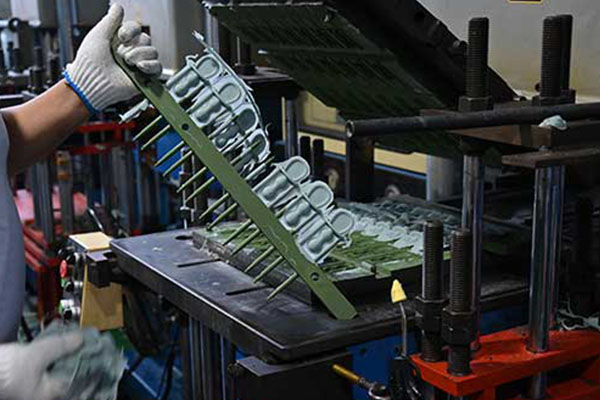
STEP 4: Compression Molding
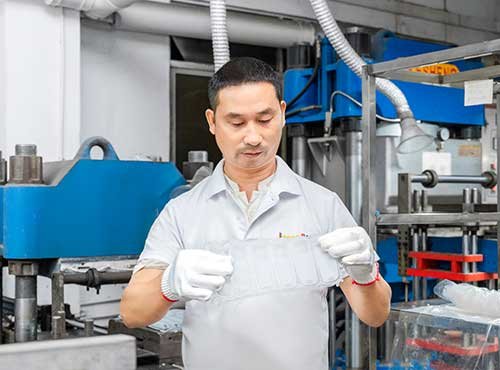
Premeasured silicone compound is cured under heat and pressure. Thin fins require controlled material flow and careful demolding to avoid incomplete edges or tearing.
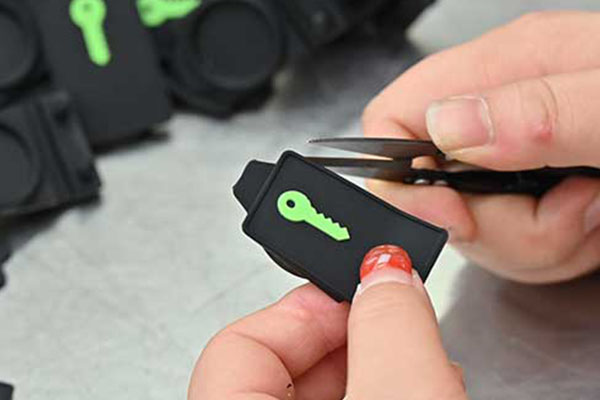
STEP 5: Demolding and Trimming
Molded heads are removed and finished. Fin edges, parting lines, and connection features are examined for flash, incomplete formation, or damage.
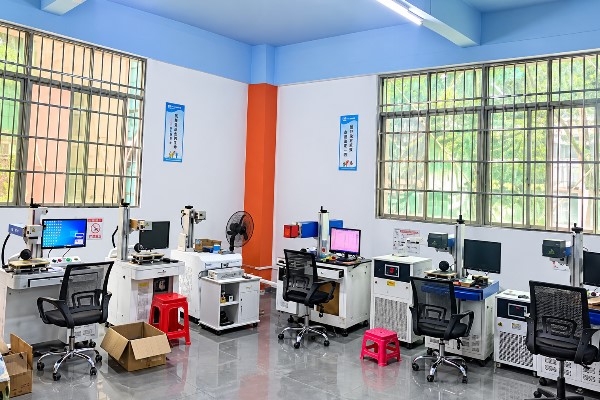
STEP 6: Component Assembly
The cleaning head is assembled with its matching handle. Detachable connections, holder fit, and any specified surface branding are checked against approved requirements.
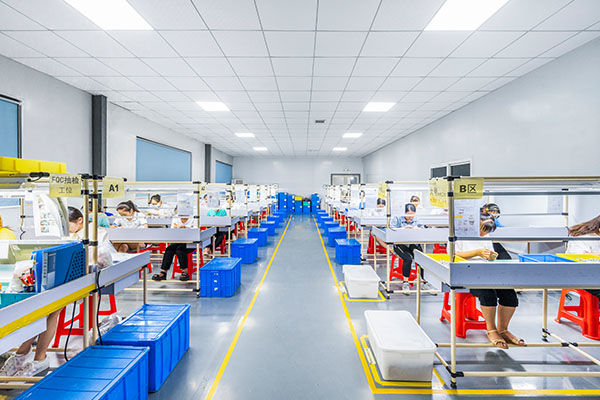
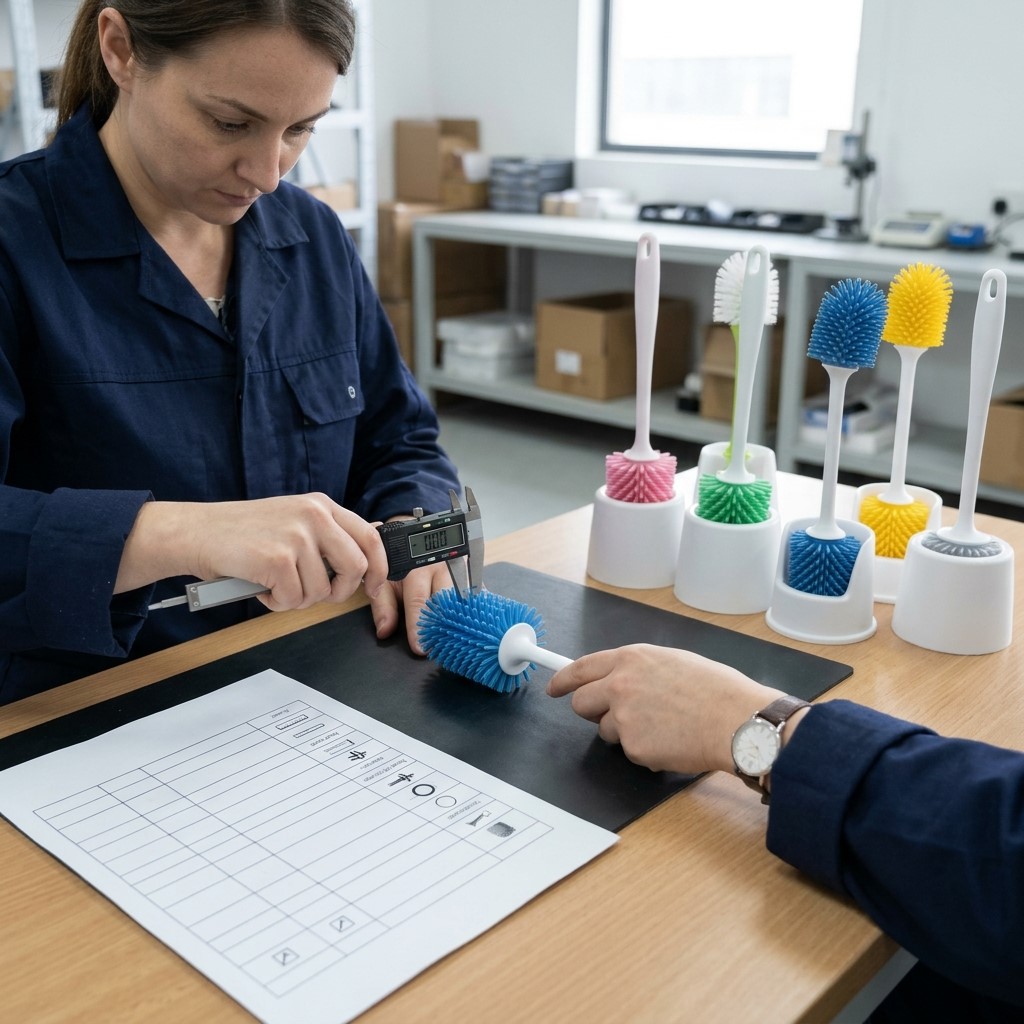
STEP 7: Quality Inspection
Finished assemblies are reviewed for dimensions, fin condition, color consistency, handle retention, and holder stability. Additional performance checks follow the agreed inspection plan.

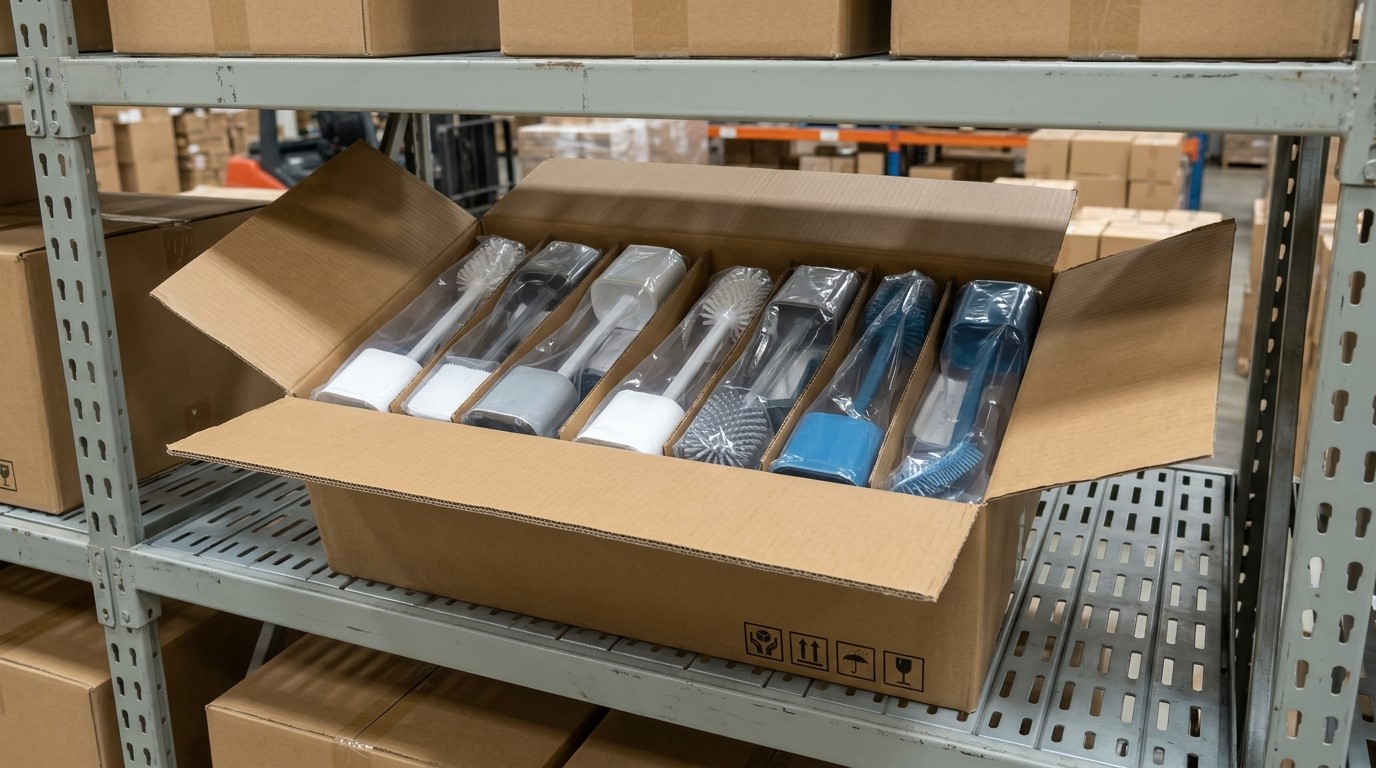
STEP 8: Packaging and Shipment
Brushes and holders are packed according to their approved configuration. Packaging protects flexible fins, prevents component movement, and maintains accurate SKU identification.
Silicone Toilet Brush Quality Control
Quality control covers cleaning-head integrity, connection reliability, holder performance, and finished appearance.
AQL 2.5 / 4.0 Standard Inspection
We run final random sampling plans to verify batch consistency:
AQL 2.5
Critical / Major Defects
AQL 4.0
Minor Visual Flaws
Another inspection standard can be used when specified in the purchase order.
Approved Sample Control
The approved sample establishes reference requirements for:
- Head geometry and fin dimensions
- Handle and connection structure
- Component colors and surface finish
- Holder fit and drainage arrangement
- Logo placement and packaging
Incoming Material Review
Silicone compounds, pigments, and purchased components are checked against approved specifications and available supplier documentation. Material identification distinguishes genuine silicone from TPR/TPE alternatives.
In-Process Inspection
Molding and finishing checks address:
- Incomplete fin formation
- Excessive flash
- Trimming damage
- Surface contamination
- Distorted head geometry
Closely spaced, thin fins can be difficult to fill and demold, creating shortened features or weak sections.
Appearance & Dimensions
Inspect tears, visible defects, color differences, and irregular edges. Verify brush-head dimensions, fin geometry, and connection features against the approved specification.
Handle Connection Strength
Evaluate detachable connections using agreed pull-off or torque-resistance criteria. The assembled joint must withstand the intended scrubbing motion without unintended separation.
Cleaning Fin Performance
Project-specific flexing checks can assess fin recovery, folding, and visible damage. Test loads, cycles, and acceptance limits require prior agreement.
Holder & Drainage
Check base stability, brush clearance, component fit, and drainage arrangement. Wall-mounted models additionally require an agreed assessment of mounting retention.
Logo & Packaging
Inspect branding clarity, placement, component quantity, labels, barcode information, and protective packing before shipment.
Silicone Toilet Brush Packaging Options
Arrange packaging based on product configuration & volume, identification, and protection.

Bulk Packaging
Simple individual bags or multi-piece packaging help control cost for distributors, professional users and promotional distribution.
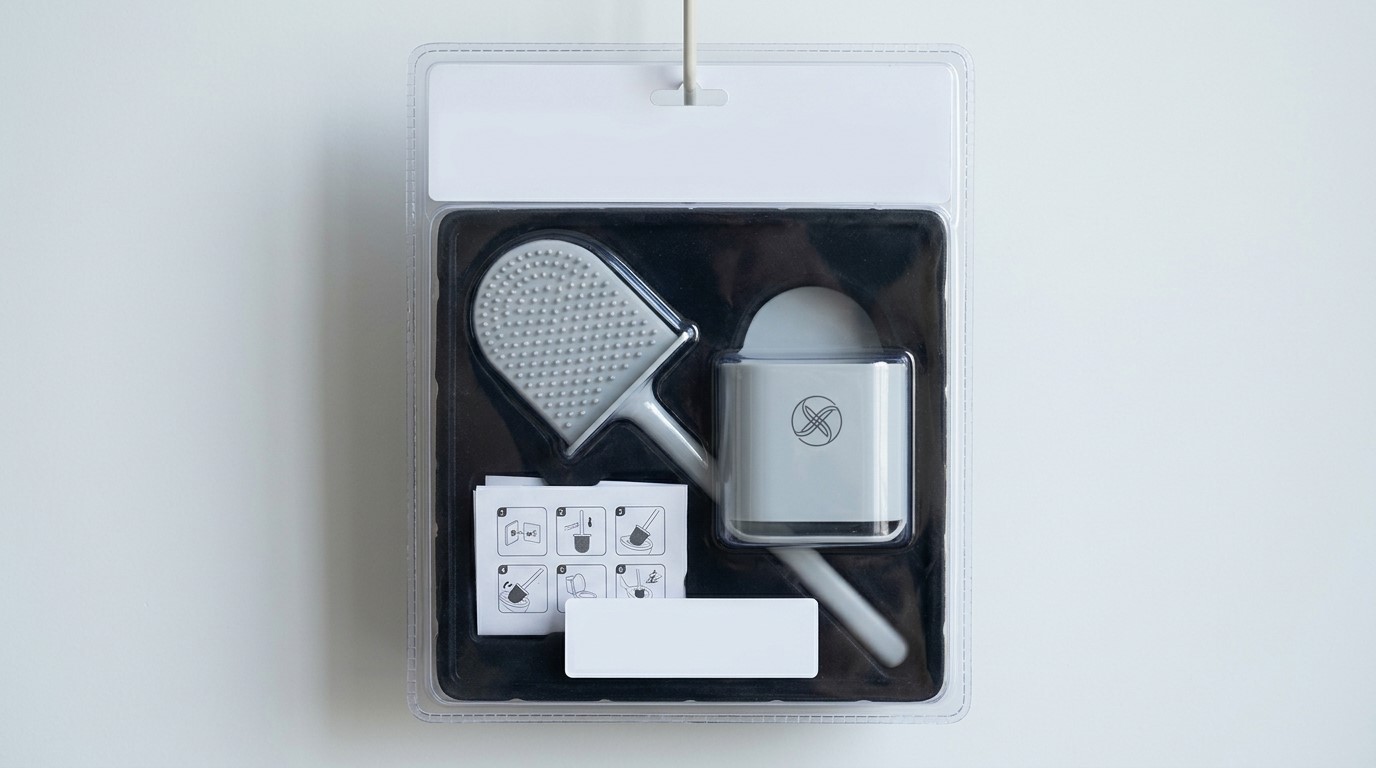
Retail Packaging
Header cards, blister packs, reusable bags and printed paper boxes provide space for branding, recipes and barcode information.

Ecommerce Packaging
We prepare SKU labels, scannable barcodes, product inserts and marketplace-specific outer labels according to your packaging file.
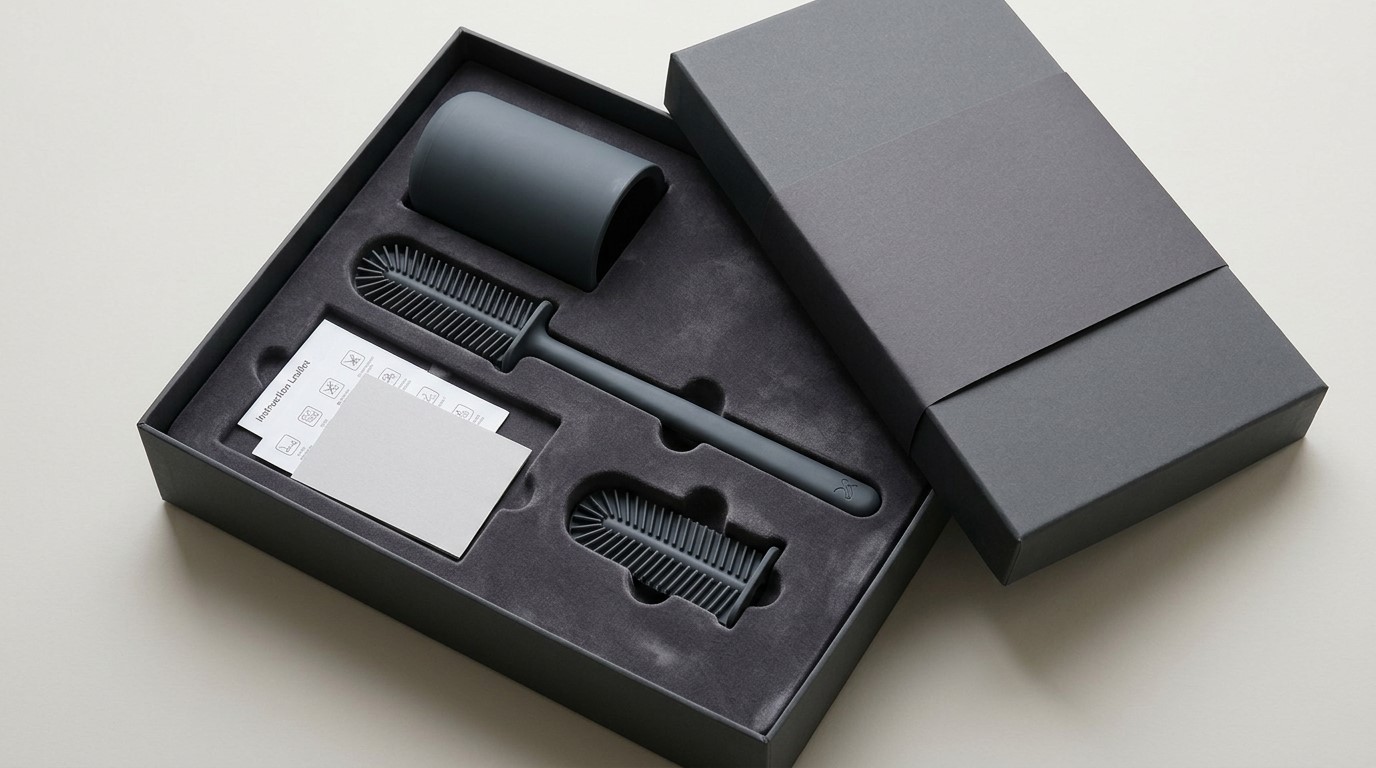
Premium Brand Packaging
Custom boxes, printed sleeves, recipe inserts and coordinated brand presentation can support higher-value retail products.

Custom Silicone Toilet Brush Typical Specifications
| Specification | Typical Reference / Project Options |
|---|---|
| Product | Silicone toilet brush with optional holder in set |
| Applications | Residential bathrooms, hospitality and routine facility cleaning |
| Cleaning head material | Silicone rubber (VMQ); TPR/TPE as separately specified alternatives |
| Silicone hardness | 35–60 Shore A—preliminary design evaluation range, not a universal recommendation |
| Brush head shape | Flat, round, angled, curved, or custom |
| Brush head width | Project-defined; 50–100 mm initial dimensional study range |
| Overall brush length | Project-defined; 350–450 mm initial dimensional study range |
| Fin design | Flexible bristles, blades, or ribbed cleaning fins |
| Fin thickness & length | Confirmed by geometry, material, and sampling |
| Handle material | PP or other suitable plastic; reinforced options subject to design review |
| Handle construction | Fixed or detachable |
| Holder material | PP or another specified material |
| Holder configuration | Freestanding, wall-mounted or hanging |
| Drainage | Ventilation slots, drainage openings, or removable collection trays |
| Color | Standard or custom color matching |
| Logo methods | Molded, embossed, debossed, or suitable surface printing |
| Silicone head production | Compound- and tooling-appropriate molding process |
| Handle/holder production | Component-specific plastic molding or approved sourcing |
| Cleaning chemical compatibility | Verified against specified cleaners and exposure conditions |
| Inspection | Approved sample and agreed inspection or test protocol |
| MOQ | Quoted by design, component tooling and packaging |
| Sample lead time | Confirmed after design and tooling review |
| Production lead time | Confirmed according to order and component requirements |
| OEM / ODM | Design and customization requirements subject to feasibility review |
Dimensional and hardness ranges are initial design references, not verified RY Silicone model specifications.
Why Work with RY Silicone
Silicone Manufacturing Experience Since 2012
RY Silicone has supplied custom silicone products since 2012. For toilet-brush projects, support begins with design review and continues through sample coordination, production planning, inspection, packaging, and export preparation.
10,000+ m² Production Facility
The 10,000+ m² figure describes RY Silicone’s overall manufacturing facility. It does not represent a dedicated silicone toilet-brush workshop or product-specific production area.
30+ Production Machines
RY Silicone operates 30+ production machines across its silicone-product activities. This factory-wide figure does not indicate 30+ machines dedicated to toilet brushes or any particular brush component.
Up to 100,000 Silicone Products per Day
Up to 100,000 silicone products per day describes factory-wide output across categories. Toilet-brush capacity is assessed separately by brush geometry, assembly, inspection needs, and approved production plan.
Engineering Review Before Quotation
We review brush-head profile, fin geometry, handle connection, holder drainage, stability, branding, and packaging before recommending a project configuration and quotation.
Sample-Based Production
The approved sample controls brush-head shape, color, handle and holder fit, logo placement, and packaging presentation. Any mismatch between sample, drawing, or purchase order is clarified before production release.
Export Project Support
RY Silicone coordinates specifications, available documentation, packaging, and shipment preparation for overseas projects. Market-specific testing, claims, or regulatory requirements are confirmed for the selected finished configuration.
Silicone Toilet Brush FAQ and Final RFQ
What is the MOQ for custom silicone toilet brushes?
MOQ depends on the selected brush structure, tooling, components, and packaging. Existing-style designs and new custom tooling may have different minimum quantities. Share your design and target volume for a project-specific quotation.
Can we use an existing brush design with our own branding?
Yes, where a suitable existing design is available. You can discuss custom colors, logos, and packaging without developing an entirely new brush structure. Existing tooling compatibility and branding options must be confirmed first.
Are silicone toilet brushes better than traditional nylon brushes?
Silicone fins are generally easier to rinse than dense nylon-bristle bundles. Nylon may provide stronger localized abrasion for stubborn deposits. Cleaning performance depends on head geometry, contact pressure, and the intended task.
Is the cleaning head made from real silicone or TPR?
Both genuine silicone rubber and TPR appear in products marketed as silicone toilet brushes. Specify VMQ silicone when genuine silicone is required, and verify the material rather than relying solely on the product name.
Which brush head shape is best for cleaning under the toilet rim?
Flat or angled heads often reach beneath narrow rims more effectively. Head thickness, tip geometry, and fin stiffness determine access and cleaning pressure. Representative bowl profiles should guide the final design.
How should I choose the hardness of a silicone toilet brush head?
Evaluate fin deflection under cleaning pressure rather than hardness alone. Fin length and thickness strongly affect flexibility. The selected compound must balance surface contact, cleaning force, and recovery after bending.
Can silicone toilet brushes scratch porcelain toilet bowls?
Flexible silicone generally creates less abrasive contact than rigid scraping tools. However, trapped grit or exposed hard components can still cause scratches. The assembled design should prevent rigid edges from contacting the bowl.
Can you develop a silicone toilet brush with a replaceable head?
Replaceable heads can use threaded, snap-fit, or other suitable connections. Joint geometry must resist loosening under scrubbing torque and pulling. Replacement heads also require consistent dimensional compatibility.
What holder design is best for silicone toilet brushes?
A practical holder allows drainage, stable storage, and accessible cleaning. Ventilation supports drying, while removable trays simplify water disposal. Drainage openings should prevent uncontrolled leakage onto bathroom floors.
Are silicone toilet brushes resistant to bleach and toilet cleaning chemicals?
Compatibility depends on the chemical formulation, concentration, and exposure duration. Silicone, handles, and connectors may respond differently. Specify the intended cleaning agents so appropriate compatibility evaluation can be arranged.
Can you customize the color and logo of a toilet brush set?
Yes. Colors and logos can be developed for suitable brush heads, handles, and holders. Different component materials may require separate color matching, while logo methods must suit their surfaces.
What documents or compliance information can be provided?
Available documents may include material specifications, supplier declarations, and agreed inspection records. Finished-product testing or regulatory claims require separate verification for the selected materials, components, and destination market.
What information do you need to quote a custom silicone toilet brush?
Please provide:
- Brush type or reference images
- Design files, drawings, or physical samples
- Head shape, dimensions, and fin design
- Material and hardness requirements
- Handle and connection configuration
- Holder and drainage design
- Colors and logo artwork
- Packaging requirements
- Estimated order quantity
- Destination market
- Required documents or tests
- Target delivery date