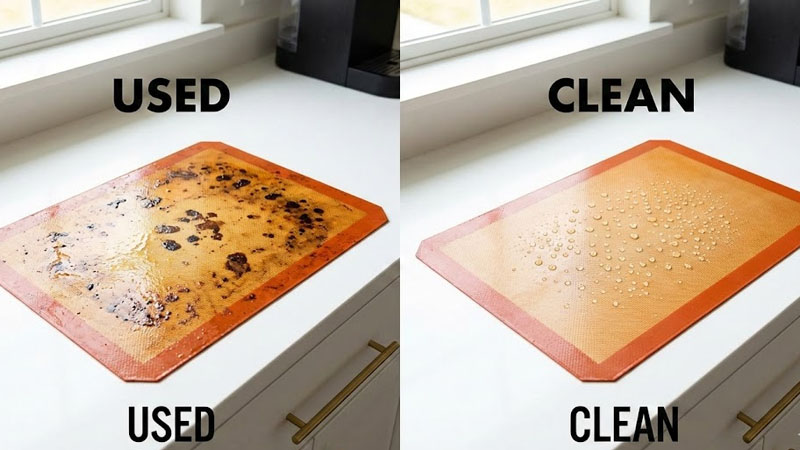
Silicone kitchenware is loved for its non-stick surface, but over time, stubborn oil films still appear. Why does this happen, and how can we clean it safely?
Understanding oil adhesion mechanisms and cleaner compatibility helps maintain silicone’s anti-stick performance and extend product lifespan.

When I tested silicone baking mats after several cooking cycles, I found that while they still released food easily, a thin greasy film remained. This film didn’t wash off with water alone — it required a deeper look at the science behind oil-silicone interaction.
Oil Stain Adhesion and Surface Energy?
Silicone’s anti-stick property comes from its low surface energy, but oils can still form a thin layer that clings through weak physical interactions.
Oil stains adhere to silicone due to surface energy differences, capillary effects, and gradual oxidation of the silicone surface.

Silicone rubber typically has a surface energy of 20–24 mN/m, while most edible oils range between 28–32 mN/m. This small difference means oils spread easily but don’t bond strongly — yet repeated heating and oxidation can roughen the silicone surface, increasing oil adhesion.
Oil Adhesion Mechanisms
| Factor | Mechanism | Result |
|---|---|---|
| Surface energy difference | Oil spreads on low-energy surface | Thin uniform film |
| Oxidation layer | Heat aging increases polarity | Stronger oil retention |
| Capillary trapping | Microtextures hold oil droplets | Residual staining after washing |
Regular cleaning after each use prevents oxidation buildup that increases stickiness over time. Once the surface oxidizes, stains and odors are harder to remove.
Cleaner Compatibility and Precautions?
Not all cleaners are safe for silicone. Some solvents can swell or dull the surface, while harsh chemicals may cause long-term degradation.
Using compatible cleaners preserves silicone’s flexibility and prevents surface damage.
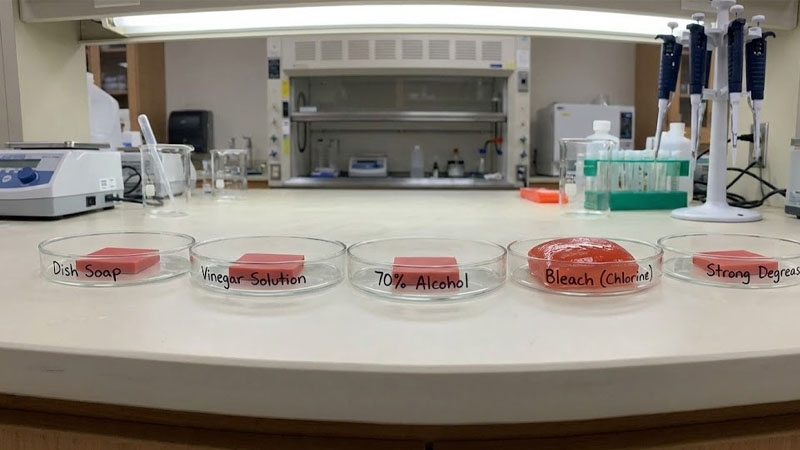
I once received feedback from a customer who soaked their baking mat in bleach overnight. The surface turned tacky and discolored — classic chemical overexposure. To confirm, we tested various household cleaners on cured silicone samples for 24 hours.
Cleaner Compatibility Table
| Cleaner Type | Compatibility | Notes |
|---|---|---|
| Neutral detergent (pH 6–8) | ✅ Excellent | Ideal for daily cleaning |
| Dishwashing soap | ✅ Excellent | Recommended standard |
| Alcohol (≤70%) | ⚠️ Limited | Use occasionally for disinfection |
| Bleach (chlorine-based) | ❌ Not recommended | Causes oxidation and tackiness |
| Strong alkali/acid cleaners | ❌ Avoid | Leads to whitening and surface hardening |
Can Alcohol or Bleach Be Used for Disinfection?
Use 70% alcohol only for quick surface wipes — not soaking. Avoid bleach, as it damages silicone’s polymer network and releases odor when reheated.
Dishwasher Cycle Recommendations?
Dishwashers offer convenience, but improper settings can accelerate silicone aging or leave white residues.
Use mild cycles and proper spacing to maintain silicone’s anti-stick properties after repeated dishwasher cleaning.

In one internal study, we ran silicone spatulas through 100 dishwasher cycles. The samples washed under high-heat “sterilization” cycles (above 90°C) showed more whitening and oil film buildup than those under mild cycles.
Recommended Dishwasher Settings
| Parameter | Recommended Value | Reason |
|---|---|---|
| Temperature | ≤ 70°C | Prevents oxidation and whitening |
| Detergent | Neutral, non-bleach | Avoids residue formation |
| Placement | Top rack, spaced apart | Prevents distortion and spots |
| Drying | Natural air-dry | Avoid prolonged heating |
To remove detergent residues, occasionally rinse with warm water and mild vinegar solution. This restores surface brightness and removes hidden soap films.
Long-term Maintenance and Storage?
Proper maintenance ensures silicone retains both appearance and flexibility. Neglect often leads to sticky or cloudy surfaces over time.
Regular cleaning, drying, and proper storage extend the product’s usable life and prevent odor buildup.
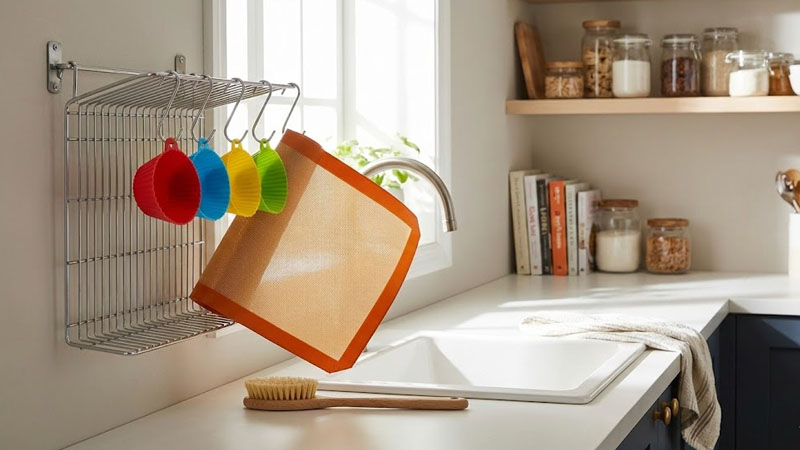
In a durability test, we stored used silicone baking molds under different conditions for three months. Samples stored sealed while still oily developed stronger odors, while those washed and air-dried stayed neutral.
Maintenance Guidelines
| Step | Action | Purpose |
|---|---|---|
| After each use | Rinse with warm water + mild detergent | Remove oil and residue |
| Weekly | Soak in 1:10 vinegar solution for 15 min | Neutralize odor and film |
| Drying | Air dry fully before storage | Prevent microbial growth |
| Storage | Avoid sealed containers if not fully dry | Prevent odor buildup |
Odors often come from trapped oils oxidizing inside pores. Routine mild acid cleaning breaks down these residues without harming the silicone surface.
How to Remove Odors?
Use a baking soda paste or vinegar soak at 60°C for 30 minutes. These mild solutions neutralize fatty acid residues and restore freshness without damaging the silicone.
Common Misconceptions and Risks?
Many consumers assume silicone is indestructible. In reality, long-term misuse — such as exposure to harsh chemicals or extreme heat — can degrade its surface permanently.
Overheating, chemical soaking, and abrasive cleaning are the main causes of reduced anti-stick performance and surface tackiness.

Common Misunderstandings
| Misconception | Reality |
|---|---|
| “Silicone is non-stick forever.” | Surface oxidation increases stickiness over time. |
| “Bleach disinfects silicone safely.” | It causes oxidation and tackiness. |
| “Dishwashers clean silicone perfectly.” | High heat can accelerate surface aging. |
| “White film means poor quality.” | Often detergent residue, removable by vinegar rinse. |
Educating users about these risks not only improves product longevity but also builds trust in brand quality and transparency.
Conclusion
Silicone’s anti-stick performance depends on proper cleaning and surface care. By understanding oil adhesion and cleaner compatibility, we can maintain safety, appearance, and functionality over years of use.
Need personalized cleaning guidance?
Select your product type and stain type to receive step-by-step cleaning recommendations from our technical support team.