
Silicone Keychain Manufacturer
Custom silicone keychains for brands, promotions, and retail programs, with flexible shapes, detailed logos, Pantone colors, and OEM/ODM packaging.
A silicone keychain is a flexible and appealing accessory made from moulded silicone rubber and fitted with a key ring, chain, carabiner, or other attachment hardware. It can carry a logo, character, message, or custom shape while providing a soft, durable, and recognizable branding surface.
Established in 2012, RY Silicone is a custom silicone manufacturer based in China. Our 10,000+ m² factory operates over 30 production machines and can manufacture up to 100,000 silicone products per day. We supply OEM & ODM silicone keychains to brands, distributors, and wholesalers in North America, Europe, and other international markets.
Silicone Keychain Manufacturing at a Glance
MOQ
Confirmed according to design complexity, mold, and packaging requirements
Colors & Branding
Match approved Pantone references and build logos through molded details, raised artwork, recessed areas, or selected printing methods.
Attachment Options
Choose split rings, ball chains, lobster clasps, carabiners, or other hardware according to your intended carrying and retail application.
Packaging Programs
From bulk packing to individual retail presentation, packaging can include bags, cards, labels, barcode stickers, and custom printed boxes.
Who We Manufacture Silicone Keychains For
Suit retail collections, brand campaigns, promotions, and licensed merchandise.
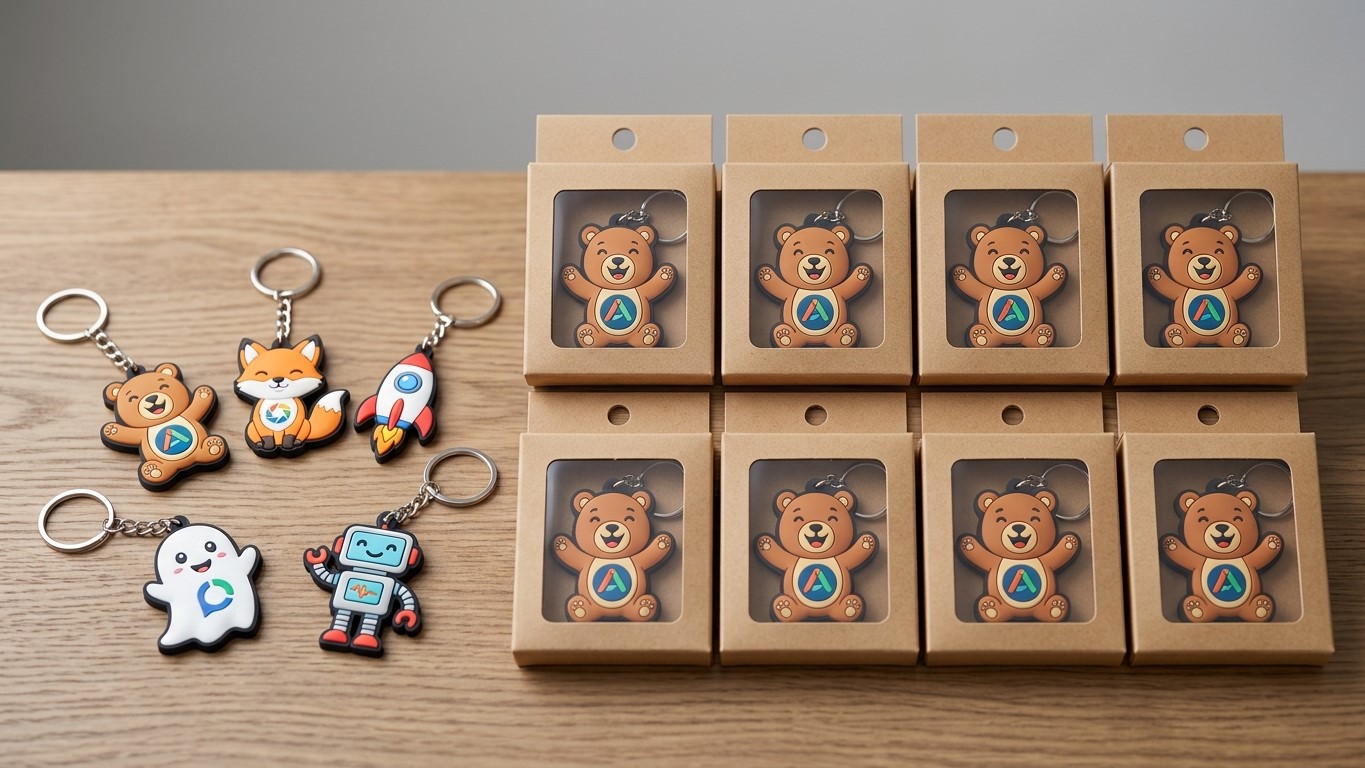
Brands & Private-Label Sellers
Create a recognizable accessory that carries your logo, mascot, or product identity beyond the original purchase. Custom shapes and coordinated colors help build a stronger branded collection for retail, e-commerce, and promotional channels.
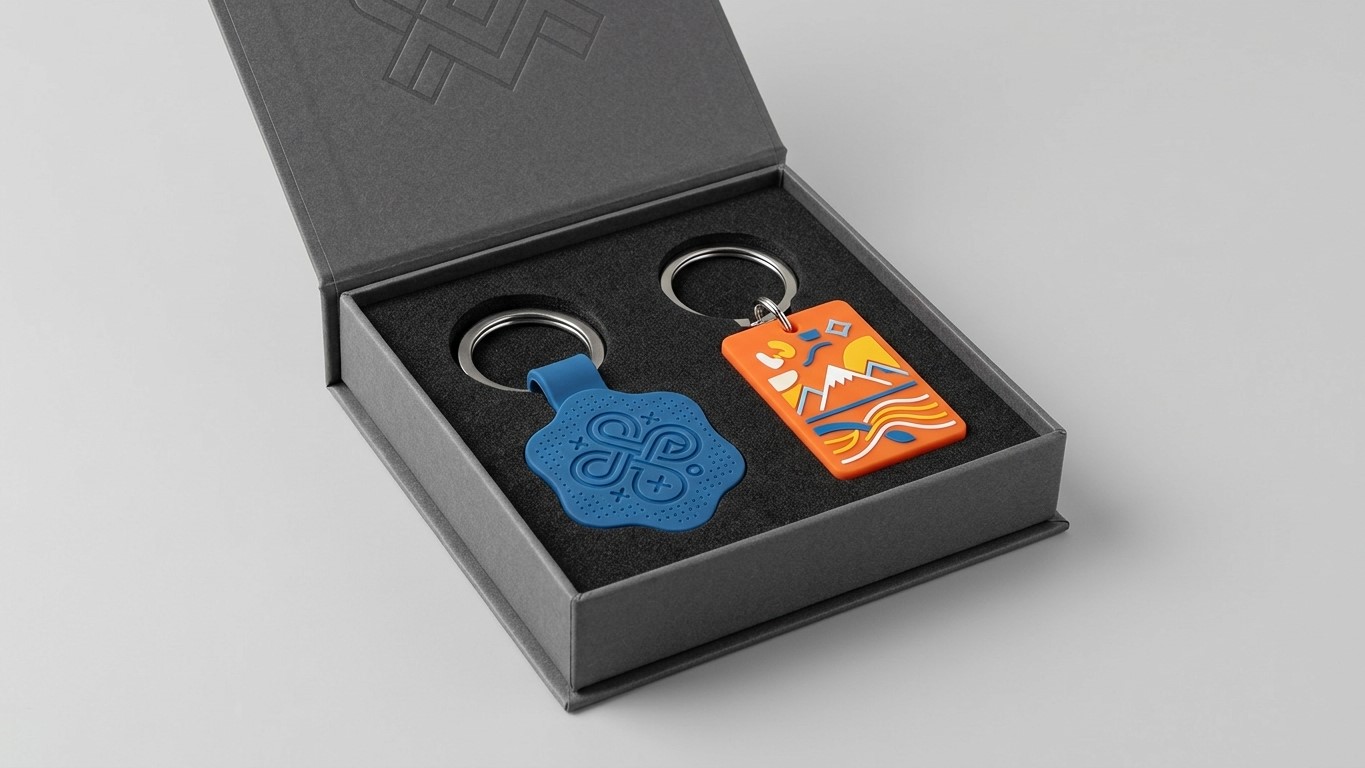
Promotional Product Companies
Develop silicone keychains for campaigns, exhibitions, giveaways, and corporate promotions. We can evaluate artwork complexity, production quantity, and attachment requirements to create a practical item for large-scale branded distribution.

Clubs, Schools & Organizations
Create identity-based keychains featuring team logos, school symbols, event graphics, or membership designs. Durable molded artwork provides a practical option for fundraising, recognition programs, and branded merchandise.
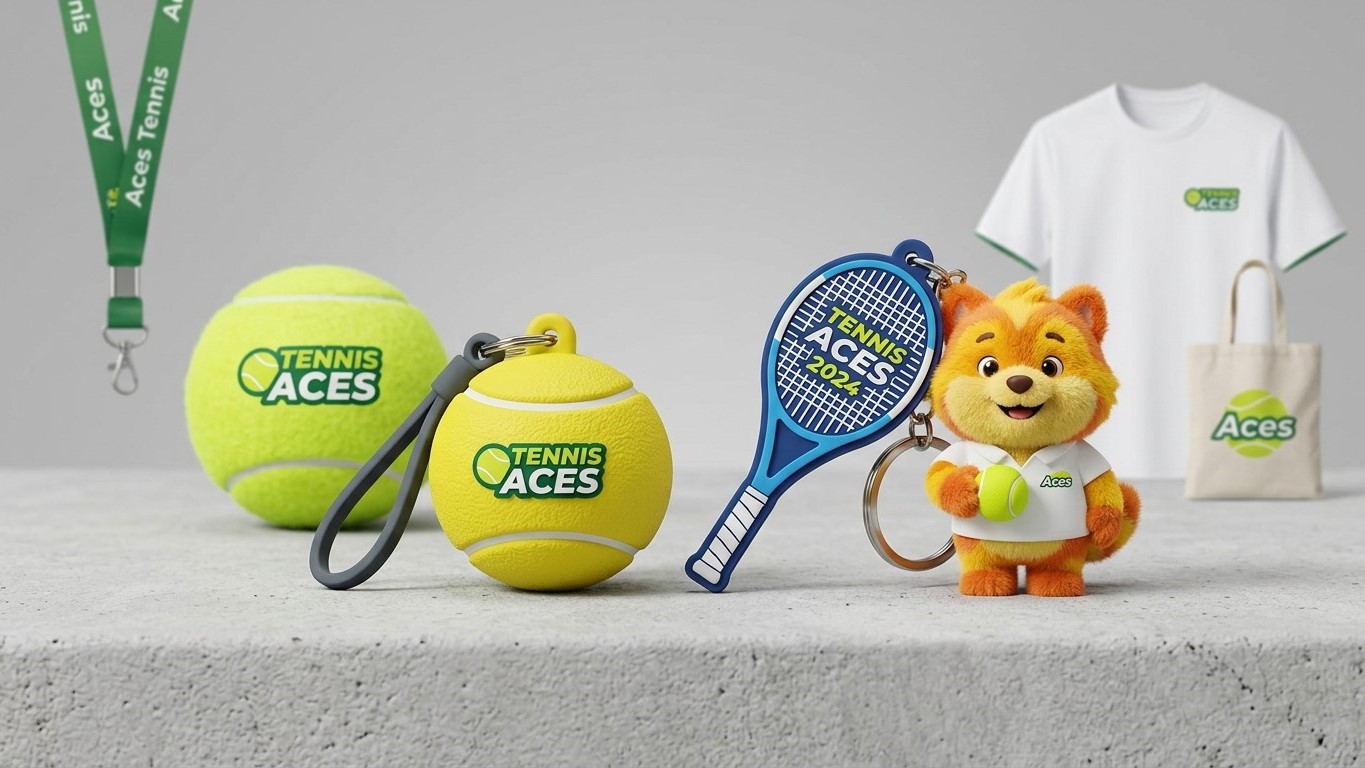
Events & Marketing Campaigns
Use custom silicone keychains as campaign merchandise and launch gifts or promotional accessories. Shape, message, and attachment style can be matched to the event concept and planned distribution method.
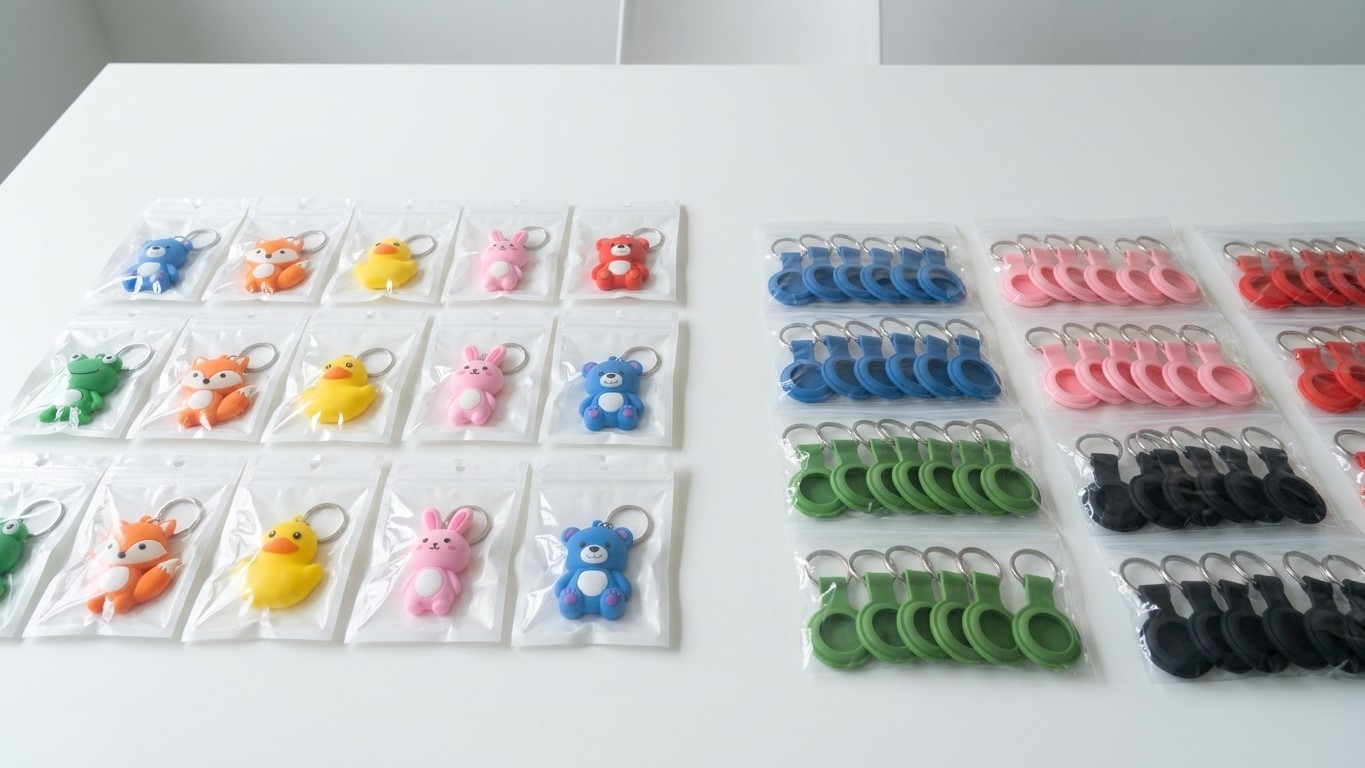
Distributors & Wholesalers
Source silicone keychains in bulk across different shapes, themes, and price levels for promotional, souvenir, and gift customers. Existing-style concepts can support faster development, while new designs create differentiated product ranges.
Retail & Ecommerce Brands
Build retail-ready keychain collections with custom packaging, SKU labels, and coordinated product presentation. The project can be planned around your target audience, price position, and marketplace or store requirements.
Silicone Keychain Types We Can Develop
Flat Silicone Keychains
Silicone Bead Keychains
Silicone Airtag Keychain
Silicone 3D Keychains
Silicone Lanyard Keychains
Silicone Wristlet Keychains
Silicone Character & Mascot Keychains
Silicone Fidget Keychain
Custom Silicone Keychain
Silicone Keychain Customization
Custom mold projects start with shape, size, color and packaging.
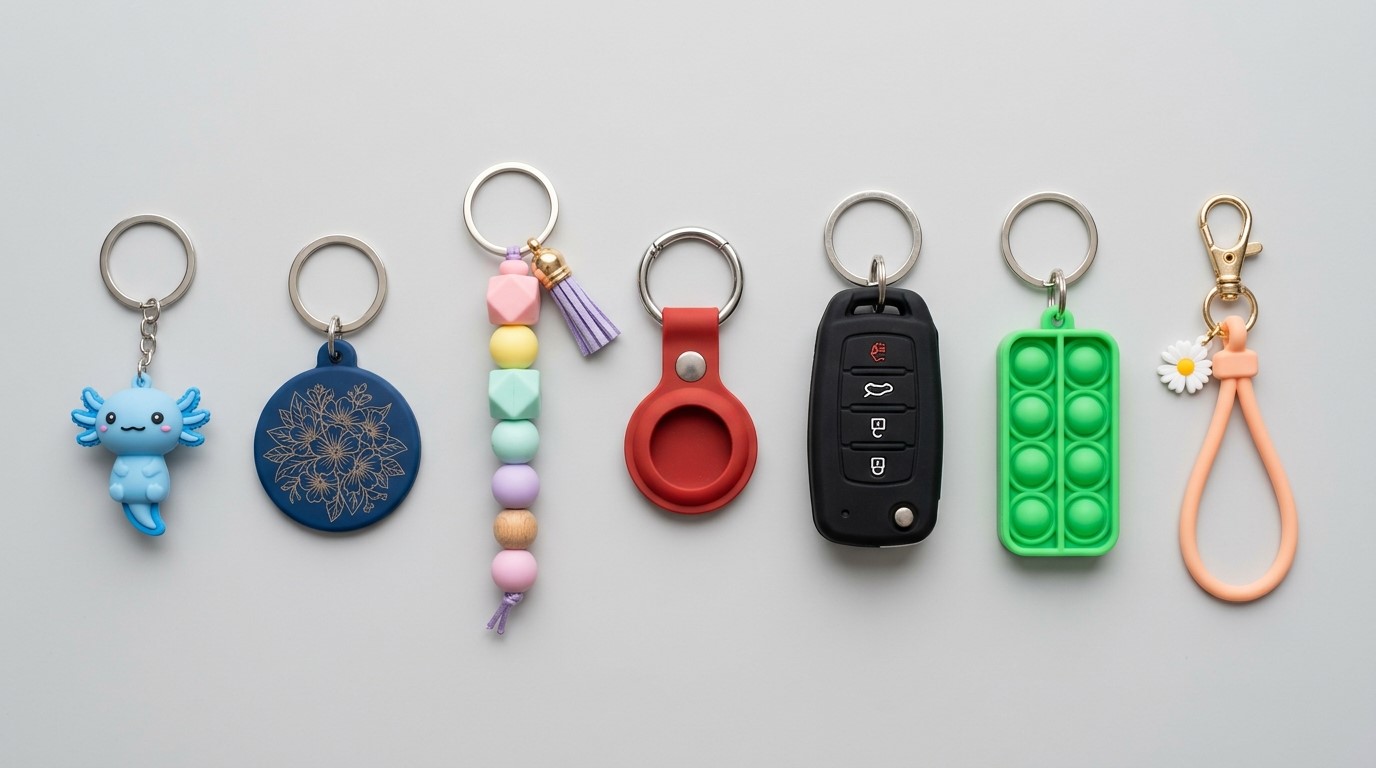
Choose a product structure that supports your artwork while remaining practical for molding, trimming, and daily use. Simple silhouettes can suit large promotional orders, while layered designs create stronger visual identity.
Available options include:
- Flat custom shapes
- 2D raised designs
- 3D sculpted structures
- Logo silhouettes
- Character shapes
- Mascot designs
- Product-shaped concepts
- Combination with fidget pop-it toys
- Custom outlines
- Single-piece designs
- Multi-level molded artwork

We review your artwork before tooling to identify fine lines, small text, and color boundaries that may affect the final molded result. A digital design may need structural adjustment before production.
Available options include:
- Company logos
- Vector artwork
- Characters and mascots
- Raised details
- Recessed details
- Molded text
- Custom icons
- Multi-color artwork
- Front and back designs
- Simplified production artwork

Match the silicone appearance to your approved brand system or product collection. Color samples should be approved before mass production because molded depth, texture, and surrounding colors can affect visual perception.
Available options include:
- Standard silicone colors
- Custom Pantone matching
- Single-color designs
- Multi-color designs
- Color-separated artwork
- Matte surfaces
- Glossy surfaces
- Fine molded textures
- Raised color areas
- Recessed color areas
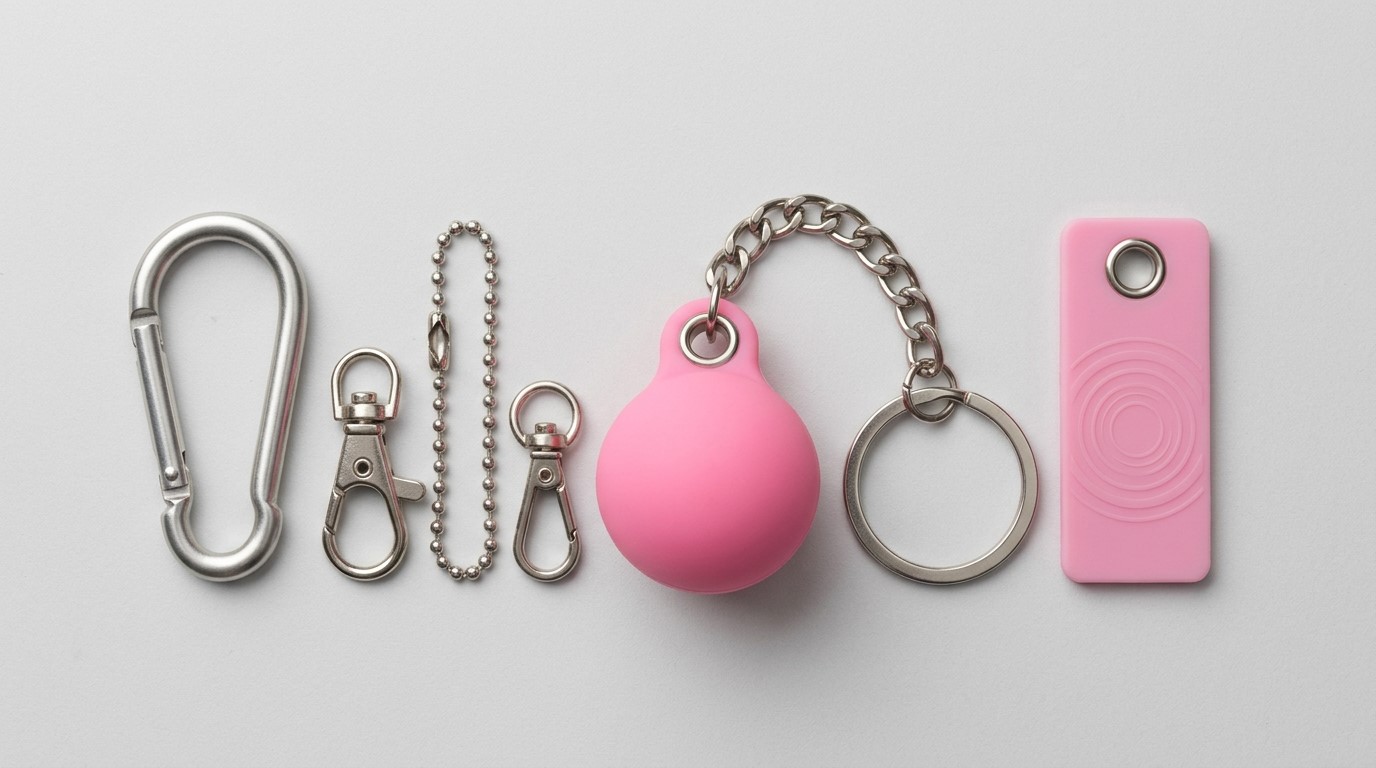
Select the attachment system according to how the keychain will be carried, displayed, or sold. Hardware dimensions and connection points should be confirmed early because they influence the molded structure.
Available options include:
- Split key rings
- Ball chains
- Lobster clasps
- Carabiners
- Swivel hooks
- Custom attachment components
- Short chains
- Wristlet attachments
- Reinforced connection holes
- Retail display attachments
Start Your Custom Silicone Keychain Project
Send your artwork, quantity, and target requirements. RY Silicone will review the design and recommend a suitable manufacturing, branding, and packaging plan.
How to Specify a Better Silicone Keychain
A successful keychain starts with artwork feasibility, structural strength, and the right attachment system.
- Shape complexity—Match fine details to practical molding capability and avoid unsupported features that may distort.
- Overall size—Define the finished dimensions based on visibility, portability, and your intended retail or promotional use.
- Thickness — Balance flexibility with enough material around detailed areas and attachment points.
- Artwork detail—Review small text, thin lines, and narrow gaps before tooling to protect logo readability.
- Color layout—Confirm color boundaries and Pantone references using an approved production sample.
- Attachment method—Select hardware according to carrying requirements and expected pulling force.
- Connection structure—Reinforce the area surrounding the attachment hole when the design includes narrow sections.
- Surface finish—Choose matte, glossy, or molded texture according to the desired appearance and handling experience.
Full Specification Guide
How to Specify a Better Silicone Keychain—artwork preparation, dimensions, thickness, molded details, hardware selection, and a complete custom project checklist.
Silicone Keychain Logo & Branding Methods
Choosing the best branding method depends on artwork, shape, detail, and product use.
Screen Printing
Select graphic details or colors to suitable silicone surfaces.
Pad Printing
Optimal for smaller logos and detailed graphics on suitable product surfaces.
Embossed Details
Raised logos, letters, and graphic elements add physical depth that can be recognized visually and by touch.
Debossed Details
Recessed artwork creates defined graphic areas below the main silicone surface.
Silicone Keychain Material & Performance Options
Choose materials matching your keychain’s appearance, flexibility, and durability needs.
Provides the flexible, soft-touch quality expected of silicone keychains.
Depending on the product structure, silicone rubber can be formulated at different hardness levels. The selected silicone material grade should balance flexibility with enough support to maintain the intended shape of the keychain and its detailed molded features.
For a thin promotional design, excessive softness may cause the product to bend too easily. For highly detailed characters, the compound must support the clean reproduction of small molded features.
Material Comparison
Silicone Keychain vs. Acrylic Keychain: Which Is Optimal for Your Project? —Clarity, sharp edge needs, durability, flexibility, and scratch resistance.
Hardness affects flexibility, shape retention, and the feel of the molded artwork.
Softer silicone creates more flexible accessories, while firmer compounds provide stronger structural support. The appropriate hardness range depends on the product’s thickness, overall shape, and attachment design, rather than appearance alone.
Therefore, hardness should be confirmed with the approved sample instead of being selected as an isolated specification.
The attachment area requires material strength and good visual design.
Repeated pulling and bending can concentrate stress around the key ring connection. Material performance, local thickness, and hole geometry must be considered together when designing the connection structure.
A thicker keychain does not automatically mean a more durable attachment point.
Consistent color reproduction is essential for recognizable branded merchandise.
The selected silicone compound and pigment system must match the approved project requirements. Custom Pantone matching should be confirmed through a physical production sample because surface texture and product geometry can influence the perceived color.
For multicolor designs, each color boundary must remain visually clean after molding and finishing.
Surface finishes change both the appearance of a product and the user’s handling experience.
For example, a matte surface can create a softer visual appearance, while a glossy finish can provide stronger visual contrast. Fine molded textures can be incorporated if they support the artwork or product identity.
The final finish should be confirmed on the approved sample because the same artwork may appear different across different surface treatments.
A clean production process helps prevent unwanted materials and curing issues.
Material selection and curing controls affect the appearance and sensory characteristics of the finished product. Any obvious odor or surface residue should be investigated rather than treated as a normal characteristic of silicone products.
Formal material claims should always be supported by documentation appropriate to the selected compound and target market.
Available project documentation may include:
- Material data sheets
- Material declarations
- REACH-related documentation
- Project-specific test reports
- Other requested material information.
The scope of the documentation must match the selected silicone compound, pigment, product configuration, and destination market.
A material document should not automatically serve as evidence of compliance for every finished keychain configuration.
Simple cleaning helps maintain the appearance of reusable silicone accessories.
Wash the silicone surface with mild soap and clean water when necessary, then rinse away any residue and allow the product to dry completely.
Avoid aggressive cleaning methods that may damage printed graphics, surface treatments, or attached hardware. Storage should also prevent prolonged compression of thin molded sections.
Maintenance Guide
How to Clean and Care for Silicone Products—cleaning methods, surface care, storage, and ways to protect molded branding.
How Custom Silicone Keychains Are Manufactured
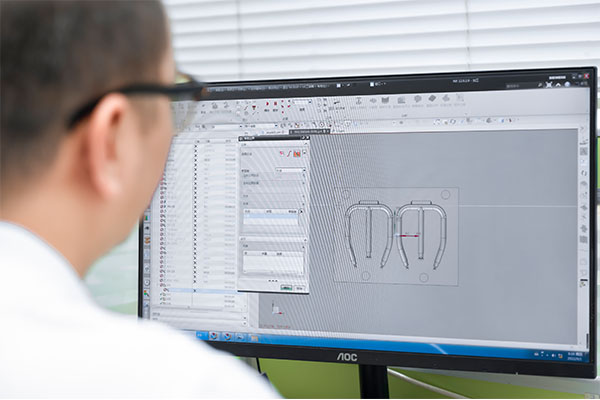
STEP 1: Requirement Review
Every project starts by confirming the artwork, finished size, thickness, color layout, attachment method, order quantity, branding requirements, packaging, and destination market requirements.
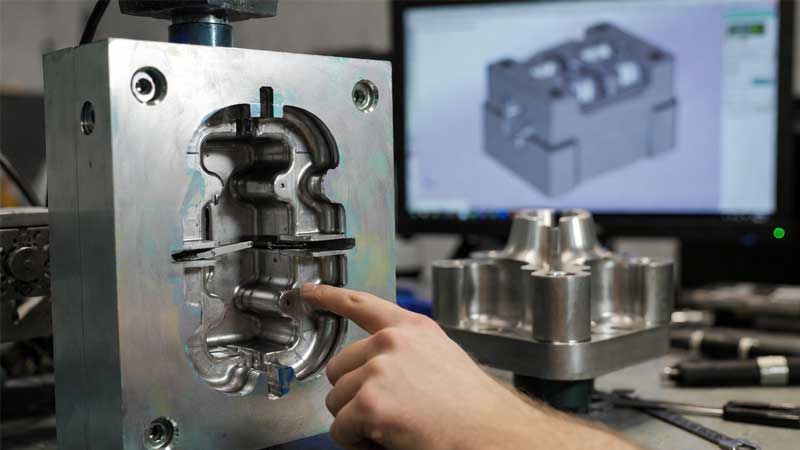
STEP 2: Tooling Evaluation
Engineers review the design for molding feasibility, paying particular attention to fine details, thin sections, color boundaries, and the strength of attachment areas.
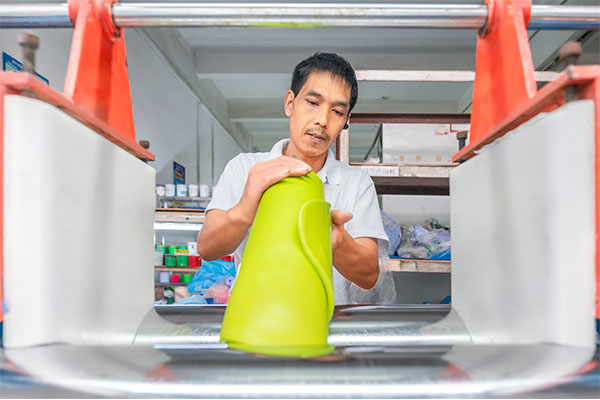
STEP 3: Material and Color Preparation
The selected silicone compound is prepared with the approved pigments according to the confirmed color layout and product requirements before production begins.

STEP 4: Silicone Molding
The silicone material is molded using the approved production process and tooling to form the required shape, thickness, surface details, and structural features.
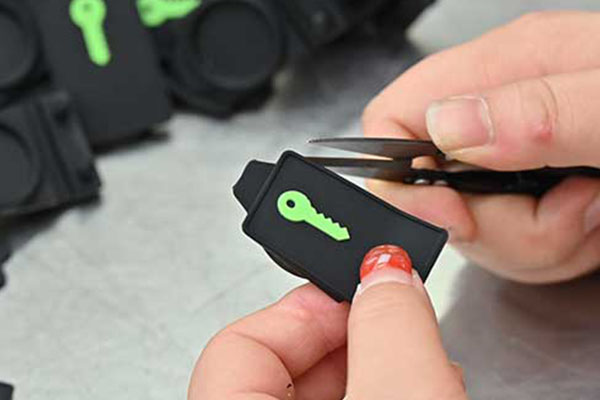
STEP 5: Demolding and Trimming
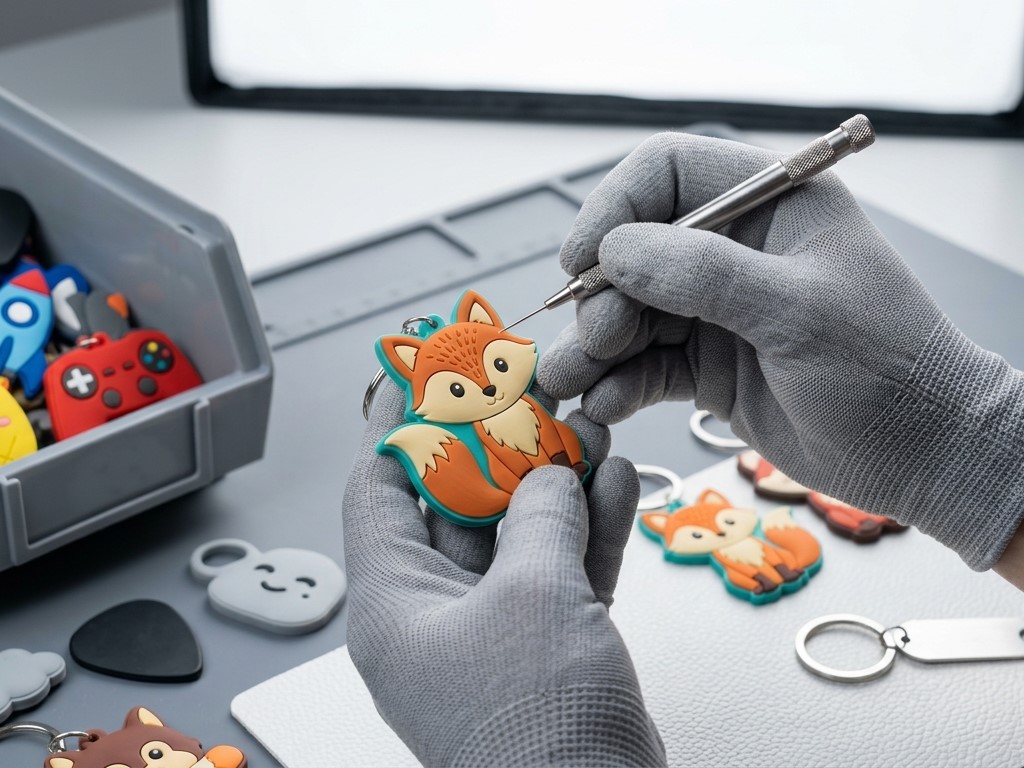
Once cured, each keychain is removed from the mold and trimmed. Edges, fine details, and attachment areas are checked for incomplete molding or irregular flash.
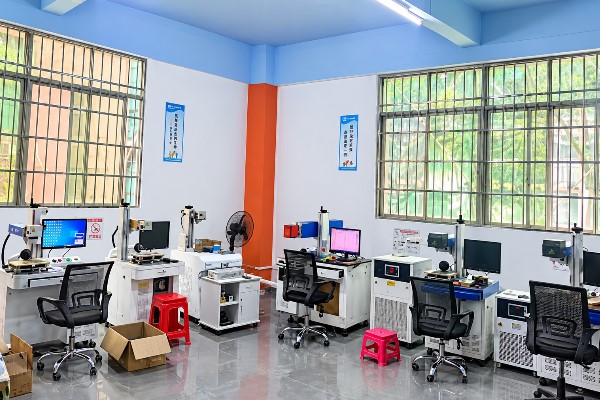
STEP 6: Branding & Hardware Assembly
Molded artwork, printing, or additional branding is completed according to the approved sample, followed by installation of key rings, chains, clasps, or specified hardware.
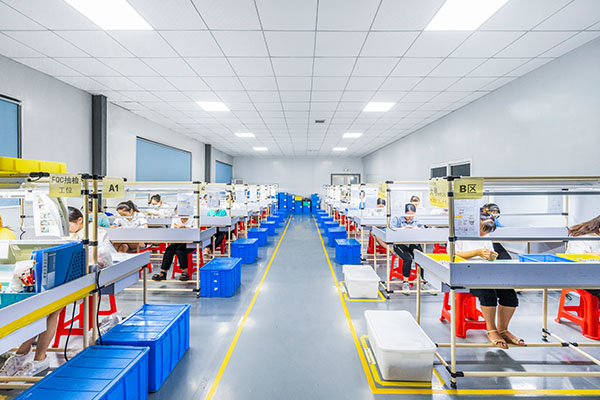
STEP 7: Quality Inspection & Testing
The finished products are inspected against the approved sample and confirmed specifications, covering appearance, dimensions, color, artwork, attachment assembly, and packaging requirements.

STEP 8: Packaging and Shipment
After final inspection, the silicone keychains are counted, packed, labeled, and carton-marked according to the approved packaging plan and shipping requirements.
Silicone Keychain Quality Control
Quality control begins before the final inspection. The most important checkpoints for custom silicone keychains include artwork reproduction, color consistency, molded structure, and reliable attachment assembly.
AQL 2.5 / 4.0 Standard Inspection
Final random inspection can follow an agreed sampling standard based on the purchase order and project requirements.
AQL 2.5
Critical / Major Defects
AQL 4.0
Minor Visual Flaws
Another inspection standard can be used when it is defined in the purchase order or customer quality requirements.
Approved Sample Control
The approved sample becomes the production reference for:
- Finished shape
- Overall dimensions
- Thickness
- Color appearance
- Surface finish
- Molded artwork
- Printed details
- Hardware type
- Attachment position
- Packaging presentation
Incoming Material Review
Incoming materials are checked against the confirmed project requirements before production.
This review can include:
- Silicone compound identification
- Approved pigment requirements
- Hardware specifications
- Packaging materials
- Artwork-related production requirements
- Available project documentation
Materials should match the confirmed production plan rather than being substituted simply because they appear visually similar.
In-Process Inspection
Production operators monitor key manufacturing details during molding and finishing.
Inspection focuses on:
- Complete filling
- Molded detail definition
- Color separation
- Surface consistency
- Flash around edges.
- Incomplete sections
- Visible deformation
- Attachment-hole integrity
Early detection matters because a molding issue repeated across a production run can affect thousands of promotional or retail products.
Appearance Inspection
Each finished silicone keychain is reviewed for visible defects that may affect product presentation.
The inspection can include:
- Tears
- Surface contamination
- Excessive flash
- Incomplete molding
- Bubbles
- Surface damage
- Irregular edges
- Visible deformation
- Color contamination
- Damaged molded details
The acceptance standard should match the approved sample and agreed quality requirements.
Dimensions & Thickness
Finished dimensions are checked against the approved specification.
Key measurements may include:
- Overall length
- Overall width
- Product thickness
- Attachment-hole size
- Hardware connection dimensions
- Critical logo features
For designs with fine details, measurement should focus on the features that affect usability and visual recognition rather than measuring every non-critical decorative surface.
Color Consistency
Production colors are compared with the approved standard under suitable controlled viewing conditions.
Color inspection may cover:
- Main silicone color
- Multi-color separation
- Visible contamination
- Consistency between production pieces
- Match with the approved sample
Pantone references provide an important development target, but the approved physical sample remains the practical production reference for the finished molded appearance.
Logo & Artwork Quality
Custom artwork is inspected for clarity and consistency.
The inspection includes:
- Logo position
- Raised detail definition
- Recessed detail definition
- Text readability
- Color boundaries
- Missing artwork
- Blurred printing
- Uneven ink coverage
- Incorrect orientation
Small artwork features deserve particular attention because they are often the first areas where tooling, molding, or finishing variation becomes visible.
Hardware & Attachment Inspection
The hardware is checked against the approved project requirements before packaging.
Inspection may include:
- Correct hardware type
- Correct hardware finish
- Ring or clasp installation
- Attachment position
- Visible damage
- Sharp or irregular edges
- Connection integrity
A keychain should be evaluated as a complete assembly. A well-molded silicone body still creates a poor finished product if the attachment hardware is incorrectly installed.
Packaging Inspection
Before shipment, the packaging is checked against the approved packing requirements.
This may include:
- Correct product quantity
- Individual packaging
- Header cards
- Barcode labels
- SKU information
- Printed inserts
- Retail presentation
- Carton quantity
- Shipping marks
For e-commerce and retail programs, packaging approval should happen early enough to avoid the product being finished before its printed packaging materials are ready.
Silicone Keychain Packaging Options
Plan packaging early to align retail materials, barcodes, and printed component schedules.

Bulk Packaging
Simple bags or multi-piece packing help control costs for wholesalers, promotional distributors, and large-volume projects requiring efficient handling and shipment.
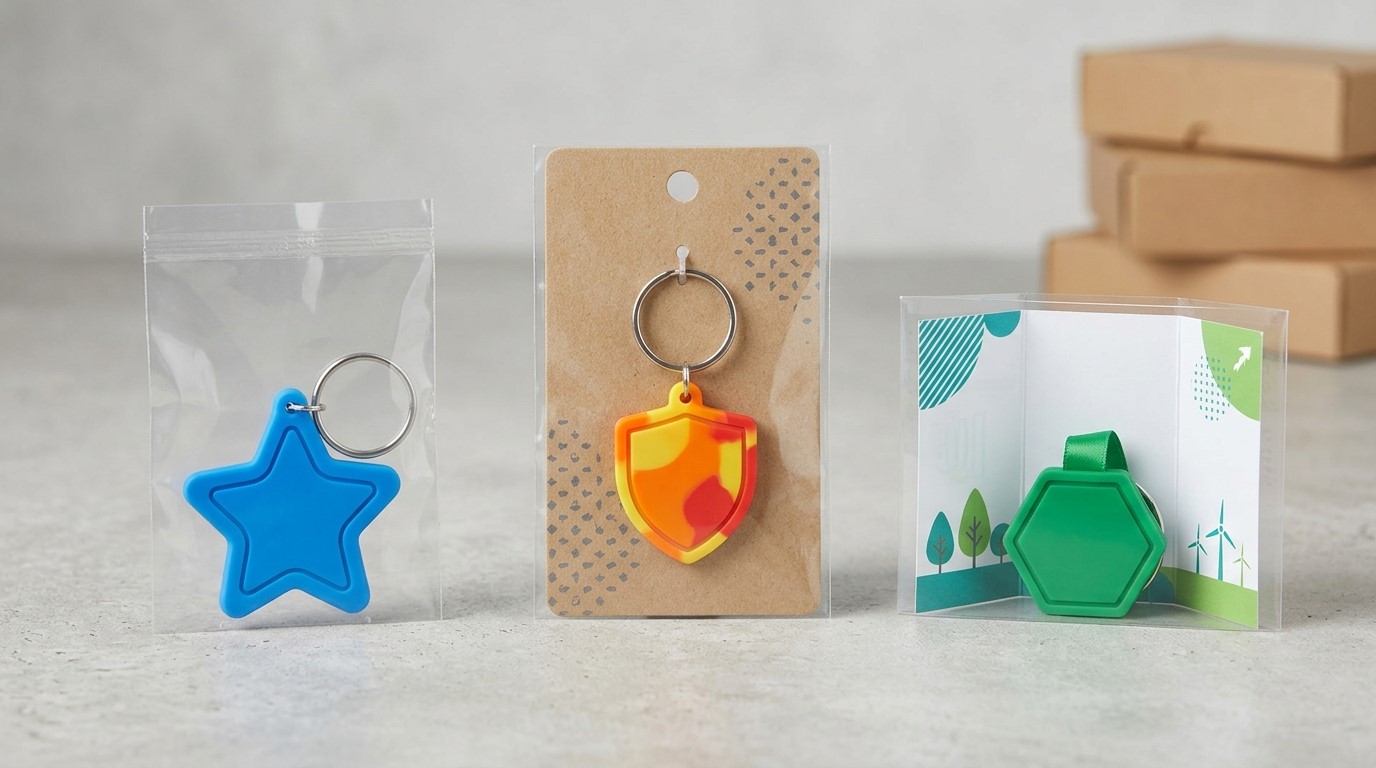
Retail Packaging
Individual bags, backing cards, or campaign inserts improve presentation while supporting branded giveaways, events, and marketing programs with clear distribution requirements.
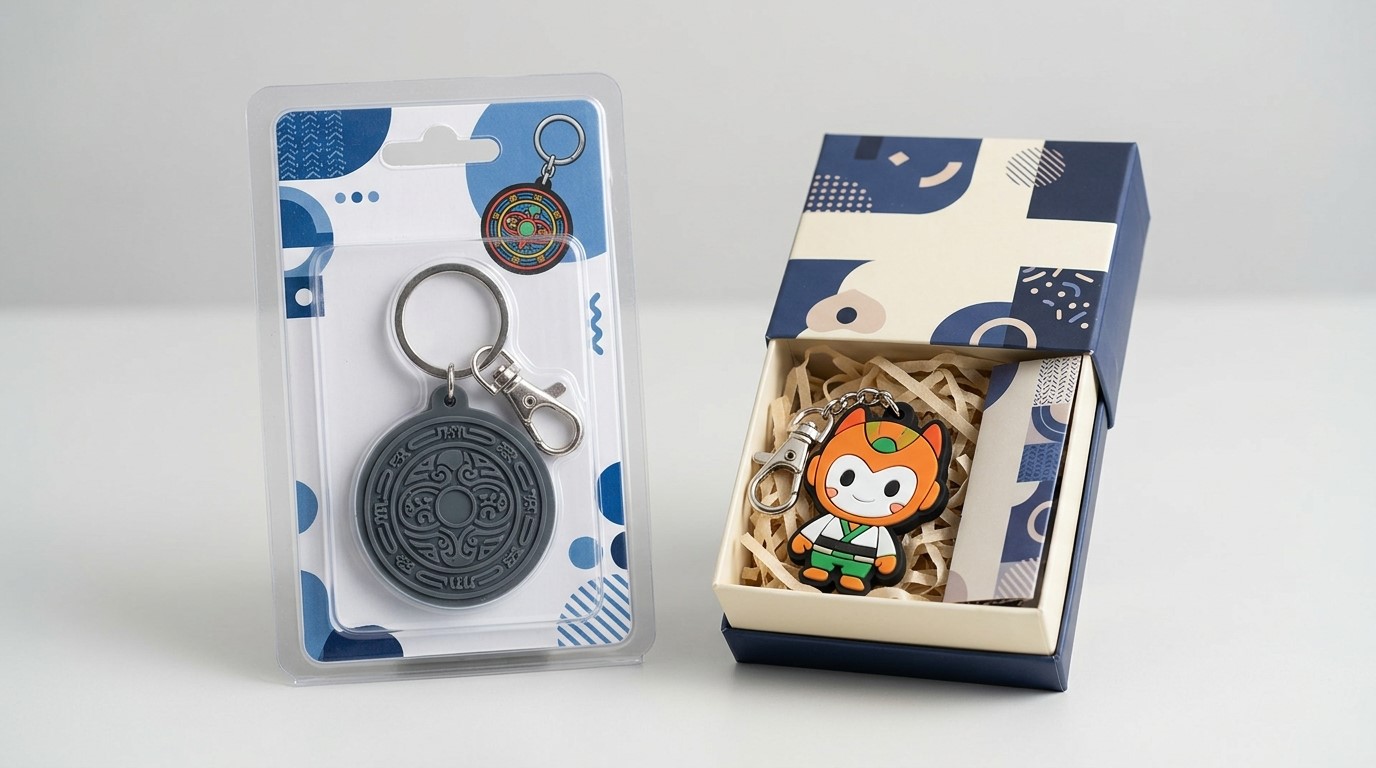
Ecommerce Packaging
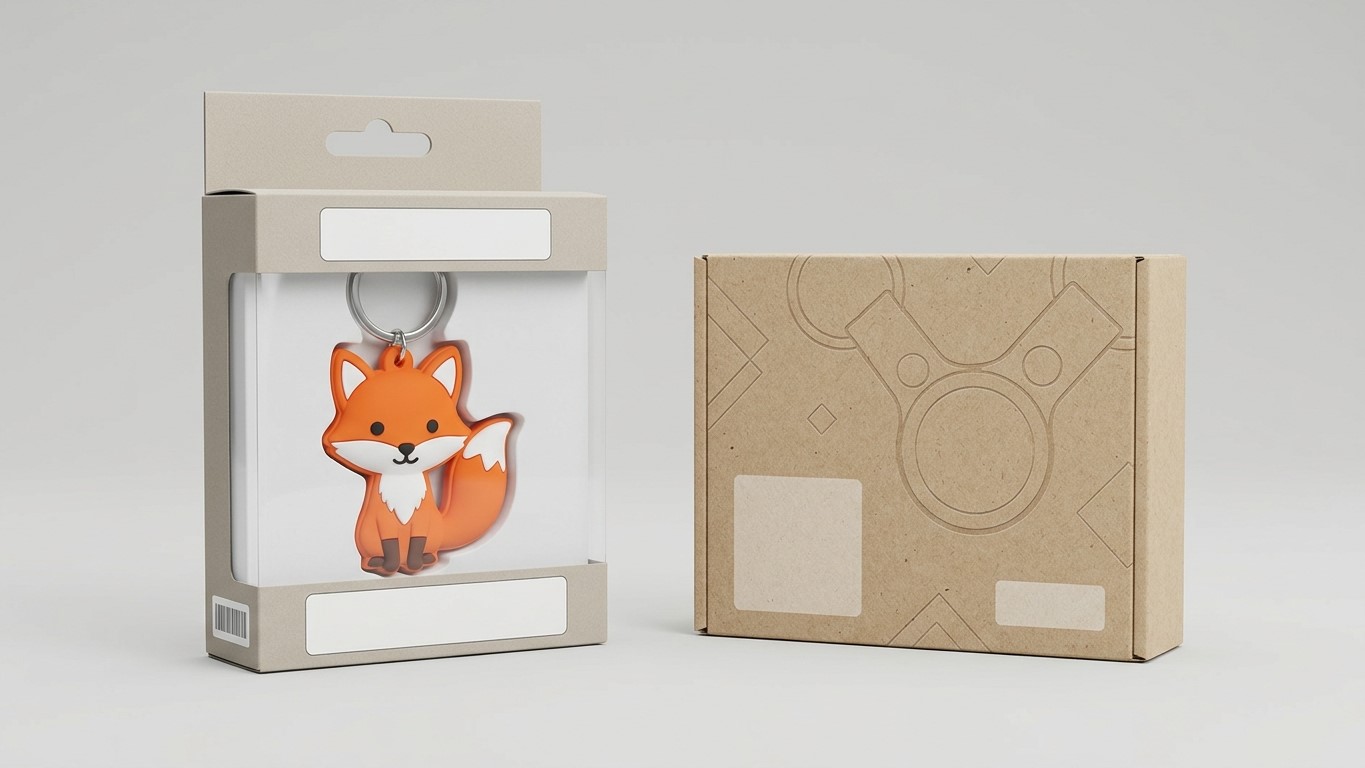
Header cards, barcode labels, printed inserts, and individual retail packaging prepare silicone keychains for stores, marketplaces, and private-label sales channels.
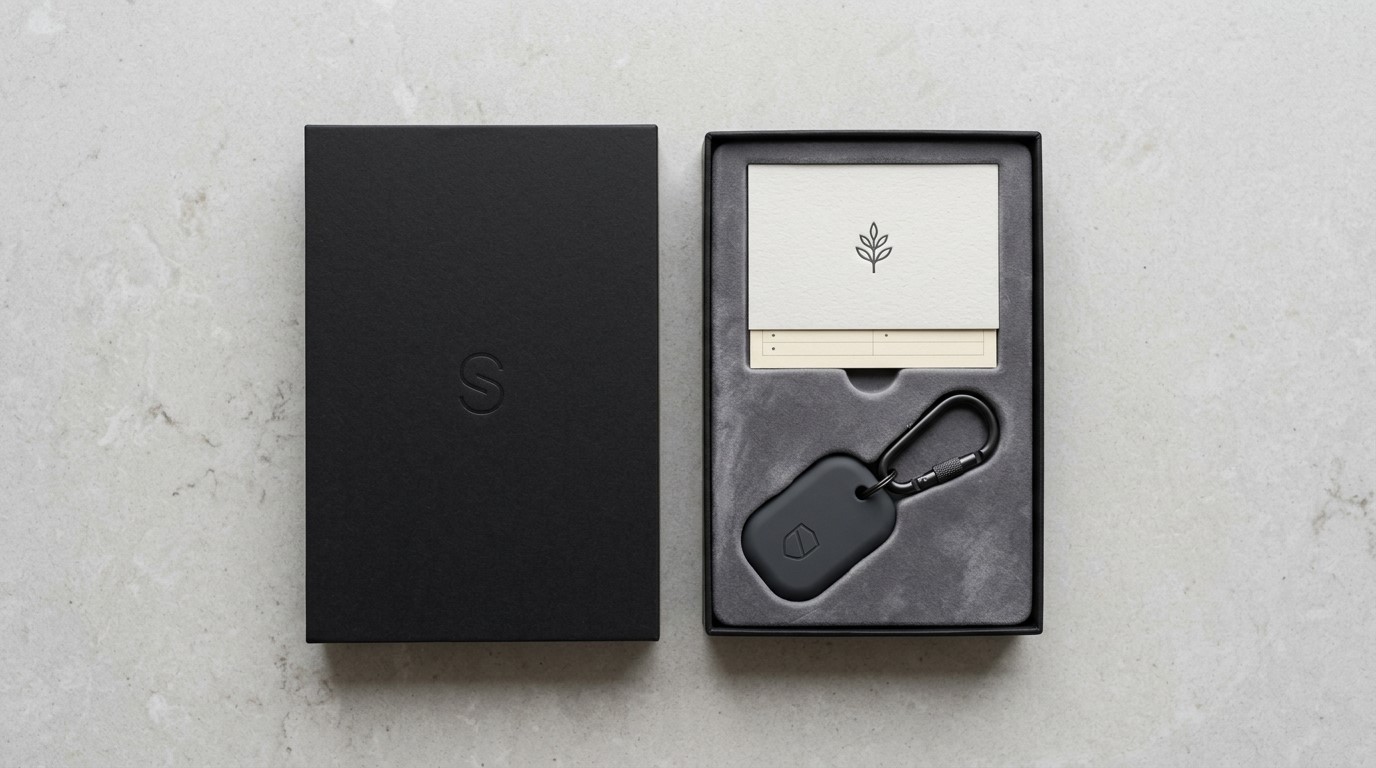
Premium Brand Packaging
Custom-printed boxes, branded cards, and coordinated inserts create stronger shelf presentation for licensed merchandise, gift programs, and higher-value retail collections.
Typical Custom Silicone Keychain Specifications
| Specification | Typical Reference |
|---|---|
| Product | Custom silicone keychain |
| Applications | Promotional gifts, branded merchandise, retail accessories, souvenirs, and private-label products |
| Material | Silicone rubber, selected according to project requirements |
| Product structure | Flat, 2D, layered, or 3D molded design |
| Overall size | Custom dimensions based on approved artwork |
| Thickness | Custom according to product structure and molded detail |
| Hardness | Selected according to flexibility, shape retention, and application requirements |
| Shape | Custom logo, character, mascot, symbol, or original artwork |
| Colors | Standard colors or custom Pantone matching |
| Artwork | Raised, recessed, molded, or selected printed details |
| Surface finish | Matte, glossy, or fine molded texture |
| Logo methods | Embossed, debossed, molded artwork, screen printing, or pad printing |
| Attachment hardware | Split ring, ball chain, lobster clasp, carabiner, or custom attachment |
| Attachment structure | Molded hole, reinforced connection area, or custom mounting design |
| Packaging | Bulk, individual bag, backing card, header card, retail packaging, or custom printed presentation |
| MOQ | Confirmed according to design complexity, tooling, and packaging requirements |
| Sample lead time | Confirmed after artwork and project requirements are reviewed |
| Mass-production lead time | Confirmed according to order quantity and approved production plan |
| Quality inspection | Approved sample plus agreed inspection requirements |
| OEM / ODM | Available |
All figures are initial project references, and final specifications are confirmed through artwork review, sampling, and production approval.
Why Work with RY Silicone

Silicone Manufacturing Experience Since 2012
RY Silicone is a China-based manufacturer specializing in custom silicone product development and manufacturing since 2012.
We support projects from design evaluation and sampling through molding, finishing, inspection, packaging, and export preparation.
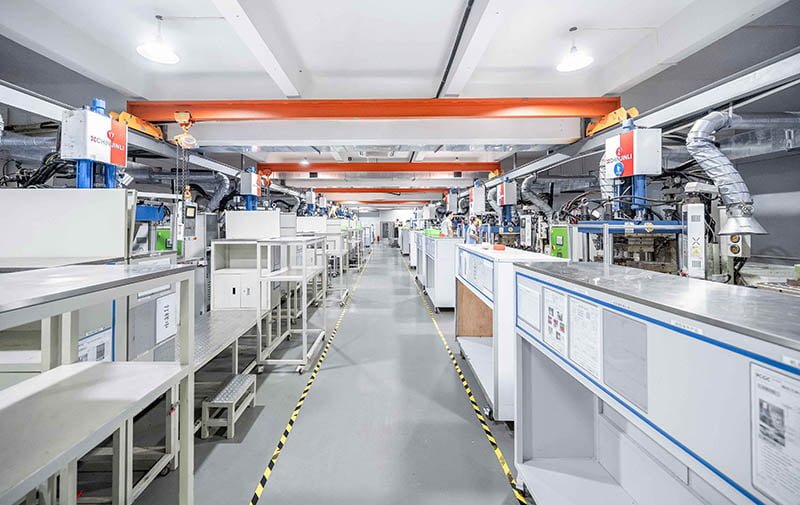
10,000+ m² Production Facility
Our 10,000+ m² production facility supports silicone molding, finishing, quality inspection, and packaging within a coordinated manufacturing operation for custom and bulk projects.

30+ Production Machines
More than 30 production machines support different product structures, order volumes, and manufacturing requirements. Production planning is matched to the approved design and delivery schedule.
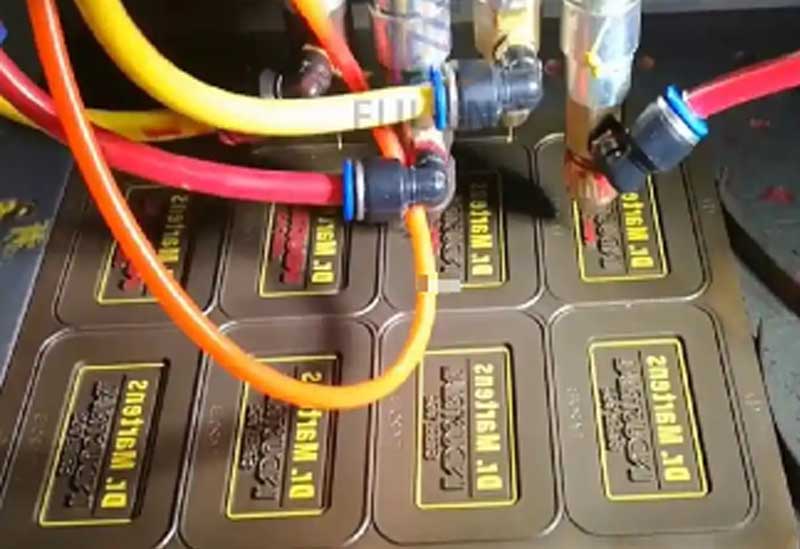
Up to 100,000 Silicone Products per Day
Our production capacity can reach up to 100,000 silicone products per day across applicable product programs.
Actual silicone keychain capacity depends on design complexity, molding cycle time, hardware assembly, and inspection requirements.

Engineering Review Before Quotation
We do not quote a custom silicone keychain based only on a product name or image.
Before confirming a manufacturing proposal, our team reviews the artwork and finished structure, then checks dimensions, thickness, colors, molded details, hardware, and packaging requirements.
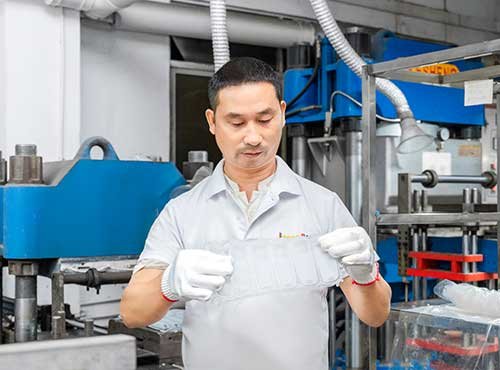
Sample-Based Production
Mass production is controlled against the approved sample. Product shape, color, and artwork are confirmed first, followed by surface appearance, hardware assembly, and packaging presentation.
If a production requirement conflicts with the approved reference, the issue should be clarified before continuing with the affected production decision.

Export Project Support
RY Silicone supplies custom silicone products to international brands, distributors, and wholesalers.
Our team supports commercial communication, project documentation, packaging coordination, and shipment preparation for customers serving North America, Europe, and other international markets.
Silicone Keychain FAQ and Final RFQ
What is the MOQ for custom silicone keychains?
MOQ depends on the design, production method, tooling requirements, hardware, and packaging. Existing-style products with customized branding may require a lower minimum than a completely new custom-shaped keychain.
Send your artwork and target quantity for a project-specific MOQ evaluation.
Can you make a silicone keychain from our logo?
Yes.
RY Silicone can review your logo or vector artwork to see if it can be made into a molded silicone keychain.
Very thin lines, extremely small text, and narrow gaps may need to be adjusted before tooling to ensure that the finished product clearly reproduces the design.
What artwork file format do you need?
AI, EPS, SVG, and vector PDF files are preferred for custom logo and artwork projects.
Please provide the intended dimensions and color references with the artwork. Providing a reference image can also help to clarify the desired finished appearance.
Can you make custom-shaped silicone keychains?
Yes. We can develop custom keychains around logos, mascots, characters, symbols, products, and original artwork.
Before tooling begins, the final shape is reviewed for molding feasibility, structural strength, fine details, and the attachment position.
What is the difference between 2D and 3D silicone keychains?
A 2D silicone keychain typically uses layered raised and recessed artwork to create visual depth on a relatively flat surface.
A 3D design uses more sculpted geometry and dimensional features. The best option depends on the artwork, product identity, and the desired visual effect.
Can you match our Pantone colors?
We can develop custom Pantone color matching for silicone keychains.
A physical production sample must be approved before mass production, as molded geometry, thickness, and surface texture can affect how the finished color is perceived.
What hardware options are available?
Attachment options can include split key rings, ball chains, lobster clasps, carabiners, and other suitable hardware.
The hardware and silicone connection structure should be selected together because the size of the attachment and pulling forces can affect the final product design.
Can you add a logo to both sides of the keychain?
Yes, depending on the selected structure and artwork.
Front and back details can be incorporated into the molded design when the tooling and product geometry support the artwork requirements.
Which silicone hardness is best for a keychain?
The optimal hardness depends on the product's thickness, shape, molded details, and required flexibility.
A softer material is not necessarily the best choice; a firmer material may be more suitable if the design requires stronger shape retention or structural support.
Can you provide samples before mass production?
Yes, sampling allows you to review the finished product's shape, color, artwork, surface appearance, and hardware assembly before production begins.
The approved sample then serves as an important reference for the production process.
How long does custom silicone keychain production take?
The lead time depends on the complexity of the artwork, tooling requirements, sample approval, order quantity, hardware availability, and packaging.
The production schedule should be confirmed after reviewing the project requirements rather than basing it only on the product category.
Can you provide material or compliance documentation?
The available documentation depends on the selected silicone compound, pigments, finished product configuration, and destination market.
Please provide your required standard or document list during the quotation stage so that we can evaluate your project correctly.
What information do you need to quote a custom silicone keychain?
Please provide:
- Design files
- Target order quantity
- Logo or artwork file
- Reference image or design concept
- Finished dimensions
- Preferred thickness
- 2D, layered, or 3D structure
- Pantone color references
- Front and back artwork requirements
- Hardware type
- Packaging requirements
- Destination country
- Required documentation
- Target delivery date
The more complete the project information, the more accurately we can evaluate tooling, production requirements, and quotation details.