
Silicone Tea Infuser Manufacturer
Reusable silicone tea infusers for loose-leaf tea, mugs, teapots, and drinkware accessories. Custom shapes, opening patterns, colors, molded logos, and retail packaging for OEM and private-label programs.
Home » Silicone Kitchen Products » Silicone Kitchen Gadgets » Silicone Tea Infuser
What Is a Silicone Tea Infuser?
A silicone tea infuser is a reusable food-contact kitchen accessory that holds loose-leaf tea while allowing hot water to circulate through openings for controlled brewing. A custom silicone tea infuser is developed around your required shape, capacity, opening pattern, dimensions, color, branding, and packaging for retail or private-label sales.
RY Silicone is a China-based custom silicone manufacturer established in 2012. Our factory covers 10,000+ m², operates 30+ machines, and can produce up to 100,000 silicone products per day. We support OEM/ODM tea infuser programs for brands, distributors, and wholesalers serving international markets.
Silicone Tea Infuser Manufacturing at a Glance
MOQ & Lead Times
From 500 pieces for selected existing designs with custom branding, or 3,000 pieces for a new custom-molded tea infuser.
Product Specifications
Custom capacity, opening pattern, dimensions, silicone hardness, color, and structure can be developed around your brewing application.
Logo & Branding
Use molded logos, embossed or debossed details, and suitable printing methods to build consistent private-label branding.
Packaging
Choose bulk, individual retail, ecommerce-ready, or premium packaging with SKU information, barcodes, and printed inserts.
Who We Manufacture Silicone Tea Infusers For
Design tea infusers matching product positioning, brewing method, channel, and packaging.
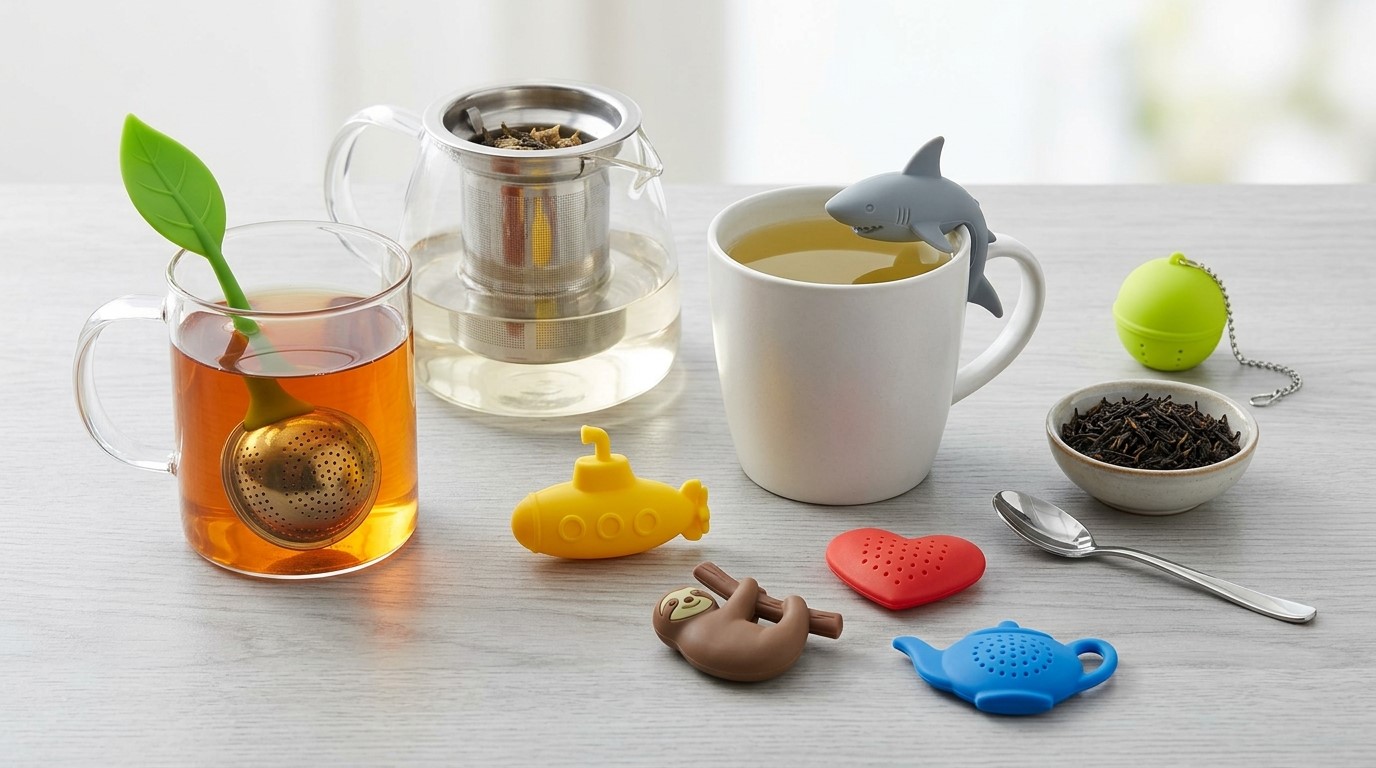
Tea & Beverage Brands
Create reusable tea accessories that match your existing drinkware range, brand colors, and retail positioning. Custom dimensions, shapes, and molded branding can help establish a consistent product family.
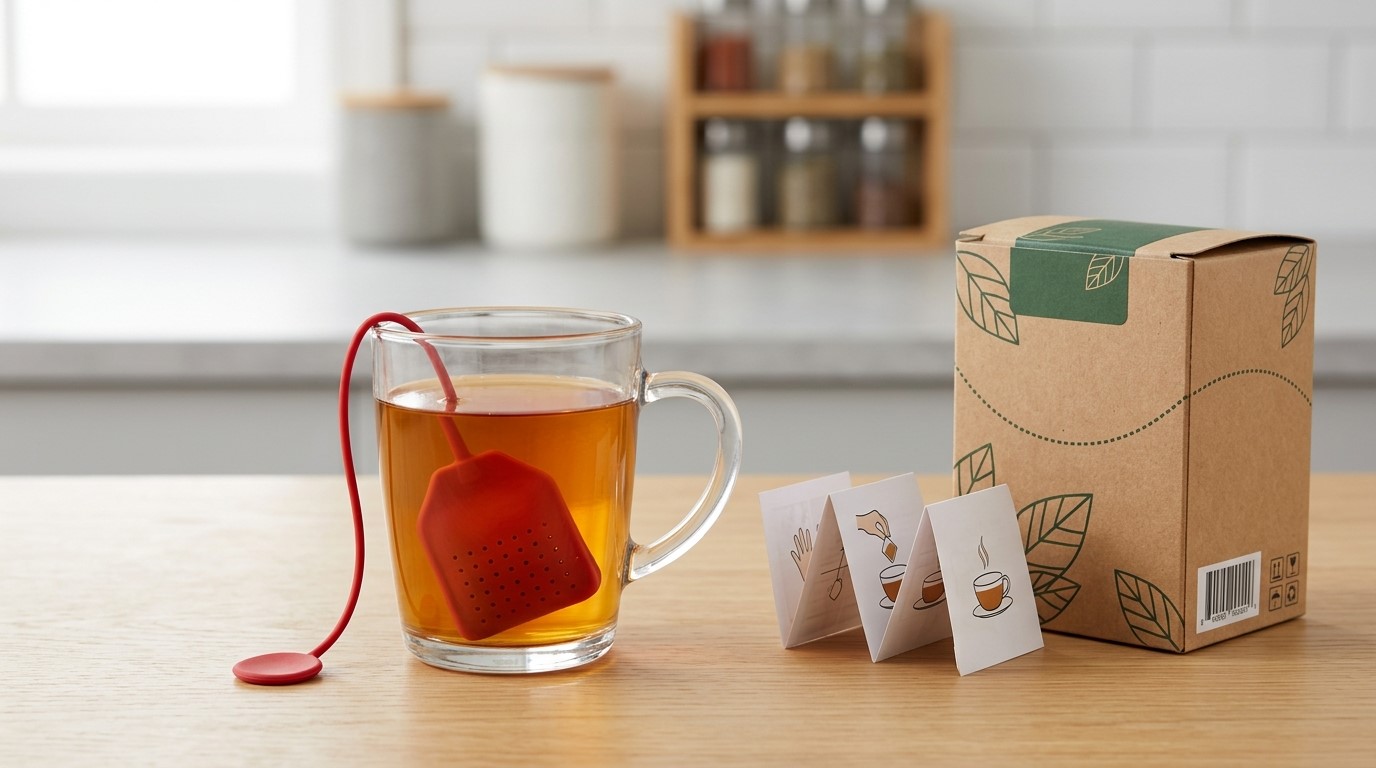
Kitchenware Brands
Add silicone tea infusers to kitchen and drinkware collections with coordinated colors, packaging, and SKU structures. Existing designs provide a faster route, while custom tooling supports distinctive product forms.
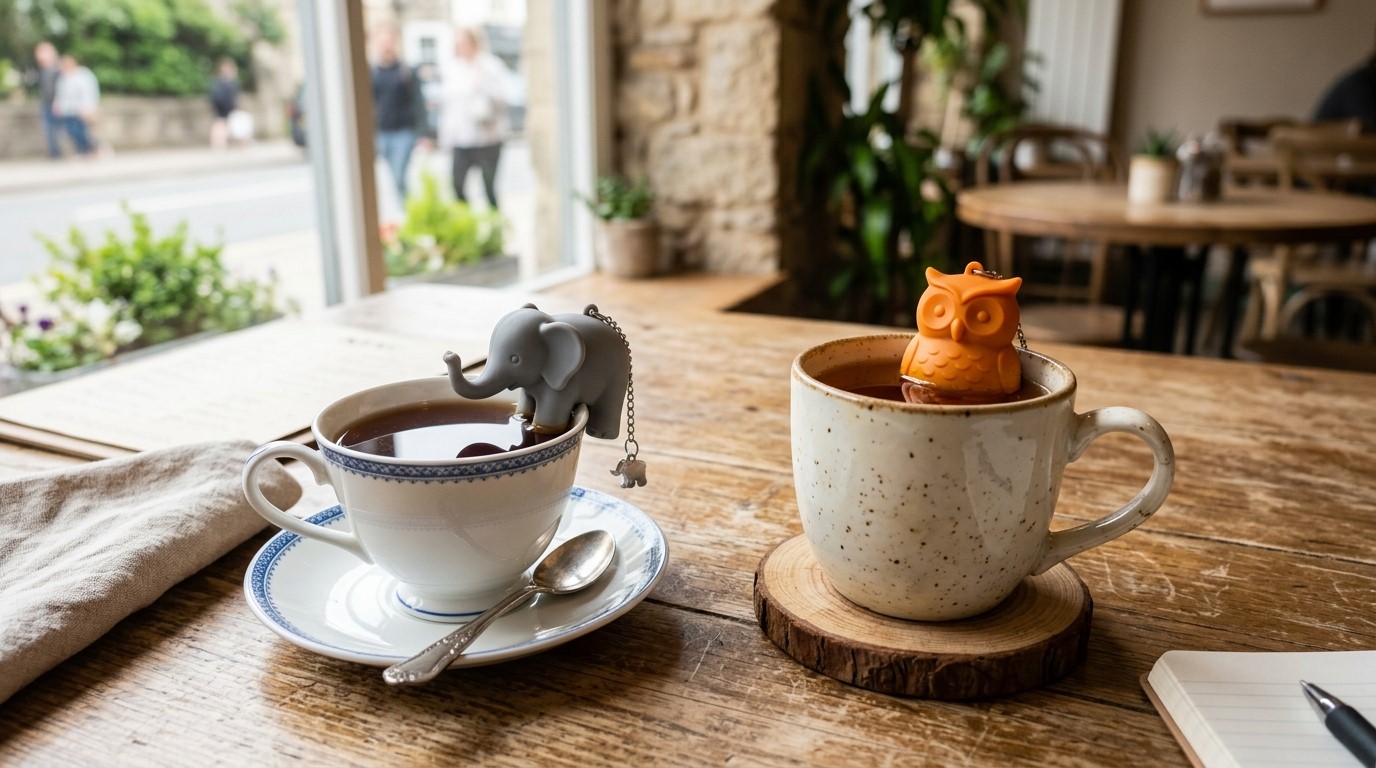
Hospitality & Tea Service Suppliers
Develop reusable infusers for hotels, cafés, restaurants, and hospitality suppliers where repeated handling, cleaning, and compatibility with common cups or teapots matter.
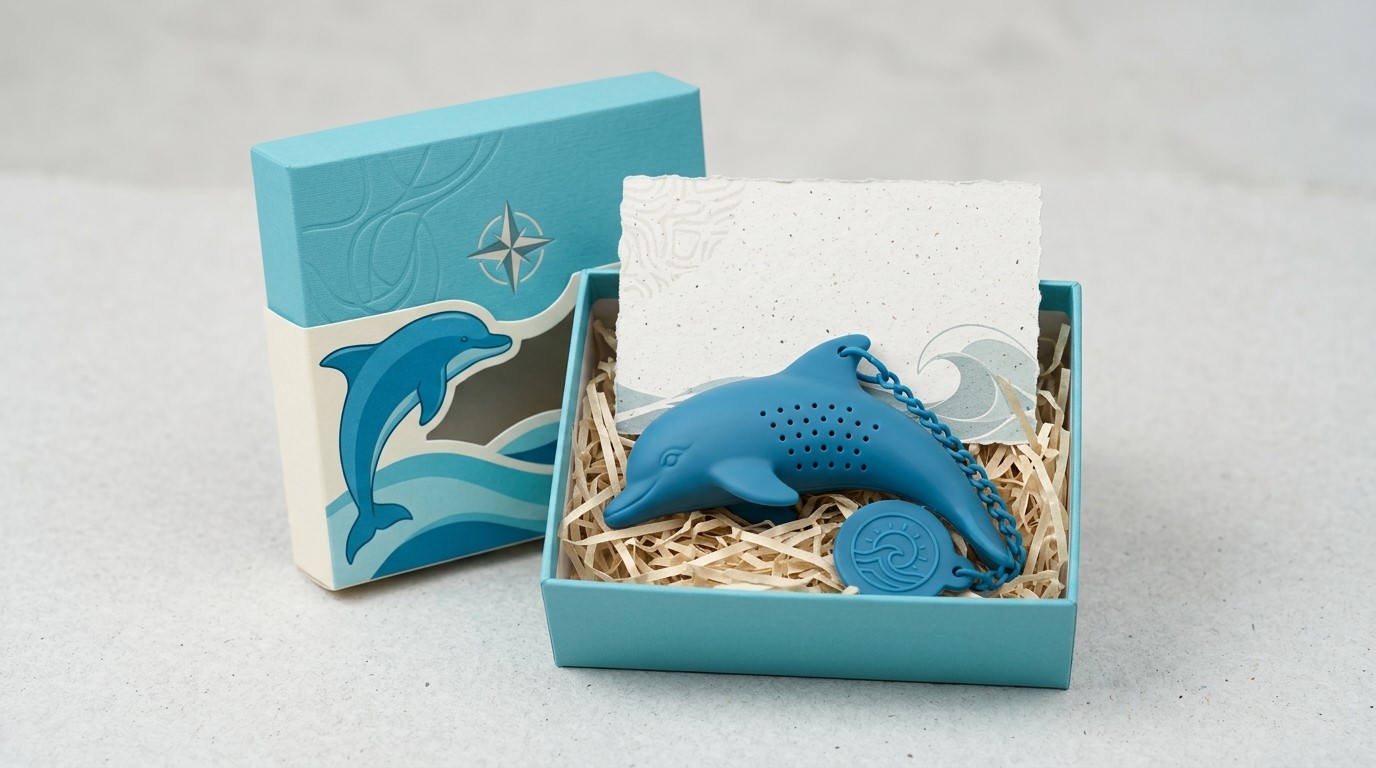
Promotional & Gift Companies
Create branded tea infusers for corporate gifts, seasonal campaigns, hospitality promotions, and tea-related gift sets. Molded branding and coordinated packaging provide a practical route for branded distribution.
Distributors & Wholesalers
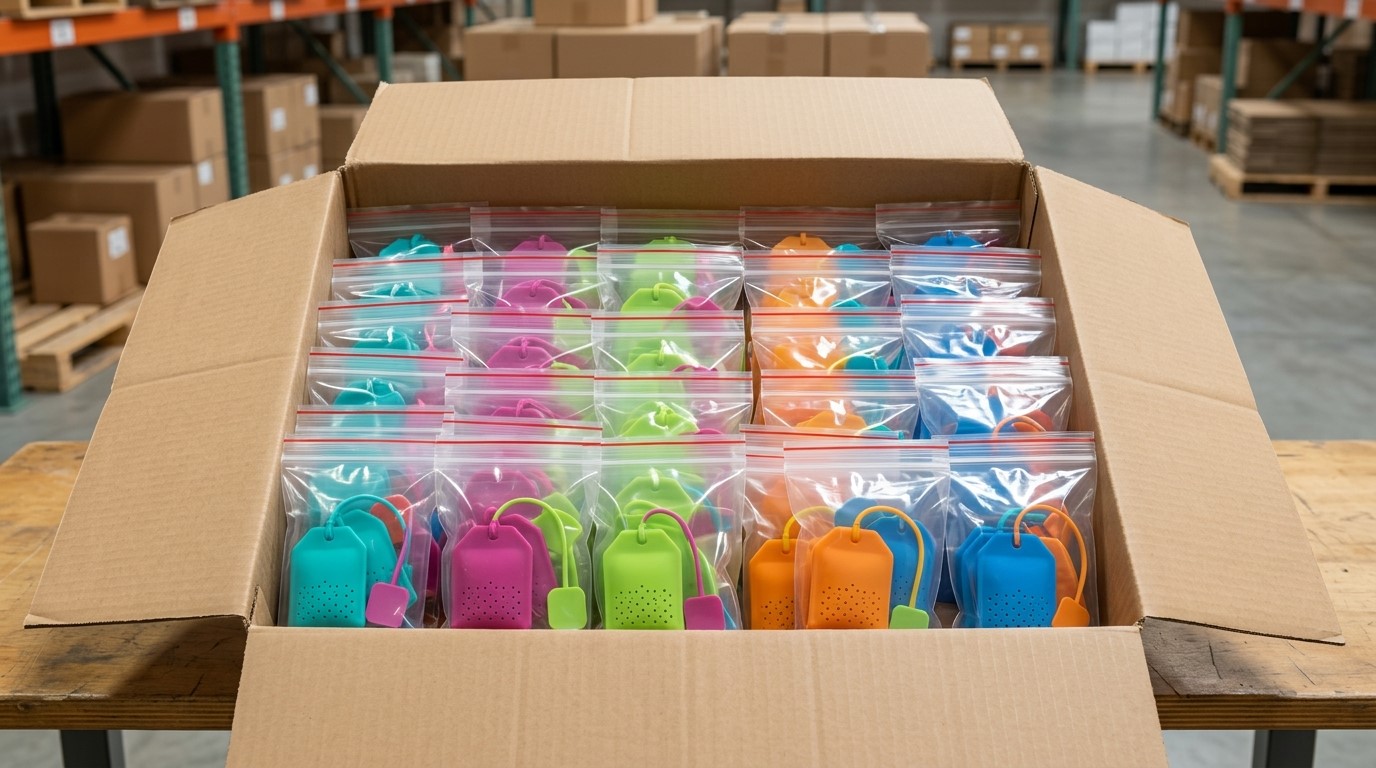
Source silicone tea infusers wholesale and in bulk for kitchenware, tea accessories, and beverage-related channels. We can support existing shapes, private-label branding, and packaging programs for different customer segments.
Retail & Ecommerce Sellers
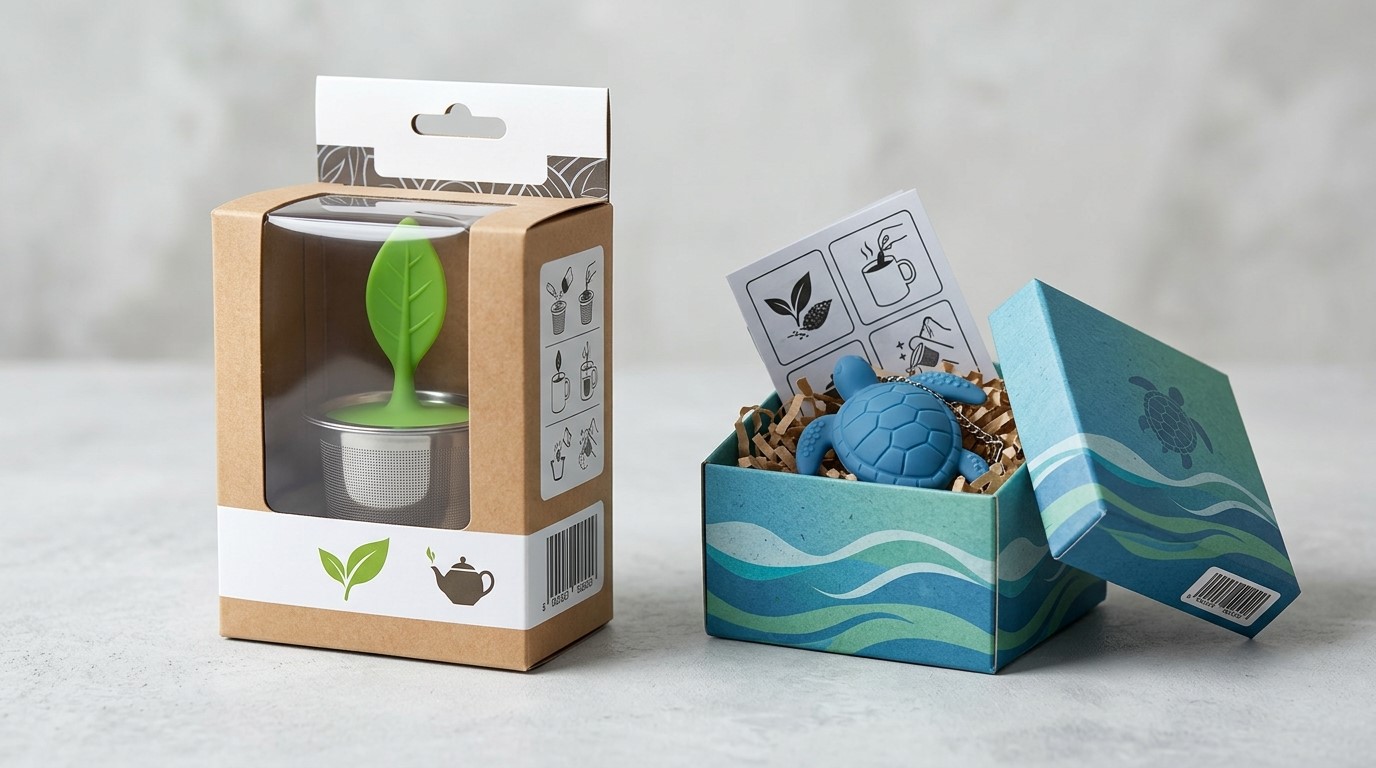
Prepare individual tea infusers for marketplaces, retail stores, and private-label websites with barcode labels, SKU information, and suitable packaging. Product structure and packaging can be developed together for easier fulfillment.
Silicone Tea Infuser Types We Can Develop
Silicone Leaf Tea Infuser
Silicone Tea Ball
Fruit-shaped Silicone Tea Infuser
Silicone Tea Infuser with Hook
Teabag-Shaped Silicone Tea Infuser
Custom-Shaped Silicone Tea Infuser
Silicone Tea Infuser Customization
Prioritize brewing performance in infuser design, then match appearance, branding, and packaging to sales channels.
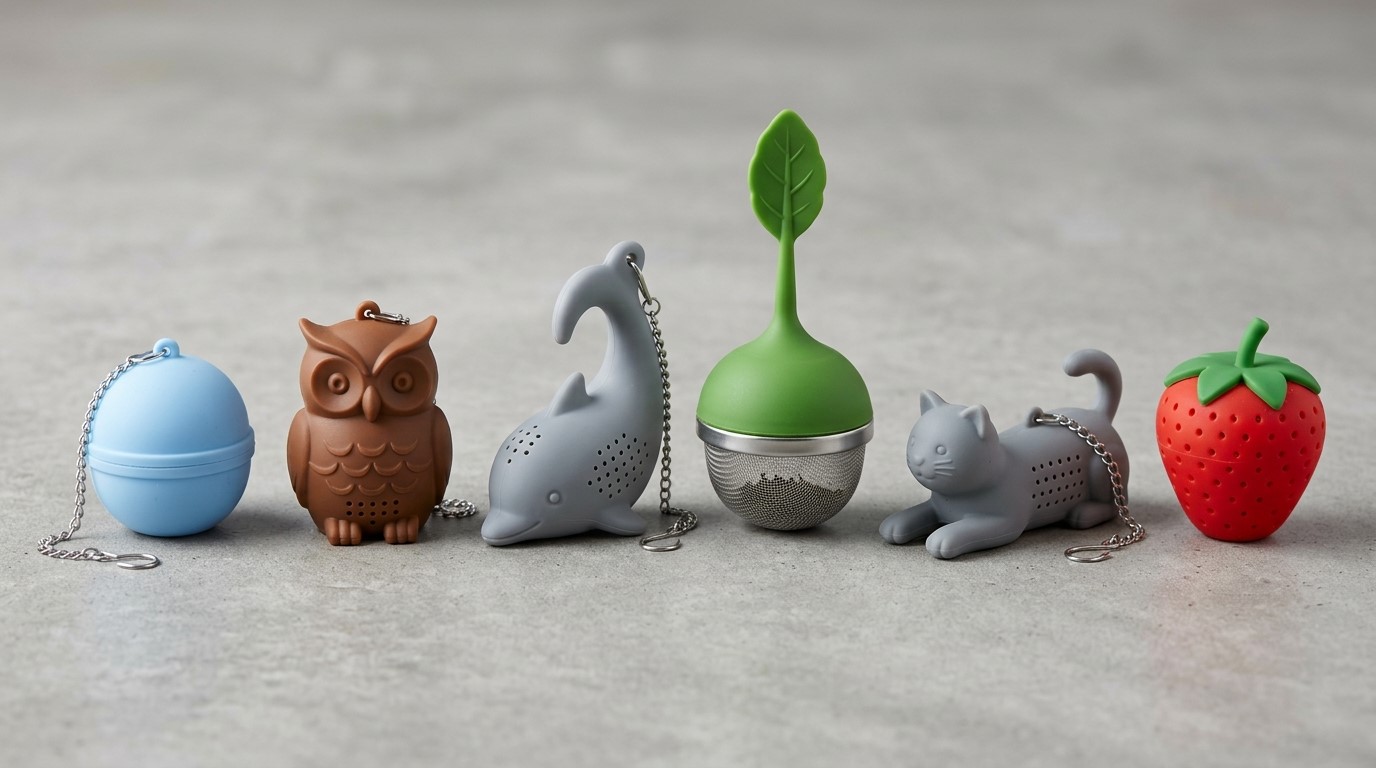
Choose a structure that matches how the infuser sits inside or attaches to your target drinkware. The overall geometry affects internal tea capacity, water circulation, stability during brewing, and ease of removal. We can work from an existing design, reference sample, or new concept and adjust the body, handle, hook, lid, or hanging structure to suit your intended cup, mug, or teapot.
Available options include:
- Basket-shaped bodies
- Ball-shaped bodies
- Cup-compatible designs
- Mug-rim structures
- Hooked designs
- Handle designs
- Lid-compatible structures
- Character or custom silhouettes
- Single-piece or multi-part constructions
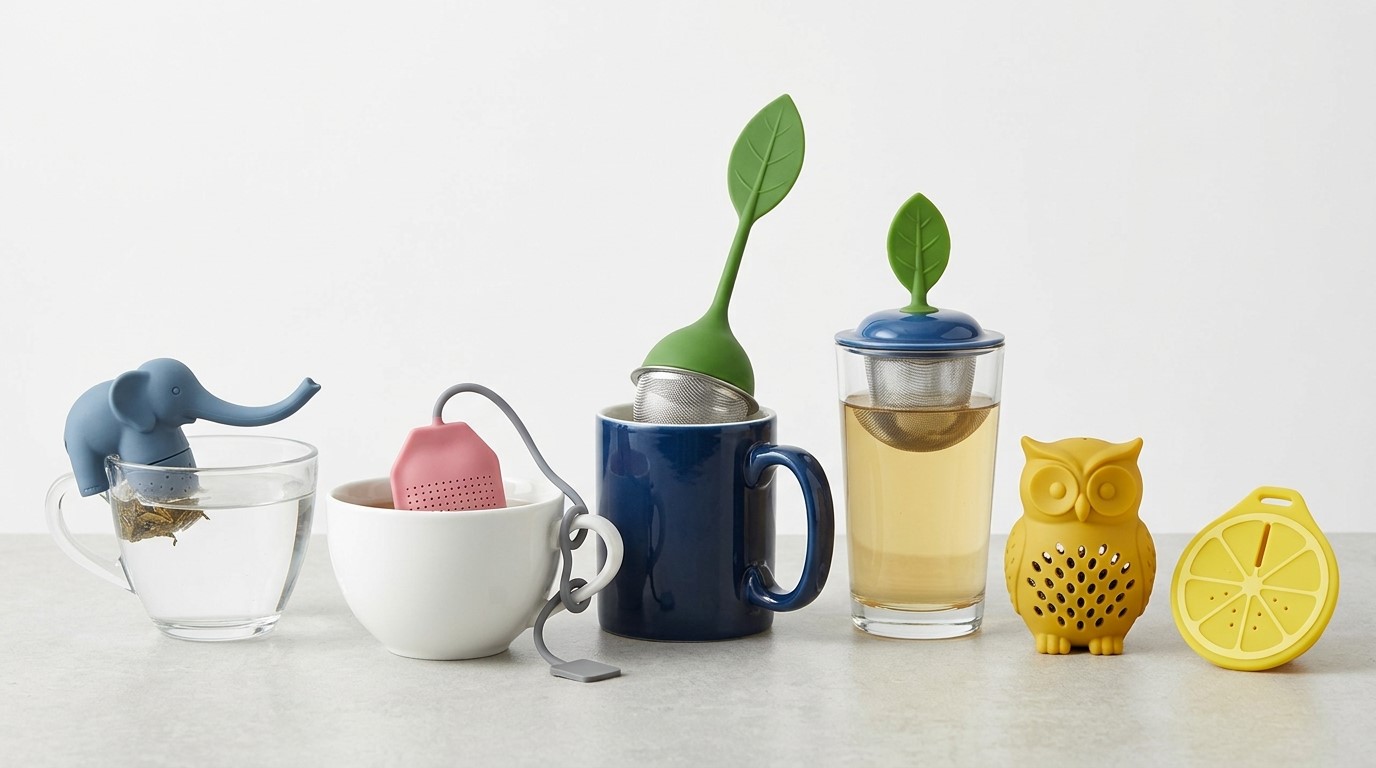
Set the dimensions around the actual brewing environment rather than treating size as an isolated cosmetic choice. The infuser needs enough internal space for loose tea to expand while remaining compatible with the target drinkware. Overall height, body diameter, wall thickness, and insertion depth can be adjusted together to create a stable and practical brewing accessory.
Available options include:
- Overall diameter
- Overall height
- Internal cavity volume
- Wall thickness
- Opening dimensions
- Handle length
- Hook width
- Lid dimensions
- Cup or mug compatibility
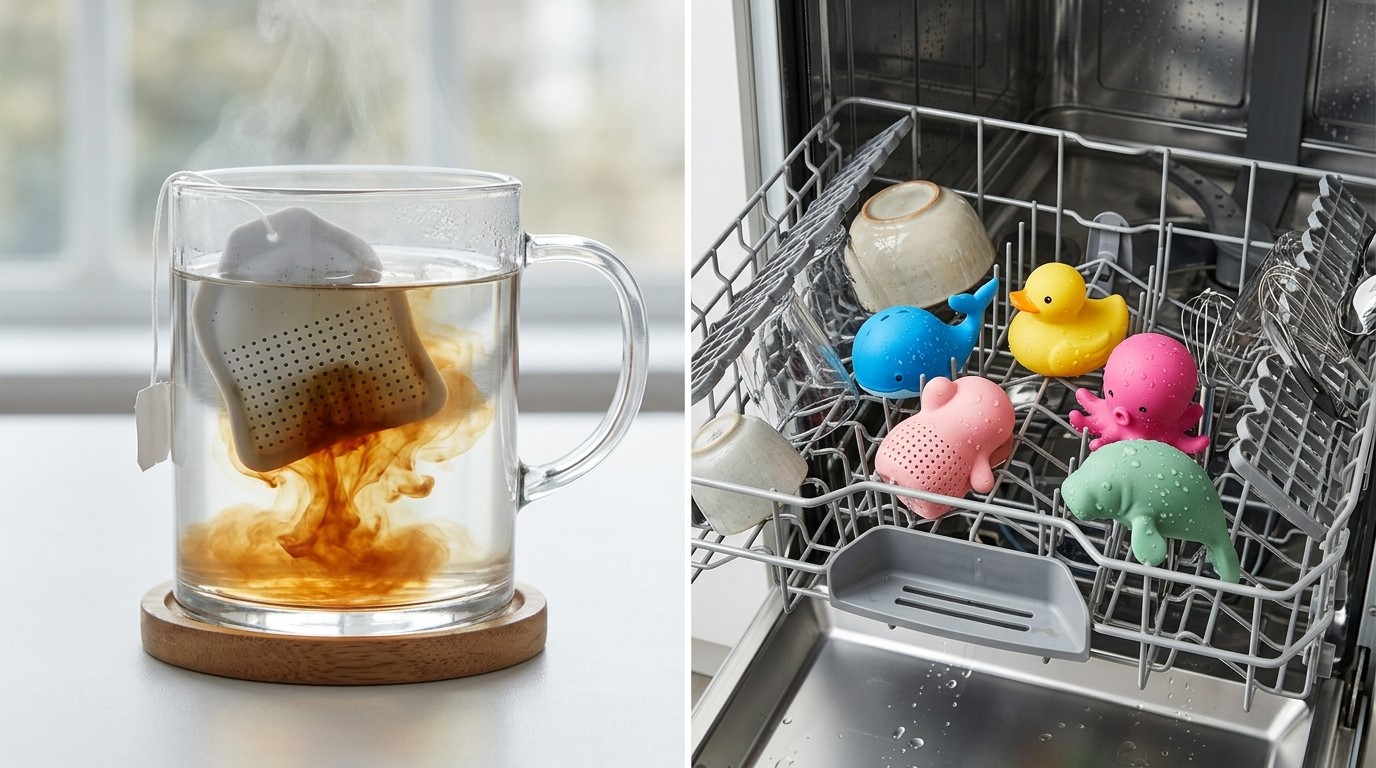
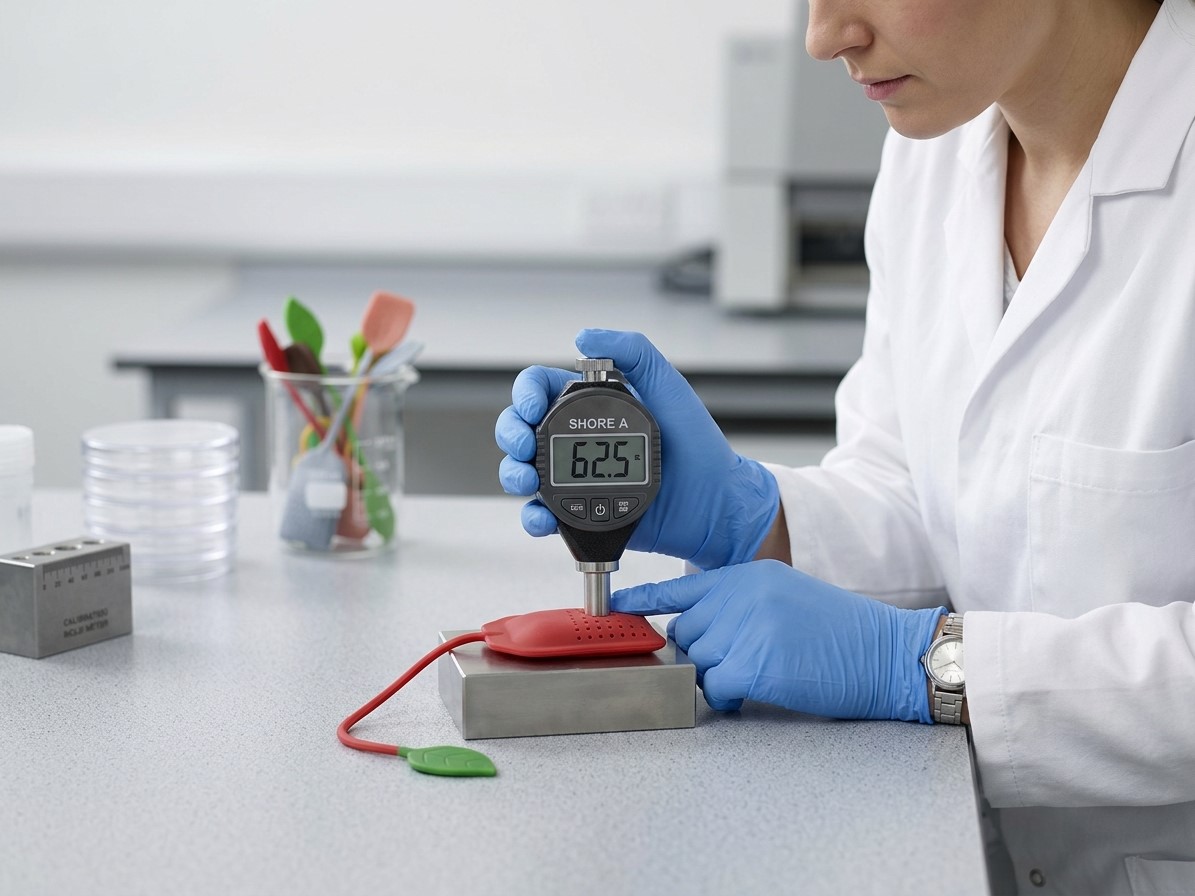
Select silicone according to the intended food-contact application, temperature exposure, flexibility, and structural requirements. Hardness affects how easily the infuser can be inserted, squeezed, or removed, while the compound and production controls determine the suitability of the finished product for the intended market. Documentation should correspond to the selected material, pigment, and final configuration.
Available options include:
- Food-contact silicone
- Different Shore A hardness levels
- Flexible or firmer structures
- Custom silicone colors
- Platinum- or peroxide-cured compounds where suitable
- Material documentation
- Market-specific compliance documentation
- Project-specific test requirements
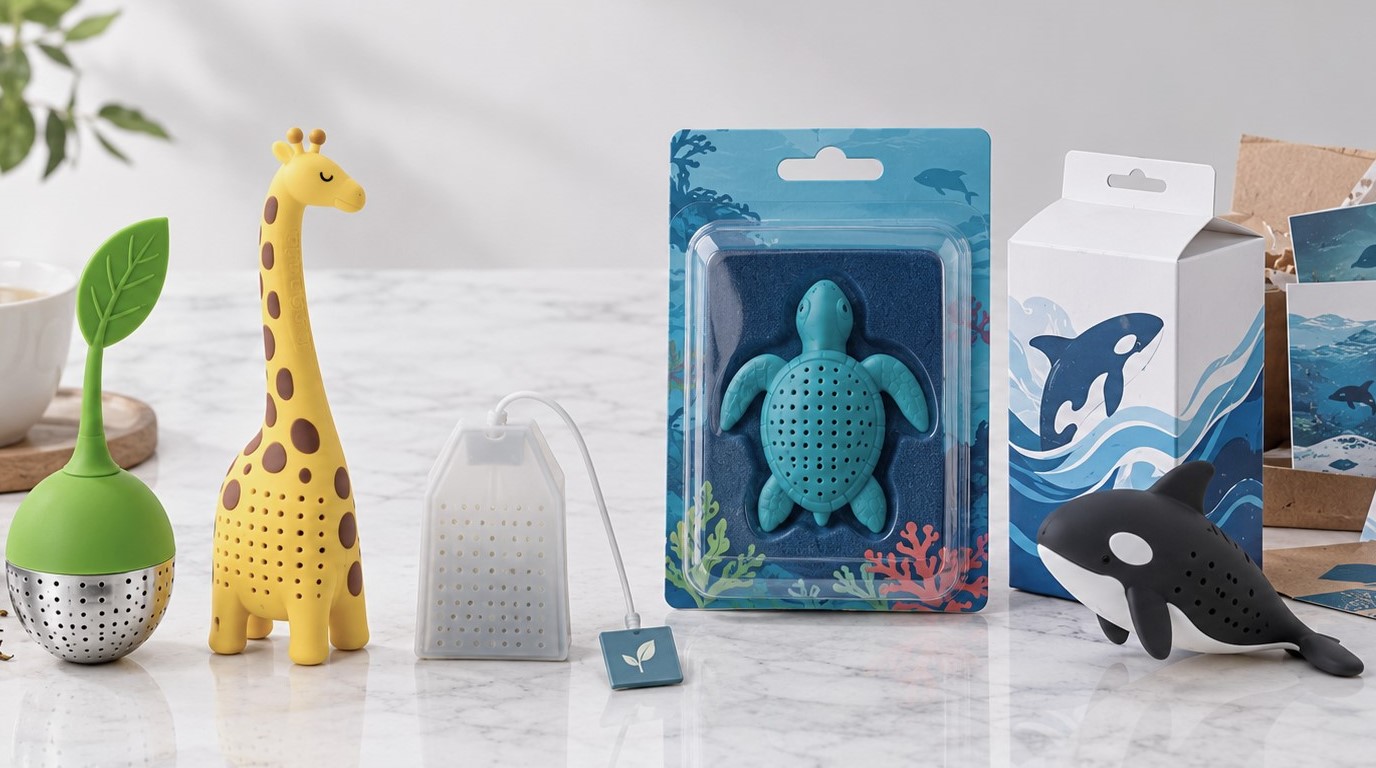
Build the tea infuser into a complete private-label SKU rather than treating the logo as a final decoration. Molded branding can be incorporated into suitable areas during tooling, while printing can be considered for appropriate non-contact surfaces. Packaging can then carry the SKU, barcode, and product information required for your retail or e-commerce channel.
Available options include:
- Embossed logos
- Debossed logos
- Molded-in branding
- Suitable screen printing
- Suitable pad printing
- Pantone color matching
- Individual OPP or PE bags
- Header cards
- Printed paper boxes
- Barcode and SKU labels
- Instruction or tea-brewing inserts
- Ecommerce-ready packaging
Start Your Custom Silicone Tea Infuser Project
Send your tea infuser design, target quantity, dimensions, tea type, and branding requirements for an engineered production proposal.
How to Specify a Better Silicone Tea Infuser
Good infusion starts with the opening pattern; internal volume and drinkware fit working together.
- Infuser capacity—Allow enough internal space for loose-leaf tea to expand rather than compressing the leaves inside a small cavity.
- Opening size—Balance water circulation with tea-leaf retention; fine teas may require a different opening structure from larger whole leaves.
- Opening distribution—Spread openings across usable surfaces so water can circulate through the tea rather than relying on one concentrated area.
- Wall thickness—Keep the silicone flexible enough for removal while maintaining dimensional stability around openings and attachment points.
- Drinkware fit—Match the body diameter, insertion depth, and hook or handle to the intended cup, mug, or teapot.
- Hardness—Select the silicone hardness according to flexibility, handling, and structural support rather than choosing hardness independently of the design.
- Cleaning access—Avoid deep corners or narrow structural gaps that can retain tea residue after brewing.
- Demolding structure—Fine openings and thin sections need sufficient tooling consideration to reduce flash, tearing, and deformation during production.
The design must suit the tea, capacity, and brewing method.
Full Specification Guide
How to Specify a Better Silicone Tea Infuser—capacity, opening size, infusion flow, leaf retention, drinkware fit, hardness, reliability of connections, and structural design.
Silicone Tea Infuser Logo & Branding Methods
Match the branding method to the logo artwork, available surface, and contact area.
Screen or Pad Printing
Printed logos add flexible color branding to suitable non-contact surfaces.
Molded-In Logos
Tooling can transfer your brand directly into the silicone component.
Embossed Logos
Raised silicone branding creates a permanent, ink-free brand mark.
Debossed Logos
Recessed branding integrates the logo directly into the silicone surface.
Silicone Tea Infuser Material & Performance Options
Silicone compound, opening structure, and design determine infuser brewing performance.
Choose a silicone compound that is appropriate for the intended beverage-contact application.
Food-contact tea infusers require material selection and production controls that are suitable for their intended use. The applicable documentation depends on the selected silicone, pigment, processing conditions, and destination market.
Material Comparison
Silicone vs. Stainless Steel vs. Nylon Mesh vs. Plastic Tea Infusers: flexibility, novelty design, temperature resistance for infusion structure, cleaning, durability, lightweight needs, and which material suits different tea accessory applications.
Opening geometry controls how water reaches the loose tea inside the infuser.
The opening pattern should allow for sufficient water exchange throughout the usable cavity. A dense pattern may restrict flow, while oversized openings can allow smaller tea particles to escape. Therefore, hole size, distribution, and tea type should be considered together.
The opening structure should contain the intended tea leaves without unnecessarily restricting brewing.
Whole-leaf tea, broken leaves, and finer tea particles behave differently during brewing. A design intended for larger leaves may not provide the same retention performance when used with finer tea particles, so the opening specifications should follow the target product range.
Silicone hardness affects handling, insertion, removal, and structural stability.
Softer silicone makes flexible bodies easier to squeeze or remove, while firmer silicone provides greater shape retention. The appropriate hardness depends on the infuser geometry, wall thickness, and attachment structure.
The selected silicone must be able to withstand the hot-water brewing environment.
Silicone is well suited to reusable tea accessories that are exposed to hot water. However, the final working range depends on the selected compound and product construction.
Specify the finished infuser according to its actual brewing environment rather than relying only on a generic material temperature rating.
Thin walls and fine openings require sufficient tear resistance around areas where stress is concentrated.
Handle joints, hooks, narrow bridges, and densely perforated sections may undergo repeated flexing during insertion and cleaning.
These areas should be reviewed during sampling because a visually acceptable prototype may require structural adjustments before volume production.
Low-odor, stable silicone is important for reusable products that come into direct contact with beverages.
Unwanted odor or residue can affect the perceived quality of a tea accessory.
Therefore, material selection, curing, and production controls should be reviewed together rather than treating odor as only a final inspection issue.
Available documentation may include:
- Material data sheets
- Material declarations
- FDA-related documentation
- LFGB-related documentation
- REACH-related reports
- Project-specific test reports like migration, toxicity, or chemical safety
The scope of the documentation should match the selected silicone, pigment, production configuration, and destination market.
Do not present a raw-material report as proof for every finished tea infuser configuration.
A practical, reusable infuser should allow tea residue to be easily removed.
Consider the body, openings, handle connections, and lid interface together during design. Smooth, accessible surfaces simplify routine cleaning, while narrow gaps and deep recesses may retain tea particles and require additional attention.
Maintenance Guide
How to Maintain Silicone Tea Infusers—Cleaning tea residue, drying, odor control, storage, and repeated-use care.
How Silicone Tea Infusers Are Manufactured
STEP 1: Requirement Review
We review tea type, brewing method, drinkware compatibility, capacity, opening pattern, dimensions, hardness, color, logo, packaging, and target-market requirements.
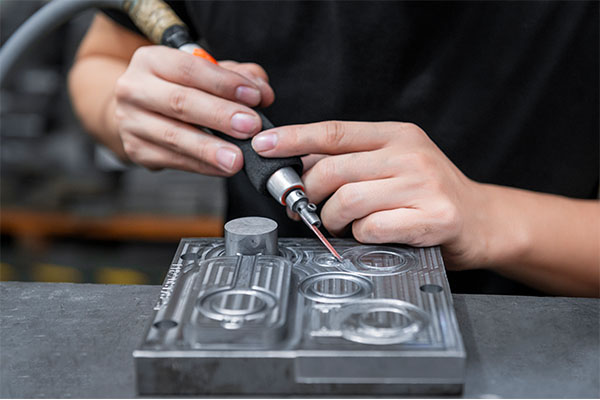
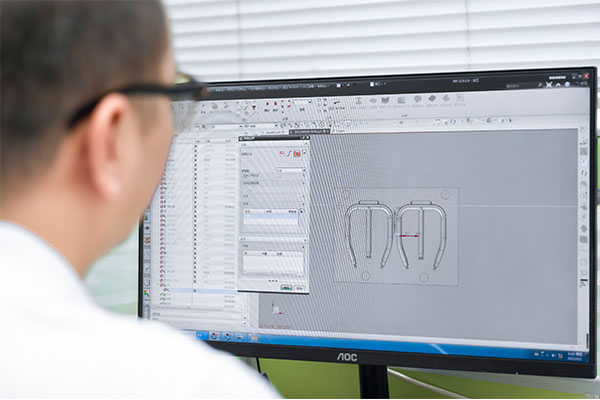
STEP 2: Mold Evaluation
Engineering evaluates the infuser geometry, opening distribution, wall thickness, handles, hooks, and lid structures to identify demolding constraints and potential weak points.
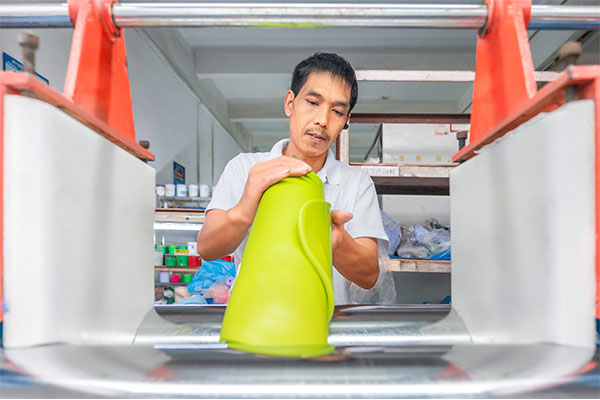
STEP 3: Material and Color Preparation
The selected food-contact silicone compound, hardness, and color are prepared according to the approved specification, with material documentation aligned to the intended market.
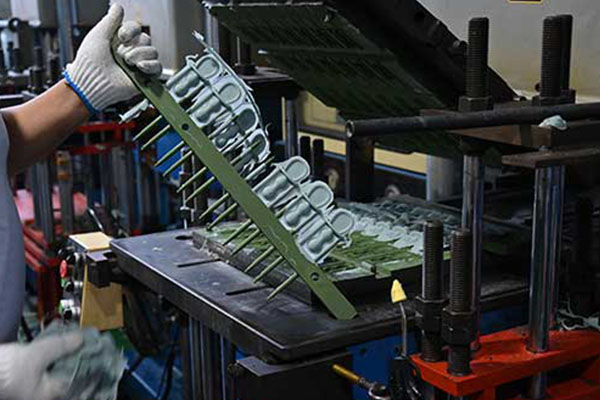
STEP 4: Silicone Molding
Silicone is formed under controlled molding conditions to reproduce the cavity, openings, structural details, and branding features specified in the approved design.
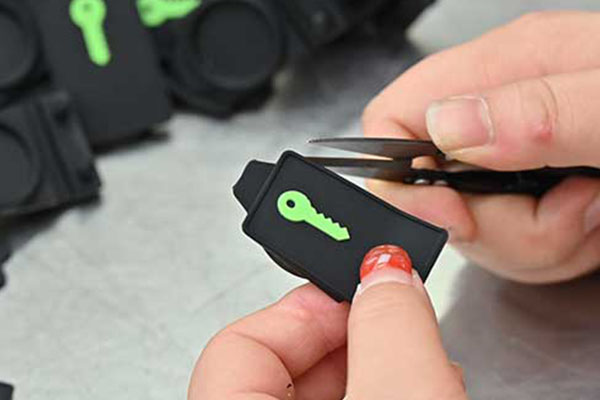
STEP 5: Demolding and Trimming
After molding, each infuser is carefully demolded and trimmed. Flash around openings receives particular attention because it can reduce usable flow area.
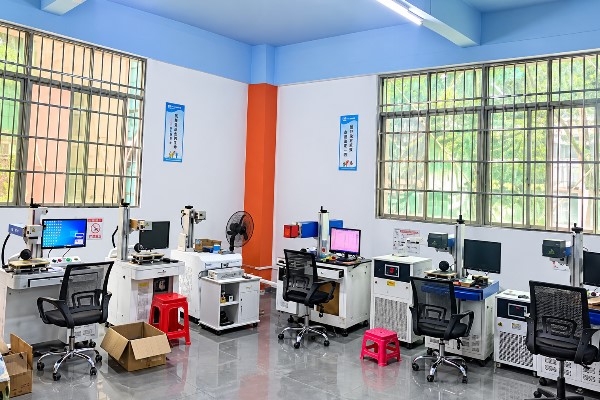
STEP 6: Surface & Logo Processing
Approved surface finishes and branding methods are applied according to the design. Molded, embossed, debossed, or printed logos are checked against the approved artwork.
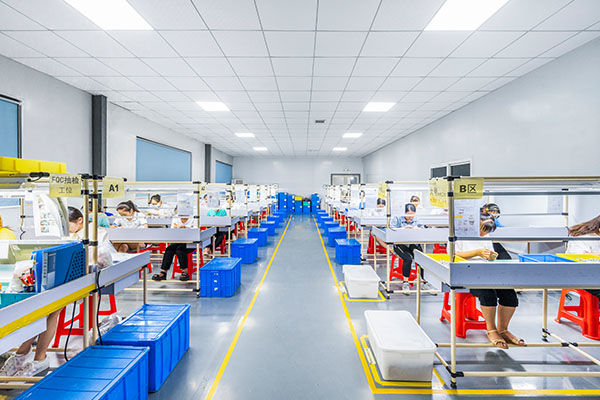
STEP 7: Quality Inspection
Finished infusers are inspected for dimensions, opening consistency, flash, deformation, color, logo definition, structural integrity, and packaging requirements against approved samples and specifications.
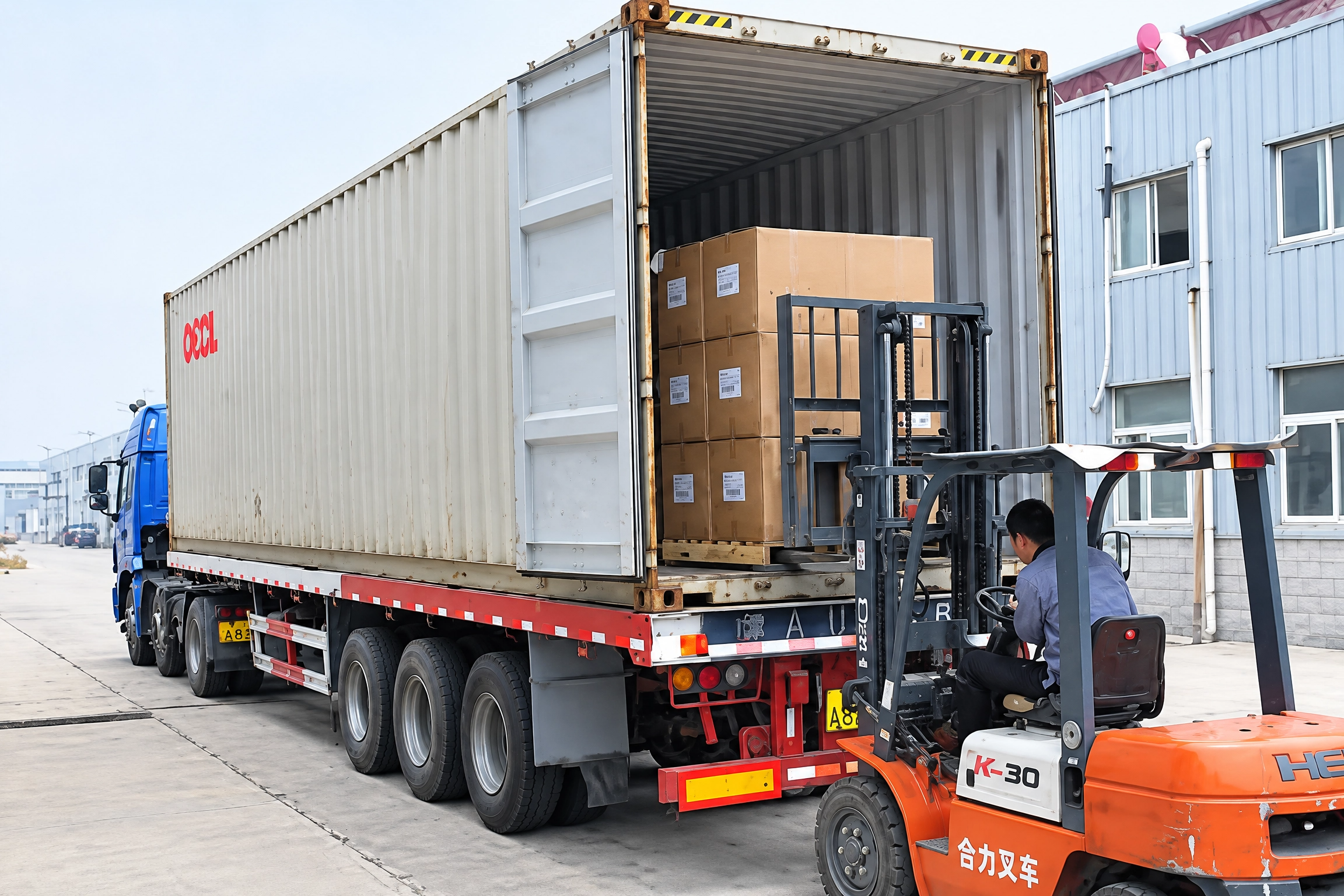
STEP 8: Packaging and Shipment
Approved products are packed according to bulk, retail, ecommerce, or premium requirements, with SKU, barcode, inserts, and carton details prepared when specified.
Silicone Tea Infuser Quality Control
Quality control focuses on brewing performance as well as appearance, dimensions, and production consistency.
AQL 2.5 / 4.0 Standard Inspection
We run final random sampling plans to verify batch consistency:
AQL 2.5
Critical / Major Defects
AQL 4.0
Minor Visual Flaws
Another inspection standard can be used when specified in the purchase order.
Approved Sample Control
The approved pre-production sample establishes the reference for shape, opening pattern, hardness, color, logo placement, and overall finish. If the approved sample and specification conflict, production should pause for confirmation.
Incoming Material Inspection
Silicone compounds, colorants, and other production materials are checked against the approved material specification before molding. Food-contact documentation should correspond to the selected material and intended market.
In-Process Inspection
Production checks monitor molding consistency, opening formation, flash, wall structure, and deformation. Small openings require particular attention because excess flash can reduce effective infusion area.
Appearance & Surface Review
Inspectors check for:
- visible flash
- bubbles
- contamination
- tears
- incomplete molding
- surface defects
- inconsistent finish
The silicone should maintain the intended appearance across the production lot.
Dimensional Inspection
Overall dimensions, cavity size, wall thickness, handle or hook geometry, and critical drinkware-contact dimensions are checked against approved drawings or samples.
Opening & Infusion Inspection
Opening size and distribution are reviewed because they influence both water circulation and tea-leaf retention. The inspection should confirm that openings remain usable after trimming.
Logo Inspection
Molded, embossed, debossed, or printed logos are checked for position, dimensions, definition, color, and consistency against approved artwork.
Packaging Review
Product quantity, barcodes, labels, inserts, bags, boxes, protective fillings, and carton marks are inspected before shipment.
Silicone Tea Infuser Packaging Options
Plan packaging early because printed items need separate schedules.
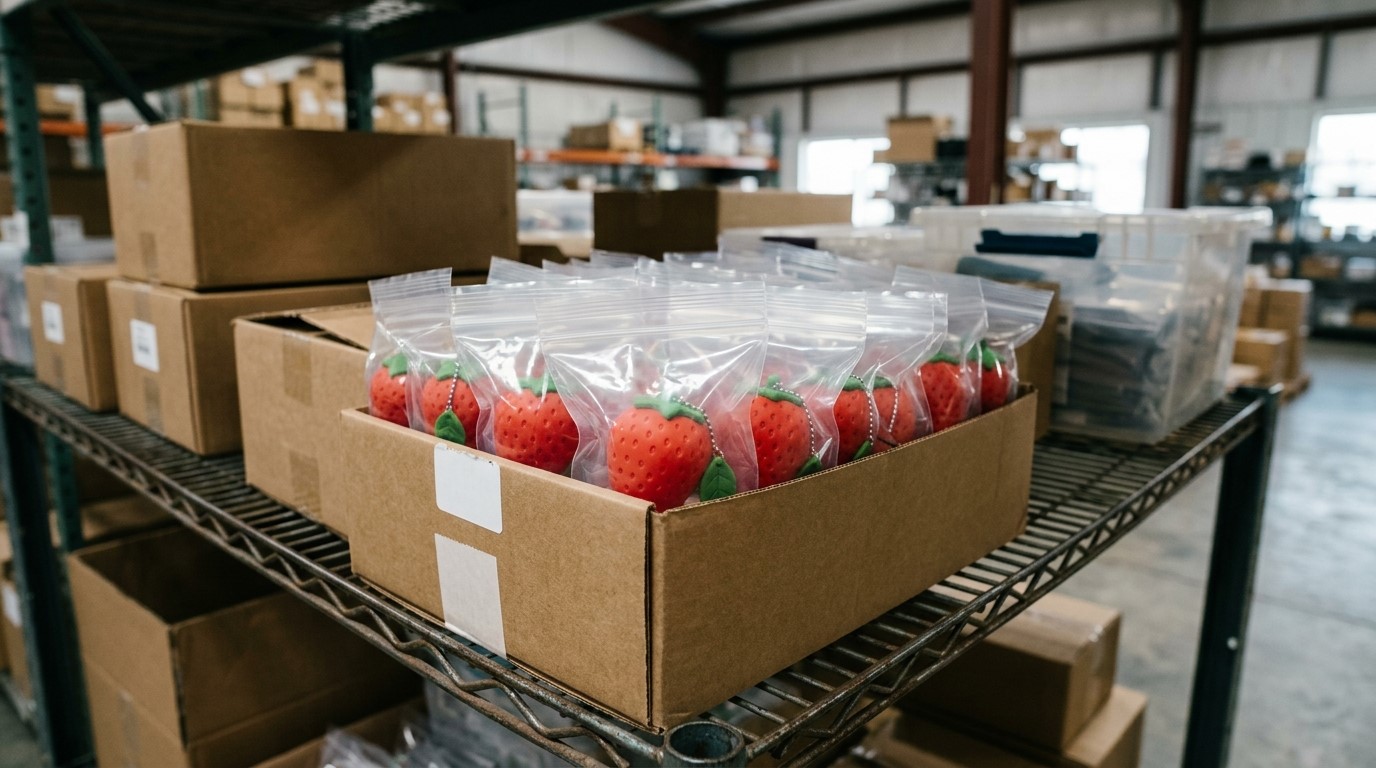
Bulk Packaging
Bulk-packed infusers provide an efficient option for distributors and wholesalers, with quantities grouped by SKU and protected for transport.
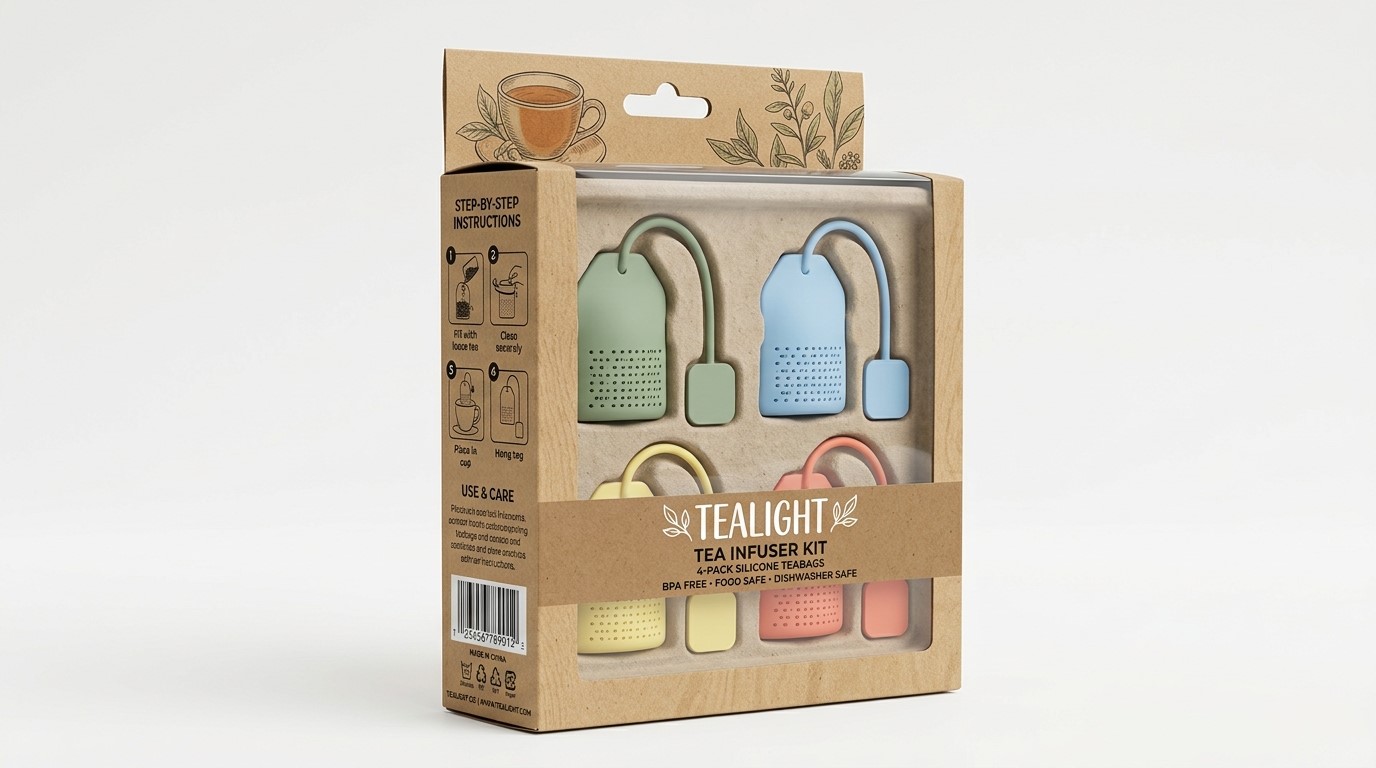
Retail Packaging
Individual bags, header cards, printed boxes, or other retail-ready formats can support private-label presentation and shelf-ready product handling.
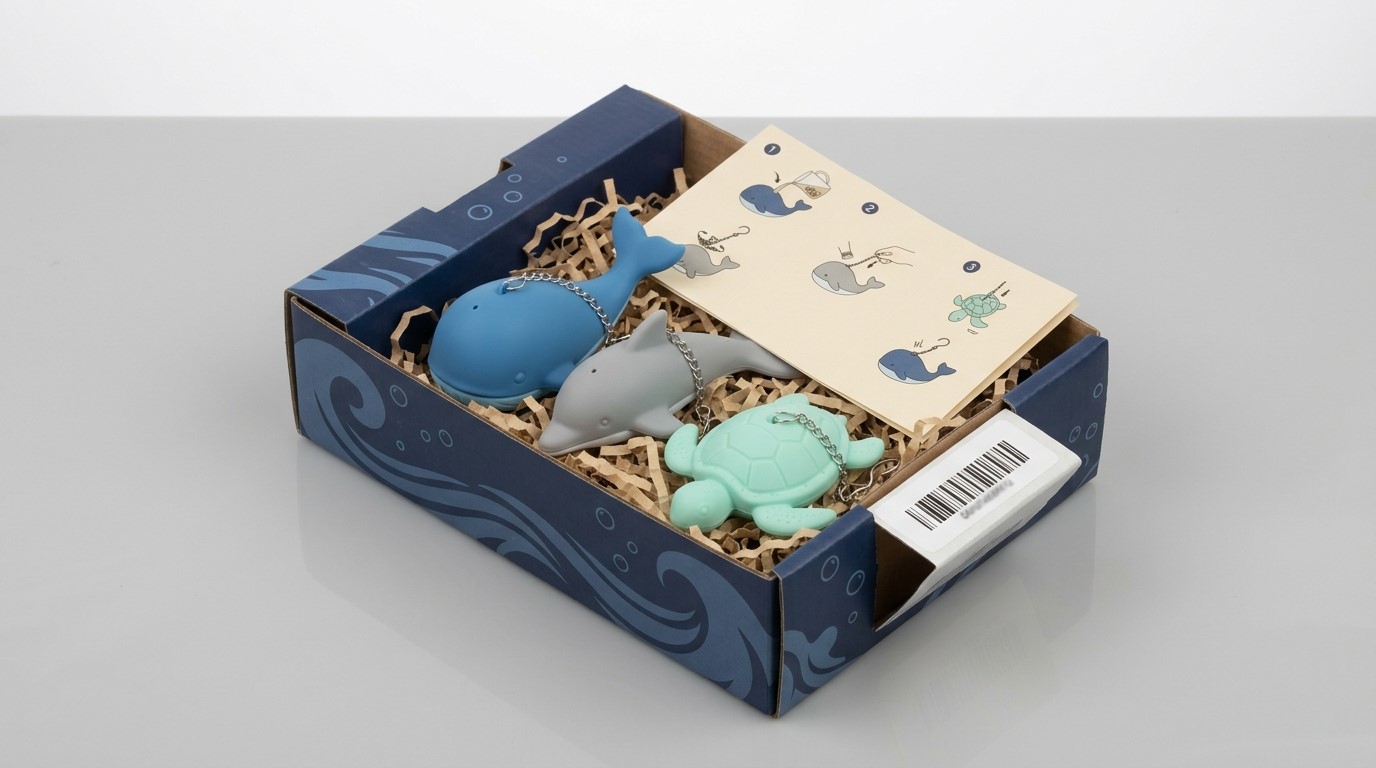
Ecommerce Packaging
Ecommerce packaging can combine individual protection, SKU information, barcode labels, and compact packing dimensions to support fulfillment operations.
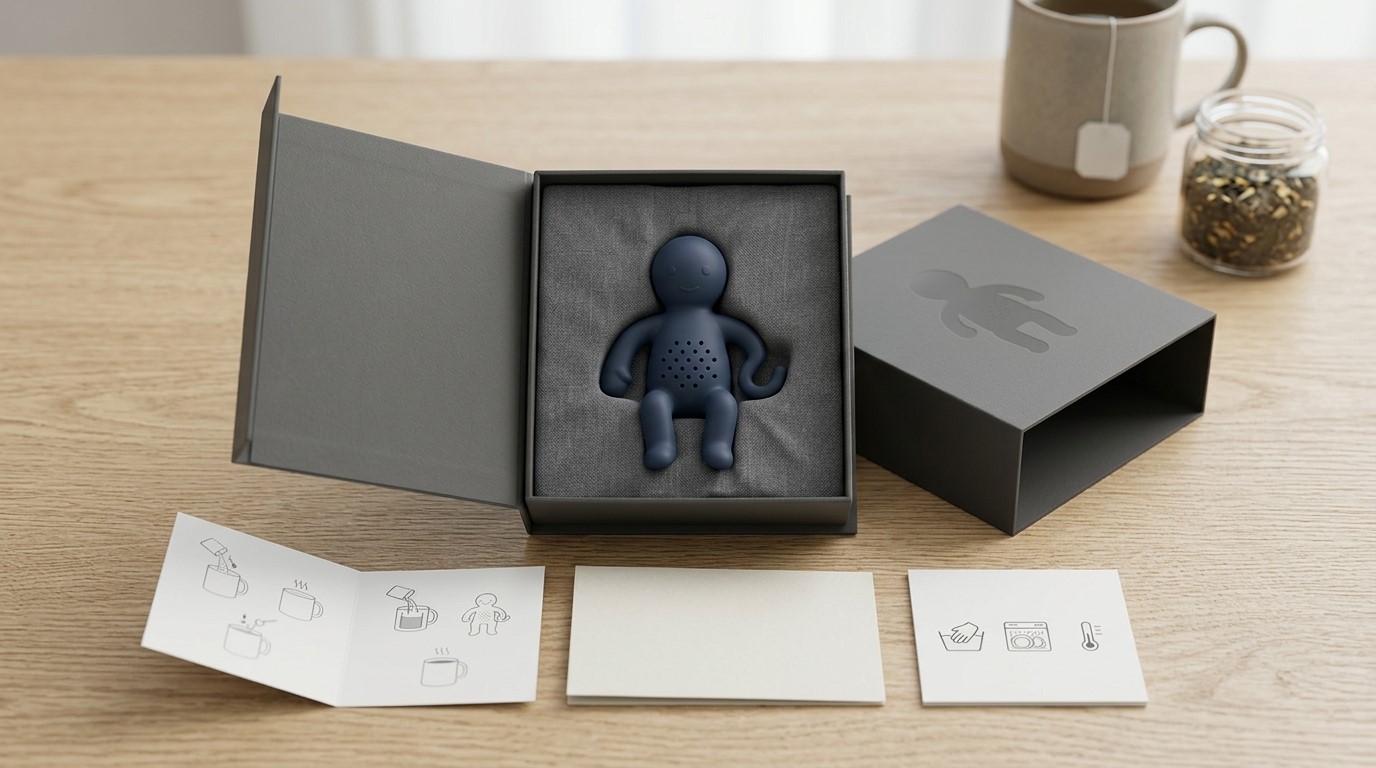
Premium Packaging
Gift boxes, inserts, and coordinated presentations can be developed for tea brands, hospitality programs, gift sets, and higher-value retail positioning.
Silicone Tea Infuser Typical Specifications
| Specification | Available Options / Reference Range |
|---|---|
| Product Type | Tea infuser basket, tea infuser ball, handled infuser, hooked infuser, lidded infuser, custom-shaped infuser |
| Overall Size | Custom dimensions according to mug, cup, teapot, or standalone brewing application |
| Infusion Capacity | Custom internal cavity volume according to tea quantity and brewing method |
| Opening Size | Custom opening dimensions and patterns according to tea-leaf size and required retention |
| Opening Distribution | Perimeter, base, sidewall, or distributed opening layouts |
| Wall Thickness | Custom according to flexibility, structural stability, and molding requirements |
| Hardness | Approximately 30–60 Shore A, subject to structure and handling requirements |
| Material | Food-contact silicone: compound selection depends on application and target-market requirements |
| Temperature Range | Approximately -40°C to 230°C, subject to the selected silicone compound and finished configuration |
| Colors | Custom colors, including Pantone-matched options where applicable |
| Surface Finish | Smooth, textured, or specified molded surface finishes |
| Logo Options | Embossed, debossed, molded-in, screen printing or pad printing, where suitable |
| Structural Features | Handle, hook, lid, hanging feature, rim structure or other custom components |
| Manufacturing Process | Compression molding and related silicone processing according to product structure |
| Packaging | Bulk, OPP/PE bags, header cards, printed retail boxes, ecommerce or premium packaging |
| MOQ | 500 pcs for selected existing designs with custom branding; 3,000 pcs for new custom molded designs |
| Sample Lead Time | Approximately 5–10 working days for applicable samples; new tooling requires additional development time |
| Custom Mold Lead Time | Approximately 10–20 working days, depending on design complexity |
| Mass Production Lead Time | Approximately 15–25 working days after sample and production approval |
| OEM / ODM | Available for custom geometry, specifications, branding and packaging |
These specifications provide a starting framework; final values should be confirmed against the approved drawing, sample, silicone compound, and intended brewing application.
Why Work with RY Silicone

Silicone Manufacturing Experience Since 2012
Since its founding in 2012, RY Silicone has developed silicone products for international customers across consumer, food-contact, and custom product applications.
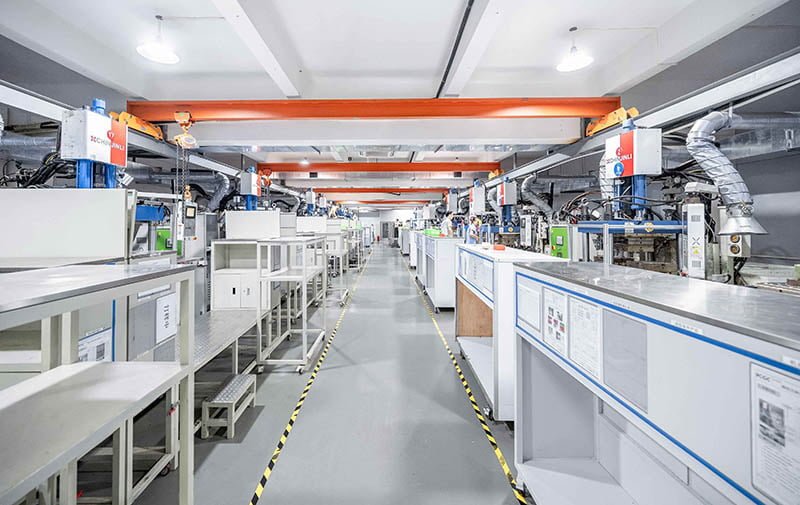
10,000+ m² Production Facility
Our 10,000+ m² manufacturing facility supports tooling, silicone molding, finishing, inspection, and packaging within an integrated production workflow.

30+ Production Machines
More than 30 machines support various silicone production needs and can accommodate both established tea infuser designs and newly developed custom structures.
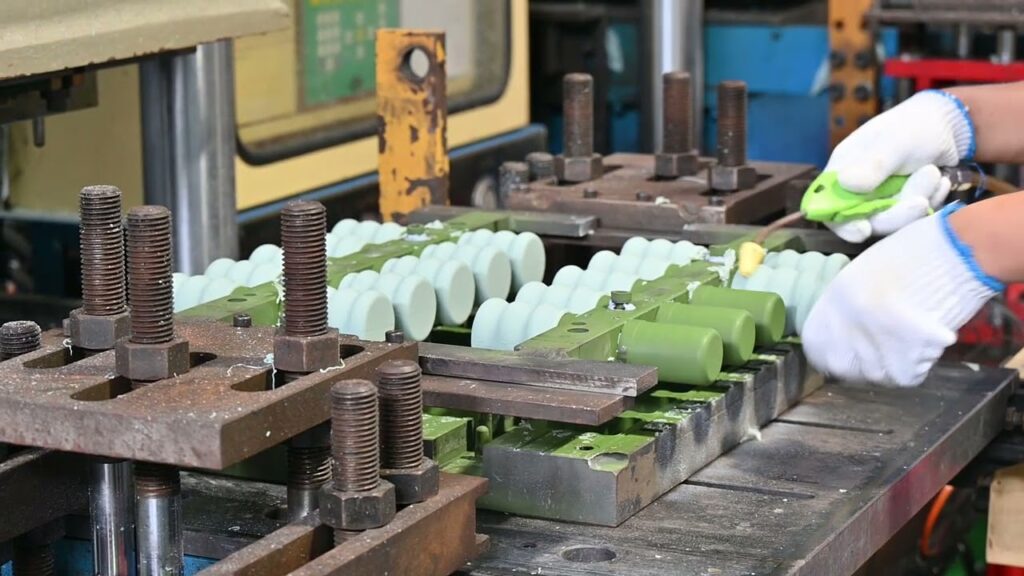
Up to 100,000 Silicone Products per Day
Our production capacity is up to 100,000 silicone products per day. This supports repeat orders and larger-volume programs when product specifications are standardized.
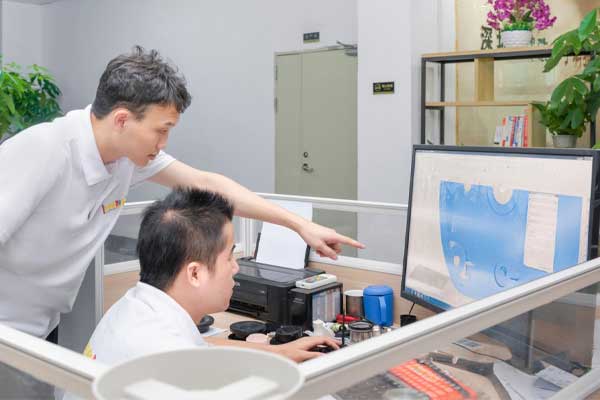
Engineering Review Before Quotation
We review your tea type, opening structure, cavity capacity, dimensions, hardness, branding, and packaging requirements before providing a quote to identify manufacturing considerations early on.
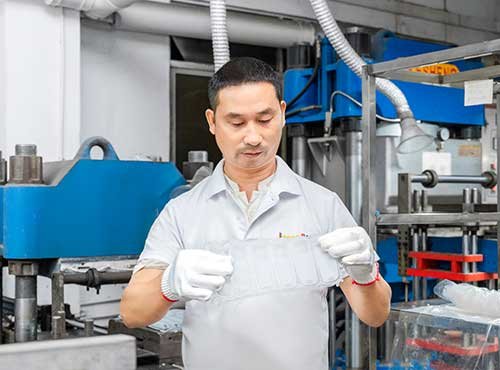
Sample-Based Production
Production can proceed based on an approved sample and confirmed specifications. This gives your team a physical reference for appearance, structure, opening formation, and branding consistency.
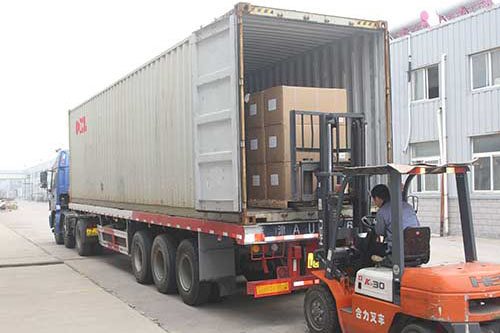
Export Project Support
RY Silicone supports international orders with custom specifications, branding, and packaging requirements for brands, distributors, wholesalers, retailers, and private-label programs.
Silicone Tea Infuser FAQ and Final RFQ
What is the MOQ for custom silicone tea infusers?
The reference MOQ is 500 pieces for existing designs with custom branding and 3,000 pieces for new, custom-molded designs. The final quantity depends on the product's structure and development requirements.
Are custom silicone tea infusers safe to use?
Yes.
High-quality silicone tea infusers are made from food-grade, BPA-free silicone that is non-toxic, odorless, and heat-resistant up to 450°F (232°C). Moreover, reusable silicone tea infusers eliminate the microplastic exposure unlike synthetic disposal tea bags.
They do not leach harmful chemicals or microplastics into hot water, ensuring a pure, safe brewing experience for loose-leaf tea.
Can you develop a completely custom silicone tea infuser?
Yes.
Custom development can cover the overall shape, cavity capacity, opening pattern, dimensions, hardness, color, handle, hook, lid, logo, and packaging. New tooling is evaluated from the supplied design before production.
How should I specify the opening size?
Specify the type of tea, the expected leaf size, the required leaf retention, and the brewing method, as well as the opening dimensions. The opening geometry should balance water circulation with the need to retain smaller tea particles.
Silicone vs. stainless steel tea infuser: which one should I choose for my project?
Reusable silicone and stainless steel tea infusers are common accessories to contain loose leaves as an easy way.
If you focus on these factors, please select silicone:
- High flexibility
- Custom novelty shapes
- Vibrant pantone colors for branding
- Ease of cleaning, as well as opening & closing
- Cost-effective tooling
When you care about these factors, choose stainless steel:
- Classic and minimalist design
- Fine filtration
- Basket infuser design
What silicone material should I choose?
Food-contact silicone is the starting point for tea-brewing.
The appropriate compound and hardness depend on the intended use, structural design, temperature exposure, and target market documentation requirements.
How to clean a silicone tea infuser?
Wash immediately after use with warm water and mild dish soap.
For stubborn tea stains or odors, soak the infuser in a solution of warm water, baking soda, and white vinegar for 15 minutes, then scrub gently.
In general, silicone tea infusers are dishwash-safe, but you’d check the manual before the dishwash cycles.
As a custom silicone tea infuser manufacturer, RY Silicone crafts top-quality, dishwasher-safe products for your tea infuser programs.
Can the tea infuser be matched to a specific mug or teapot?
Yes. Provide the relevant rim diameter, opening dimensions, available depth, and any supporting or hanging requirements. These details will allow us to develop the infuser structure around the intended drinkware.
Can I add my logo to a silicone tea infuser?
Yes. Depending on the available surface and artwork, branding options can include molded-in, embossed, debossed, screen-printed, or pad-printed logos. Approval of logo dimensions and placement is required before production.
Can you provide food-contact compliance documentation?
Available reports depend on the selected silicone, pigment, printing ink and destination market.
Please provide the exact standard or document requirement so that we can confirm whether an existing report is suitable.
Can you provide retail-ready packaging?
Yes.
We can develop packaging for bulk, retail, e-commerce, or premium presentation. Options include individual bags, header cards, printed boxes, SKU information, barcode labels, and inserts.
How long does a custom tea infuser project take?
Reference lead times are approximately 5–10 working days for applicable samples, 10–20 working days for new custom tooling, and 15–25 working days for mass production after approval. Final timing depends on the design and order requirements.
What information should I include in an RFQ?
For a faster engineering review, provide:
- Product drawings, sketches, design files, or existing samples
- Overall dimensions and target cavity capacity
- Tea type and expected leaf size
- Opening size and preferred opening pattern
- Mug, cup, or teapot compatibility requirements
- Silicone material or hardness preference, if known
- Target color or Pantone reference
- Logo artwork and branding requirements
- Packaging requirements
- Target quantity and expected annual demand
- Destination market
- Required compliance or material documentation
- Desired sample and production schedule