Babies often go through gum discomfort, pain, and itching during the teething stage. Parents are very cautious when choosing teething toys, and the choice of material plays a key role. Safe, soft, and chew-resistant options are most suitable, and silicone beads stand out because of their flexibility, durability, and proven safety.
What Are the Materials of Silicone Beads?
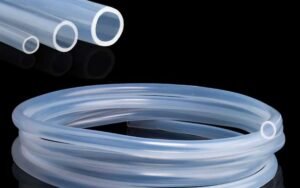
Silicone beads are usually made from food-grade or medical-grade silicone. These materials are safe, non-toxic, heat-resistant, and bite-resistant. They do not release harmful substances. This helps protect a baby’s health during long chewing sessions. Food-grade silicone is common in everyday teething toys, while medical-grade silicone meets higher standards. It passes biocompatibility tests and is gentler on the skin and mouth, making it suitable for products that require extra safety.
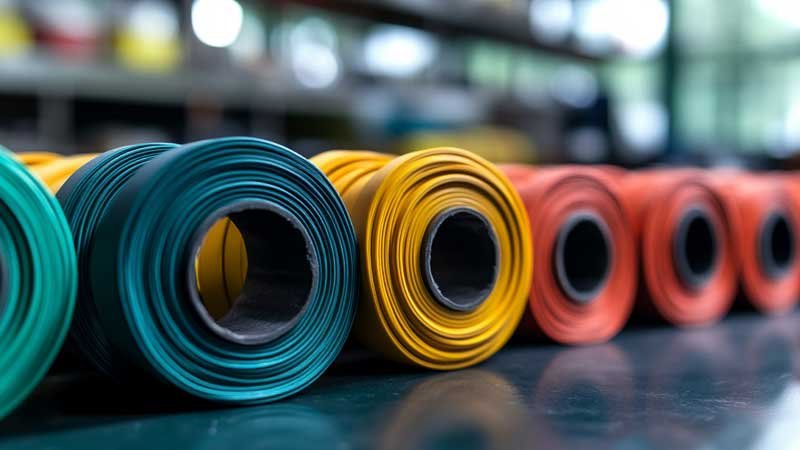
From a material standpoint, silicone beads mainly fall into two categories: liquid silicone rubber (LSR) and high-temperature vulcanized silicone (HTV). LSR has excellent flowability, allowing manufacturers to create smooth surfaces, fine details, and a wide range of colors such as bright tones, gradients, or matte finishes. HTV is known for its durability and hardness. It can withstand strong biting force and frequent high-temperature sterilization. This makes it a preferred choice for long-term use or toys that require repeated cleaning.
The main physical properties of silicone beads include softness, elasticity, bite resistance, hypoallergenic qualities, and color stability. Formulas can be adjusted to achieve different levels of softness or hardness for babies at different stages. Softer beads help ease gum sensitivity during early teething, while slightly harder beads provide stronger massage as teeth begin to emerge.
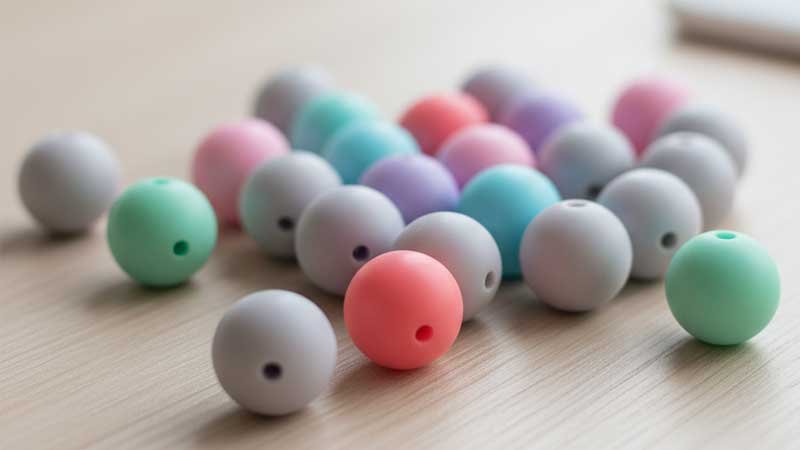
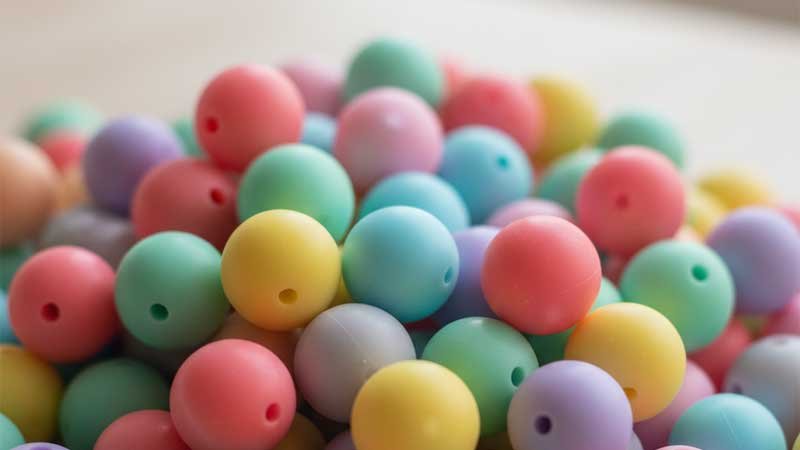
In the market, silicone beads go beyond basic chewing functions. They often feature innovative designs that create added value. Some brands offer beads with mixed hardness levels to help babies adapt gradually to different chewing intensities. Others add textures such as ridges or matte patterns to massage gums and enrich sensory play. These design variations give silicone beads both functional and aesthetic advantages, making them stand out in a competitive market.
How Do Silicone Beads Function in Teething Toys?
Silicone beads are more than just decoration or accessories in teething toys. They directly shape the baby’s experience. One of their most important roles is soothing. The elasticity and firmness of the beads apply gentle pressure during chewing. This helps relieve gum pain and itchiness caused by teething. Compared with hard plastic or wood, silicone is softer and safer, preventing gum or tooth damage even with repeated chewing.
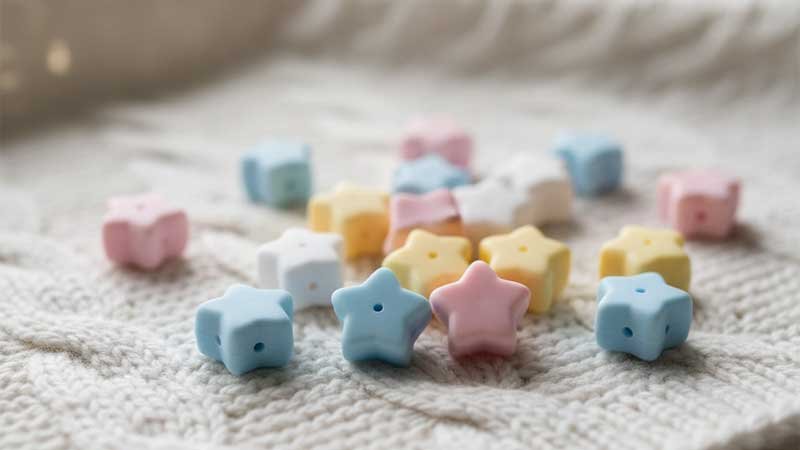
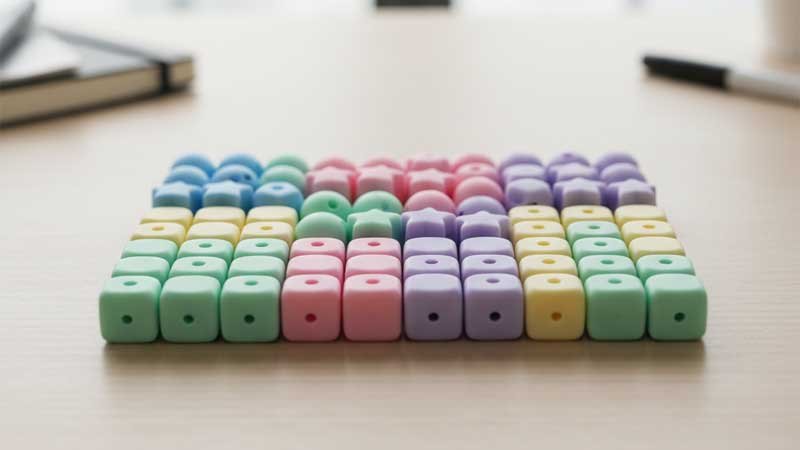
Silicone beads also play a role in sensory training and hand development. Different shapes and textures—such as round, square, ridged, or bumpy beads—provide varied tactile experiences that stimulate nerve development. As babies grasp, rotate, and move the beads, they strengthen finger dexterity and hand-eye coordination. This not only distracts from gum discomfort but also supports early cognitive and motor skill development.
Durability is another advantage. Silicone beads undergo strict hardness and bite-resistance tests. They do not easily break or deform, even under long-term chewing, pulling, or friction. They can also withstand high-temperature cleaning, including boiling and steam sterilization. This reassures parents about hygiene. Unlike some materials that crack or wear out, silicone remains reliable over time.
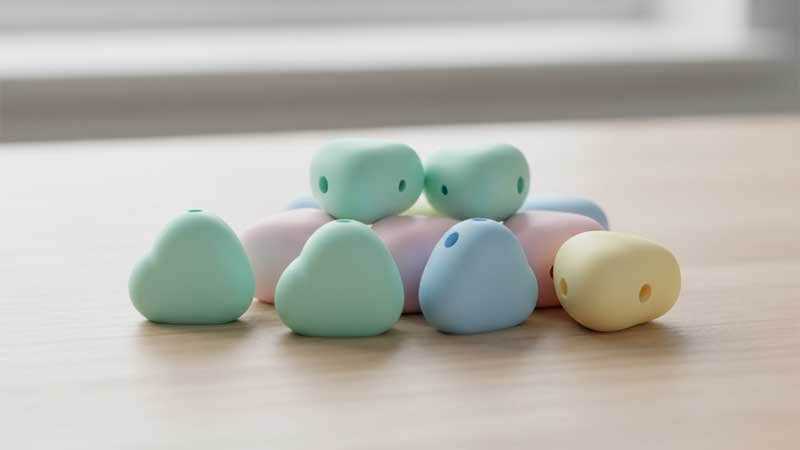
Flexibility in design makes silicone beads even more versatile. They can be used in many product forms, such as standalone teething rings, pacifier clips, or toys combining wood and fabric. Manufacturers can play with color combinations, bead sizes, and geometric patterns to create products that are both practical and visually appealing. For example, colorful silicone bracelets can double as chewable accessories, while combination toys provide multiple textures in one piece. This multi-functionality satisfies a baby’s natural curiosity and offers parents more value in one purchase.
How to Choose Safe and Reliable Silicone Beads?
Safe products should not only use non-toxic raw materials but also meet strict standards in certification, craftsmanship, durability, and design. To make this clearer, here is a comparison between safe silicone beads and low-quality ones:
| Selection Aspect | Safe and Reliable Silicone Beads | Risks of Low-Quality Silicone Beads |
| Material Source | Food-grade or medical-grade silicone, certified by FDA, LFGB, and similar standards | Industrial silicone that may contain BPA, phthalates, or heavy metals |
| Physical Properties | Soft and elastic, durable against biting and chewing, gentle on gums | Too hard or too soft, easy to break, poor chewing comfort |
| Craftsmanship | Smooth surface with no rough edges, stable colors made with food-grade pigments | Rough surface, defects, fading colors, or unpleasant odors |
| Heat Resistance & Cleaning | Withstands up to 200°C, safe for boiling, steam sterilization, or dishwasher cleaning | Deforms or breaks down under heat, hard to clean thoroughly, may harbor bacteria |
| Design Safety | Proper size (usually ≥12mm) to prevent swallowing or choking | Small size or poorly designed holes may cause choking hazards |
| Brand & Testing | Comes with official testing reports and brand assurance, reliable source | Unknown origin, no testing or after-sales support, poor quality assurance |
Conclusion
Silicone beads not only help ease gum discomfort but also provide tactile stimulation and sensory training. They are important parts of early development.
We offer custom silicone solutions to bring your ideas to life. Whether you need teething toys or other creative bead designs, our team can tailor products to your exact needs with trusted quality and care.