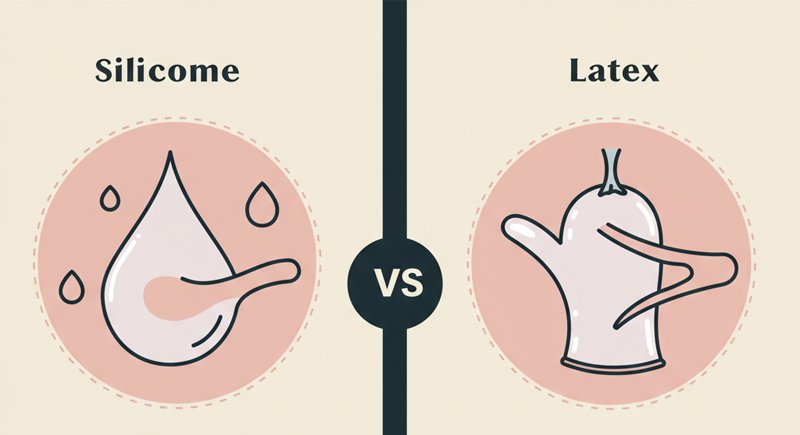
Silicone and latex often appear similar. They are both soft, elastic, and flexible. But in real projects, they behave very differently.
This article will compare these two materials in detail to help readers better understand their properties and applications.
Why Silicone and Latex Are Often Compared?
Customers usually compare silicone and latex for one reason. They touch and feel similar. But similarity in touch does not mean similarity in performance.
Latex focuses on elasticity and cost. Silicone focuses on stability and long-term reliability.
If the product will be used briefly, latex often works. If the product must survive heat, time, or harsh conditions, silicone is usually the safer choice.
Quick Comparison: Silicone vs. Latex at a Glance
This is the first table we often use when discussing material options with clients.
| Factor | Silicone | Latex |
| Base material | Silicone polymer (Si–O backbone) | Polyisoprene or synthetic rubber |
| Typical lifespan | Long-term, years | Short to mid-term |
| Temperature range | Very wide | Limited |
| UV & ozone resistance | Excellent | Poor to moderate |
| Allergy risk | Very low | Possible, especially natural latex |
| Unit cost | Higher | Lower |
| Typical positioning | Durable, premium | Cost-effective, disposable |
If most of your requirements fall on the left side, silicone usually makes sense.
If they fall on the right, latex may be enough.
Different Types of Silicone and How They Are Used
One common mistake is treating all silicone as the same material. It is not.
Common Silicone Types in Production
| Silicone Type | Typical Use | Key Strength | Practical Notes |
| Solid Silicone (HCR) | Seals, gaskets, automotive parts | Heat resistance, durability | Stable choice for long-term industrial use |
| Liquid Silicone Rubber (LSR) | Medical, baby products, electronics | Precision, cleanliness | Higher mold and equipment cost |
| RTV Silicone | Sealing, potting, molds | Room-temperature curing | Not suitable for mass molded parts |
In our experience, HCR silicone is the most forgiving choice. Even when processing conditions are not perfect, it still performs consistently over time.
LSR is chosen when failure is not acceptable. Medical and baby products are typical examples.
Different Types of Latex and Their Real Differences
Latex performance depends heavily on its type. This is often underestimated.
Latex Material Comparison
| Latex Type | Strengths | Weaknesses | Typical Applications |
| Natural Latex | Excellent elasticity, soft feel | UV aging, allergy risk | Gloves, mattresses, cushions |
| SBR Latex | Low cost | Limited durability | Cushions, low-cost consumer goods |
| NBR Latex | Oil resistance | Less elastic | Industrial gloves |
| Neoprene Latex | Better weather resistance | Still limited vs silicone | Outdoor elastic parts |
Natural latex feels great at first use.
But over time, heat, air, and sunlight quickly change its behavior.
Performance Comparison Based on Real Use
| Performance Aspect | Silicone | Latex |
| Temperature stability | Stable across a wide range | Stable mainly at room temperature |
| Long-term aging | Very slow | Clearly noticeable over time |
| UV & ozone resistance | Highly resistant | Sensitive, especially natural latex |
| Chemical resistance | Broad and stable | Strongly type-dependent |
| Water resistance | Excellent | Swelling and degradation possible |
| Hygiene & cleanability | Non-porous, easy to clean | More porous, harder to maintain |
This table gives the conclusion.
The sections below explain what these differences mean in real use.
Temperature Performance
Temperature is usually where things start to go wrong, or right.
Silicone handles heat and cold with very little drama. We’ve seen silicone parts go through repeated heating cycles and still come back the same. They stay flexible. They do not suddenly stiffen or lose shape. That is why silicone is often chosen when temperature is not easy to control.
Latex feels great at room temperature. No doubt about that. Soft, stretchy, and comfortable. But once you move away from that range, you start to see changes. Heat speeds things up. Cold makes the material less forgiving. After a while, cracking or permanent deformation is not uncommon, especially in parts that are expected to stay in place.
Aging and Service Life
This part is easy to underestimate until you see it in the field.
Silicone ages slowly. In many long-term projects, we open up assemblies after years and the silicone parts still look and feel close to new. That kind of stability reduces maintenance and unexpected replacements.
Latex starts changing much earlier. Air, heat, and light slowly take their toll. First the elasticity drops. Then the surface hardens or starts to crack. For disposable or short-life products, that is usually acceptable. For anything meant to last, it often becomes a headache.
UV and Weather Resistance
Outdoor use makes the difference very clear.
Silicone handles sunlight, ozone, and moisture without much trouble. We have seen silicone parts stay outdoors for long periods with very little visible change.
Latex, especially natural latex, does not like UV exposure. Leave it in the sun long enough and the surface starts to degrade. Additives help, but only to a point. Outdoor use always comes with more risk.
Chemical Resistance
Chemical exposure is rarely clean and simple in real applications.
Silicone holds up well against many acids, alkalis, and common industrial chemicals. Its behavior is predictable. This is why it is often used for seals and gaskets in mixed environments.
Latex depends heavily on the formulation. Some synthetic types perform better, but natural latex struggles with strong chemicals. In those cases, testing is not optional. Guessing usually leads to problems later.
Water Resistance
Water is another factor that quietly causes trouble over time.
Silicone stays stable in humid or wet environments. It does not swell easily, and it keeps its strength. For products that live around water, this makes life much easier.
Latex absorbs moisture. Over time, that leads to swelling and faster aging. In wet or high-humidity applications, this limits how long the part can realistically last.
Hygiene and Cleanability
If a product needs frequent cleaning, this becomes important very quickly.
Silicone has a smooth, non-porous surface. It cleans easily and does not trap much residue. That is why it shows up so often in medical and food-contact products.
Latex is more porous. It is harder to clean completely, and repeated washing or disinfection speeds up degradation. Over time, both hygiene and appearance suffer.

Biocompatibility and Safety in Real Products
Silicone is widely accepted for long-term skin contact. It is commonly used in medical devices, baby products, and food-contact items. Allergy complaints are rare.
Latex is different. Natural latex contains proteins that can trigger allergic reactions. This is why many markets require latex labeling.
In many modern projects, silicone is chosen not because it is stronger, but because it is safer.
Manufacturing Reality
Tooling and Equipment
| Aspect | Silicone | Latex |
| Tooling cost | Higher | Lower |
| Equipment | Specialized (LSR) | Simple |
| Startup barrier | Higher | Lower |
Silicone projects require more preparation. Latex allows faster entry.
Unit Cost vs. Long-Term Cost
Latex looks cheaper per piece.
Silicone often wins over the full product lifecycle. Fewer replacements. Fewer complaints. Less redesign.
This is a trade-off many clients only see after launch.
Application Comparison by Industry
Medical and Healthcare
In medical applications, the main concern is not elasticity. It is stability and risk.
Silicone dominates long-term and implantable uses because it behaves the same over time. It does not react much to body temperature, moisture, or long-term contact. Once approved and validated, it stays predictable. That matters in medical design.
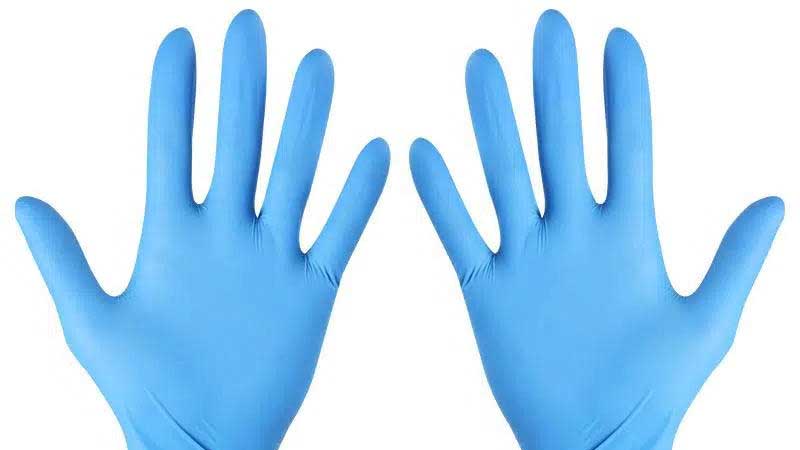
Latex is still used in disposable gloves and short-term elastic components. The reason is cost and flexibility, not durability. These products are meant to be used once or replaced often, so aging and long-term stability are less critical. Allergy risk is managed through labeling and controlled use, but it is always part of the discussion.
Baby and Consumer Products
For baby products, the biggest issue is trust.
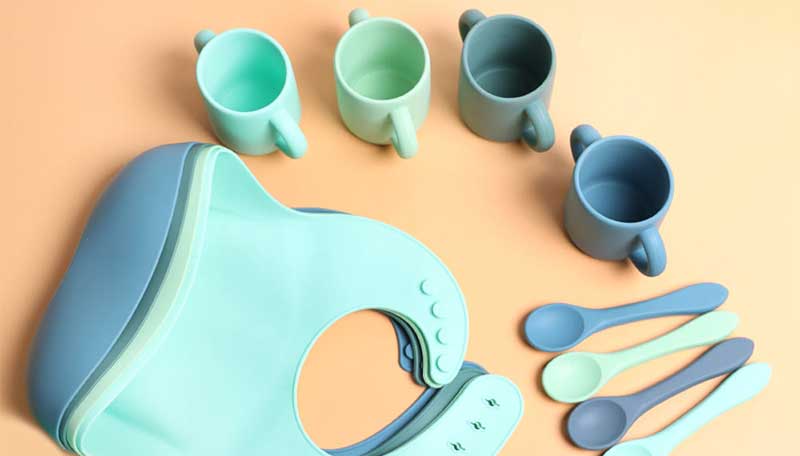
Silicone is preferred for feeding, teething, and long-term skin contact because it is chemically stable and does not release odors or residues over time. Parents care less about maximum elasticity and more about safety, cleanliness, and peace of mind. Silicone fits that expectation well.
Latex shows up in some consumer products where softness and cost matter more. It feels natural and comfortable. But it almost always comes with clear labeling, because aging, odor, and allergy concerns cannot be ignored. For baby products specifically, those risks make many brands cautious.
Industrial and Automotive
In industrial and automotive applications, failure usually shows up as leaks, deformation, or unexpected hardening.
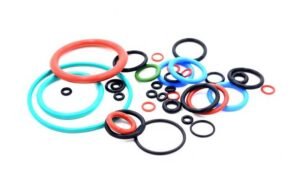
Silicone is widely used for seals, hoses, and thermal parts because it tolerates heat, cold, and long operating cycles. Even when conditions are not ideal, silicone tends to fail slowly, not suddenly. That makes maintenance planning easier.
Latex struggles in these environments. Heat, oil, and chemicals accelerate degradation. In most cases, latex simply does not last long enough to justify its lower cost. This is why it is rarely chosen for critical industrial parts.
Household Products
Household products sit somewhere between comfort and durability.
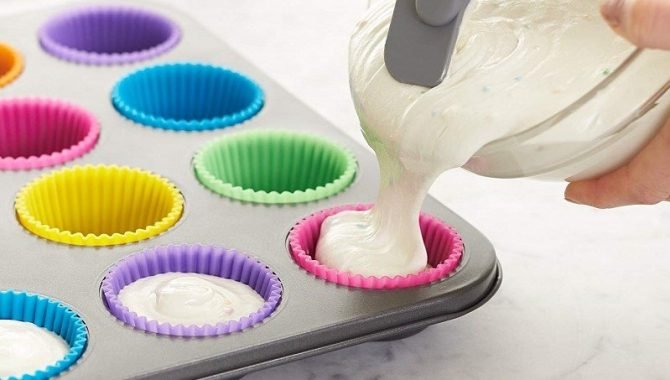
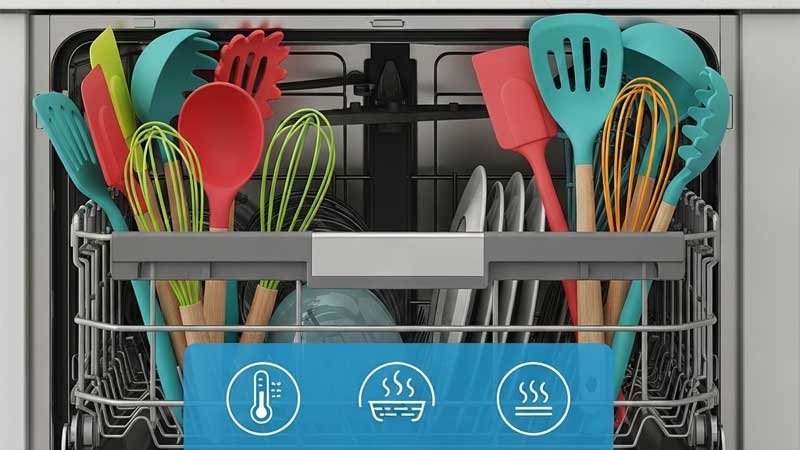
Silicone is common in kitchenware and bathroom accessories because it handles heat, water, and repeated cleaning without much change. It keeps its shape and appearance, even with daily use.
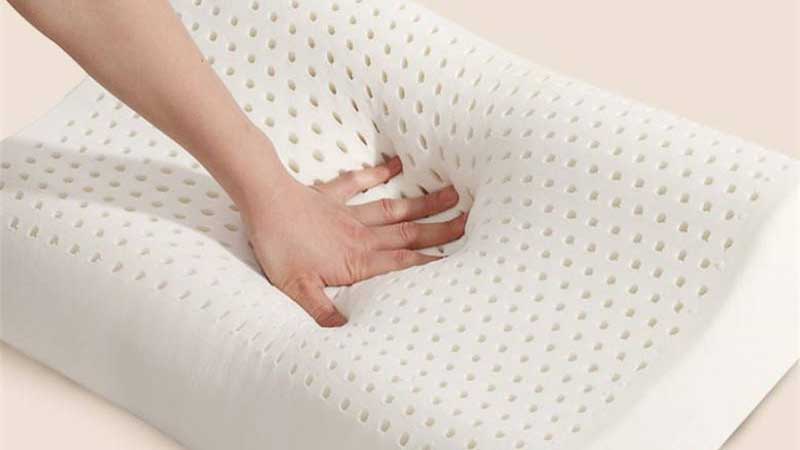
Latex is more common in mattresses and cushions, where softness and elasticity are the main selling points. These products are used in controlled indoor environments and are expected to be replaced over time. In that context, latex makes sense.
How We Usually Help Clients Choose?
When clients ask whether silicone or latex is the better option, we usually do not start with material data sheets. We start with a few practical questions. These questions come from problems we have already seen on real products.
- We look at the working environment. Will the product face heat, sunlight, outdoor exposure, or repeated temperature changes? If the answer is yes, silicone is usually the safer choice. Latex can perform well at the beginning, but these conditions often shorten its service life much faster than expected.
- We consider how the product is used by people. Does it touch skin for long periods? Is it in contact with the mouth, food, or sensitive areas? In these cases, long-term stability matters more than initial softness. Silicone keeps its surface and elasticity more consistently, which reduces complaints after months of use.
- We talk about replacement expectations. Some products are designed to be replaced regularly. Others are not. If replacement is easy and expected, latex can be a reasonable option. But if replacement is difficult, expensive, or unacceptable, silicone usually saves cost in the long run, even if the initial price is higher.
- We discuss cost honestly. Latex often looks attractive at the early stage because of lower material cost and good elasticity. That works for short-life products. Problems start when latex is pushed into applications that demand durability. Cracking, hardening, or early failure then appear, and redesign becomes unavoidable.
When durability, safety, and long-term consistency matter, silicone gives more room for error.
When cost and short-term elasticity are the main drivers, latex may be enough.
Conclusion
Silicone and latex are not substitutes. Silicone is chosen for stability, safety, and long service life. Latex is chosen for elasticity, comfort, and cost efficiency.
The right choice depends on how the product is used, not how it looks on day one. Choosing correctly at the start saves far more than changing later.