When we design pacifiers, safety comes first. Many teams focus on Shore A hardness. They believe harder silicone means stronger products. In real production, this idea often causes problems. Harder silicone can become brittle. Once a baby’s tooth creates a small cut, the material may tear quickly. That small tear can turn into a choking risk.
After years in silicone molding for baby products, I have learned one clear lesson. Tear strength matters more than hardness. This article explains why. I will break down the material logic, the lab testing, and the shop-floor decisions that lead to safer pacifiers.
The Misunderstanding Around Hardness
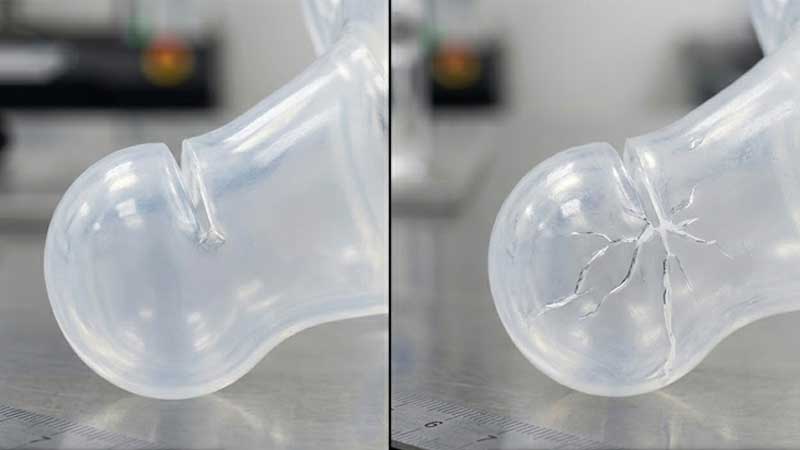
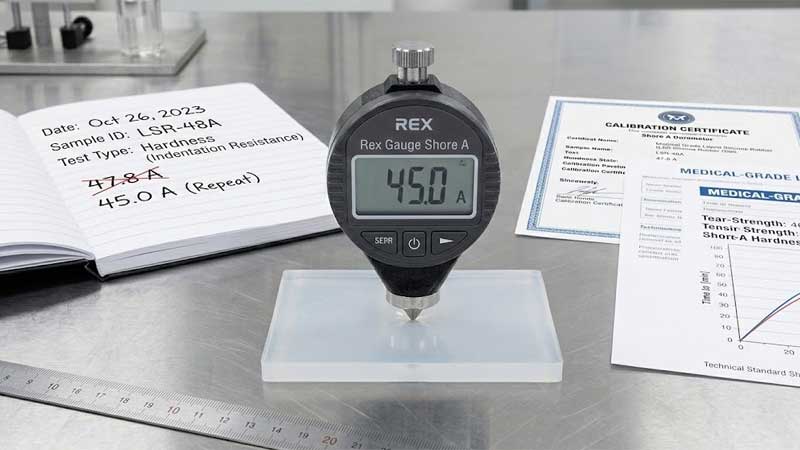
Shore A durometer measures surface hardness. It does not measure resistance to tearing. A 60 Shore A silicone feels firm. It resists indentation. But firmness alone does not stop crack growth.
In many failed samples we inspected, the pattern was clear. The silicone was too stiff. A small bite mark became a crack. The crack spread fast. The nipple separated from the body. The product failed long before expected.
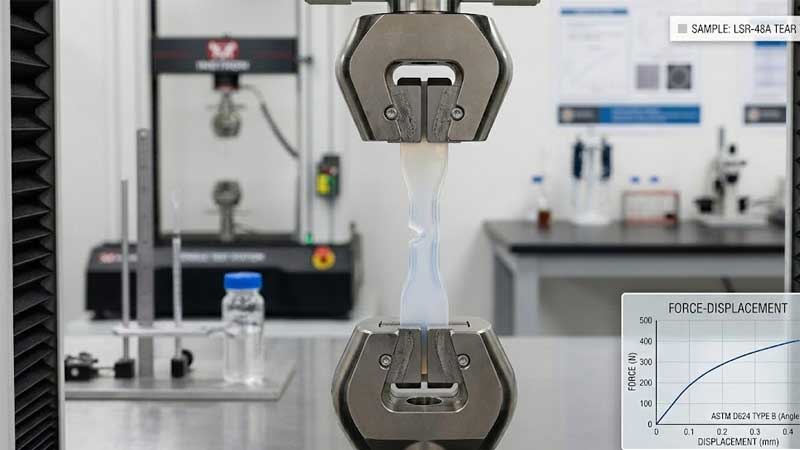
Tear strength tells a different story. It measures how much force the material can resist once a cut already exists. For pacifiers, this property is critical.
In markets like the United States, recalls damage brands quickly. Agencies such as the U.S. Consumer Product Safety Commission monitor choking hazards closely. Choosing the wrong silicone formula is not just a technical mistake. It is a business risk.
The Physics of a Baby’s Bite
Baby teeth are small but sharp. They create tiny scratches on the silicone surface. These scratches act as stress concentrators. Engineers call this notch sensitivity.
Once a notch forms, the next bite does more damage. Stress gathers at the tip of the cut. If the silicone is brittle, the crack moves fast.
How a Tear Develops
Tear failure usually happens in two stages.
- Initial penetration. The tooth breaks the surface.
- Crack propagation. The existing cut spreads under repeated biting.
Silicone with moderate flexibility spreads stress better. Very hard silicone does not absorb energy well. It transfers stress directly to the crack tip.
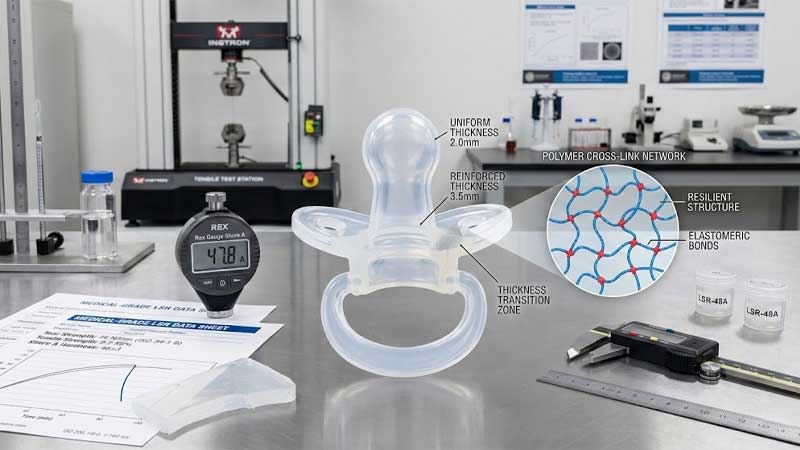
In our lab, we use ASTM D624 Type B tear testing. This method simulates angled tearing. It reflects real chewing conditions better than simple straight pulls. In production approval, we avoid materials below 20 kN/m tear strength for pacifier nipples.
What We See in Simulated Chewing
When we run cyclic bite simulations, low-tear materials degrade quickly. Small cuts grow wider after thousands of cycles. High-tear silicone maintains structure much longer.
Cross-link Density: The Balance Point
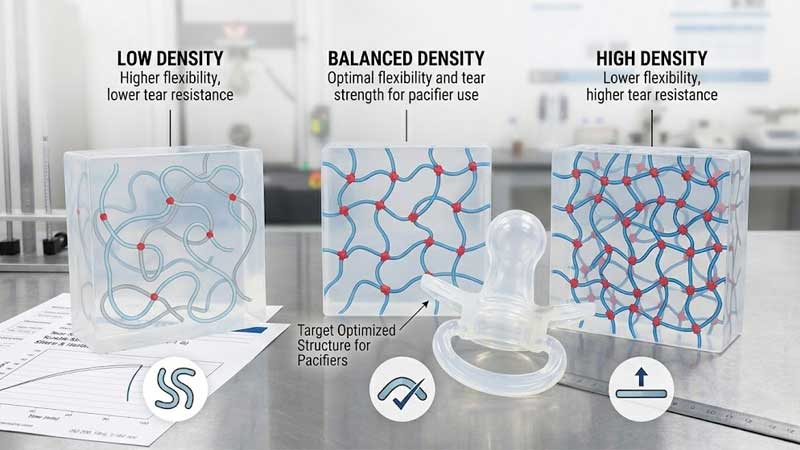
Silicone performance depends on cross-link density. Cross-links connect polymer chains. They control elasticity and strength.
If cross-link density is too low, the silicone feels soft and weak. It may deform permanently. The nipple may collapse.
If cross-link density is too high, the silicone becomes stiff and brittle. Tear resistance drops.
There is a middle zone. I call it the balance point.
Practical Mixing Control
In liquid silicone rubber systems, small changes in catalyst ratio affect cross-link density. A slight adjustment in mix ratio can change both Shore A and tear strength.
In one medical-grade batch, we targeted about 0.55 mol% cross-link density. The result was around 42 Shore A and 28 kN/m tear strength. A harder 58 Shore A version showed much lower tear performance. It cracked under repeated stress.
Typical Cross-link Ranges
| Cross-link Level (mol%) | Shore A | Tear Strength (kN/m) | Performance in Pacifiers |
| 0.25–0.45 | 28–38 | 14–19 | Too soft, poor shape retention |
| 0.50–0.75 | 40–48 | 24–30 | Balanced and reliable |
| 0.80–1.00 | 52–62 | 9–13 | Too brittle, crack risk |
These values come from real cured samples tested in our lab.
Design Matters as Much as Material
Material alone cannot prevent choking. Structural design plays a major role.
The nipple-to-base connection is a critical zone. Sharp corners create stress concentration. Rounded transitions distribute force more evenly.
We often use radii of around 0.7 mm in these areas. Simulation results show significant reduction in peak stress.
Mold and Processing Details
Gate location affects molecular orientation. If the gate sits near a bite zone, the local structure may weaken. We move gates away from chewing areas.
Flash and parting lines also matter. Rough mold seams can start tears. Precision tooling and careful trimming reduce this risk.
These small details often decide whether a pacifier passes long-term fatigue testing.
Dynamic Fatigue Testing
Standard pull tests check initial strength. They do not reflect real use. Babies bite repeatedly. Stress is cyclic.
We built internal rigs to simulate chewing cycles.
In one comparison test:
| Material Type | Initial Tear (kN/m) | After 12,000 Cycles (kN/m) | Strength Loss |
| 43 Shore A High-Tear | 29 | 23.2 | 20% |
| 58 Shore A Standard | 17 | 8.5 | 50% |
The harder material lost half its strength. Visible cracks appeared early. The balanced formula remained functional.
We also test under saliva exposure and heat aging. Pacifiers must survive sterilization and daily washing.
Compliance and Safety Standards
Pacifiers must meet mechanical and chemical safety rules. In the U.S., the U.S. Consumer Product Safety Commission sets pull force requirements. International markets may reference ISO standards for biocompatibility.
Standards such as ISO 10993 and USP Class VI focus on biological safety. They do not guarantee tear durability. That is why internal mechanical validation is essential.
Manufacturers should request real tear data from suppliers. Ask for ASTM D624 Type B results. Do not rely only on Shore A values.
Conclusion
For infant products, tear strength should be a primary specification. Hardness is secondary.
A pacifier does not fail because it is too soft. It fails because a small cut grows into a full tear.
With correct cross-link control, thoughtful mold design, and dynamic fatigue testing, silicone pacifiers can achieve both comfort and safety.
Backed by years of silicone expertise and tools like our fatigue simulators, we’re ready to craft custom pacifier solutions that prioritize safety and innovation. Get in touch to discuss tailoring for your line. Let’s make products that deliver peace of mind.