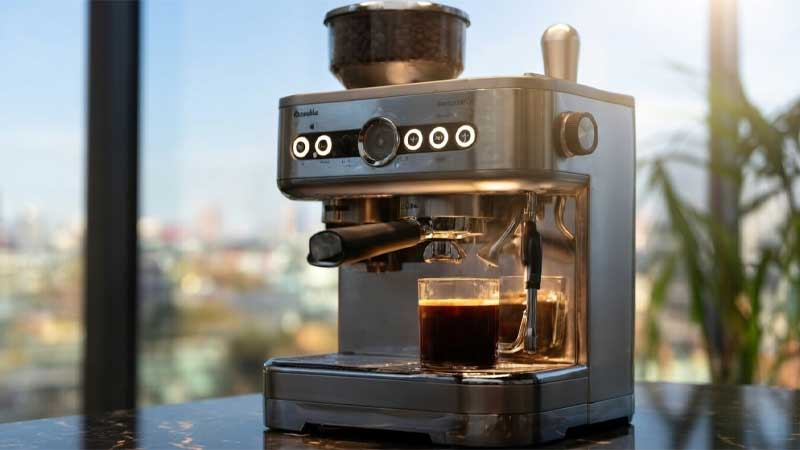
Top coffee machine brands made the switch some years back. They moved away from the usual plastic gaskets and EPDM rubber rings. In their place came food-grade silicone seals. The reason was simple and practical. These new seals handled the daily heat and pressure better. Machines from La Marzocco and Breville run cleaner and need less fixing now. For anyone who designs these machines or handles parts for small appliance brands, the change touches real results. It shows up in fewer returns, steadier performance, and coffee that tastes right every time.
The story started with everyday problems on the line and in customer homes. Early machines were simpler. Today’s models push harder. They need seals that last through many brew cycles without giving trouble. Silicone stepped in and quietly became the standard. Here is how that happened and why it matters for your next project.
The Evolution of Coffee Machine Sealing
Look back to the 1980s and 1990s. Most home espresso machines used basic plastic or EPDM rubber for the group head and portafilter. Those materials did the job when pressure stayed low and water temperature sat around 90°C. A seal only had to hold for a few hundred uses. Leaks were rare in the beginning.
Modern machines changed the game. They now run at 9 bars and keep water at 93 to 96°C for longer stretches. The machine heats up and cools down several times each day. At the same time, buyers want safer materials. They check for BPA and ask about strange tastes. Rubber started to show its limits. Plastic warped under repeated heat. Brands began to test other options.
Silicone came out ahead after the first round of field trials. It cost a bit more at first. But the numbers from service centers told a clear story. Fewer leaks meant fewer visits. Customers kept their machines longer. Today you see silicone in almost every premium model. The old materials simply could not match the new demands for temperature control and clean taste.
Material Showdown: Silicone vs. Rubber vs. Plastic
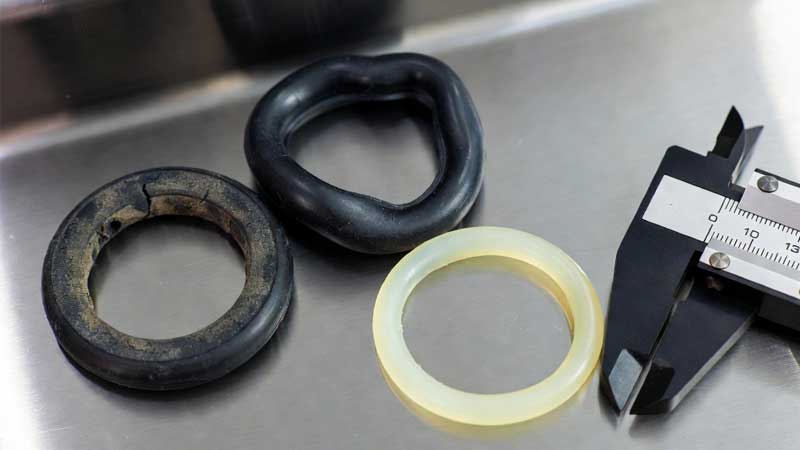
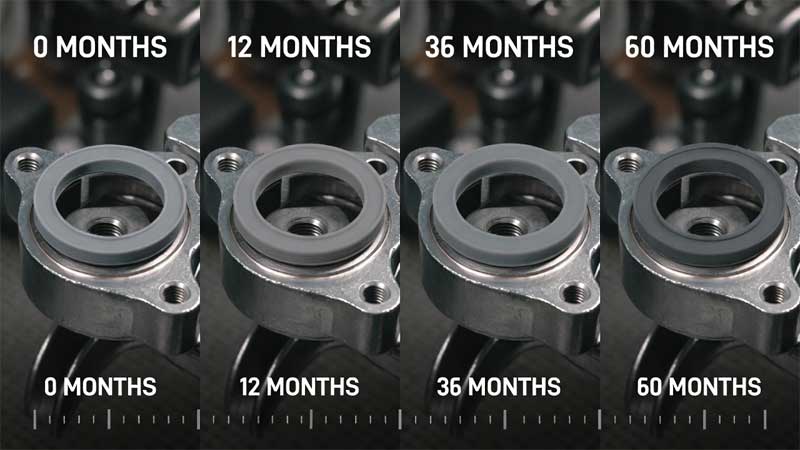
Hold a used seal in your hand and the difference appears right away. Plastic turns stiff and shows cracks along the edges. Rubber flattens out and loses its spring. Silicone stays soft and returns to shape even after heavy use.
The table below comes from repeated lab runs and real production batches. It shows how each material holds up in daily coffee machine conditions.
| Material | Temperature Range | Compression Set after 22 hours at 100°C | Picks Up Coffee Oils | Life in Daily Home Use | Part Cost at High Volume |
| Food-grade Silicone (LSR) | -60°C to 230°C | 10–20% | None | 3–5 years | Medium |
| EPDM Rubber | -40°C to 150°C | 30–50% | Some | 1–2 years | Low |
| Standard Plastic | Up to 120°C | Permanent change | High | Under 1 year | Very low |
Silicone handles the full swing from cold startup to hot brew without turning brittle. It ignores coffee oils completely, so the next shot tastes clean. And it keeps its bounce after every lock and unlock of the portafilter. That matters when the handle gets used ten or more times a day. Rubber slowly hardens. Plastic loses its fit after the first few hot cycles. The gap in real life shows up fast.
Technical Deep Dive: Why Silicone Wins in Brewing
Brew water moves under pressure. It carries heat straight to the seal for minutes at a time. Ordinary materials start to weaken after a few months. Their chains break down when hot water hits them again and again.
Silicone uses a different backbone. Silicon and oxygen links hold steady even in constant hot water. The seal keeps its strength through thousands of 9-bar cycles. It does not soften or harden without warning.
The surface also works in a helpful way. Silicone carries low surface energy. Scale and limescale have trouble sticking. In areas with hard water, rubber seals often need cleaning every month. Silicone versions stretch that to two or three months. Service teams spend less time on descaling. Customers notice the machine feels simpler to live with.
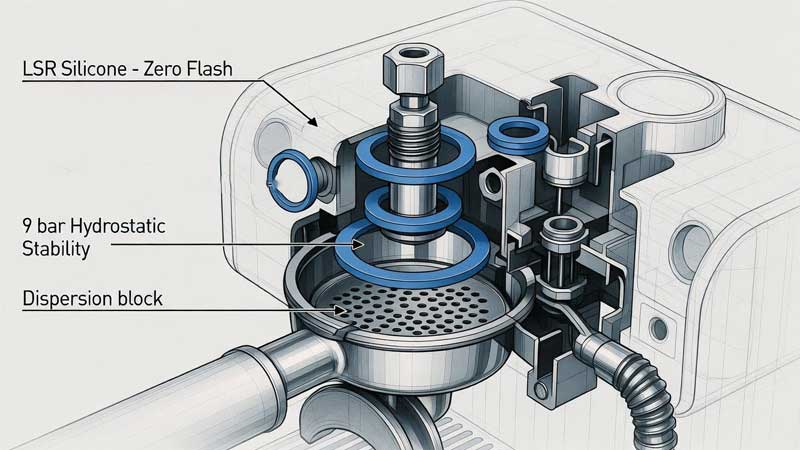
On the factory side, liquid silicone rubber brings another quiet advantage. The injection molding fills every detail of the mold. Parts leave the press with no flash at all. The gasket sits exactly in the group head groove. No extra trimming steps. No rough edges that could cause leaks. Assembly moves faster and quality checks become straightforward.
Food Safety & Regulatory Compliance
Supply chain checks usually start with the paperwork. Silicone makes this step smooth. It already meets the main requirements without added work.
The main marks that matter include:
- FDA 21 CFR 177.2600 for the United States
- LFGB standards for Germany and the EU
- Full match with current food contact rules across Europe
Tests at 95°C show almost no movement of substances into the water. Plastic parts can release small traces when heat and pressure combine. Silicone stays quiet and inert.
The move away from PFAS also fits naturally. Many older rubber seals needed those coatings to perform. Silicone works without them. It blocks leaks just as well and lasts longer. Brands now list PFAS-free on their sheets as a clear benefit.
Common Failure Modes of Non-Silicone Seals
Repair shops see the same issues repeat. Plastic seals crack after the machine switches between cold and hot. One day everything holds. The next day water drips from the edges.
Rubber develops a light bond with the metal handle over time. The portafilter becomes harder to lock and unlock. Some users twist too hard and damage the part.
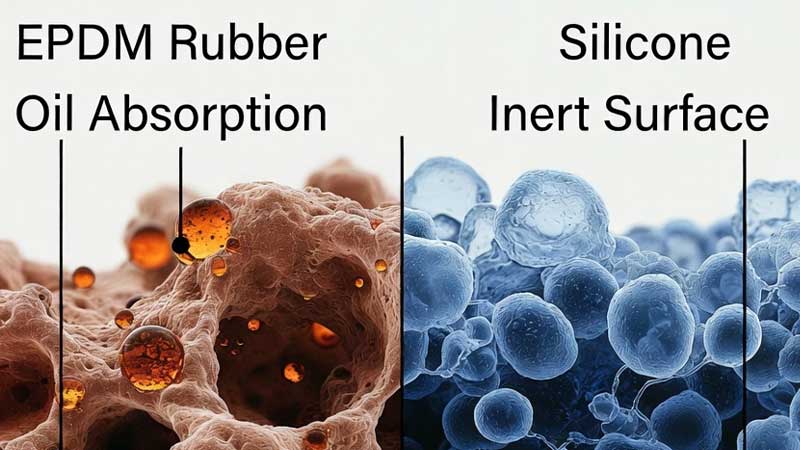
Old rubber also holds coffee oils inside its small pores. Those oils slowly turn and add a bitter note to every shot. Taste problems appear before any visible leak. That kind of quiet failure hurts the brand the most.
Case Study: Group Head Gasket Optimization
A European espresso maker tracked their data closely after changing to custom silicone O-rings. The numbers told a useful story.
Before the change:
- Rubber gaskets lasted 8 to 10 months in normal home use
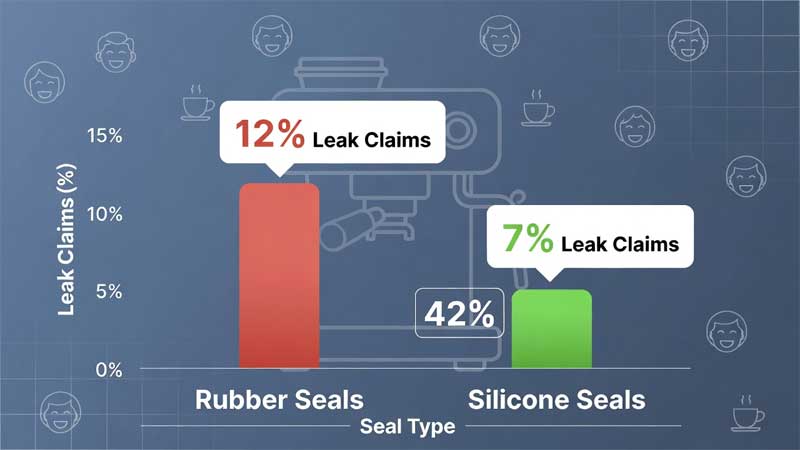
- Leak claims reached 12 percent of units in the first year
- Service centers spent extra hours cleaning oil residue from returned machines
After switching to 60 Shore A silicone:
- Gaskets now run 3 to 4 years under the same conditions
- Warranty claims for leaks dropped 42 percent
- Flavor tests showed clearer notes from the beans
- Assembly rejection rate fell because the parts fit the groove every time
Hardness made the biggest difference. Side-by-side tests with 50 A, 60 A, and 70 A showed 60 to 70 Shore A gave the best balance. It sealed tight at 9 bars but still let the handle turn easily. Softer options leaked under pressure. Harder ones felt stiff.
Two small steps from that project still help today. A thin layer of food-grade grease on first fit helps the seal slide into place without twists. A 0.2 mm gap for heat expansion adds months to the life. These details come up often when teams fine-tune new designs.
Conclusion
Silicone raised the bar for good coffee machines. It matches the heat and pressure that modern brewing needs. It keeps the taste clean and cuts service costs in a way that shows on the numbers.