Industrial Silicone Parts Manufacturer
Precision OEM and custom-molded silicone components for machinery, electronics, automotive systems, and harsh industrial environments. Engineering support, strict tolerances, and application-specific material selection.
Home » Industrial Silicone Parts Manufacturer
What Is an Industrial Silicone Part?
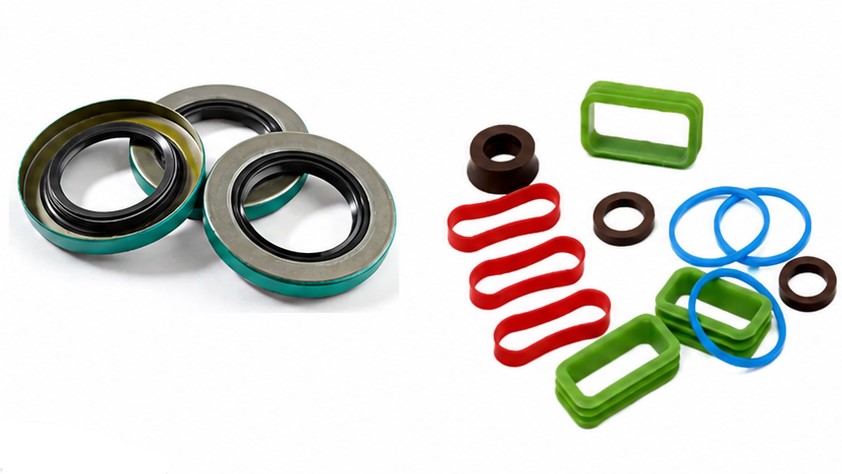
An industrial silicone part is a flexible, durable component molded from synthetic elastomer that seals, insulates, connects, or absorbs vibration within mechanical and electrical assemblies in industrial setting. A custom industrial silicone part is engineered to your specific geometry, tolerance requirements, durometer, and environmental resistance for integration into commercial equipment or specialized hardware.
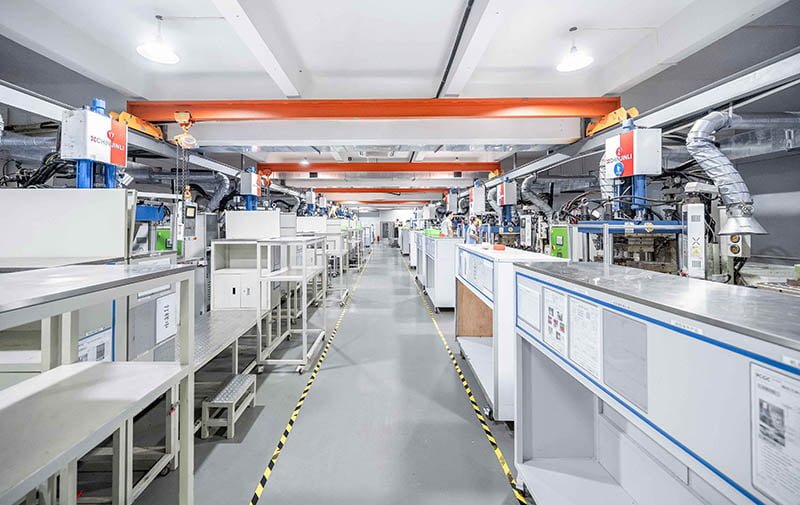
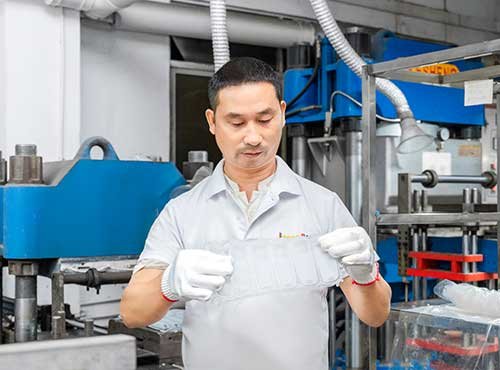
RY Silicone is a custom silicone manufacturer based in China, established in 2012. The factory covers 10,000+ m², runs 30+ machines, and can produce up to 100,000 silicone products per day. We supply OEM/ODM silicone components to equipment manufacturers, engineering brands, and industrial distributors across North America, Europe, and other global markets.
Industrial Silicone Parts Manufacturing at a Glance
MOQ
From 1,000 to 5,000 pieces depending on part size and tooling setup
Lead Times
Samples in 5–10 working days, custom molds in 10–20, and mass production in 15–25 after approval.
Material & Performance
High-Consistency Rubber (HCR), Liquid Silicone Rubber (LSR) and Fluorosilicone (FVMQ) from 20 to 80 Shore A, functioning reliably from -60°C to 250°C.
Branding & Packaging
Bulk polybags, anti-static packaging, kitting for assembly lines and custom part-number labeling.
Who We Manufacture Industrial Silicone Parts For
Start with the application environment, then define the geometry, compound, and tolerance limits.

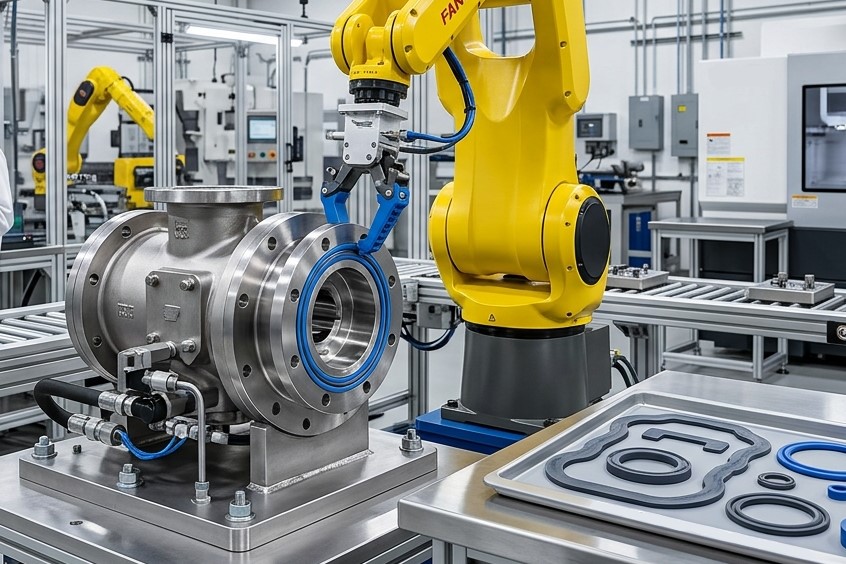
Machinery & Equipment OEMs
Build reliable sealing and protective components for pumps, valves, pneumatics, and automated machinery.Dimensional accuracy and long-term compression set are the priority when these parts go into critical mechanical assemblies.
Automotive & Aerospace Suppliers
Develop custom bellows, boots, grommets, and dampeners designed to survive engine bays, fluid exposure, and constant vibration.Material formulation matters most here, requiring specialized compounds like fluorosilicone to handle fuel and oil vapor.
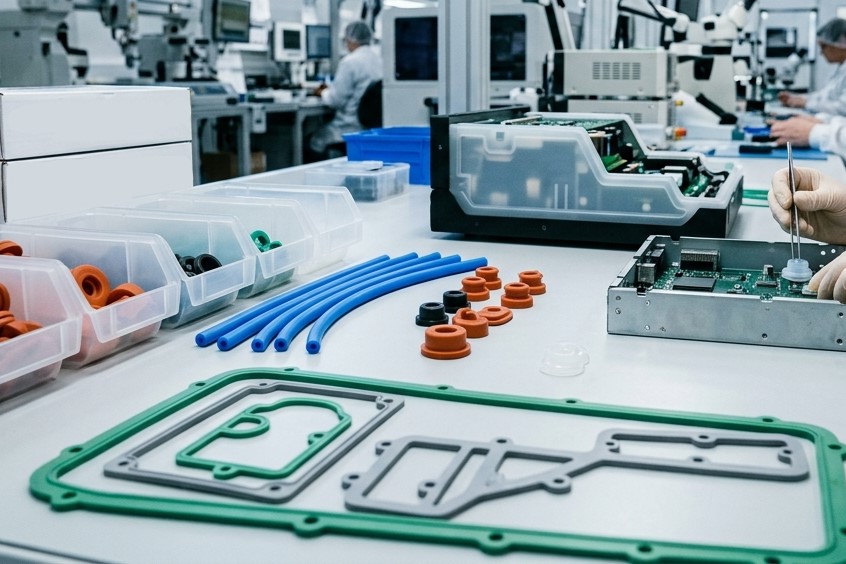
Electronics & Electrical Manufacturers
Source insulating boots, wire seals, keypads, and thermal pads for enclosures and sensitive electrical devices.Dielectric strength, flame retardancy (such as UL 94 V-0 ratings), and precise fits around cable pass-throughs guide the engineering process.
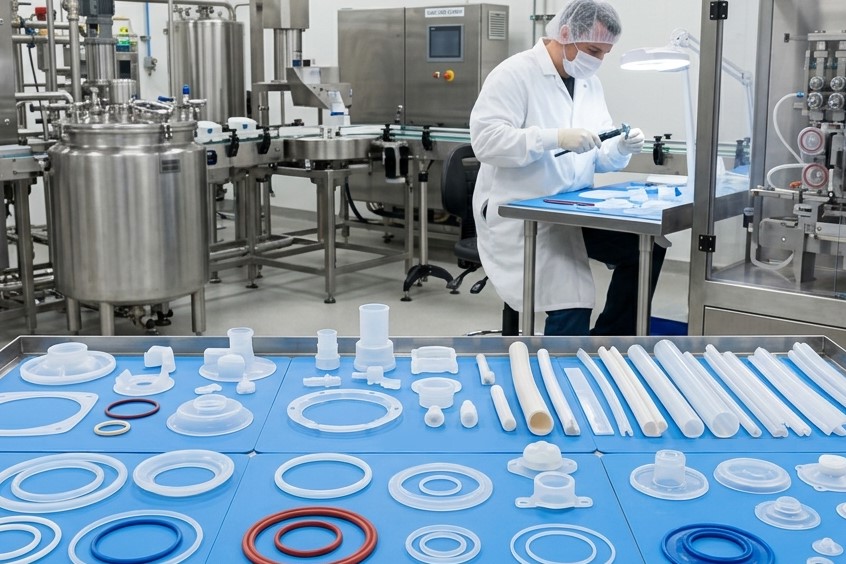
Medical & Food Processing Equipment Brands
Produce custom hygienic seals, tubing connectors, and fluid-control valves for processing lines and medical devices.Strict compliance with FDA, LFGB, or biocompatibility standards pairs with clean manufacturing environments for these applications.
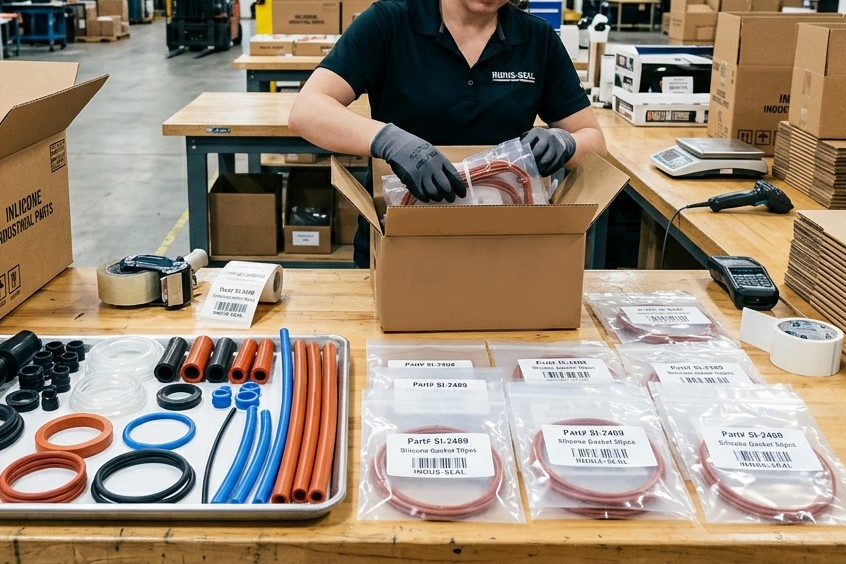
Industrial Distributors & Wholesalers
Source standard or custom-dimensioned O-rings, gaskets, and plugs wholesale to supply local maintenance and manufacturing sectors.As a direct factory partner, we ensure consistent batch-to-batch quality and reliable replenishment schedules.
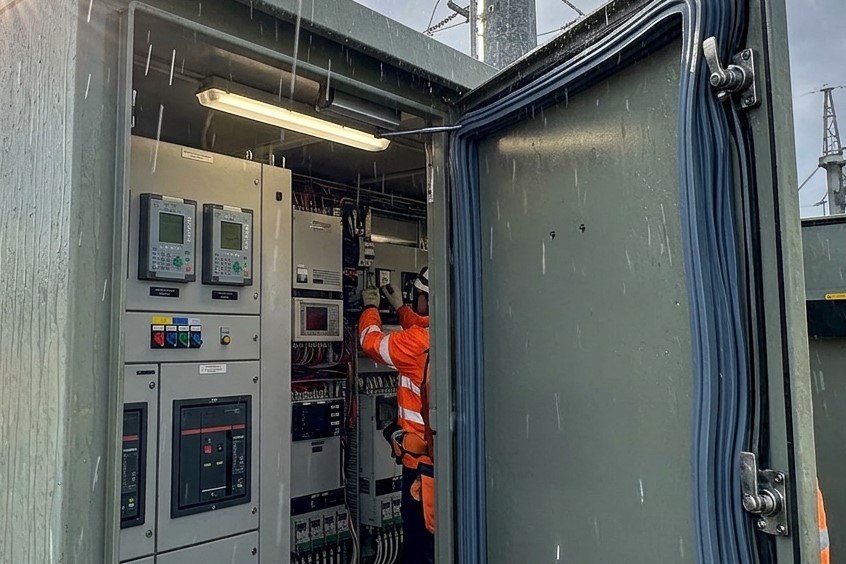
Energy, Utilities & Infrastructure Companies
Develop custom seals, insulating covers, cable grommets, and protective boots for power systems, renewable energy, and utility infrastructure, ensuring weather resistance, insulation, UV stability, and durability.
Industrial Silicone Parts Types We Can Develop
Silicone Seals
Silicone Gaskets
Silicone Tubing
Silicone Hose
Silicone Rubber Strips
Silicone Rubber Heaters
Silicone Rubber Keypads
Silicone Sheets
Industrial Silicone Part Customization
Custom component projects start with the operating environment, geometry, compound and integration needs.
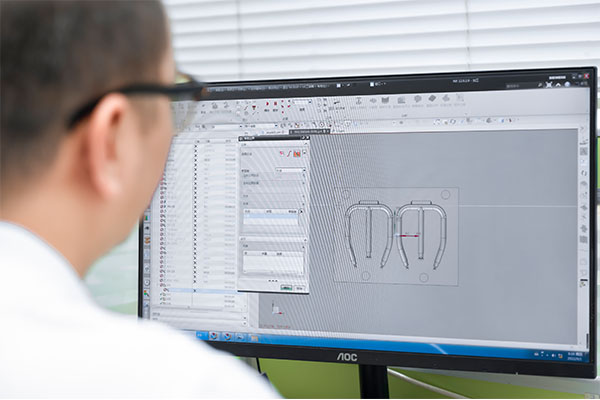
This is the starting point of the project because the part’s shape determines the mold structure, gate locations and necessary tonnage. You can provide 2D drawings or 3D step files, and our engineers will evaluate manufacturability.
Available options include:
- Custom 3D geometries and profiles
- Undercut and complex hollow structures
- Precision tolerances adhering to ISO 3302-1 standard (Class M1 to M3)
- Silicone gaskets in sheets or rolls of different thicknesses
- Controlled parting-line placements
After the geometry is confirmed, we specify the elastomer blend. The goal is to balance tensile strength, chemical resistance, temperature limits and elongation so the part survives its actual working conditions without degrading.
Available options include:
- Standard High-Consistency Rubber (HCR)
- Liquid Silicone Rubber (LSR) for high-precision needs
- Fluorosilicone (FVMQ) for solvent and fuel resistance
- Flame-retardant formulations
- High-tear-strength compounds
- Electrically conductive or insulating grades
The physical feel and compression behavior dictate how the part seals or absorbs impact. Hardness is customized to match the closing force of your assembly or the required flex of a moving joint.
Available options include:
- Soft and highly compressible (20–30 Shore A)
- Medium, balanced flex and structure (40–60 Shore A)
- Firm, rigid sealing (70–80 Shore A)
- Durometer-matched dual-molding
How the part integrates into your final product matters just as much as how it is molded. We adapt the finish and delivery format to fit seamlessly into your production line.
Available options include:
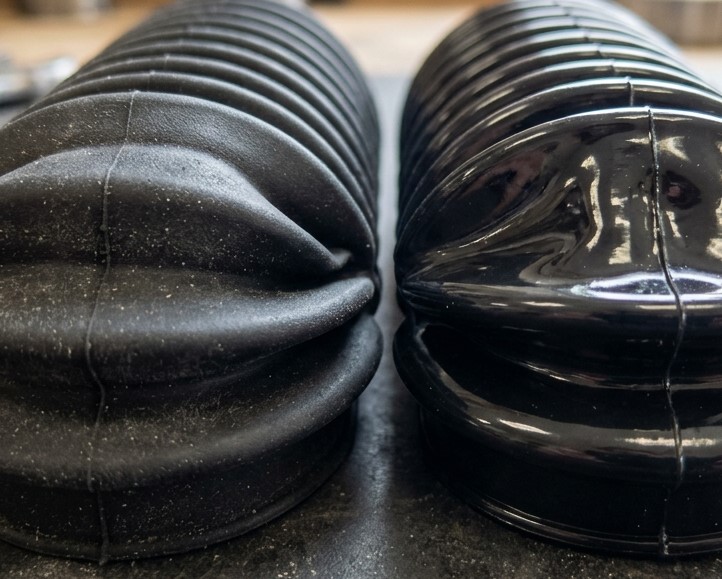
- Surface treatments to reduce tackiness (e.g., Parylene coating or matte texturing)
- Pre-inserted metal hardware
- Application of double-sided adhesive backing (e.g., 3M tapes)
- Post-curing to eliminate outgassing in closed electronics
- Slitting or secondary die-cutting
Start Your Custom Silicone Industrial Parts Project
Send your quantity, part type, logo artwork, and packaging requirements. RY Silicone will review the project and recommend suitable industrial parts, material, branding method, and processing.
How to Specify a Better Industrial Silicone Part
Performance relies on matching the mechanical properties to the real-world assembly.
- Compression Set—functions well under pressure
- Operating Temperature—high heat exposure without degrading or wearing out
- Chemical Exposure—specific oils, fuels, solvents, or cleaning agents involved
- Tolerances—the acceptable dimensional variance for your mating parts
- Tear Strength—vital for parts that stretch during installation
A higher durometer does not automatically mean better sealing performance.
Full specification guide
How to Specify a Better Industrial Silicone Part—tolerance classes, compression set evaluation, understanding durometer ranges, and a complete engineering checklist.
Industrial Silicone Part Graphics & Branding
Choose the marking method that fits traceability requirements without affecting part integrity.
Screen Printing
Strong, clean coverage for simple one- or two-color logos in bulk orders.
Pad Printing
High-contrast ink printing for logos or batch codes on visible, flat surfaces.
In-Mold Logos
Embossed or debossed cavity markings for permanent, ink-free identification.
Laser Engraving
Precision etching used primarily on coated silicone surfaces for durable, sharp serialization.
Industrial Silicone Material and Performance Options
We match polymer, curing agent, and post-processing to operational hazards.
Maintains elasticity near engines, exhaust, and heating elements.
Standard industrial silicone performs reliably up to 230°C. For extreme environments, specialized heat-stabilized compounds can push continuous operating temperatures up to 250°C or even 300°C for intermittent exposure without turning brittle.
Material Comparison
Silicone Rubber vs. Phenyl: Which Is Optimal for You for Cold Resistance? —low-temp grade, oil resistance, raw material, environmental resistance, leakage issue, and curing cycles.
Protects against swelling and degradation.
Standard silicone handles water, ozone, and UV exceptionally well but swells when exposed to petroleum-based fluids. Fluorosilicone (FVMQ) is required for continuous contact with fuels, engine oils, and aggressive industrial solvents.
Material Comparison
Silicone vs EPDM Parts: Which Is Best? — chemical compatibility, temperature ranges, weathering, cost factors, and how to choose the right elastomer.
Ensures a gasket or O-ring continues to seal over years of pressure.
A seal that flattens out and stays flat will eventually leak. We formulate and post-cure the compound to achieve a low compression set, ensuring the material pushes back against the mating hardware throughout its service life.
Vital for complex assembly and dynamic movement.
Bellows, moving diaphragms, and parts stretched over metal fittings require mechanical properties evaluation and high-tensile-strength formulations. This prevents microscopic nicks from propagating into catastrophic failures during installation or cyclical movement.
Protects sensitive electronics and optical devices.
Industrial parts destined for sealed electrical enclosures or optical housings undergo extended post-curing in forced-air ovens. This bakes off volatile organic compounds (VOCs) that could otherwise condense on lenses or circuit boards.
Available documents may include:
- Material Data Sheets (TDS)
- RoHS and REACH compliance reports
- FDA / NSF declarations for food-grade machinery
- UL flammability ratings (e.g., UL 94)
The scope must match the selected silicone grade and destination market.
An FDA-approved raw material report should not be presented as proof of regulatory compliance for a finished, un-audited assembly.
Maintenance Guide
How to Clean & Maintain Industrial Silicone Components — acceptable solvents, avoiding abrasive damage, inspection routines and replacement indicators.
How Custom Industrial Silicone Parts Are Manufactured

STEP 1: Requirement Review
Every project begins by reviewing your 2D/3D CAD files, operating environment, tolerance requirements (e.g., ISO 3302-1 Class M2), assembly methods and requested material compliance.
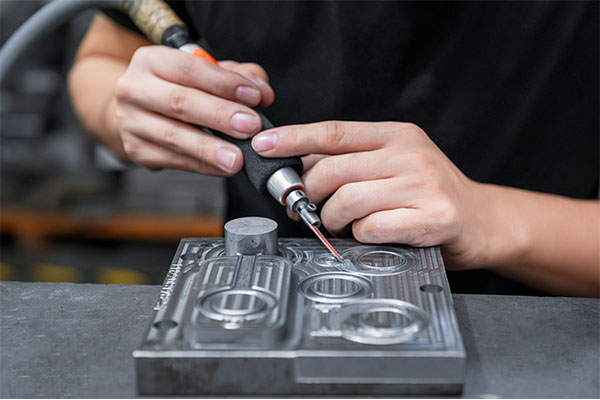
STEP 2: Tooling Design and Machining
Our engineers design molds, calculating gates, parting lines, and shrinkage. Silicone shrinkage depends on formulation and curing temperature, so EPDM dimensions cannot ensure accuracy.
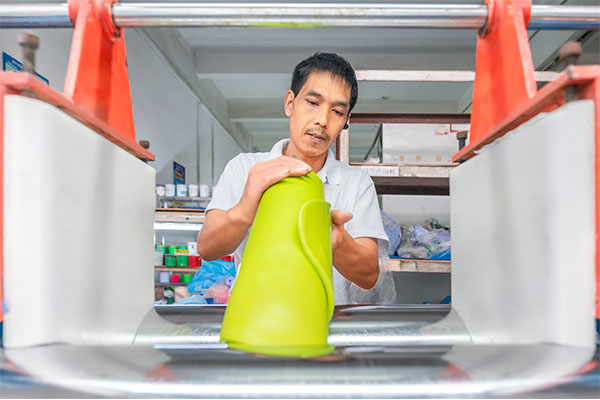
STEP 3: Compounding and Preparation
The raw silicone base is milled and blended with specific catalysts, pigments and performance additives to achieve the confirmed durometer and physical properties.

STEP 4: Molding Process
The catalyzed compound is formed using compression molding, transfer molding or Liquid Injection Molding (LIM).The right method is chosen based on part complexity, undercut requirements and production volume.

STEP 5: Deflashing
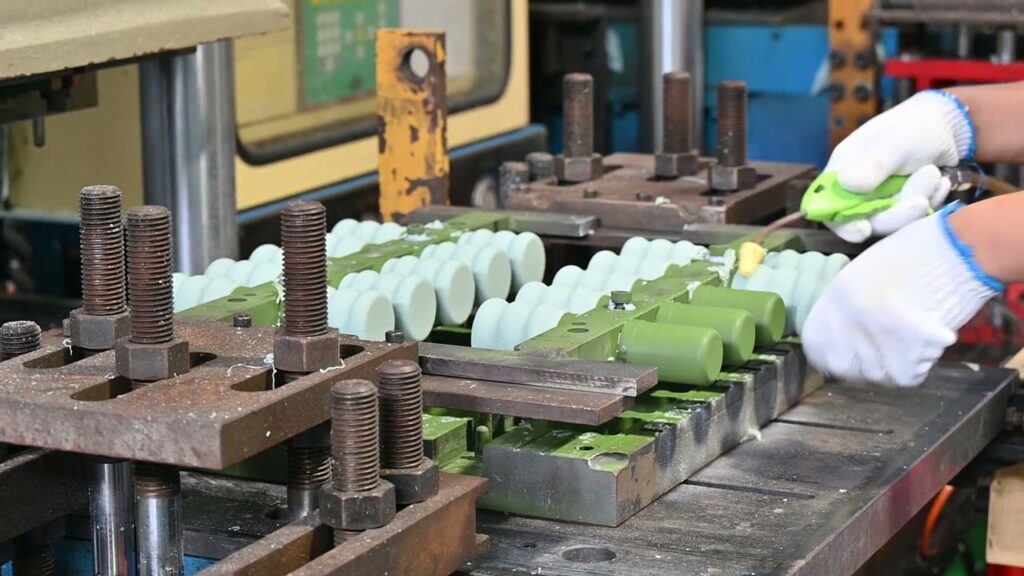
Once cured, each component is removed from the tool and excess flash is removed via manual trimming, cryogenic deflashing or tumbling, depending on the part's geometry and edge tolerances.
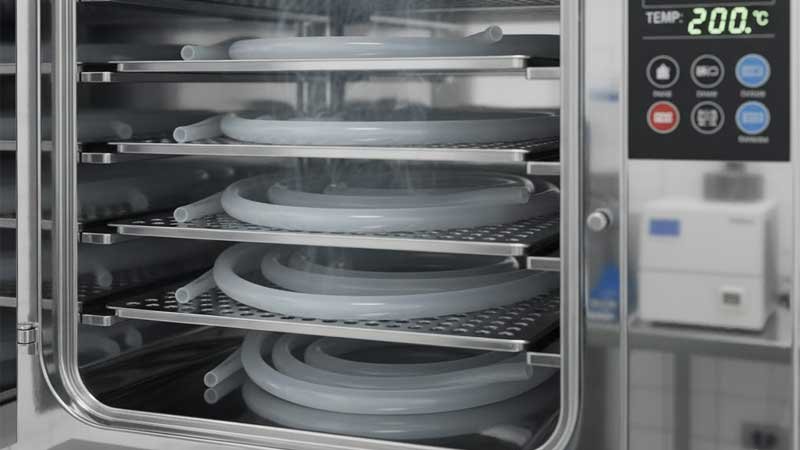
STEP 6: Post-Curing
Components undergo controlled oven baking.This secondary curing stabilizes physical dimensions, maximizes compression set properties and eliminates volatile by-products.
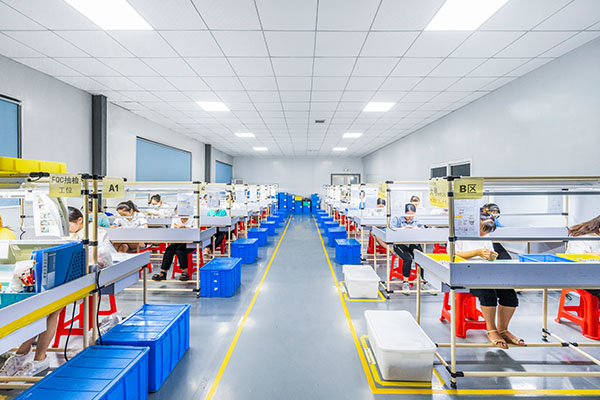
STEP 7: Quality Assurance
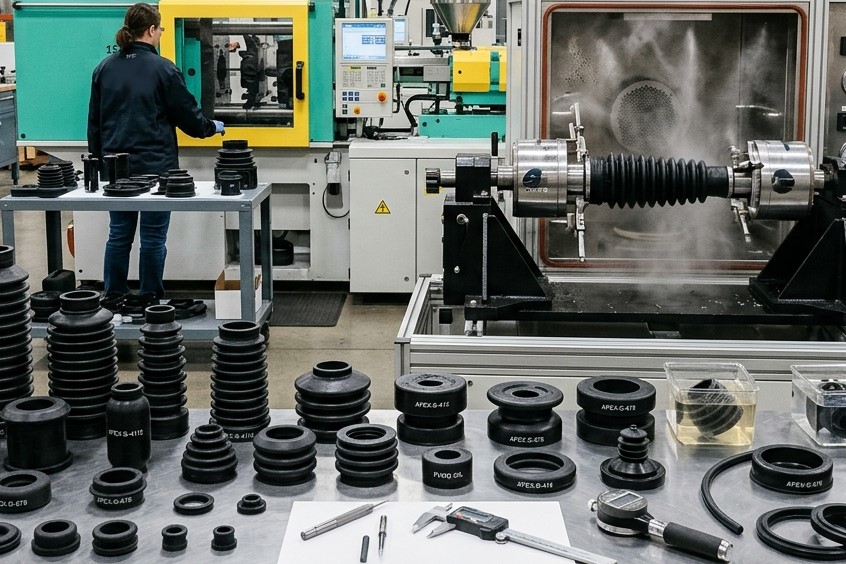
Our QC team measures critical dimensions, tests durometer and inspects for surface defects against your technical drawing and the approved sample.
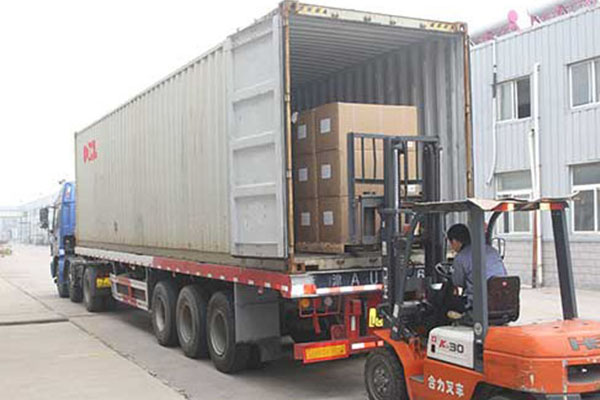
STEP 8: Packaging and Delivery
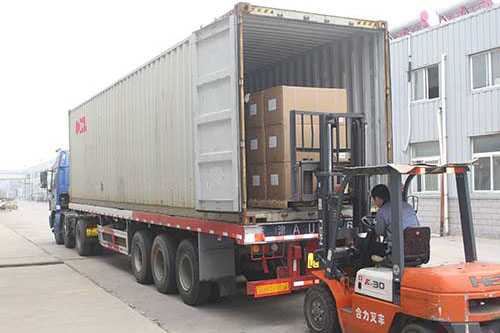
Finally, parts are counted, bagged, labeled with your requested SKU or batch information, and prepared for industrial freight delivery.
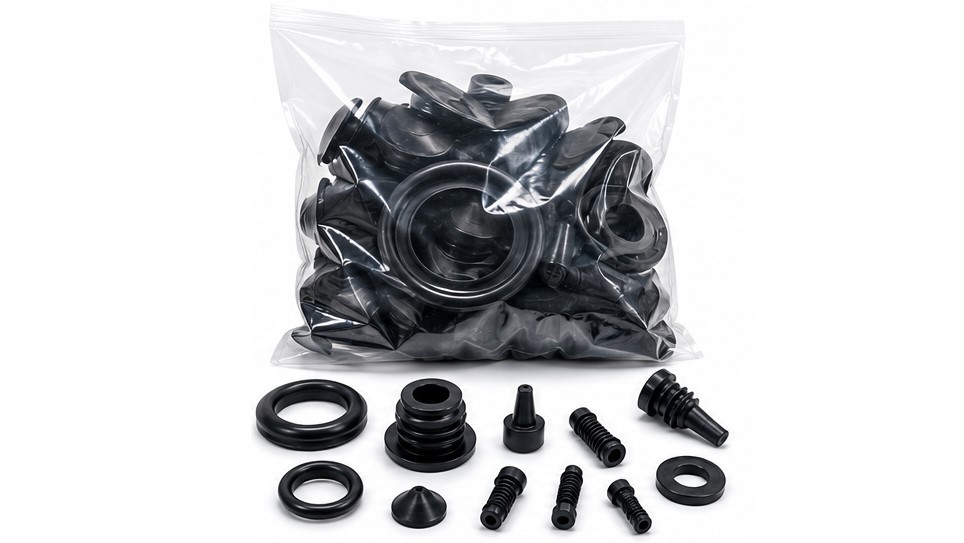
Industrial Silicone Part Quality Control
Quality control in industrial applications focuses on dimensional stability, material consistency and functional reliability under stress.
AQL 2.5 / 4.0 Standard Inspection
We run final random sampling plans to verify batch consistency:
AQL 2.5
Critical / Dimensional Defects
AQL 4.0
Minor Surface / Visual Flaws
Another inspection standard can be integrated when specified in your quality agreement.
Approved Sample & Drawing Control
The approved sample and approved 2D drawing become the absolute baseline for:
- Critical-to-function dimensions
- Durometer
- Weight
- Parting line mismatch limits
- Flash extension limits
Incoming Material Review
Incoming silicone bases, cross-linkers and third-party test reports are verified before any batch enters the mixing mill.
In-Process Inspection
Technicians monitor mold temperature, platen pressure and cycle times to prevent under-curing or internal voiding.
Dimensional Verification
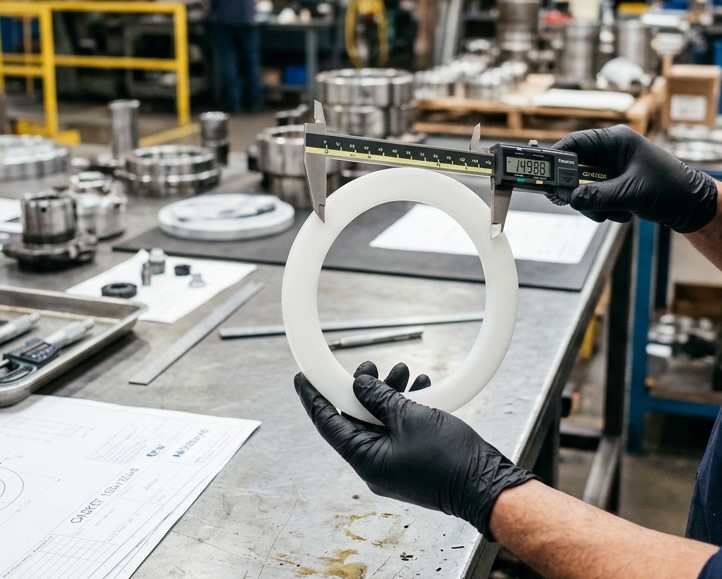
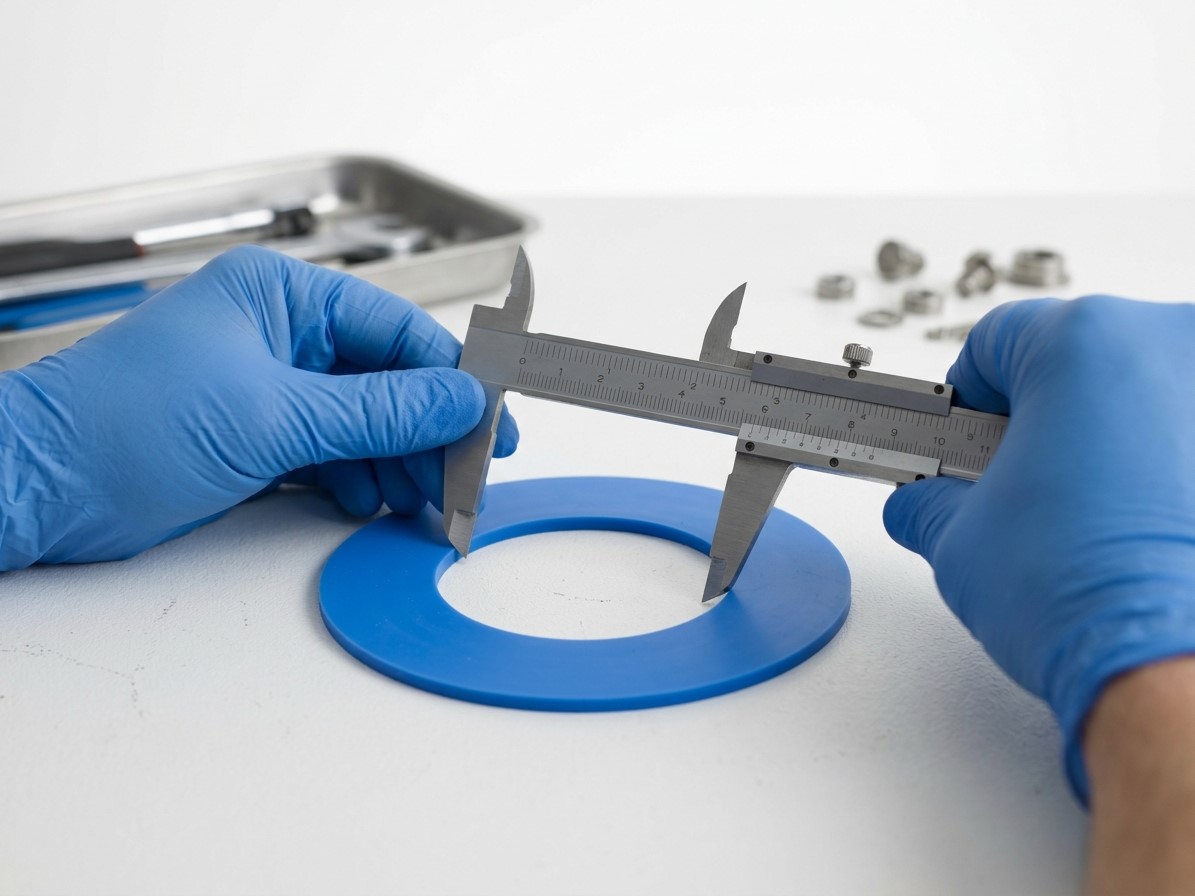
Using calipers, micrometers and optical comparators, critical dimensions (ID, OD, cross-section) are checked against the specified ISO 3302-1 tolerance class.
Appearance and Surface
Each part is evaluated for:
- Flow marks
- Inclusions or contamination
- Short shots (incomplete fills)
- Tear marks from demolding
- Unacceptable flash residue
Mechanical Testing
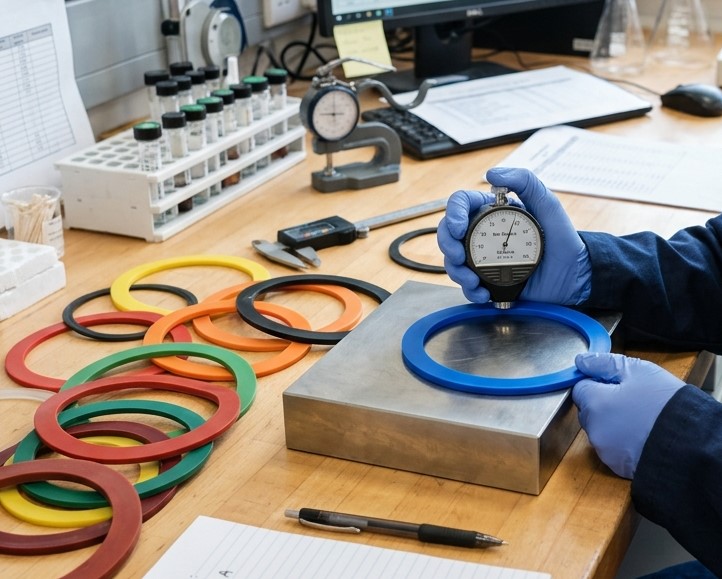
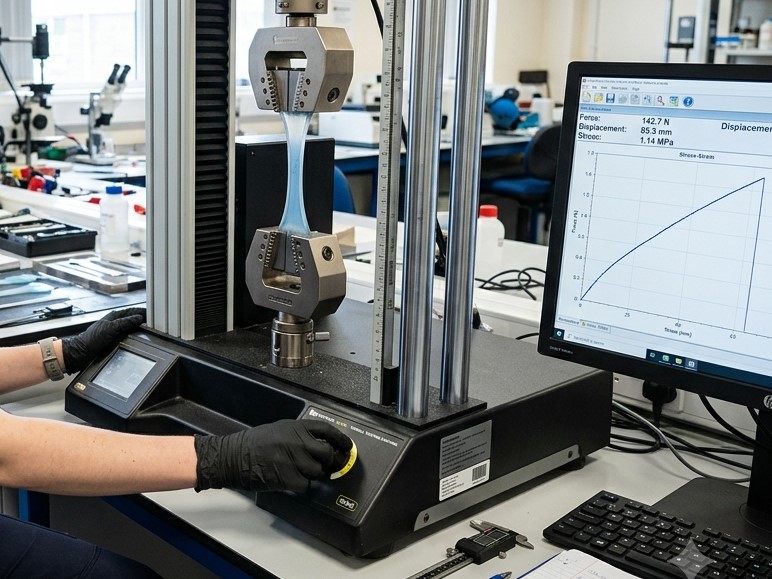
Our lab can perform internal checks for hardness (Shore A), tensile strength, elongation and basic tear resistance as required by the project scope.
Packaging and Labeling
Accurate part quantities, correct SKU labeling, anti-static bags (if requested) and secure carton preparation are verified before dispatch.
Industrial Silicone Part Packaging Options
Proper packaging prevents deformation during transit and simplifies your assembly line logistics.

Bulk Packaging
Standard bulk packing in PE bags inside robust export cartons, offering a highly cost-effective solution for high-volume, durable rubber components.
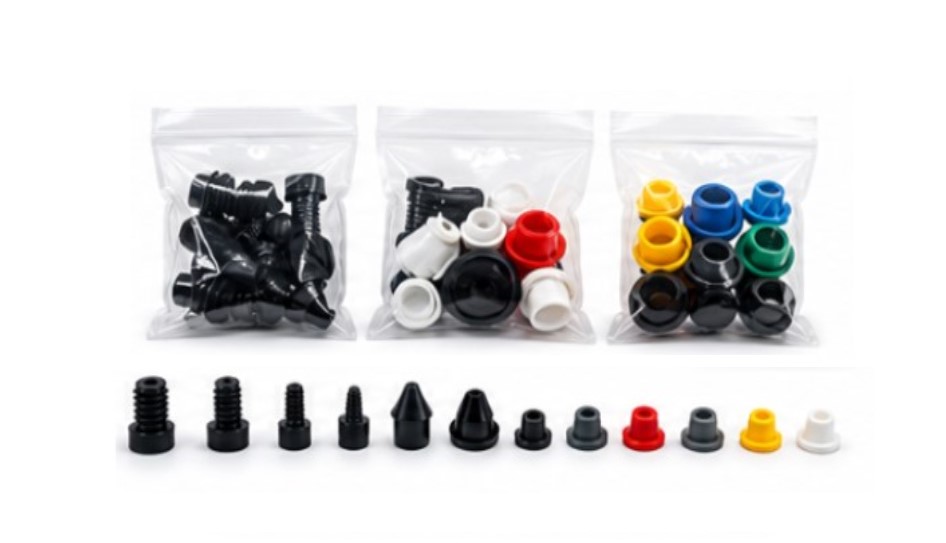
Kitting & Sub-Assembly
Pre-packaged kits of O-rings, seals and grommets, expertly grouped and ready for immediate inclusion in your equipment manuals or spare parts stock.
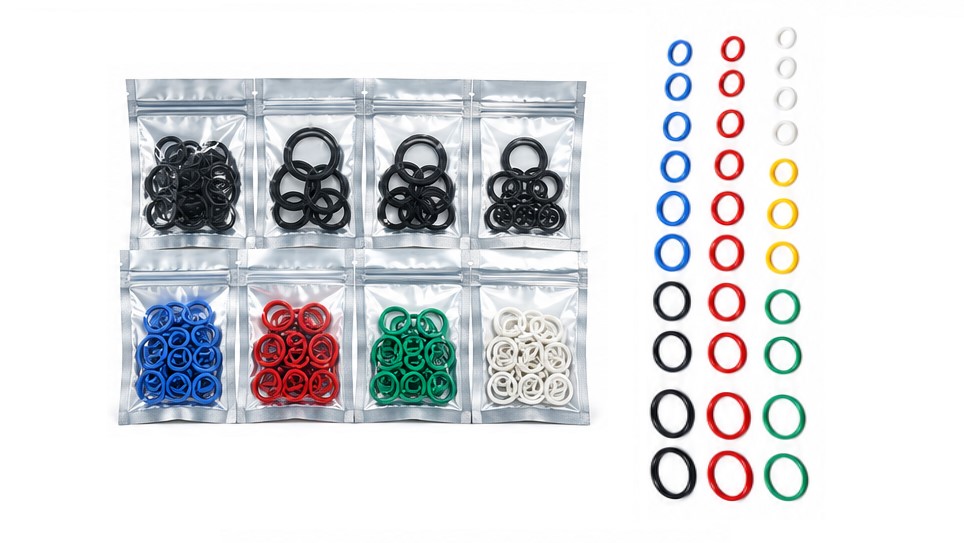
Anti-Static Packaging
Specialized packing in anti-static bags or cleanroom settings for electronic or medical device components to prevent dust attraction and contamination.

Distributor Packaging
Custom-labeled bags with barcodes, batch numbers and corporate branding, designed for seamless, immediate intake into your global warehouse systems.

Typical Custom Industrial Silicone Parts Specifications
| Specification | Typical Reference |
|---|---|
| Product | Custom industrial silicone parts |
| Applications | Seals, gaskets, bellows, O-rings, grommets, dampeners, silicone sheets, and overmolded parts |
| Material | HTV, LSR, Fluorosilicone (FVMQ), specialized blends |
| Hardness range | 20–80 Shore A |
| Temperature range | -60°C to 250°C (up to 300°C for specialty compounds) |
| Tolerance standard | ISO 3302-1 (Class M1, M2, and M3 available) |
| Colors | Black, translucent, custom Pantone matching available |
| Molding process | Compression, transfer, or liquid injection molding (LIM) |
| Post-processing | Deflashing, post-curing, adhesive backing, surface coating |
| Part marking | Molded-in cavities, laser engraving, pad printing |
| Minimum Order Quantity (MOQ) | From 1,000 to 5,000 pieces depending on part size and tooling |
| Standard sample lead time | 10–20 working days (includes custom tooling) |
| Mass-production lead time | 15–25 working days after sample approval |
| Inspection | Approved drawing, physical sample and agreed AQL standard |
| Certifications | RoHS, REACH, FDA, LFGB, and UL-compliant materials available |
| OEM and ODM | Fully supported |
All figures are initial project references. Final specifications are confirmed according to the selected compound, geometry and tolerance requirements.
Why Work with RY Silicone
Silicone Manufacturing Experience Since 2012
RY Silicone is a China-based factory that has focused on custom elastomer manufacturing since 2012.
We support OEM clients, engineers, and procurement teams from initial design review through mass production and reliable replenishment.
10,000+ m² Production Facility
Our in-house factory handles compounding, tooling coordination, molding, deflashing, post-curing, and rigorous dimensional inspection all under one roof.
30+ Production Machines
Multiple hydraulic presses and injection machines support everything from micro-seals to large-format gaskets and multi-cavity high-volume runs.
Up to 100,000 Silicone Products per Day
That headroom is what lets us absorb supply-chain spikes and process six-figure blanket orders without compromising your production schedule.
Actual capacity per day depends heavily on part geometry, cycle time, and the required deflashing process.
Engineering Review Before Quotation
We do not quote blind from a rough sketch.
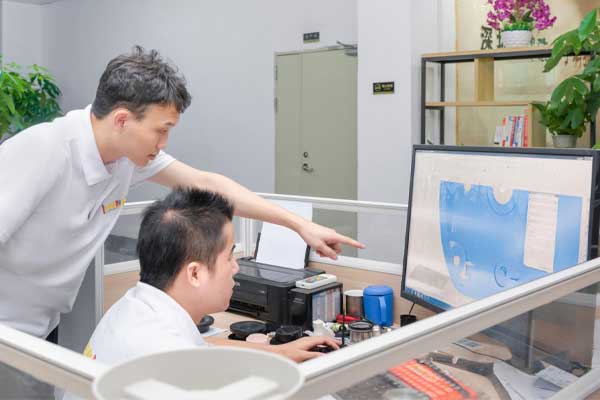
Instead, our engineers review your CAD files to identify potential undercuts, assess draft angles, verify tolerance feasibility, and match the material to the working environment. Only then do we submit a manufacturing proposal.
Sample-Based Production
Everything is locked to one approved sample and drawing before mass production—dimensions and durometer first, then flash limits and packaging.
On the floor, that signed sample and drawing outrank any generic spec sheet: if the two disagree, we pause the run and confirm with you.
Export Project Support
As a China-based industrial silicone supplier, RY Silicone serves machinery, automotive, and electronics clients across North America, Europe, and global manufacturing hubs.
Our team ensures clear technical communication, comprehensive shipping documentation, and seamless freight coordination.
Industrial Silicone Parts FAQ and Final RFQ
What is the MOQ for custom industrial silicone parts?
The MOQ typically ranges from 1,000 to 5,000 pieces depending on the physical size of the component and the cavity count of the tooling. For large, heavy gaskets, the MOQ can be lower. We are accustomed to supporting smaller initial batches for prototype validation before moving to high-volume production.
How long does it take to make custom silicone tooling?
Standard compression molds take 10 to 15 working days. More complex tooling, such as multi-plate transfer molds, LSR tooling or molds designed for metal-insert overmolding, may take 15 to 20 working days.
Can you mold silicone over metal or plastic parts?
Yes.
We regularly overmold silicone onto stainless steel, brass, aluminum and high-temperature engineering plastics. The insert must withstand the molding temperatures, and proper surface preparation (degreasing and priming) is critical to ensure a permanent mechanical or chemical bond.
Some molded silicone parts like molded silicone gaskets have higher-performance seal, that is suitable for mass production.
Are industrial silicone parts oil-resistant?
Standard silicone (HCR/LSR) will swell and degrade when continuously exposed to petroleum-based oils, fuels and certain solvents. If your part operates in these fluids, we must specify Fluorosilicone (FVMQ), which is engineered specifically for chemical and petrochemical resistance.
How do you handle tight dimensional tolerances?
We work to international rubber tolerance standards, typically ISO 3302-1 Class M2 or M3 for molded parts. If your assembly requires tighter Class M1 precision, we must review the geometry first, as highly precise tolerances require higher-grade tooling, specialized compounds and strict post-curing controls.
What is the difference between HCR and LSR for industrial parts?
High-Consistency Rubber (HCR) is processed via compression molding and is highly versatile, cost-effective for medium-to-large parts, and supports extreme temperature blends. Liquid Silicone Rubber (LSR) is injection-molded, offering faster cycle times, superior consistency and zero-flash potential for high-volume, precision micro-components.
What is the difference between silicone gaskets and rubber gaskets, and which is better for industrial use?
Industrial silicone gaskets
While both materials serve as seals, industrial silicone gaskets offer significantly higher durability, broader temperature limits, and superior environmental resistance compared to traditional natural rubber gaskets.
While natural rubber is a cost-effective choice for basic, low-stress applications, silicone is the industry standard for high-performance, extreme-environment sealing.
Do you provide UL 94 flame-retardant silicone parts?
Yes.
We can formulate compounds that achieve UL 94 V0 or UV 94 V1 flame retardancy standards, by meeting Underwriters Laboratories (UL) testing requirements for fire safety and flame resistance, which offer internal wiring seals, battery dampeners and electrical enclosure gaskets., etc.
Can you color-match industrial components?
Yes.
While industrial parts are most commonly black, gray, red or translucent, we can match specific Pantone colors for color-coded assembly lines, specialized branding or specific wiring identification.
What information do you need to quote an industrial silicone part?
Please provide:
- 2D technical drawing (with tolerances) and 3D step file
- Relevant design files
- Working environment details (temperature, chemicals, pressure)
- Target durometer (Shore A) and material grade
- Estimated annual volume or batch quantity
- Assembly or post-processing requirements (e.g., adhesive backing)
- Required certifications (e.g., RoHS, FDA, UL) for medical, health care, and food processing settings
- Destination country and target delivery date