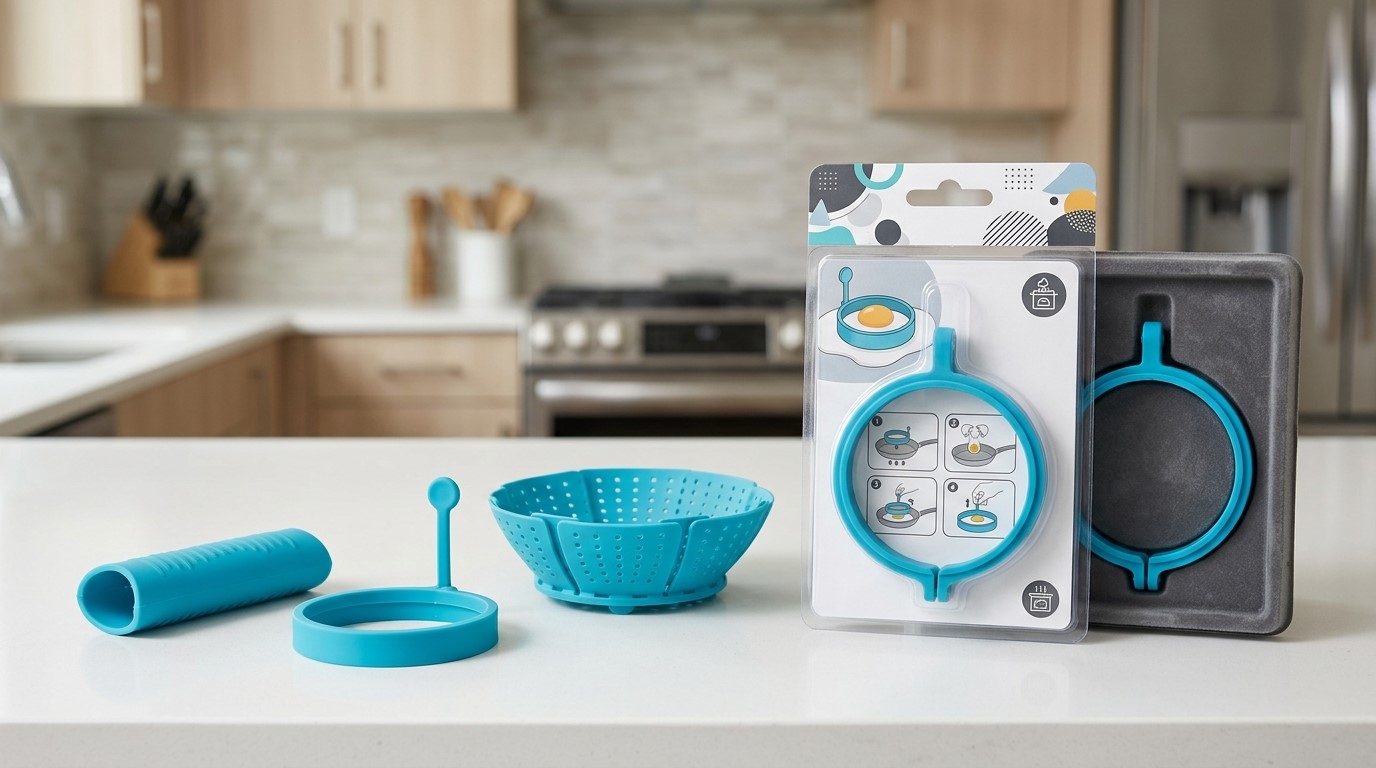
Silicone Kitchen Gadgets Manufacturer
Silicone kitchen gadgets for cooking, food preparation, baking, straining, steaming, and cleaning. Custom shapes, food-grade materials, branded designs, and retail-ready packaging.
What Are Silicone Kitchen Gadgets?
A silicone kitchen gadget is a functional silicone kitchen product designed to assist with food preparation, cooking, baking, serving, straining, or cleaning. Custom silicone kitchen gadgets can be developed to your required shape, dimensions, hardness, color, logo, structural design, and packaging for retail or private-label programs.
RY Silicone is a China-based custom silicone manufacturer established in 2012. The factory covers 10,000+ m², operates 30+ machines, and can produce up to 100,000 silicone products per day. We support OEM/ODM kitchen gadget programs for brands, distributors, and wholesalers in international markets.
Silicone Kitchen Gadgets Manufacturing at a Glance
MOQ & Lead Times
Existing designs with custom branding can offer a faster route, while new tooling is planned around product structure, order quantity, and approval timing.
Product Specifications
Food-grade silicone can be matched to the gadget's required hardness, flexibility, heat resistance, structure, and intended kitchen application.
Branding & Packaging
Embossed, debossed, and suitable printed logos can be combined with bulk, individual, or retail-ready packaging for different sales channels.
Custom Development
Custom tooling supports new shapes, functional structures, color systems, and product configurations when standard kitchen accessories do not meet your requirements.
Who We Manufacture Silicone Kitchen Gadgets For
Choose the sales channel first, then align product function, branding, and packaging.

Kitchenware & Cooking Brands
Develop coordinated kitchen gadget collections around brand colors, functional requirements, and retail positioning, using existing designs or custom tooling for distinctive shapes, structures, and branded product details across broader coordinated product ranges.
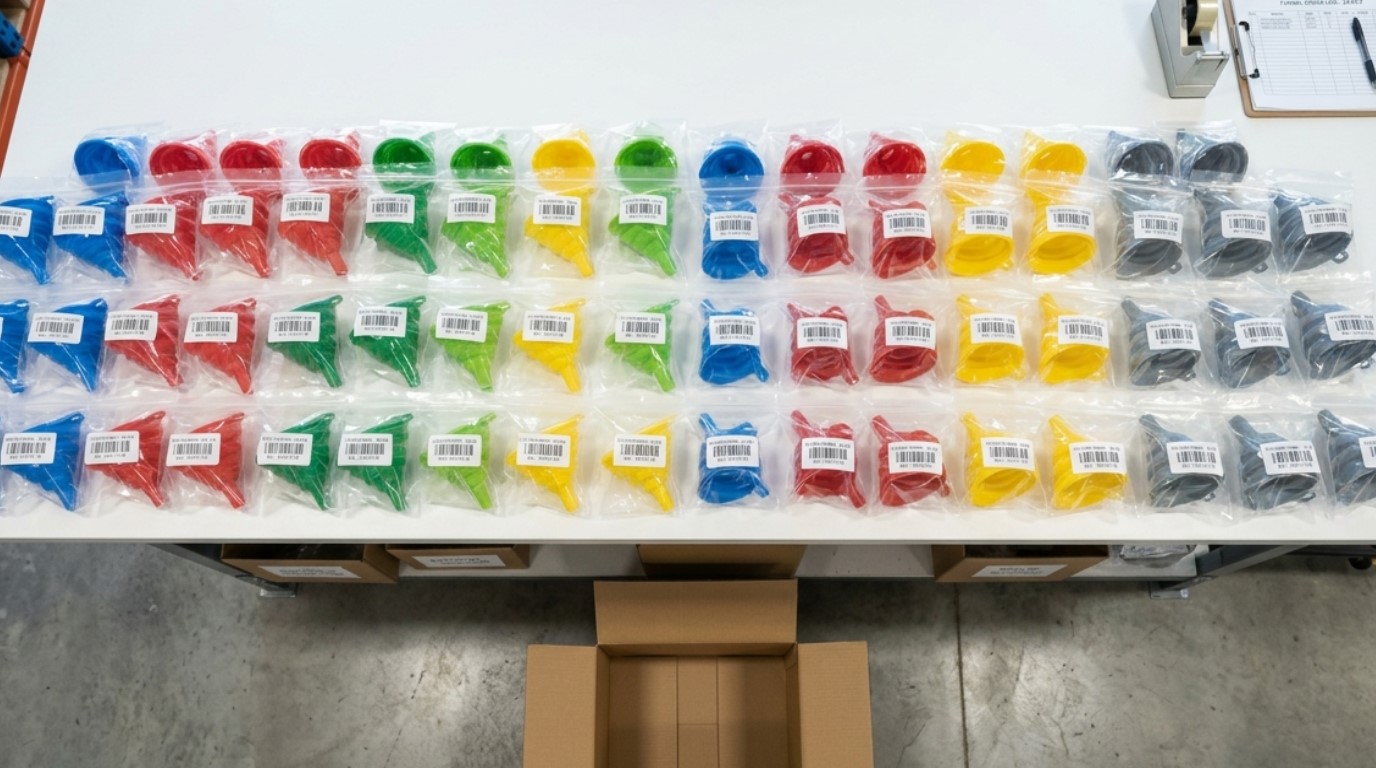
Distributors & Wholesalers
Source silicone kitchen gadgets wholesale and in bulk for kitchenware, cookware, baking, and household product channels.We can support multiple SKUs with coordinated colors, logos, and packaging to simplify broader product-line sourcing.
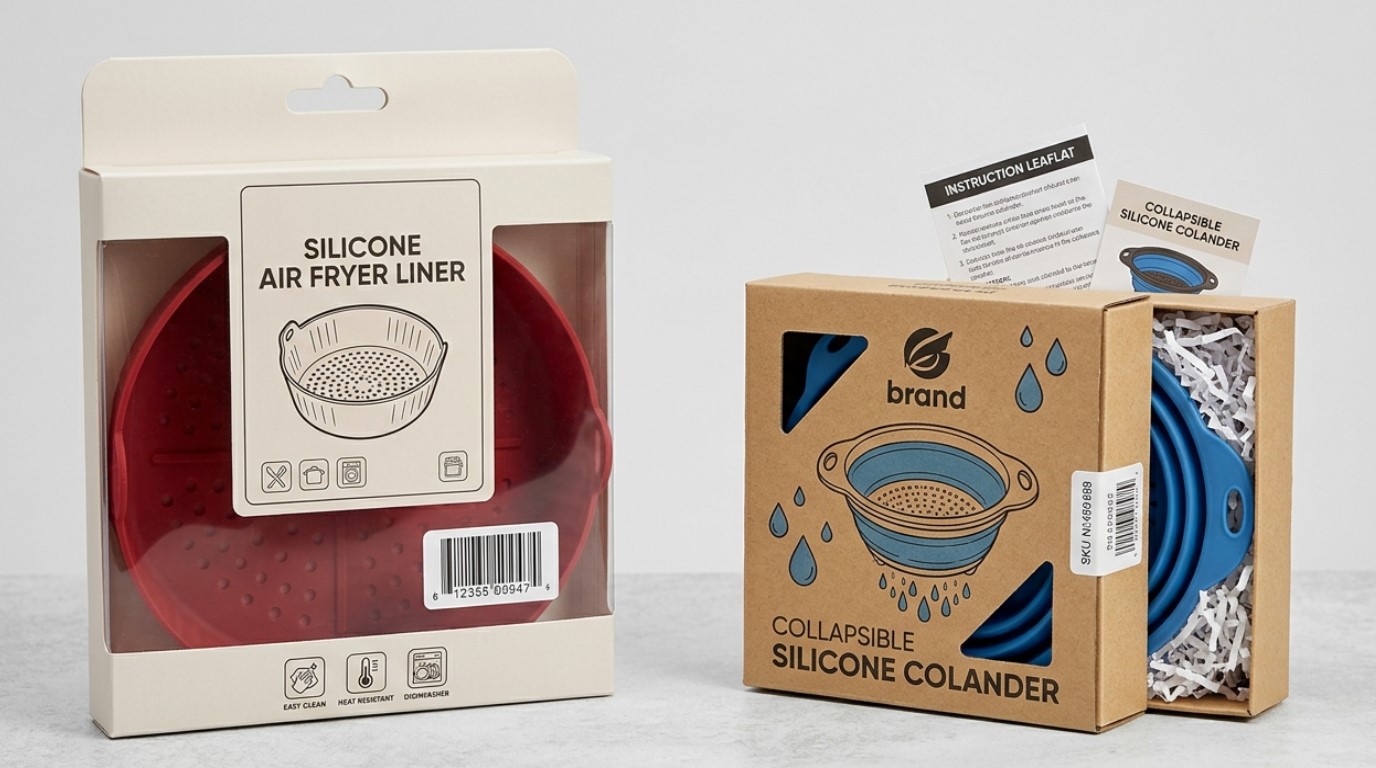
Retail & Ecommerce Sellers
Prepare silicone gadgets for online marketplaces, retail stores, and private-label websites with SKU information, barcode labels, and suitable packaging, coordinating product structure and packaging for efficient storage, fulfillment, and presentation.
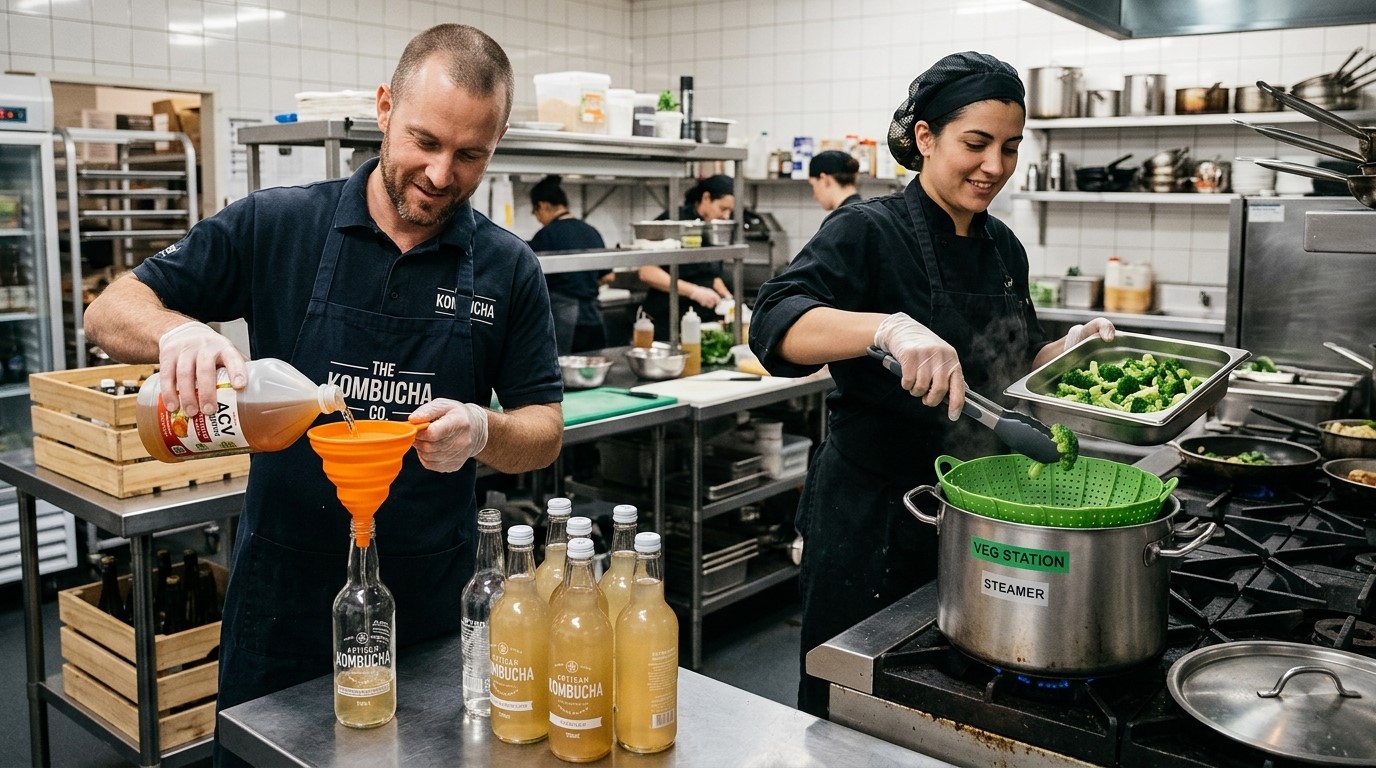
Hospitality & Foodservice Suppliers
Develop practical kitchen gadgets for restaurants, catering operations, hospitality suppliers, and professional food-preparation environments, reviewing materials, heat exposure, cleaning requirements, and repeated handling for each application.
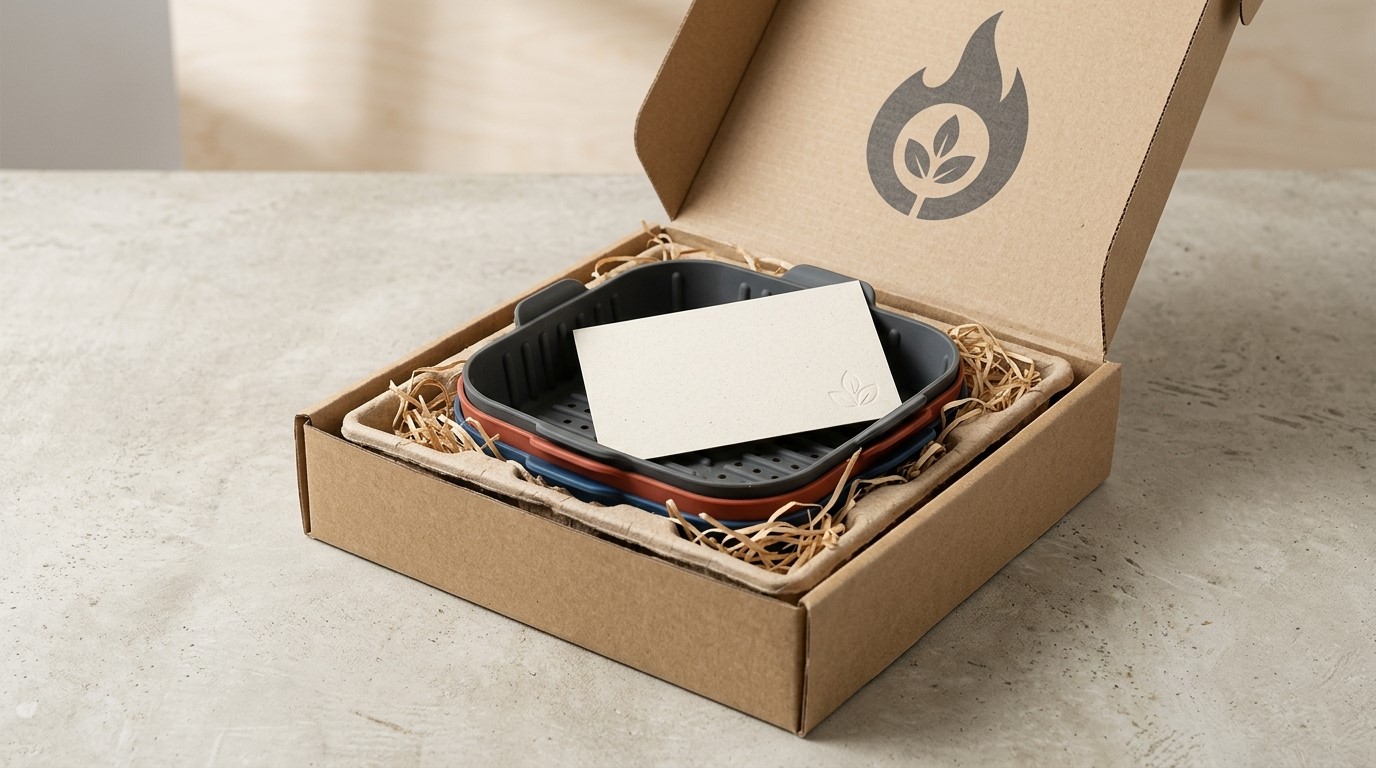
Retail & Ecommerce Sellers
Create branded kitchen gadgets for corporate campaigns, seasonal promotions, events, and customer giveaways.Existing designs with molded or printed branding can provide a practical route when quantity, delivery timing, and cost are important.
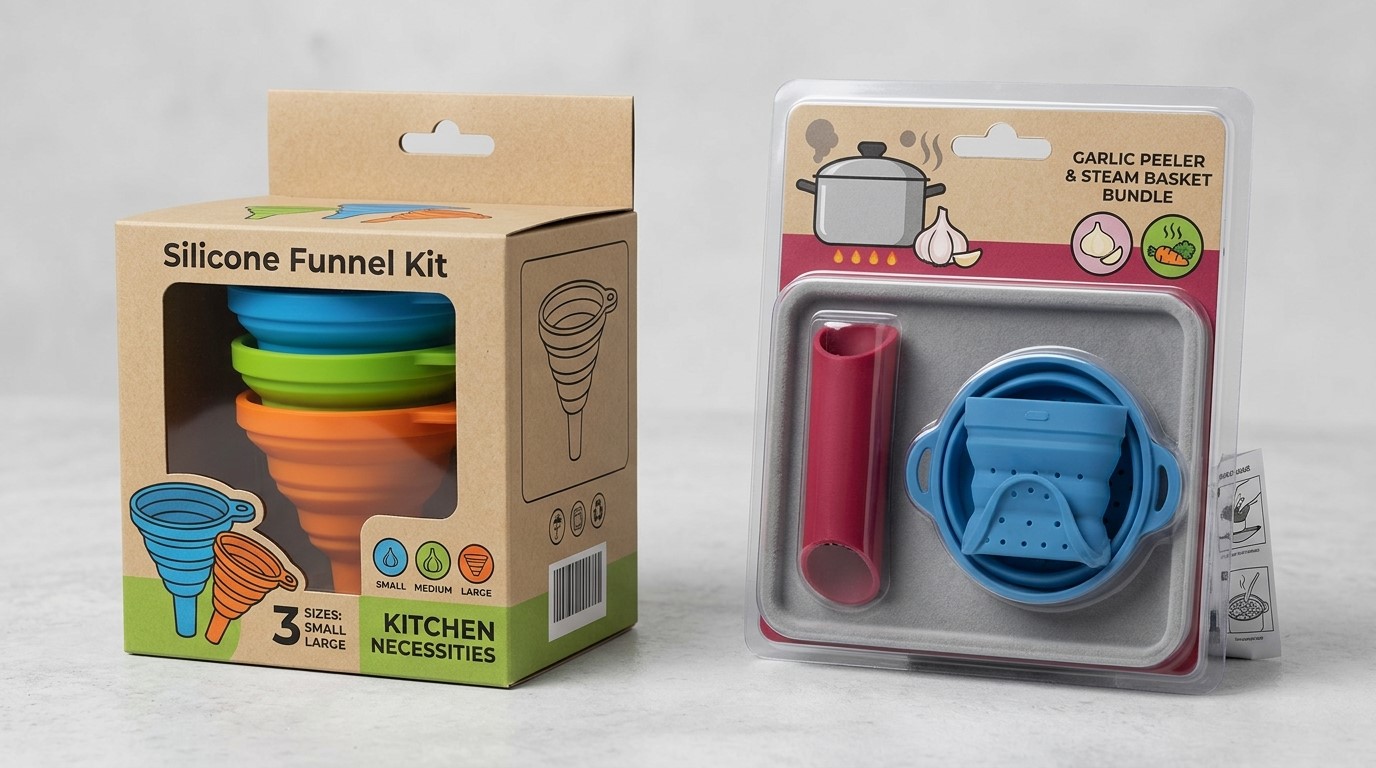
Kitchen & Homeware Retail Programs
Build coordinated collections combining strainers, funnels, scrapers, cooking tools, and other silicone accessories under one retail identity.Color matching and packaging consistency help different SKUs appear as one product family.
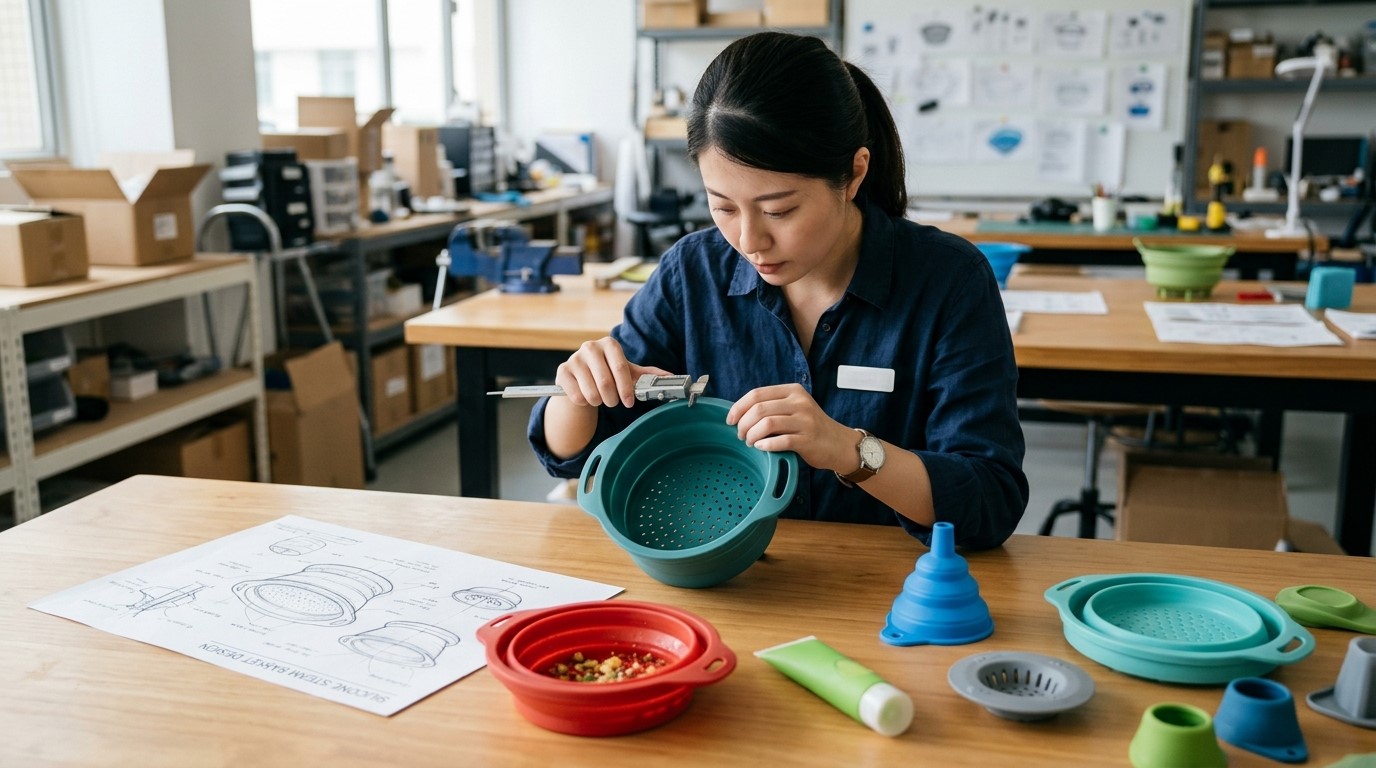
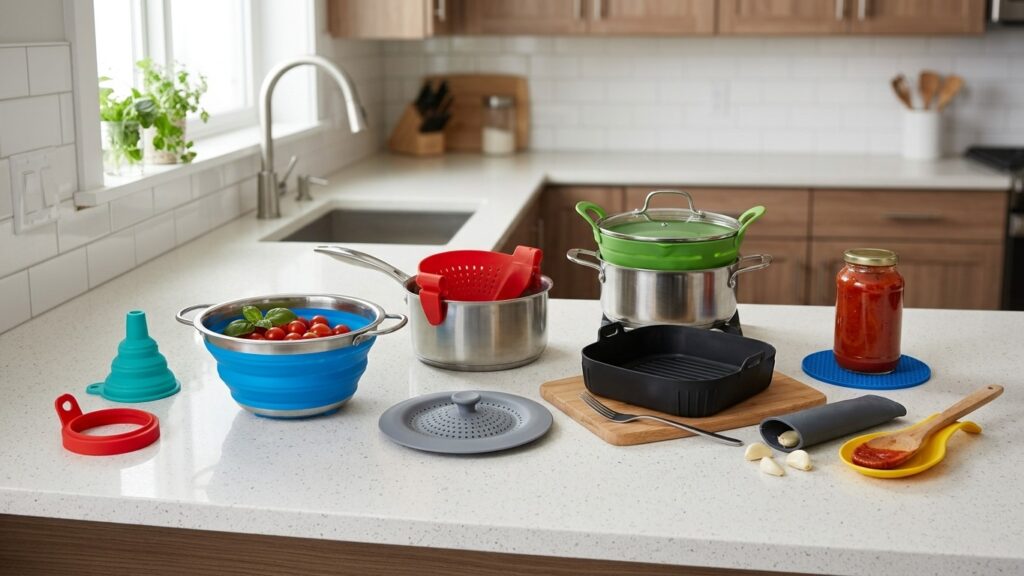
Silicone Kitchen Gadget Types We Can Develop
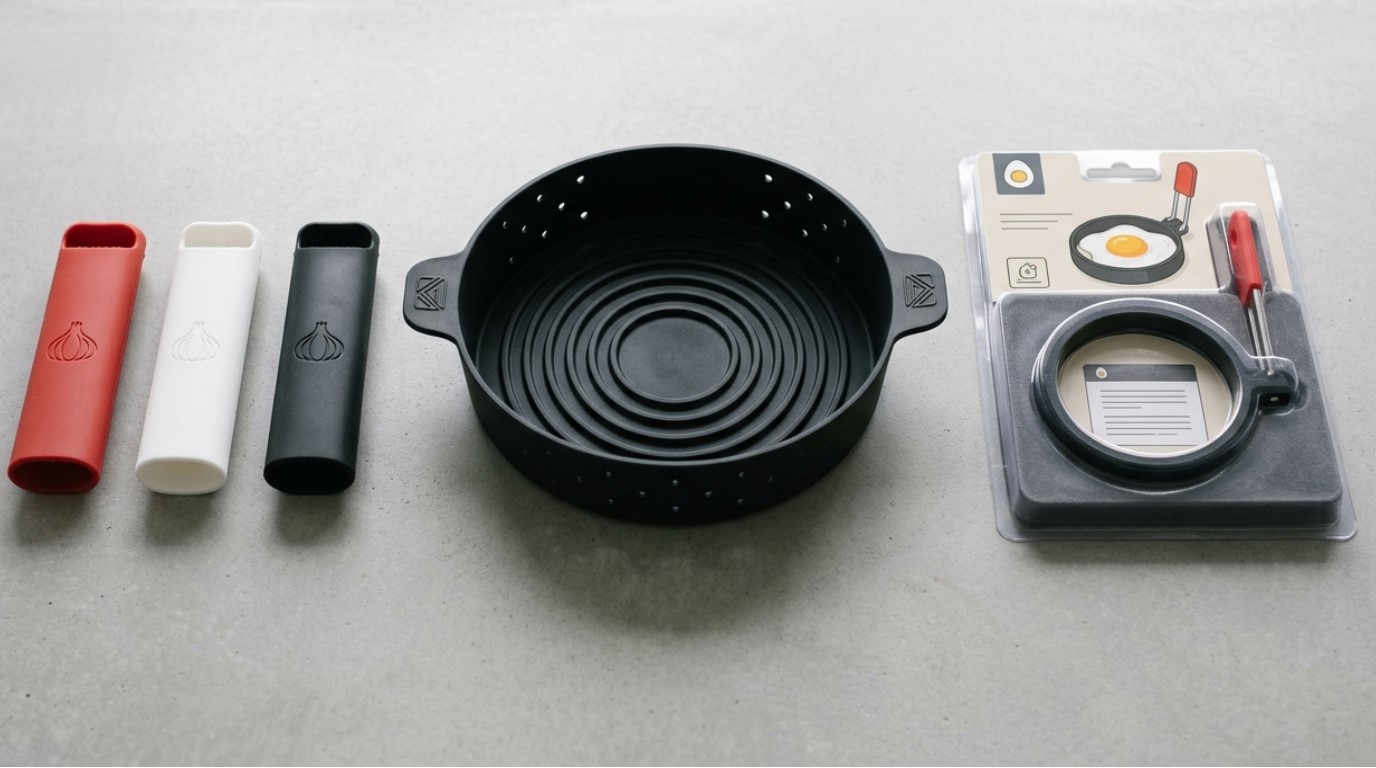
Silicone Egg Rings
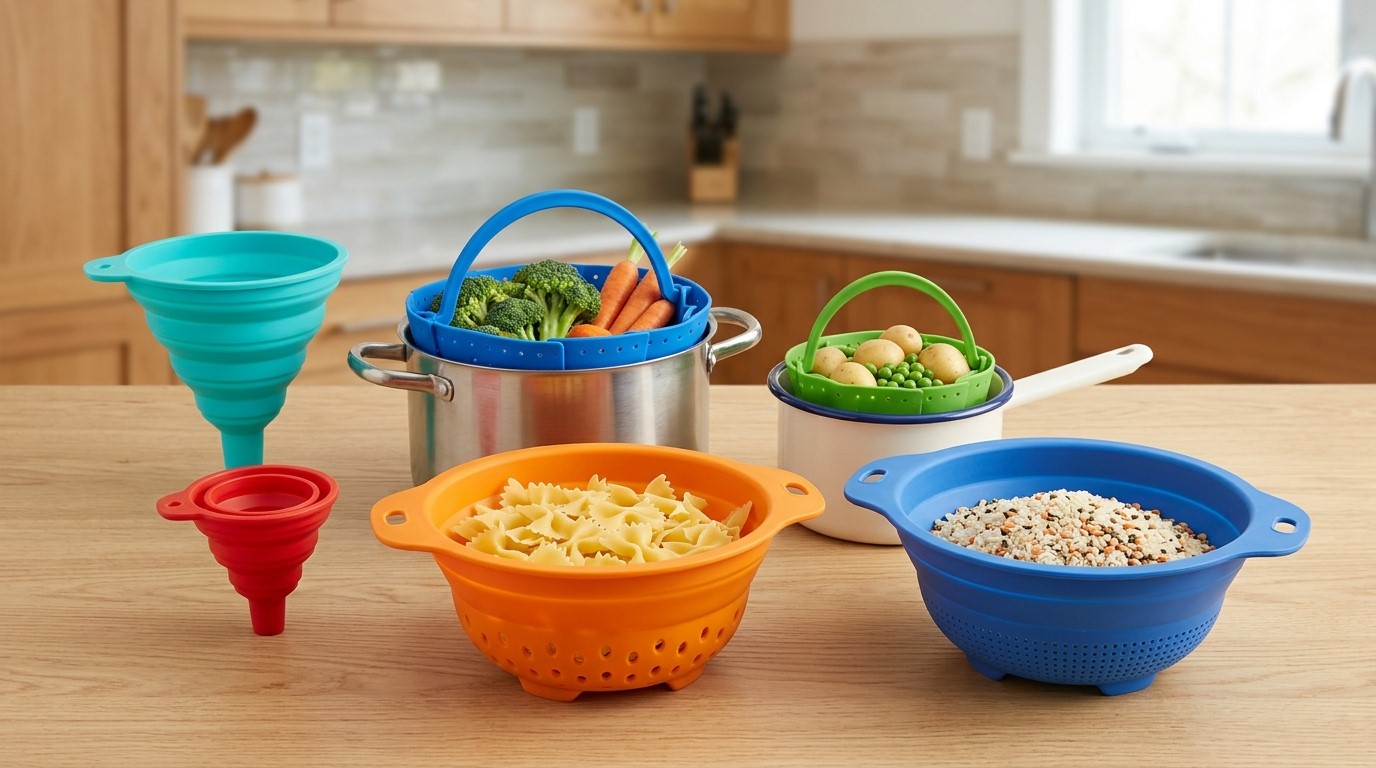
Silicone Funnels
Silicone Strainers & Colanders
Silicone Sink Strainers
Silicone Scrapers
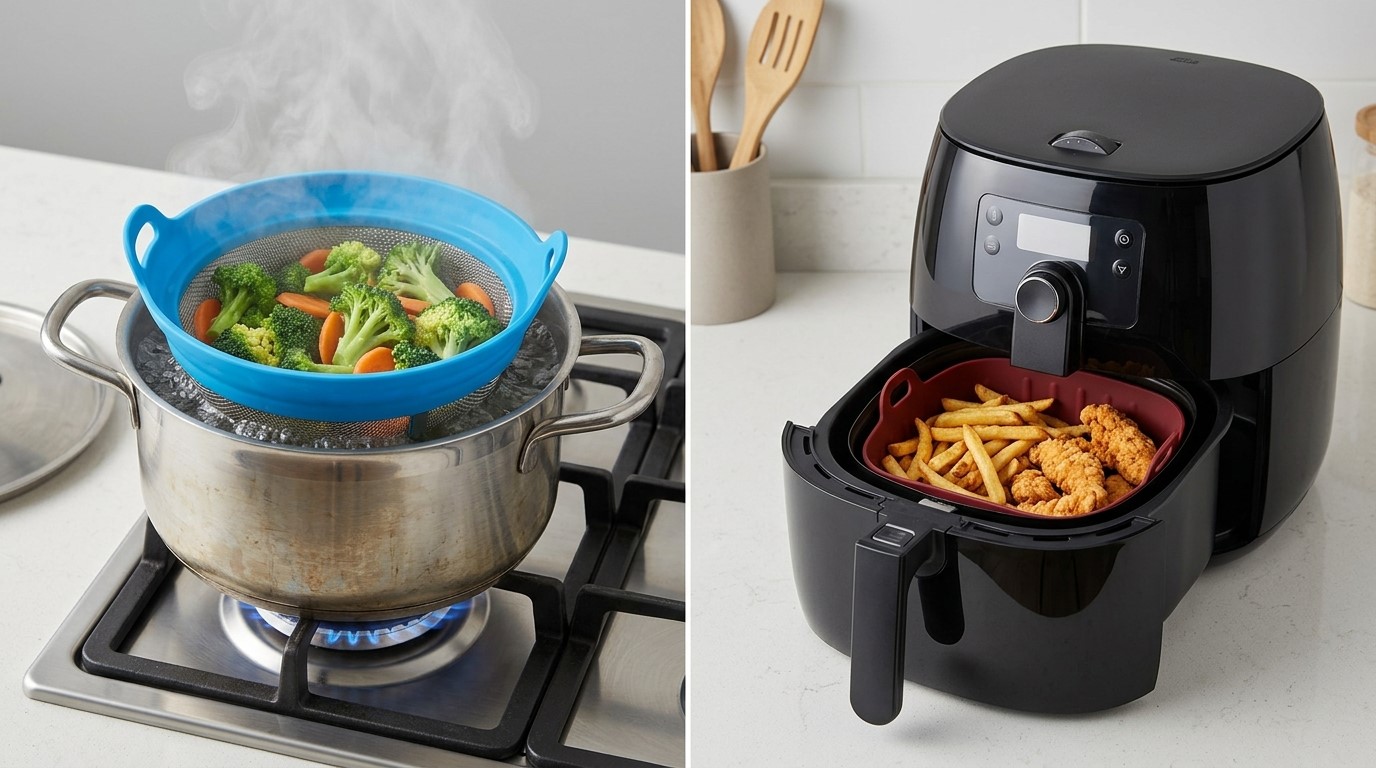
Silicone Steam Baskets
Silicone Air Fryer Liners
Silicone Jar Opener
Silicone Garlic Peeler
Silicnoe Egg Poacher Cup
Custom Silicone Kitchen Accessories
Silicone Kitchen Gadgets Customization
Select the right combination of geometry, performance, materials, and branding for your kitchen gadget program.
Kitchen gadgets can be developed around the intended food-preparation task, handling method, storage space, and production requirements. Geometry can be refined for pouring, scraping, straining, steaming, gripping, or separating food while maintaining practical molding conditions. Flexible sections, reinforced edges, openings, folds, and contact surfaces can be adjusted according to the product’s function.
- Functional Geometry & Overall Profiles: Funnels, strainers, scrapers, rings, liners, baskets, or other silicone kitchen accessories
- Grip Structures: Handle geometry, textured, ribbed, ergonomic, or non-slip surfaces
- Structural Features: Reinforced rims, functional or ventilation openings, foldable construction with fatigue resistance, and edges. support sections, cavities, channels, drainage holes, connection or attachment features, and perforations.
Dimensions should be specified according to the ingredients, cookware, storage conditions, and expected handling environment. For products such as egg rings, funnels, strainers, and air fryer liners, diameter, height, opening size, wall thickness, and overall footprint directly affect usability. RY Silicone can develop dimensions from drawings, samples, or application requirements while considering manufacturability.
- Overall Dimensions: Length, width, height, diameter, or target kitchen accessory dimensions
- Functional Dimensions: Opening, flow paths, cavity, rim, blade, hole size & spacing, handle
- Wall Design: Product-specific thickness and flexibility
- Fit Requirements: Cookware, containers, sinks, appliances, or utensils
Material selection should match the gadget’s temperature exposure, flexibility, food-contact requirements, cleaning conditions, and structural design. Food-contact silicone can be selected for applicable kitchen products, while hardness can be adjusted according to whether the gadget needs flexibility, compression, grip, or dimensional support. Metal reinforcement or other structural elements can also be considered where required.
- Silicone Material Grade: Food-contact or general-purpose silicone for applicable configurations
- Hardness: Product-specific Shore A options
- Structure: Silicone-only or silicone with reinforcement
- Performance: Heat exposure, flexibility, compression, cleaning requirements, dimensional stability, and aging resistance
- Compliance: toxicity, migration, chemical safety, curing system, post-curing, purity, intended market, and physical properties
Branding can be integrated into the product design rather than treated as a separate finishing step. Logo position, artwork scale, color, surface geometry, and production method should be reviewed together to maintain clear identification without interfering with the gadget’s functional surfaces. Packaging can also be developed around your retail, wholesale, or private-label requirements.
- Logo Styles: Embossed, debossed, in-molded, laser engraving, and pad & screen printing.
- Color: Custom silicone colors matching for food-grade standards and approved references
- Placement: Functional surface, handle, rim, liners, or designated branding area
- Packaging: Bulk, retail-ready, e-commerce, or private-label packaging
Start Your Custom Silicone Kitchen Gadgets Project
Turn your kitchen gadget concept into production-ready silicone products with engineering review, sampling, branding, and scalable manufacturing.
How to Specify Better Silicone Kitchen Gadgets
Clear functional requirements help prevent design changes, tooling issues, and performance problems during production.
- Define the application: Explain whether the gadget is intended for cooking, baking, food preparation, serving, cleaning, or storage support.
- Specify dimensions: Provide overall dimensions together with critical openings, wall thicknesses, cavity sizes, or fitting requirements.
- Clarify temperature exposure: Identify expected cooking, heating, freezing, or cleaning temperatures.
- Set flexibility requirements: Explain whether the product needs to bend, compress, fold, grip, or maintain a stable shape.
- Confirm food-contact requirements: Identify the target market and applicable food-contact documentation requirements.
- Provide branding details: Include logo artwork, position, color references, and preferred branding method.
- Define packaging: Specify bulk, retail-ready, e-commerce, or private-label packaging requirements.
- Confirm order requirements: State expected quantity, SKU structure, target market, and delivery destination.
Full Specification Guide
How to Choose the Right Silicone Kitchen Gadgets? —Dimension stability, temperature resistance, flexibility, food-contact safety, and stuctural integrity.
Silicone Kitchen Gadgets Logo & Branding Methods
Match branding to silicone texture, logo complexity, intended use, and durability requirements.
Screen or Pad Printing
Printed logos add fine color details when molded branding is unsuitable.
Molded Graphics
Custom graphics and brand elements integrate directly into suitable mold geometries.
Embossed Logos
Molded raised silicone logos create durable branding directly on product surfaces.
Debossed Logos
Recessed molded logos deliver a clean, integrated appearance on silicone surfaces.
Silicone Kitchen Gadgets Material & Performance Options
Base material selection on food contact, temperature, flexibility, cleaning, and structural needs.
Applicable kitchen tools can use food-grade or general-purpose silicone, which is selected according to market and documentation requirements.
When selecting a compound, consider the gadget’s intended application, temperature exposure, flexibility, structural requirements, cleaning conditions, and target market compliance.
For egg rings, food-grade silicone is recommended, as dimensional stability and heat resistance are crucial for steam basket or air fryer liners.
Material Comparison
Silicone vs. Plastic: Which One Is Optimal for Kitchen Gadgets? —Migration, direct or indirect food contact, temperature exposure, cleaning conditions, and applicable regulatory requirements.
The flexibility, hardness, shape retention, grip, and structural stability should be evaluated alongside the molding process based on the intended function.
Thin sections provide greater flexibility for folding, squeezing, and handling. Medium flexibility offers a balance of softness and stability. Thicker areas improve structural support and shape retention.
Heat-resistant silicone is ideal for kitchen accessories that are exposed to hot cookware, steam, ovens, or air fryers.
Rather than relying on a generic temperature rating, the actual operating temperature, exposure duration, and repeated-use conditions should be evaluated.
Material performance should be evaluated in conjunction with product geometry.
For kitchen tools that undergo repeated bending, folding, squeezing, or handling, consider the silicone formulation and wall thickness together to support tear resistance and durability over time.
Surface finish can be customized to balance food release, cleanability, grip, and handling performance.
Smooth surfaces can support easier food release and cleaning, while controlled textures can improve grip and handling.
The appropriate surface finish depends on whether the area will come into contact with food, hands, cookware, or other equipment, as well as the intended cleaning and use conditions of the gadget.
Available documentation may include:
- Material Safety Data Sheets (MSDS)
- Food contact compliance statements (FDA & LFGB)
- REACH & RoHS regulatory declarations
- Independent lab test reports (BPA-free & heavy metal testing)
- Batch-specific quality assurance certificates
Documentation coverage depends on the specific silicone formulation, color masterbatch, surface treatment, and target export region. Raw material certificates alone do not serve as final compliance proof for fully processed kitchenware.
Dishwasher exposure, repeated washing, food residue, and cleaning frequency can affect the material, surface design, logo method, and product geometry.
Care Guide
How to Care Silicone Kitchen Gadgets? —Daily cleaning & washing, odor & stain removal, inspection of structural integrity before each use, and flat storage.
How Silicone Kitchen Gadgets Are Manufactured

STEP 1: Requirement Review
Engineering reviews the gadget's application, dimensions, silicone requirements, functional features, branding, packaging, and target market before confirming the production route.
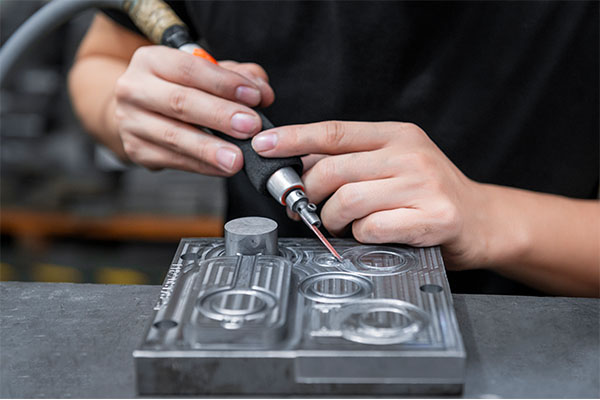
STEP 2: Tooling Evaluation
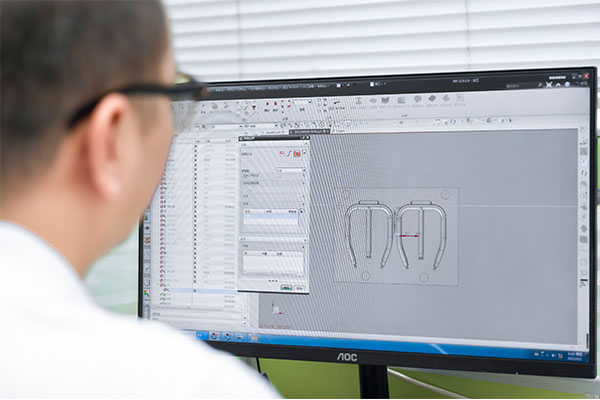
The proposed geometry is assessed for parting lines, wall thickness, draft, openings, flexible sections, and other features that may affect molding and demolding.
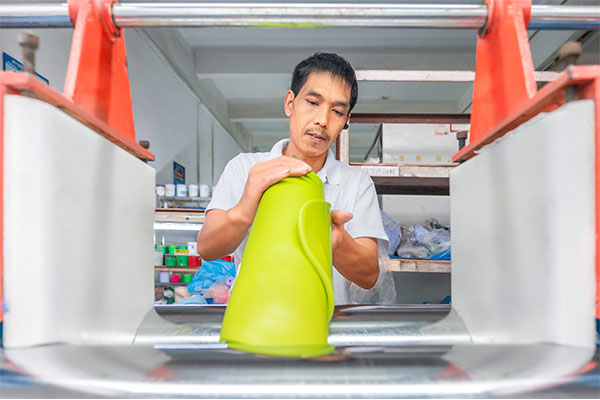
STEP 3: Material Preparation
The selected silicone compound, color system, and required additives are prepared according to the approved specification and applicable food-contact requirements.

STEP 4: Silicone Molding
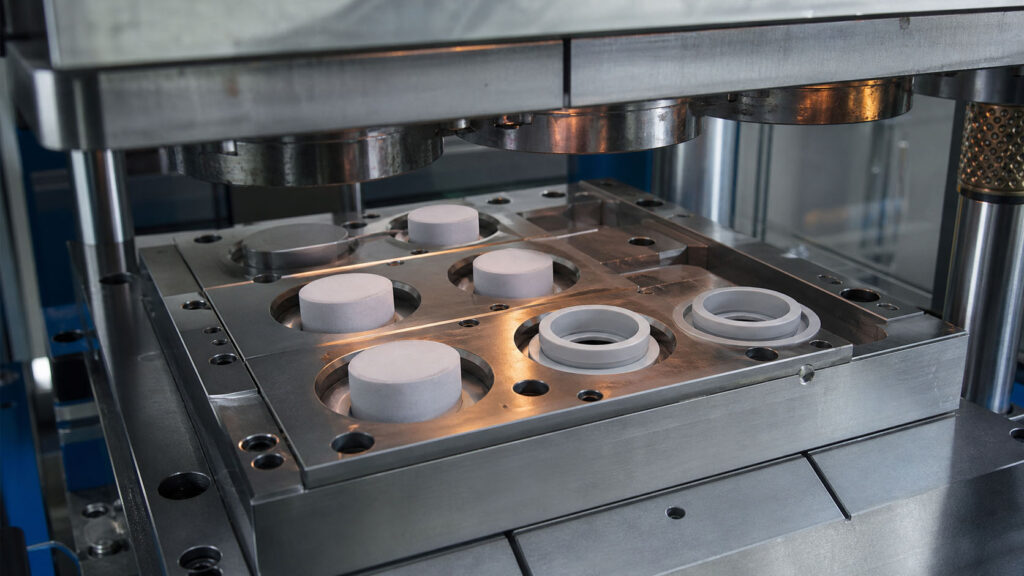
Silicone is molded under controlled production conditions according to the approved tooling and material specification to maintain consistent shape and surface quality.
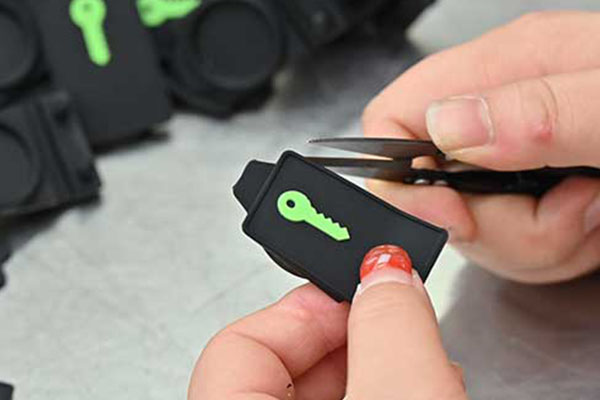
STEP 5: Demolding and Trimming
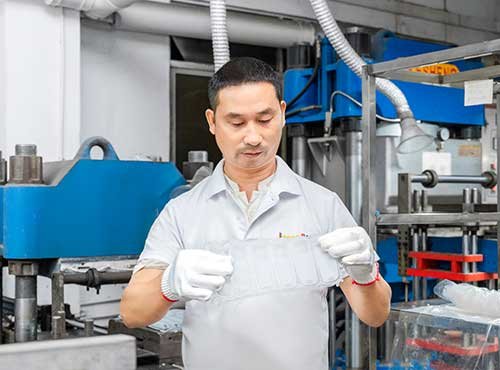
Flash, excess material, and molding remnants are removed while functional edges, openings, rims, and other critical areas are checked for clean finishing.
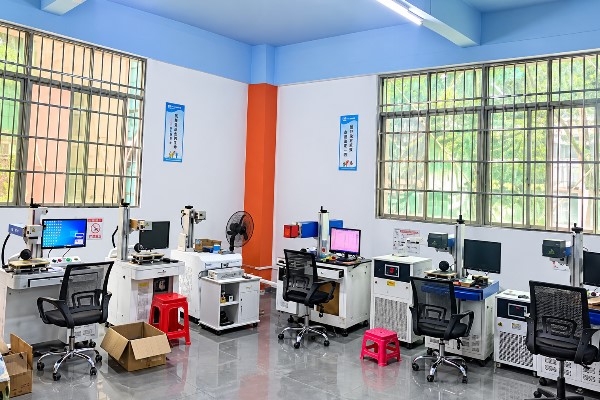
STEP 6: Surface & Branding
Approved logos, textures, or surface treatments are applied according to the confirmed artwork and production method, with placement and appearance checked against the approved sample.
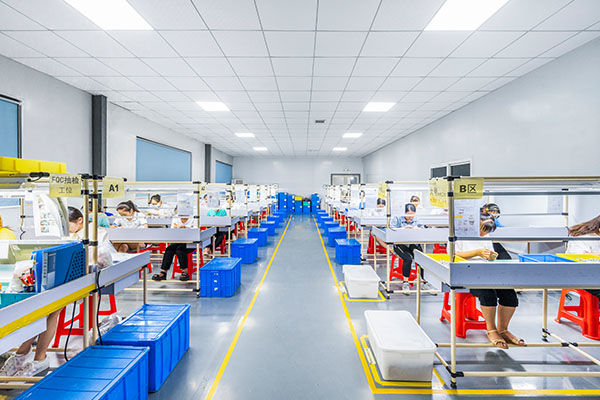
STEP 7: Quality Control & Testing
Finished gadgets are checked against approved samples and specifications, covering appearance, dimensions, color, logo quality, material performance, and packaging requirements.

STEP 8: Packaging and Shipment
Finished kitchen accessories are checked against approved samples and specifications, covering appearance, dimensions, color, logo quality, material performance, and packaging requirements.
Silicone Kitchen Gadgets Quality Control
Quality control follows the approved sample and product specification throughout incoming, in-process, and final inspection stages.
AQL 2.5 / 4.0 Standard Inspection
We run final random sampling plans to verify batch consistency:
AQL 2.5
Critical / Major Defects
AQL 4.0
Minor Visual Flaws
Another inspection standard can be used when specified in the purchase order.
Approved Sample Control
The approved production sample establishes the reference for appearance, geometry, color, logo placement, surface finish, and other agreed product characteristics.
Incoming Material Review
Silicone materials and applicable color compounds are checked against the approved material and color requirements before production begins.
In-Process Inspection
Production checks focus on molding consistency, dimensions, flash, surface condition, functional features, and other product-specific characteristics.
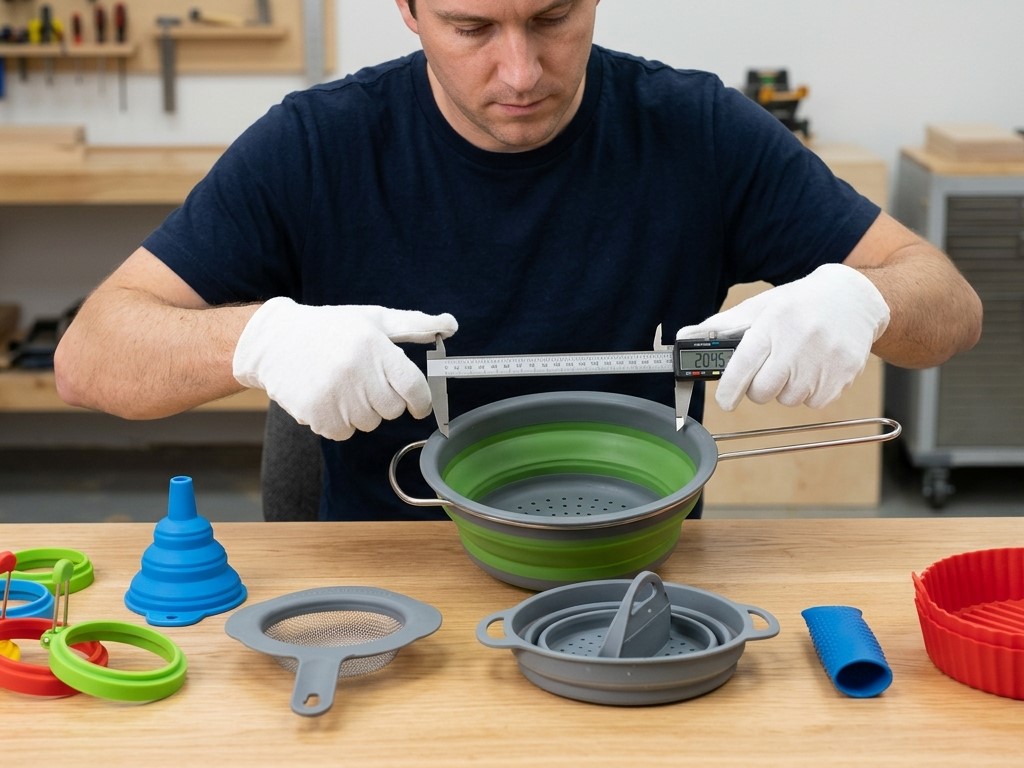
Dimensional & Functional Inspection
Critical dimensions should be measured according to the approved drawing and intended application.
- Overall length, width, height, or diameter
- Opening and cavity dimensions
- Rim and wall dimensions
- Connection or fitting dimensions
- Cookware or container compatibility
- Folding and recovery behavior where applicable
- Shape retention during normal handling
- Pouring, scraping, straining, or support function
Heat & Application Performance
Products exposed to cooking, baking, steaming, freezing, or heated appliances require performance requirements appropriate to their intended operating conditions.
Inspection or validation may consider:
- Intended temperature exposure
- Dimensional stability after applicable heat exposure
- Softening or deformation
- Structural integrity
- Product-specific contact surfaces
- Compatibility with the intended cooking environment
Logo & Branding Inspection
Branding is inspected against the approved artwork and sample rather than only checking whether a logo is present.
- Logo dimensions
- Logo position
- Orientation
- Color accuracy
- Embossing or debossing depth
- Molded graphic definition
- Printed edge clarity
- Surface adhesion or durability where applicable
Final Appearance Inspection
Final inspection should verify that finished kitchen gadgets meet the approved appearance requirements.
- Color consistency
- Surface condition
- Flash and trimming quality
- Deformation
- Cracks or tears
- Contamination
- Logo appearance
- Product cleanliness
- Overall workmanship
The approved sample remains the practical reference for characteristics that are difficult to define completely through numerical specifications alone.
Packaging & Quantity Inspection
Stretch and recovery can be reviewed using an agreed internal method or customer test protocol.
Silicone Kitchen Gadgets Packaging Options
Plan packaging early because printed items need separate schedules.

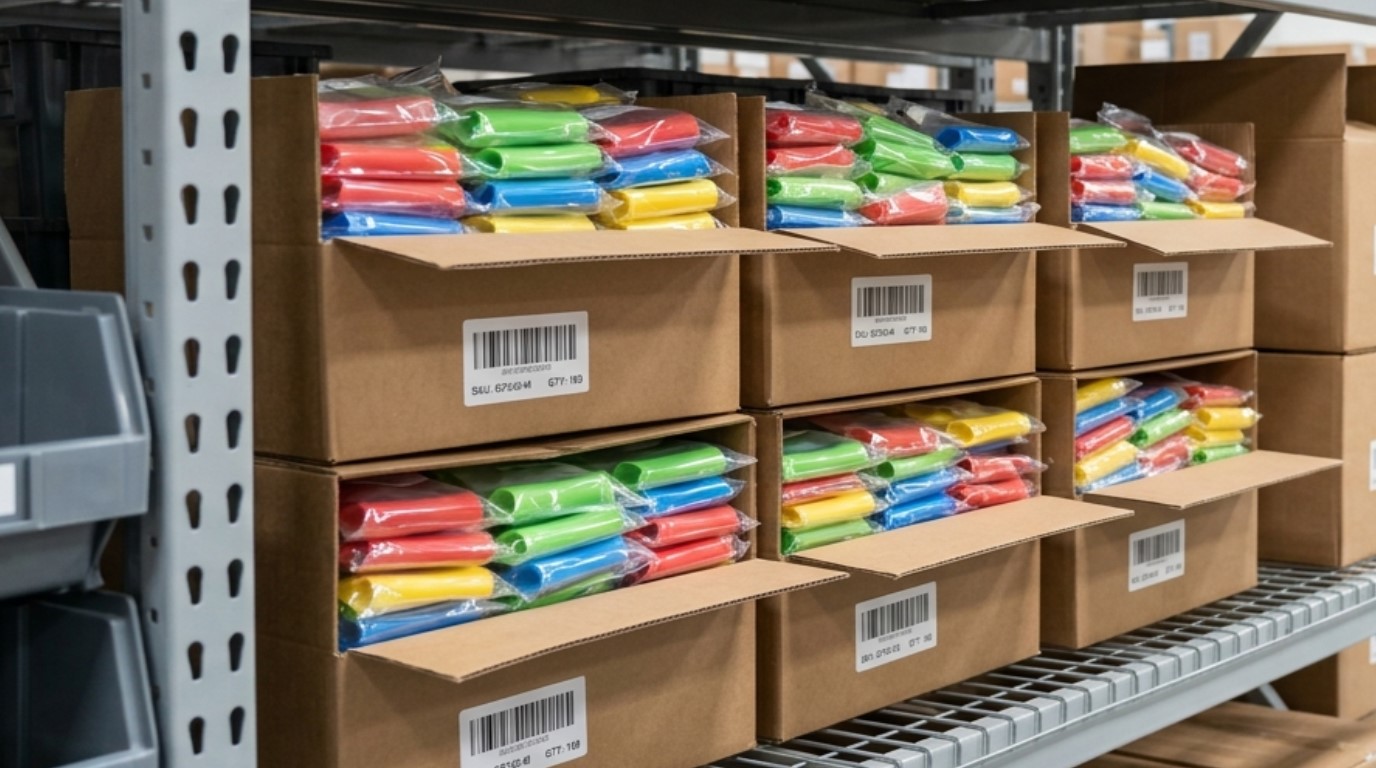
Bulk Packaging
Bulk packaging suits distributors and wholesalers purchasing larger quantities for warehouse storage, repacking, or downstream retail.
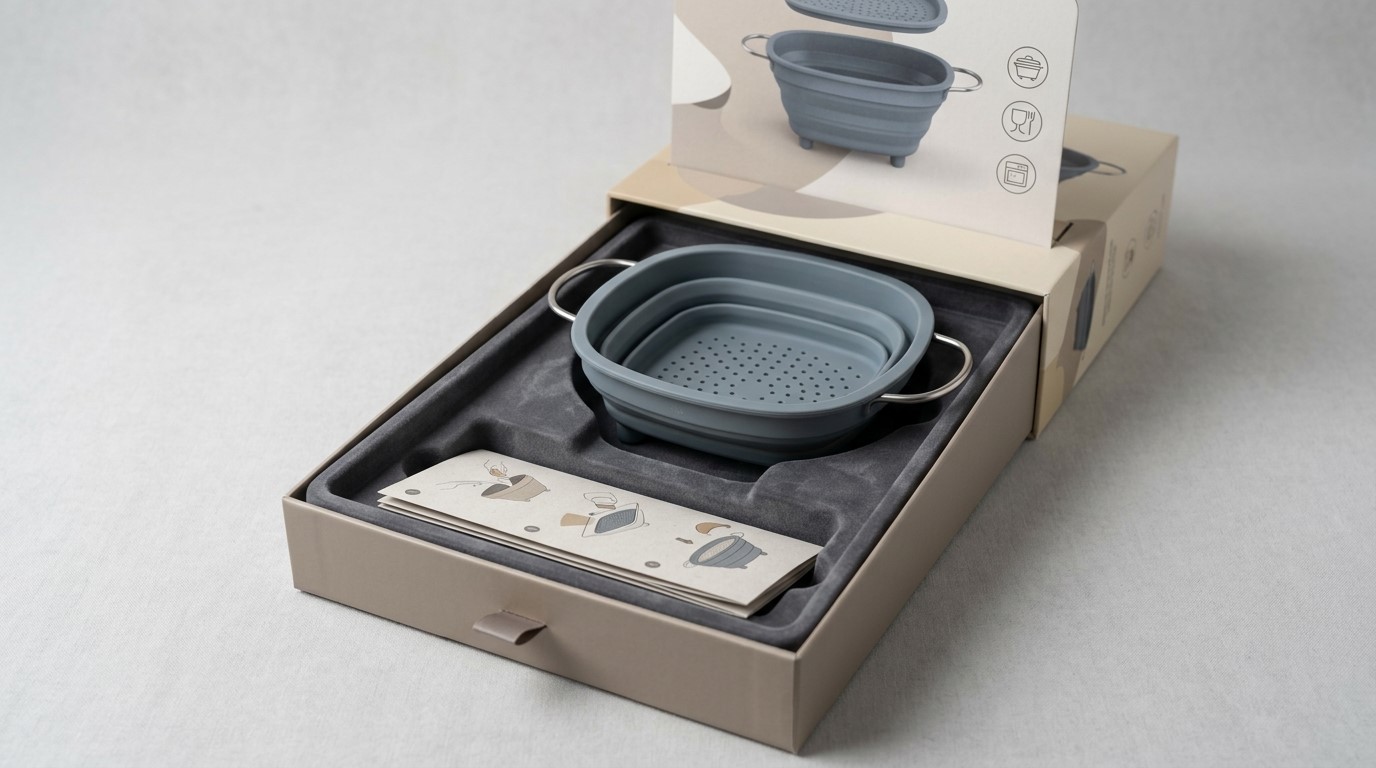
Retail Packaging
Retail packaging can include individual polybags, header cards, printed boxes, or inserts matched to your labeling and barcode requirements.
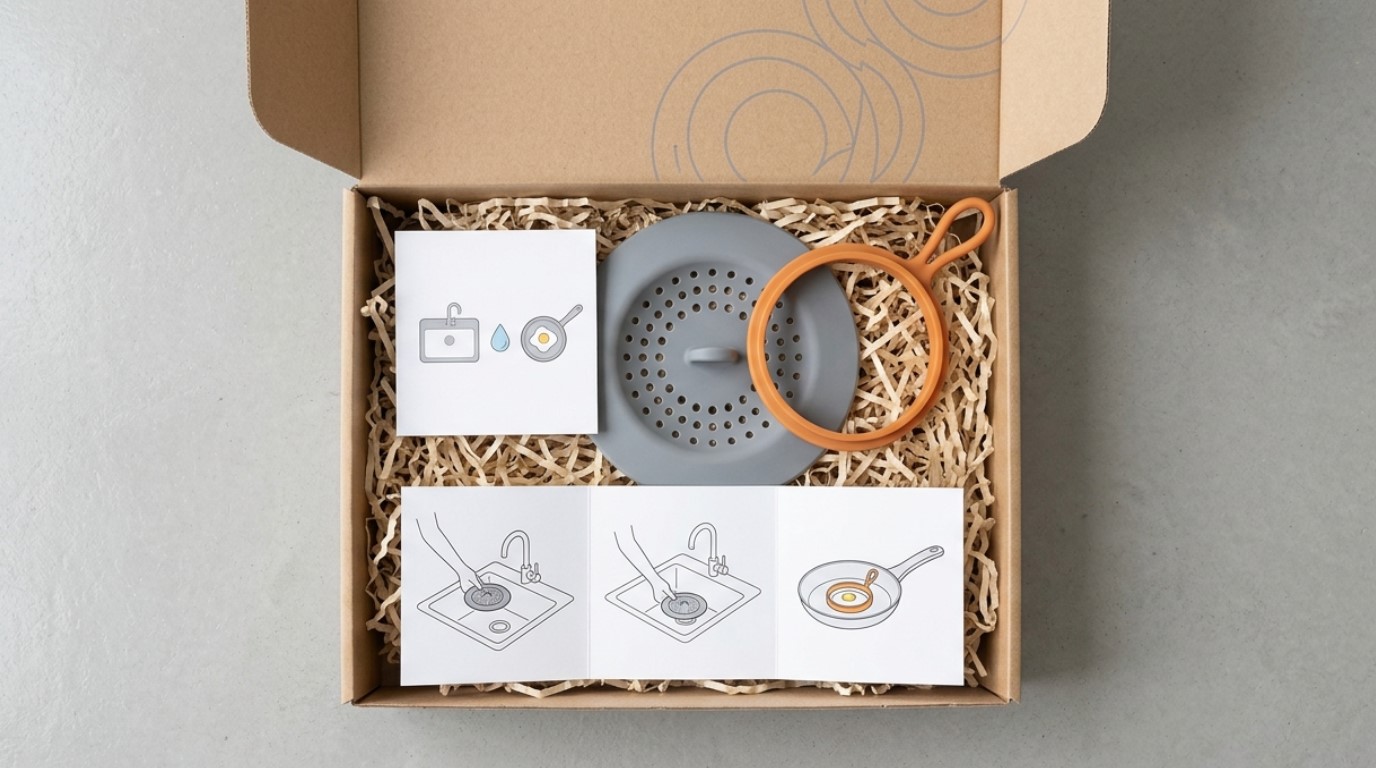
Ecommerce Packaging
E-commerce packaging focuses on product protection, compact dimensions, and efficient fulfillment while reducing unnecessary movement during transportation.
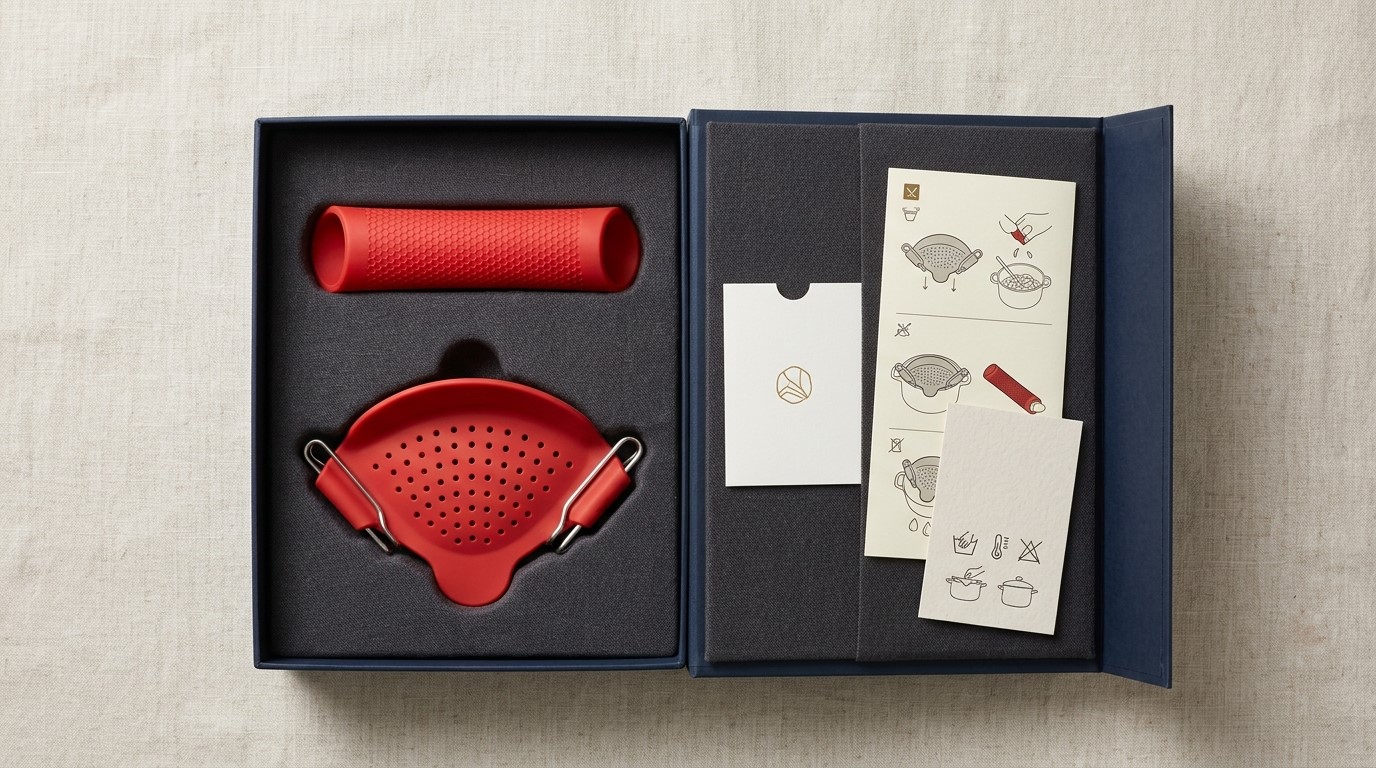
Premium Brand Packaging
Premium packaging can combine customized boxes, inserts, product presentation, and brand elements for higher-value kitchenware programs and gift-oriented retail channels.

Custom Silicone Kitchen Gadgets Typical Specifications
| Specification | Typical Reference for Silicone Kitchen Gadgets |
|---|---|
| Product Category | Egg rings, funnels, strainers, scrapers, steam baskets, air fryer liners, kitchen cleaning tools, heat-protection gadgets, or custom kitchen gadgets |
| Material | Food-contact silicone for applicable configurations |
| Silicone Hardness | Product-specific Shore A selection based on flexibility, grip, compression, and shape retention |
| Temperature Requirement | Application-specific; commonly specified according to oven, air fryer, microwave, steaming, freezing, or cleaning exposure |
| Overall Dimensions | Custom length, width, height, diameter, circumference, or footprint |
| Functional Dimensions | Opening diameter, cavity size, rim height, handle size, fitting dimensions, or straining area |
| Wall Thickness | Product-specific thickness according to flexibility, structural support, heat exposure, and molding requirements |
| Surface | Smooth, matte, textured, ribbed, non-slip, molded pattern, or application-specific finish |
| Grip Design | Plain, textured, ribbed, ergonomic, reinforced, or integrated handle |
| Functional Structure | Solid, perforated, vented, folded, collapsible, reinforced, or multi-part design |
| Heat-Management Features | Air holes, raised channels, ridges, insulation zones, or heat-resistant handling features where required |
| Color | Standard color or custom color matched to an approved reference |
| Logo & Branding | Embossed, debossed, molded graphics, screen printing, or pad printing |
| Packaging | Bulk, individual polybag, header card, printed box, e-commerce, or private-label packaging |
| Sample Lead Time | Confirmed after design, sample requirements, and tooling status are reviewed |
| Mass Production Lead Time | Confirmed according to tooling, quantity, product complexity, and production schedule |
| MOQ | Confirmed according to product type, tooling, SKU quantity, material, and packaging requirements |
| OEM / ODM | Available for suitable product development programs |
Specifications are finalized according to the gadget’s application, design, material, tooling, and order requirements.
Why Work with RY Silicone
Silicone Manufacturing Experience Since 2012
RY Silicone has manufactured silicone products since 2012, supporting OEM and ODM programs for international brands, distributors, wholesalers, and other commercial customers.
10,000+ m² Production Facility
Our production facility covers more than 10,000 m², supporting tooling, molding, finishing, inspection, packaging, and shipment coordination within an established manufacturing environment.
30+ Production Machines
More than 30 production machines support different silicone molding requirements, helping accommodate varied kitchen gadget geometries, materials, dimensions, and order configurations.
Up to 100,000 Silicone Products per Day
Production capacity can reach up to 100,000 silicone products per day, depending on product design, tooling configuration, process requirements, and production scheduling.
Engineering Review Before Quotation
Engineering reviews the intended application, product geometry, silicone requirements, branding, packaging, and manufacturing considerations before confirming the production route and quotation.
Sample-Based Production
Approved samples provide a practical reference for production appearance, dimensions, color, logo placement, and other agreed characteristics before larger-scale manufacturing proceeds.
Export Project Support
RY Silicone supports international orders with production coordination, packaging arrangements, documentation, and shipment preparation for overseas brands, distributors, and wholesalers.
Silicone Kitchen Gadgets FAQ and Final RFQ
What is the MOQ for silicone kitchen gadgets?
MOQ depends on the product type, existing or custom tooling, material requirements, number of SKUs, packaging configuration, and production complexity. The final MOQ is confirmed during quotation.
Can you manufacture different silicone kitchen gadgets under one program?
Yes. Multiple kitchen gadget types can be developed under one product program, with each SKU reviewed according to its individual geometry, application, material, tooling, and production requirements.
What silicone hardness should I choose for a kitchen gadget?
Hardness depends on the intended function. Flexible funnels, liners, and collapsible products may require different hardness from scrapers, rings, strainers, or structurally supportive components.
Can silicone kitchen gadgets be made for food-contact applications?
Applicable products can use food-contact silicone selected according to the target market and required documentation. Specific compliance requirements should be confirmed before production.
Can you match our silicone kitchen gadget colors?
Yes. Custom colors can be developed according to approved color references. Color requirements should be confirmed together with the product material and production specification.
Can logos be molded directly into silicone kitchen gadgets?
Yes. Depending on the product geometry, branding can use embossed, debossed, or molded graphics. Printed methods can also be considered for suitable surfaces.
Can silicone kitchen gadgets include metal reinforcement?
Where the application requires additional structural support, silicone can be developed around suitable reinforcement elements. The silicone-to-insert interface should be evaluated during engineering review.
Can you provide retail or private-label packaging?
Yes. Packaging can be developed for bulk distribution, retail-ready sales, e-commerce fulfillment, or private-label programs according to your channel requirements.
Can you manufacture custom silicone kitchen gadgets from drawings or samples?
Yes. Product development can begin from drawings, artwork, physical samples, or application requirements. Engineering reviews the available information before confirming tooling and production requirements.
What information is needed for a silicone kitchen gadget quotation?
For an accurate RFQ, provide:
- Product drawings, 3D files, design files, or physical samples
- Kitchen gadget type and intended application
- Overall dimensions and critical functional dimensions
- Silicone type and hardness requirements, if specified
- Target color or approved color reference
- Logo artwork and preferred branding method
- Expected quantity and SKU structure
- Packaging requirements
- Target market and applicable compliance requirements
- Delivery destination
The more complete your product information, the more accurately RY Silicone can evaluate tooling, materials, production, packaging, and quotation requirements.