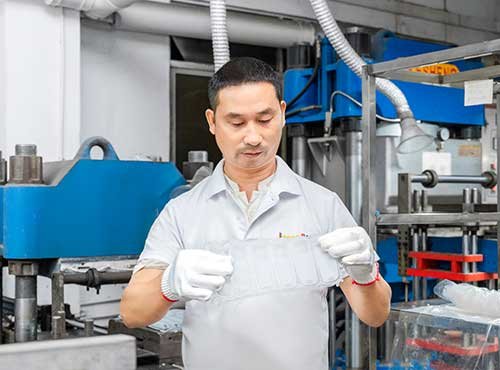
Silicone Egg Ring Manufacturer
Custom silicone egg rings for kitchenware brands, cookware collections, and retail programs. Develop distinctive shapes, stable structures, food-contact material options, and branded packaging through OEM and ODM manufacturing.
What Is a Silicone Egg Ring?
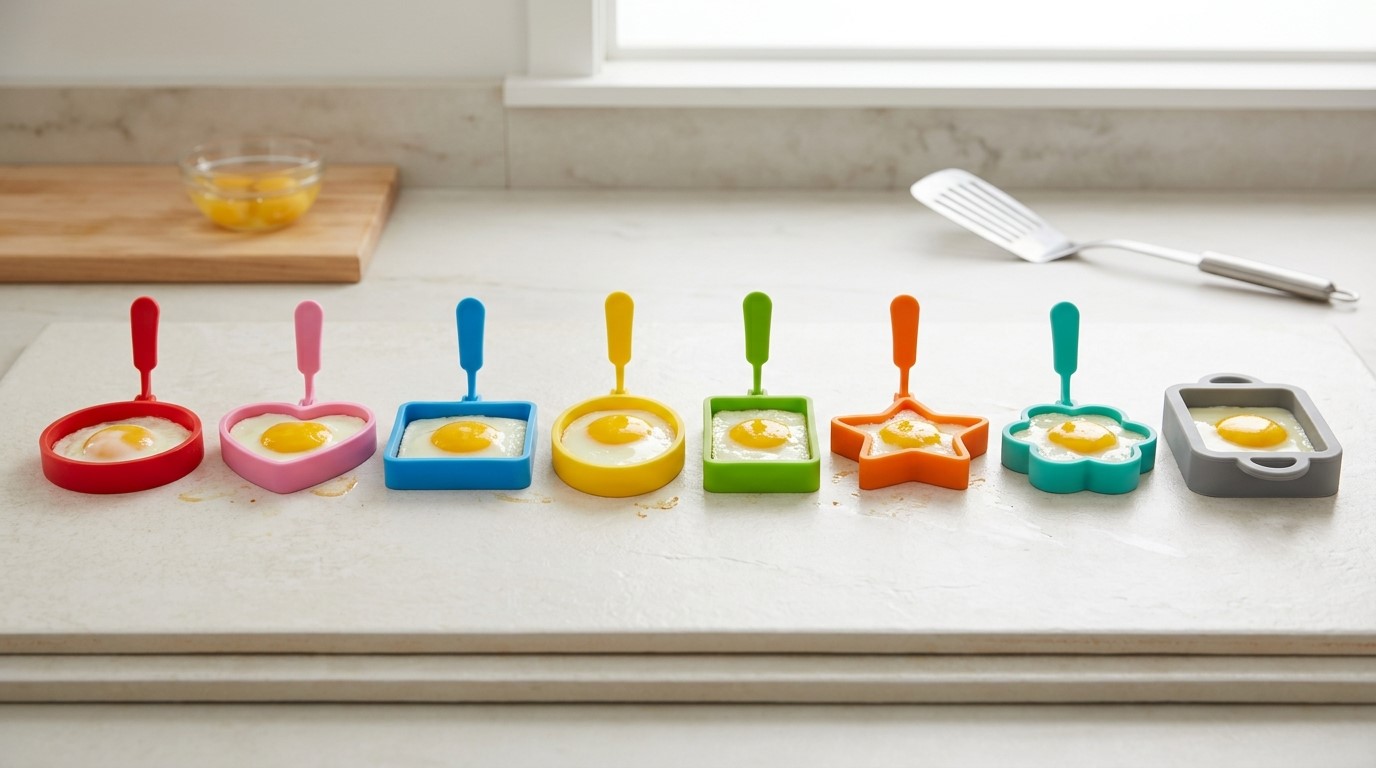
A silicone egg ring is an effective kitchen accessory designed to hold eggs, pancake batter, or similar foods in a defined shape during cooking on a suitable flat cooking surface. Made from heat-resistant silicone, it helps create consistent food shapes while allowing convenient removal and cleaning. Custom silicone egg rings can be developed in different shapes, sizes, colors, and structural configurations for kitchenware brands and retail product lines.
A custom OEM/ODM silicone egg ring is manufactured according to your product design, dimensional requirements, branding, and packaging specifications. RY Silicone is a China-based custom silicone manufacturer established in 2012. We support product development for brands, distributors, and wholesalers, including custom shapes, material selection, sampling, bulk production, and retail-ready packaging.
Silicone Egg Ring Manufacturing at a Glance
MOQ & Lead Times
Confirmed order quantities, sampling schedules, and lead times align with tooling, product structure, and packaging specifications.
Product Specifications
Define ring diameter, height, wall thickness, hardness, base structure, and heat resistance to match your intended cooking applications.
Logo & Branding
Add molded logos, embossed or debossed details, and suitable printing to support private-label kitchenware collections.
Packaging Preparation
Choose bulk packaging, individual bags, printed boxes, or retail-ready sets with SKU labels and barcode information.
Who We Manufacture Silicone Egg Rings For
Build a product range around your sales channel, cooking applications, and brand positioning.

Kitchenware & Cookware Brands
Create coordinated egg rings in custom shapes, colors, and structures matching your cookware. Use existing designs for faster launches or custom tooling to establish a unique product identity.

Hospitality & Foodservice Suppliers
Optimize silicone egg ring designs for professional foodservice like cafés and catering. Assess ring stability, cleaning, handling, and cooking conditions to select the best product configuration before finalizing orders.
Private-Label Kitchen Accessory Brands
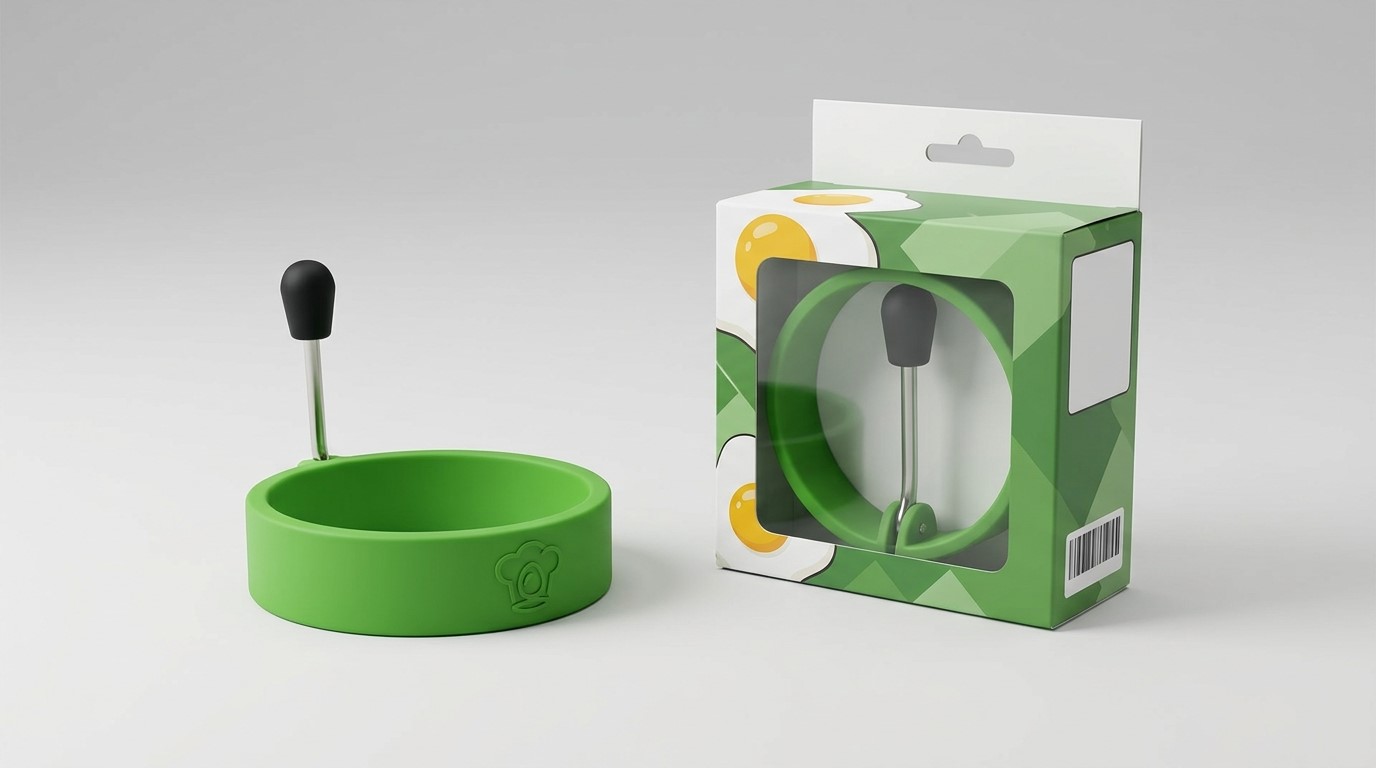
Expand your kitchen accessory portfolio with custom silicone egg rings that match your existing product range. Coordinate shape, color, packaging, and branding across related cooking tools to maintain a consistent retail presentation.

Distributors & Wholesalers
Source silicone egg rings in bulk for kitchenware, cookware, housewares, and seasonal product categories. Choose established designs or customized configurations with consistent specifications, practical packaging, and product options suited to your distribution network.
Retail & Ecommerce Sellers
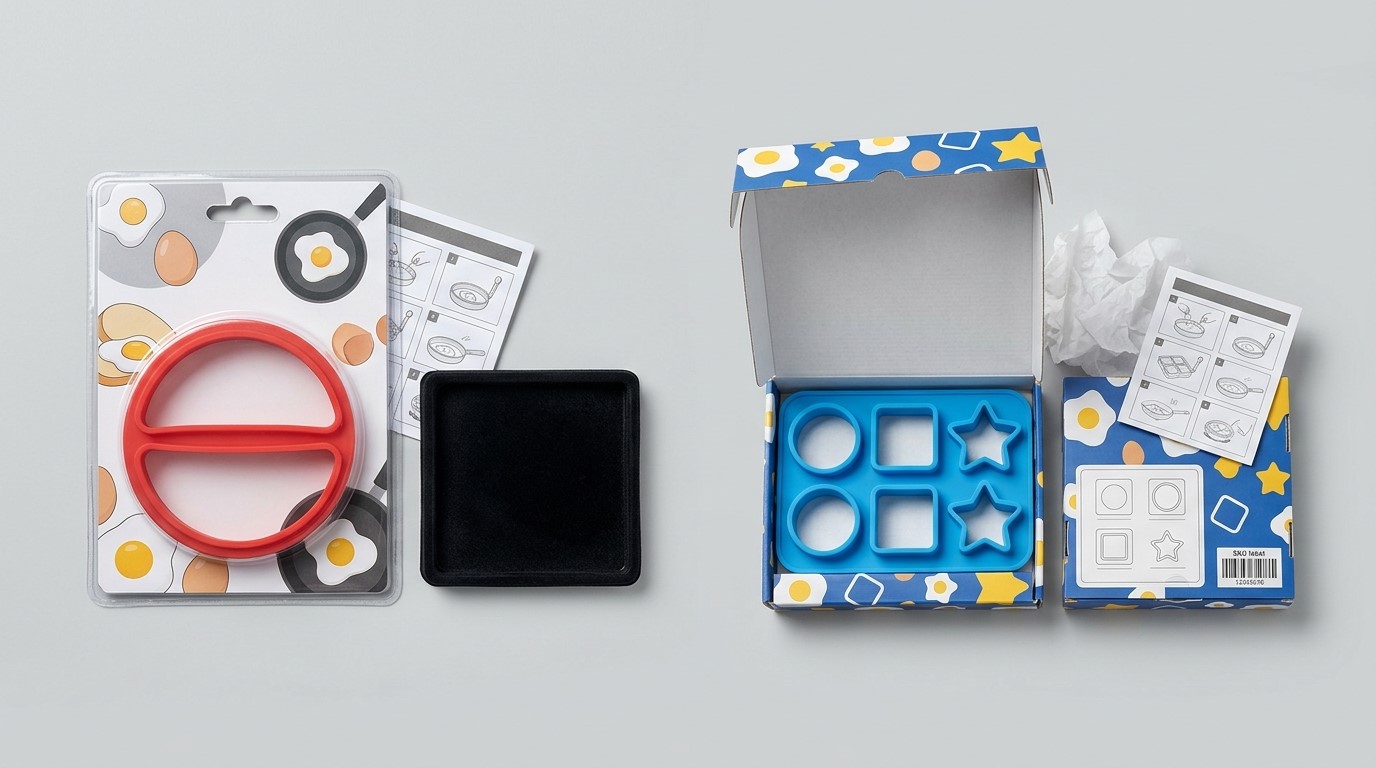
Prepare private-label silicone egg rings for supermarkets, kitchenware stores, online marketplaces, and direct-to-consumer websites. Coordinate product dimensions, color options, barcode labels, SKU information, and individual packaging to support listing, inventory management, and order fulfillment.
Promotional Product Companies
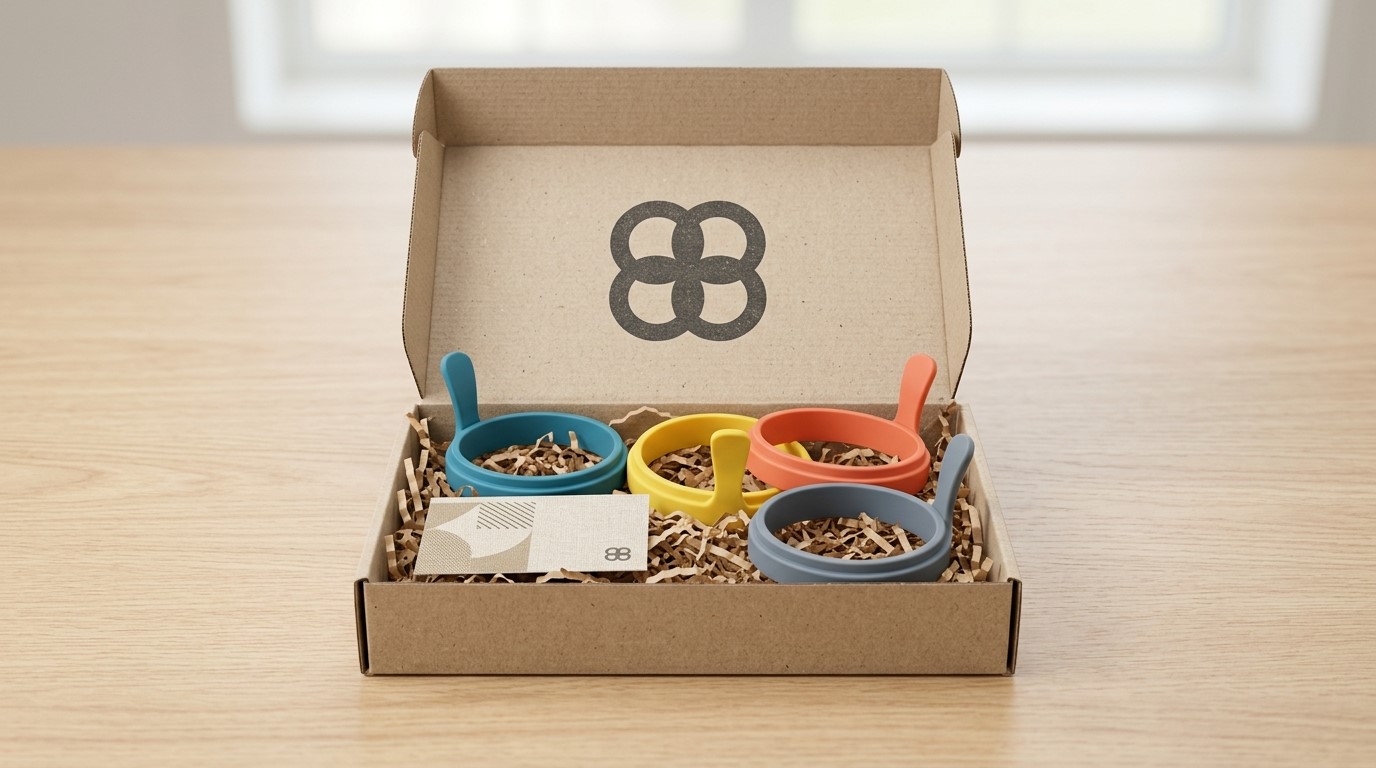
Develop branded silicone egg rings for corporate gifts, seasonal campaigns, cooking-themed promotions, and kitchenware gift sets. Custom colors, recognizable shapes, and logo placement help align the product with campaign identity and presentation requirements.
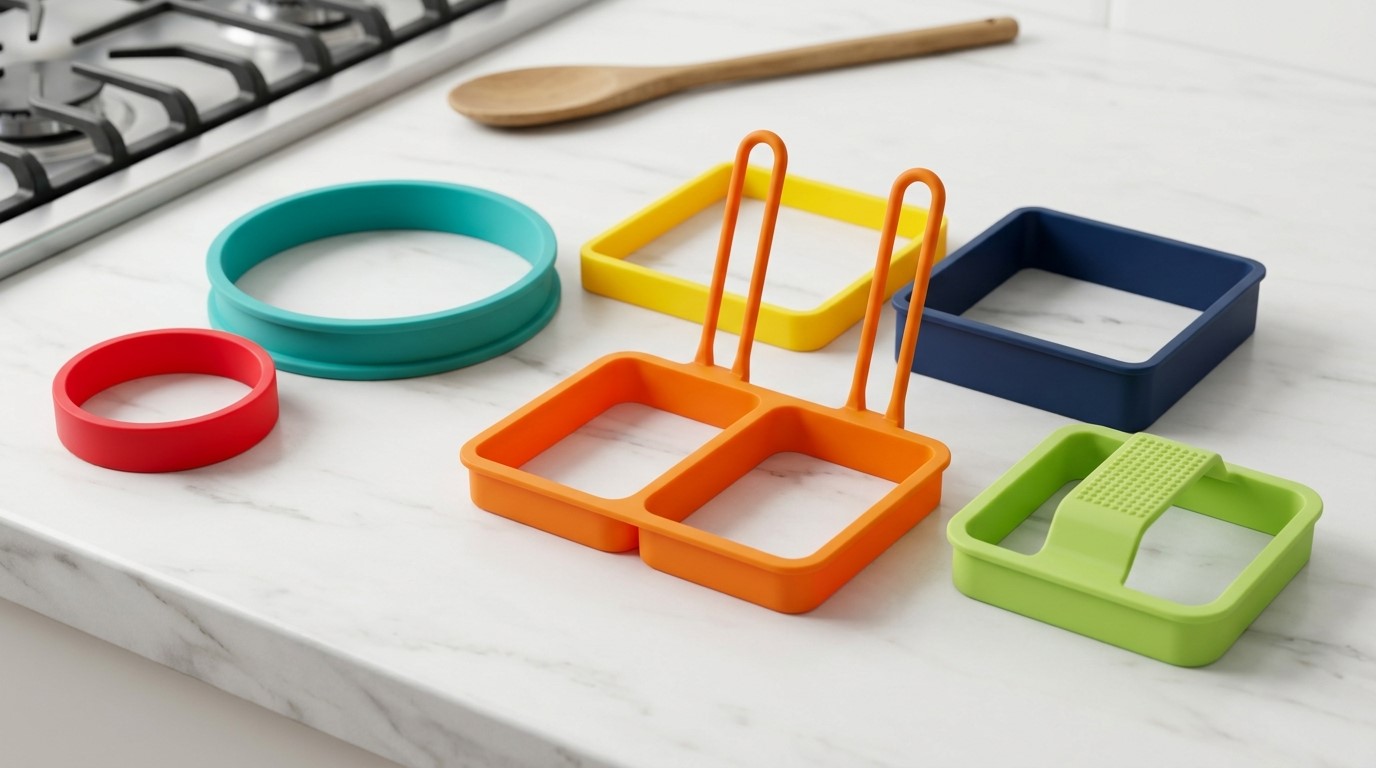
Silicone Egg Ring Types We Can Develop
Round Silicone Egg Rings
Heart-Shaped Silicone Egg Rings
Rectangular Silicone Egg Rings for Griddle
Square Silicone Egg Rings
Adjustable Silicone Egg Ring
Multi-Cavity Silicone Egg Rings
Silicone Egg Rings with Handles
Custom-Shaped Silicone Egg Rings
Silicone Egg Ring Customization
Customize silicone egg ring shape, dimensions, material, and branding for cooking.
Size affects portion dimensions, cookware compatibility, and the amount of space required during cooking. We define the outer dimensions, inner opening, and ring height together, then adjust wall thickness and base geometry to support structural stability. For multi-ring designs, cavity spacing and overall footprint also need to match the available cooking surface and intended storage method.
Available options include:
- Custom outer diameter and overall width
- Inner diameter and opening dimensions
- Ring height and wall thickness
- Base width and contact geometry
- Multi-cavity spacing and layout
- Handle length and grip dimensions
- Product weight and overall footprint
Shape determines the egg ring’s visual identity and influences how the product contains food during cooking. Choose a familiar round design for everyday kitchenware or develop distinctive silhouettes for branded collections. We review the outline, internal corners, connecting bridges, and handle structure to ensure the design remains practical for filling, handling, and food release.
Available options include:
- Round, oval, square, and rectangular profiles
- Heart, star, flower, and novelty shapes
- Custom brand-inspired silhouettes
- Single-ring and multi-ring configurations
- Integrated handles or grip extensions
- Custom cavity arrangements
- Rounded or defined internal corners
Material selection influences heat resistance, flexibility, shape retention, and suitability for food-contact applications. We match the silicone compound and hardness to the product structure and intended cooking conditions. Food-contact documentation should be assessed against the selected compound, pigments, manufacturing process, and destination market rather than assumed from the silicone material name alone.
Available options include:
- Food-contact silicone compounds
- Custom Shore A hardness
- Platinum-cured or other suitable curing systems
- Custom silicone color formulations
- Different flexibility levels for ring structures
- Material options matched to intended heat exposure
- Applicable material declarations and test documentation
Branding gives your silicone egg rings a recognizable identity across private-label kitchenware collections, promotional products, and retail packaging. Logo placement and production methods depend on the available surface, artwork complexity, and intended use. Molded-in branding can provide durable, ink-free details, while suitable printing methods may support additional color or graphic requirements.
Available options include:
- Embossed or debossed logos
- Molded-in brand marks
- Custom product colors
- Suitable screen or pad printing
- Logo placement on handles or designated surfaces
- Custom retail labels and printed packaging
- Coordinated branding across multi-piece kitchenware sets
Start Your Custom Silicone Egg Ring Project
Share your design, target dimensions, order quantity, and branding requirements. We will review the structure, material, and production plan for your custom silicone egg rings.
How to Specify a Better Silicone Egg Ring
A well-specified silicone egg ring balances shape retention, base contact, heat resistance, and convenient food release.
- Inner Diameter: Define the finished food’s target diameter and portion size.
- Ring Height: Match the wall height to the expected egg or batter volume.
- Wall Thickness: Balance flexibility with resistance to bending during filling and handling.
- Base Contact: Specify a flat, stable bottom edge to help reduce leakage on suitable cooking surfaces.
- Hardness: Select Shore A hardness according to the ring’s geometry, handling needs, and flexibility requirements.
- Temperature Resistance: Confirm the intended cooking temperature and the selected compound’s documented limits.
- Release Performance: Evaluate the inner surface and geometry for food removal and cleaning.
- Cookware Compatibility: Check the overall footprint against the intended pan dimensions and cooking method.
- Branding: Confirm logo position, size, and molding or printing method before tooling.
- Packaging: Select the packaging option that best meets your needs, whether that be individual packaging, labeling, retail presentation, or something else.
A larger or thicker ring is not automatically more stable; base geometry, hardness, and wall structure must work together.
Full Specification Guide
How to Specigy a Better Silicone Egg Ring — Dimensional stability, balance between flexibility and structural integrity, crack & heat resistance, and non-stick surface for your programs.
Silicone Egg Ring Logo & Branding Methods
Choose branding methods that suit your egg ring’s surface, material, and retail positioning.
Screen Printing
Create graphics or logo designs into the surface of silicone egg rings with safety.
Pad Printing
Transfer compact logos onto selected flat or gently curved areas.
In-Cavity Logos
Build functional and minimalist logos into molds to producing desired egg rings.
Embosse & Debossed
Raised or recessed logo are formed with wear-resistance for identification.
Silicone Egg Ring Material & Performance Options
Select materials and performance features based on cooking, food-safety, and durability needs.
Smooth contact surfaces can make it easier to release eggs after cooking.
The surface finish, ring geometry, and cooking conditions all influence release. However, a silicone surface does not guarantee sticking-free performance, as oil use and cooking temperature may also affect results.
Material Comparison
Are silicone or metal egg rings better? —Consider rust resistance, non-stick surface, compatibility with non-stick pans, flexibility, light weight, dimensional stability, leakage, service life, heat retention, and ease of cleaning and maintenance.
Food-contact suitability depends on the selected silicone compound and target-market requirements.
Food-contact silicone can be used for egg rings in direct food preparation. The silicone compound and any colorants must be evaluated against the applicable requirements of the intended market and use.
The food-contact silicone formulations must withstand the intended cooking temperature and duration of exposure.
Egg rings may come into contact with heated cookware during frying or other stovetop cooking. When selecting materials, consider temperature exposure, repeated heating, and the manufacturer’s stated operating limits.
A balanced design helps the ring maintain its shape while cooking and handling.
Wall thickness, ring height, silicone hardness, and base geometry all influence stability. Excessively flexible walls may deform during egg filling, and overly rigid designs can complicate handling and release.
Available project documentation may include the following:
- Silicone material data sheets
- Material declarations
- Food-grade compliance documentation
- FDA-related material documentation
- LFGB-related material documentation
- REACH-related reports
- Test report about migration, chemical safety, and toxicity
- Agreed test reports
All applicable documentation must match the selected silicone compound, pigments, branding process, and destination market.
Rather than being treated as proof for every final product configuration, the material documentation should be reviewed alongside the finished silicone egg ring configuration.
Material and surface choices should facilitate practical cleaning after repeated cooking cycles.
Smooth surfaces and accessible corners can help reduce buildup of food residue. Cleaning instructions should be tailored to the selected material and intended washing method, including any dishwasher-use claims.
Besides, please check the product manual to determine if it is dishwasher-safe.
Care Guide
How to Care for Your Silicone Egg Rings to Extend their Service Life? — Rinse the residues right away, wipe gently avoid abrasive tools, tough residues removal regularly, store without sunlight, and cracks, punctures, and connection inspection before using.
How Custom Silicone Egg Rings Are Manufactured

STEP 1: Requirement Review
We review the egg ring’s shape, dimensions, cooking application, material requirements, logo, target market, and packaging needs before preparing a manufacturing proposal.
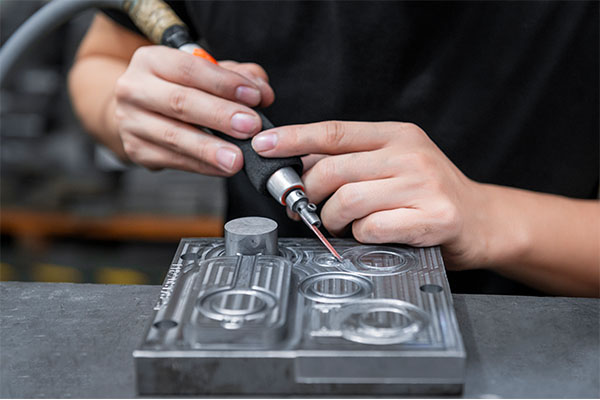
STEP 2: Mold Feasibility Assessment
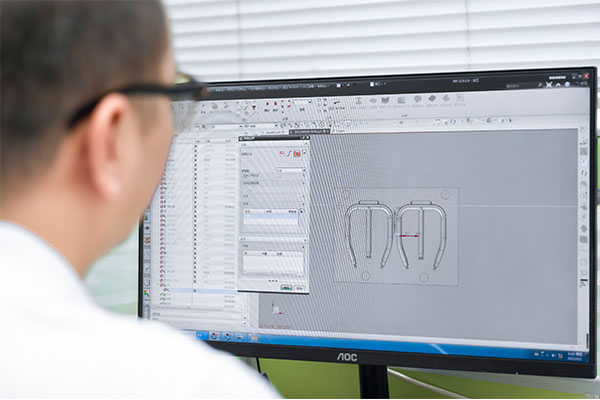
Engineers assess ring geometry, wall thickness, base structure, parting lines, and demolding direction to reduce deformation and improve dimensional consistency.
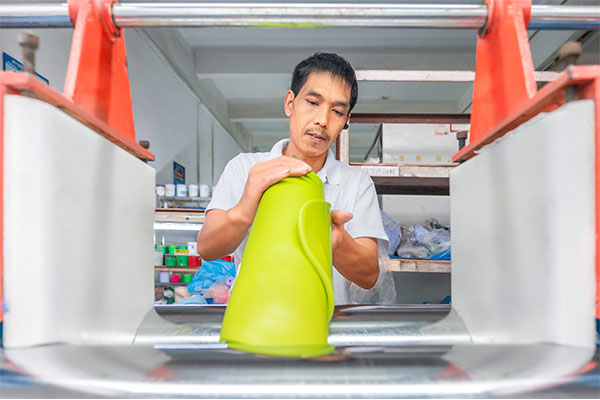
STEP 3: Material Preparation
The approved silicone compound, colorants, and required additives are prepared according to the confirmed material specification and applicable food-contact requirements.
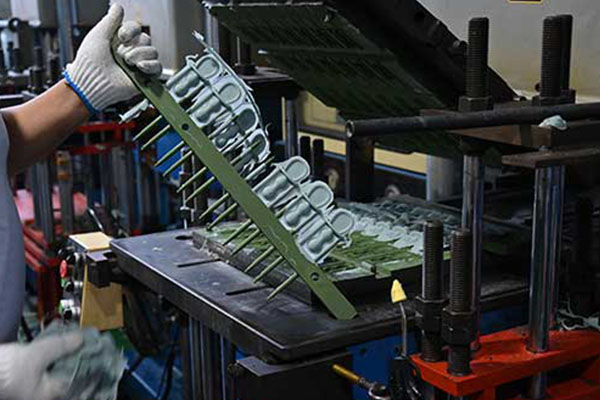
STEP 4: Silicone Molding
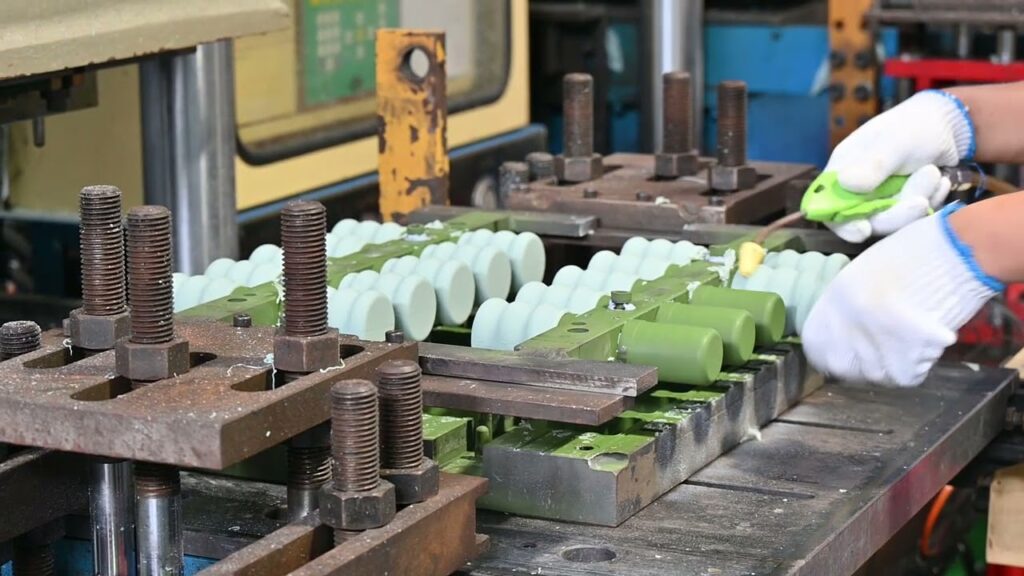
Silicone is molded under controlled processing conditions. Mold design and curing parameters are adjusted to achieve the required ring shape, wall structure, and surface finish.

STEP 5: Trimming & Edge Finishing
Excess silicone and flash are removed from the molded ring. Particular attention is given to the base edge and inner opening, where irregularities may affect contact and release.
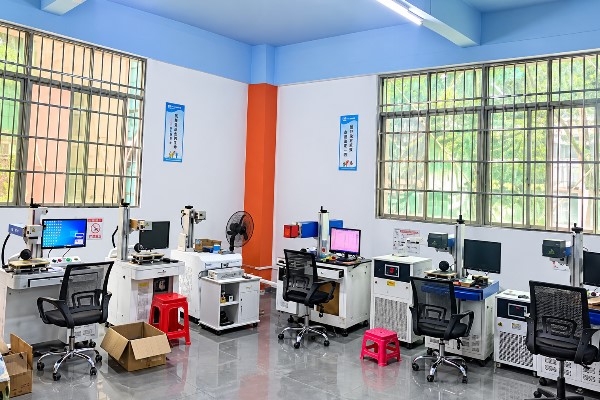
STEP 6: Surface Finishing & Branding
Approved surface treatments and logo methods are applied according to the design. Printed branding, when used, requires suitable curing and adhesion checks.
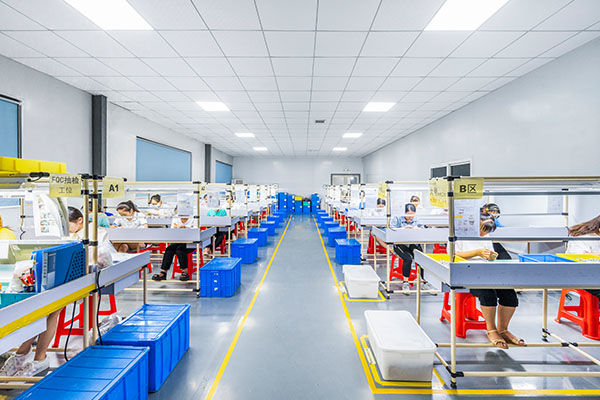
STEP 7: Quality Inspection & Testing
Finished rings are checked against the approved sample and specifications for dimensions, shape, surface defects, color, logo quality, and functional performance.

STEP 8: Packaging and Shipment
Approved products are packed according to the order’s packaging plan. Labels, quantities, carton markings, and required documentation are verified before shipment.
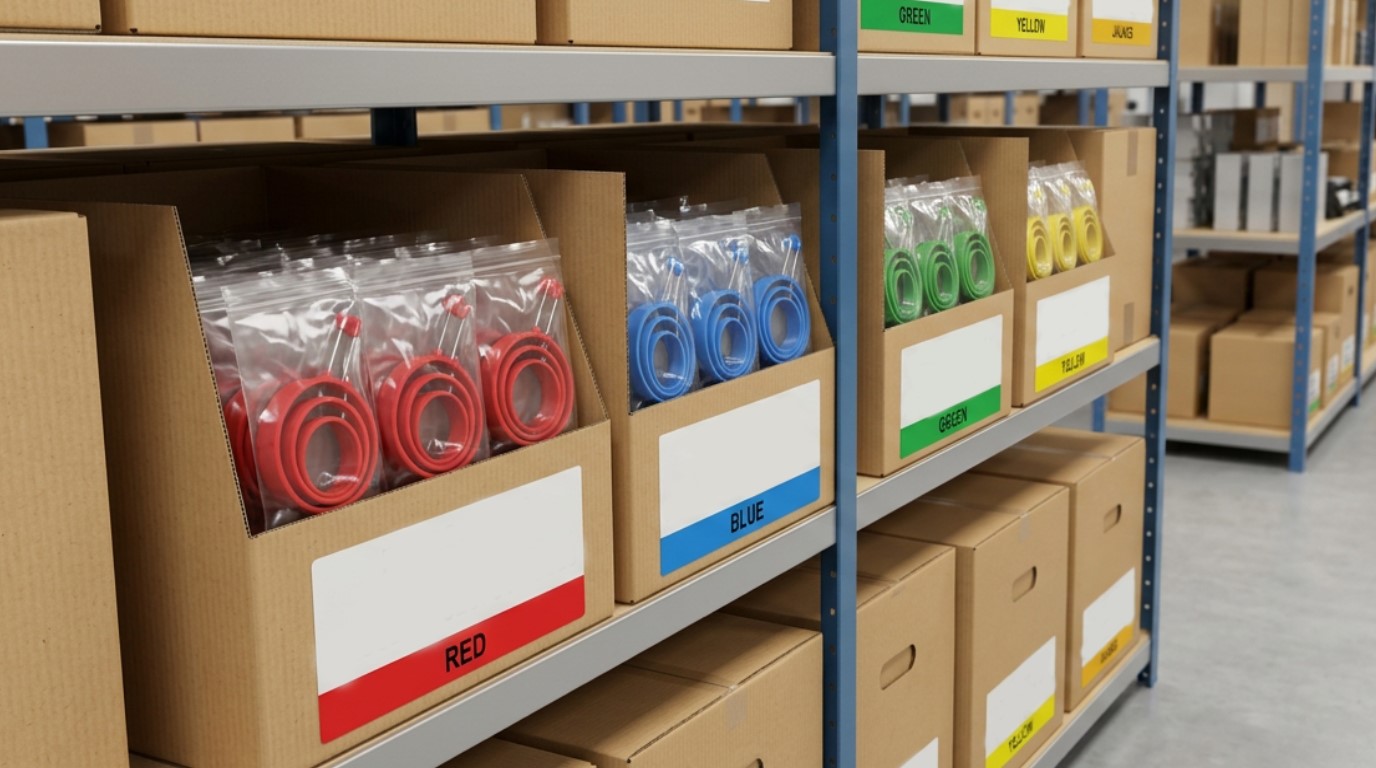
Silicone Egg Ring Quality Control
Quality control focuses on cooking-related functionality, dimensional consistency, material suitability, branding, and packaging.
AQL 2.5 / 4.0 Standard Inspection
We run final random sampling plans to verify batch consistency:
AQL 2.5
Critical / Major Defects
AQL 4.0
Minor Visual Flaws
Another inspection standard can be used when specified in the purchase order.
Approved Sample Reference
The approved sample establishes the reference for ring diameter, height, wall thickness, base shape, hardness, color, surface finish, and logo placement. Any specification conflict is clarified before mass production.
Incoming Material Inspection
Silicone compounds and colorants are checked against approved specifications, including material identification, color consistency, and required documentation. Food-contact documentation is reviewed according to the target market and product configuration.
In-Process Inspection
During molding and finishing, inspection focuses on:
- Molding consistency: Ring shape, wall thickness, base flatness, and visible deformation.
- Flash and trimming: Excess material around the inner opening and bottom edge.
- Color consistency: Visible variation between production batches and approved references.
- Branding quality: Logo position, legibility, and printing adhesion where applicable.
Appearance Inspection
Produced silicone egg rings are inspected for:
- Bubbles
- Cracks
- Contamination
- Surface defects
- Uneven edges
Dimensions Review
These dimensional details are reviewed against the approved specs, involving:
- Inner diameter and outer diameter
- Wall thickness
- Height, base geometry, and ring deformation
- Base contact
- Shape retention
Logo Quality Evaluation
The evaluation covers:
- Logo position & size
- Clarity
- Completeness of surface patterns
- Adhesion of graphics or textes
Functional & Application Checks
Base contact and wall stability should be evaluated together, not as isolated dimensions.
A ring may meet its diameter specification but still allow egg white to escape if the base does not sit evenly on the cooking surface. Functional checks should therefore consider base geometry, cookware contact, and handling during filling.
Where required, agreed tests can evaluate heat exposure, repeated-use performance, and release behavior under specified conditions.
Sampling & Acceptance Criteria
Pre-shipment inspection can follow an agreed AQL sampling plan, such as AQL 2.5 for major defects and AQL 4.0 for minor defects, where suitable for the order. Critical defects, sampling levels, and acceptance criteria should be confirmed with the buyer before production.
Packaging Review
Product quantity, individual protection, labels, barcodes, carton markings, and your specific packaging requirements are verified before shipment.
Silicone Egg Ring Packaging Options
Choose packaging based on your sales channel, order volume, and branding requirements.

Bulk Packaging
Bulk packaging suits wholesalers, distributors, and commercial buyers ordering larger quantities. Individual bags or grouped packaging can simplify warehouse storage, inventory handling, and downstream repacking.
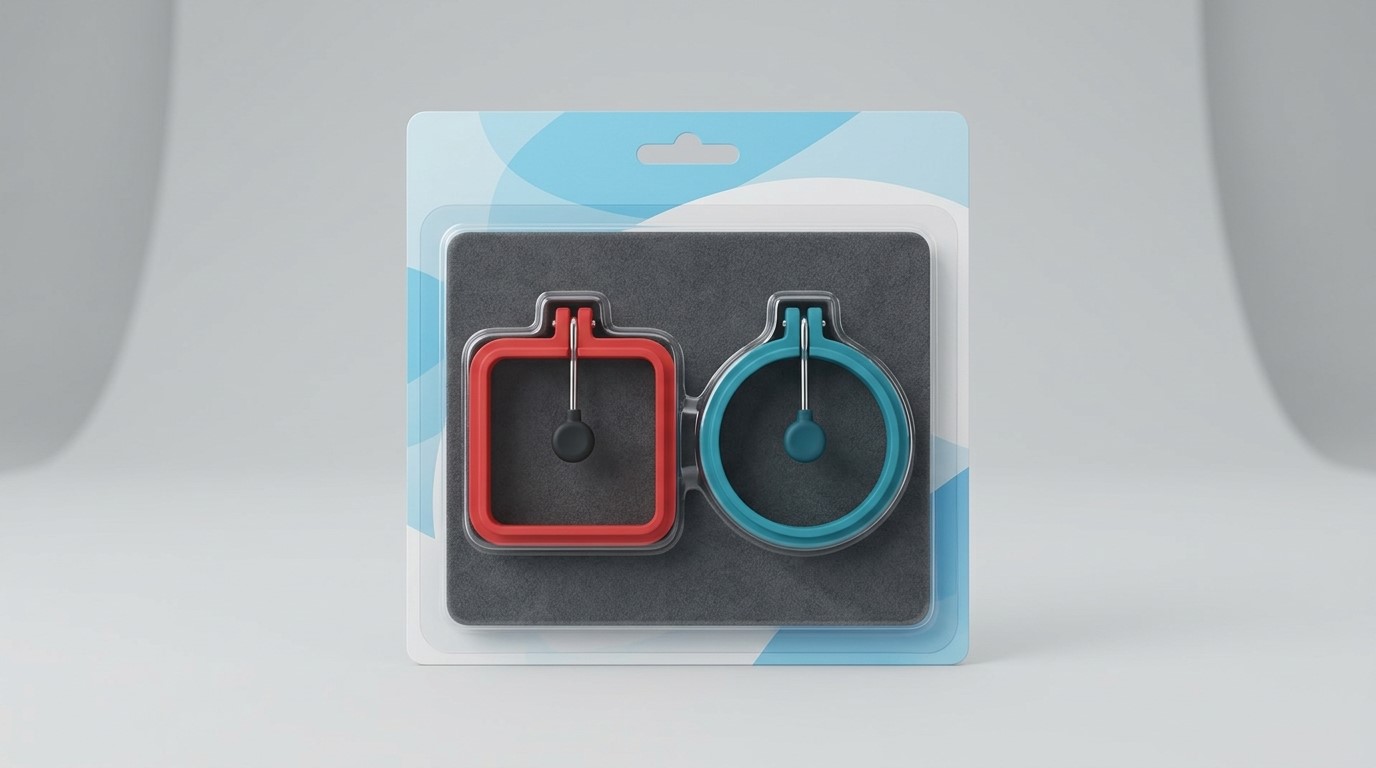
Retail Packaging
Retail-ready packaging can include individual polybags, header cards, printed boxes, and product inserts. Packaging dimensions, product information, and barcode placement can be customized for kitchenware stores and supermarket channels.
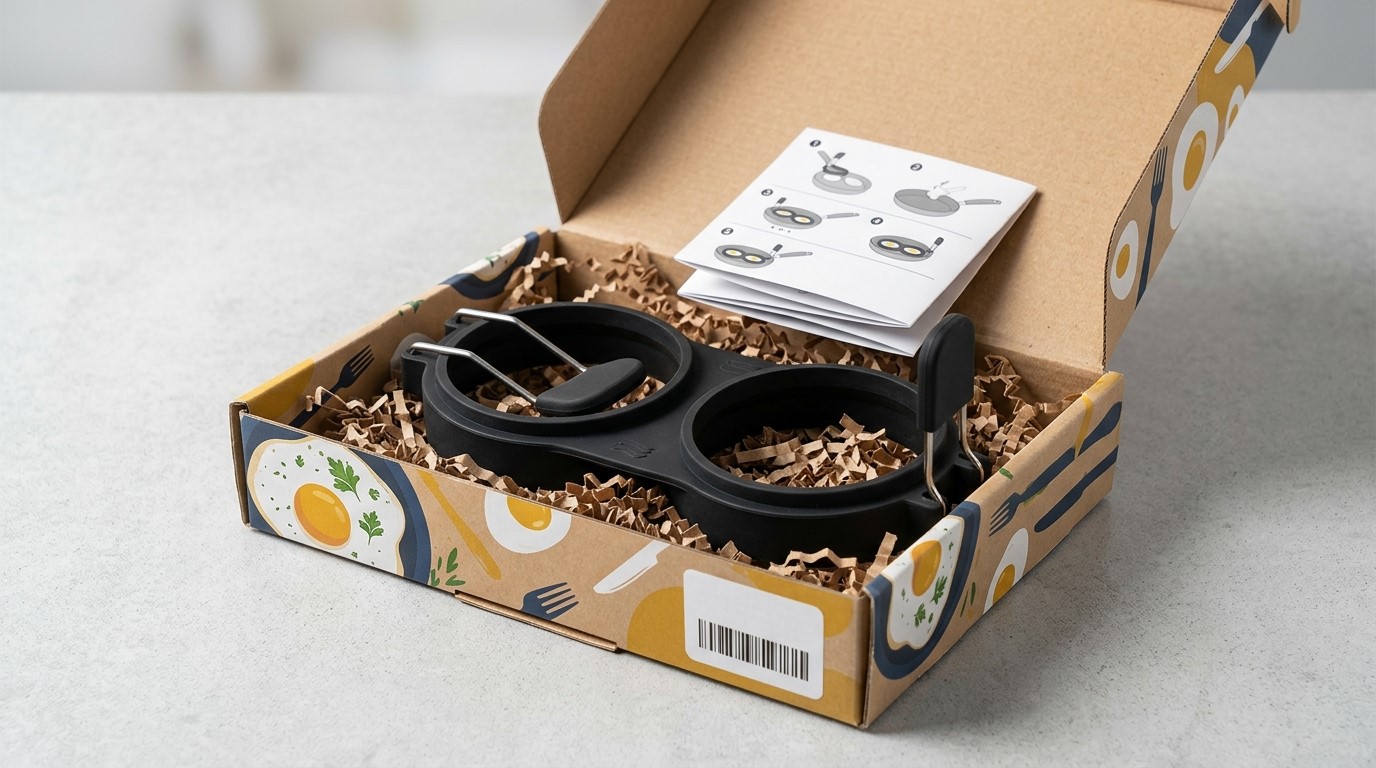
Ecommerce Packaging
E-commerce packaging supports online marketplaces and direct-to-consumer fulfillment. Individual protection, SKU labels, barcode information, and compact packaging can be coordinated to support product handling and shipping requirements.

Premium Brand Packaging
Premium packaging can include custom boxes, printed sleeves, branded inserts, and coordinated visual elements. These options help private-label brands maintain consistent presentation across silicone egg rings and other kitchenware products.

Typical Silicone Egg Ring Specifications
| Specification | Typical Reference |
|---|---|
| Product | Custom silicone egg ring |
| Applications | Fried eggs, omelets, mini pancakes, and other ring-shaped breakfast foods |
| Material | Food-contact silicone, subject to intended use and market requirements |
| Shape | Round, square, heart-shaped, rectangular, or custom geometry |
| Inner Diameter | Customized according to egg size and portion requirements |
| Outer Diameter | Customized according to ring structure and intended cookware |
| Height | Customized according to food thickness and filling requirements |
| Wall Thickness | Designed according to stability, flexibility, and demolding needs |
| Hardness | Customized Shore A hardness according to handling and shape-retention needs |
| Temperature Resistance | Confirmed according to the selected silicone compound and intended cooking conditions |
| Color | Standard colors or custom color matching |
| Surface Finish | Smooth, matte, or approved molded texture |
| Base Design | Flat base or other customized contact geometry |
| Logo Methods | Embossed, debossed, screen printing, or pad printing, subject to design feasibility |
| Molding Process | Silicone compression molding or another approved process |
| Packaging | Bulk bags, retail boxes, e-commerce packaging, or custom branded packaging |
| Existing-Mold Branding MOQ | Confirmed according to product availability and branding requirements |
| Custom-Molded MOQ | Confirmed according to mold design, production setup, and order volume |
| Sample Lead Time | Confirmed after design and sample requirements are reviewed |
| Mass-Production Lead Time | Confirmed after sample approval and order specifications |
| Inspection | Approved sample, agreed specifications, and applicable inspection criteria |
| OEM & ODM | Available for approved custom development projects |
Final specifications are confirmed through design review, material selection, and approved sample evaluation.
Why Work with RY Silicone
Silicone Manufacturing Experience Since 2012
RY Silicone has focused on custom silicone product manufacturing since 2012, supporting overseas buyers from product evaluation and sampling through production, inspection, and delivery.
10,000+ m² Production Facility
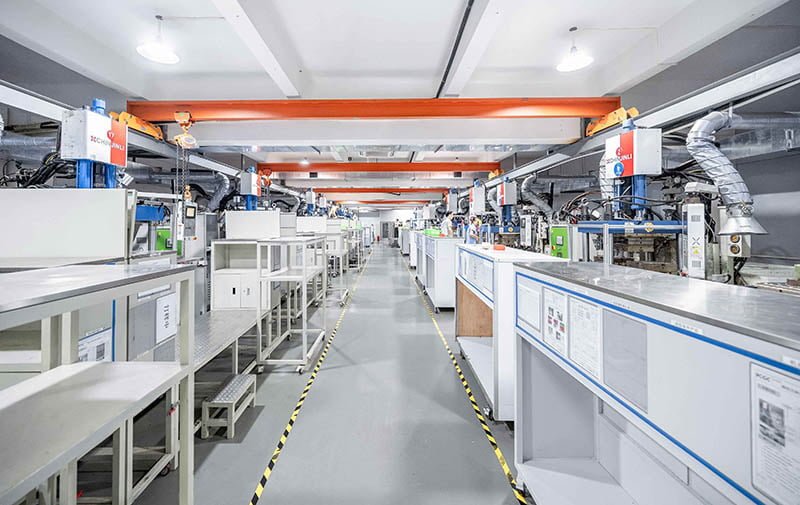
Our production facility supports silicone tooling, molding, finishing, branding, inspection, and packaging for custom silicone kitchen products.
30+ Production Machines
Multiple production machines support different silicone product structures and production requirements, with manufacturing arrangements determined by order volume and product design.
Up to 100,000 Silicone Products per Day
Our production capacity can reach up to 100,000 silicone products per day across suitable product configurations. Actual output depends on mold design, cycle time, and inspection requirements.
Engineering Review Before Quotation
We review ring dimensions, base geometry, material, hardness, logo, packaging, and target-market requirements before confirming the manufacturing proposal and quotation.
Sample-Based Production
Mass production follows an approved sample that establishes the reference for dimensions, color, surface finish, logo placement, and other agreed requirements.
Export Project Support
We support international B2B orders with product specifications, packaging coordination, inspection arrangements, and export documentation according to the destination market and project requirements.
Silicone Egg Ring FAQ and Final RFQ
What is the MOQ for custom silicone egg rings?
MOQ depends on whether the project uses an existing mold or requires new tooling, as well as material, branding, and packaging requirements. The final quantity is confirmed during project review.
What silicone material is suitable for egg rings?
Food-contact silicone may be suitable for egg rings used in direct food preparation.
The compound, color formulations & color matching for branding, and supporting documentation should be evaluated against the intended use and destination-market requirements.
Can you manufacture egg rings in custom shapes and sizes?
Yes.
Custom designs can include round, square, heart-shaped, rectangular, and other geometries. Inner diameter, outer diameter, height, wall thickness, and base design can be developed according to the intended application.
How do you improve egg ring stability during cooking?
Stability depends on the combination of silicone hardness, wall thickness, ring height, and base geometry. The design should balance flexibility for handling with sufficient shape retention and contact with the cooking surface.
Can silicone egg rings be used on different cookware?
Compatibility depends on the ring’s dimensions, base design, and the cookware’s surface and temperature conditions.
Buyers should confirm the intended cookware and follow the product’s approved operating instructions.
Can silicone egg rings withstand repeated heating?
Repeated-use performance depends on the selected compound, temperature exposure, cleaning method, and operating conditions.
Material suitability and durability should be evaluated against the intended use.
How to use silicone egg rings?
Silicone egg rings can be used not just for eggs, but also for mini omelets, English muffins, poached eggs, burgers, sliders, and plated breakfasts on pans and griddles.
Unlike stainless steel egg rings, there is no need to preheat; eggs or other food ingredients can be placed directly into the rings on a hot cooking surface. Fry according to your preference and release the ring. Then, flip your eggs or food until well-done and enjoy!
Moreover, using a bit of cooking spray or oil improves egg release from the rings and makes cleaning easier.
What logo options are available for custom egg rings?
Available options may include embossed logos, debossed logos, screen printing, and pad printing. The suitable method depends on logo complexity, surface geometry, and branding requirements.
What quality checks are performed on silicone egg rings?
Inspection can cover dimensions, shape, base contact, surface defects, material specifications, color, logo quality, and packaging. Functional checks can be agreed according to the product’s intended cooking application.
Can you provide food-contact compliance documentation?
Documentation availability depends on the selected silicone compound, colorants, manufacturing configuration, and destination market.
Applicable requirements should be identified before material approval and production.
What information is needed for a custom silicone egg ring quotation?
Please provide the following details to help us evaluate your project:
- Product shape and design drawings, relevant design files, or reference images.
- Inner diameter, outer diameter, height, and wall thickness.
- Intended cooking application and cookware type.
- Silicone material and hardness requirements, if known.
- Color reference and logo artwork.
- Target market and applicable compliance requirements.
- Estimated order quantity and annual demand.
- Packaging type, labeling, and barcode requirements.
- Sample requirements and expected delivery schedule.
Send your design, specifications, target quantity, and packaging requirements to discuss a custom silicone egg ring project with RY Silicone.