
Silicone Air Fryer Liner Manufacturer
Custom reusable silicone air fryer liners for kitchenware brands, wholesalers, distributors, and private-label retailers. Develop basket-compatible shapes, functional base structures, brand colors, logos, and retail packaging with RY Silicone.
What Is a Silicone Air Fryer Liner?
A silicone air fryer liner is a reusable silicone kitchen gadget designed to sit inside a compatible air fryer basket or tray. Depending on its structure, it can help collect grease and food residue, simplify cleanup, and provide a removable cooking surface. Its dimensions, base design, and temperature rating must suit the intended appliance and use conditions.
RY Silicone, a China-based manufacturer established in 2012, offers OEM/ODM development for custom silicone air fryer liners, tailoring basket profile, wall height, thickness, texture, color, branding, and packaging. Operating a 10,000+ m² facility with 30+ machines, we deliver high-capacity production for kitchenware brands, distributors, and private-label buyers.
Silicone Air Fryer Liner Manufacturing at a Glance
MOQ & Lead Times
MOQ, tooling, sample timelines, and lead times depend on design, customization, quantity, and packaging.
Product Specs
Define basket dimensions, sidewall height, base thickness, hardness, structure, finish, and temperature before sampling.
Logo & Branding
Customize logo placement, molded lettering, colors, and approved printing methods to align with brand identity.
Packaging Solutions
Select bulk packing, individual bags, printed boxes, barcodes, inserts, or retail packaging for your channel.
Who We Manufacture Silicone Air Fryer Liners For
Support reusable air fryer development for retail, distribution, and private-label product lines.

Kitchenware Brands
Develop coordinated silicone air fryer liners with custom dimensions, colors, base structures, and branding. We review product positioning, target appliance compatibility, and intended use before confirming the design.
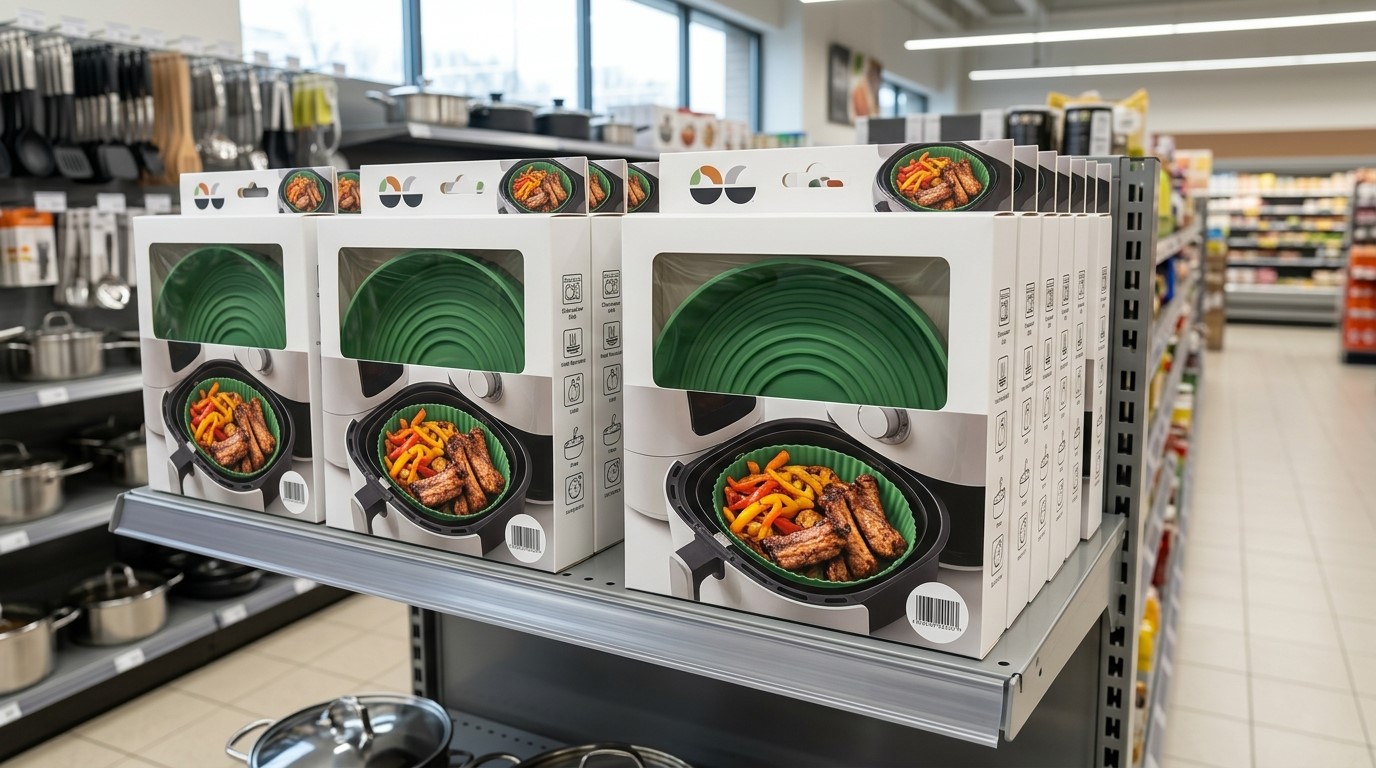
Supermarket & Household Product Suppliers
Create silicone kitchen accessory SKUs for household-product channels. We can review assortment consistency, shelf presentation, packaging requirements, and repeat-order specifications across approved product variants.
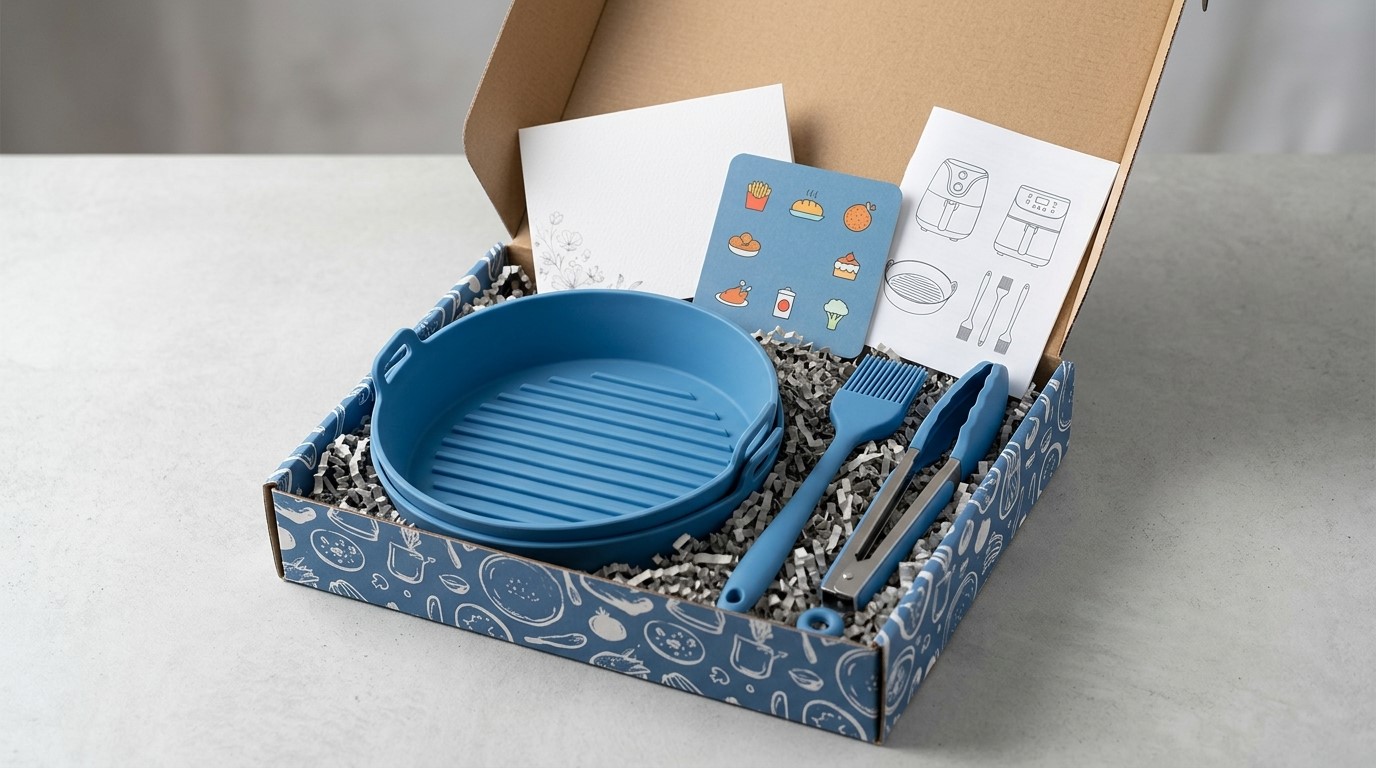
Kitchen Accessory Gift-Set Brands
Coordinate silicone air fryer liners with other kitchen accessories for bundled or seasonal offerings. Set composition, color coordination, product protection, and packaging layout can be evaluated during project development.
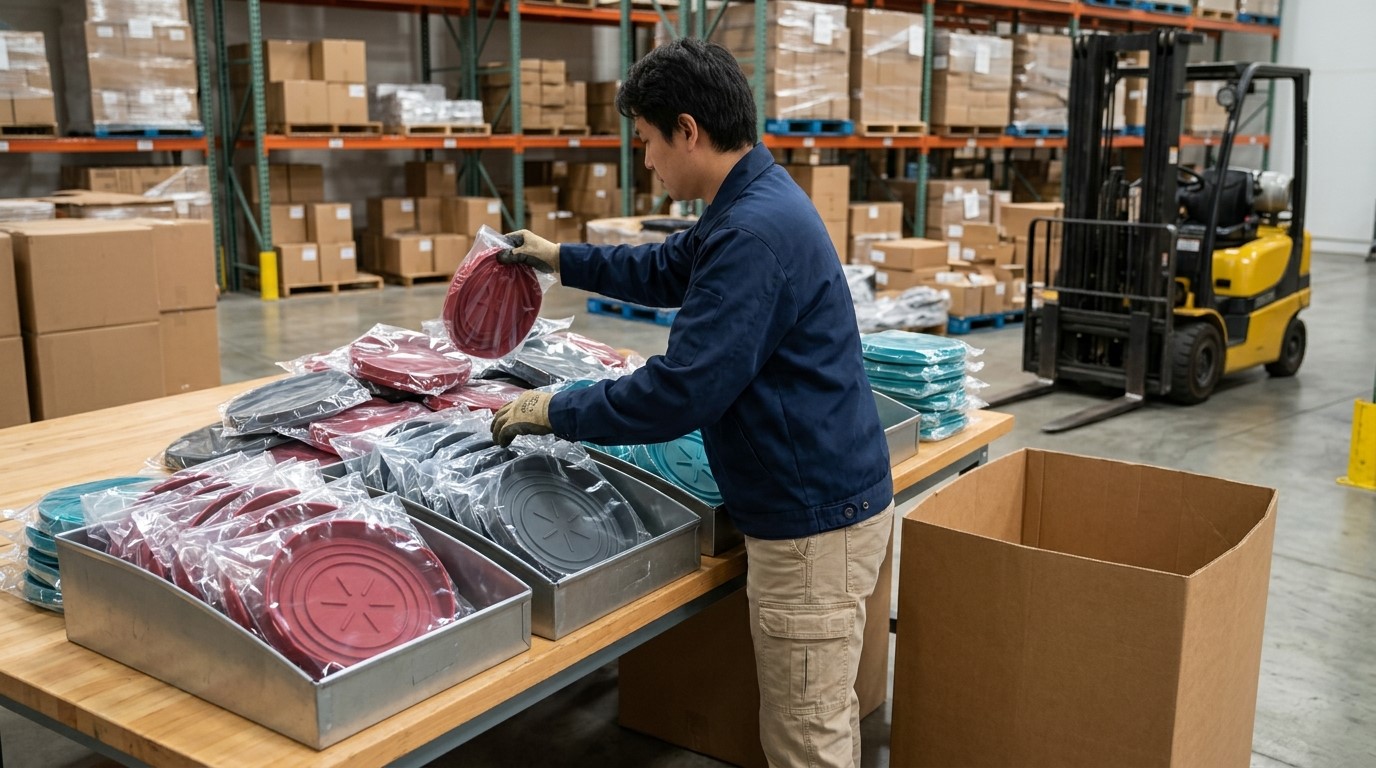
Wholesalers & Distributors
Source customized silicone liners for wholesale assortments and regional markets. Product specifications, carton quantities, labeling, and documentation requirements can be reviewed against your purchasing and distribution needs.
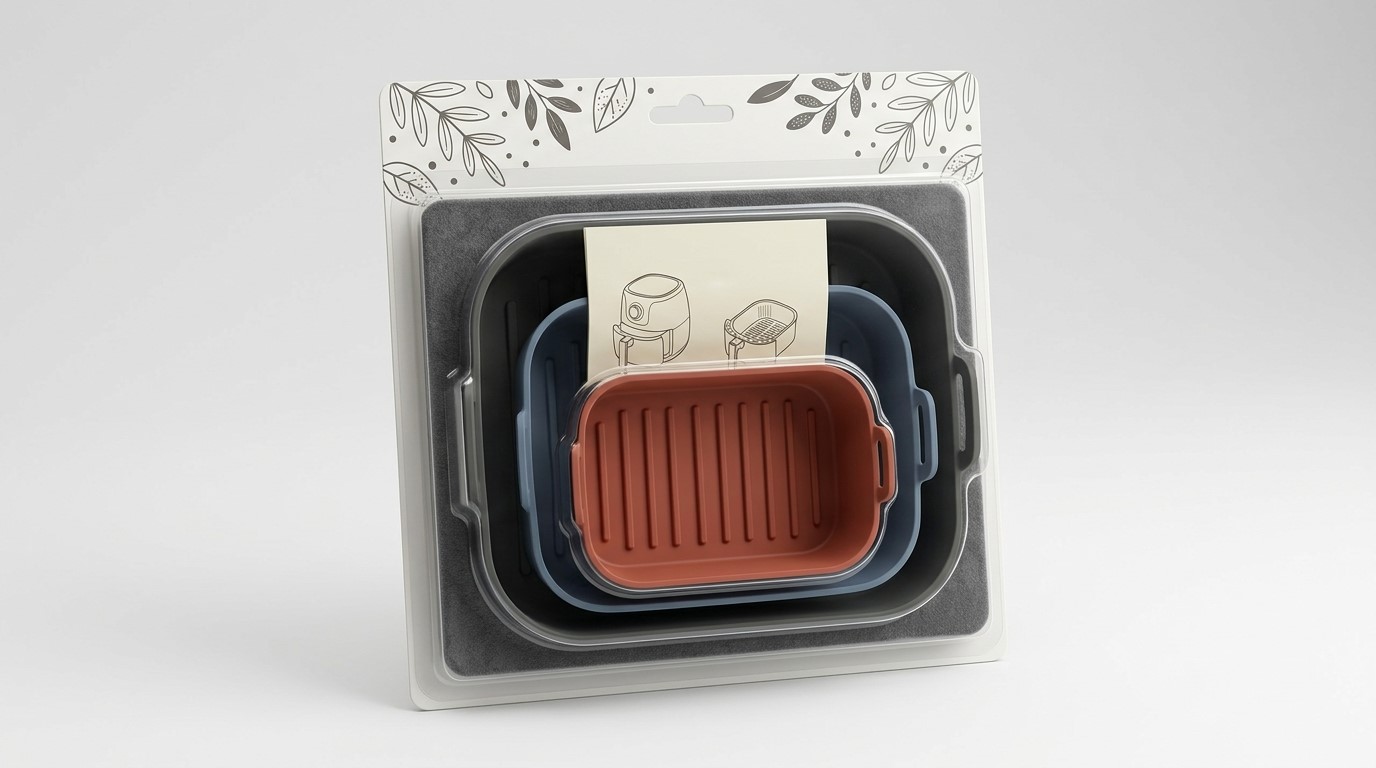
Private-Label Retailers
Build differentiated products around your own brand identity, including approved colors, molded logos, individual packaging, and retail presentation. Artwork and product details should be confirmed before production.

E-commerce Sellers
Develop product variations for online listings, including selected shapes, size options, colorways, and packaging configurations. Clear compatibility information helps buyers understand which basket dimensions the product is designed for.
Silicone Air Fryer Liner Types We Can Develop
Round Silicone Air Fryer Pot Liners
Square Silicone Air Fryer Liners
Rectangular Silicone Air Fryer Liners
Perforated Silicone Air Fryer Mats
Solid-Bottom Silicone Air Fryer Liners
Raised-Rib & Grooved Air Fryer Silicone Liners
Collapsible Air Fryer Silicone Liners
Custom-Size & Private-Label Liners
Silicone Air Fryer Liner Customization
Customize the fit, structure, material, and branding around your target market and appliance requirements.

Custom round, square, and rectangular air fryer liners must match internal basket geometry, including corner profiles, rims, and wall angles. RY Silicone reviews drawings, samples, or specs before tooling to ensure precise fit across target appliance models rather than relying solely on advertised capacity ratings.
Available options include:
- Round, square, and rectangular outlines
- Custom corner radii and edge profiles
- Different sidewall heights
- Basket-specific dimensions
- Drawing-based or sample-based development
- Single-size or multi-size product ranges
- Custom rim and handling features, subject to design review
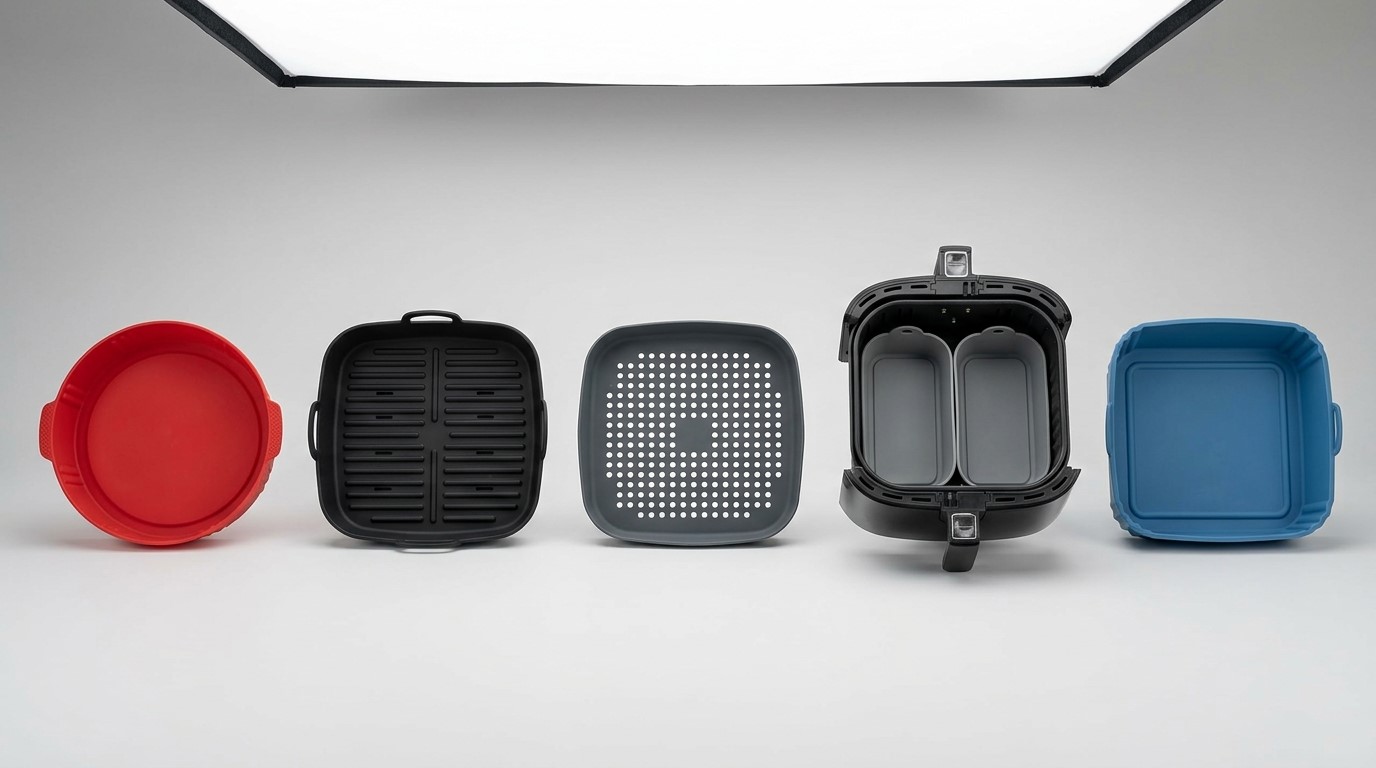
A solid bottom holds residue, while perforations, raised ribs, or grooves alter airflow and grease drainage. Select the optimal structure based on basket geometry and cleaning needs. Always test approved samples in target appliances to prevent altered cooking performance.
Available options include:
- Solid-bottom construction
- Collapsible types with fatigue resistance
- Flat perforated, or pot design
- Linear strips, ripple patterns, circular ridgets, or grid-raised ribs
- Raised dots or grease drainage with deep ribs
- Customized hole diameter and spacing
- Adjusted base and sidewall thickness
- Enhanced handles
- Reinforced or shaped rims, where feasible
- Structural revisions after sample evaluation
Custom silicone air fryer liner shape design options must account for product thickness, flexibility, heat tolerance, and food-contact compliance. For private-label and wholesale projects, our engineer team reviews your design configuration, target market requirements, and essential compliance documentation before finalizing your material and branding.
Available options include:
- Silicone compound selected for the intended application
- Project-specific Shore A hardness
- Custom material and color requirements
- Flexible or firmer structural targets
- Surface finish options
- Agreed temperature-use requirements
- Material documentation review
- Sample evaluation before production approval
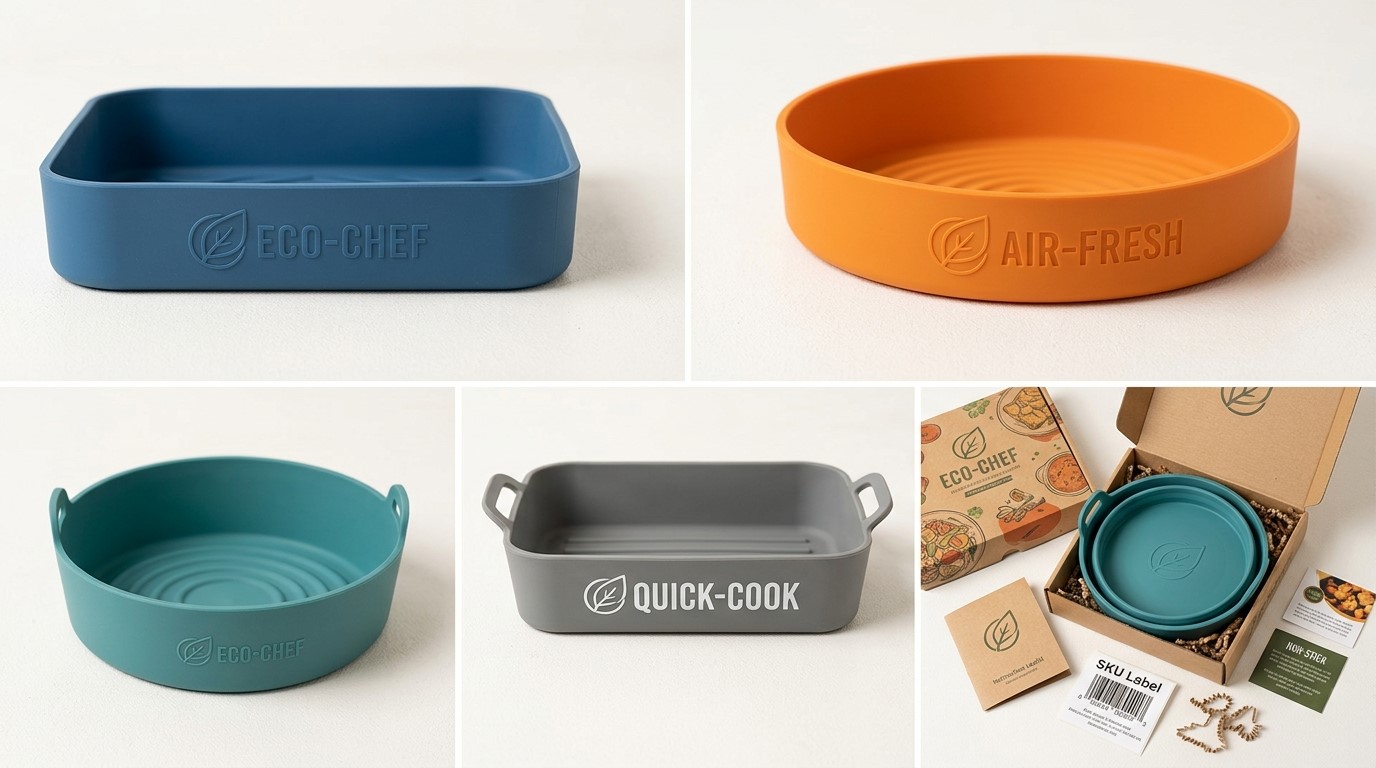
Custom silicone air fryer liners feature molded-in or durable printed logos placed to protect food-contact safety, functional geometry, and ease of cleaning. Aligning logo placement, color matching, and packaging artwork with product shape design ensures visual consistency across coordinated retail SKU ranges.
Available options include:
- Embossed or debossed molded logos
- Custom silicone colors
- Logo placement on suitable rim or exterior areas
- Screen or pad printing where technically suitable
- Product-specific logo size and depth
- Individual packaging and printed boxes
- Barcode, SKU, and instruction labels
- Coordinated branding across multiple sizes
Start Your Custom Silicone Air Fryer Liner Project
Share your target basket dimensions, preferred base structure, quantity, branding, and packaging needs. RY Silicone can review the requirements before quotation and sampling.
How to Specify a Better Silicone Air Fryer Liner
A well-specified liner starts with basket fit, base design, material suitability, and practical handling.
- Basket dimensions: Provide the usable interior length, width or diameter, corner radius, and available depth of the target basket.
- Sidewall height: Confirm the required wall height without interfering with the basket rim, handle, or appliance clearance.
- Base thickness: Balance shape stability and flexibility; thicker material is not automatically better.
- Base structure: Specify solid, perforated, ribbed, or grooved construction according to intended cooking and grease-handling needs.
- Perforation layout: Define hole size, spacing, and distribution where applicable.
- Material requirements: Confirm intended temperature conditions, food-contact requirements, and relevant documentation.
- Branding and packaging: Supply logo artwork, color references, packaging specifications, and destination-market requirements.
A physical basket sample or dimensioned drawing helps reduce fit-related uncertainty before tooling.
Full Specification Guide
How to Specify a Custom Silicone Air Fryer Liner—basket measurements, wall height, base thickness, perforation layout, hardness, and pre-production approval.
Silicone Air Fryer Liner Logo & Branding Methods
Choose a branding method that suits the logo artwork, silicone surface, and intended use.
Screen Printing
Durable printed logos against repeated heating, friction, washing, and aging.
Pad Printing
Clear and sharp graphics printing on your air fryer liners with desired branding methods,
Embossed Logos
Fine details, line width, and logo depth must be reviewed against moldability and cleaning requirements.
Debossed Logos
Logo depth and position should be selected to preserve legibility without creating unnecessary recesses.
Silicone Air Fryer Liner Material & Performance Options
Material selection should match intended use, temperature, structure, and destination market.
Select the compound according to the intended application and required documentation.
Evaluate the food-contact suitability of the actual silicone material grade, color formulations, manufacturing process, and target market.
A general description such as “food-grade silicone” should not replace review of the relevant material information and finished-product requirements. Buyers should identify the intended market and applicable documentation needs before the material is finalized.
Material Comparison
Silicone Air Fryer Liners vs. Parchment Paper for Air Fryer: Which One Is Optimal for You?—Convenience, long-term cost, reusability, hole design for hot air circulation, heat resistance, flexibility, and application limitations.
Confirm the usable temperature range for the selected material and finished design.
Temperature performance depends on the silicone formulation, thickness, product geometry, exposure duration, and actual operating conditions.
RY Silicone should confirm the proposed material specification for the project rather than applying one universal temperature rating to every liner.
Buyers should also follow the finished product’s approved instructions and the air fryer manufacturer’s guidance. Do not assume a liner is suitable for every appliance, temperature setting, or cooking cycle.
Balance flexibility with sufficient structural stability for the intended use.
The base and sidewalls should retain acceptable shape during the agreed conditions of use.
A very thin base or tall wall may flex under food weight, while excessive thickness can make the liner less flexible and increase material consumption. Design reviews should consider base dimensions, wall height, corner transitions, and thickness together.
Heat-related performance should be checked against agreed acceptance criteria rather than judged only from the product’s appearance at room temperature.
Choose the base structure around the intended cooking application.
A solid base, raised-rib pattern, grooved surface, and perforated design provide different ways of handling grease and air passage.
The raised ribs or grooves improve airflow, ensuring that food is cooked evenly. The perforated structure prevents food from sticking to the inner pot and eliminates spills.
A liner that covers basket openings may change airflow and cooking behavior, so compatibility cannot be assumed from dimensions alone. For perforated models, hole diameter, spacing, distribution, and edge distance need to be considered together.
Evaluate the selected structure in the target appliance; avoid marketing faster cooking or better results without supporting evidence.
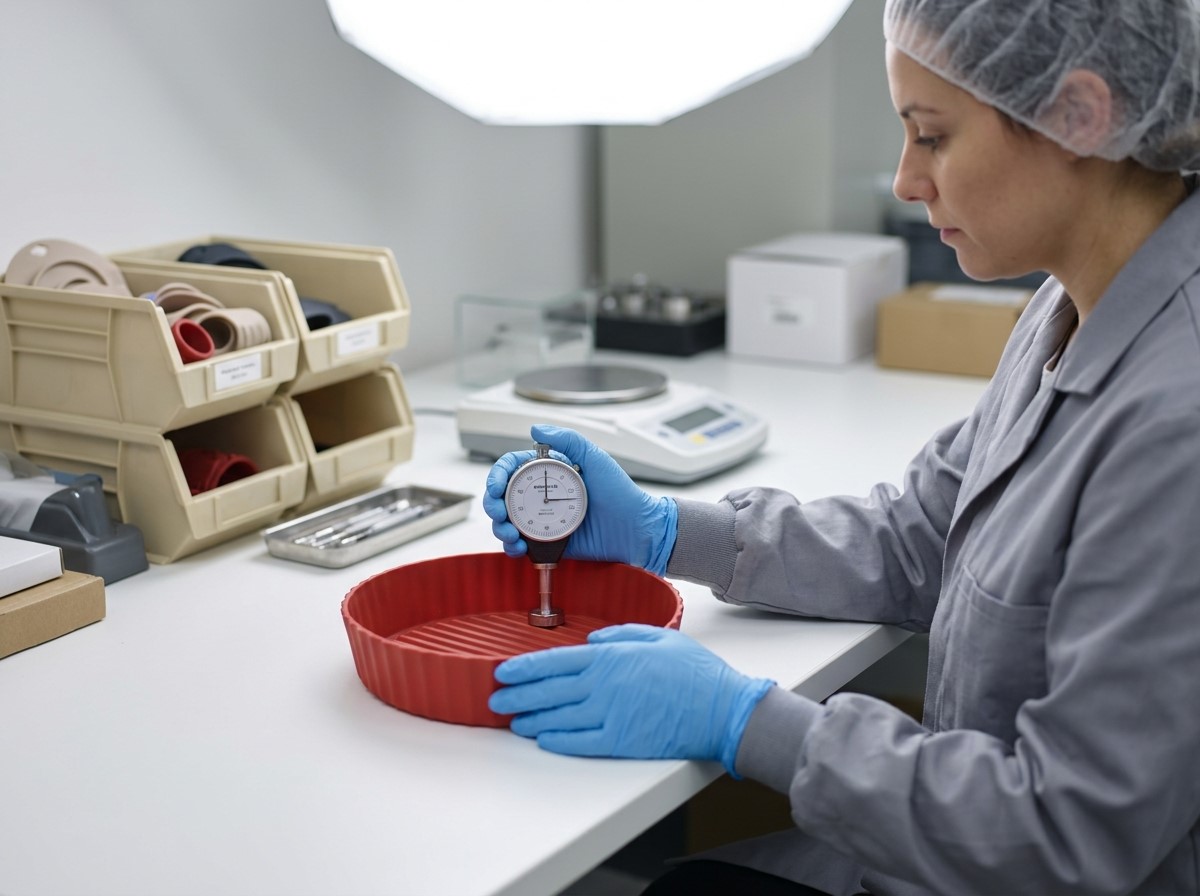
Match hardness to handling, shape retention, and the liner’s geometry.
Shore A hardness is one useful material-selection parameter, but it does not independently determine whether a liner will perform well.
A suitable balance depends on the base thickness, sidewall height, rim design, and required flexibility when inserting or removing the product.
The hardness target should be confirmed during development and evaluated on the approved sample. Where a buyer has a benchmark product, a physical sample can help communicate the desired handling feel.
Design the surface to balance practical cleaning with the intended product structure.
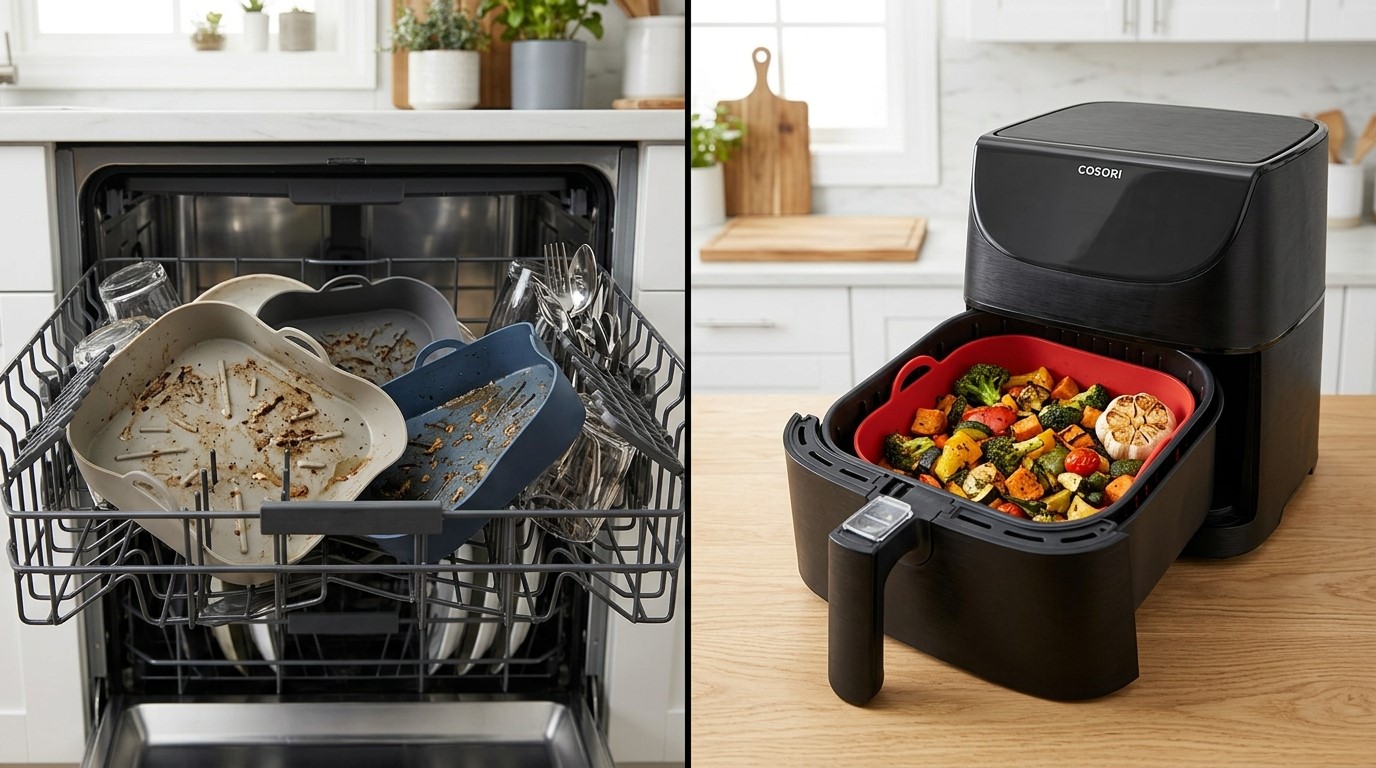
Smooth areas may simplify wiping, while raised ribs, grooves, and perforations can introduce additional areas where grease or food residue may collect. Besides, non-stick silicone air fryer pots protect the coatings of original baskets of air fryers from permanent stains of rust.
The base pattern, corner transitions, and molded edges should be reviewed for practical access during cleaning. Excessive flash or rough finishing can also affect the user experience.
Cleaning instructions should be based on the approved material and finished product, including any restrictions specified for detergents, dishwasher use, or other cleaning methods.
Assess odor and residue as screening points, not as proof of compliance.
Unusual persistent odor, oily residue, or visible material irregularities should trigger a review of the compound, curing process, and production conditions. Sensory and visual checks can help flag concerns, but they cannot establish full chemical safety or regulatory compliance. If the project requires formal evidence, define the appropriate testing scope with reference to the selected material, finished-product configuration, and destination market.
Available documents may include, where applicable and available for the selected project:
- Material data sheets
- Material declarations
- FDA-related material documentation
- LFGB-related material documentation
- REACH-related reports
- Toxicity, migration, and chemical tests for safety
- Agreed third-party or project-specific test reports
The specific documents required depend on the silicone compound, pigments, branding process, finished product requirements, and destination market.
A report on raw silicone material cannot automatically prove that every finished liner configuration meets all applicable requirements. Always confirm document scope and product applicability before making compliance claims.
Removing food crumbs and rinsing or running dishwashing cycles for routine cleaning can extend the service life of your air fryer silicone liners.
Applying a baking soda paste to the liners’ surface can effectively remove odors and greasy films, especially stubborn baked-on residues. Then, air dry them completely before storing them flat in a place that is neither wet nor exposed to sunlight.
Care Guide
How to Care for Silicone Air Fryer Liners? — Clean after each use, store loosely rolled or flat, keep away from sharp objects, and keep dry to prevent mold.
How Silicone Air Fryer Liners Are Manufactured
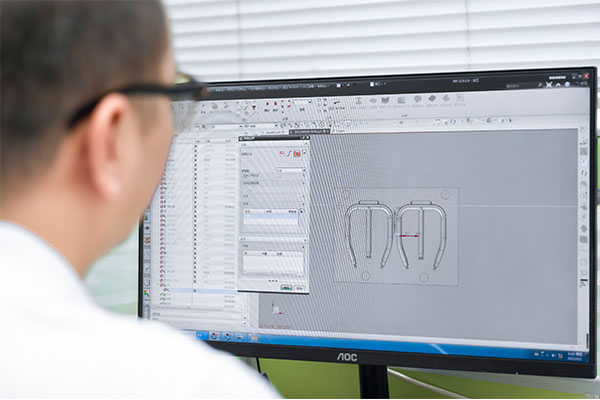
STEP 1: Requirement Review
Review the target basket dimensions, liner shape, intended use, order quantity, logo, packaging, and destination market. Identify missing specifications before preparing a quotation.
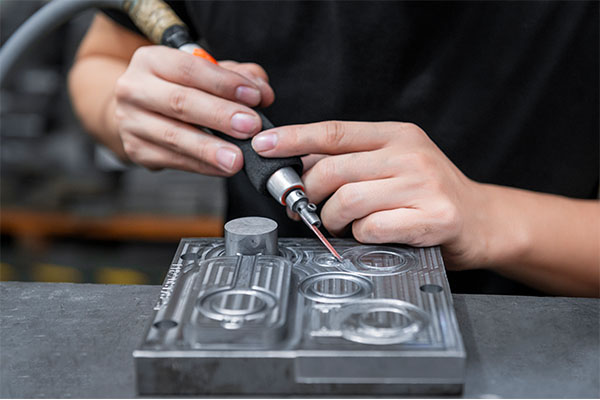
STEP 2: Design & Tooling Assessment
Evaluate the base geometry, corner radii, wall height, thickness distribution, perforation layout, and logo details. Review moldability and potential deformation risks before confirming tooling requirements.
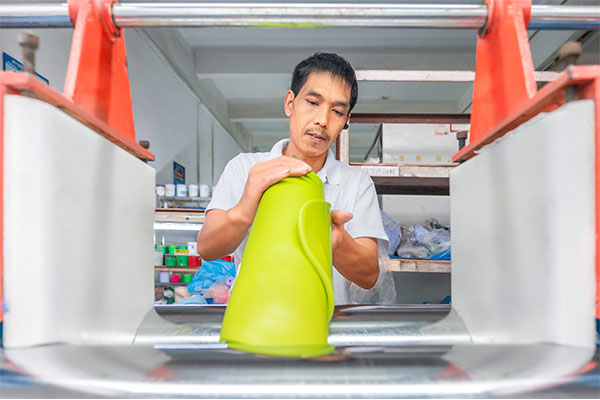
STEP 3: Material and Color Preparation
Confirm the selected silicone compound, hardness target, pigment, and applicable material documentation. Color references and project-specific material requirements should be approved before production.
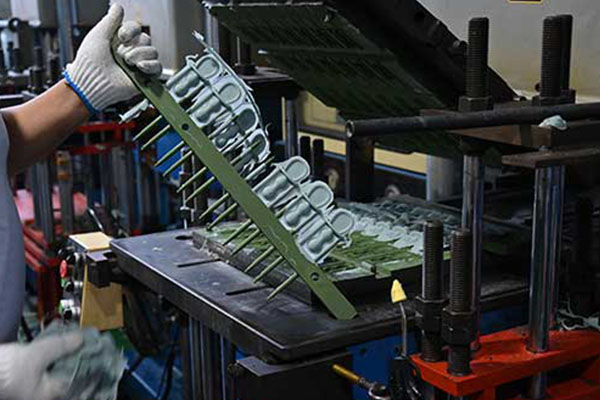
STEP 4: Silicone Molding
Form the liner using the approved mold and process parameters. Base thickness, sidewalls, rim transitions, ribs, and perforations require consistent formation according to the product design.
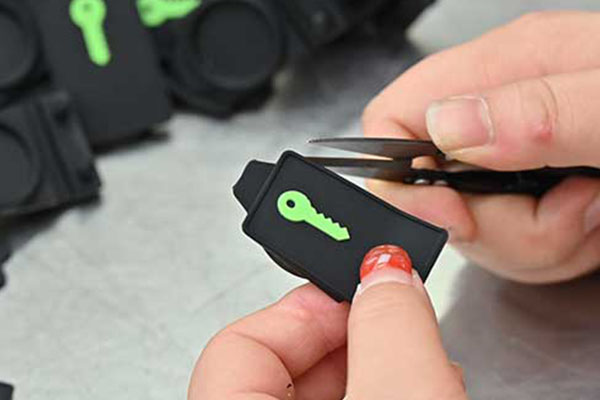
STEP 5: Demolding and Trimming
Remove molded parts and trim excess silicone where required. Inspect edges, corners, and perforations for flash or finishing defects that could affect fit, appearance, or cleaning.
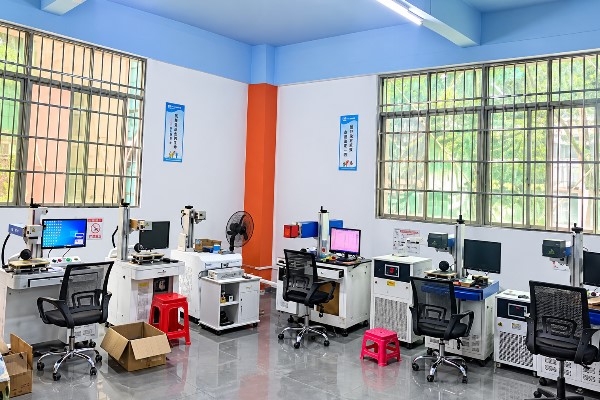
STEP 6: Logo & Surface Finishing
Apply approved molded or printed branding and complete the specified finishing steps. Check logo definition, color consistency, surface condition, and the suitability of the branding method for its intended position.
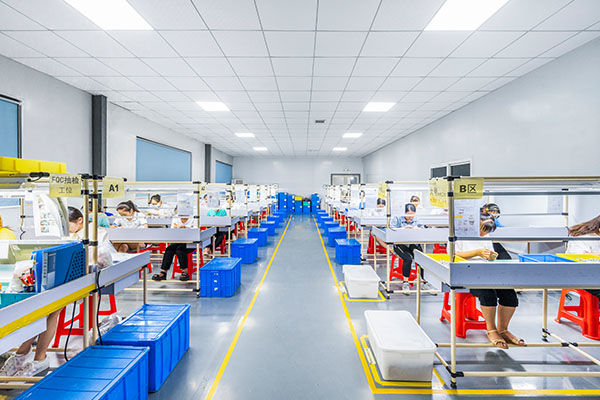
STEP 7: Quality Inspection
Inspect dimensions, appearance, structure, branding, and agreed functional criteria against the approved sample and specification. Any heat-related or appliance-fit validation should follow the agreed test method.
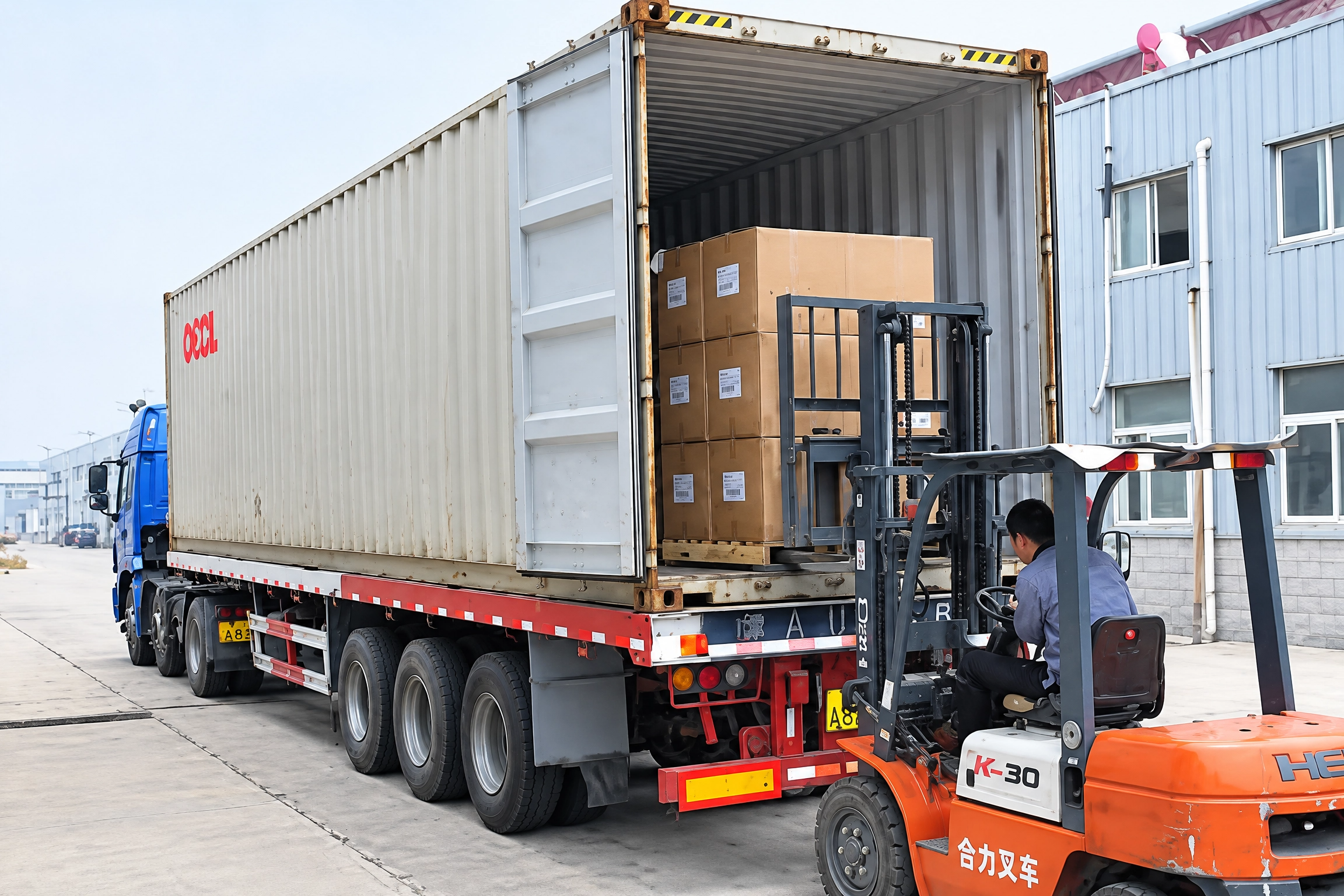
STEP 8: Packaging and Shipment
Pack accepted products according to the confirmed bulk or retail specification. Verify labels, SKU information, quantities, and carton configuration before shipment preparation.
Silicone Air Fryer Liner Quality Control
Quality control should verify not only the silicone material but also basket fit, base geometry, finishing, branding, and packaging consistency.
AQL 2.5 / 4.0 Standard Inspection
We run final random sampling plans to verify batch consistency:
AQL 2.5
Critical / Major Defects
AQL 4.0
Minor Visual Flaws
Another inspection standard can be used when specified in the purchase order.
Approved Sample & Specification Control
The approved sample, confirmed drawings, purchase order, and agreed inspection criteria should form the reference for mass production.
Any later change to dimensions, material, color, base pattern, logo, or packaging should be reviewed before implementation.
Incoming Material Review
- Verify material identification and available supporting documents.
- Check pigment and color references against the approved specification.
- Confirm that material selection matches the agreed application and temperature requirements.
- Review material batches and traceability records where required by the project.
In-Process Inspection
- Check molding consistency and visible surface defects.
- Inspect base thickness, sidewall formation, rim geometry, and corner transitions.
- Review perforation formation and raised-rib or groove definition where applicable.
- Monitor flash, incomplete filling, irregular edges, and other process-related defects.
- Confirm that approved tooling and production settings are used.
Dimensional & Basket-Fit Inspection
- Measure the overall diameter or length and width.
- Verify sidewall height, base dimensions, and key thickness measurements.
- Check corner radii and rim profile against the approved drawing.
- Evaluate the liner against the agreed basket sample or dimensional fixture.
- Confirm that the liner does not interfere with intended basket placement or handling.
Manufacturing insight: A liner may meet its nominal length and width yet still fit poorly if the basket has tapered walls or tight corner radii. For this reason, dimensional inspection should include the geometry that determines fit, not just the maximum outside measurements.
Appearance, Color & Logo Inspection
- Inspect surface finish, edges, corners, and visible contamination.
- Compare color with the approved reference under an agreed inspection condition.
- Verify logo position, orientation, legibility, and molded detail.
- Check printed branding against the approved artwork and acceptance criteria.
- Review odor or visible residue concerns as screening indicators requiring further investigation when necessary.
Structure & Performance Validation
- Confirm base structure, perforation pattern, and raised-rib geometry against the approved design.
- Review flexibility and shape retention against the agreed sample.
- Conduct heat-related or appliance-fit validation only using a defined method and agreed acceptance criteria.
- Evaluate cleaning access around grooves, corners, and perforations when required by the project.
- Document deviations and obtain approval for any proposed change.
Final Inspection & Packaging
The inspection covers:
- Position
- Size
- Edge definition
- Color coverage
- Missing ink
- Blurred printing
- Visible adhesion problems
Silicone Air Fryer Liner Packaging Options
Plan packaging early because printed items need separate schedules.

Bulk Packaging
Individual bags or grouped packing can support wholesale orders and distributor supply. Pack quantities and carton configuration are confirmed according to product dimensions and shipment requirements.

Retail Packaging
Printed paper boxes, header cards, or individual bags can present the liner for retail sale. Packaging artwork, barcodes, product descriptions, and SKU labels require approval before production.
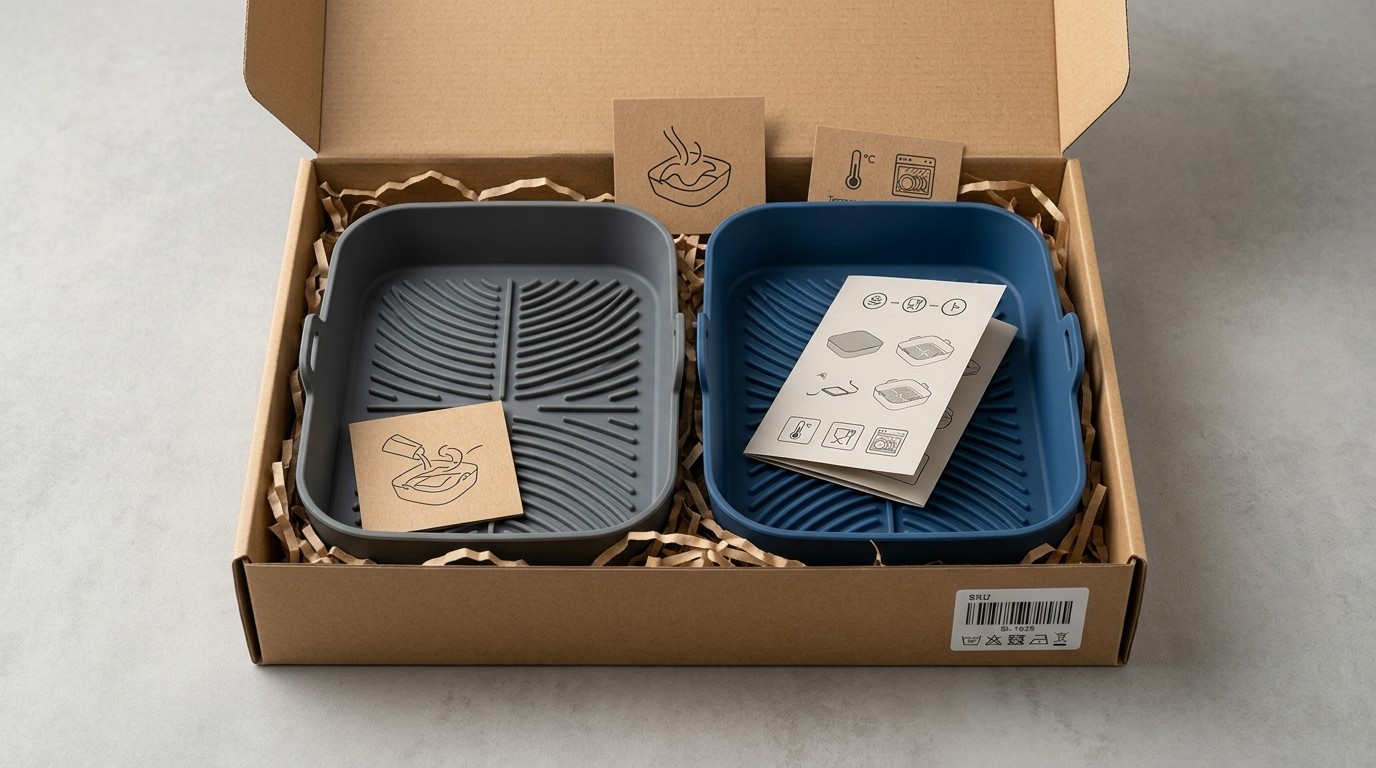
Ecommerce Packaging
Packaging can include product protection, scannable barcodes, SKU labels, instruction inserts, and appropriate outer-carton arrangements. Requirements should reflect the buyer's fulfillment and shipping workflow.
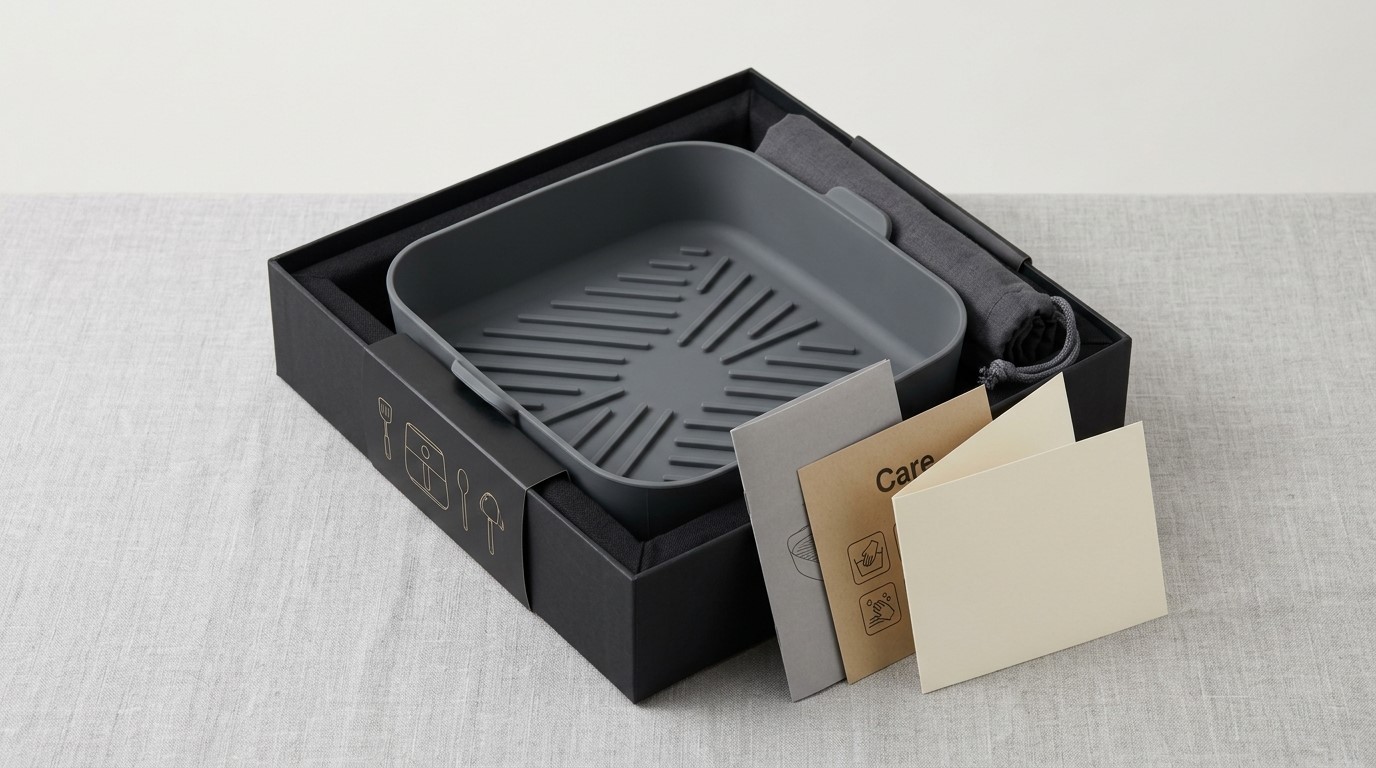
Premium Brand Packaging
Custom boxes, printed sleeves, coordinated inserts, and branded presentation can support premium kitchenware ranges or gift sets. Final packaging is developed around the product size, brand guidelines, and target retail positioning.
Custom Silicone Air Fryer Liner Typical Specifications
| Specification | Typical Reference / Customization |
|---|---|
| Product | Custom silicone air fryer liner |
| Applications | Compatible air fryer baskets and trays, subject to fit and use validation |
| Shape | Round, square, rectangular, or custom outline |
| Overall Dimensions | Custom diameter or length × width |
| Usable Base Dimensions | Project-specific; confirm against the target basket |
| Sidewall Height | Custom according to basket depth and handling requirements |
| Base Thickness | Custom; confirm through design review and sampling |
| Sidewall & Rim Thickness | Project-dependent |
| Corner Radius | Custom to match target basket geometry |
| Base Structure | Solid, perforated, raised-rib, grooved, or approved combination |
| Perforation Pattern | Custom hole diameter, spacing, distribution, and edge distance |
| Silicone Material Grade | Food-grade silicone, BPA-free |
| Hardness | Custom Shore A target, confirmed during development |
| Temperature Suitability | Up to 232℃ (450℉) typically, confirmed for the selected compound and finished product |
| Color | Standard color options or custom color reference, subject to feasibility |
| Surface Finish | Smooth or specified molded texture |
| Logo | Embossed, debossed, or approved printing method where suitable |
| Manufacturing Process | Compression molding or liquid injection molding generally |
| Product Weight | Confirmed after design and sample approval |
| Packaging | Bulk, individual bag, retail box, e-commerce, or premium packaging |
| MOQ | Confirmed according to tooling, design, customization, and order requirements |
| Sample Lead Time | Quoted after design and sample requirements are reviewed |
| Production Lead Time | Confirmed after sample approval, order quantity, and packaging review |
| OEM / ODM | Custom development subject to technical evaluation |
| Inspection | Approved sample, agreed specification, and confirmed inspection criteria |
Final specifications depend on the selected design, material, tooling, and approved sample; temperature, MOQ, and lead times require project confirmation.
Why Work with RY Silicone
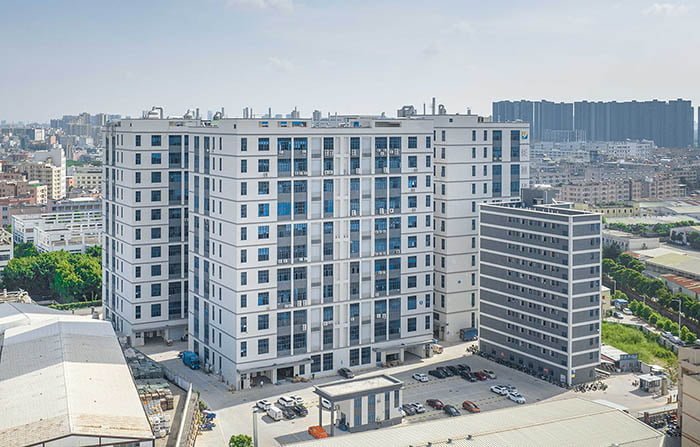
Silicone Manufacturing Experience Since 2012
Since 2012, RY Silicone has focused on manufacturing custom silicone products, supporting overseas B2B customers with product development, sampling, production, inspection, and delivery coordination.
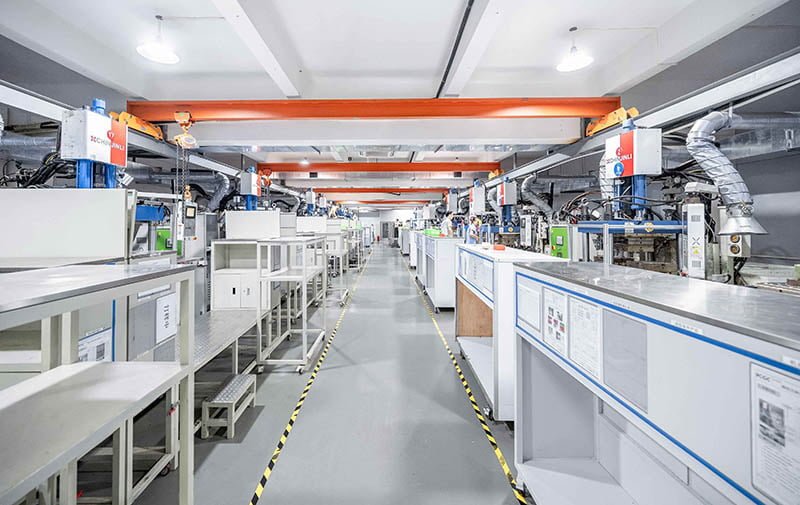
10,000+ m² Production Facility
Our factory resources support silicone product manufacturing and related production activities. Specific processes, tooling requirements, and project arrangements are reviewed according to the product design.

30+ Production Machines
Our manufacturing resources include more than 30 machines. Suitable production arrangements depend on the liner’s geometry, material, tooling, process requirements, and order volume.
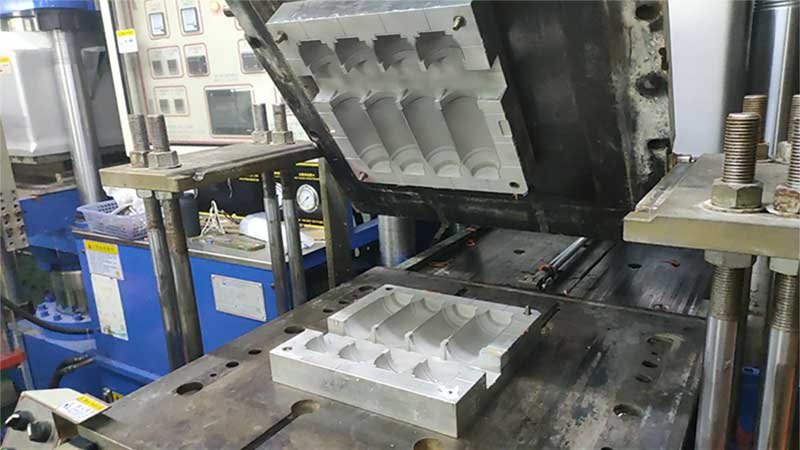
Up to 100,000 Silicone Products per Day
RY Silicone reported overall capacity can reach 100,000 silicone products per day, depending on the product mix and process requirements. This is not a guaranteed daily output for every air fryer liner project.
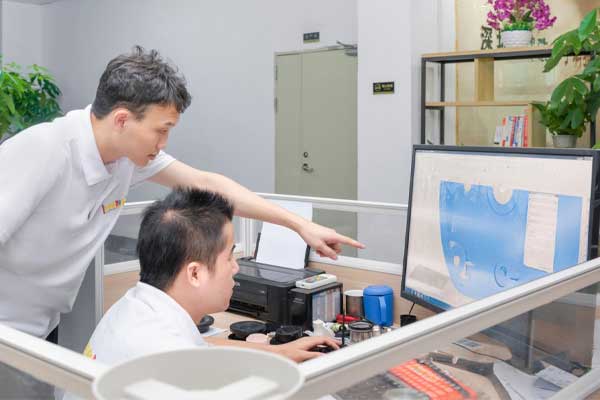
Engineering Review Before Quotation
We review dimensions, basket compatibility, base structure, material requirements, logo details, and packaging before confirming a manufacturing proposal. This helps us identify design questions that could otherwise lead to changes in sampling or production.
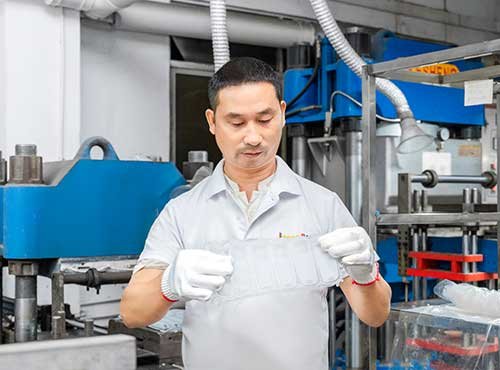
Sample-Based Production
The approved sample provides a practical reference for appearance, dimensions, color, structure, and branding. Any significant deviation from the approved sample or specifications must be reviewed before proceeding with production.
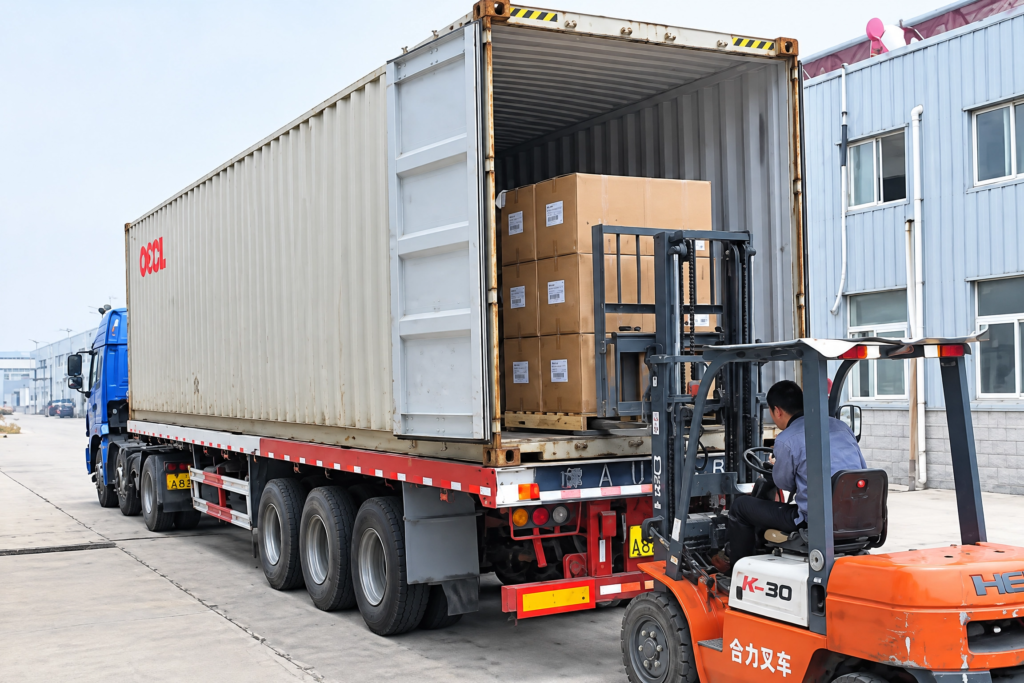
Export Project Support
We coordinate project specifications, packaging information, labeling requirements, and available documentation with overseas buyers. We review compliance documents and export requirements according to the selected product configuration and destination market.
Silicone Air Fryer Liner FAQ and Final RFQ
What is the MOQ for custom silicone air fryer liners?
The MOQ depends on whether an existing design can be used or if new tooling is required. It also depends on the material, color, branding, and packaging configuration. RY Silicone will confirm the applicable MOQ after reviewing the project details.
Do you manufacture liners for specific air fryer models?
We can evaluate custom development using a dimensioned drawing, basket measurements, or a physical sample. Important factors for assessing compatibility include the usable interior dimensions, corner radius, wall taper, and available depth.
Can I customize the liner's base structure?
Yes, proposed designs can include solid bases, perforations, raised ribs, or grooves, pending tooling and technical review. Select the structure according to the intended application, cleaning requirements, and airflow considerations.
What silicone material should I choose?
Material selection should reflect the following:
- Intended food contact
- Temperature exposure
- Flexibility
- Product geometry
- Destination-market requirements
The selected compound and any supporting documentation must be reviewed before the material is approved for production.
What temperature can a silicone air fryer liner withstand?
There is no single temperature rating that can be applied to every custom liner.
Generally, the temperature range that air fryers run at (150℃~200℃/302℉–392℉) stays well within the safe range for silicone. Additionally, silicone air fryer liners can safely withstand home dishwasher cycles between 60°C and 75°C (140°F and 167°F).
The applicable range must be confirmed for the selected compound and finished design, taking exposure conditions and the product's approved usage instructions into account.
Will a silicone liner affect air circulation or cooking performance?
Yes, it can. A liner that covers basket openings or alters the air passage beneath food can affect airflow and cooking performance.
The base design, perforations, and basket compatibility should be evaluated for the intended appliance, and no universal cooking performance result should be assumed.
Can you add our company logo and brand colors?
Potential options include embossed or debossed logos and custom silicone colors. Suitable printing methods will also be considered.
The feasibility depends on the logo's details, the surface's geometry, the selected process, durability requirements, and food-contact considerations.
Moreover, surface pretreatments can enhance the reliability of your logos or graphics.
What food-contact or compliance documents can you provide?
The available documentation depends on the selected silicone compound, pigments, branding process, finished product requirements, and target market.
Material data sheets, declarations, and relevant test reports may be available where applicable. Buyers should confirm the required scope of documents before placing an order.
Can you supply retail-ready or e-commerce packaging?
Packaging options may include individual bags, printed boxes, barcode and SKU labels, instruction inserts, and premium presentation.
The final arrangement depends on the product's dimensions, the order quantity, the branding artwork, and the buyer's distribution requirements.
How long do sampling and mass production take?
Timing depends on whether existing tooling is suitable, whether new tooling is needed, material and color approval, sample revisions, order volume, and packaging. A project-specific schedule should be confirmed after the requirements are reviewed.
What information should I provide for a quotation?
Please prepare the following wherever available:
- Drawings or relevant design files
- Target air fryer basket dimensions or a physical sample
- Product shape and proposed base structure
- Base thickness, sidewall height, and other critical dimensions
- Intended application and temperature requirements
- Material or food-contact documentation requirements
- Quantity and expected repeat-order volume
- Logo artwork and color reference
- Packaging, labeling, and barcode requirements
- Destination market and delivery requirements
- Target schedule and any reference product