Kitchen sinks get messy fast. One moment you’re rinsing a plate, the next, water has splashed across the counter. Many splash guards try to help, but most fail. This article looks at why silicone splash guards handle these everyday messes better and what makes them worth using.
What a silicone splash guard really is
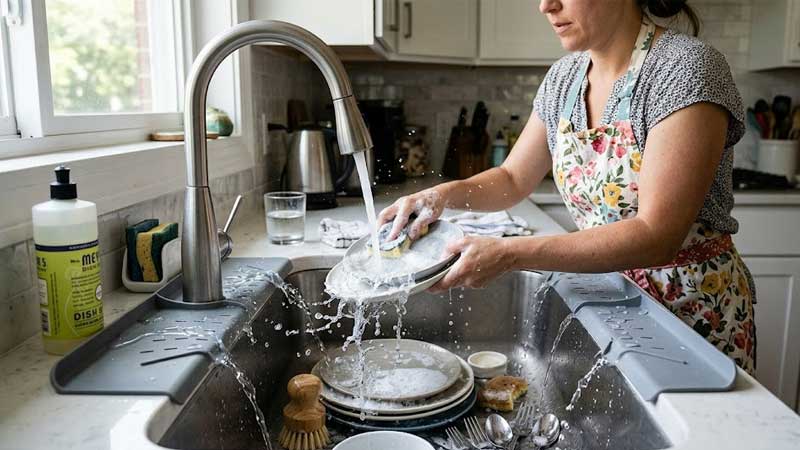
A silicone splash guard is more than a simple mat. A good one is a single piece. No glued parts, no seams. The edges are soft, a little weighted, and they settle onto the sink edges. You can press it down slightly, and it sticks without sliding.
Some designs have a gentle slope. Some include tiny channels to guide water back to the sink. They look small, but they matter when you are washing dishes and water is bouncing around.
Silicone bends but returns to its original shape. That is what keeps it in place. With plastic or metal, you often end up adjusting it constantly.
In production, the molding method matters. Compression molding or liquid silicone injection makes a huge difference. Clean edges and even thickness mean it sits properly and lasts longer.
Why silicone behaves differently from other materials
Flexibility that actually seals
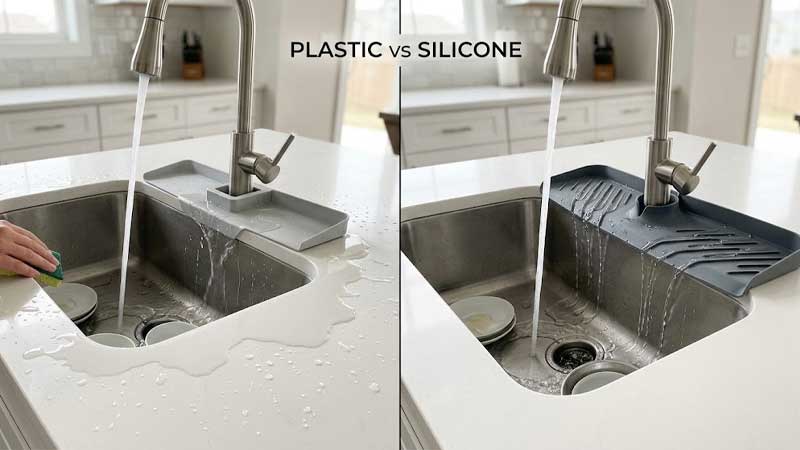
Placing a splash guard on a real sink is tricky. I’ve tried rigid plastic guards before. They lift at corners. You can see water creeping under them.
Silicone bends to match slight curves and uneven edges. Water doesn’t sneak through the tiny gaps. That flexibility is subtle, but noticeable in daily use.
Metal looks clean but ignores the problem. Water still escapes along the edges. Silicone works with the sink, not against it.
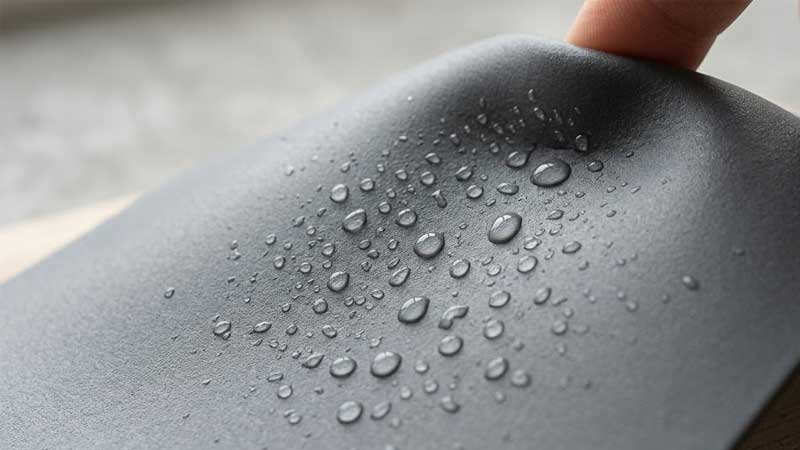
Water does not stay on it easily
Silicone has a low surface energy. Water beads up, slides toward the sink. It does not sit there, pooling on the edges.
If you have the slope right, even the water that lands on the guard moves back fast. It is not about being completely waterproof. It’s about guiding water away from the counter.
Stable under heat and daily use
In real kitchens, hot water and steam hit the guard all the time. I’ve seen cheaper materials warp or crack under heat. Silicone handles it. Even after weeks of washing dishes, boiling pots, or cleaning with hot soapy water, it keeps its shape.
It keeps its shape over time
Daily use presses and lifts the guard. I’ve noticed lower-quality plastics bend and stay that way. Silicone bounces back. That keeps the seal consistent. You do not find yourself constantly repositioning it.
What happens in real use
Light daily use
Hand washing a few dishes is when you notice the difference. Water splashes slightly, but the area around the faucet stays mostly dry.
Even small tasks, like rinsing a cup, are cleaner. You might notice a stray droplet here or there, but the counter is manageable.
Dishwashing
Wash a pile of bowls and plates, and you see the real benefit. Water does not run across the entire countertop. Less wiping, less frustration. The sink gets wet, but the surrounding area stays usable.
It is subtle, but it matters when you are doing dishes for 10 minutes straight, multiple times a day.
Heavy use with large cookware
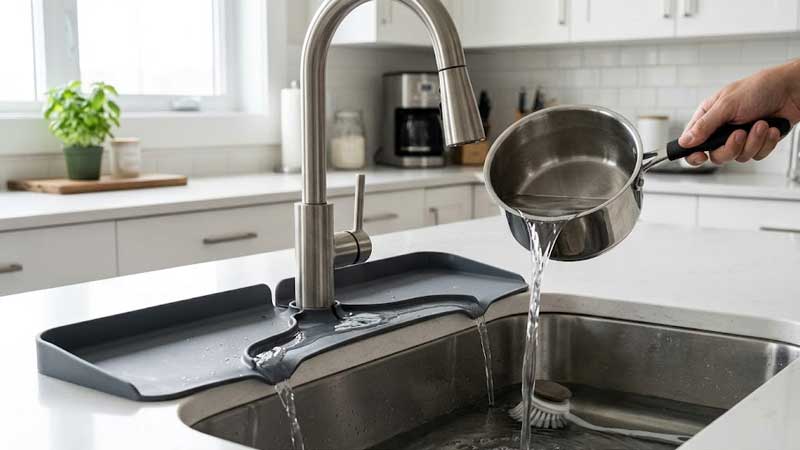
Large pots and pans with strong water flow still cause splashes. No guard can stop everything.
Silicone helps by keeping most water moving back into the sink. Some droplets escape, but it is far better than nothing. In those moments, the difference is obvious.
The limitations that matter in the long run
Not all silicone feels the same
Some guards feel sticky at first. Dust or oil sticks more than you expect. After a few weeks, they can look dull.
Food-grade silicone that is cured properly behaves differently. It stays neutral to the touch and is easier to clean. I have a couple of guards like this at home, and the difference is clear.
Design can ruin good material
Even good silicone fails if the design is off. Too flat a slope, uneven thickness, or the wrong center hole size can leave gaps.
Material sets the potential. Design decides the result. I have tried guards with perfect silicone but poor design. They still leaked.
Cleaning is still part of the routine
Silicone resists water, but not grease. Soap and oil combine in ways that leave a film. I rinse mine daily and occasionally do a deeper wash. Otherwise, it starts to look worn, even if the silicone is good.
It changes the look of your sink area
A guard is visible. Not bulky, but it adds a layer. In some kitchens, this may matter if you want a completely clean, uninterrupted countertop. It is a minor trade-off for most people, but worth noting.
Fit and compatibility in real kitchens
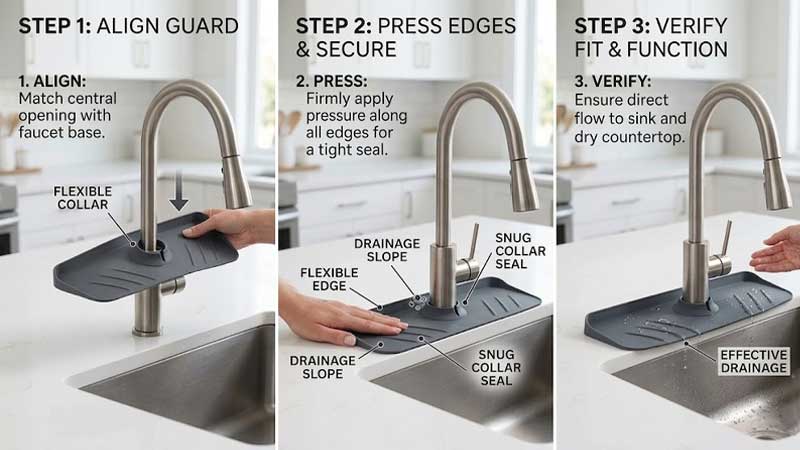
Most sinks are not perfectly flat. There are curves, tiny bumps, and sometimes uneven installation. Silicone adjusts to those variations.
Edges lifting? Softer material can help. Slippage? Slightly textured underside reduces it. Water draining slowly? Usually a slope issue.
These are small fixes that make daily use easier. In practice, they make silicone the simplest solution for most homes.
Compared to other solutions
Faucet mats soak up water but do not guide it. Plastic guards lift at corners. Metal plates look good but do not control water at all.
Permanent solutions like caulking or redesigning the sink work better, but require more time and money.
Silicone sits in the middle. It is not permanent, but it is practical. Daily use shows the benefit clearly, and cleanup is simple.
How to choose a good one
Start with material. Food-grade, smooth, not sticky. That is the first filter.
Then look at structure. A slight slope keeps water moving. Thickness should balance flexibility and stability. Too thin bends, too thick does not adapt.
Production matters. Good molds produce even surfaces and clean edges. That improves fit, durability, and daily use.
Surface treatment also helps. Guards with anti-oil finishes stay easier to clean. It is a small detail, but noticeable after weeks of washing dishes.
Keeping it in good condition
Rinse after heavy use. Quick and simple.
Occasional deep wash with warm water and mild detergent keeps it fresh.
Dry it properly. Leaving water sitting underneath can defeat the purpose. These habits are small but extend the guard’s usefulness.
Conclusion
If you expect a perfect, splash-free barrier, you will be disappointed.
For reducing mess without changing the kitchen, silicone works well. Flexible, stable, easy to use. Reliable in everyday conditions. Not flawless, but enough to make a real difference.
Looking for high-quality silicone solutions? Our company specializes in custom silicone products tailored to your needs. With decades of industry experience, precise manufacturing, and strict material control, we ensure every piece fits perfectly and performs reliably. Get in touch to create your ideal silicone product today.