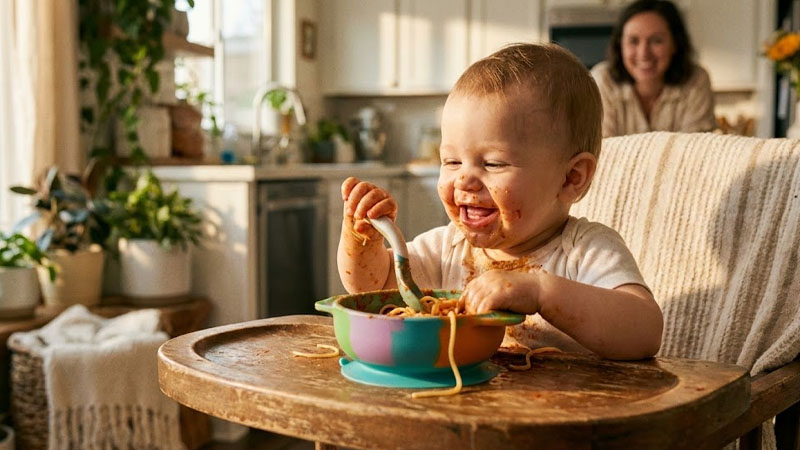
Designing infant tableware goes beyond making it cute — it’s about safety, developmental support, and human factors that make mealtime both safe and joyful.
Human-centered silicone tableware design integrates ergonomics, child development, and material safety to support infants’ self-feeding growth.
When I first collaborated with a pediatrician on a silicone suction bowl design, I learned that a few millimeters in handle size or bowl curvature could drastically change how easily a child eats. This article explores the science behind these design choices.
Introduction: Developmental Milestones in Infant Self-Feeding?
Infants develop feeding skills in phases, and every design decision should match their growth in hand control and oral coordination.
Understanding the self-feeding development stages helps designers create tableware that aligns with each stage’s motor ability and sensory needs.
Key Feeding Milestones
| Age Range | Development Focus | Tableware Design Implication |
|---|---|---|
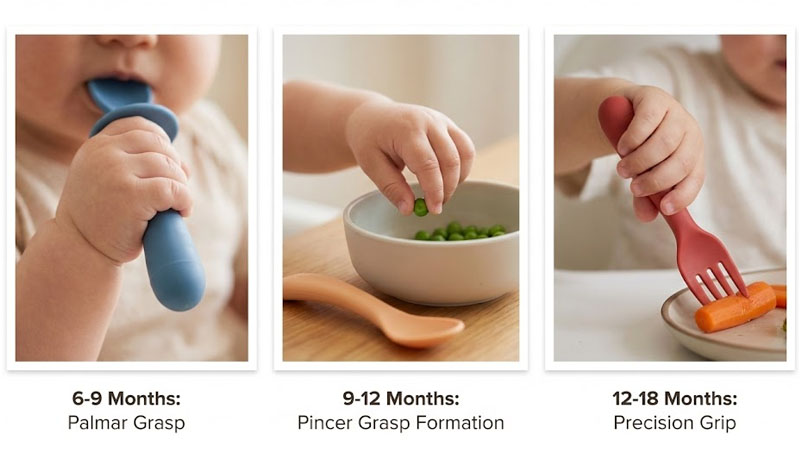
| 6–9 months | Palmar grasp; early coordination | Thicker handles, rounded edges |
| 9–12 months | Pincer grasp formation | Curved handles, lightweight spoons |
| 12–18 months | Precision grip; self-feeding | Balanced handles, firm grip texture |
| 18–36 months | Independence & utensil transition | Standard-size handles, divided plates |
At around 8 months, most infants can hold a spoon but cannot control it well. A wide, soft silicone spoon head helps them explore safely while avoiding gum irritation.
Age Segmentation and Grasp Capability Matching?
Each age group requires specific handle proportions for ergonomic and developmental reasons.
Handle diameter, curvature, and weight should evolve with a child’s grip strength and control ability.
Handle Design Guidelines
| Age Range | Handle Diameter | Handle Length | Weight Range | Design Tip |
|---|---|---|---|---|
| 6–9 months | 18–22 mm | 60–80 mm | 15–25 g | Chunky, short, rounded |
| 9–12 months | 14–18 mm | 80–100 mm | 20–30 g | Slight curvature for grip |
| 12–18 months | 10–14 mm | 90–110 mm | 25–35 g | Transition to standard form |
A handle diameter-to-length ratio around 1:5 works best for early feeding tools — thick enough for small hands but short enough for control. Silicone overmolding also adds tactile comfort.
Suction Base Technology and Table Surface Material Compatibility?
Parents often complain that suction cups “don’t stick.” The issue isn’t always the product — sometimes it’s the surface.
Effective suction depends on surface smoothness, suction area, and the microtexture of both the silicone and the table.
Measured Adhesion Force on Different Surfaces
| Surface Material | Surface Roughness (µm) | Average Adhesion (N) | Result |
|---|---|---|---|
| Glass | <0.1 | 35 | Excellent |
| Glazed ceramic | 0.3 | 30 | Very good |
| Plastic laminate | 0.6 | 22 | Good |
| Wood (unfinished) | 1.5 | 10 | Poor |
| Stone | 0.8 | 18 | Moderate |
Why Don’t Suction Cups Work on Wood Tables?
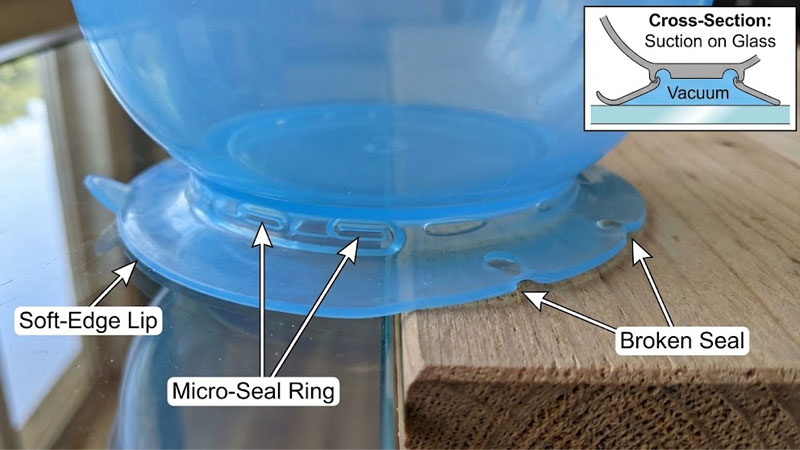
Wood has micropores and uneven grain patterns that let air leak under the cup, breaking vacuum sealing.
Designers can improve performance using micro-seal rings, larger suction diameters, and soft-edge lips that adapt to small surface irregularities.
Anti-slip Mats vs. Suction Cups
| Feature | Anti-slip Mat | Suction Cup |
|---|---|---|
| Portability | Excellent | Limited |
| Adhesion Strength | Medium | Strong |
| Cleaning | Easy | Moderate |
| Ideal Scenario | Travel use | At-home feeding |
Spoon and Fork Mouthfeel, Hardness, and Safety?
The tactile experience inside a baby’s mouth determines comfort and trust. Material softness and shape influence gum health and oral development.
Silicone utensils should balance softness for comfort with stiffness for feeding control.

Silicone Hardness and Gum Pressure Relationship
| Shore A Hardness | Feel | Gum Safety | Application |
|---|---|---|---|
| 20A | Very soft | Excellent | Newborn spoons, teethers |
| 30A | Balanced | Excellent | 6–12 months |
| 40A | Moderate firmness | Good | 12–18 months |
| 50A | Firm | Acceptable | Older toddlers |
Tests show spoon heads thicker than 2.5 mm reduce gum irritation significantly. Dual-layer designs — soft tip with firmer handle — provide the ideal tactile combination.
Temperature-sensitive color-changing silicone also helps parents monitor food heat, reducing burn risk while adding visual engagement for children.
Plate and Bowl Geometric Design and Food Compartmentalization?
Proper geometry encourages self-feeding while minimizing mess. Infants learn visual segmentation and scooping mechanics from bowl design.
Wall angle, curvature, and compartment layout affect usability and cognitive comfort during feeding.
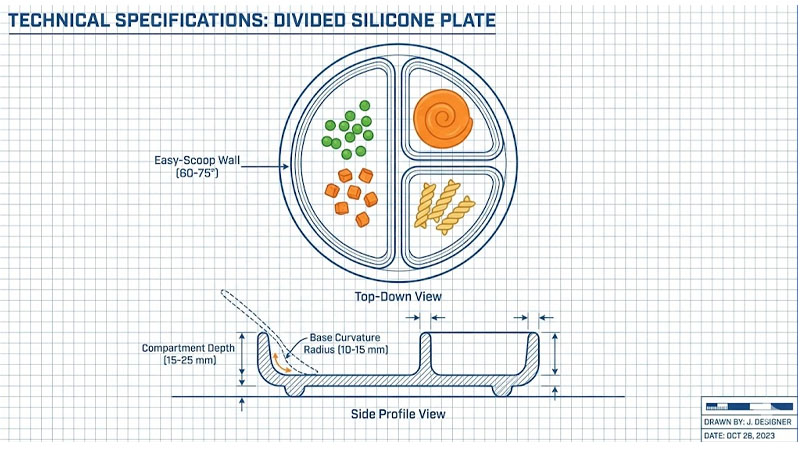
Bowl Geometry Guidelines
| Feature | Recommended Range | Benefit |
|---|---|---|
| Wall angle | 60–75° | Easier food collection |
| Base curvature radius | 10–15 mm | Prevents food trapping |
| Compartment depth | 15–25 mm | Visual clarity, portion control |
| Capacity marking | Volume indicators | Helps parents guide feeding volume |
Research shows children respond positively to 2–3 compartments — more helps portion variety but too many can increase cognitive load, leading to food rejection.
Mechanical Principles of Tip-Resistant Design?
Infant tableware must stay stable under impulsive motions. Tipping resistance depends on geometry, center of gravity, and external force balance.
Tip-resistant design combines a low center of gravity, wide base, and suction integration for maximum stability.
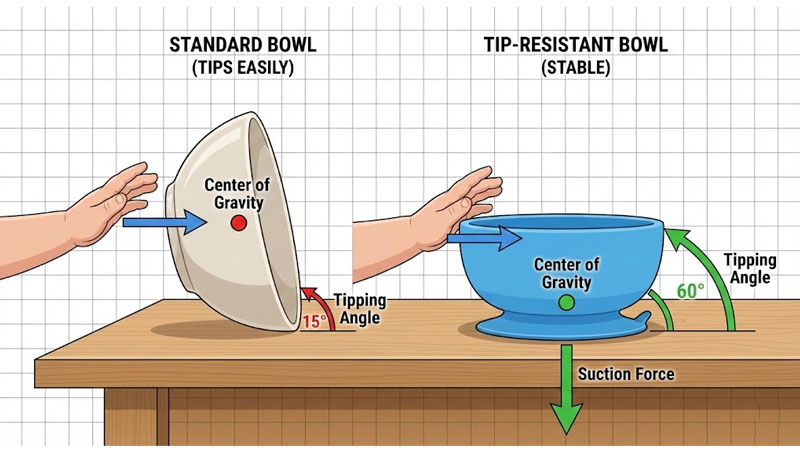
Stability Comparison
| Design Type | Center of Gravity Height (mm) | Base Diameter (mm) | Tipping Angle (°) |
|---|---|---|---|
| Standard bowl | 25 | 90 | 25° |
| Weighted base | 18 | 95 | 40° |
| Suction base | 20 | 100 | 60° |
The higher the tipping angle, the more stable the product. Weighted bottoms or embedded steel rings add stability but increase cost and reduce dishwasher compatibility. Suction bases remain the most efficient stability solution for silicone products.
Human Factors Considerations in Cleaning and Storage?
Parents value hygiene and convenience just as much as safety. Design choices affect both.
A hygienic, easy-to-clean structure encourages frequent use and longer product lifespan.
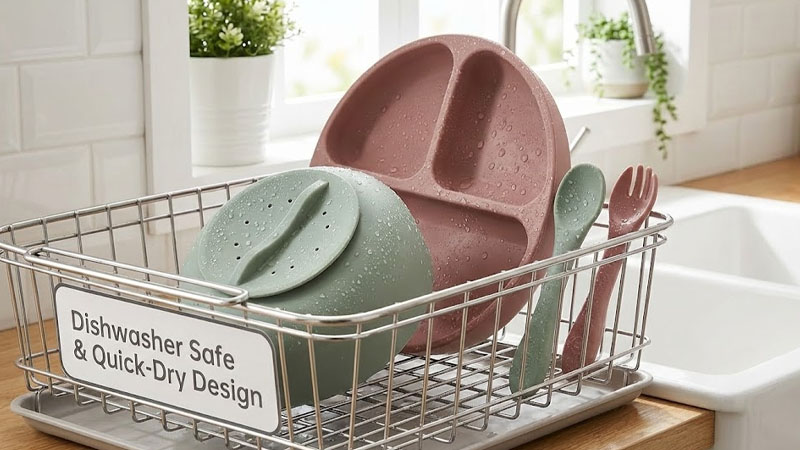
Cleaning and Storage Design Guide
| Design Element | Recommendation | Benefit |
|---|---|---|
| One-piece molding | Preferred | No dead corners, easy to clean |
| Dishwasher compatibility | Temperature resistance ≥120°C | Time-saving cleaning |
| Stackable structure | Aligned rim thickness | Compact storage |
| Quick-dry holes or ridges | Base venting | Prevent mold and odor buildup |
Mold growth often starts from trapped moisture. Slightly elevating drying structures under bowls or suction cups can shorten drying time by over 40%.
Color Psychology and Appetite Stimulation?
Color isn’t just decoration — it shapes emotional and sensory responses during meals.
Warm tones enhance appetite, while high-contrast color schemes improve visual attention for infants.
Design Insights
| Color Family | Psychological Impact | Recommended Use |
|---|---|---|
| Warm (yellow, orange) | Stimulates appetite | Bowl interiors |
| Cool (blue, green) | Calming effect | Outer surfaces |
| High contrast (white vs. color) | Improves visual tracking | Utensil tips, edges |
Pediatricians recommend avoiding very dark or overly saturated colors that might distract or confuse early eaters. Pastel hues and gentle contrasts support relaxed feeding experiences.
Material Durability and Life Cycle?
Even food-grade silicone degrades over time. Bite marks, whitening, or odor indicate the need for replacement.
Durability depends on material purity, hardness, and sterilization frequency.
Durability Overview
| Test Type | Typical Limit | Key Observation |
|---|---|---|
| Bite mark test | 500 cycles | Surface whitening at edges |
| Steam sterilization | 100 cycles | Minor stiffness increase |
| Dishwasher cleaning | 200 cycles | Color fading possible |
| UV exposure | 500 hrs | Slight yellowing |
Replacement interval: every 6–12 months or immediately upon visible damage. Eco-friendly silicone blends or biodegradable alternatives are emerging, offering sustainability without compromising safety.
Conclusion
Designing infant tableware is about more than functionality — it’s about empathy. When we align silicone safety, ergonomics, and child psychology, we create products that empower both children and parents through safe, joyful feeding experiences.