Based on troubleshooting hundreds of LSR injection molding runs, we know that additives in liquid silicone rubber formulations do more than just change product features—they alter manufacturing stability. This guide explains how processing stability modifiers, silicone curing agents, and property tuners actually behave in the press over time, and why buyers often mis-spec them.
How LSR Additives Behave in the Molding Process (and Why Teams Mis-Spec Them)
When people ask me about “LSR additives” in liquid AB silicone, they usually want a clean menu.
- Add X to get hardness.
- Add Y to get faster cure.
- Add Z to get flame rating.
That is not how it behaves in production.
In liquid silicone rubber formulations, additives are rarely a single-function switch. They push on multiple levers at once.
- Cure speed changes.
- Viscosity changes.
- Demold window shifts.
- Compression set moves.
- Tear strength moves.
- Pigment behavior changes.
And the part still needs to run stable for weeks, not just pass a one-off sample.
So I’m going to frame this the way we discuss it internally: by function class, and by what it does to the process over time.
What Counts as an Additive in Two-Part (A/B) LSR
In two-part LSR, Part A and Part B are already engineered systems.
- Part A typically carries the base polymer and filler.
- Part B typically carries the silicone curing agents (catalyst package).
When a customer says “additive,” they might mean:
- Something blended into the A/B before shipment.
- A modifier added at the customer’s mixing stage.
- A change in filler level, oil content, or catalyst balance.
Those are not equivalent.
If you change something that interacts with the catalyst or inhibitor balance, you are not only changing performance. You are changing how controllable the LSR molding process is.
That is where most surprises come from.
Processing Stability Modifiers: Viscosity and Cure Window Control
Processing stability modifiers are additives designed to maintain viscosity and delay premature cross-linking. These are additives used to make the material behave like a material you can actually mold.
Typical goals:
- stabilize viscosity over shelf time
- reduce sensitivity to trace contaminants
- widen the safe window between mixing and injection
- improve flow without making the cured rubber weak
How Stability Modifiers Show Up in Long Production Runs
You see it as:
- fewer “mystery” short shots when ambient temperature drifts
- less day-to-day variation in fill balance on multi-cavity tools
- fewer mold deposits forming after long runs
But it also has a cost.
A formulation that is very forgiving can be slightly less “aggressive” in cure. That matters if you are trying to run extremely short cycle times.
Why Lab Samples Hide Stability Problems
Because early samples are usually run under controlled conditions.
One shift.
One operator.
Clean tooling.
Fresh material.
That is not the real stress test.
The problems show up after:
- repeated purges
- multiple material lots
- minor oil contamination
- temperature drift across a day
This is where “additives” become a manufacturing decision, not a lab decision.
Cure Control Additives: Cure Speed vs. Process Window
Cure control modifiers are silicone curing agents and inhibitors that manage reaction timing. People want faster cure because faster cure sells cycle time.
But cure control is not only “fast vs slow.” It is:
- how quickly viscosity rises after shear
- how long the mix remains injectable
- how sharp the snap-cure is once it starts
How a Narrow Cure Window Behaves Over a Long Run
When you push cure speed hard, you usually narrow the safe window.
That means:
- higher scrap sensitivity when the press pauses
- more risk of scorch in the feed system
- more variation between cavities if temperature uniformity is not perfect
A fast-cure package can look excellent in small trials.
Over long production, you pay in stability.
Why “Cycle Time” Alone Misjudges Cure Speed
Teams assume cure speed is a single KPI.
In practice, the cost of a narrower process window shows up as:
- operator interventions
- more frequent cleaning
- unexplained drift in part dimensions
Those costs are not captured in a simple “seconds per cycle” comparison.
Mechanical Property Tuners: Hardness, Tear Strength, and Rebound
Mechanical property tuners are functional fillers and plasticizers used to adjust the physical feel of the rubber. Hardness is the most common request.
The mistake is thinking hardness is isolated.
You can move hardness by:
- changing filler system
- changing polymer structure
- adding plasticizing components
Each path changes more than hardness.
What I Watch For When Buyers Ask for “Softer” Silicone
When a customer wants “a little softer,” I look for what they will complain about next. For example, pushing for a 10-point Shore A drop using certain plasticizers can sometimes increase compression set after heat aging by 15-20%.
Other side effects include:
- weaker tear strength at thin sections
- tack on the surface
- poor pigment dispersion
Why Hardness Targets Hide Tear and Compression Set Risk
Because hardness is easy to measure quickly.
Compression set after heat aging is not.
Tear at a thin knit line is not.
So teams lock in a hardness target early, then discover later that the “soft” version is the one that fails in real use.
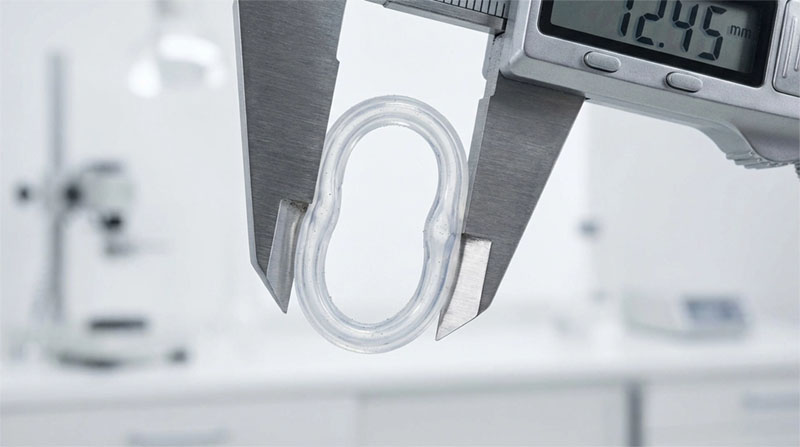
Low Compression Set and Heat Aging Additives
If the part is a sealing application, compression set is the real story.
Here additives often aim to:
- improve network efficiency
- resist post-cure drift
- maintain elasticity after heat exposure
How Compression Set Failures Show Up After Heat Aging
This is where a material can look fine at demold and still be a bad decision.
You see problems later:
- increased permanent deformation after repeated compression cycles
- sealing force loss after heat
- stiffness shift after post-cure
Why Testing “Fresh Parts” Misjudges Sealing Performance
Because they test “fresh parts” and declare success.
But for sealing parts, the buyer should care about:
- aged performance
- repeated compression
- media exposure
If the evaluation does not include aging and repetition, the additive system is basically unproven.
Color and Pigment Additives: Translucency and Appearance Stability
Pigments and optical effects are not neutral.
They can:
- change heat absorption in the mold
- introduce inhibitor behavior
- change flow at the gate
How Color and Surface Drift Appear Over Long Runs
Color drift and surface appearance issues often show up after:
- long press runs
- multiple clean cycles
- tool temperature profile changes
If you want a stable appearance spec, you are really asking for stable processing conditions.
That needs to be treated as a manufacturing requirement, not an “add pigment” request.
Flame Retardant (FR) Additives: Flow, Tear, and Compliance Trade-offs
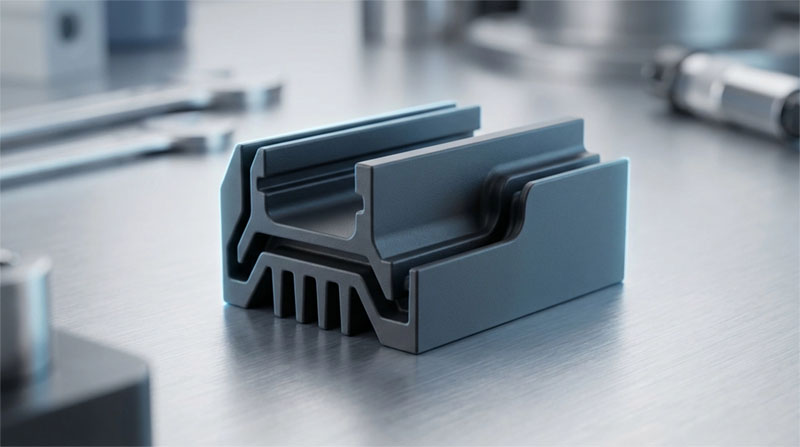
Flame retardancy is the area with the highest expectation gap.
People assume the additive is the feature.
In reality, the additive changes the entire balance.
Typical side effects:
- higher viscosity or poor flow at thin walls
- reduced tear strength
- more mold deposit risk
- higher sensitivity to processing temperature
Why FR Silicone Behaves Like a Different Material Family
Because they start with the standard LSR mindset.
But FR systems often behave like a different material family.
If you treat an FR component like “normal LSR plus FR additive,” you end up with unexpected trade-offs that appear late.
Adhesion and Bonding Additives for LSR Overmolding
Adhesion is rarely “on/off.” It is conditional.
It depends on:
- substrate chemistry
- surface energy and cleanliness
- mold temperature
- post-cure
- storage and handling
An adhesion-promoting additive can help.
But it can also change:
- surface feel
- contamination sensitivity
- long-term stability of the interface
How Adhesion Fails After Thermal Cycling and Flex
Adhesion failures often occur after thermal cycling, moisture exposure, or repeated flex.
So the additive needs to be evaluated under those conditions.
Otherwise you are just validating a fresh bond, not a stable one.
What We Need From Buyers Before Specifying LSR Additives
If you tell me only the desired function, I can guess.
But guesses are expensive.
The minimum information that actually matters:
- part function (seal, cosmetic cover, electrical, medical grade silicone, food contact)
- key failure mode to avoid (leak, tear, compression set, discoloration)
- process constraints (cycle time, tool temperature limits, runner type)
- use environment (heat, oil, steam, UV, repeated compression)
- whether the spec must hold after aging
Without those, “additive selection” is just a fast way to create a material that looks good on paper and behaves badly in the press.
LSR Additives Are a Process Decision, Not a Feature Add-On
Most teams treat additives as a performance upgrade.
In LSR, additives are more often a process behavior decision.
If the application is forgiving, you can chase a single feature and still be fine.
If the part is sealing, thin-wall, FR, cosmetic, or bonded to another substrate, then additive choices stop being isolated. They shape stability and long-run risk.
That is the difference between a material that ships samples and a material that runs.