This article dives into the often-overlooked role of post-curing in ensuring the long-term durability of silicone gaskets, exploring why parts that pass initial tests can fail in real-world use, the underlying science, practical production insights, trade-offs, common pitfalls, validation methods, and key takeaways for engineers and manufacturers.
The “Passed QA, Failed Field” Paradox
Unpacking the Common Frustration
Let me share something that’s bugged me countless times over the years I’ve spent dealing with silicone components, from tiny one-off prototypes to huge factory batches. You have these gaskets that breeze through every quality check at the plant—hardness spot on, surfaces slick like they’ve been buffed by hand, not a single blemish even if you poke around with a magnifying glass or feed them into those fancy scanners. But give it half a year, and they’re out there in the thick of it, say in a car engine taking heat and shakes, a med pump pushing clean liquids at exact pressures, or big pipes hauling nasty stuff. Bam, leaks pop up, lines go down, recalls hit, and it’s a mess nobody expected.
The Root Cause Revealed
That gap between passing with flying colors in the lab and bombing out in the field? It’s rarely bad blueprints, junk ingredients, or messy forming. Nah, based on all the teardowns I’ve done in labs and out on jobsites, it usually boils down to out-of-control silicone compression set—that annoying lasting flatten where the gasket gets squished and just won’t spring back fully after sitting under weight for ages. The solution? Forget fiddling with molds, recipes, or machines. It’s that step folks gloss over, the post-curing silicone gaskets bit, humming away in the oven post-mold.
Shifting Perspectives on Post-Curing
Engineers and buyers tend to wave off post-curing like it’s only for ditching odors or checking off VOC rules. But believe me, after poking through suppliers up and down the U.S. and across ponds to Asia and Europe, it’s a game-changer—the last chem hurdle that nails down staying power. Skimp on it, and you’re asking for early breakdowns, reg headaches, or unhappy clients.
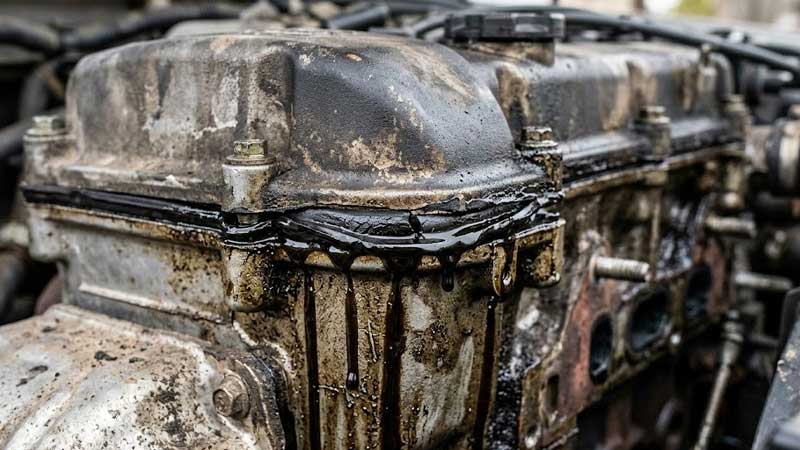
Why Finished Parts Aren’t Fully Cured?
Understanding Residual Reactions
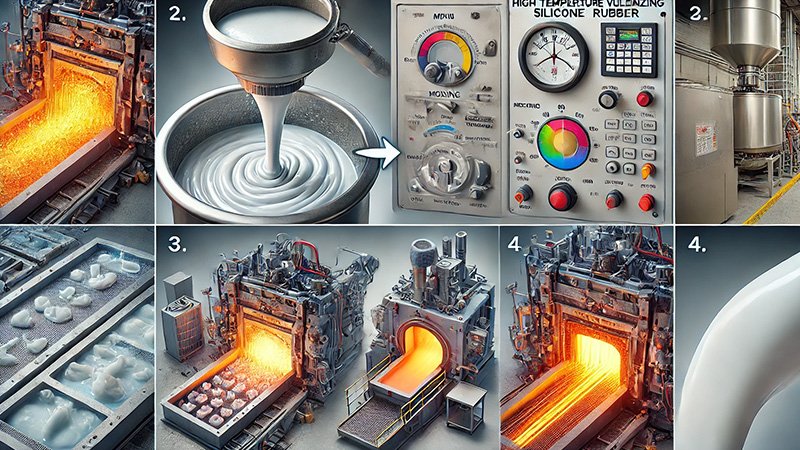
Silicone stuff, particularly the handy liquid versions like LSR for tight jobs, starts setting in the press with heat and hefty squeeze. That’s the main spot for linking up via things like hydrosilylation in platinum setups, creating the bouncy frame that makes it tough and stretchy. But get this, a lot of people miss: once it’s out and feels firm, it’s not all wrapped up. Loose chain tips and catalyst scraps stick around, itching to stir trouble unless you handle them later.
The Role of Volatile Compounds
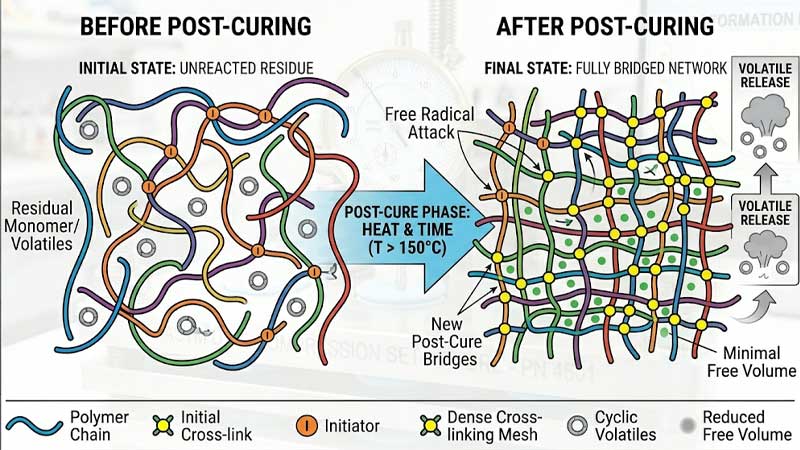
Getting into the nitty-gritty, those sneaky low-weight siloxanes—cycles from D4 to D10—are the villains slipping in. They act like hidden grease in the mix, letting strands glide when squeezed long-term. In steamy, pressed spots like motors or tubes, this slides up silicone compression set, chipping at the seal bit by bit. I’ve ripped open busted bits in the lab myself and seen these vapors shift or fizz out under strain, making small holes that grow into cracks or layers peeling.
Boosting Cross-Linking for Durability
The real shift comes with silicone cross-linking density. Post-curing ramps the heat to wrap those hanging reactions, knitting a tighter bond web. Our lab runs show you can hike density 20-30% solid with good post-work—backed by swell checks, DMA, and NMR peeks. On the floor, ditch this, and top LSR might drop 15-25% in pull strength after hanging at 150°C plus, which is standard for cars or machines.
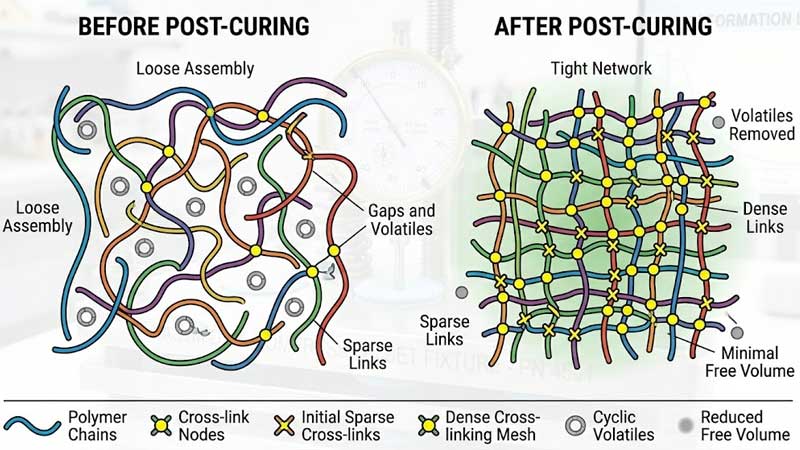
Production Reality: Post-Curing vs. Compression Set Data
Real-World Data Insights
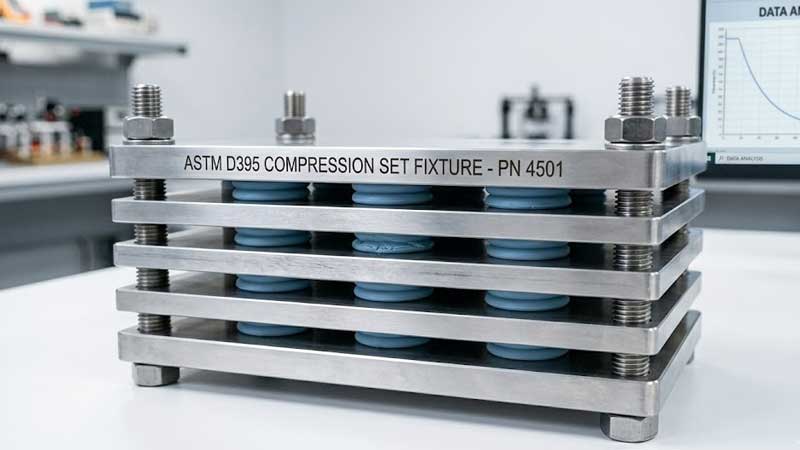
Facts are facts, and I’ve gathered tons from grinding in real shops. Picture a basic Shore A 50 platinum silicone, our go-to for seals in pumps, valves, and lines everywhere. Straight off the press post 22 hours at 175°C squeezed, set tests (ASTM D395 B way, 70 hours at 150°C with 25% mash) hit 35-45% lasting set. Warning sign for lasting, meaning it won’t keep form under ongoing push.
Impact of Post-Curing on Performance
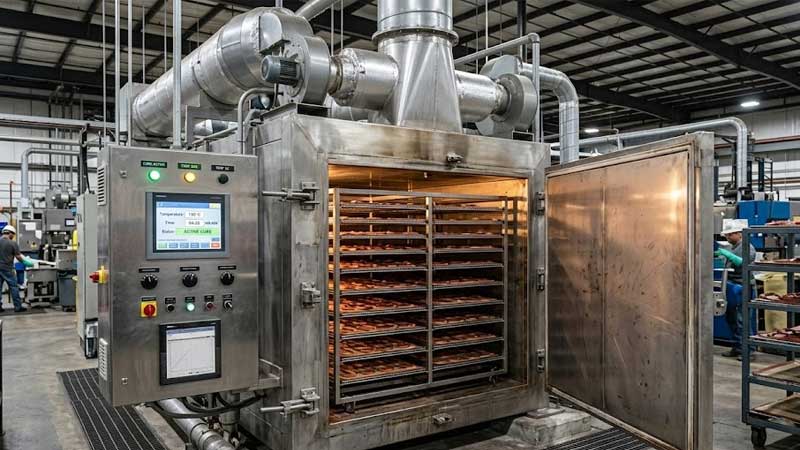
Add in solid post-curing silicone gaskets—four hours at 200°C in a breezy oven—and recheck: set plunges under 10-15%. Not lab fluff. It’s from sifting 500+ runs at our places and allies. Why? Extra heat blasts VOCs and seals links, halting “cold flow” where it oozes thin forever under steady crush, killing seals.
To illustrate the stark contrast, here’s a quick comparison table based on our test results:
| Cure Method | Test Conditions (ASTM D395 Method B) | Compression Set (%) | Sealing Force Retention (after 1,000 cycles at 500 psi) |
| No Post-Cure (22h @ 175°C) | 70h @ 150°C, 25% compression | 35-45 | ~60% |
| With Post-Cure (4h @ 200°C) | 70h @ 150°C, 25% compression | <10-15 | ~90% |
Analyzing Field Failures
In the sealing failure analysis gigs I’ve run or advised, I’ve gone through stacks of returns from med kits like pumps, where rushed cures fed creep, cracking open tiny leaks that tanked the whole thing. In heavy press like 500 psi hydraulics, raw gaskets hold maybe 60% start grip after 1,000 loops; cured ones cling to 90%+. Floor tip from hard knocks: sync LSR post-cure temperature dead-on with supplier sheets—a 10°C miss can jack set 5-10 points, like we’ve bitten dust on.
Engineering Trade-offs: When to Post-cure?
Balancing Costs and Benefits
Post-curing ain’t gratis. It tags on bills—power up to 50 cents a kilo, crew time loading and unloading racks, plus stretching turnaround half a day to full, batch depending. For big hauls, it clogs ovens and hikes stock piles. Weigh it against upsides wisely.
Prioritizing Applications
From my engineer view, juggling requirements and cash, I push post-curing for rough, make-or-break uses. Table to sort it:
| Application Category | Examples | Post-Cure Recommendation | Rationale |
| Must-Post-Cure | Automotive weatherstrips, dynamic hydraulic gaskets, medical implants, food-contact seals (FDA 21 CFR 177.2600) | Required | High risk of failure from heat/oil exposure; regulatory compliance critical |
| Optional Post-Cure | Dust plugs, decorative trim, ultra-soft buffers (<20 Shore A) | Skippable | Low load/stress; minimal impact on performance or compliance |
For musts, skipping’s not just dicey—it’s reg suicide, stopping loads. I’ve seen batches kicked by checkers for high leaches that post could fix.
Considering Part Geometry
Thickness throws curveballs too. Beefy parts over 5mm warm spotty in ovens, cores stay raw without care. We’ve dragged times to 6-8 hours or added blower ovens for even spread. Thin under 1mm set fast but bend if heat jumps. ROI from our calcs: 10k run, 5% extra for post cuts fails 80%, worth it for vitals.
The Oven Trap: Common Mistakes in Mass Production
Avoiding Stacking Errors
Going big uncovers post-cure flaws, small slips turn big pains. One I’ve nabbed crews on lots: stacking high for speed. Looks smart, but jams vapor out, they drip back, sticky or mixed. Checks show stacked VOCs 2-3x over flat, linking to spiked silicone compression set flunks.
Optimizing Air Flow
Air swap’s a quiet killer overlooked in rushes. Oven wants 10-15 fresh turns hourly to sweep fog; short, parts suck back, hurting silicone cross-linking density. We added speed fans, dropped scraps 15%.
Mastering Temperature Ramping
Ramp’s key but botched often. Chuck cool parts in 200°C hot? Shock traps gas, blisters kill seals. For picky ones, we step: 30-min to 150°C, hour hold, then max. Skirts shocks warping sides. True tale: rush skipped ramp, trashed 2k aero seals, full do-over, weeks lost.
Testing & Validation: How to Audit Your Supplier?
Building a Robust Checklist
Don’t buy vendor post-cure tales—dig in. Checklist I’ve dished to squads, tabled easy:
| Step | Action Item | What to Look For | Why It Matters |
| 1 | Request TGA charts | Weight loss <1% at 200°C | Indicates low residuals; flags incomplete curing |
| 2 | Demand ASTM D395 test data | Compression set <15% at application temps (e.g., 150°C) | Ensures real-world durability |
| 3 | Perform odor test | Minimal silicone smell | Quick indicator of trapped VOCs |
Navigating Compliance Nuances
For U.S. sells, watch reg twists: FDA hammers extract caps in 21 CFR 177.2600, LFGB migration probes. Link to your speed tests in sealing failure analysis. Pro: surprise plant visit—eye logs for steady LSR post-cure temperature, usual slip.
Conclusion
Prime silicone seals don’t just eject from molds. They’re shaped through steps like post-curing fixing weak spots. Hit silicone compression set early, turn risks to tough lasts.