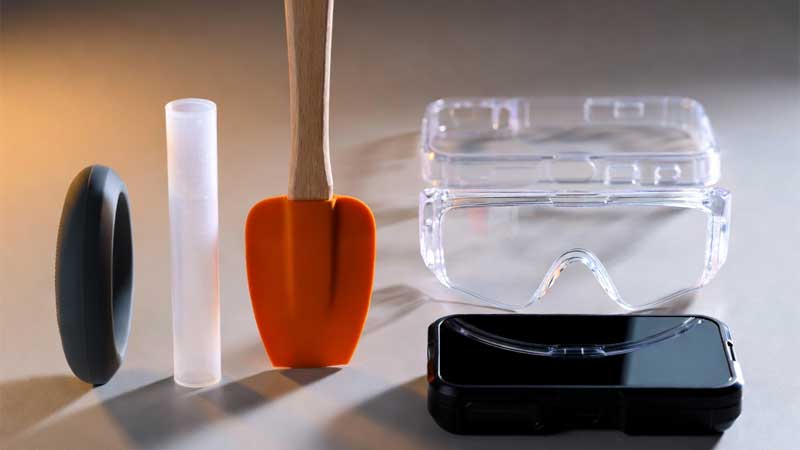
Choosing the right material can make all the difference in a product’s performance and durability. Silicone and polycarbonate are both popular, but they serve very different purposes. This article breaks down their key properties, applications, and strengths to help you decide which material fits your product best.
What Is Silicone?
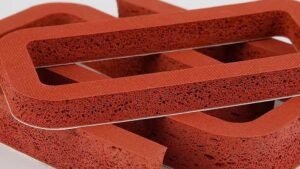
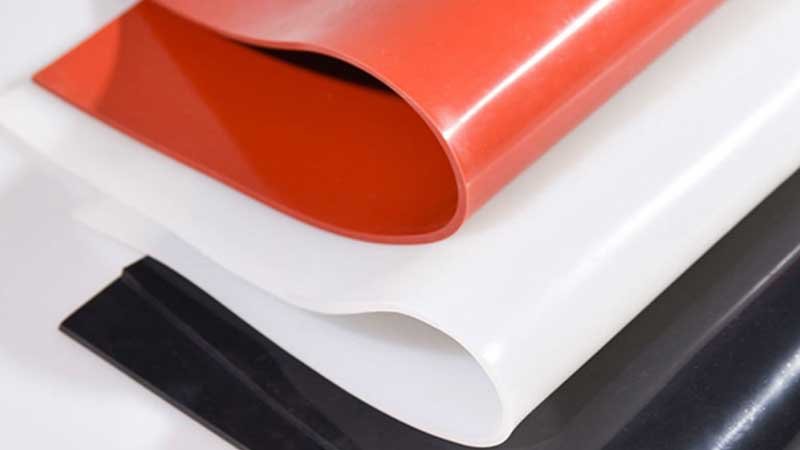
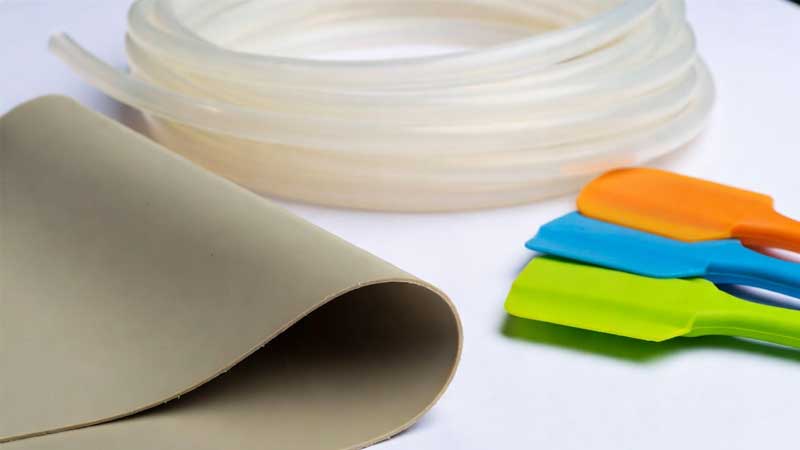
Silicone is a polymer built around a silicon–oxygen backbone (–Si–O–Si–). That basic arrangement is what gives the material its reliable heat resistance, chemical stability, and electrical insulation properties. The rubber version stretches without much effort, absorbs impacts pretty effectively, and stays safe enough for medical devices or anything that comes in contact with food. It holds its own against UV light, ozone, and a wide range of common chemicals, even if strong alkalis or hydrofluoric acid can still cause problems in certain situations. You see it all the time in baking mats, spatulas, gaskets, seals, medical tubing, and wearable components. Silicone handles temperatures from −50°C up to +250°C in everyday grades, with some specialty versions going as high as +300°C. It also stays lightweight and flexible while offering the sort of durability that keeps products performing reliably over time.
What Is Polycarbonate?
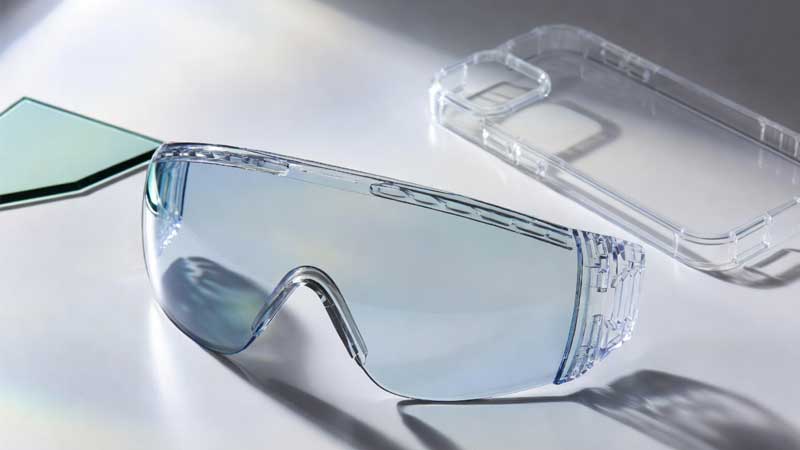
Polycarbonate (PC) is a rigid thermoplastic formed with carbonate linkages running through its molecular chain. What sets it apart is how strong it is, how transparent it stays, and how well it maintains its dimensions, which opens up all sorts of uses in structural and optical applications. Standard PC can stretch a bit before it breaks—roughly 120–130% elongation—and it manages temperatures up to around 145°C. You’ll run across it in protective gear, electronic housings, automotive parts, and building panels. It weighs less than glass, recycles completely, and processes fairly easily, although long exposure to UV light can make it yellow over time and it doesn’t always get along with aggressive chemicals.
Core Differences Between Silicone and Polycarbonate
| Attribute | Silicone Rubber | Polycarbonate (PC) |
| Flexibility / Hardness | Very flexible, Shore A 10–90, elongation 100–1,100% | Rigid, Rockwell R 100–120, elongation ~120–130% |
| Operating Temperature | −50°C to +230°C typical; some grades up to +300°C | Standard: −20°C to +120°C; high-temp up to +140°C |
| Impact Strength | Absorbs shocks through elasticity | Very high; Charpy notched 55–65 kJ/m² |
| Transparency | Usually translucent or opaque | Highly transparent, 89–90% light transmittance |
| Chemical Resistance | Excellent; inert to most solvents, oils, water | Good; resists water, alcohol, weak acids; sensitive to acetone, ketones, strong alkalis |
| UV & Aging | Excellent, does not yellow | Requires UV stabilizers; may discolor over time |
| Electrical Insulation | Reliable across a wide temperature range | Good at room temperature; decreases near Tg |
| Density (g/cm³) | ~1.05–1.2 | ~1.19–1.2 |
| Biocompatibility | Very high; FDA and medical-grade | Good; BPA-free grades are food-safe |
| Recyclability | Limited; downcycling only | Widely recyclable |
| Durability / Failure | Resistant to wear; overstretch can cause tears | Tough, but may crack under stress or UV exposure |
| Cost | Higher; complex processing | Lower; commodity resin |
| Processing Difficulty | Multi-step: mixing, molding, curing | Simple; injection molding or extrusion |
| Typical Uses | Seals, gaskets, kitchenware, medical tubing, flexible components | Lenses, housings, protective shields, enclosures |
Silicone tends to be the better choice whenever flexibility, heat resistance, or biocompatibility sit at the top of the priority list, while polycarbonate steps up when you need rigidity, optical clarity, and solid impact strength.
Manufacturing Processes
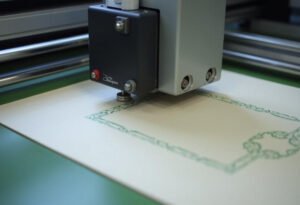
Silicone production moves through several distinct stages that each play their own part. It starts with the basic monomers, which get blended with different fillers to adjust hardness, elasticity, and whatever other characteristics the final part needs. Then the mixture gets shaped through compression molding, injection molding, or liquid casting. After the part takes form, it goes through curing—either by applying heat or using platinum-catalyzed crosslinking—to lock everything into place. Every one of those steps influences how the finished piece behaves, so keeping a close eye on the process is what delivers the consistent flexibility, durability, and safety you’re counting on.
Polycarbonate manufacturing follows a simpler path in comparison. Monomers such as bisphenol A are reacted with phosgene or diphenyl carbonate to create the polymer resin. The pellets that come out of that reaction get melted and formed using injection molding or extrusion. Unlike silicone, polycarbonate skips any curing step entirely; once the part cools, it’s ready to use. That straightforward flow is exactly why it works so well for high-volume runs and for components that have to meet tight dimensional tolerances straight out of the mold.
Seeing how the two manufacturing routes differ helps when you’re sketching out parts that need to balance real-world performance with what’s actually practical to produce. A silicone gasket, for instance, can keep its flexibility and sealing ability even when temperatures swing back and forth dramatically, while a polycarbonate housing supplies the rigid backbone that won’t deform under load.
Application Case Studies
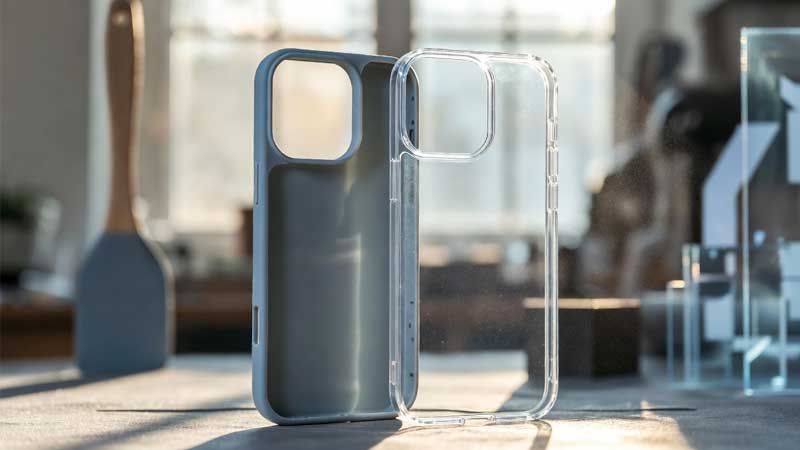
Phone Cases: Soft silicone gives a secure grip, soaks up shocks nicely, and feels comfortable in the hand. Polycarbonate supplies the hard, transparent outer shell that adds meaningful protection. Plenty of manufacturers combine the two—silicone on the inside for cushioning and polycarbonate on the outside for strength—so the finished case gets the benefits of both without the usual trade-offs.
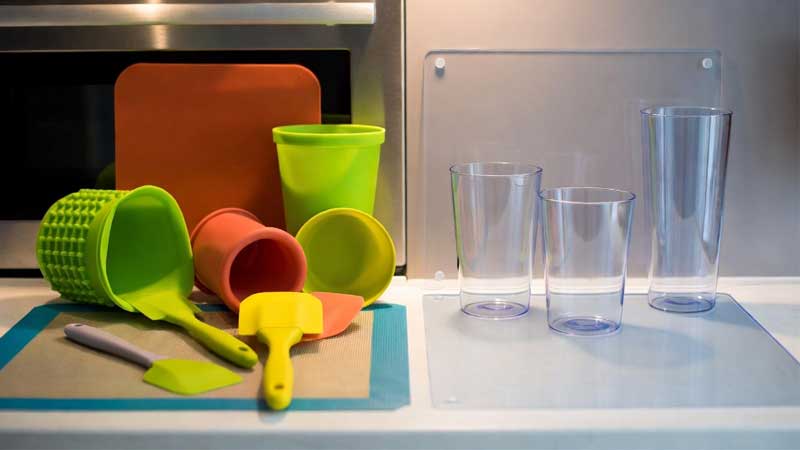
Kitchenware: Silicone shows up in baking mats, spatulas, molds, and any tool that has to face heat without losing its shape or releasing anything into food. Its flexibility and temperature tolerance make it a practical everyday choice. Polycarbonate appears in drinkware, appliance panels, or clear covers, but it isn’t designed for prolonged direct exposure to high heat.
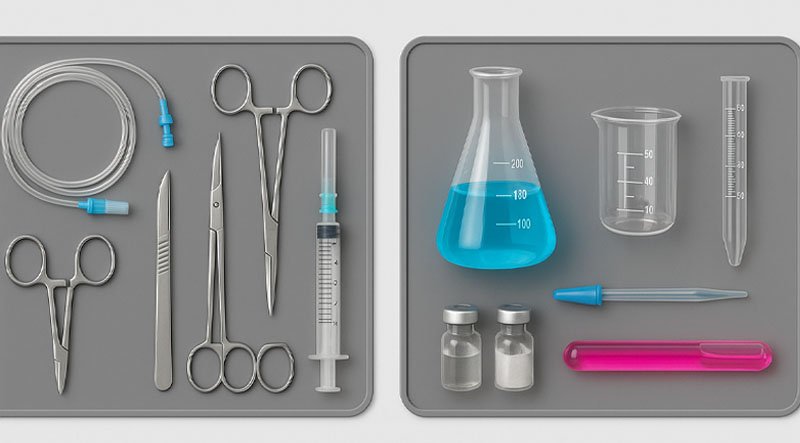
Medical Devices: Silicone is the go-to for seals, tubing, and flexible implants because it’s biocompatible, easy to sterilize, and comfortable against skin. Polycarbonate takes care of the rigid housings and enclosures where clarity, strength, and dimensional stability are essential.
Protective Shields: Polycarbonate leads the way in this area—goggles, face shields, industrial guards—thanks to its strong impact resistance paired with good optical clarity. Silicone often gets added as a soft sealing gasket along the edges to boost comfort and keep dust or moisture from sneaking in.
Gaskets & Seals: Silicone holds its shape and elasticity through wide temperature swings, which is exactly why it has become the standard for reliable sealing solutions. Polycarbonate lacks the give required to perform well in these roles.
Wearables: Silicone provides the soft, skin-friendly flexibility that makes straps, grips, and soles comfortable for long periods of wear. Polycarbonate supplies the rigid frames or protective housings that keep the whole assembly structurally sound.
In actual product development, pairing silicone and polycarbonate often turns out to be the most sensible approach. You pull flexibility and sealing performance from the silicone side while drawing on polycarbonate’s strength and structural support, so the final item holds up reliably even when conditions get demanding.
How to Choose: Quick Checklist
- Flexibility or comfort needed? → Silicone
- Structural strength, rigidity, or impact protection required? → Polycarbonate
- Exposure to high heat (>200°C)? → Silicone
- Cost or recyclability priority? → Polycarbonate
- Chemical or UV resistance critical? → Silicone
Quite a few designs end up working better when both materials are brought together: a flexible silicone element for comfort or sealing paired with a rigid polycarbonate frame for support or protection. Taking the time to look closely at the specific application, the expected loads, and what the end user really needs is what leads to that right balance.
FAQs
Can silicone replace PC for protective parts?
Not in any practical way. Silicone is simply too soft to deliver the structural backbone or impact resistance that most protective components require.
Is PC safe for food contact?
BPA-free polycarbonate is generally considered safe, but it isn’t the best pick when high-heat cooking or baking is part of the picture. Silicone stays the clearer choice for bakeware and similar applications.
Can silicone and PC be recycled together?
Mixing them in the recycling stream doesn’t work well. Silicone is tough to recycle at any real scale, while polycarbonate can be handled on its own without problems.
Which material performs better outdoors?
Silicone stands up to UV exposure, ozone, and general weathering for long stretches without much trouble. Polycarbonate needs UV stabilizers added and can still show discoloration after extended time outside.
Conclusion
Silicone stands out when elasticity, heat endurance, and safe contact with food or skin are priorities. Polycarbonate delivers when rigidity, transparency, and impact resistance matter most.