If you work with seals, gaskets, kitchen tools, or molded parts, you have probably faced this choice before. Silicone and rubber often appear to do the same job. They are both flexible. They both compress. And on the surface, they can look almost identical.
The problem is that they behave very differently once the product is in use. A part that performs well in a warm indoor setting may fail quickly outdoors. Something that looks fine at the start may harden, crack, or lose function months later.
Many material decisions are made by comparing price or strength numbers. In practice, those numbers rarely tell the full story. How a material reacts to heat, light, air, and time matters just as much.
This article looks at silicone and rubber from real working conditions. The goal is not to prove one is better, but to help you understand where each material succeeds and where it causes problems, so you can choose with fewer surprises later.

What Is Silicone?
Silicone is often called a type of rubber, but in practice it behaves more like its own material. The main difference sits in the backbone. Instead of carbon chains, silicone is built on silicon and oxygen.
You do not need to remember the chemistry to see the result. In real use, silicone stays flexible across heat and cold that would damage most rubbers. It does not mind sunlight or ozone either. Parts made from silicone usually look and feel the same long after standard rubber parts start to stiffen.
Another reason silicone is chosen is stability around people and food. It has very little smell. It does not rely on plasticizers to stay soft. Over time, it is less likely to bleed, harden, or change surface feel.
Silicone is rarely picked for raw strength. If a design needs high tear resistance or fast rebound, rubber often wins. Silicone earns its place when consistency matters more than force.
What Is Rubber?
Rubber is a broad term. It includes natural rubber and many synthetic types, and they do not all behave the same. What they share is a carbon-based polymer structure that gives rubber its familiar elasticity.
In practice, rubber stretches easily and snaps back fast. This quick rebound is the reason rubber works so well in tires, belts, and moving parts. It handles repeated motion better than silicone in many designs.
Rubber also offers strong mechanical performance. Tear resistance, abrasion resistance, and grip are areas where many rubbers outperform silicone. For applications that involve friction or constant movement, this matters more than temperature stability.
The trade-off is aging. Most rubbers slowly change once they are in service. Heat, air, and light take their toll over time. The material may harden, lose elasticity, or crack. This is not a defect. It is simply how carbon-based elastomers behave.

Key Differences Between Silicone and Rubber
At first glance, silicone and rubber seem close enough. Both bend. Both compress. Both show up in seals, pads, and molded parts.
The difference usually appears later. Not in the lab. In use. Heat cycles, sunlight, and constant pressure slowly work on rubber. You may not notice it right away, but the feel changes. The surface stiffens. The part does not recover the way it used to.
Silicone reacts differently. It is less sensitive to light and air. In many cases, it looks almost the same months later. That stability is the main reason people accept its higher price.
Rubber still has clear advantages. It stretches more easily and snaps back faster. In parts that move, slide, or grip, this behavior can matter more than long-term stability.
The table below reflects how these differences usually show up once a product has been in service for some time.
| Property | Silicone | Rubber |
| Base structure | Silicon–oxygen backbone | Carbon-based polymer |
| Typical temperature range | -60°C to 230°C | -30°C to 120°C |
| UV and ozone resistance | Very high | Low to moderate |
| Aging behavior | Slow, predictable | Gradual hardening |
| Tensile strength | Moderate | Often higher |
| Elastic rebound | Slower | Faster |
| Outdoor durability | Long service life | Shorter service life |
| Initial cost | Higher | Lower |
| Appearance over time | Stable | Tends to change |
Why Silicone and Rubber Age Differently?
Most rubber materials begin to change from the moment they are put into service. This is not always visible at first. The process is slow, and it depends on heat, air, light, and stress.
Rubber is built on carbon-based polymer chains. Over time, these chains react with oxygen and ozone. Heat speeds this up. Sunlight makes it worse. The result is familiar. The surface hardens. Small cracks appear. Elastic recovery becomes weaker.
Silicone follows a different path. Its backbone is made of silicon and oxygen, which is far more resistant to environmental attack. UV light and ozone have little effect on it. Temperature swings also cause less damage.
Because of this, silicone does not usually fail through gradual chemical breakdown. Instead, it tends to fail through mechanical fatigue. After long use, it may tear or split, but its basic properties stay stable for much longer.
This difference matters in real products. Rubber often loses performance quietly. Silicone gives clearer signs when it reaches the end of its service life.

Failure Modes in Real-World Use
In real products, materials rarely fail the way datasheets describe. What matters is not the theoretical limit, but how the material behaves after months or years of normal use.
Rubber products often fail quietly. Performance drops before the product looks damaged. Seals lose compression. Gaskets stop rebounding. Grips feel harder but still appear intact. By the time cracks become visible, function is already compromised.
Silicone behaves more honestly. As long as it stays within its working range, performance remains stable. When failure happens, it is usually physical and obvious. A tear forms. An edge splits. The part no longer holds its shape.
This difference changes how products are inspected and replaced. Many rubber parts are changed on schedule. Silicone parts are often replaced based on condition.
The contrast is clearer when placed side by side:
| Aspect | Rubber | Silicone |
| Early warning signs | Gradual hardening, loss of rebound | Very few before damage |
| Typical failure type | Aging, cracking, compression set | Tearing, mechanical fatigue |
| Performance drop | Slow and hard to notice | Sudden and obvious |
| Replacement logic | Time-based | Condition-based |
Applications of Silicone and Rubber
In real products, silicone and rubber are rarely interchangeable, even when they appear in the same category. Engineers usually decide based on what will fail first, not on what looks similar on paper.
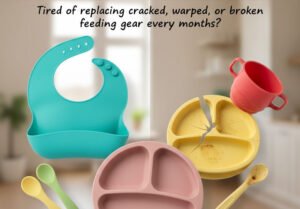
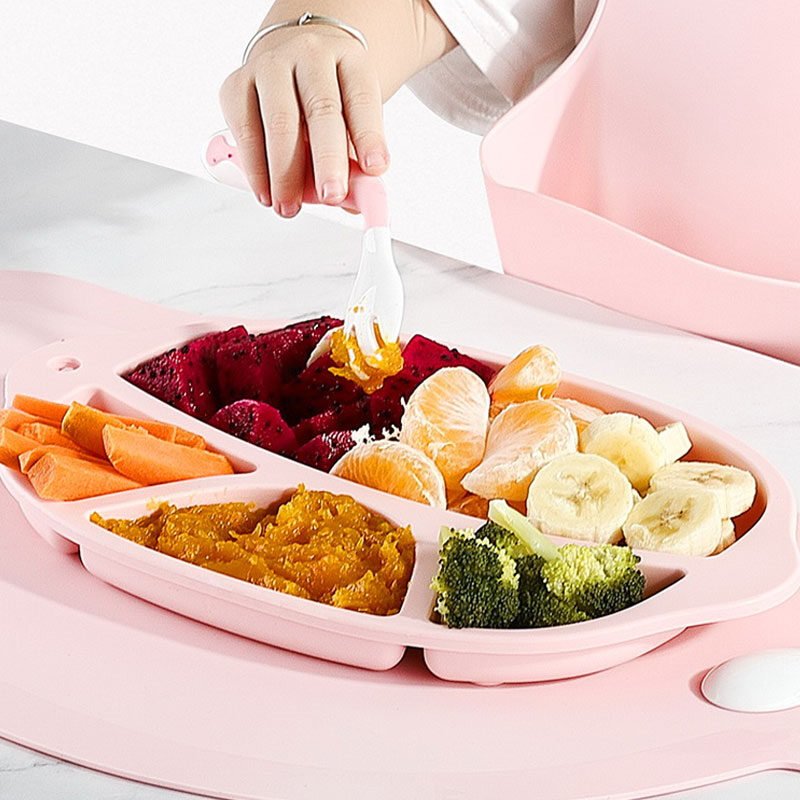
Silicone tends to show up in places where heat, time, and hygiene slowly punish materials. Bakeware, baby products, and reusable food containers rely on silicone because repeated heating does not change its smell or texture. In medical use, silicone tubing and implants are selected less for strength and more for stability. They survive sterilization cycles and long skin contact without becoming brittle.
Rubber is used when parts are expected to move, flex, or take abuse. Tires, vibration mounts, and industrial rollers depend on rubber’s ability to deform and recover thousands of times. In these roles, gradual wear is accepted and planned for. Rubber parts are often treated as consumables rather than permanent components.
Many everyday products quietly combine both. A wearable device may use silicone where the body touches the product, while rubber is placed inside to absorb impact. Footwear follows the same logic. The sole handles friction with rubber. Comfort layers rely on silicone for long-term feel.
| Use environment | Silicone is commonly used for | Rubber is commonly used for |
| Heat exposure | Bakeware, hot seals, sterilized parts | Rarely used |
| Skin contact | Medical tubing, wearables, baby items | Limited, short-term use |
| Repeated motion | Limited use | Tires, rollers, dampers |
| Planned replacement | Less common | Very common |
| Mixed-material products | Comfort and sealing | Grip and impact absorption |

Hygiene and Contamination Risk
In food and medical products, hygiene is about long-term behavior, not just initial compliance.
Rubber changes as it ages. Heat, air, and repeated use can alter the surface. In some cases, older rubber parts may develop odor or slight surface tackiness. This does not mean immediate failure, but it can make the surface more likely to hold oils, dust, or residues. Cleaning remains possible, yet it often requires closer control and scheduled replacement.
Silicone is more stable over time. Its chemistry reacts less with air, moisture, and common cleaning agents. The surface usually stays smooth and dry, even after long-term use or repeated washing. Odor and surface change are uncommon under normal conditions.
For hygienic applications, the difference is practical rather than theoretical. Rubber often relies on defined replacement cycles to manage contamination risk. Silicone relies more on material stability to reduce it.
Both materials can be used safely. The choice depends on how much maintenance and control the application allows.
How to Choose Between Silicone and Rubber?
The wrong question is “Which material is better?”
The useful question is “What will this part face every day?”
If heat is part of the environment, silicone becomes the safer option. Ovens, steam, hot liquids, and repeated sterilization cycles slowly break down most rubbers. Silicone remains stable in these conditions and does not change much over time.
If movement and friction dominate, rubber often performs better. Dynamic seals, rollers, and parts under constant flex benefit from rubber’s quick rebound and high tear resistance. In these cases, silicone may feel too soft or wear too fast.
Cost also plays a role, but it should not lead the decision. Rubber is usually cheaper at the material level. Silicone often costs more upfront but reduces replacement frequency. Over the full product life, the gap is not always as large as it appears.
A simple way to decide is to match the material to the main stress, not the secondary one.
| Primary Stress | Better Choice |
| High temperature | Silicone |
| Repeated sterilization | Silicone |
| Constant motion | Rubber |
| High abrasion | Rubber |
| Long-term stability | Silicone |

Conclusion
Silicone and rubber serve different purposes. Neither is inherently better. When the working environment, service life, and risk tolerance are clearly understood, the choice between silicone and rubber usually becomes obvious.