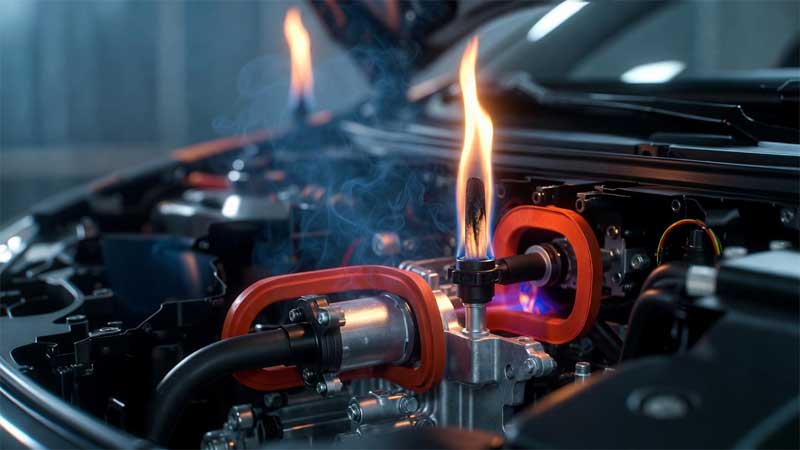
Fire safety sits at the center of material selection for electronics, automotive systems, aerospace components, and everyday appliances. Any part close to live wires, heat sources, or enclosed spaces has to do more than just survive normal operation. It must actively limit how a flame travels if something goes wrong. Silicone rubber brings real advantages here. The material holds its flexibility across a wide range, from minus sixty degrees Celsius in cold storage up to two hundred degrees or higher in continuous use. It keeps electrical insulation strong even after years of exposure, and it stands up to oils, solvents, and outdoor weathering without cracking. Still, the base polymer alone does not guarantee quick self-extinguishing. That is the exact reason the UL94 V-0 rating matters. It gives clear proof that the finished compound will stop burning fast and prevent the fire from jumping to nearby parts.
What the V-0 Rating Really Means in Practice
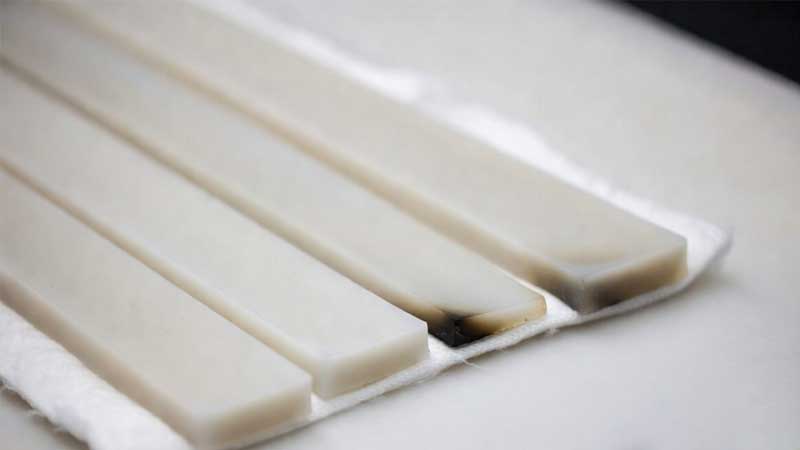
Underwriters Laboratories put the UL94 test together so engineers could run the same flame exposure on different materials and read the numbers side by side. The vertical orientation matches how flames often move once a short circuit or overheated connection starts. V-0 marks the highest level in that setup. After the burner pulls away, each test bar has to go dark inside ten seconds. Burning drops can fall, yet they must land on the cotton three hundred millimeters below without starting a second fire. The flame also cannot climb the full height and touch the clamp at the top.
The ratings line up in a practical way when you sit down to pick material for a new design:
| Rating | Afterflame time per ignition | Dripping allowed | Typical real-world applications |
| V-0 | ≤10 s | Yes, but must not ignite cotton | Engine-bay gaskets, aircraft wiring, battery packs |
| V-1 | ≤30 s | Yes, but must not ignite cotton | Moderate-risk sensor housings, appliance seals |
| V-2 | ≤30 s | Yes, and may ignite cotton | Low-risk consumer keypads or decorative parts |
V-0 opens the biggest safety window when the part lives inside a tight enclosure where any spread could reach other electronics or structural elements.
Why Silicone Rubber Needs the V-0 Check
Silicone stays stable at high temperatures for long stretches, but the polymer chain can still carry combustion if the flame-retardant package falls short. Running the full UL94 V-0 sequence clears away any uncertainty. It shows exactly how the molded part will react once installed. The data lines up with OEM requirements, keeps regulatory files clean, and lets downstream teams move forward without second-guessing the material. A gasket that passes every compression and swell test can still drop out on the second ten-second burn. Catching that early keeps production schedules on track instead of sending parts back for reformulation weeks later.
The test numbers also guide small adjustments in the mixing room. A slight change in filler distribution or cure temperature often drops the afterflame time by several seconds. In crowded engine compartments or inside battery modules, those saved seconds can stop a local fault from becoming a larger event.
How the Test Runs in the Lab
Labs keep the procedure locked down so every facility worldwide measures the same way. Five bars come in at one hundred twenty-five millimeters long by thirteen millimeters wide. Thickness matches the thinnest wall planned for production, never going past thirteen millimeters. Each bar leaves the cutting station clean, no surface marks or mold-release residue left behind.
The technician sets one bar vertical inside a draft-free chamber. A Bunsen burner holds a steady twenty-millimeter blue flame. Ten seconds against the bottom edge, then the burner moves clear. The stopwatch runs. Afterflame time records. Ten seconds on again. Observers track the cotton pad below, any glow after the second removal, and whether anything reaches the clamp line. The same steps repeat across all five bars under identical air flow and temperature conditions.
Back on the production floor the same failure patterns appear again and again. Thin corners in the mold create hot spots that burn longer. Short cure cycles leave uncross-linked areas that feed the flame. Filler that never fully dispersed during compounding forms weak pockets. Many shops keep a small bench burner near the press and run quick checks on cut strips before shipping full sets to the UL lab. It catches most issues while the batch is still adjustable.
The Exact Limits for Passing
Every bar must clear these thresholds without exception:
- Afterflame ten seconds or less on the first burn and again on the second
- Combined afterflame time across all ten measurements fifty seconds or less
- No flame or glowing combustion reaches the clamp on any bar
- No burning drip ignites the cotton indicator
- Afterglow thirty seconds or less following the second ignition
These numbers keep the material from feeding secondary fires. One missed limit sends the compound back to the mixer for another round of testing.
What Shapes Results on the Production Line
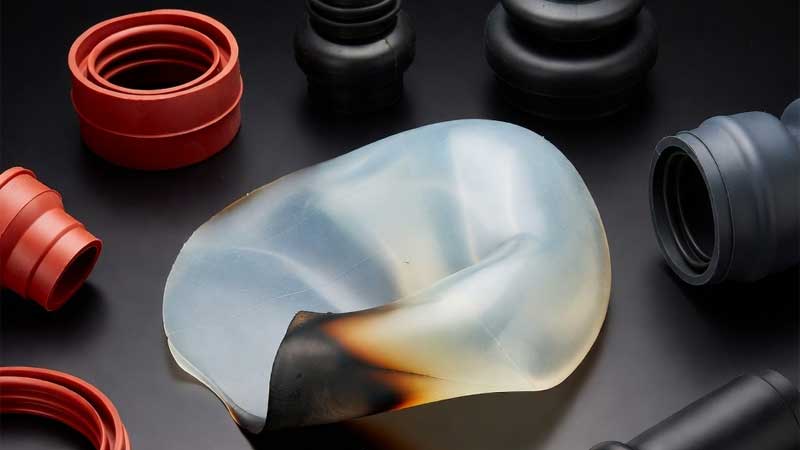
Wall thickness influences burn behavior more than many initial drawings suggest. Sections thinner than one point five millimeters ignite faster and hold heat longer unless the retardant loading compensates. Injection molding spreads aluminum trihydrate or treated silica particles more evenly than compression molding and delivers tighter control over cross-link density. Halogen-free packages stay clean for electronics, but the exact percentage has to stay inside narrow windows. Drop too low and the rating slides to V-1. Push too high and the rubber loses elongation and compression set over time, so seals may leak after thermal cycling.
Printed legends, adhesive layers, or bonded inserts change the flame path too. The full assembly goes into the chamber together rather than testing the base rubber alone. A cable grommet pressed onto a metal bracket or a keypad sheet laminated to plastic needs its own complete run. The balance stays practical: the part must still compress to form a reliable seal, flex during installation, and keep its surface feel for thousands of cycles.
Places Where V-0 Silicone Earns Its Keep
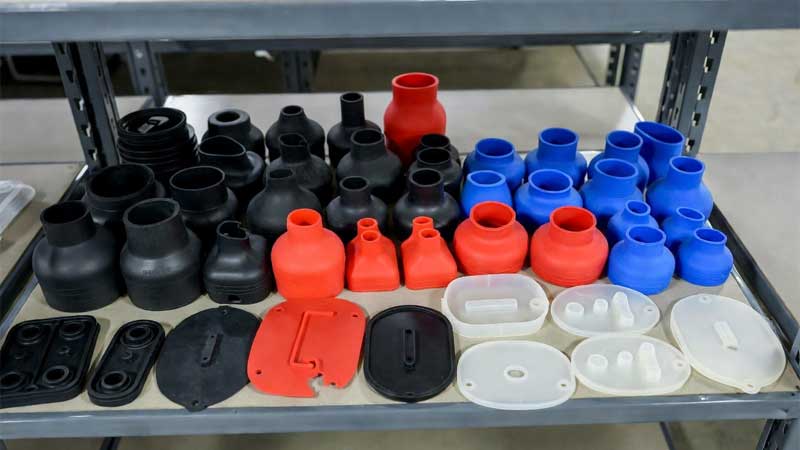
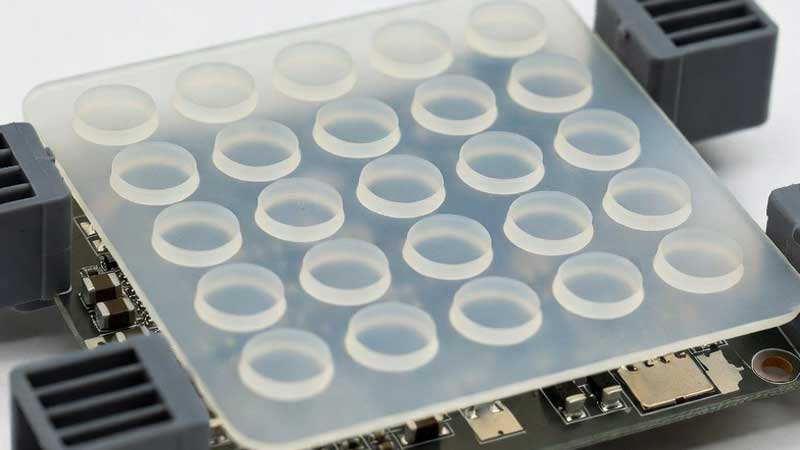
LED driver enclosures use it because a failed component inside must not spread heat to the rest of the fixture. Membrane keypads in control panels rely on it to keep a local arc from reaching surrounding circuits. High-voltage cable jackets carry the rating so a short inside a harness stays contained. Automotive teams specify the material for engine-sensor boots, electric-vehicle battery seals around cooling lines, and wiring pass-through grommets near exhaust manifolds. Aircraft and rail applications layer it with FAR 25.853 or EN 45545 rules for cable sleeving along fuselage walls and interior panel edges. Appliance lines run it on oven door gaskets that see constant two-hundred-degree exposure and on connector boots near heating elements. In every case the goal stays the same: contain the fault so one small problem does not become a recall or safety incident.
Checking That the Rating Is Real
A datasheet note that simply says V-0 leaves room for interpretation. The only solid confirmation sits inside the UL Product iQ database. Search the exact compound grade and verify the minimum listed thickness covers the walls in your mold. Reliable suppliers keep batch records tied to the original test report and can forward it the same day. Skipping the lookup has led to more than one surprise during a customer audit or field failure analysis. Five minutes in the database avoids months of explanation later.
Conclusion
UL94 V-0 stays in the background on most drawings, yet it quietly decides how a product behaves when heat turns into flame. Match the tested thickness to the actual geometry, keep mixing and curing variables under control, run the full assembly through the chamber, and confirm the listing before release. Those steps turn standard silicone into dependable protection across temperature swings, chemical exposure, and long service life. In any location where fire could travel quickly, that careful path is simply how the parts stay reliable year after year.