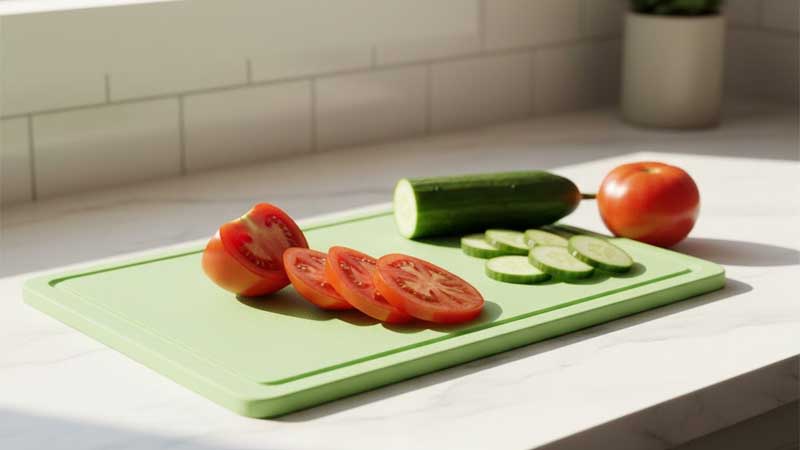
A cutting board is one of the most frequently used tools in the kitchen, coming into direct contact with food almost every day. Common materials include wood, plastic, bamboo, and silicone. As silicone products become more popular, silicone cutting boards are finding their way into more and more homes. But are they really as safe, non-toxic, and hygienic as people claim?

Are Silicone Cutting Boards Really Safe?
To know whether silicone cutting boards are safe, we first need to look at their main material—siloxane polymer. Its molecular backbone is made of alternating silicon (Si) and oxygen (O) atoms, forming a strong Si–O–Si structure. This stable bond gives silicone excellent heat resistance, aging resistance, and chemical stability. It stays firm under kitchen conditions, unlike plastic that may warp or natural rubber that may crack over time.
Kitchen-grade silicone is usually food-grade silicone, a purified and tested high-quality material. It must meet several international food-contact safety standards, including:
- U.S. FDA (21 CFR 177.2600): ensures no harmful chemicals are released under high temperature or repeated use.
- EU LFGB: tests whether any substances migrate from the material into food during simulated contact.
- China GB 4806.11: checks stability and safety under boiling, oily, or acidic conditions.
Food-grade silicone that passes these certifications contains no BPA, phthalates, lead, or cadmium. It also does not need plasticizers. Even after high heat, frequent washing, or knife contact, its molecular structure stays stable. It will not break down or release microplastic particles.
In comparison, plastic cutting boards often develop knife marks and discoloration over time, which can lead to microplastic release. Wooden boards are natural but absorb moisture easily and can harbor bacteria.

What Are the Advantages of Silicone Cutting Boards?
Food-grade silicone is not only safe for food contact but also performs well in daily use. Here are the key reasons why it is gradually replacing traditional plastic and wooden cutting boards:
Heat Resistant and Shape Stable
Silicone stays stable between -40°C and 230°C. Hot water or steam will not cause it to warp. This makes it suitable for dishwashers, hot water sterilization, and various kitchen environments.
Chemically Inert and Non-Reactive with Food
Silicone has a stable molecular structure and does not react with acids, alkalis, oils, or salt. It stays odor-free and does not release chemicals, even after long contact with food. This makes it ideal for handling raw meat, fruits, and cooked dishes.
Smooth Surface, No Stains or Odors
The surface of silicone is dense and nonporous. Food pigments, juices, and oils do not easily penetrate. After cutting colored vegetables, a quick rinse is enough to keep it clean. Unlike wood, it will not absorb water or discolor.
Hygienic and Less Prone to Bacteria Growth
Because silicone does not absorb moisture or trap dirt, bacteria have few places to survive. Compared with wooden or bamboo boards, silicone greatly reduces the risk of cross-contamination.
Flexible and Nonslip for Stable Cutting
Silicone offers good flexibility and grip. It stays steady on the countertop and provides a firm cutting surface. Some designs can even roll up, letting you pour chopped food directly into the pan for easier use.
Durable and More Eco-Friendly
High-quality silicone resists tearing and aging. It keeps its shape for years without cracking. Though not biodegradable, it can be reused many times, helping reduce waste from disposable plastic boards.

How to Clean and Maintain a Silicone Cutting Board?
Silicone naturally resists high temperatures, does not absorb water, and repels oils, making it easier and safer to clean than wooden or plastic cutting boards.
Its smooth, dense surface prevents bacteria growth and lingering odors. After use, simply wash with hot water and a mild detergent. This cleans effectively without damaging the material. Silicone cutting boards can also be safely placed in a dishwasher.
Here are more detailed care tips:
- Wash immediately after use: Remove food residue, oils, or seasonings to prevent buildup.
- Use mild detergents: Avoid strong acids or bases, such as bleach or ammonia-based cleaners, which can age the silicone and reduce elasticity.
- Perform high-temperature sterilization regularly: Occasionally boil the board or use a steam sterilizer to kill bacteria, especially after handling raw meat or seafood.
- Air dry or hang for storage: Ensure the board is completely dry and stored in a ventilated area to prevent moisture-related odors.
- Avoid heavy pressure or contact with sharp objects: Silicone is flexible, but prolonged heavy weight or sharp metal can cause dents or surface damage.
For noticeable scratches or discoloration, gently scrub with a paste of baking soda and warm water. This helps remove stubborn stains and restore the board’s smooth surface. Proper cleaning and care keep a silicone cutting board elastic, vibrant, odor-free, and durable for long-term use.

How to Choose a High-Quality and Safe Silicone Cutting Board?
Although food-grade silicone is generally safe and reliable, the market still has some low-quality products. Some small manufacturers cut costs by adding fillers or using recycled silicone. This can introduce impurities or residual catalysts, causing unpleasant odors or releasing volatile substances during use. Choosing a high-quality silicone cutting board affects not only your cooking experience but also your health and safety.
Here are key points to consider when selecting a reliable silicone cutting board:
Check for Food-Grade Certification
- Look for products labeled as Food Grade Silicone or certified by internationally recognized authorities such as FDA (U.S. Food and Drug Administration) or LFGB (EU Food Safety Certification).
- Such certifications ensure the material is free from BPA, phthalates, heavy metals, and other harmful substances, meeting food contact safety standards.
Examine Material and Craftsmanship
- The surface should be smooth, elastic, non-sticky, and free from strong odors.
- The board should have an even thickness and consistent structure, providing stability and durability while cutting.
- Prefer boards made entirely of silicone rather than silicone-coated plastic, to avoid potential health risks from low-quality plastics.
Consider Brand Reputation and Price
- Avoid unbranded or extremely low-priced products, as they often lack safety testing or use inferior raw materials.
- Choose reputable brands or products that provide testing reports to ensure long-term safety and durability.
Conclusion
Overall, food-grade silicone offers clear advantages in chemical safety, hygiene, durability, and environmental performance. Silicone cutting boards are safe for everyday cooking and can be used with confidence.
If you are looking to create silicone cutting boards that meet international certification standards, we provide professional OEM and ODM services. With advanced molding equipment, a mature material formulation system, and FDA and LFGB-compliant production, we can customize hardness, color, and structure to fit your design. Let safe, eco-friendly, and durable silicone cutting boards add lasting value to your brand and kitchen.