I’ve seen too many startups stumble at the biocompatibility stage. They assume every skin-contact device needs the full battery of tests, burn through budget, and still face regulatory pushback. The truth? ISO 10993 is a framework, not a checklist.
ISO 10993 biocompatibility testing for skin-contact devices requires a risk-based approach: you select tests from a matrix based on contact type (surface, external communicating, or implant), duration (limited, prolonged, or permanent), and material equivalence to established devices. Most silicone skin-contact devices need cytotoxicity, sensitization, and irritation tests at minimum.

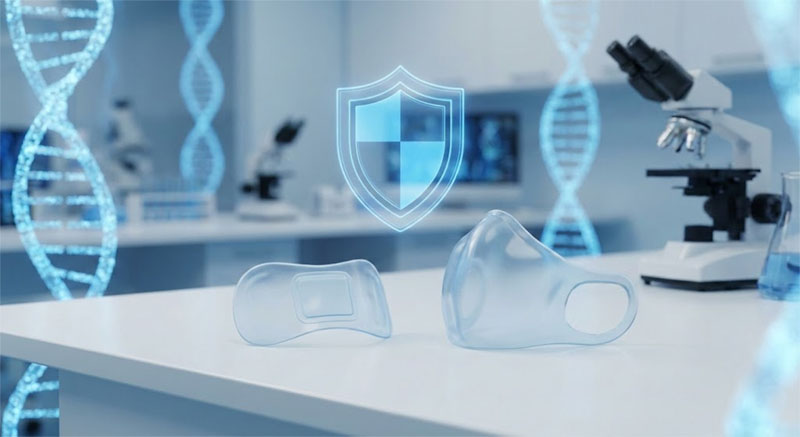
If you’re launching a wearable sensor, a silicone mask, or any device touching skin, you need to map your exact pathway before ordering tests. Let me walk you through how I approach this with my own projects.
How Do I Know Which Tests My Device Actually Needs?
I always start by asking: what touches what, and for how long? This sounds simple, but I’ve watched teams waste months because they skipped this step.
Your test selection depends on three factors: contact type (skin surface, mucosal membrane, breached surface), contact duration (≤24h, >24h to 30 days, >30 days), and the specific body location. A silicone wristband worn 24/7 needs different tests than a facial mask used for 20 minutes.

The ISO 10993-1 matrix is your starting point, but here’s what it doesn’t tell you: you can tailor this based on material history and intended use. I break down the decision process like this:
Step 1: Define Your Contact Scenario
| Contact Type | Body Location | Duration Category | Example Devices |
|---|---|---|---|
| Skin surface | Intact skin | Limited (≤24h) | Electrodes, temporary sensors |
| Skin surface | Intact skin | Prolonged (>24h-30d) | Wearable patches, fitness trackers |
| Skin surface | Intact skin | Permanent (>30d) | Long-term monitoring devices |
| Breached/Compromised | Damaged skin | Any duration | Wound dressings, dermal patches |
Step 2: Check the Initial Test Matrix
For skin-contact devices, the baseline typically includes:
- Cytotoxicity (ISO 10993-5): Always required, screens for cell damage
- Sensitization (ISO 10993-10): Tests for allergic reactions
- Irritation (ISO 10993-10): Evaluates acute inflammation
- Systemic toxicity (ISO 10993-11): Required if prolonged/permanent contact
Step 3: Consider Your Material Story
This is where I see the biggest opportunity to streamline. If your silicone supplier has existing biocompatibility data on the exact same formulation, you might establish equivalence rather than repeat every test. But—and this is critical—the burden of proof is on you to demonstrate true material equivalence.
Can I Skip Tests If My Supplier Already Has Biocompatibility Reports?
I get asked this constantly. The short answer: maybe, but you need a solid equivalence case.
You can potentially leverage existing biocompatibility data through a material equivalence assessment if you can prove your material has identical chemical composition, processing, and intended use as the tested material. However, you still need your own biological evaluation report that documents this equivalence.

Here’s my framework for equivalence assessment:
What You Need to Prove:
- Chemical Equivalence: Same base polymer, same catalyst system, same additives (including colorants and stabilizers). I request a full disclosure letter from suppliers that lists every component above 0.1% by weight.
- Manufacturing Equivalence: Same processing method (LSR vs HTV silicone behaves differently), same cure conditions, same post-processing (like washing or surface treatment).
- Contact Equivalence: The tested device had the same or more challenging contact scenario than yours. If the existing data is for a 1-hour contact and you need 24/7 wear, you can’t claim equivalence.
The Material Master File Strategy
I maintain a Material Master File (MMF) for each silicone grade I use regularly. This includes:
- Complete formulation disclosure from supplier
- Existing biocompatibility test reports
- Processing specifications
- Change control history
When I switch to a new product using the same material, I reference this MMF and only conduct gap testing. For example, if my MMF covers cytotoxicity, sensitization, and irritation for a 24-hour contact, but my new device has 7-day contact, I’d only add systemic toxicity testing.
The Reality Check:
Notified bodies and FDA reviewers are increasingly skeptical of equivalence claims. I’ve had assessments rejected because the color masterbatch changed by 0.5%. My advice: when in doubt, test. The cost of a rejected submission far exceeds the cost of one additional biocompatibility study.
What Happens If I Change My Silicone Color or Switch Suppliers?
This question keeps founders up at night, and rightfully so. Supply chain changes can torpedo your biocompatibility strategy.
Any change to your material composition—including colorant additions, new additive lots, or supplier switches—requires a change control assessment. Minor changes like lot-to-lot variation within the same formulation typically don’t require retesting, but color changes or supplier switches usually trigger new testing.

I use a tiered change control system:
Tier 1: No Impact (No retesting needed)
- New production lot of identical formulation from same supplier
- Manufacturing date variation
- Storage location changes
Tier 2: Low Impact (Risk assessment + possible retesting)
- Raw material lot change from qualified supplier
- Minor processing parameter adjustments within validated ranges
- Packaging material changes that don’t contact product
Tier 3: High Impact (Retesting required)
- Addition or removal of any ingredient (including colorants)
- Change in base polymer grade or supplier
- Modification to cure process or post-processing
- New supplier for same “equivalent” material
The Color Change Trap:
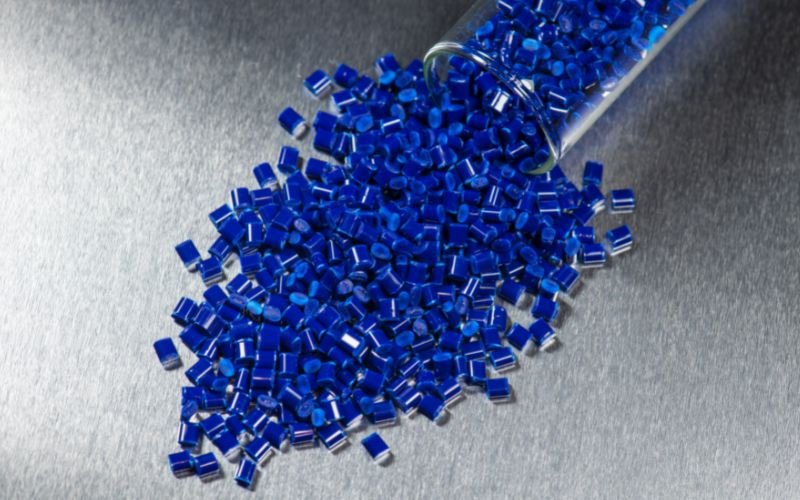
I learned this the hard way. We added a blue pigment to match a client’s branding—seemed trivial, right? Wrong. That pigment introduced new chemical entities that required full cytotoxicity and sensitization retesting. The color masterbatch itself had food-grade certification, but that’s irrelevant for medical devices.
My Change Control Process:
- Document the proposed change in detail
- Request a comparative analysis from the supplier showing what’s different
- Conduct a toxicological risk assessment on any new components
- Determine which tests from your original battery might be affected
- Conduct targeted retesting or full retesting based on risk
- Update your technical file and notify your regulatory body if required
Supplier Switch Protocol:
When switching suppliers (even for “identical” material), I require:
- Complete formulation disclosure from both old and new suppliers
- Side-by-side comparison of technical specifications
- Chemical analysis (FTIR, DSC) confirming equivalence
- At minimum, cytotoxicity screening on new material
- Full retesting if any doubt exists about true equivalence
The key is documentation. Regulators want to see that you systematically evaluated the risk, not that you assumed equivalence.
How Do I Structure My Biocompatibility Documentation for Regulatory Submission?
I’ve reviewed dozens of biocompatibility reports that got rejected, and the pattern is always the same: incomplete risk assessment or missing traceability.
Your biocompatibility documentation must include: a biological evaluation plan outlining your rationale for test selection, complete test reports with clear pass/fail criteria, a biological evaluation report synthesizing all data, and material characterization linking test samples to final devices.

My Documentation Template:
1. Biological Evaluation Plan (before testing)
- Device description and intended use
- Contact classification and duration
- Material composition and suppliers
- Test matrix with justification for selections or exclusions
- Acceptance criteria for each endpoint
2. Material Characterization
- Complete bill of materials for device-contacting components
- Material safety data sheets
- Chemical composition analysis (if required)
- Processing conditions
- Sample preparation method for testing
3. Test Reports (from ISO 17025 accredited labs)
- Test method and acceptance criteria
- Sample description with traceability to device
- Complete raw data and observations
- Pass/fail conclusion with evidence
4. Biological Evaluation Report (after testing)
- Summary of all tests conducted
- Interpretation of results in context of intended use
- Discussion of any adverse findings and their clinical significance
- Overall conclusion on biocompatibility acceptability
- Risk-benefit analysis if any marginal results
Common Rejection Points I’ve Encountered:
- Insufficient sample traceability: Test lab used “silicone sample” without linking to your specific device or formulation
- Missing test justifications: You excluded systemic toxicity without explaining why
- Inadequate extraction conditions: Test used 24-hour extraction when device has 7-day contact
- No material equivalence evidence: You claimed equivalence but provided no comparative data
- Outdated test methods: Used superseded versions of ISO 10993 parts
My Quality Check Process:
Before submission, I verify:
- Every test report references my specific device and material lot
- Test methods match current ISO 10993 versions
- Extraction ratios and conditions match or exceed my worst-case use
- Any deviations from the standard matrix are clearly justified in writing
- Test samples are described in enough detail to recreate them
The biological evaluation report is where you tell your story. Don’t just staple test reports together—explain your logic, address potential concerns proactively, and demonstrate that you understand the clinical implications of your test data.
Conclusion
ISO 10993 compliance isn’t about checking boxes—it’s about building a defensible risk-based case that your device is safe for its intended use. Start with your contact scenario, leverage existing data strategically, control your supply chain rigorously, and document everything systematically. Get this right the first time, and you’ll save months of regulatory delays.