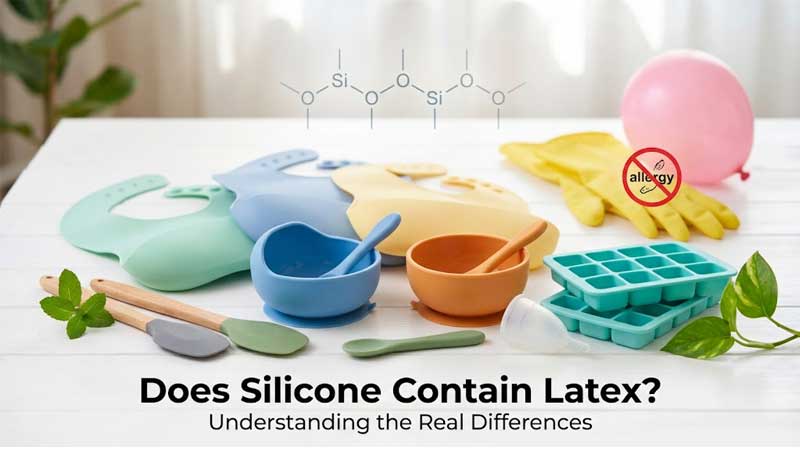
When you’re shopping for kitchen tools, baby products, or medical supplies, one question often comes up, especially if someone in the family has a latex allergy: Does silicone contain latex? The two materials sound similar, but they’re actually very different. In this article, we’ll break down whether silicone has any latex in it, highlight the key differences between them, and share practical tips on how to make sure a product is truly latex-free.
Does Silicone Contain Latex?
Answer
No. Silicone holds no latex on its own. It comes together as a man-made polymer mixing silicon, oxygen, carbon, and hydrogen. Natural rubber latex comes straight from rubber tree sap. That sap brings elastic proteins, and those proteins spark the allergies. Silicone grows from mineral sources in a controlled setting, so it never picks up tree sap or the proteins that go with it. From the start, silicone runs latex-free.
Important caution
One point keeps coming up. The core silicone stays clean, yet the final item sometimes adds other bits along the way. Take a kitchen spatula with a painted handle or a foam layer tucked underneath. Those extras might slip in latex or something close. Labels become the key. The FDA favors the exact line “not made with natural rubber latex” because no test catches every last trace. Solid food-grade or medical-grade silicone usually carries that clean note, but a quick look still helps, especially when allergies run deep.
What Is Silicone?
Definition and Properties
Silicone rubber, the polymer form, lines up as chains of silicon and oxygen atoms with carbon and hydrogen branches. That backbone gives the traits people lean on. It stays flexible across big temperature shifts, pushes away water, and holds shape after years of handling. Heat barely touches it. You can run it from minus sixty Celsius to two hundred thirty and it keeps working. Sun, ozone, and plain aging leave it mostly untouched. Good silicone carries almost no smell and no taste, so it fits right into food and skin contact.
Common Silicone Products
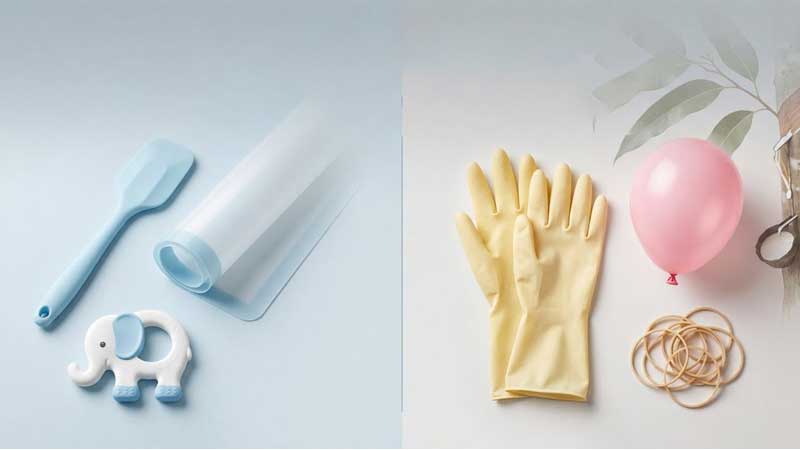
It turns up everywhere. Kitchen mats, baking molds, spatulas, and lids use food-grade silicone that lines up with FDA rules. Baby bibs, teethers, and bottle nipples rely on the same safe blend. Medical tubing, seals, and implants follow tighter medical-grade checks. Facial masks, menstrual cups, and certain wearable covers choose it for the same steady feel. Factories use it for gaskets and insulation because it simply lasts longer.
Why Silicone Is Popular
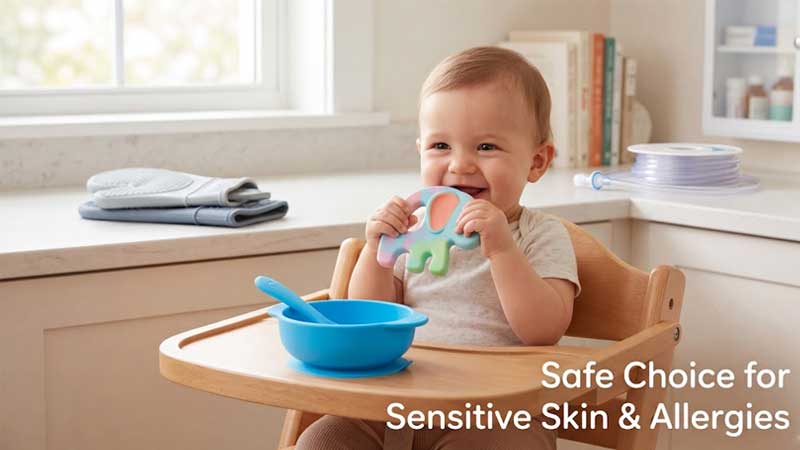
Folks reach for silicone because it handles heat without fuss, wipes clean, and stays easy on whatever it meets. The material does not leach or shift, so food tastes right and skin stays calm. Tags that say food-grade or medical-grade mean the piece passed the needed safety steps. Those steps also keep allergy chances low, which explains why silicone keeps showing up in homes and clinics.
What Is Latex?
Definition
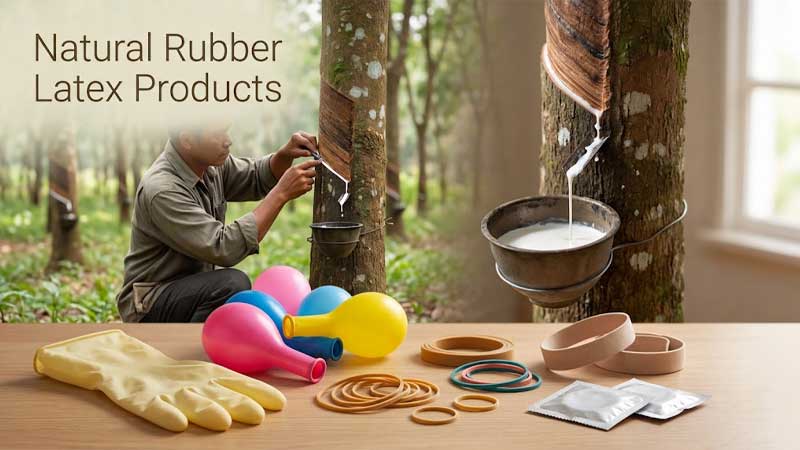
Latex usually means natural rubber latex, the milky sap drawn from Hevea brasiliensis trees. That sap holds long polyisoprene chains along with proteins, fats, and sugars. Once it cures, it becomes the stretchy stuff in gloves or balloons. People sometimes use the word for paints or adhesives, but those follow their own chemistry.
Allergy Concerns
The allergy part comes down to the proteins. Thirteen known ones can spark reactions. Contact with natural rubber might bring light itching or heavier issues like hives, breathing trouble, or more. Healthcare teams see it often because exposure adds up. Numbers run from one to six percent in everyday folks and higher for medical workers.
Common Latex Products
Everyday items still include it. Surgical gloves, exam gloves, rubber bands, balloons, elastic straps, and some bandages carry natural rubber. Condoms and certain mattress layers do too. The count passes forty thousand products, so the allergen turns up in places you might not expect. That is why vinyl, nitrile, and silicone stepped forward as steadier options.
Silicone vs Latex: Main Differences
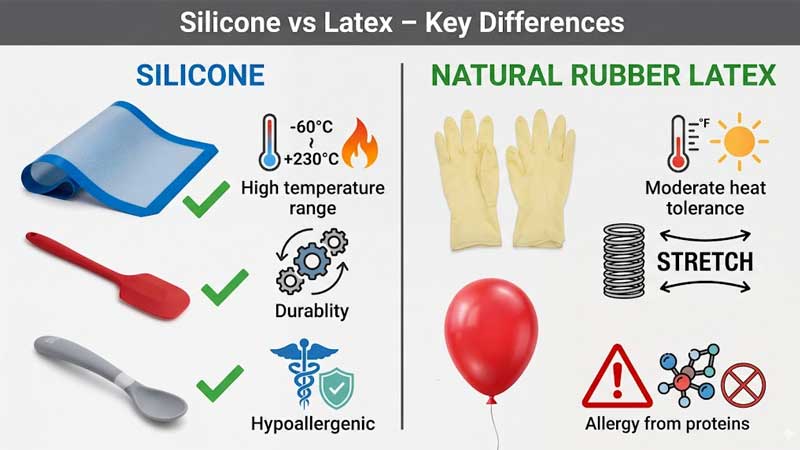
Take a look at how the two line up side by side. The split starts with their roots and runs through every real-world trait.
| Attribute | Silicone | Natural Rubber Latex (NRL) |
| Source | Synthetic polymer from silicon, oxygen, carbon, hydrogen | Sap taken from rubber trees |
| Chemistry | Silicon-oxygen backbone plus side groups | Polyisoprene chains full of proteins |
| Heat Resistance | Steady from minus sixty to plus two hundred thirty Celsius | Softens or breaks down in high heat |
| Durability | Holds against UV, ozone, oxidation, and years of use | Can dry out or stiffen over time |
| Elasticity | Flexible and easy to tune for softness or firmness | Strong stretch from the beginning |
| Odor and Taste | Clean and neutral in pure form | That familiar rubber smell |
| Chemical Stability | Inert and stays put | Reacts with air and carries proteins |
| Allergy Risk | Very low and seen as hypoallergenic | High from the proteins |
| Common Uses | Baby sets, medical tubing, bakeware, seals | Gloves, balloons, elastic bands, some catheters |
The chemistry drives the whole story. Silicone builds on a siloxane network that brings lasting stability natural rubber cannot match. The allergy difference stands out even more. Silicone leaves out the proteins that trouble so many, so it becomes the natural pick when sensitivity counts.
Is Silicone Latex-Free?
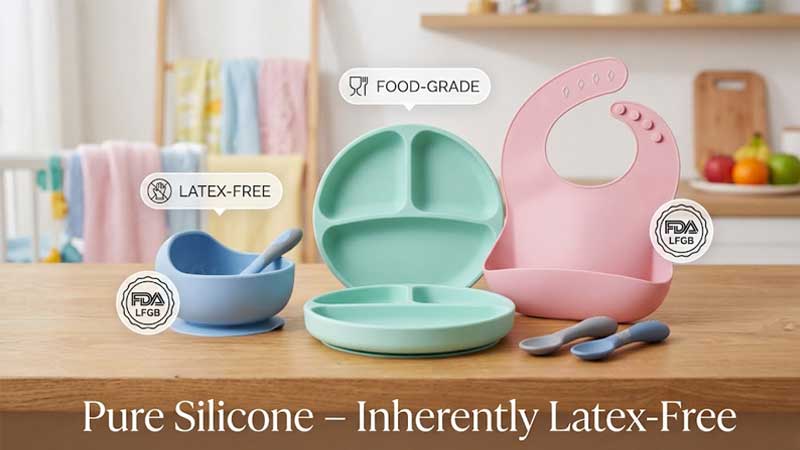
Yes, pure silicone starts latex-free. That built-in fact pushes its place in baby items and medical tools. Packages often state it straight as latex-free silicone. FDA-approved or LFGB-approved baby bowls and utensils carry the note because the material itself holds none of the rubber proteins. It serves as a reliable non-latex rubber choice.
Anyone with latex allergies can usually turn to silicone with confidence. The FDA cleared it for food contact and medical use long ago, and the track record shows no latex allergens coming from the silicone base.
Still, checking the whole product keeps things solid. The FDA likes the clear phrase “not made with natural rubber latex” because it cuts down confusion. If a silicone lid adds a rubber gasket or an adhesive strip, that extra piece could bring latex along. So the steps stay straightforward. Read the label for plain statements. Spot the certifications that support food or medical safety. When something feels off, ask the maker about every part. In most solid pieces the silicone leads and the rest stays on the same clean track. A bit of care keeps the worry away.
Can Silicone Products Still Cause Reactions?
Silicone itself stays free of latex. Real allergic reactions to the polymer show up so seldom they hardly register. The material counts as biocompatible, and the body takes it in without the immune response that latex proteins stir up.
A few side details still matter. Some pieces mix in pigments, fillers, or processing helpers. Lower-grade silicone might leave small residues that bother very sensitive skin. A colored section could react to the dye instead of the base.
Coatings and added parts play a role too. An item might look all silicone yet hide an adhesive or backing that brings its own concerns. What seems like a silicone reaction often traces to friction, moisture held underneath, or another surface element.
Plain irritation from fit or texture happens now and then. If something appears, the first step is to look over the full item for anything beyond the silicone. Medical-grade or food-grade pieces that cleared full biocompatibility checks almost never stir trouble. A small patch test can ease the mind when extra caution feels right.
How to Confirm a Product Is Truly Latex-Free?
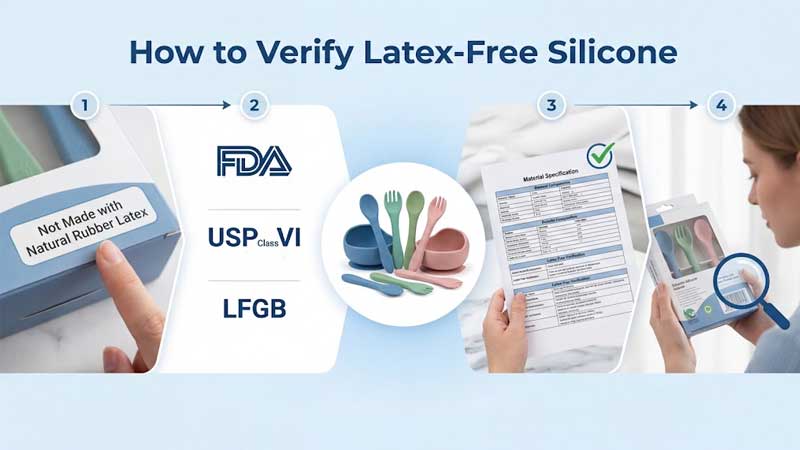
Begin with the label and the product page. Search for lines like “100 percent silicone,” “no natural rubber latex,” or the FDA-preferred wording. Certifications add weight. Food-grade pieces show FDA or LFGB marks. Medical items carry USP Class VI or ISO details. Those marks do not always spell out latex-free, yet any product cleared for food or medical use tends to skip rubber.
When the situation feels important, drop a note to the supplier. Request the material sheet and a full list of every component, dyes and adhesives included. Reliable makers keep that ready.
Look at the piece itself. Some mix materials. A silicone brush might hold a rubber tip or a plastic core. Make sure every spot that meets skin or food stays silicone.
For custom work the questions stay the same. Confirm the raw silicone grade, whether it uses platinum curing, and what sits in the colorants. Even the packaging bands can carry natural rubber, so check those as well. A few minutes spent asking now saves later headaches.
Why Silicone Is Chosen for Sensitive Users?
Silicone fits allergy-sensitive homes because it leaves out the proteins that cause issues. It stays neutral in smell and taste, which matters for baby use or food contact. The surface fights bacteria buildup and cleans without effort.
It keeps its soft touch through heat and cold. Sterilizing runs simple, whether boiling, washing, or machine cycles. Durability means it does not crumble or drop bits after time.
Certifications back the safety notes. Food-grade and medical-grade silicone come with test results that families and clinics rely on. That mix of gentleness, strength, and proven safety explains why silicone appears in bibs, utensils, bath toys, baking mats, masks, and seals whenever “latex-free” and “gentle” sit high on the list.
Buying Tips for Silicone Products
Shoppers do well to check plain labels. “100 percent silicone,” “latex-free,” “food-grade,” or “medical-grade” with the right numbers give the clearest sign. Stay with brands that show steady reviews and skip the very cheapest options that skip the paperwork.
Business buyers go deeper. Ask for the full spec sheet, compliance papers, and allergen test results. Request proof that every part meets the mark. If samples come available, test them.
Brand owners build trust by spelling details out. Name the curing method and list every certification. In the FAQ area explain that the silicone base carries no natural rubber proteins. When non-silicone parts appear, name them and confirm they stay latex-free. Clear talk cuts returns and grows steady customers.
FAQs
Is silicone safe for people allergic to latex?
Yes. The silicone polymer holds none of the proteins that set off latex reactions. Most folks with latex sensitivity use it without trouble. Even so, check the full product for any added straps or adhesives, and look for the food-grade or medical-grade marks.
Can a silicone product accidentally contain natural rubber latex?
The molded or extruded silicone itself stays free of latex. The risk appears only in extra components. A gasket or handle might bring it. Always read the complete description and ask the maker if anything feels unclear.
Is silicone better than latex?
It depends on the job. Silicone delivers heat resistance, stability, and low allergy risk, so it shines in bakeware, baby items, and medical tools. Latex gives great stretch at lower cost for gloves and bands. When latex allergy comes in, silicone usually feels like the better path.
Are all silicone products hypoallergenic?
The base polymer counts as hypoallergenic. Yet additives or curing shortcuts can shift things. Medical-grade or platinum-cured food-grade pieces test strongest. A quick patch test clears personal questions.
How do I know if a silicone product is truly latex-free?
Look for the exact wording on the label or page. Certifications confirm the material path. Reach out to the supplier for the material declaration when details run thin. Check packaging and every contact surface. Honest makers share the facts right away.
Conclusion
Silicone and natural rubber latex follow separate paths from the beginning. Silicone carries no tree-sap proteins and works as a steady, low-allergy option for baby gear, kitchen tools, medical devices, and more. Anyone looking for a latex-free choice often finds silicone meets the need well.