
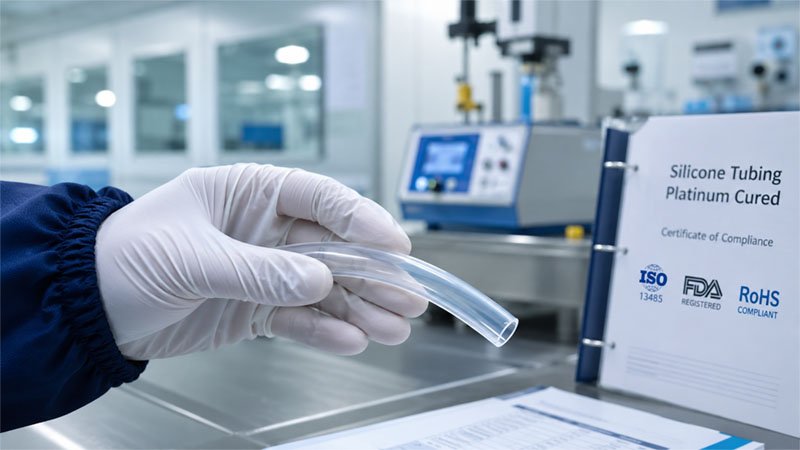
“Medical grade silicone” is one of the most misused labels in B2B procurement. The same wording appears on baby pacifiers, infusion tubing, and long-term implants — but each one is held to a different standard. Most generic articles skip that distinction.
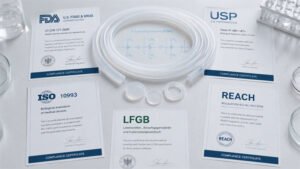
Medical-grade silicone is platinum-cured silicone that has passed at least one recognized biocompatibility standard — typically FDA 21 CFR 177.2600 (contact), USP Class VI (short-term medical use), or ISO 10993 (clinical device classification). The applicable standard depends on contact type and contact duration, not on the silicone itself.
If your job is to decide whether a product even needs medical-grade material before sending an RFQ, the sections below give you the boundary lines.
What “Medical Grade Silicone” Actually Means
There is no single global definition. When a factory calls a compound “medical-grade,” three conditions are usually met at the same time:
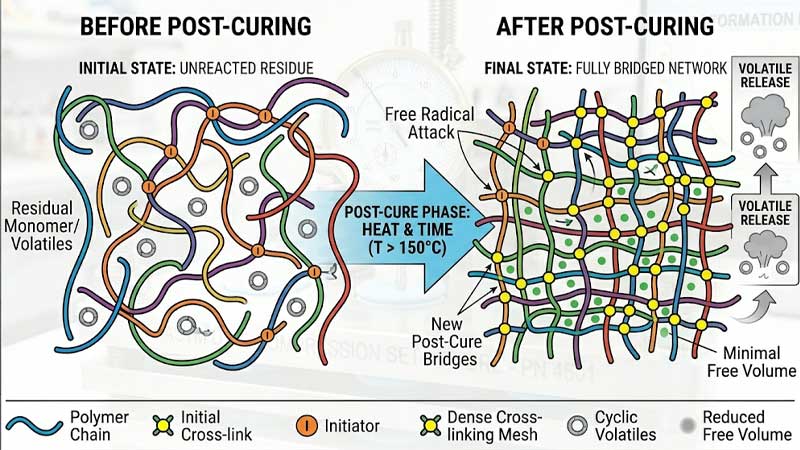
- Platinum-cured (addition cure), not peroxide-cured — no peroxide by-products, no residual odor, no yellowing.
- Compounded from base polymers tested against a recognized biocompatibility standard (FDA, USP, or ISO 10993).
- Produced under controlled conditions, typically ISO 14644-1 Class 8 cleanroom (≈ Class 100,000) or stricter.
Any compound missing one of those three is not medical-grade in a procurement sense, regardless of marketing wording.
The Three Compliance Tiers (and Where Each Applies)
Different applications require different certifications. Picking the wrong tier either over-spends on material or fails audit at registration.
| Standard | Scope | Typical Contact | Indicative Material Cost vs Industrial HTV |
|---|---|---|---|
| FDA 21 CFR 177.2600 | Food / oral / skin contact safety | Pacifiers, nipples, kitchenware | +10–20% |
| USP Class VI (USP <87> / <88>) | Short-term medical contact, ≤ 30 days | Tubing, masks, short-use catheters | +30–50% |
| ISO 10993 series | Full clinical biocompatibility battery (cytotoxicity, sensitization, irritation, systemic toxicity) | Implants, long-term contact devices | +50–100% |
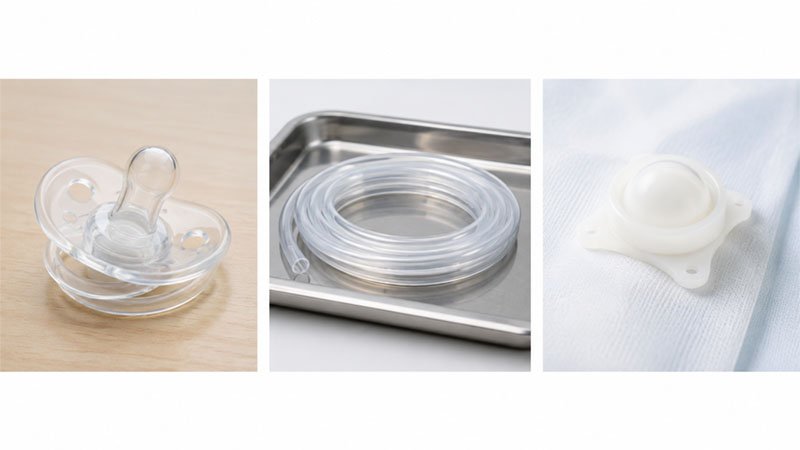
Key boundary: FDA 21 CFR 177.2600 is a food-contact rule, not a medical device rule. A compound described as “FDA-approved silicone” is not automatically cleared for medical use. For the finished-device assessment, see how silicone biocompatibility is evaluated under ISO 10993.
When You Actually Need Medical-Grade
For procurement screening, the decision is driven by contact type and contact duration — not by the product category name.
- No skin or oral contact (industrial seals, external housings, structural parts): standard HTV silicone is sufficient. Medical-grade is over-spec.
- Repeated oral or skin contact (bibs, mats, kitchen tools, pacifiers): FDA 21 CFR 177.2600 plus LFGB (EU market) is the working baseline. USP Class VI adds cost with no audit benefit.
- Short-term medical device contact (≤ 30 days, intact skin or mucosa — e.g. infusion tubing, respiratory masks): USP Class VI is the working minimum.
- Implant or long-term tissue contact (> 30 days): ISO 10993 is mandatory; FDA 510(k) device clearance is a separate process at the device level, not the material level.
If the product sits below the medical device boundary, paying for USP Class VI raw material rarely improves the sale and adds 30–50% to material cost.
What Changes on the Factory Side

Once a project is locked to medical-grade, three things change at quote stage:
- Material: switches from peroxide-cured HTV to platinum-cured HTV or LSR. Raw material price rises roughly 25–40%.
- Tooling and line: production must run in a cleanroom (ISO 14644-1 Class 8 minimum). Shared peroxide-cure tooling is not allowed due to cross-contamination risk.
- Lead time: material CoA, biocompatibility test reports, and lot traceability typically add 1–2 weeks before first article approval.
These are direct consequences of the standard, not optional supplier surcharges.
Common Misreads to Avoid Before You Quote
- “Food-grade” ≠ medical-grade. FDA 21 CFR 177.2600 does not cover biocompatibility for medical use.
- “Platinum-cured” alone ≠ medical-grade. The compound must also pass the applicable USP or ISO 10993 test set.
- “LSR” ≠ medical-grade. LSR describes a process (liquid silicone injection); the line can be either industrial or medical depending on compound and cleanroom class.
- A material CoA covers the raw silicone only. Final device certification (FDA 510(k), CE MDR) is the buyer’s responsibility, not the silicone supplier’s.
Typical Medical-Grade Applications We Manufacture
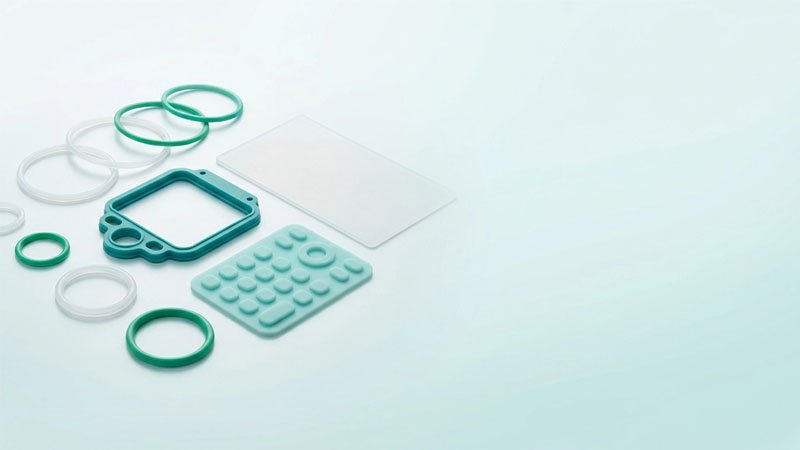
Three product lines cover most of the medical-grade RFQs we quote. Each one sits on a different compliance tier — which determines the test reports required, the line it runs on, and the unit price.
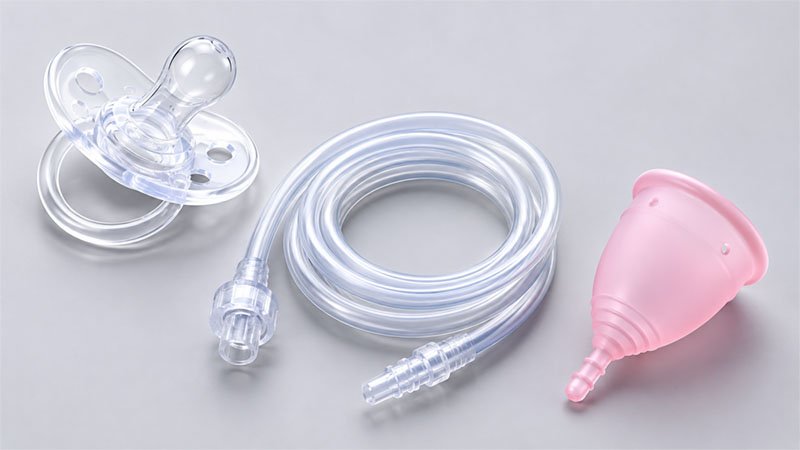
| Compliance Tier | Typical Product Line | Why This Tier Applies |
|---|---|---|
| FDA 21 CFR 177.2600 | Silicone baby pacifiers and other food-contact parts | Repeated oral contact, but not a registered medical device — food-grade compliance is the working baseline |
| USP Class VI (≤ 30 days) | Silicone hoses and tubing for clinical equipment | Surface or short-duration fluid-path contact in medical devices; USP <87> / <88> cytotoxicity reports required |
| ISO 10993 (long-term / mucosal) | Medical-grade silicone menstrual cups | Cumulative intravaginal contact crosses the 30-day threshold; full ISO 10993-5 and -10 testing needed |
This is not a full catalog — it’s where the compliance tier most directly drives quoting. For other categories, the same rule applies: contact type and duration decide the standard, not the product name.
FAQ
Is FDA-approved silicone the same as medical-grade silicone?
No. FDA 21 CFR 177.2600 covers food contact safety. Medical use requires USP Class VI or ISO 10993 testing.
Does medical-grade silicone need to be platinum-cured?
In practice, yes. Peroxide residues fail USP Class VI cytotoxicity testing, so medical-grade compounds in production today are platinum-cured.
What is the typical MOQ for medical-grade silicone parts?
Most factories quote medical-grade LSR from 5,000–10,000 pieces, because cleanroom line setup is not economical for smaller runs.
Can I downgrade later from medical-grade to food-grade to cut cost?
Only if the product never carries a medical claim. Once a device is registered under FDA 510(k) or CE MDR, material substitution requires re-validation.
Before You Send the RFQ
To get a usable medical-grade quote, three inputs must be confirmed upfront:
- Contact type and contact duration (skin / mucosa / implant; ≤ 30 days or > 30 days).
- Target market and required certification (FDA 21 CFR 177.2600, USP Class VI, ISO 10993-5 / -10).
- Whether the buyer holds the device registration (510(k) / CE MDR) or expects supplier support.
Without these three inputs, any “medical-grade” quote you receive is a placeholder, not a real price.



One Response
I would bookmark this page for Yeahman FNF. It is useful when you want to replay the mod or send it to someone else.