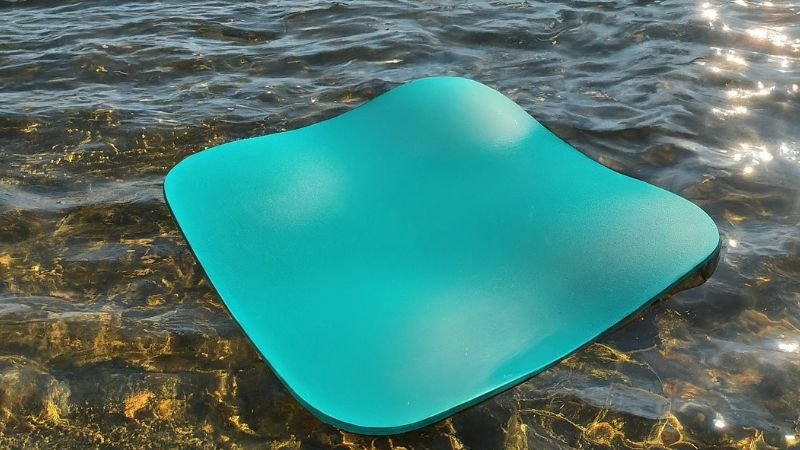
Have you ever dropped a silicone kitchen utensil into a sink full of water and watched it sink to the bottom? This might lead you to wonder: Does silicone actually float? This question seems straightforward, but the answer isn’t as simple as you might think. Let’s dive into the intriguing world of silicone and its relationship with buoyancy.
Yes, silicone can float, but it depends on several factors such as its density and the design of the specific product. Generally, silicone items designed with less density than water will float.
Now that you know the basic answer, let’s explore more about why and how this happens.
How Silicone Density Affects Floatation
The density of silicone is the most fundamental factor in determining whether it floats or sinks. Density is defined as mass per unit volume, and it directly impacts the material’s buoyancy according to Archimedes’ principle. Most unfilled silicones have a density slightly higher than water, usually around 1.1–1.2 g/cm³. This means a solid, unmodified silicone block may sink under normal conditions.
Influencing factors:
- Type of silicone:LSR (Liquid Silicone Rubber) is usually more flexible and slightly less dense than HTV (High-Temperature Vulcanized) silicone, giving it a slightly higher chance of floating in small quantities.
- Fillers: Adding fillers such as glass beads, carbon powders, or mineral additives can drastically increase density. For example, glass-filled silicone often sinks even if molded into a hollow shape.
- Color and pigmentation: Heavy pigments can also slightly increase density. Transparent or lightly colored silicones are more likely to float if other factors remain constant.
Practical design tip: Engineers can adjust density by using specific silicone grades and minimizing fillers when buoyancy is desired. This is critical in industries like marine devices, bath toys, or floating medical components.
Silicone Material Composition and Additives
Beyond density alone, the chemical composition of silicone plays a significant role in floatation. Silicones are primarily composed of siloxane chains, whose length and crosslinking determine flexibility, strength, and slightly, density.
Key points:
- Chain length and crosslinking: Longer polymer chains increase flexibility, which can slightly reduce material density. Crosslinking creates a more rigid structure but does not significantly increase density.
- Fillers and additives: While fillers increase density and can lead to sinking, certain additives like foam agents or low-density fillers can intentionally make silicone lighter. Pigments, UV stabilizers, flame retardants, and plasticizers may have minor effects but can accumulate in industrial formulations.
- Impact on water interaction: Silicones are generally hydrophobic, but surface treatments or certain additives may alter interaction with water, influencing how well a part floats initially.
Example: A silicone medical float used in a water therapy pool might combine low-density fillers and precise polymer formulation to maintain consistent buoyancy over long-term exposure.
Structure and Geometry Influence
Even with the same material, the shape and structure of silicone parts greatly influence floatation. Engineers and product designers often rely on geometric adjustments to control buoyancy.
- Hollow designs: Air pockets inside silicone significantly reduce effective density, allowing parts to float even when the base silicone is denser than water.
- Thin-walled vs thick-walled components: Reducing wall thickness lowers mass, making floatation more likely without sacrificing surface area.
- Layered or composite designs: Combining dense and light silicone layers lets designers fine-tune the center of mass and overall buoyancy. This technique is common in industrial floatation components like sensor housings or floating seals.
- Shape optimization: Rounded or convex shapes can displace more water and improve stability when floating, while flat, solid slabs may tip or partially submerge.
DIY advice: Hobbyists making silicone models can add small internal cavities or use molds to create lightweight, hollow parts that float reliably.
Environmental Factors and Aging Effects
Silicone does not exist in a vacuum. Environmental factors can gradually alter floatation performance.
- Temperature effects: Silicone expands slightly when heated and contracts when cooled. These changes can affect overall density and flexibility, especially in large or thin components. Extreme temperature shifts may alter floatation performance.
- UV and chemical exposure: Prolonged sunlight or chemical contact can degrade silicone at the microscopic level, creating tiny voids or increasing rigidity. Over time, this may increase effective density and reduce buoyancy.
- Water type: Saltwater is denser than freshwater, which means a silicone piece may float in a pool but sink in freshwater if density is marginally above 1 g/cm³.
- Long-term immersion: Continuous immersion may lead to minor absorption in some formulations or surface alterations that influence how the part sits in water.
Industrial insight: Marine electronics housings, floating pool toys, and silicone medical devices must account for these environmental variables to ensure consistent performance.
Calculating Silicone Buoyancy
Using Archimedes’ principle, designers can predict whether silicone will float. The principle states that the buoyant force equals the weight of displaced water. If the buoyant force exceeds the object’s weight, the silicone floats; otherwise, it sinks.
Practical example:
- A solid silicone block weighs 50 g and displaces 40 g of water → sinks
- A hollow silicone float with internal cavities weighs 30 g and displaces 35 g of water → floats
Design tip: Engineers can use this principle to determine optimal cavity volume, wall thickness, and material composition to achieve desired buoyancy.
Industrial Applications
Silicone floatation is critical across industries:
- Toys: Floating bath toys, pool accessories, and novelty items must maintain consistent buoyancy without compromising safety.
- Medical devices: Aquatic therapy components, floating medical seals, or sensors must reliably float for patient safety and device performance.
- Electronics: Outdoor and marine silicone housings protect sensitive electronics and sometimes require floatation for easy retrieval.
- Consumer goods: Floating cup lids, silicone straw accessories, and kitchen floatation aids are popular in C2C markets.
Practical Tips to Control Silicone Floatation
- Choose appropriate material: Use low-density silicone grades or minimize fillers for buoyancy.
- Design hollow structures: Internal cavities reduce overall density.
- Layering: Combine dense and light layers to fine-tune flotation.
- Prototype testing: Small-scale water testing before mass production prevents design errors.
- Surface treatment: Avoid coatings that significantly increase weight or water adhesion.
DIY advice: For small home projects, silicone molds with built-in cavities or lightweight fillers can create floating toys or models.
FAQ
Why do small silicone pieces float while larger pieces sink?
Weight accumulates faster than volume in larger pieces, reducing net buoyant force. Hollowing or thin walls may be needed.
Can temperature and water type affect silicone floatation?
Yes. Silicone may behave differently in cold vs warm water and in freshwater vs saltwater due to density and expansion changes.
How long can silicone maintain floatation in outdoor or chemical-exposed environments?
High-quality silicones maintain performance for years, but UV, chemical, or prolonged water exposure may gradually reduce floatation.
How can engineers precisely control silicone floatation?
Through careful selection of silicone grade, fillers, structural design (hollow, thin-wall, layered), and prototype testing.
Conclusion
Silicone floatation depends on density, material composition, geometry, environmental factors, and careful design. By understanding and controlling these variables, designers and engineers can produce silicone parts that float or sink exactly as needed. Hobbyists and DIY enthusiasts can experiment with hollow structures or low-density formulations for small projects.