Introducing solids can be exciting—but also confusing. How do you know your baby is truly ready?
Babies are usually ready for solids between 4 to 6 months, showing signs like head control, sitting up, and interest in food. Silicone tools can make the transition smoother and safer.
Feeding is more than just food—it’s a milestone in development. Understanding the timing and tools can help you support your baby confidently. Let’s break down the signs and how silicone feeding products play a key role in the journey.
What are the developmental signs of solid food readiness?
It’s easy to get caught up in age milestones, but readiness depends more on development than the calendar.
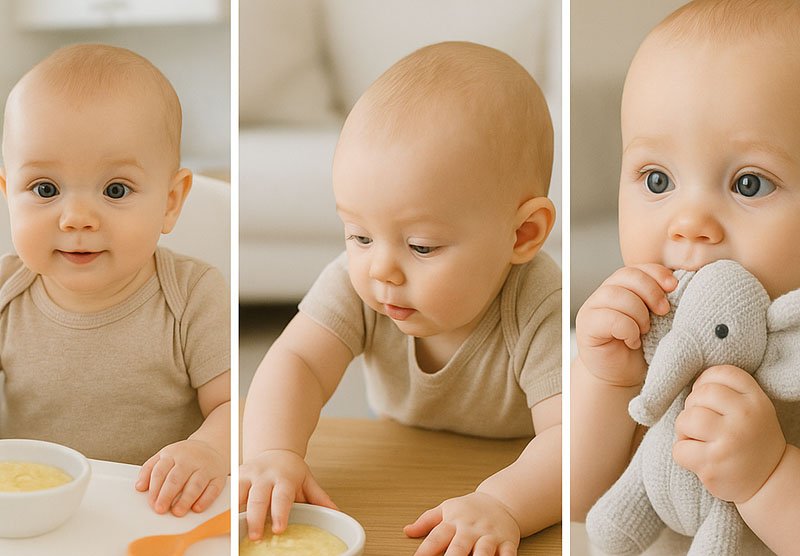
Signs include head control, sitting with support, mouthing behavior, and showing curiosity about what you’re eating.
Watch Their Behavior, Not the Clock
I’ve talked with many parents and manufacturers, and the most common question is: “Is my baby ready?” It’s not just about hitting the 6-month mark. Some babies are ready at 5 months, while others may take longer.
Here are the main readiness signs:
- Good head and neck control: Your baby can hold their head steady while sitting upright.
- Sitting up with support: Babies should be able to sit in a high chair or on your lap with minimal assistance.
- Mouthing toys and hands: Increased chewing motions and interest in putting things in their mouth.
- Interest in food: Reaching for your food or mimicking your chewing.
- Loss of tongue-thrust reflex: They no longer automatically push food out with their tongue.
Each baby is unique. Watch their cues. If these signs align, it’s a good time to start introducing solids—gently and patiently.
How do silicone tools support this transition?
Solid food means new textures, temperatures, and techniques. Tools can either help—or make things harder.
Silicone tools are soft, flexible, and safe, helping babies explore food with confidence and less mess.
Tools Designed for Gentle Exploration
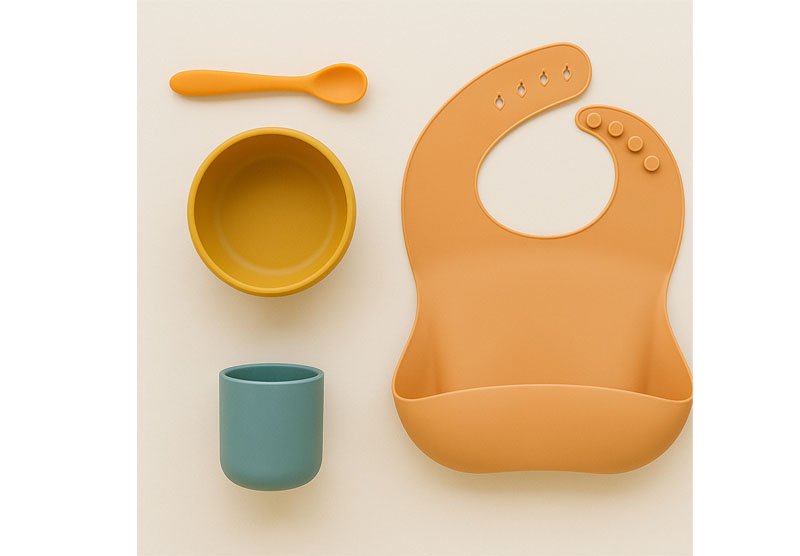
One reason I advocate for silicone feeding products is their versatility. When babies first start solids, they don’t just eat—they squish, drop, chew, and smear. That’s how they learn.
Silicone spoons are soft on tender gums and flexible enough for babies to explore independently. Bowls with suction bases stay in place, reducing spills. Divided plates introduce variety without overwhelming them. And silicone bibs with food catchers? Game changers.
Here’s how different silicone tools support early feeding:
| Silicone Tool | Benefit |
|---|---|
| Soft-tipped Spoon | Gentle on gums, easy for first bites |
| Suction Bowl | Prevents tipping and messes |
| Bib with Pocket | Catches food, reduces cleanup |
| Teething Feeder | Allows safe tasting of soft foods |
| Open Training Cup | Encourages sipping and motor control |
These aren’t just tools—they’re part of the learning experience. They help babies build confidence, reduce frustration, and keep the feeding environment safe and engaging.
What’s the role of baby-led weaning in starting solids?
Some parents follow the traditional spoon-fed method, others choose baby-led weaning (BLW).
Baby-led weaning encourages self-feeding from the start using soft, graspable solids. Silicone tools support this with safe, easy-to-handle designs.
Encouraging Independence from the First Bite
I remember working with a client who insisted on designing an entire silicone set specifically for baby-led weaning. Their goal was to make self-feeding safer and more enjoyable—and it worked.
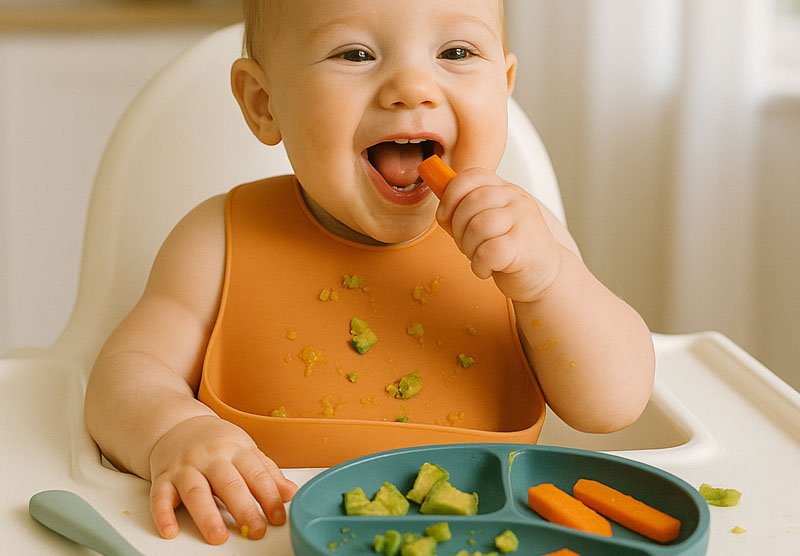
BLW focuses on giving babies control over how much they eat and what they explore. Instead of spoon-feeding purees, parents offer soft finger foods like avocado slices, steamed carrots, or banana chunks.
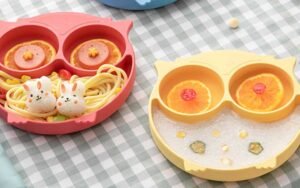
Silicone plates with divided sections help introduce different textures and flavors. Easy-grip utensils allow babies to practice picking up and chewing safely. And since silicone is non-slip, everything stays more stable on highchair trays.
BLW also encourages:
- Fine motor development through grasping and self-feeding
- Better appetite control and eating habits
- Family mealtime bonding from an early age
If you choose BLW, silicone tools can make the experience safer, cleaner, and more rewarding for both of you.
What foods should you start with—and how does silicone help?
First foods matter, and the tools you use can make those first meals easier to manage.
Begin with soft, easy-to-digest options like mashed avocado, banana, and oatmeal. Use silicone spoons and feeders to safely introduce textures.
Combining Safe Foods with Smart Tools
The goal is to make early feeding as stress-free as possible. The last thing you want is a hard plastic spoon hurting tender gums or a slippery bowl flying off the highchair.
Here are good first food options:
- Mashed avocado
- Steamed and mashed sweet potato
- Mashed banana
- Iron-fortified baby oatmeal
- Pear or apple puree
Pair these with silicone tools:
| First Food | Recommended Tool |
|---|---|
| Banana/Avocado | Silicone teething feeder |
| Oatmeal/Puree | Soft silicone spoon |
| Soft finger foods | Suction plate, divided dish |
| Steamed veggie sticks | Open plate with grip edges |
These tools let babies explore safely and let parents feel more in control of the chaos that often comes with mealtime.
How do you prevent choking and ensure safety?
Safety is every parent’s top concern during the transition to solids.
Always supervise meals, sit babies upright, and avoid choking hazards. Silicone tools help with portion control and safe feeding textures.
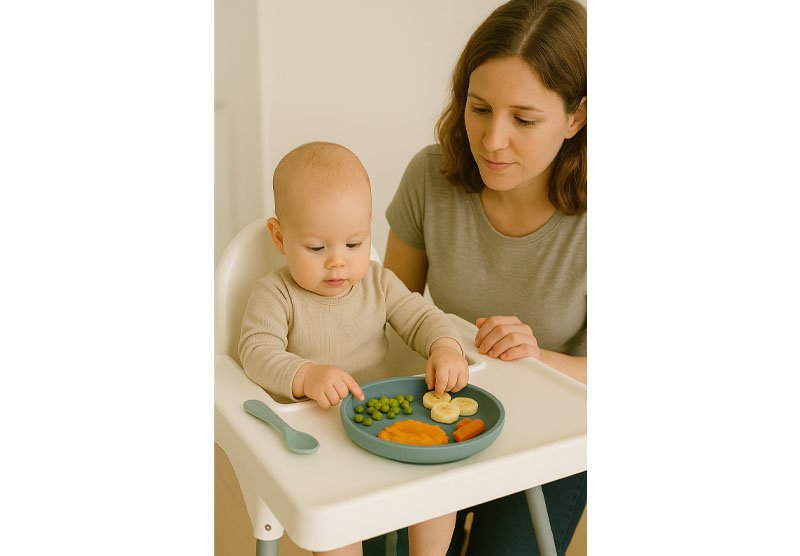
Creating a Safer Feeding Environment
I’ve tested countless products with safety in mind. Feeding tools must match not just what babies eat but how they eat.
Silicone utensils have rounded edges and soft surfaces. That reduces injury risk during mouthing. Suction bases keep bowls and plates secure so babies aren’t chasing their food around. And silicone feeders let babies explore soft solids without swallowing large pieces.
Basic safety practices include:
- Always supervise feeding
- Offer age-appropriate, soft foods
- Avoid small, round, or hard foods (grapes, nuts, chunks of meat)
- Keep baby seated upright in a highchair
- Use small portions to prevent overstuffing
Combine these practices with safe feeding tools, and you’ll dramatically reduce the risks associated with starting solids.
When should you introduce drinking tools like silicone cups?
Feeding isn’t just about solids—learning to drink is part of the process too.
You can introduce silicone open cups or sippy cups around 6 months to develop oral motor skills and healthy habits.
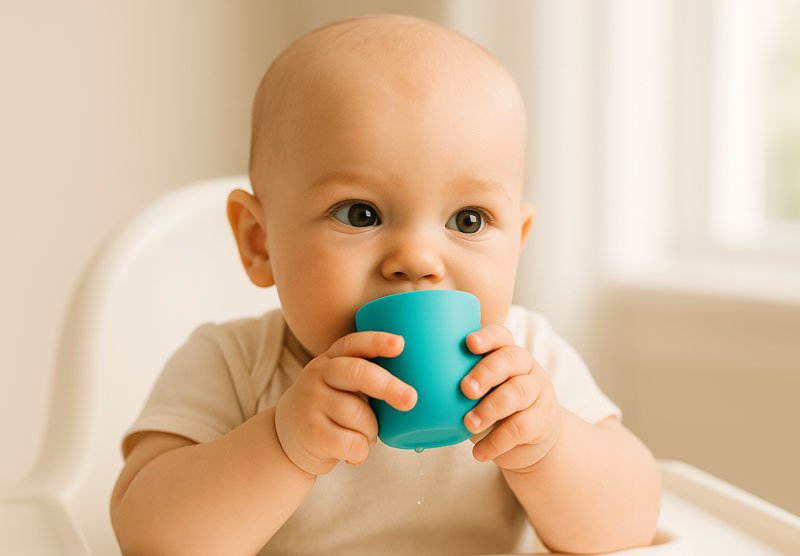
From Bottle to Cup: A Smooth Transition
Some parents wait too long to introduce cups. But pediatricians now recommend introducing open or straw cups as early as 6 months, alongside solids.
Silicone training cups are ideal for this stage. They’re soft, easy to grip, and won’t hurt your baby if dropped—or thrown. Unlike hard plastic, they’re gentler on teeth and gums.
Start with small amounts of breast milk, formula, or water (if appropriate). Let your baby explore the cup during mealtime. Don’t worry if they spill—spilling is learning.
Here’s how different cup types compare:
| Cup Type | Recommended Age | Benefits |
|---|---|---|
| Open Silicone Cup | 6+ months | Supports natural sipping and control |
| Straw Cup | 6–9 months | Encourages strong lip closure |
| Hard Spout Sippy | Not recommended | May interfere with oral development |
Start early and let your baby practice. It builds confidence and helps with smoother bottle weaning later.
Conclusion
Knowing when your baby is ready for solids is all about watching their cues—and choosing the right tools. Silicone feeding sets make the transition safer, cleaner, and more enjoyable for both of you.