When we talk with customers about baby products, the discussion almost always starts with materials. Parents may not know technical terms, but they are very sensitive to smell, texture, and long-term use.
Over the years, food-grade silicone has gradually become a standard option in this category. It is no longer limited to a few high-end items. Today, it is used across pacifiers, teethers, feeding tools, bibs, and simple toys. This change came from repeated use in the market, not from marketing trends.
What Is Food-Grade Silicone?
Food-grade silicone is a stable material. In daily use, it does not react much. Saliva, milk, oils, and heat do not easily change it.
What matters more is consistency. After long periods of boiling, steaming, and washing, silicone usually keeps its softness and shape. This is one of the reasons it performs well in baby products.
Compared with PVC or soft plastics, silicone stays flexible without added plasticizers. Compared with natural latex, it avoids allergy concerns. These are not selling points on paper. They are issues that show up later if the wrong material is used.
One-piece molding is another practical advantage. Fewer joints mean fewer cleaning problems. This detail is often overlooked at the design stage but becomes important after real use.
The table below shows a simple comparison between food-grade silicone and other common baby-product materials:
| Material | Heat Resistance | BPA-Free | Aging Resistance | Softness | One-Piece Molding |
| Food-Grade Silicone | Excellent | Yes | Very Good | Very Soft | Yes |
| PVC | Average | Possible | Poor | Medium | Difficult |
| TPU | Good | Yes | Affected by Oils | Medium-Soft | Yes |
| Natural Latex | Poor | Yes | Poor and Allergenic | Soft | Difficult |
Where Silicone Is Commonly Used?
In our projects, silicone appears in almost every daily baby product. The material adapts well to different shapes, thicknesses, and uses.
Below are the main product types we deal with most often.
Pacifiers and Soothers
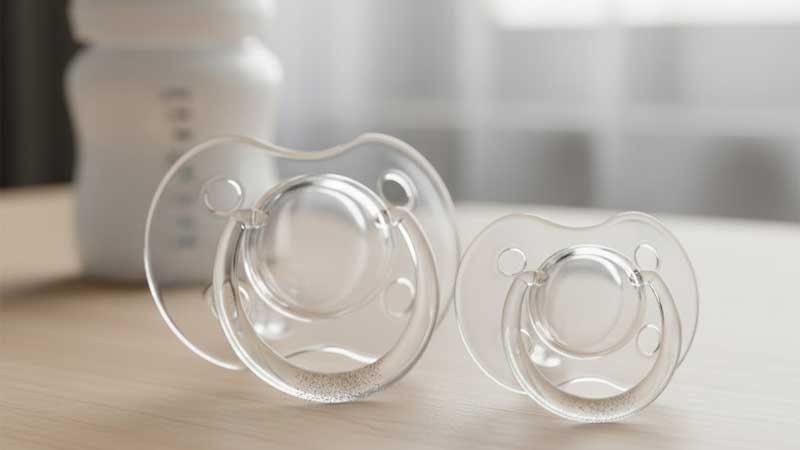
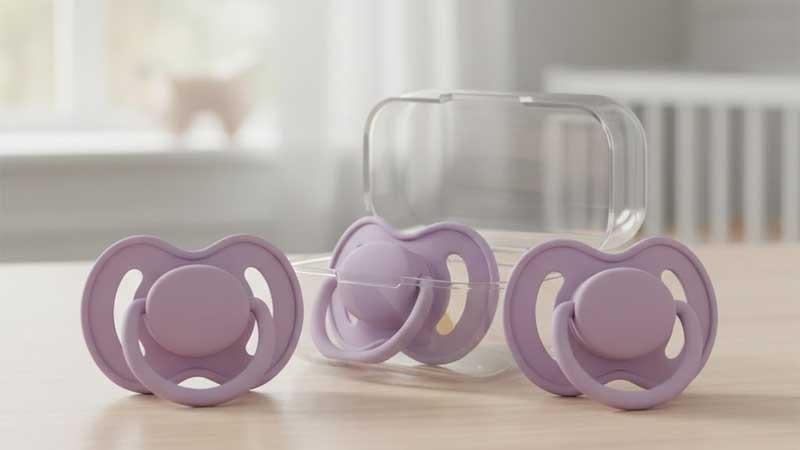
Pacifiers are usually the first point of contact between silicone and a baby. Material quality shows up quickly here.
Good silicone holds up under repeated biting. It does not tear easily and does not develop odor after long-term use. For this reason, most reliable pacifiers are molded in one piece using food-grade or medical-grade silicone.
Typical design considerations include:
- Softness matched to age stage
- A natural curve that supports sucking
- One-piece structure for safety
- Internal support to prevent collapse
These details are basic, but skipping them usually causes problems later.
Silicone Bottles and Related Parts
Silicone bottles are chosen mainly for practical reasons. They do not shatter when dropped, and they feel softer than hard plastic or glass.
From feedback we receive, parents appreciate bottles that are easy to clean and comfortable to hold. Designs that allow the bottle body to be turned inside out are especially popular.
In everyday use, the main advantages are:
- Drop resistance
- Soft grip
- Easier cleaning
- Compatibility with standard bottle caps
- Suitability for repeated sterilization
Teethers and Teething Toys
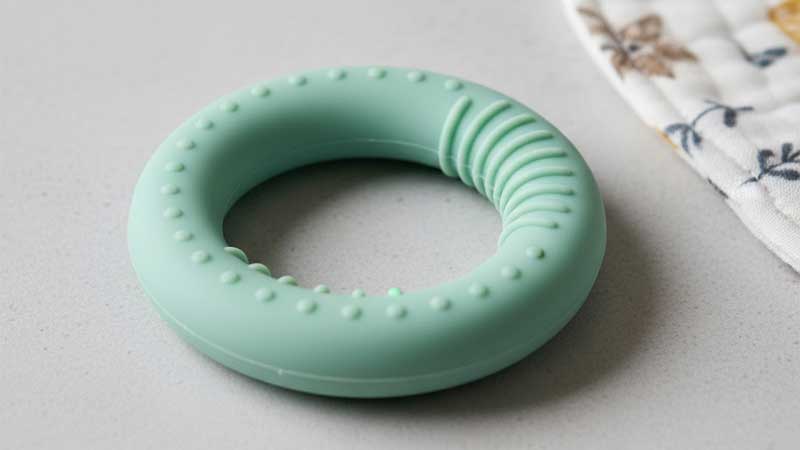
Teething products place constant stress on materials. Silicone performs well because it combines flexibility with durability.
Designers often use different textures and thicknesses in one product. This helps provide varied chewing feedback while keeping the structure simple and safe.
Most reliable designs focus on:
- Smooth transitions between soft and firm areas
- Surface textures that are easy to clean
- One-piece construction
- Shapes that are easy to hold
Feeding Tools
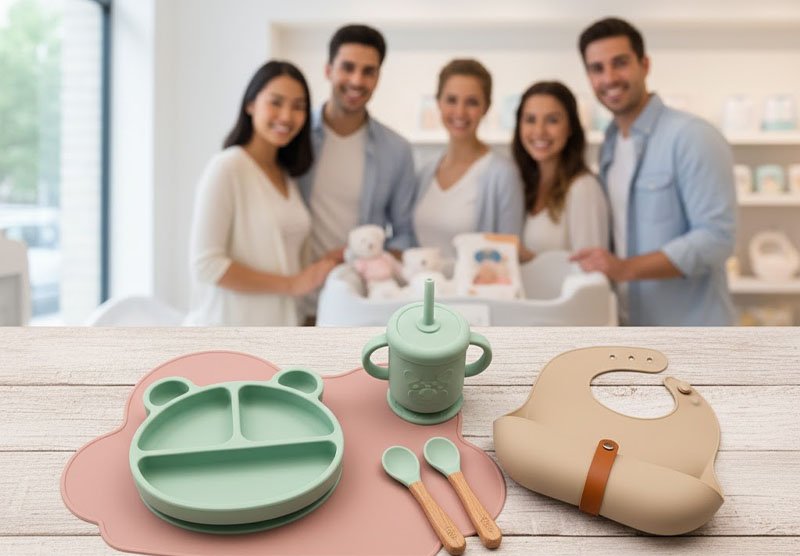
Silicone bowls, plates, spoons, and cups are widely used during feeding stages.
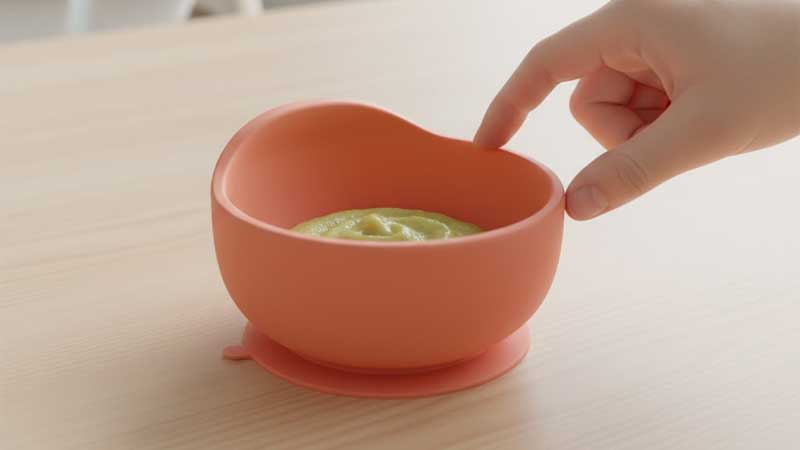
Suction bowls rely on slightly harder silicone at the base. When pressed down, they form a seal that helps keep the bowl in place. This does not eliminate mess, but it reduces it.
Parents usually choose silicone feeding tools because they are:
- Heat resistant
- Soft and impact-resistant
- Easy to wash
- Stable in color
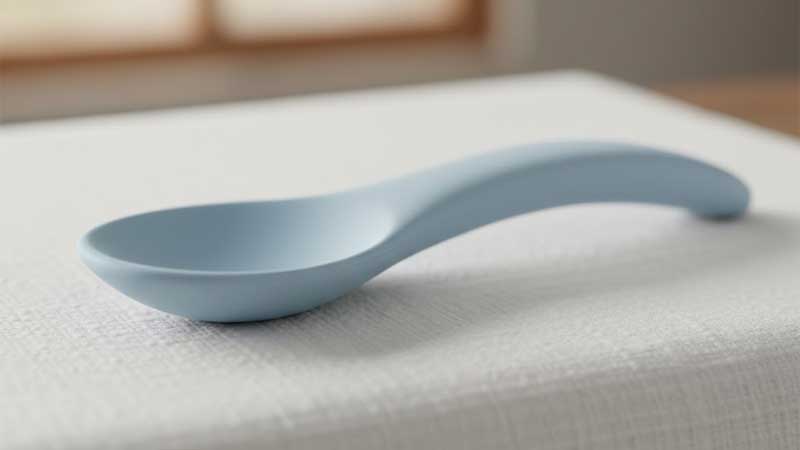
Soft spoons protect gums. Silicone straws bend without cracking and recover their shape after use.
Silicone Bibs
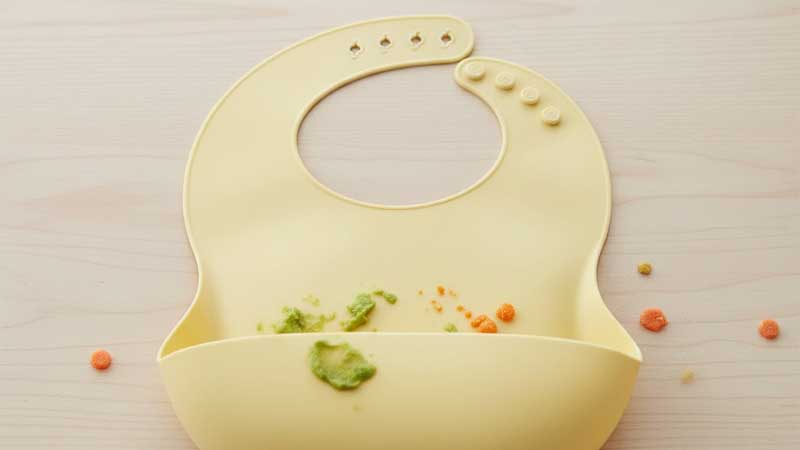
Silicone bibs are valued for convenience.
They sit comfortably, catch food effectively, and clean easily with water. Folding and storage are simple, which matters for daily use.
Over time, good silicone bibs keep their shape and do not absorb odors.
Silicone Toys and Sensory Products
Silicone toys are widely used in early learning and sensory play. The material does not chip or splinter. This reduces safety concerns.
Common products include stacking toys, bath toys, and textured balls. Drainage and cleaning are easier compared with many hollow plastic designs.
How to Check if Silicone Baby Products Are Safe?
In practice, quality differences are easy to notice.
Good silicone:
- Has little or no odor
- Feels dry, not sticky
- Recovers quickly after bending
- Shows even color
- Uses simple, one-piece structures
Strong smell, deformation during heating, or oily residue usually indicate material issues.
Cleaning and Replacement
Silicone handles boiling and steaming well. Normal sterilization does not damage it.
Avoid abrasive tools. If oil residue appears, mild cleaners such as baking soda work well.
Over time, all materials age. When silicone hardens or loses elasticity, replacement is recommended.
A Note from Long-Term Production Experience
Silicone became widely used in baby products because it performs reliably over time. In our experience, stable materials and simple structures reduce problems after products reach the market.
Fancy features matter less than consistent quality.
Working with Us on Silicone Baby Products
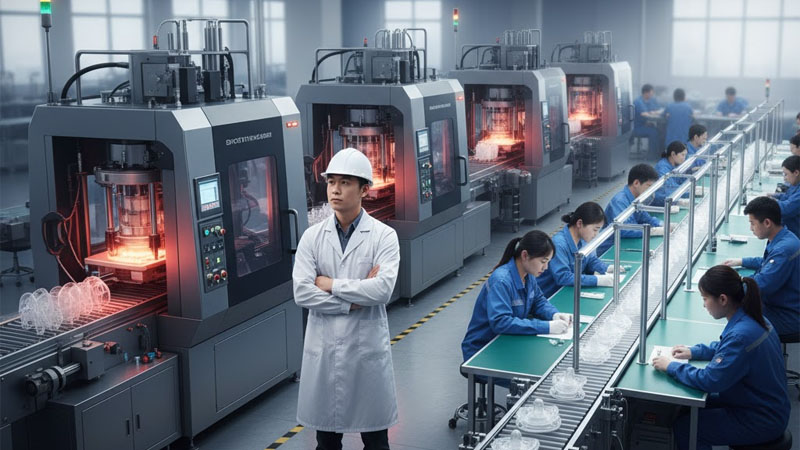
We have more than ten years of experience producing silicone baby products. Our work covers material selection, structural design, molding, and quality control.
If you are planning to develop or customize silicone baby products, you are welcome to share your ideas with us. We focus on practical solutions and long-term cooperation.