A baby bib looks like a very simple product. Many people just pick one based on color, price, or a quick online review. At the beginning, almost all bibs seem fine. But after a few weeks of use, differences start to show.
Some bibs develop a smell that does not go away. Some become slightly sticky after repeated use. Others lose their shape, and the pocket no longer works well. These are common complaints, not rare cases.
From what I have seen in production and product feedback, these problems usually come from two areas. One is the material itself. The other is how the product was made and controlled during production.
So the real question is not just which bib looks good.
It is whether the product can still perform well after daily use.
What Is a Silicone Baby Bib?
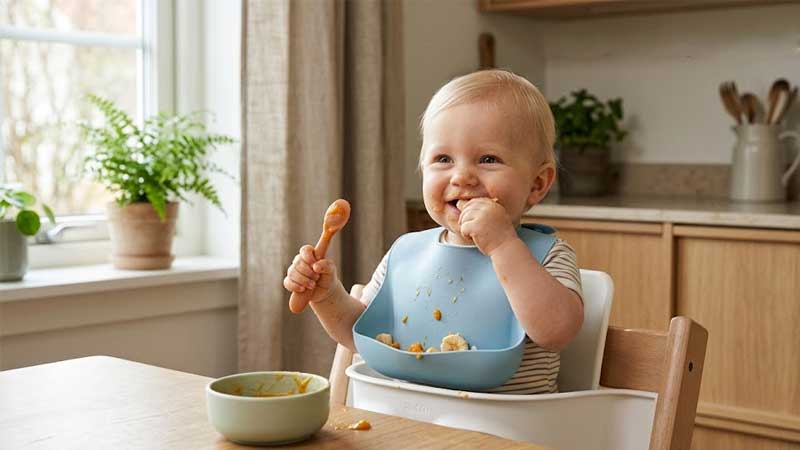
A silicone baby bib is made from food-grade silicone rubber. This material is widely used in food-contact products because it is stable, flexible, and resistant to heat and oil.
Unlike fabric, silicone does not absorb liquids. Milk, soup, and oil stay on the surface. This makes cleaning much easier and also helps reduce odor over time.
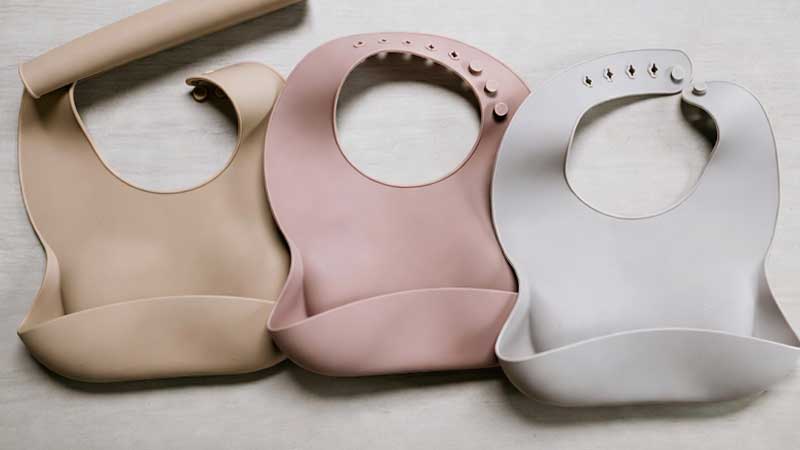
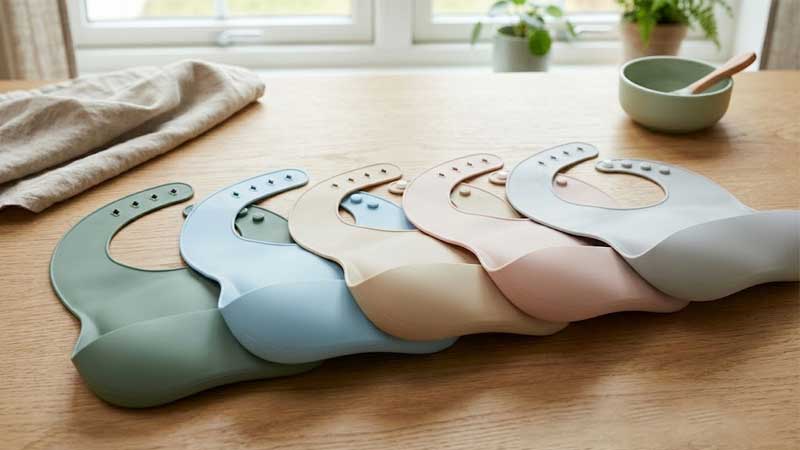
Most silicone bibs are made as a single molded piece. There are no stitched parts or glued joints. This structure improves durability and reduces the risk of damage during washing.
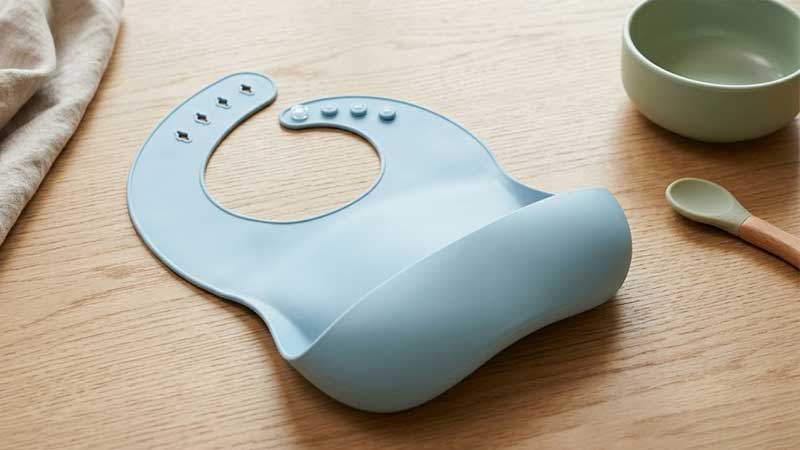
The pocket at the bottom is one of the most important features. It is designed to stay open and catch falling food. But this only works if the material and thickness are well balanced.
If the bib is too soft, the pocket collapses inward during use. If it is too stiff, it becomes uncomfortable and may push away from the baby’s body. A well-made product always finds a middle ground here.
Types of Silicone Bibs
By Structure and Style
There are several common structures on the market. Roll-up bibs are designed for convenience. They are easy to fold and fit into a small bag. This is useful for travel or outdoor use.
On the other hand, bibs with a fixed pocket structure usually perform better during feeding. The pocket stays open more easily and catches food more effectively. This type is more suitable for daily use at home.
Flat designs are also available, but in practice, they do not solve the main problem, which is catching falling food. They work more like a basic cover rather than a functional tool.
So the choice depends on how the bib will be used. Frequent travel favors flexibility, while daily feeding favors structure.
By Fastening Method
The fastening method affects both comfort and durability. Button closures are the most common option. They are simple, stable, and allow size adjustment as the baby grows.
Some products use Velcro for convenience. It is easy to put on and remove, especially for new parents. However, after repeated use and washing, Velcro tends to lose its grip. It can also collect lint, food particles, and dust.
There are also adjustable strap designs, but they are less common. In most cases, a well-designed button system is still the most reliable choice over time.
By Functional Design
Functional details often decide whether a bib works well in real life. The depth of the pocket is one of the most important factors. A shallow pocket may look neat, but it does not catch much food.
A deeper pocket improves performance, especially when the baby starts self-feeding. At that stage, food dropping increases, and the bib needs to handle more mess.
The edge of the pocket also matters. Reinforced edges help the pocket stay open. Without this support, the pocket may fold inward during use.
These are small design differences, but they directly affect daily experience.
Why Silicone Bibs Are Often the Better Choice?
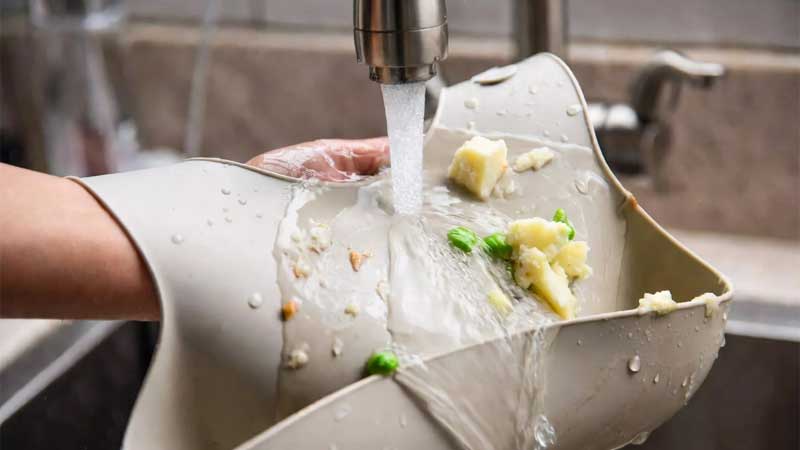
Silicone bibs stand out mainly because of how easy they are to clean. In most cases, a quick rinse under water is enough. For light use, even wiping with a cloth works.
Fabric bibs behave very differently. They absorb liquids and food residue. After a few uses, stains become harder to remove, and odor may build up.
Disposable bibs are convenient, especially for short trips. But they are not cost-effective over time, and they create more waste.
Plastic bibs are more rigid. Some are uncomfortable for babies, and over time, they may crack or lose shape.
Silicone offers a balanced solution. It is soft enough for comfort, strong enough for repeated use, and simple to maintain. That is why it has become the mainstream option in recent years.
When Should Babies Start Using Silicone Bibs?
Most babies start using silicone bibs when they begin eating solid food. This usually happens around six months, but it can vary slightly.
At this stage, feeding becomes less controlled. Food drops more often, and liquids may spill. A bib with a functional pocket helps reduce the mess and protects clothing.
As babies grow, they begin to explore self-feeding. This stage creates more movement and more mess. The bib needs to handle larger amounts of falling food.
Because of this, the design requirements also change. Early-stage bibs focus more on comfort. Later-stage bibs need stronger structure and deeper pockets.
Choosing the right design for each stage can make feeding much easier for both the baby and the parent.
Where Silicone Bibs Work Best?
In daily home use, silicone bibs help reduce cleaning workload. Less food reaches the clothes. This means less laundry and less time spent on cleanup.
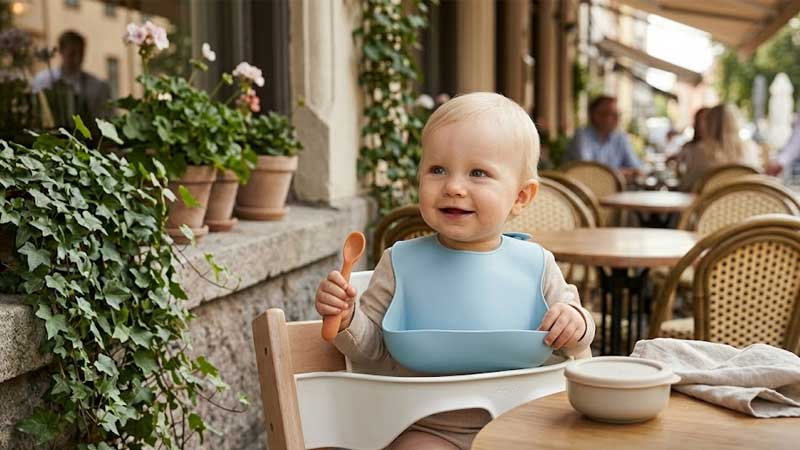
When eating outside, the benefit becomes even clearer. A bib helps avoid carrying extra clothes or dealing with unexpected spills. This is especially useful during travel or dining out.
For travel, easy cleaning is important. You may not always have access to a washing machine. A bib that can be rinsed and reused quickly is much more practical.
In daycare or group settings, durability becomes a key factor. The bib may be used several times a day and washed frequently. A stable and well-made product will last much longer under these conditions.
A good silicone bib should perform consistently across all these situations.
How to Choose the Right Silicone Baby Bib?
Material Safety
Material is always the first thing to check. It should be food-grade silicone and free from harmful substances like BPA.
Certifications such as FDA or LFGB provide additional assurance. They indicate that the material has been tested for food contact safety.
While these standards are not always visible in daily use, they are important for long-term safety.
Manufacturing Quality
This is where many products differ, even if they look similar.
Platinum-cured silicone is generally cleaner and more stable. It produces less odor and performs better over time. It also has a more consistent texture.
Some lower-cost products use fillers to reduce material cost. At first, this may not be obvious. But after some use, the bib may feel sticky, lose flexibility, or show surface changes.
This kind of issue often appears after repeated washing or exposure to oil.
Design Details
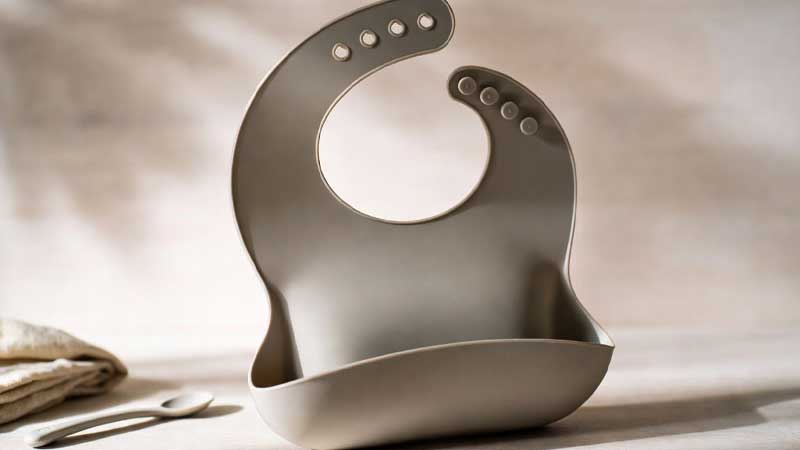
The neck opening should be adjustable and comfortable. It should fit securely without pressing too tightly against the skin.
The pocket should be deep enough and able to stay open during use. A pocket that collapses easily will not be effective.
Thickness needs to be balanced. Too thin, and the bib feels weak. Too thick, and it becomes stiff and less comfortable.
A well-designed product pays attention to all these small details.

Ease of Use
Ease of cleaning is one of the main reasons people choose silicone. A good bib should not hold onto oil or stains.
Dishwasher compatibility is useful, but only if the material can handle repeated heat cycles without degrading.
Foldable designs are helpful for storage and travel. They make the product easier to carry and use in different situations.
How Silicone Bibs Are Made?
The production process starts with selecting the right silicone material. This step has a strong impact on the final product quality.
Next comes mold design. A well-designed mold ensures smooth edges, consistent thickness, and a proper pocket shape.
The main forming process is usually compression molding or liquid silicone injection. Both methods require precise control of temperature and curing time.
After molding, the product goes through trimming and finishing. This removes excess material and improves appearance.
Printing may be added for branding or decoration. Finally, each product should be inspected before packaging.
In practice, many defects come from poor curing or uneven trimming. These are small process details, but they affect performance a lot.
How Quality Is Controlled?
Quality control begins with raw material inspection. The silicone must meet food-contact standards before production starts.
Hardness is tested to ensure the right balance between softness and structure. This is usually measured using Shore A scale.
Odor testing is also important. A strong smell often indicates incomplete curing or lower material quality.
Mechanical tests check strength and flexibility. These help ensure the product will not tear or deform easily.
For food-contact products, migration testing is used to confirm that no harmful substances transfer to food.
These tests may not be visible to the end user, but they are critical for product reliability.
How to Clean and Maintain Silicone Bibs?
Daily cleaning is simple. Warm water and mild soap are usually enough to remove most residue.
For oil buildup, using a soft brush helps clean the surface more effectively. This is especially useful after meals with greasy food.
If a slight odor appears, soaking the bib in a mixture of water and vinegar can help. Baking soda is another option for odor removal.
Most silicone bibs can be cleaned in a dishwasher. However, repeated high-temperature cycles require good material quality.
Regular cleaning not only keeps the bib hygienic, but also helps maintain its performance over time.
Common Problems and What to Watch For
Stickiness is one of the most common issues. It is often caused by oil residue or lower-quality silicone with fillers.
Odor is another frequent complaint. In many cases, it comes from incomplete curing during production.
Some bibs may lose shape over time. This usually happens when the product is too thin or not properly designed.
Surface damage can occur if sharp objects are used. This can affect both appearance and performance.
Paying attention to these small details helps avoid problems in long-term use.
Cost and Market Reality
The price of silicone bibs varies widely. Lower-cost products often reduce material quality or simplify production steps.
Higher-quality products use better silicone and more controlled processes. This results in better durability and more stable performance.
Customization also affects pricing. Factors such as color matching, logo printing, and packaging all add to the cost.
From a long-term perspective, a slightly higher upfront cost often leads to better value and fewer issues.
Conclusion
A silicone baby bib is not a complex product, but it involves more detail than it first appears.
Material choice, design structure, and production quality all influence how the product performs in daily use.
When these elements are well controlled, the bib becomes reliable, easy to use, and long-lasting.
Understanding these factors makes it much easier to choose a product that truly works, rather than one that only looks good at first glance.