Many people believe the core of an e-cigarette is the battery, the coil, and the e-liquid. In reality, long-term performance depends on small, often overlooked parts. These parts control leakage, safety, durability, and comfort. Silicone is one of the most critical materials among them.
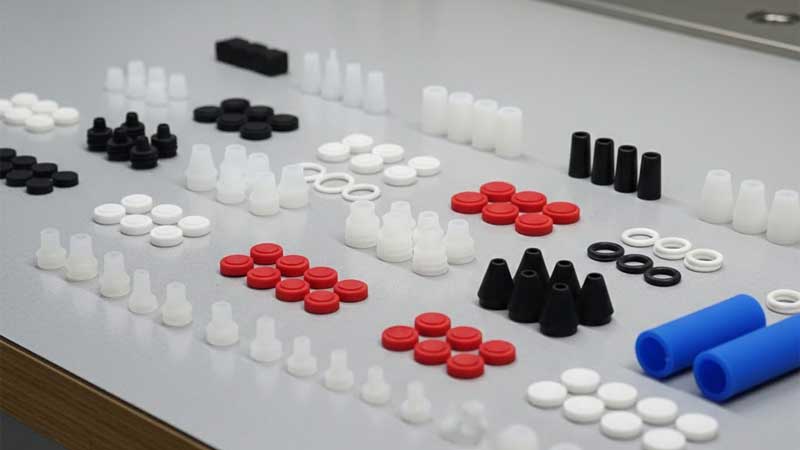
Common Silicone Components in an E-Cigarette
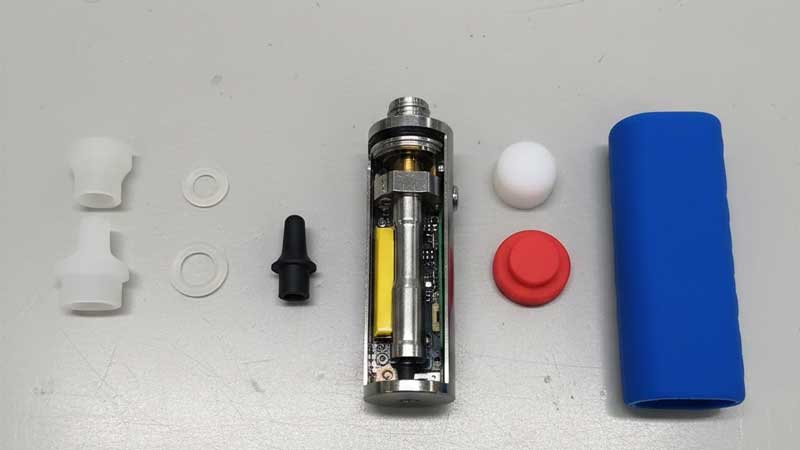
Silicone is widely used throughout a complete e-cigarette. Some parts touch the lips directly. Others are hidden inside, but they handle sealing, leak prevention, and shock absorption. The table below gives a clear overview:
| Silicone Part | Location | Main Function |
| Silicone mouthpiece | Top section | Inhalation, comfort |
| Silicone sealing ring (O-ring) | Between tank and connectors | Prevents leaks, improves sealing |
| Silicone dust cap | Air inlet, charging port | Protects from dust and contamination |
| Silicone fill plug | Filling port | Prevents e-liquid leakage |
| Silicone protective sleeve | Outer surface | Anti-slip, shock and scratch protection |
| Silicone button | Control area | Rebound, sealing, water and dust resistance |
| Silicone connector sleeve | Joint and structure connection | Stabilizes structure, absorbs vibration |
These components show how silicone supports many key areas of an e-cigarette.
Silicone Mouthpiece: Comfort and User Experience
The silicone mouthpiece touches the lips. This makes material choice critical. It must stay soft and comfortable. It also needs to stay stable under hot vapor. No deformation. No strange smell. No impact on flavor.
Compared with plastic mouthpieces, silicone feels gentler. Even in cold weather, it does not feel hard or icy. For frequent users, this small difference becomes very clear over time. Silicone also offers excellent heat resistance. Even when exposed to warm vapor for long periods, it keeps its shape and does not collapse or soften.
In production, the hardness of a silicone mouthpiece usually falls between Shore A 40–60. This range balances softness and support. It feels comfortable but still holds its form.
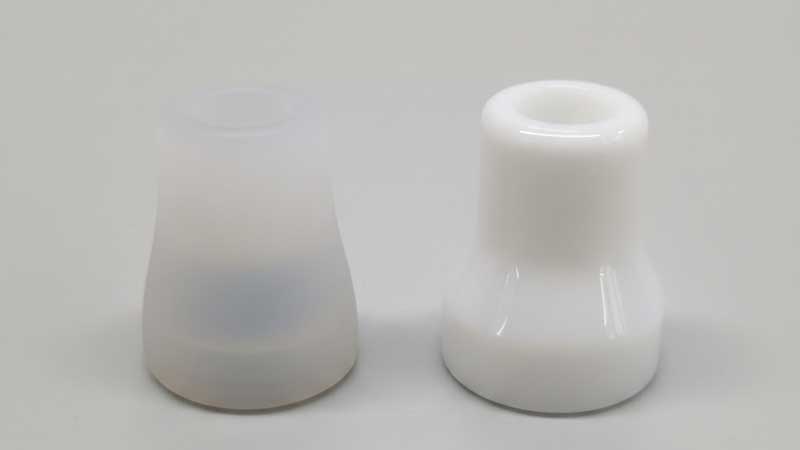
For premium products, silicone mouthpieces can be color-customized. They can be semi-transparent, matte, or textured. These options help strengthen brand identity and visual appeal.
Silicone Sealing Rings: The Core of Leak Prevention
One of the most common problems with e-cigarettes is leakage. In most cases, the issue comes from poor sealing. The true hero here is the silicone sealing ring.
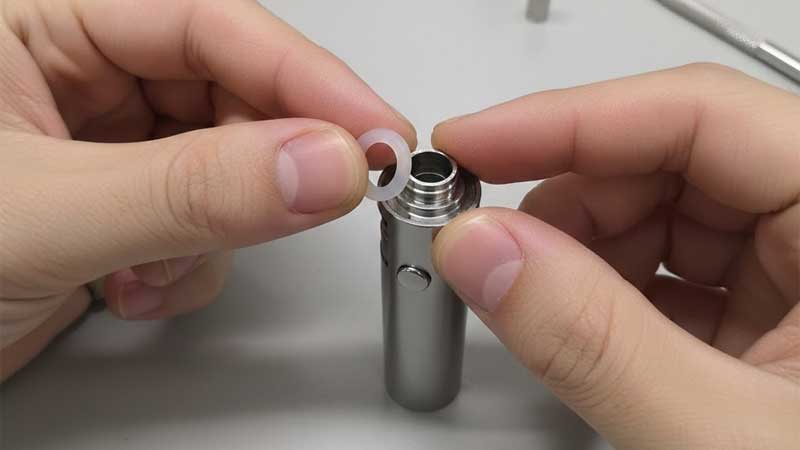
Silicone O-rings sit between the tank and the coil, between the tank and the housing, and sometimes across several inner layers. Their job is to create a tight, elastic barrier. This prevents e-liquid from escaping and keeps internal pressure balanced for smooth airflow.
For e-cigarettes, sealing rings must meet several key requirements:
- Resistant to propylene glycol and vegetable glycerin in e-liquid
- Able to keep flexibility over time without hardening or cracking
- Strong rebound even after repeated installation and removal
- High dimensional accuracy, not too loose and not too tight
Common cross-sections include round, square, and custom designs. Each shape fits different structures and sealing needs. Typical colors are transparent, black, and red. Some brands use color coding to distinguish models or functional areas, which also helps during assembly and maintenance.
A high-quality silicone sealing ring sets the basic standard of an e-cigarette’s overall quality.
Silicone Fill Plugs and Dust Caps: Small Size, Big Impact
Silicone fill plugs and dust caps look tiny, but they play a very important role.
The fill plug sits at the e-liquid refill port. If the seal is weak, leakage can occur during transport. E-liquid may stain clothes or items in a bag. A good silicone fill plug fits snugly and has the right hardness. It holds firmly while still being easy to remove.
Dust caps usually protect the charging port or air inlet. Their main job is to block dust, moisture, and small particles. This helps protect internal circuits and airflow channels. In turn, it extends the device’s lifespan.
In custom designs, silicone plugs and caps also offer room for creativity. Brands can customize color, shape, or add a logo. This improves visual appeal without changing the main structure.
Silicone Protective Sleeves: A Visible Sense of Safety
For most users, the most visible silicone part is the protective sleeve. It wraps around the outside of the device. It improves grip and greatly increases impact resistance.
Silicone has a naturally high friction coefficient. After adding a sleeve, the device becomes less likely to slip from the hand. Silicone also absorbs shock. If the device drops, the sleeve reduces impact and helps prevent cracks or internal damage.
Design options are also very flexible. The sleeve can be solid color, gradient, transparent, matte, or printed with patterns and textures.
Silicone Buttons: Balance Between Feel and Durability
The button on an e-cigarette may look small, but it is pressed many times every day. Plastic buttons can become loose over time. Metal buttons often lack cushioning. Silicone buttons solve both problems.
They provide smooth, clear feedback with every press. They also resist fatigue. Even after thousands of presses, they keep their shape and elasticity. The surface can be sprayed or laser-etched with symbols. This keeps the markings clear and long-lasting.
Silicone Material Grades and Safety
Not all silicone is the same. This is something you really feel after working with different materials for a while. For parts that touch the mouth or e-liquid, food-grade or medical-grade silicone is not optional. It is the baseline.
From practical experience, these grades usually show a few clear advantages:
- They are non-toxic, odorless, and tasteless. If a mouthpiece smells strange when it is new, that is already a warning sign.
- They handle heat and repeated vapor exposure much better. Even after long use, they keep their shape and do not turn soft or sticky.
- They stay chemically stable when in contact with propylene glycol, vegetable glycerin, or nicotine. This matters more than many people realize.
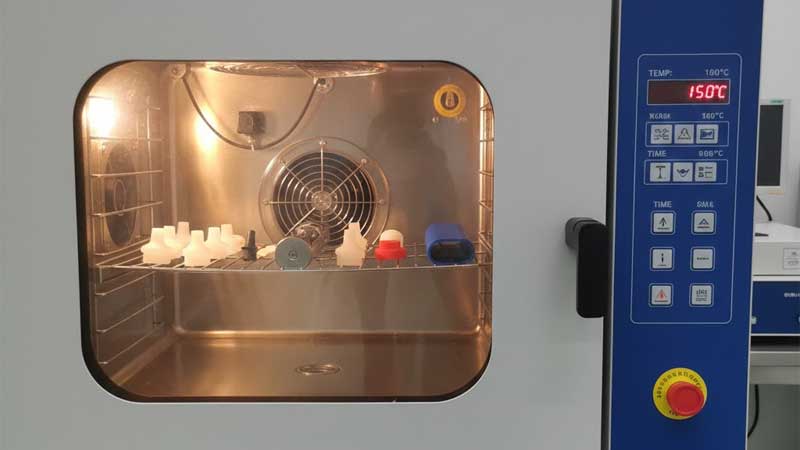
Lower-grade silicone often looks fine at first. Problems show up later. Odor starts to appear. Color changes. Elasticity slowly drops. Eventually, this leads to leakage, deformation, or customer complaints. For premium devices, certified silicone gives much more consistent results. In production, engineers usually confirm this through basic checks like hardness testing, thermal aging, and simple chemical resistance tests before materials are released to the line.
Silicone vs Other Materials: Why Silicone Wins
Years ago, many e-cigarette parts were made from plastic, TPE, or standard rubber. Some still are. But over time, silicone proved to be more reliable in daily use.
Compared with those materials, silicone has some very practical advantages:
- Heat resistance is the most obvious one. Plastics may soften or warp under vapor heat. Silicone usually does not.
- Elasticity is more stable. After being pressed or compressed again and again, silicone still rebounds well. This is critical for O-rings and buttons.
- Aging behavior is more predictable. Silicone does not harden or crack as quickly as cheap rubber.
- Chemical compatibility is better. It stays neutral with common e-liquid ingredients and does not introduce off-flavors.
Because of this, more brands slowly moved silicone into key areas like mouthpieces, sealing rings, sleeves, and buttons. From a factory point of view, silicone costs more at the start, but it often saves money later through fewer returns and fewer quality issues.
Manufacturing and Structural Design Details
Silicone parts look simple. Making them work well is not always simple.
Their performance depends a lot on design details and process control:
- Injection molding (LSR) or compression molding helps keep hardness and thickness consistent. Even small variations can affect sealing or pressing feel.
- O-rings and small seals usually need tight tolerances. Around ±0.1 mm is common. Anything looser can lead to leaks.
- Wall thickness and hardness have to be balanced. Too thin, and parts collapse or tear. Too thick, and buttons feel stiff or uncomfortable.
- Post-curing and surface finishing matter more than people think. They help remove residue, reduce odor, and improve long-term elasticity.
Devices that ignore these details often look fine at first but slowly turn into maintenance problems. Devices that get them right feel stable and trouble-free over time.
Long-Term Use: Aging and Failure
Even good silicone changes with time. The difference is how much it changes.
In real use:
- Continuous exposure to e-liquid and heat may cause slight softening or swelling, but well-formulated silicone stays within an acceptable range.
- Buttons and O-rings take repeated stress. If hardness or wall thickness is wrong, permanent deformation shows up sooner than expected.
- External sleeves sometimes discolor or lose grip under UV light or extreme temperatures, especially with low-quality material.
This is why many manufacturers run basic aging tests like compression set and thermal cycling. It helps predict how the product will behave after months of daily use, not just on day one.
Regulatory Compliance
For products sold internationally, compliance is not just paperwork. It affects material choice from the start.
Most markets expect:
- FDA (US) or LFGB (EU) compliant silicone for any part touching the mouth or e-liquid.
- RoHS and REACH compliance for integration with electronic components.
- Proof that materials do not release harmful substances under heat.
Using certified silicone makes approvals smoother and reduces risk later. Many brands keep full documentation, including material certificates and batch test records, to avoid problems during audits or market entry.
Common Issues and Repair Cases
From real production and after-sales feedback, some issues appear again and again:
- Leakage is often blamed on the tank, but in many cases the real cause is an O-ring with poor compression or incorrect hardness.
- Button fatigue usually comes from design choices. Wall thickness and material hardness matter more than the button shape itself.
- Mouthpiece odor is almost always linked to low-grade silicone or incomplete post-curing, not user cleaning habits.
- Dust caps and fill plugs may loosen over time if the silicone hardens or tolerances are off, leading to small leaks or contamination.
Understanding these patterns helps brands adjust designs early, choose better materials, and reduce returns. Small silicone parts rarely get attention, but they often decide whether a product feels solid or problematic.
Conclusion
In an e-cigarette that looks simple on the surface, silicone plays a quiet but essential role. It prevents leaks, improves grip, enhances safety, and extends service life. You may not always notice it, but you depend on it every single day. From material choice and manufacturing to long-term performance and compliance, every small silicone component contributes to a better vaping experience.